Microsoft(MSFT)

Search documents
正式落地!美国政府批准向中国出口英伟达H200芯片;死了么APP官宣改名!启用全球化品牌名Demumu;立讯精密:终止收购印度闻泰资产
雷峰网· 2026-01-14 00:25
Group 1 - Meta plans to cut 1,500 jobs in its Reality Labs department, shifting focus from the metaverse to AI devices, with a cumulative loss exceeding $70 billion since Q4 2020 [4][5] - The company aims to invest hundreds of billions in data centers and increase budgets for wearable AI glasses to maintain a competitive edge in the AI market [4][5] - The Reality Labs department will primarily focus on Horizon OS, the metaverse, and wearables after a restructuring in October 2025 [5] Group 2 - The U.S. government has approved NVIDIA to export its H200 AI chips to China, with an expected delivery of 2 million chips by 2026, primarily to large internet companies [9] - The H200 chip is priced at approximately $27,000 each, with a total of 700,000 units currently in stock [9] Group 3 - Luxshare Precision has terminated its acquisition of Indian assets from Wistron due to delivery restrictions and is seeking arbitration for a refund of approximately 1.53 billion yuan [12][13] - The termination of the asset transfer agreement will not adversely affect Luxshare's normal operations and financial status [12] Group 4 - The app "Demumu," previously known as "死了么," has gained significant traction, becoming the top tool app on the Apple App Store, with a 300-fold increase in downloads [14] - The app focuses on providing safety tools for individuals living alone and plans to raise its price from 8 yuan to around 14-15 yuan [14] Group 5 - Baichuan-M3, a new medical AI model, has been released, outperforming OpenAI's GPT-5.2 in various medical evaluation metrics [16][17] - The model is expected to play a significant role in the application of AI in healthcare, with plans for a potential IPO by 2027 [17] Group 6 - Major companies like Xiaomi and Huawei are launching high-end Pro Max models, indicating a competitive shift in the smartphone market [22] - Xiaomi's Pro Max model has become the best-selling variant in its series, reflecting a successful strategy in the high-end market segment [22] Group 7 - The local life service sector is seeing increased competition, with companies like Kuaishou and Didi entering the market with new service apps [24][25] - Meituan is expanding its local service offerings, indicating a broader trend of tech companies diversifying into everyday services [25] Group 8 - ByteDance has raised its stock option price significantly, reflecting a 4-fold increase since 2019, indicating strong growth and valuation [32] - The company is also experiencing a surge in AI job postings, with salaries for certain positions rising significantly [27] Group 9 - Porsche China is addressing issues with dealers who have ceased operations, promising to provide compensation for customers who have paid deposits but not received their vehicles [29][30] - The company is actively working to ensure customer rights are protected amid dealer disruptions [29] Group 10 - Citigroup plans to lay off approximately 1,000 employees as part of a broader strategy to reduce its workforce by 20,000 by the end of 2026 [50][51] - The layoffs are part of ongoing efforts to align staffing with current business needs and improve efficiency [51]








微软:愿意承担高电价 以覆盖数据中心的电力成本
Hua Er Jie Jian Wen· 2026-01-14 00:13
微软表示将推出以社区为核心的AI基础设施新举措。要求公用事业公司和公共委员会将费率设定得足 够高,以覆盖数据中心的电力成本。 1月13日,微软宣布启动全新的 "社区优先"AI基础设施倡议,承诺在美国境内建设数据中心时采取不同 以往的负责任方式。该计划包含五大核心承诺:确保数据中心不增加当地居民电价、实现水资源补充、 为当地居民创造就业、增加地方税收,以及投资当地AI培训和非营利组织。 微软副董事长兼总裁布拉德·史密斯在公告中表示,该倡议旨在成为数据中心所在社区的 "好邻居" ,体 现了公司的公民责任感以及对运营成功AI基础设施所需的长期考量。该计划将在2026年于美国迅速落 地,并随后推广至其他国家。 AI基础设施建设正成为美国继运河、铁路、电网之后的最新大规模基础设施浪潮。国际能源署预计, 到2035年美国数据中心用电需求将增长两倍以上,从200太瓦时增至约640太瓦时。但这种快速扩张已在 多地引发了对电价上涨和水资源紧张的担忧。微软的这一计划试图平衡技术进步与社区利益,为科技行 业在AI时代的基础设施建设树立新标准。 承诺不转嫁电力成本 在电力方面,微软做出四项具体承诺。首先,公司将要求公用事业公司和公共 ...

道指跌近400点,英特尔大涨7%,中概股普跌,文远知行跌超10%,比特币涨5%创年内新高
2 1 Shi Ji Jing Ji Bao Dao· 2026-01-13 23:32
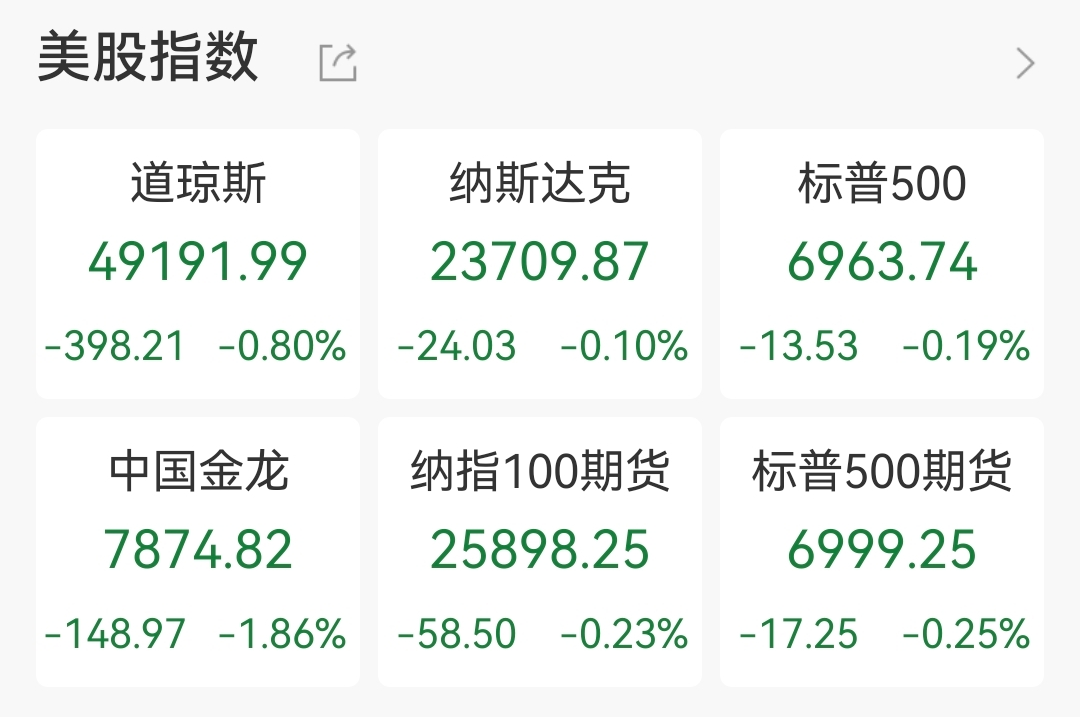
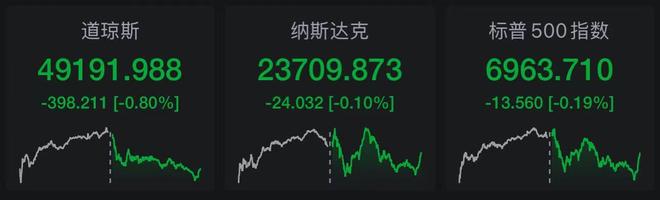
Market Performance - On January 13, all three major US stock indices closed lower, with the Dow Jones down 0.8%, nearly 400 points, the S&P 500 down 0.19%, and the Nasdaq down 0.1% [1] - The Dow Jones index closed at 49,191.99, down 398.21 points, while the Nasdaq and S&P 500 closed at 23,709.87 and 6,963.74, down 24.03 and 13.53 points respectively [2] Technology Sector - Technology stocks showed mixed performance, with Intel rising over 7% to reach a nearly two-year high, and AMD increasing over 6%. However, Meta, Amazon, and Microsoft all fell over 1% [2] - Nvidia's stock rose 0.47% following the news that the US has relaxed export regulations on its H200 chips to China [2] Banking Sector - Bank stocks experienced a broad decline, with the KBW Bank Index falling 1.3% and JPMorgan Chase dropping over 4%. The decline was attributed to lower-than-expected investment banking fees and warnings regarding potential risks from proposed credit card interest rate caps [4] - JPMorgan's investment banking revenue from underwriting and advisory services saw a decline, which could significantly impact the bank and its clients [4] Chinese Stocks - The Nasdaq Golden Dragon China Index fell 1.86%, with many popular Chinese stocks declining. Notable drops included Brain Rebirth down over 26%, WeRide down over 10%, and Pinduoduo down over 5% [4] Commodity and Currency Markets - US Treasury yields fluctuated after the CPI report, with the 10-year yield stabilizing around 4.17%. The dollar strengthened, pushing the USD/JPY exchange rate above 159 [6] - Gold prices reached a historical high of $4,630 before slightly retreating, while silver futures rose 2.08% to $86.86 per ounce [6] Inflation and Economic Outlook - The US Consumer Price Index (CPI) rose 2.7% year-on-year as of December 2025, with the core CPI increasing by 2.6% [8] - Analysts predict that inflation may remain sticky around 3% in 2026, with potential upward pressure due to looser fiscal and monetary policies [8]


Can Microsoft Continue Its AI Domination in 2026?
The Smart Investor· 2026-01-13 23:30
Core Insights - Microsoft has established itself as a leader in enterprise AI since the launch of ChatGPT in November 2022, leveraging its partnership with OpenAI and the Azure platform [1][2] - The company reported an 18% year-on-year revenue increase to US$77.7 billion for the first quarter of fiscal year 2026 [1] Financial Performance - In the first quarter of fiscal year 2026, Microsoft's Intelligent Cloud segment revenue rose by 28% year-on-year to US$30.9 billion, driven by a 40% year-on-year growth in Azure and other intelligent cloud services [3] - GitHub Copilot has gained over 26 million users, and Microsoft 365 Copilot has been adopted by over 90% of Fortune 500 companies [4] Strategic Partnerships - Microsoft has redefined its relationship with OpenAI, securing exclusive rights to host OpenAI's APIs and intellectual properties on Azure through 2032 [5][6] - The company has also partnered with Anthropic to integrate its AI models across Microsoft's Copilot family, enhancing enterprise access to AI capabilities [7] Industry Trends - Gartner predicts that by 2026, 40% of enterprise applications will feature task-specific AI agents, a significant increase from less than 5% last year [5] - The integration of AI into Microsoft's core offerings has facilitated organic adoption within existing business workflows [2][3] Regulatory Environment - New safety and transparency standards for AI systems have been introduced, leading to higher compliance costs and potential delays in product rollouts [9] - Microsoft has established a Responsible AI Standard and oversight bodies to ensure ethical AI development practices [10] Competitive Landscape - Increased competition from companies like Amazon Web Services poses a risk of price wars that could compress margins for Microsoft [10] - However, Microsoft's deep integration of AI into daily workflows creates high switching costs, making it relatively resilient to competitive pricing pressures [11] Future Outlook - Microsoft enters 2026 with strong AI momentum supported by strategic partnerships and favorable industry trends [12] - Sustaining leadership in AI will require ongoing innovation, adaptability, and monitoring of adoption rates and competitive positioning [12][13]

陆家嘴财经早餐2026年1月14日星期三
Wind万得· 2026-01-13 22:45
Group 1 - A-shares experienced a decline on January 13, with the Shanghai Composite Index down 0.64% to 4138.76 points, ending a 17-day winning streak. The total trading volume reached a record high of 3.7 trillion yuan [1] - The U.S. President Trump announced the cancellation of all talks with Iranian officials, and the U.S. State Department urged citizens to leave Iran immediately. Iran's military claimed to have enhanced its capabilities in response to security threats [1] - The Federal Reserve Chairman Powell is under criminal investigation, with former financial officials criticizing the Trump administration's actions. Global central bank leaders are drafting a statement in support of Powell [1] Group 2 - Trump threatened to impose a 25% tariff on countries doing business with Iran, prompting a response from China's Foreign Ministry, which emphasized the need to maintain the stability of global supply chains for critical minerals [4] - The Ministry of Industry and Information Technology held a meeting with representatives from key industries, emphasizing participation in industry rule-making and self-regulation to resist "involution" [4] - The Ministry of Civil Affairs and other departments introduced 14 measures to promote high-quality development in elderly care services, with the elderly population expected to reach 310 million by 2024 and over 400 million by 2035 [4] Group 3 - The Hong Kong Hang Seng Index rose 0.9% to 26848.47 points, with medical stocks performing well. Southbound funds recorded a net purchase of 1.296 billion Hong Kong dollars [6] - The ETF management scale of Huaxia Fund surpassed 1 trillion yuan, marking a milestone in the domestic ETF market [6] - Two "commercial aerospace" concept stocks received regulatory warnings for inaccurate and incomplete information disclosures [6] Group 4 - A survey indicated that over 70% of insurance investment officers are optimistic about the investment outlook for 2026, with a preference for increasing equity asset allocations [7] - As of January 13, 186 listed companies had been investigated by institutions, with a focus on sectors like brain-computer interfaces and commercial aerospace [7] - More than 140 companies in the A-share market released performance forecasts for 2025, with 63 companies expecting profit increases [7] Group 5 - Companies in the mining sector are expected to see significant profit growth in 2025 due to rising gold prices, with companies like Chifeng Jilong Gold and Zijin Mining forecasting substantial profit increases [8] - The passing of David Webb, a prominent activist investor in Hong Kong, has raised concerns about the impact on the market [8] - China Europe Fund announced the suspension of certain fund activities, indicating a tightening of investment conditions [8] Group 6 - The Ministry of Industry and Information Technology outlined a plan for the development of industrial internet platforms, aiming for over 450 influential platforms by 2028 [11] - The Ministry of Commerce announced the continuation of anti-dumping duties on imported solar-grade polysilicon from the U.S. and South Korea [11] - A new round of high-value medical consumables procurement is set to open bidding, involving 12 types of medical consumables [11] Group 7 - Jiangsu Province released an "Artificial Intelligence+" action plan, targeting a trillion-yuan industry scale by 2027 [12] - The used car market in China is projected to exceed 20 million transactions in 2025, with a notable increase in the share of electric vehicles [12] - Significant advancements have been made in the development of high-performance sodium-ion battery materials [12] Group 8 - The global hedge fund industry achieved a 12.6% return in 2025, marking the strongest annual performance since the 2009 financial crisis [20] - JPMorgan reported a fourth-quarter revenue of $45.798 billion, exceeding market expectations, despite a decline in investment banking performance [20]




全球大公司要闻 | 美国放宽对英伟达H200芯片出口中国的管制
Wind万得· 2026-01-13 22:45
Group 1 - Nvidia has received a regulatory easing from the US for exporting H200 chips to China, and the company clarified it will not require customers to pay for undelivered products despite previous rumors of strict payment terms [2] - Rongbai Technology signed a procurement agreement with CATL worth over 120 billion yuan for lithium iron phosphate cathode materials, expected to supply 3.05 million tons from Q1 2026 to 2031, positively impacting future performance [2] - Microsoft is integrating ChatGPT into Office 365 to enhance productivity and collaborating with Walmart to strengthen AI recommendation systems on its e-commerce platform, reinforcing its position in enterprise software and cloud computing [2] Group 2 - Debon Logistics plans to voluntarily delist, with a cash option registration date set for February 6, 2026, and the stock will resume trading on January 14, 2026, aiming to optimize its capital structure [5] - Fulin Precision plans to raise 3.175 billion yuan through a private placement to CATL at 13.62 yuan per share for a project to produce 500,000 tons of high-end energy storage lithium iron phosphate, deepening cooperation in the new energy sector [5] - Baiwei Storage expects a net profit of 850 million to 1 billion yuan in 2025, a year-on-year increase of 427.19% to 520.22%, driven by recovering demand in the storage chip market [5][6] Group 3 - TCL Technology anticipates a net profit growth of 169% to 191% in 2025, primarily due to improved profitability in its semiconductor display business and rapid development in the new energy photovoltaic sector [3] - TCL Zhonghuan expects a net loss of 8.2 billion to 9.6 billion yuan in 2025, a reduction from a loss of 9.818 billion yuan the previous year, with positive operating cash flow [6] - Pudong Development Bank projects a net profit of 50.017 billion yuan in 2025, a year-on-year increase of 10.52%, driven by improved asset quality and steady growth in intermediary business income [7]




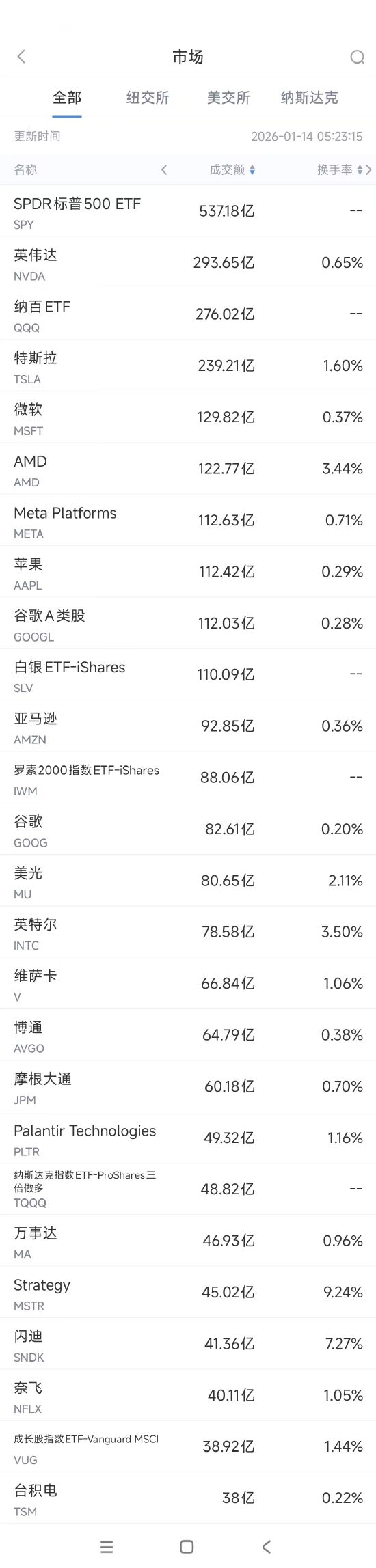
1月14日美股成交额前20:谷歌再创新高,花旗重申买入评级
Xin Lang Cai Jing· 2026-01-13 21:49
Group 1: Nvidia - Nvidia's stock rose by 0.47% with a trading volume of $29.365 billion, and the company stated it will not require customers to pay upfront for H200 chips, countering reports of strict payment terms for Chinese clients [1] - The company emphasized it will never ask customers to pay for products not yet received, addressing concerns over potential policy changes affecting its ability to sell H200 chips in China [1] Group 2: Tesla - Tesla's stock fell by 0.39% with a trading volume of $23.921 billion, as Elon Musk announced plans to make the platform's recommendation algorithm public within a week, aiming for regular updates every four weeks [1] - Musk indicated that the recommendation algorithm will increasingly rely on AI, particularly the Grok chatbot, to enhance the quality of information flow [1] Group 3: Microsoft - Microsoft's stock declined by 1.36% with a trading volume of $12.982 billion, as the company committed to covering operational electricity costs for its U.S. data centers amid concerns over rising utility costs for consumers [2] - Microsoft plans to collaborate with utility companies to ensure power supply and improve data center efficiency while reducing water usage [2] Group 4: AMD and Intel - AMD's stock increased by 6.42% with a trading volume of $12.277 billion, as KeyBanc Capital Markets upgraded both AMD and Intel to "overweight" with target prices of $270 and $60 respectively, citing strong demand for server CPUs [2] - Intel's stock rose by 7.33% with a trading volume of $7.858 billion, reflecting similar positive sentiment in the semiconductor market [3] Group 5: Meta Platforms - Meta Platforms' stock decreased by 1.69% with a trading volume of $11.263 billion, as estimates suggest that a recent nuclear data center agreement may require over $14 billion in investment [3] Group 6: Google - Google's Class A shares rose by 1.24%, reaching a historical high with a trading volume of $11.203 billion and a market capitalization of $4.05 trillion, following a significant partnership with Apple to support AI functionalities in upcoming products [3] - Citigroup's report highlighted Google's Gemini model's capabilities and infrastructure advantages, reaffirming its position as a top choice in the internet sector with a target price of $350 [3] Group 7: Amazon - Amazon's stock fell by 1.57% with a trading volume of $9.285 billion, as reports indicated the company is seeking discounts from suppliers, with reductions ranging from low single digits to as high as 30% [3] Group 8: Financial Sector - Visa's stock dropped by 4.46% with a trading volume of $6.684 billion, amid concerns over potential impacts on profitability from proposed credit card interest rate caps [4] - JPMorgan's stock fell by 4.19% with a trading volume of $6.018 billion, as the bank reported projected total revenue of $185.6 billion for 2025, a 3% increase year-over-year, but a decrease in net profit compared to 2024 [5]


美股三大指数收跌 英特尔涨超7%
Xin Lang Cai Jing· 2026-01-13 21:09
Core Viewpoint - The U.S. stock market experienced a decline on Tuesday, with the Dow Jones falling by 0.80%, the Nasdaq by 0.10%, and the S&P 500 by 0.19% [1] Group 1: Major Stock Movements - Large technology stocks showed mixed performance, with Intel rising over 7% and AMD increasing by more than 6% [1] - Google and Netflix both saw gains of over 1%, while Nvidia, Apple, and Broadcom had slight increases [1] - Conversely, Micron and Qualcomm dropped by more than 2%, and Meta, Amazon, Microsoft, and Oracle fell by over 1%, with Tesla experiencing a slight decline [1]

SymphonyAI Launches Next-Generation CINDE Merchandising Agents, Bringing Agentic AI Into Core Merchandising Decisions, Powered by Microsoft Foundry and Azure
Businesswire· 2026-01-13 20:43
Core Insights - SymphonyAI has launched the next generation of CINDE Merchandising Agents, which integrate agentic AI into various merchandising workflows to enhance decision-making processes in retail [1][2]. Group 1: Product Features - CINDE Merchandising Agents provide real-time, margin-driving insights that shift merchandising decisions from reactive to proactive, utilizing Microsoft Foundry technology [2]. - These agents are designed specifically for merchants, offering autonomous, role-based intelligence that continuously analyzes performance and recommends prioritized actions [2][5]. - The agents address delays in traditional workflows by delivering immediate insights and recommendations, thus improving the speed and effectiveness of merchandising decisions [4][5]. Group 2: Operational Impact - The agents help retailers identify margin-impacting signals earlier, allowing for timely actions that protect and grow margins week after week [5]. - A case study highlighted how a regional grocer was able to recover margin quickly by acting on insights provided by the Merchant Planner agent, which identified a placement issue affecting sales [6]. - The agents facilitate a shift from historical analysis to real-time decision-making, enabling retailers to act on emerging issues as they arise [4][7]. Group 3: Market Positioning - SymphonyAI positions its CINDE Merchandising Agents as essential tools for retailers seeking measurable ROI from AI investments, emphasizing the need for systems that act as margin multipliers [9]. - The company has established a strong presence in the market, serving over 2,000 enterprise customers, including top financial institutions and major consumer goods companies [10].

SymphonyAI Launches New Industrial AI Apps Purpose-Built for the CPG Food and Beverage Industry, Powered by Microsoft Azure
Businesswire· 2026-01-13 20:35
Core Insights - SymphonyAI has launched eight new industrial AI applications specifically designed for the unique operational needs of CPG (Consumer Packaged Goods) and Food and Beverage manufacturers, representing a significant expansion of its IRIS Foundry platform [1][2] Group 1: Product Features - The new applications are powered by Microsoft Azure and are tailored to address the complexities of high-speed food and beverage manufacturing, including high-velocity packaging lines and various operational challenges [2][4] - These applications utilize real-time optimization capabilities, leveraging Azure IoT Operations to process critical data close to the source, which is essential for decision-making in fast-paced environments [5] - Key functionalities include AI optimization for cleaning cycles, real-time analytics for line performance, digital twin simulations, advanced defect detection, predictive maintenance, and intelligent material flow management [6] Group 2: Industry Context - CPG manufacturing operates at a different speed and complexity compared to traditional industrial environments, where small parameter drifts can lead to significant yield losses [4] - The new applications are designed to provide CPG-specific intelligence that can be integrated directly into workflows, addressing the unique challenges faced by food and beverage plants [4][8] Group 3: Strategic Importance - The integration of these applications with Microsoft Teams and Microsoft 365 Copilot allows for enhanced collaboration and real-time insights, democratizing access to critical industrial data [7] - The shift towards AI systems that deliver measurable returns on intelligence is emphasized, with the potential for significant operational improvements and margin impacts for manufacturers [8][9] Group 4: Technical Infrastructure - The applications are built on a robust Azure-native architecture, ensuring enterprise-grade scalability and uncompromising security for sensitive operational data [10]