NIKE(NKE)

Search documents
“织”道系列7:运动制造6月跟踪:运动鞋服订单增速分化,景气弱化趋势放缓
Changjiang Securities· 2025-08-12 23:30
Investment Rating - The industry investment rating is "Positive" and maintained [7] Core Insights - The report indicates that the order growth for footwear and apparel manufacturing has been recovering since Q3 2023 due to the end of inventory destocking by overseas brands. However, it is expected that order growth will begin to slow down on a month-on-month basis in 2025 due to weak terminal retail performance [2][4][32] - The current situation shows a divergence in order growth for sports shoes and apparel, with a slowdown in the weakening trend of the industry. The recovery of Nike is crucial, as its operational recovery could lead to an overall industry rebound and improve order intake for manufacturers [2][4][32] Summary by Sections Manufacturing Orders - In June, the order growth for sports shoes and apparel showed divergence, with specific companies reporting varied performance. For instance, Yu Yuan Group's manufacturing revenue increased by 9.4% year-on-year, while Feng Tai's revenue decreased by 3.1% year-on-year. Overall, the order growth has been maintaining recovery since Q3 2023, but is expected to slow down in 2025 due to weak terminal retail [5][29][32] Market Strategy - The textile manufacturing sector is expected to return to fundamental investment logic as tariffs on Southeast Asia have largely been resolved. The report suggests focusing on quality manufacturers like Crystal International and Huali Group, as well as brands with high earnings elasticity post-tariff adjustments [6][33] - In the A-share market, brands are anticipated to shift to a destocking cycle in Q3, increasing the probability of industry improvement. Recommended stocks include Hailan Home and Robam Life, which are expected to benefit from this transition [6][34] Export Trends - In June 2025, China's apparel exports grew by 0.8% year-on-year, while Vietnam's apparel exports increased by 16.0%. However, footwear exports from China and Vietnam showed a decline of 4.0% and 3.3% year-on-year, respectively, indicating a mixed performance in the export market [26][28]

美国零售股反攻之势未完待续? 耐克(NKE.US)重返亚马逊引领零售行业估值扩张
Zhi Tong Cai Jing· 2025-08-12 09:03
Core Viewpoint - The article discusses the recovery of U.S. retail stocks, particularly Nike's return to Amazon, which is expected to lead to an expansion in retail industry valuations as trade tensions ease and pricing strategies improve [1][2]. Group 1: Market Context - The easing of U.S.-China trade tensions and a shift in the Trump administration's tariff policies have led Wall Street to refocus on retail stocks that were previously impacted by tariffs [1]. - Goldman Sachs forecasts a stable performance outlook for the U.S. retail sector, driven by companies like Nike, Amazon, and Walmart, as they optimize their channel and pricing strategies [1]. Group 2: Nike's Strategy - Nike's stock has rebounded over 35% since hitting a year-to-date low in April, with Walmart also seeing a stock increase of over 25% during the same period [2]. - Nike has reopened its official store on Amazon, offering approximately 90 products, primarily priced under $100, to attract cost-conscious consumers [2][4]. - The pricing strategy on Amazon includes significant discounts compared to other channels, allowing Nike to manage product pricing and inventory effectively while maintaining brand premium [2][4]. Group 3: Competitive Landscape - Goldman Sachs notes that while Kohl's and Academy sell many of the same Nike products, their promotional discounts often result in lower actual selling prices compared to Nike's Amazon store [3][4]. - The overlap of products sold on different platforms indicates a strategic differentiation in product positioning, with Nike's Amazon offerings tailored to value-oriented markets [3][4]. - The initial promotional efforts on Amazon are less aggressive than those on other retail platforms, suggesting a controlled approach to inventory and pricing [5][6]. Group 4: Future Outlook - Goldman Sachs maintains a "Buy" rating on Nike, setting a 12-month price target of $85, reflecting confidence in the company's strategic positioning and market recovery [6].
X @CoinDesk
CoinDesk· 2025-08-08 14:32
Market Cap Comparison - BNB's market cap has surpassed Nike's [1] - BNB market cap is $110 billion [1] - Nike market cap is $109.9 billion [1]
NIKE's E-Commerce Momentum Builds: Is it Enough to Offset Retail Woes?
ZACKS· 2025-08-08 14:25
Core Insights - NIKE Inc. is intensifying its focus on e-commerce amidst a challenging retail environment, with digital transformation efforts showing early signs of success [1][8] - The company is implementing strategies such as storytelling integration, partnerships with platforms like Amazon, and enhancing wholesale collaborations to expand consumer reach [1][8] - Despite digital gains, NIKE faces ongoing retail challenges, including declining wholesale revenues and high inventories in certain regions [2][8] E-commerce Strategy - NIKE Direct is evolving into a premium destination linked to sports moments and product launches, aiming for full-price sales even at the cost of lower short-term traffic [1][3] - The brand is committed to leveraging its sport-led identity to stimulate consumer demand both online and in physical stores [3] Competitive Landscape - Rivals lululemon and adidas are also enhancing their e-commerce strategies to capture consumer spending in a digital-first marketplace [4] - lululemon's e-commerce contributes over 40% of total revenues, supported by strong product innovation and brand activations [5] - adidas is experiencing growth in its e-commerce segment through exclusive product drops and targeted marketing, helping to mitigate the impact of weaker wholesale and store traffic [6] Financial Performance - NIKE's shares have increased by 27.5% over the past three months, outperforming the industry growth of 23.4% [7] - The Zacks Consensus Estimate indicates a projected earnings decline of 21.8% for fiscal 2026, followed by a growth of 53.7% for fiscal 2027 [9] - NIKE's forward price-to-earnings ratio stands at 40.05X, significantly above the industry's 30.08X [12]

跑鞋大火抢占球鞋市场,运动品牌怎么办?
3 6 Ke· 2025-08-08 01:28
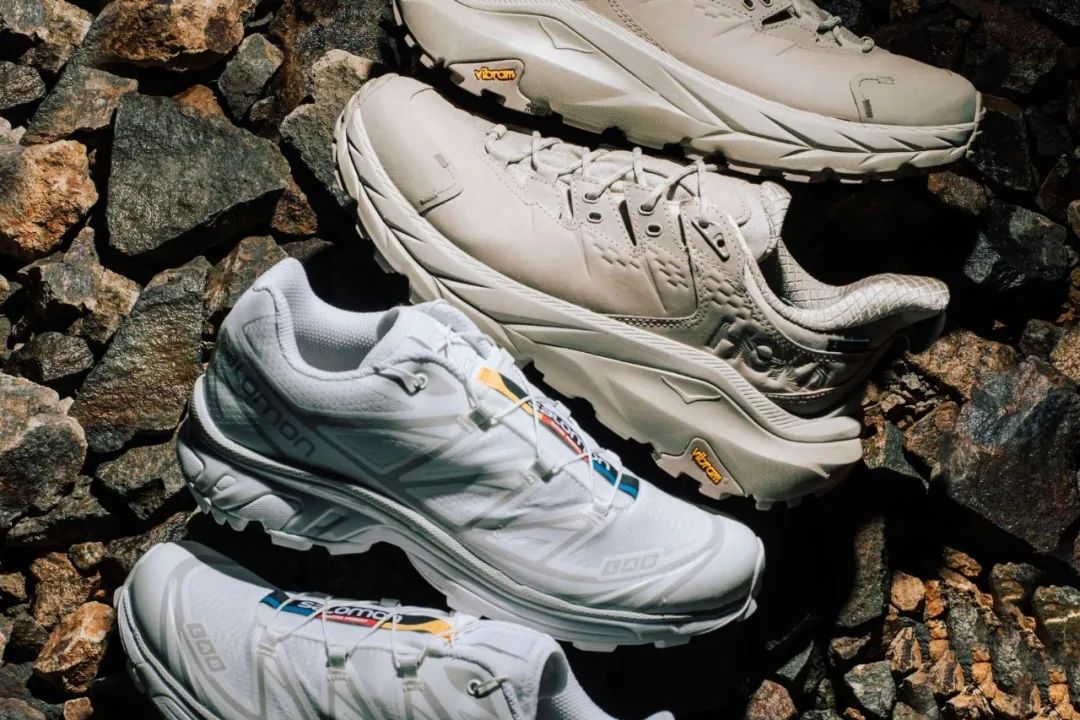
Core Insights - The basketball shoe market is experiencing a decline, with sales dropping by 5% in 2024 and projected to fall by 8% by May 2025, posing challenges for major sports brands that heavily invest in this category [1][2] - The rise of running shoes, which are favored for their comfort and broader audience appeal, is a significant factor contributing to the decline in basketball shoe sales [2][3] - The influence of basketball stars, particularly Michael Jordan, has waned over time, leading to a decrease in the cultural relevance of basketball shoes compared to their past prominence [6][8] Group 1: Market Dynamics - The basketball shoe market was once a popular choice for consumers, but the shift towards running shoes has disrupted this trend, as brands struggle to compete with the technological advancements and pricing strategies of running shoes [2][3] - New brands like Hoka and On are capitalizing on the running trend by associating their products with an ideal lifestyle, attracting a diverse consumer base [3][5] Group 2: Brand Strategy - To revitalize basketball shoe sales, brands must focus on technological innovation and performance enhancement, as these are critical competitive advantages in the market [9][10] - The development of new materials and supply chain advancements are essential for creating high-performance basketball shoes that can attract consumers [12] Group 3: Role of Designers - Designers are increasingly stepping into the spotlight, engaging directly with consumers to share design philosophies and brand stories, which can positively impact sales [13][17] - The emergence of platforms for designers to share knowledge and experiences is fostering a collaborative environment that can lead to innovative design breakthroughs [16][17]
Global Head Coach of Nike Running Shares Expert Tips with YourUpdateTV
GlobeNewswire News Room· 2025-08-07 16:20
Core Insights - Nike is promoting running among Americans, with over 50 million individuals participating regularly, and is encouraging them to engage in running events [1] - Chris Bennett, Nike Running Global Head Coach, is providing motivation and tips for runners through a nationwide media tour [2] Product Offerings - Nike offers a range of running footwear designed for various needs, focusing on cushioning, including models like Pegasus, Structure, and Vomero [3] Community Engagement - Running serves as a social activity, fostering community through run clubs and race events, which helps maintain motivation among participants [4] Coach Profile - Chris Bennett, known as "Coach B," has extensive experience in competitive running and coaching, helping runners of all levels build confidence and connection to the sport [5]

望远镜系列12之2025Q1财报总结:营收表现分化,终端需求待修复
Changjiang Securities· 2025-08-06 23:30
Investment Rating - The report maintains a "Positive" investment rating for the textile, apparel, and luxury goods industry [11]. Core Insights - Revenue performance in Q1 2025 shows divergence among brands, with On (+40%) and Adidas (+13%) performing well, while Nike (-7%) and Under Armour (-11%) face revenue declines due to weak demand and inventory adjustments [6][20]. - The cautious revenue guidance from key companies indicates a continuation of this divergent performance in upcoming quarters, with some brands canceling their full-year guidance [7][25]. - The industry is entering a replenishment phase, but weak end-consumer demand necessitates close monitoring of recovery trends [9][34]. Revenue Performance - In Q1 2025, On and Adidas exhibited strong revenue growth, while Nike and UA struggled with declines [6][18]. - The overall revenue growth rates varied significantly across regions, with North America and Greater China showing relative weakness [20][22]. Inventory Dynamics - The apparel industry has returned to a healthy inventory level but is now entering a replenishment phase, with some brands beginning to accumulate stock [8][9]. - Retailers' inventory-to-sales ratios are normal, but certain brands are still in a destocking phase, particularly Nike and VF [8][9]. Future Outlook - The report emphasizes the need to monitor the pace of consumer demand recovery, especially as the industry faces challenges from weak demand and inflationary pressures [9][34]. - Nike's gradual operational improvement may alleviate some negative pressures on the industry, suggesting potential for a rebound in the manufacturing sector [9][34].


以儿童为中心,耐克在打造属于下一代的运动世界
Xin Jing Bao· 2025-08-06 06:14
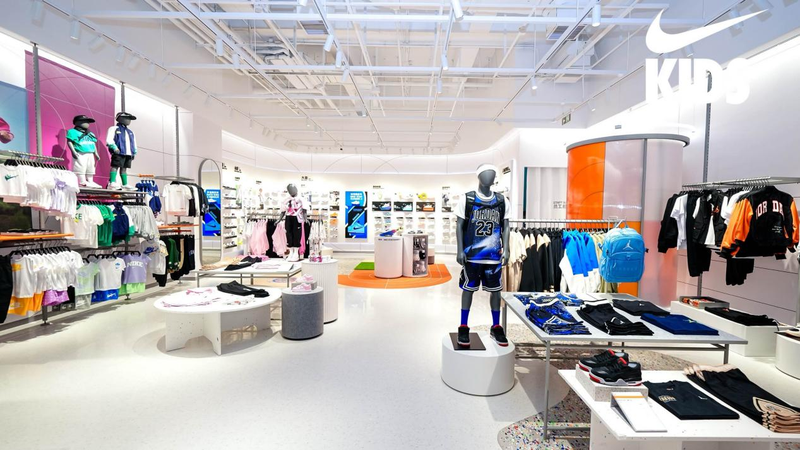
具体来看,此次耐克合生汇新店的升级中,品牌在门店设计规划上突出了"以运动为核心"理念,并设置了中国首 块专为儿童及家长设计的创新鞋墙,通过对运动场景和消费诉求的细分呈现,该设计帮助孩子和家长轻松找到满 足不同运动需求的产品,充分彰显耐克的运动DNA。 其次针对校园跑步等与中国儿童紧密相关的场景,门店打造具象化的体验空间,既实现了品类细分,又增强了孩 子的感知与互动。另外,新门店从孩子需求出发设计空间,鞋墙前的地板、动线规划、试衣间设置等细节,均遵 循"为孩子服务"的原则,让门店不仅是购物场所,更成为孩子理解运动、体验品牌、激发热爱的起点。 在耐克"回归运动"的核心战略驱动下,其儿童业务的转型战略落地同样"运动"属性满满。 7月31日,耐克在北京合生汇落地升级的Nike Kids好动体验店正式开幕。作为耐克儿童业务转型战略的重要落地 场景,此次门店升级并非简单的空间改造,而是耐克儿童"运动场景驱动零售体验"战略的重要落地,旨在通过沉 浸式运动场景、亲子互动体验及本土化产品创新,进一步巩固其在儿童运动市场的领先地位。 耐克大中华区儿童品类副总裁兼总经理胡志丰(Eddie Hu)在接受新京报贝壳财经采访时表示,实体 ...
美国消费者追踪2Q25-通胀上升,实际收入下降,关税在下半年考验消费者-US Consumer Tracker (2Q25)_ Inflation up, real income down, tariffs test consumers in H2
2025-08-05 03:19
Summary of US Consumer Tracker (2Q25) Industry Overview - **Industry**: US Consumer Sector - **Key Focus**: Impact of inflation, consumer sentiment, and tariffs on spending behavior Core Insights 1. **Inflation and Consumer Income**: - Inflation has increased, with a notable rise to 2.7% in June 2025, while real disposable income has declined sequentially in May 2025 [3][15] - Tariff-driven inflation is expected to further impact consumer prices in the second half of 2025 [2] 2. **Consumer Sentiment**: - Consumer sentiment showed slight recovery in June but remains significantly lower year-to-date in 2025, particularly among high-income consumers concerned about inflation and employment [3][17] - The trade-down effect is evident as consumers shift to lower-priced options due to economic pressures [3][17] 3. **Retail Sales Trends**: - Retail sales growth has normalized after an earlier pull forward, indicating stable shopping behaviors despite economic challenges [3][21] - Categories such as home goods and toys have turned inflationary in Q2 2025, contributing to a weak consumer backdrop [3][87] 4. **Sector Performance**: - **Broadlines & Hardlines Retail**: Companies like Dollar General (DG), Dollar Tree (DLTR), and Walmart (WMT) are expected to benefit from trade-down trends, with WMT well-positioned due to its enhanced shopping experience [4] - **Specialty Retail**: Anticipated price increases of high single digits to low double digits for apparel and footwear, and over 20% for hard goods due to tariffs, may impact Q3 spending [5] - **Restaurants**: A macro deceleration in May affected spending, with potential declines in 2026 due to SNAP benefit reductions [6] - **Alcohol Sector**: Consumption is pressured by affordability concerns, particularly among low-income consumers [7] 5. **Investment Ratings**: - **Retailing**: Outperform ratings for WMT, COST, DG, and LOW; Market-Perform for HD and DLTR; Underperform for TGT [11] - **Food Sector**: Outperform ratings for MKC, MDLZ, SMPL, and CPB; Market-Perform for several others [11] - **Apparel & Specialty Retail**: Outperform ratings for brands like NKE, TJX, and LULU; Market-Perform for CPRI and ROST [11] Additional Insights 1. **Consumer Behavior**: - The gap between low-income and high-income consumer sentiment has narrowed, indicating a shift in spending patterns [13][17] - Cooking from scratch is increasing as consumers seek value amid rising prices [7] 2. **Economic Indicators**: - The unemployment rate remains low, but consumer credit growth has decelerated in a high-rate environment [13][51] - The 10-Year Treasury yield remains elevated, reflecting higher inflation expectations [46][48] 3. **Inflation Dynamics**: - Cumulative inflation since January 2019 is at 28%, with food and energy leading the increases [94][96] - General merchandise categories have recently turned inflationary, influenced by tariff-driven price increases [83] This summary encapsulates the key findings and implications from the US Consumer Tracker for Q2 2025, highlighting the challenges and opportunities within the consumer sector amidst ongoing economic pressures.