Nissan Motor(NSANY)

Search documents
日本汽车、家电边缘化,这些产业仰仗中国
Di Yi Cai Jing· 2025-11-17 13:30
Group 1: Japanese Automotive Industry in China - Japanese automotive brands are experiencing a decline in competitiveness in the Chinese market, with potential further market share shrinkage if the Japanese government does not correct its course [1][3] - The market share of Japanese automakers in China has dropped to 11.2% in 2024, a decrease of 3.2 percentage points from 2023, with major companies like Toyota, Honda, and Nissan facing significant sales declines [3] - Toyota's sales in China for 2024 are projected at 1.776 million units, down 6.9%, while Honda's sales have plummeted by 30.9% to approximately 852,000 units, marking the lowest level since 2014 [3] Group 2: Impact of Political Relations - The deterioration of Sino-Japanese political relations, influenced by provocative statements from Japanese politicians, is expected to adversely affect Japanese industries reliant on the Chinese market, including automotive, alcohol, and tourism [1][8] - Analysts suggest that if political tensions continue, Japanese automotive exports and local sales in China will be significantly impacted [3][4] Group 3: Japanese Consumer Goods and Retail - Japanese retail and consumer goods companies are seeing stock price declines due to their reliance on Chinese consumers, with Shiseido's stock dropping by 11% following political tensions [1] - The import of Japanese household appliances to China has been decreasing, with a drop from $1.016 billion in 2022 to an estimated $708 million in 2024 [5] Group 4: Japanese Alcohol and Tourism - Japan's whiskey imports to China have shown significant growth, with a 41.9% increase in import value in the first eight months of 2025, amounting to $2.436 million [6] - Chinese tourists are a major consumer of Japanese sake, with exports to China growing by 495.9% over the past decade, making China the largest export market for Japanese sake [7] Group 5: Economic Impact of Reduced Tourism - A significant reduction in Chinese tourists visiting Japan could lead to a 0.36% decrease in Japan's GDP, equating to an estimated economic loss of 2.2 trillion yen (approximately 101.16 billion yuan) [9]



Nissan to cut European office jobs under global restructuring plan
Yahoo Finance· 2025-11-17 10:18
Core Points - Nissan is implementing a global restructuring plan under CEO Ivan Espinosa, which includes job cuts at its European regional office in Montigny, France [1][2] - The restructuring will reduce Nissan's global output by approximately one-third to 2.5 million vehicles, close seven of its 17 plants, and cut its workforce by 15%, equating to around 20,000 jobs [2] - The company reported an 8% decline in European retail sales in the first half and has adjusted its full-year regional outlook down by 3% to 340,000 vehicles [5] Job Cuts and Restructuring Details - Nissan plans to eliminate 87 jobs in Montigny, with 64 of these positions already occupied at the time of the agreement with employee representatives [2][4] - The company is creating 34 new roles to support internal redeployment, which may lower the final number of redundancies [3] - The job cuts will be phased, starting with a voluntary separation program, and if necessary, compulsory redundancies may begin in early February [3] Employee Support and Financial Performance - Employees who move internally may receive a gross bonus of €5,000 ($5,810), while those leaving will get outplacement support and up to two years of redeployment leave based on age [4] - Nissan reported a net loss of Y221.9 billion ($1.4 billion) for the first half of FY25, compared to a profit of Y19.2 billion a year earlier, citing weak core auto performance and new US tariffs on Japanese goods [5] Asset Management Strategy - As part of a non-core asset disposal strategy, Nissan plans to sell its Yokohama headquarters and lease it back for 20 years, maintaining it as its head office [6]
10月新能源渗透率57%!东风明年量产固态电池?智己LS9上市!多款新车登录工信部!丨一周大事件
电动车公社· 2025-11-16 16:06
New Car Launches - Aion UT Super launched at a price of 89,900 yuan, featuring a 100kW motor and a 54.04kWh lithium iron phosphate battery with a CLTC range of 500km [1][3][9] - Changan Qiyuan A06 launched with prices ranging from 109,900 to 149,900 yuan, offering both pure electric and range-extended versions [1][17] - Wuling Hongguang family launched with prices between 54,800 and 77,800 yuan, available in fuel, pure electric, and range-extended versions [1][19] - Zhiji LS9 launched with a price range of 322,800 to 352,800 yuan, featuring advanced interior and exterior designs [1][26][31] - Wuling Xingguang 730 launched with prices from 73,000 to 109,800 yuan, available in fuel, plug-in hybrid, and pure electric versions [1][34] - Aion i60 launched at a price range of 109,800 to 135,800 yuan, offering both pure electric and range-extended versions [1][6] - Ora 5 opened for pre-sale with a price range of 109,800 to 142,800 yuan, targeting the young market with its design [1][52] - Nissan N6 opened for pre-sale with a price range of 109,900 to 121,900 yuan, featuring a hybrid powertrain [1][58] - Xingtou ET5 opened for pre-sale with a price range of 159,900 to 174,900 yuan, equipped with advanced driving assistance systems [1][66] - Hongqi HS6 PHEV opened for pre-sale with a price range of 178,800 to 228,800 yuan, featuring a luxurious design and advanced technology [1][72] Company Dynamics - FAW-Volkswagen has produced its 30 millionth vehicle, becoming the first passenger car company in China to reach this milestone [1][79] - Faraday Future reported a third-quarter loss of $206.8 million, with ongoing financial challenges despite receiving over 11,000 paid orders for its new FX Super One model [1][84][87] - Dongfeng Motor plans to mass-produce solid-state batteries next year, with a projected energy density of 350Wh/kg [1][88][91] - Leap Motor announced it has surpassed 500,000 cumulative sales this year, achieving its 2025 sales target ahead of schedule [1][92][94] Industry News - In October, the retail penetration rate of new energy vehicles reached 57%, with 1.282 million new energy vehicles sold out of a total of 2.242 million vehicles [1][112][113]







5 high-profile CEOs who were famously ousted from their companies
Yahoo Finance· 2025-11-15 16:33
Core Insights - The modern business landscape in America is crowded with both public and private companies, creating an environment susceptible to fraud and misconduct, often leading to the ousting of CEOs when issues arise [1][2]. Group 1: High-Profile CEO Dismissals - High-profile CEOs have faced dismissal for various reasons, including corporate fraud, financial misconduct, and poor performance [2]. - Notable cases include Carlos Ghosn, who resigned from Renault-Nissan-Mitsubishi Alliance in 2018 due to ethical misconduct, including underreporting compensation [4][5]. - Elizabeth Holmes resigned as CEO of Theranos in 2018 after being indicted for defrauding investors and patients regarding the company's blood testing capabilities [9][10]. - Adam Neumann stepped down as CEO of WeWork in 2019 amid concerns over the company's financial viability and corporate governance issues, receiving $1.7 billion as part of his exit [14]. - Travis Kalanick resigned as Uber's CEO in 2017 following allegations of a toxic work culture and sexual harassment [17]. - Dennis Muilenburg resigned as Boeing's CEO in 2019 after two fatal crashes involving the 737 MAX raised serious safety concerns [21]. Group 2: Other Notable CEO Exits - Sam Bankman-Fried, former CEO of FTX, stepped down in November 2022 amid bankruptcy proceedings and allegations of misusing customer funds [22]. - John Stumpf, former CEO of Wells Fargo, resigned in October 2016 after the bank admitted to improper sales practices, forfeiting $41 million in stock awards [23]. - Bernard Ebbers, former CEO of WorldCom, was forced to resign in 2002 due to accounting fraud allegations, leading to the company's bankruptcy [24].

日产与本田讨论在美国合作开发汽车
3 6 Ke· 2025-11-14 05:53
Core Insights - Nissan's President, Ivan Espinosa, indicated discussions with Honda regarding joint vehicle and powertrain development in the U.S. market, amidst increasing tariffs and a challenging market environment [2][3] - Both companies are motivated by a sense of urgency due to Nissan's underperformance in the North American market and Honda's recent losses in its automotive business [3] - Espinosa emphasized the potential benefits of collaboration, including improved competitiveness and the possibility of alleviating tariff impacts [3][4] Group 1: Joint Development and Market Conditions - Nissan and Honda are exploring the possibility of collaborating on vehicle and powertrain development, although specific vehicle types (EV or HV) have not been disclosed [2] - The collaboration is driven by the need to enhance competitiveness in the U.S. market, where high tariffs and a challenging business environment have been noted [2][3] - Honda acknowledged ongoing discussions about various cooperation possibilities, but no definitive agreements have been reached yet [3] Group 2: Financial and Operational Strategies - Nissan has faced challenges in launching popular hybrid vehicles in North America, leading to poor sales performance [3] - Both companies are under pressure to improve cost competitiveness, particularly in the electric vehicle segment, as Honda reported losses in its automotive business during the April to September 2025 period [3] - Espinosa mentioned that Nissan is considering various options, including potentially producing pickup trucks for Honda at underutilized U.S. factories [3][4] Group 3: Capital Cooperation and Restructuring - Previous attempts at business consolidation between Nissan and Honda failed due to a lack of trust, and there are currently no discussions regarding capital cooperation [4] - Nissan is also reassessing its capital relationship with Renault, with plans to reduce mutual investment obligations from 15% to 10% by 2025 [5] - The company is undergoing significant restructuring, including a global workforce reduction of 20,000 and the closure of seven factories, with Espinosa affirming that factory reductions will proceed as planned [5]

日产与本田讨论在美国合作开发汽车
日经中文网· 2025-11-14 03:08
Core Viewpoint - Nissan and Honda are discussing potential collaboration in vehicle and powertrain development in the U.S. market, driven by increasing market challenges such as high tariffs [2][4]. Group 1: Collaboration and Market Challenges - Nissan's president, Ivan Espinosa, indicated that discussions are ongoing regarding joint vehicle and powertrain development with Honda, without specifying whether the focus will be on electric vehicles (EV) or hybrid vehicles (HV) [2][4]. - The collaboration is seen as a response to the challenging market environment in the U.S., where Nissan has struggled with low sales due to delays in launching popular HV models [4][5]. - Both companies aim to enhance their competitiveness in the U.S. market, which is critical for their survival amid rising tariffs and operational challenges [2][4]. Group 2: Financial Performance and Strategic Moves - Honda's automotive business reported losses between April and September 2025, highlighting the urgent need to improve cost competitiveness centered around electric vehicles [5]. - Espinosa emphasized the strong production systems and supply chain coverage of both companies in the U.S., suggesting that collaboration could mitigate tariff impacts and open opportunities in other markets [5]. - Nissan is also considering producing pickup trucks for Honda at its underutilized U.S. factories, although no definitive plans have been announced [5]. Group 3: Corporate Restructuring and Future Prospects - Nissan is undergoing significant restructuring, including a global workforce reduction of 20,000 employees and the closure of seven factories [6]. - Espinosa confirmed that factory reductions will proceed as planned, while expressing no intention for further layoffs [6]. - The future of Nissan's capital relationship with Renault is under review, with both companies agreeing to reassess their investment obligations, potentially reducing them from 15% to 10% by 2025 [5].

Nissan to cut jobs at European regional office as part of global overhaul
Reuters· 2025-11-14 02:41
Core Points - Nissan is set to eliminate 87 positions at its European regional office in France as part of a global restructuring and turnaround plan initiated by CEO Ivan Espinosa [1] Group 1 - The job cuts are part of a broader strategy aimed at improving operational efficiency and addressing challenges faced by the company in the European market [1] - This move reflects Nissan's ongoing efforts to streamline its operations and adapt to changing market conditions [1] - The restructuring plan is expected to impact various departments within the European office, indicating a significant shift in the company's operational focus [1]

日产卖楼求生 日系汽车巨头陷“至暗时刻”
Xin Jing Bao· 2025-11-13 14:42
Core Viewpoint - Nissan is facing a severe financial crisis, reporting significant losses for the first half of the 2025 fiscal year, with a net loss of 221.9 billion yen, marking a drastic decline from profitability in the previous year [1][2]. Financial Performance - For the first half of the 2025 fiscal year, Nissan's global sales reached 1.48 million units, a year-on-year decrease of 7.27% [2]. - Revenue for the same period was 5.58 trillion yen, down 6.8% compared to the previous year [2]. - Operating loss was 27.7 billion yen, contrasting with an operating profit of 32.9 billion yen in the same period last year [2]. - The net loss of 221.9 billion yen is a stark contrast to a net profit of 19.2 billion yen in the previous year [2]. Market Challenges - Sales in key markets, including Japan and China, have seen double-digit declines of 16.5% and 17.6%, respectively [2]. - The company attributes its performance issues to weak sales in Japan and other regions, as well as the impact of U.S. tariffs [2]. - Nissan's slow transition to new technologies and product iterations has led to competitive disadvantages in markets like North America and Southeast Asia [3]. Cost-Cutting Measures - Nissan has initiated a series of cost-cutting measures, including halting vehicle production at its Yokosuka plant and converting another plant to produce auto parts [3]. - The company plans to reduce its global vehicle manufacturing plants from 17 to 10 by the 2027 fiscal year [3]. Asset Liquidation - To alleviate financial pressure, Nissan has sold its global headquarters building in Yokohama for 97 billion yen, reflecting the company's urgent need for cash [4][5]. - The buyer is a consortium led by China's Minth Group and U.S. private equity firm KKR, with Nissan planning to lease the building for 20 years [4]. Strategic Focus - Nissan's recovery plan, dubbed "Re:Nissan," emphasizes the importance of the Chinese market, with plans to launch 10 new energy models by summer 2027 [6]. - The company aims to establish a joint venture with Dongfeng focused on exports and to set up a new light commercial vehicle R&D center in Zhengzhou [6]. - Nissan anticipates an operating profit loss of 275 billion yen for the 2025 fiscal year, highlighting the ongoing financial challenges [6].
Nissan considering car development with Honda in US, Nikkei quotes Nissan CEO as saying
Reuters· 2025-11-13 11:06
Nissan Motor is considering a joint vehicle and powertrain development with Honda Motor in the United States, Nissan CEO Ivan Espinosa told the Nikkei business daily on Thursday. ...

进博会见证日产汽车深耕中国新进展:首创合资出口模式 驱动全球加速正增长
Zhong Guo Jin Rong Xin Xi Wang· 2025-11-13 03:22
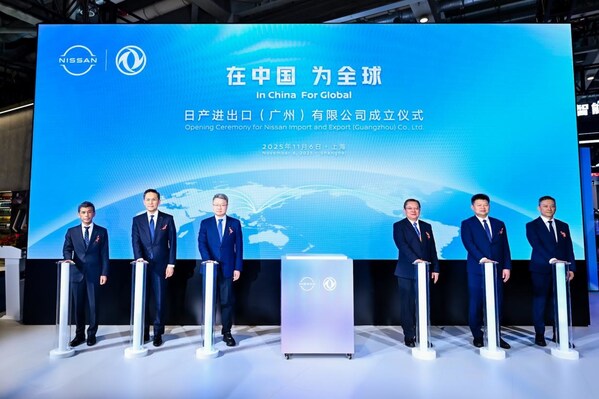
Core Insights - Nissan's participation in the China International Import Expo (CIIE) marks its seventh appearance, showcasing a diverse product matrix and the establishment of Nissan Import and Export (Guangzhou) Co., Ltd, the first joint venture for vehicle import and export by a foreign automaker in China, indicating a shift from localized production to global output [1][10][13] Product Strategy - Nissan's exhibition at CIIE serves as a "technology roadmap" for understanding the Chinese market, emphasizing a diversified and intelligent approach to meet the growing consumer demand for smart, electric, and personalized mobility [3][10] - The Tianlai Hongmeng cockpit, the world's first fuel vehicle equipped with Huawei's Hongmeng cockpit, represents a leap from "physical comfort" to "intelligent comfort," addressing the "oil-electric intelligence" issue in traditional fuel vehicles [3][5] - The N7, Nissan's first pure electric sedan developed under the Dongfeng Nissan's new energy technology framework, has quickly become a bestseller in the joint venture electric vehicle market, showcasing its appeal to Chinese family users [5][10] - The N6, Nissan's first plug-in hybrid sedan, features a large 21.1 kWh battery to alleviate range anxiety, reflecting the company's deep understanding of Chinese family user needs [5][9] - The Frontier Pro PHEV, Nissan's first global pickup designed, developed, and produced in China, showcases the company's commitment to electric innovation and local R&D capabilities [7][9] Strategic Developments - The establishment of Nissan Import and Export (Guangzhou) Co., Ltd, with an investment of 1 billion yuan, signifies a new milestone in Nissan's strategy to export "China-made" vehicles globally, enhancing its role as a foreign automaker in China [10][11] - Nissan's global executive committee member and president of Dongfeng Motor Co., Ltd, emphasized China's role as a major automotive market and innovation engine, reinforcing Nissan's commitment to deepening its presence in China while connecting with global consumers [10][12] Local Empowerment and Future Vision - Under the "Re:Nissan" global strategy, the Chinese team has gained unprecedented autonomy in product definition and market strategy, allowing Nissan to respond swiftly to market changes and consumer needs [12][13] - Nissan aims to integrate "Chinese wisdom" into global innovation, as highlighted by the collaboration with local tech giants like Huawei, driving the development of new energy vehicles and export growth [12][13]