Nissan Motor(NSANY)

Search documents
财经观察:关税损失近百亿美元,日车企齐喊“状况严峻”
Huan Qiu Shi Bao· 2025-11-12 22:58
Core Points - Japanese automakers are collectively facing significant profit warnings due to U.S. import tariffs, marking the first time since 2020 that all seven major companies reported profit declines, totaling nearly $10 billion in losses [1][2] - The impact of U.S. tariffs, yen depreciation, supply chain disruptions, and intensified competition are creating a complex environment for Japanese automotive companies, with many executives indicating that the current "severe situation" may become the "new normal" [1][2][3] Group 1: Financial Impact - The seven major Japanese automakers reported a combined profit decline of 27.2% year-on-year, with Nissan, Mazda, and Mitsubishi posting losses, while the remaining four companies also experienced varying degrees of profit declines [2] - Toyota's operating profit in Japan and the U.S. decreased by approximately $4.32 billion, with expected losses from U.S. tariffs reaching about $9.4 billion for the fiscal year, exceeding previous estimates [3] - Honda anticipates a profit reduction of around $2.5 billion for the entire fiscal year due to U.S. tariffs, with executives acknowledging that the profit decline has become a "normal" situation [3] Group 2: Tariff and Trade Agreements - The recent performance warnings from Japanese automakers come shortly after a U.S.-Japan trade agreement, where Japan agreed to invest $55 billion in exchange for a reduction of tariffs on exports to the U.S. [6] - Despite the agreement, the high tariff rates remained applicable for most of the April to September period, leading to an estimated total profit loss of over ¥2.5 trillion for the fiscal year [6] - Executives express concerns that even a reduced tariff rate of 15% will further erode already thin profit margins, with fears that tariffs may persist beyond the current administration [6][8] Group 3: Market Challenges - The Japanese automotive industry is facing multiple challenges, including an unexpected depreciation of the yen, which is currently around 154 yen to the dollar, exceeding initial forecasts [9] - Supply chain disruptions, particularly in semiconductor availability, have led to production halts in various factories, further complicating the operational landscape for Japanese automakers [10] - The competitive landscape is intensifying, especially in the Chinese market, where Japanese brands have seen their market share drop significantly, from 24.1% in 2020 to 11.6% recently [11]


“阵痛期”勤换帅 跨国公司“水逆”何时休?
Zhong Guo Qi Che Bao Wang· 2025-11-12 09:35
Core Insights - The global automotive industry is undergoing a significant leadership transition, with major companies like Nissan, Stellantis, and Porsche facing unprecedented challenges and financial losses due to the shift towards electrification and market pressures [2][3][10]. Group 1: Industry Challenges - Traditional automakers are struggling with the dual pressures of regulatory policies and market demands for electrification, leading to increased financial strain and reliance on internal combustion engine (ICE) vehicles for revenue [2][3]. - The shift towards electric vehicles (EVs) has not met expectations, resulting in substantial losses for companies like Porsche, which reported a third-quarter operating loss of €966 million [10][11]. - The competitive landscape is intensifying, particularly from Chinese automakers that leverage flexible supply chains and localized technology, further squeezing the market share of established foreign brands [2][3]. Group 2: Company-Specific Developments - Stellantis reported a net loss of €2.256 billion in the first half of the year, a stark contrast to a profit of €5.647 billion in the same period last year, primarily due to asset write-downs and tariffs [4][5]. - Nissan announced a net loss of ¥221.921 billion for the first half of the fiscal year, with a projected loss of ¥670.9 billion for the entire fiscal year, prompting the sale of its headquarters to alleviate financial pressure [13][14]. - Porsche's financial performance has deteriorated significantly, with a 67.1% drop in operating profit to €1.01 billion in the first half of the year, attributed to strategic adjustments and increased costs from tariffs and restructuring [11][12]. Group 3: Leadership Changes - The leadership changes at Stellantis, Nissan, and Porsche are seen as urgent measures to address ongoing crises, with new CEOs tasked with implementing significant reforms [3][4][10]. - Stellantis' new CEO, Carlos Tavares, faces the challenge of balancing regional interests amid a shift in focus towards the U.S. market, including a $13 billion investment plan [5][6]. - Nissan's new CEO, Ivan Espinosa, is implementing a drastic restructuring plan aimed at reducing global production capacity and cutting 20,000 jobs, reflecting the depth of the company's crisis [14][15]. Group 4: Market Dynamics - The imbalance in regional markets and fluctuating policies, particularly U.S. tariffs on imported vehicles, are exacerbating operational pressures for multinational automakers [3][5]. - Renault's new CEO, Luca de Meo, is expected to navigate the company through a challenging landscape, with plans for voluntary layoffs and strategic partnerships to enhance competitiveness [7][9]. - Jaguar Land Rover is grappling with the aftermath of a cyberattack that halted production, highlighting vulnerabilities in the digital transformation of traditional manufacturers [16][17].


Nissan Motor Co., Ltd. 2026 Q2 - Results - Earnings Call Presentation (OTCMKTS:NSANY) 2025-11-11
Seeking Alpha· 2025-11-11 23:51
Group 1 - The article does not provide any specific content or key points related to a company or industry [1]

财报显示美国加征关税严重冲击日本七大车商
Xin Hua Wang· 2025-11-11 13:14
Core Insights - Japanese automakers are experiencing collective performance declines due to U.S. tariffs on imported cars, with an estimated total loss of 1.5 trillion yen (approximately 9.74 billion USD) for the seven major manufacturers [1][2] Group 1: Financial Performance - Nissan reported a net loss of 221.9 billion yen, Mazda a net loss of 45.2 billion yen, and Mitsubishi a net loss of 9.2 billion yen for the first half of the fiscal year [1] - Honda faced a revenue loss of 164.3 billion yen and a 37% decline in net profit due to the tariffs [1] - Subaru, which derives 80% of its sales from the U.S. market, suffered a loss of 154.4 billion yen and a 45% drop in net profit [1] Group 2: Impact of Tariffs - The U.S. government imposed a 25% tariff on imported cars starting in April, significantly impacting Japanese automakers reliant on the U.S. market [1] - Toyota's operating profit declined by 18.6% despite a 5.8% increase in revenue, marking its first operating loss in North America since the 2008 financial crisis [2] - Toyota anticipates a 29.1% drop in operating profit and a 38.5% decline in net profit for the fiscal year, with tariffs expected to reduce operating profit by 1.45 trillion yen [2] Group 3: Future Outlook - Despite a reduction in U.S. tariffs on Japanese car imports to 15%, the situation remains challenging for Toyota and other manufacturers [2] - Analysts suggest that the performance decline among automakers may also hinder domestic investment in Japan, affecting the broader Japanese economy [2]

光大新鸿基:告重
光大新鸿基· 2025-11-11 12:19
Market Overview - US stock markets experienced a decline, with the Dow Jones down 1.21% to 46,987.10, the S&P 500 down 1.63% to 6,728.80, and the Nasdaq down 3.04% to 23,004.54[5][6] - The Hang Seng Index rose 1.29% to 26,241.83, while the National Enterprises Index increased by 1.08% to 9,267.56[5][3] Commodity and Currency Markets - New York crude oil fell 2.02% to $59.75 per barrel, while New York gold rose 0.33% to $4,009.80 per ounce[5][3] - The US Dollar Index decreased by 0.20% to 99.60, with the Euro rising 0.25% to 1.1566 and the Australian Dollar falling 0.79% to 0.6493[3][31] Economic Indicators - The University of Michigan's consumer confidence index dropped to 50.3, the lowest since June 2022, with inflation expectations slightly rising to 4.7%[8][24] - US companies announced 153,000 layoffs in October, a significant increase of over 1.8 times month-on-month, marking the largest October layoffs since 2003[8][24] Bond Market Insights - The US government shutdown continues, impacting market stability; the 2-year Treasury yield is at 3.591%, while the 10-year yield is at 4.116%[26] - Hong Kong plans to issue tokenized bonds, with previous issuances totaling HKD 6.8 billion since 2023, aiming to enhance its status as a financial hub[26] Investment Strategies - AI-themed funds are highlighted as a key strategy for capturing future trends, emphasizing the importance of technology innovation and ethical standards[21] - Investors are advised to remain cautious and await clearer market directions before making significant investment decisions[18]



美国参议院已获得足够票数通过临时拨款法案


21世纪经济报道· 2025-11-11 04:11
Group 1 - The U.S. Senate has passed the Continuing Appropriations and Extensions Act, marking the end of a 41-day government shutdown since October 1 [1] - U.S. stock market saw significant gains, with Nvidia rising nearly 6% and Xpeng Motors increasing over 16% [2] - The cryptocurrency market experienced a major sell-off, resulting in approximately 140,000 liquidations [2] Group 2 - Burger King China has been sold, with shareholders from Mixue Ice City and Pop Mart taking over [2] - Nissan is undergoing significant restructuring, including selling properties, closing factories, and laying off employees as part of a survival strategy [2]

卖楼关厂裁员,日产这波自救能成吗?
2 1 Shi Ji Jing Ji Bao Dao· 2025-11-10 15:07
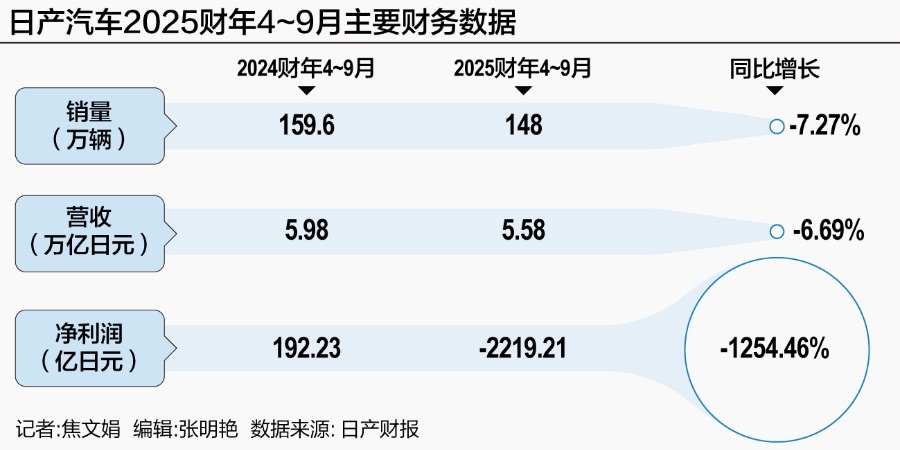
Core Viewpoint - Nissan is facing a significant crisis, with a sharp decline in global sales and a substantial net loss for the first half of the 2025 fiscal year, marking its first half-year loss in five years [1][2][4]. Sales Performance - In the first half of the 2025 fiscal year (April to September), Nissan's global sales fell by 7.27% year-on-year to 1.48 million units, with sales in China and Japan dropping by 17.6% and 16.5%, respectively [1][4]. - For the entire 2025 fiscal year, Nissan forecasts a 2.9% decline in global sales to 3.25 million units, with specific market predictions of a 7.4% drop in China to 645,000 units and a 3.4% drop in Japan to 445,000 units [2][4]. Financial Performance - Nissan's revenue for the first half of the 2025 fiscal year decreased by 6.69% to 5.58 trillion yen, resulting in an operating loss of 27.7 billion yen and a net loss of 221.92 billion yen, compared to a net profit of 19.22 billion yen in the same period last year [1][4]. - The company anticipates an operating loss of 275 billion yen for the entire fiscal year, although it believes it can achieve breakeven without tariff impacts [2][4]. Strategic Response - To address the financial challenges, Nissan is implementing a strategy of "asset monetization, capacity reduction, and personnel optimization," which includes selling its headquarters in Yokohama for 97 billion yen and initiating the "Re:Nissan" transformation plan [2][8]. - The "Re:Nissan" plan aims to reduce global production facilities from 17 to 10 by the 2027 fiscal year, with a target production capacity of 2.5 million units and a workforce reduction of 20,000 employees, approximately 15% of its total workforce [7][8]. Market Challenges - Nissan is experiencing supply chain issues, particularly due to export controls affecting semiconductor supplies, which have led to production cuts at its facilities [10]. - The company is also facing technological and strategic challenges, having fallen behind competitors like Tesla and BYD in the electric vehicle market due to insufficient investment and slow model updates [11][12]. Focus on China - Nissan is shifting its focus to the Chinese market, viewing it as critical for its recovery, and is decentralizing decision-making to local teams [13][14]. - The company plans to launch several new models developed by its Chinese teams, aiming to regain market share in a competitive environment where its market presence has been declining [15][18].
日产卖楼关厂裁员,断臂求生
2 1 Shi Ji Jing Ji Bao Dao· 2025-11-10 14:17
Core Viewpoint - Nissan is facing a significant crisis, with a sharp decline in global sales and a substantial net loss for the first half of the 2025 fiscal year, marking its first half-year loss in five years [1][5][9]. Sales Performance - In the first half of the 2025 fiscal year (April to September), Nissan's global sales fell by 7.27% to 1.48 million units, with significant declines in key markets: China down 17.6% to 279,000 units and Japan down 16.5% to 186,000 units [1][9]. - For the entire 2025 fiscal year, Nissan forecasts a 2.9% decline in global sales to 3.25 million units, with expected drops of 7.4% in China and 3.4% in Japan [4]. Financial Performance - Nissan's revenue decreased by 6.69% to 5.58 trillion yen, with a net loss of 221.92 billion yen, a stark contrast to a net profit of 19.22 billion yen in the same period last year [1][9]. - The company anticipates an operating loss of 275 billion yen for the entire fiscal year, although it believes it could break even without tariff impacts [5][9]. Strategic Response - To address the financial crisis, Nissan is implementing a strategy of asset monetization, capacity reduction, and personnel optimization, including the sale of its Yokohama headquarters for 97 billion yen [5][12]. - The "Re:Nissan" transformation plan aims to streamline operations, reduce global production sites from 17 to 10 by the 2027 fiscal year, and cut 20,000 jobs, approximately 15% of its workforce [11][12]. Market Challenges - Nissan is grappling with external challenges such as tariffs and supply chain disruptions, which are complicating its recovery efforts [6][14]. - The company is also facing technological and strategic setbacks, particularly in the electric vehicle sector, where it has fallen behind competitors like Tesla and BYD [15][20]. Focus on China - Nissan is shifting its focus to the Chinese market, viewing it as critical for its recovery, and is decentralizing decision-making to empower local teams [16][18]. - The company plans to launch several new models developed by its Chinese team, indicating a strategic pivot towards local market needs [17][18].
日产卖楼关厂裁员,断臂求生
21世纪经济报道· 2025-11-10 14:07
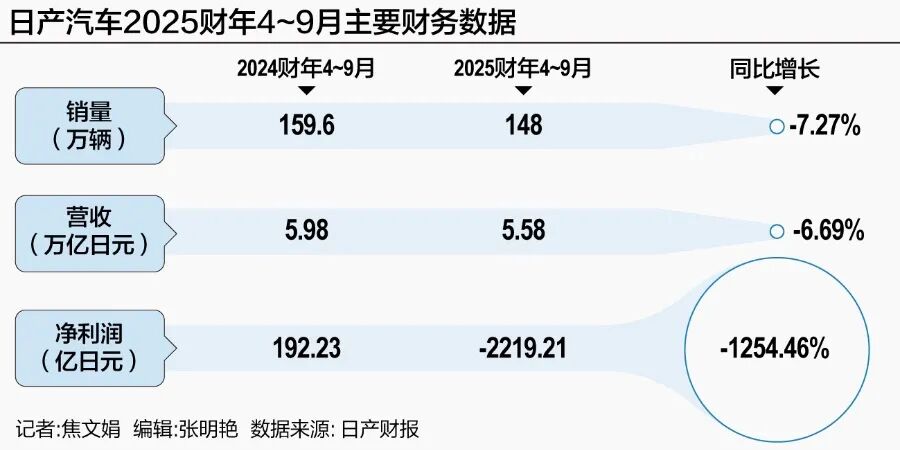
Core Viewpoint - Nissan is facing a significant crisis, with a sharp decline in sales and a substantial net loss for the first half of the 2025 fiscal year, marking the first half-year loss in five years [1][4][6]. Sales Performance - In the first half of the 2025 fiscal year (April to September), Nissan's global sales dropped by 7.27% to 1.48 million units, with sales in China and Japan declining by 17.6% and 16.5%, respectively [1][6]. - For the entire 2025 fiscal year, Nissan forecasts a 2.9% decrease in global sales to 3.25 million units, with expected declines in key markets: China (-7.4% to 645,000 units), Japan (-3.4% to 445,000 units), and North America (-0.2% to 1.3 million units) [4][6]. Financial Performance - Nissan's revenue for the first half of the 2025 fiscal year fell by 6.69% to 5.58 trillion yen, resulting in an operating loss of 27.7 billion yen and a net loss of 221.92 billion yen, compared to a net profit of 19.22 billion yen in the same period last year [1][6][9]. - The company anticipates an operating loss of 275 billion yen for the entire fiscal year, although it believes it can achieve breakeven without tariff impacts [4][6]. Strategic Response - To address the financial challenges, Nissan is implementing a strategy of "asset monetization, capacity reduction, and personnel optimization," which includes selling its headquarters in Yokohama for 97 billion yen and initiating the "Re:Nissan" transformation plan [4][10]. - The "Re:Nissan" plan aims to reduce global production facilities from 17 to 10 by the 2027 fiscal year, with a target production capacity of 2.5 million units and a workforce reduction of 20,000 employees, approximately 15% of its total workforce [9][10]. Market Position and Challenges - Nissan's supply chain risks are exacerbated by semiconductor shortages, leading to production cuts at its facilities [12]. - The company is struggling with technological and strategic lag, particularly in the electric vehicle sector, where it has fallen behind competitors like Tesla and BYD [13]. - Nissan is shifting its focus to the Chinese market, emphasizing local development and decision-making to regain market share, as its presence in China has been declining [14]. Competitive Landscape - In contrast to Nissan's struggles, Toyota's global sales increased by 5% to 4.783 million units in the same period, and Honda maintained profitability despite a sales decline [15].

丰田净利润9000多亿日元,同比增长62%,日产净亏损2000多亿
Feng Huang Wang Cai Jing· 2025-11-10 09:46
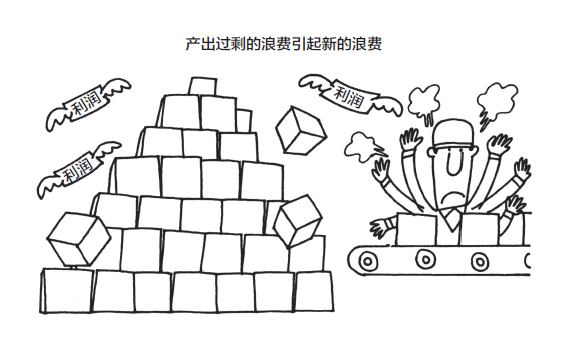
Group 1: Nissan's Financial Performance - Nissan reported a net loss of 221.92 billion yen (approximately 10.3 billion RMB) for the first half of the fiscal year 2025 (April to September) [1] - The company plans to sell its global headquarters building in Yokohama for 97 billion yen (approximately 4.5 billion RMB) as part of its restructuring efforts [1] - Nissan has announced layoffs of over 10,000 employees globally, aiming for a total workforce reduction of about 15%, which translates to around 20,000 employees [1] Group 2: Toyota's Financial Performance - Toyota reported a net profit of 932.08 billion yen for the second quarter, marking a 62% year-on-year increase [1] - The company's net sales for the second quarter reached 12.38 trillion yen, reflecting an 8.2% year-on-year growth [1] Group 3: Comparative Analysis - Despite both companies facing high tariff policies, Nissan is experiencing losses while Toyota is seeing growth, suggesting differences in operational efficiency [1] - The principles outlined in Taiichi Ohno's "Toyota Production System" may provide insights into how reducing waste can lead to increased profits [1]