
Nissan Motor(NSANY)

Search documents
摩根大通:汽车零部件 - 轮胎行业
摩根· 2025-05-29 14:12
Investment Rating - The report provides various investment ratings for Japanese automotive companies, including "Overweight" for Toyota Motor, Suzuki Motor, Yamaha Motor, Isuzu Motors, Denso, Aisin, and Nifco, while "Underweight" is assigned to Nissan Motor and SUBARU [5]. Core Insights - The global auto industry is expected to normalize after overcoming COVID-19 and supply chain issues, with a projected growth rate of approximately 2% CAGR from 2024 [20]. - The report highlights the complexity of the Toyota Group structure, indicating increasing cross-shareholdings among its subsidiaries [7]. - Tariff impacts are noted to be minor in the tire sector, but the competitive environment remains challenging [4]. Coverage Universe & Valuation - Nissan Motor: Underweight, Price: ¥355, Target Price: ¥320, Market Cap: ¥1,318.5 billion, FY24E P/E: NM, ROE: -1.2% [5] - Toyota Motor: Overweight, Price: ¥2,624, Target Price: ¥3,600, Market Cap: ¥41,438.1 billion, FY24E P/E: 6.9, ROE: 13.4% [5] - Mitsubishi Motors: Neutral, Price: ¥432, Target Price: ¥360, Market Cap: ¥631.1 billion, FY24E P/E: 15.4, ROE: 3.7% [5] - Mazda Motor: Neutral, Price: ¥894, Target Price: ¥1,000, Market Cap: ¥564.8 billion, FY24E P/E: 4.5, ROE: 7.3% [5] - Honda Motor: Neutral, Price: ¥1,421, Target Price: ¥1,500, Market Cap: ¥7,500.2 billion, FY24E P/E: 6.4, ROE: 7.5% [5] - Suzuki Motor: Overweight, Price: ¥1,787, Target Price: ¥2,300, Market Cap: ¥3,509.7 billion, FY24E P/E: 8.6, ROE: 14.5% [5] - SUBARU: Underweight, Price: ¥2,625, Target Price: ¥2,500, Market Cap: ¥1,923.9 billion, FY24E P/E: 5.5, ROE: 12.9% [5] - Yamaha Motor: Overweight, Price: ¥1,075, Target Price: ¥1,500, Market Cap: ¥1,103.3 billion, FY24E P/E: 9.7, ROE: 13.3% [5] - Isuzu Motors: Overweight, Price: ¥1,924, Target Price: ¥2,600, Market Cap: ¥1,372.5 billion, FY24E P/E: 9.8, ROE: 9.5% [5] - Denso: Overweight, Price: ¥1,897, Target Price: ¥2,300, Market Cap: ¥5,522.1 billion, FY24E P/E: 13.0, ROE: 8.0% [5] - Aisin: Overweight, Price: ¥1,781, Target Price: ¥2,200, Market Cap: ¥1,440.9 billion, FY24E P/E: 13.4, ROE: 5.2% [5] - Bridgestone: Overweight, Price: ¥6,106, Target Price: ¥6,500, Market Cap: ¥4,357.8 billion, FY24E P/E: 14.7, ROE: 8.0% [5] Earnings Forecast Summary - Toyota's revenue for FY24 is projected at ¥45,095.3 billion, with a YoY growth of 21.4% and a net profit of ¥4,944.9 billion [17]. - Honda's revenue for FY24 is projected at ¥20,428.8 billion, with a YoY growth of 20.8% and a net profit of ¥1,107.2 billion [17]. - Nissan's revenue for FY24 is projected at ¥12,685.7 billion, with a YoY growth of 19.7% and a net profit of ¥426.6 billion [17]. - Suzuki's revenue for FY24 is projected at ¥5,374.3 billion, with a YoY growth of 15.8% and a net profit of ¥267.7 billion [17]. - SUBARU's revenue for FY24 is projected at ¥4,702.9 billion, with a YoY growth of 24.6% and a net profit of ¥385.1 billion [17].




美国国家公路交通安全管理局:日产北美公司正在召回171,381美国车辆,因后视摄像头图像变形可能会降低驾驶员对车辆后方的视野,从而增加发生碰撞的风险。
news flash· 2025-05-29 09:08
Group 1 - The National Highway Traffic Safety Administration (NHTSA) has announced that Nissan North America is recalling 171,381 vehicles in the U.S. due to a potential issue with the rearview camera image distortion [1] - The distortion may reduce the driver's visibility of the area behind the vehicle, thereby increasing the risk of collisions [1]
四处筹钱,日产向英国政府求援
Sou Hu Cai Jing· 2025-05-29 03:53
Group 1 - Nissan is considering raising over 1 trillion yen (approximately 49.38 billion RMB) through loans and asset sales, including a syndicated loan guaranteed by the UK government [1] - The company plans to issue convertible securities and bonds worth up to 630 billion yen (approximately 31.1 billion RMB), including high-yield dollar and euro notes [1] - Nissan is also exploring a 1 billion pound (approximately 9.68 billion RMB) syndicated loan guaranteed by the UK Export Finance, although the board has not yet approved the financing proposal [1] Group 2 - Nissan is contemplating selling portions of its stakes in alliance partner Renault and battery manufacturer Envision, as well as closing two assembly plants in Japan and overseas factories in Mexico and South Africa as part of its cost-cutting plan [3] - The company has begun offering buyout packages to U.S. workers and has suspended performance-based salary increases globally [3] - Under the new CEO Ivan Espinosa, who took office in April, Nissan announced a comprehensive cost-cutting plan, including a 15% workforce reduction and a decrease in the number of global automotive plants from 17 to 10 [3]

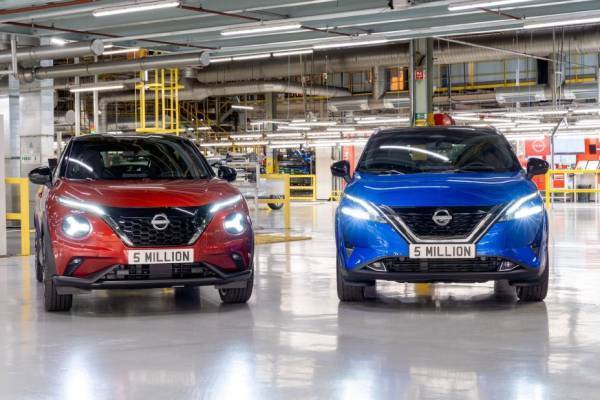
Nissan Resorts to e-Power Technology to Reshape Vehicle Lineup
ZACKS· 2025-05-28 13:55
Core Viewpoint - Nissan Motor Co., Ltd. is leveraging its new e-Power technology to facilitate a turnaround after reporting significant financial losses, focusing on the North American market for recovery [1][2]. Group 1: e-Power Technology - e-Power is a hybrid system that utilizes both an electric motor and a gasoline engine, providing a smooth driving experience without the need for charging [1][2]. - Unlike traditional electric vehicles, e-Power generates its own charge through gasoline, making it more convenient for drivers [2]. Group 2: Financial Performance and Strategy - Nissan reported a $4.5 billion loss for the fiscal year ending in March, highlighting the urgent need for a successful model [2]. - The company is implementing a major restructuring plan, which includes cutting about 15% of its global workforce (approximately 20,000 jobs) and reducing manufacturing plants from 17 to 10 [3]. Group 3: Market Position and Competitors - e-Power is currently available on models like Qashqai and X-Trail in Europe and Note in Japan, with plans to launch in the U.S. in the new Rogue [4]. - The only other automaker offering a similar hybrid system is Suzuki, indicating a competitive landscape for e-Power technology [4]. Group 4: Future Developments - Nissan is also working on advanced electric vehicles and solid-state battery technology, which may replace current lithium-ion batteries [5]. - Previous merger talks with Honda were dropped, indicating a shift in strategic focus [5].
内部邮件显示,日产汽车已开始向美国员工提供买断协议,包括位于坎顿工厂的生产线工人。日产已暂停全球范围内的绩效加薪。
news flash· 2025-05-28 08:53
内部邮件显示,日产汽车已开始向美国员工提供买断协议,包括位于坎顿工厂的生产线工人。日产已暂 停全球范围内的绩效加薪。 ...
日产汽车公司正寻求通过发债和资产出售筹集超过1万亿日元,以保持正常运营。
news flash· 2025-05-28 03:10
日产汽车公司正寻求通过发债和资产出售筹集超过1万亿日元,以保持正常运营。 ...
日产考虑出售总部大楼!日本7大车企集体渡劫
Zhong Guo Qi Che Bao Wang· 2025-05-28 01:39
Group 1 - Nissan is considering selling its global headquarters building in Yokohama, Japan, estimated to be worth over 100 billion yen (approximately 5.03 billion RMB), to cover high costs associated with structural reforms such as factory closures [1] - The seven major Japanese automakers, including Toyota, Honda, and Nissan, have reported a collective profit decline of over 20% for the 2024 fiscal year, with Nissan posting a net loss of 670.8 billion yen (approximately 33.7 billion RMB) [2] - Toyota's net profit for the 2024 fiscal year is expected to drop by 35% to 3.1 trillion yen, marking its largest decline in nearly a decade, largely due to new tariffs imposed by the U.S. [6][7] Group 2 - Honda plans to reduce its investment in electrification and software from 10 trillion yen to 7 trillion yen due to a slowdown in the electric vehicle market and trade uncertainties [5] - The U.S. tariffs on imported vehicles and parts have significantly impacted Japanese automakers, with Nissan estimating a loss of 450 billion yen due to these tariffs [7] - Japanese automakers are facing challenges in transitioning to electric and smart vehicles, with high R&D costs and uncertain market demand, leading to adjustments in their product strategies [10] Group 3 - In the Chinese market, Japanese automakers have experienced declining sales, with Toyota's sales down 6.9%, Honda's down 30.9%, and Nissan's at their lowest since 2008, down 12.2% [12][13] - Increased promotional expenses in the North American market are squeezing profits for Japanese automakers, as competition intensifies [13]

日产考虑出售总部大楼!
鑫椤锂电· 2025-05-27 08:23
-广告- 关注公众号,点击公众号主页右上角" ··· ",设置星标 "⭐" ,关注 鑫椤锂电 资讯~ 本文来源: 青岛汽车 5月23日, 据多家媒体 报 道,为缓 解全球重组带来的财务压力,日 本汽车制造商日产汽车正考虑在重 组中出售位于横滨的总部大楼。 据了解,日产汽车总部大楼位于横滨站附近,2009年日产汽车将全球总部从东京迁至此地。媒体报道称, 日产汽车这一举措是其经营重建的一部分,目的是通过出售资产筹集资金,用于支付因工厂削减而产生的 重组成本。据估算,该总部大楼价值超1000亿日元(约50.11亿元人民币)。出售该 总部大楼之后,日 产汽车将采用"售后回租"方式,即卖出大楼后再与买家签署租赁合同,这也意味着日产汽车可以继续在原 址办公,只是变成了 租赁方式而已。 截至发稿前,日产汽车官方暂未对上述消息作出回应。 在行业人士看来,日产汽车被曝考虑出售横滨总部大楼的背后,或与其正面临的严峻财务和经营压力有 关。5月13日,日产汽车发布的2024财年业绩报告显示,2024财年,日产汽车合并净销售额为12.6万亿 日元,同比下滑0.4%;营业利润为698亿日元,同比下滑87.7%;净亏损为6709亿日元,由 ...

启动大规模重组计划 日产汽车“自救”
Zhong Guo Jing Ying Bao· 2025-05-27 02:20
中经记者尹丽梅张硕北京报道 根据日产汽车近期披露的2024财年(2024年4月至2025年3月)财报,公司营业利润同比下滑87.7%至 698亿日元(约合人民币34.77亿元),净利润由盈转亏,从上一财年的盈利4266亿日元(约合人民币 214.38亿元)转为亏损6709亿日元(约合人民币334.23亿元)。 在惨淡的业绩以及转型压力下,日产汽车决定"断腕求生"。伊万·埃斯皮诺萨在财报发布会上对外披露 了一项名为"Re:Nissan"的大规模业务重组计划,改革力度堪比1999年由前日产汽车CEO卡络斯·戈恩主 导的"日产复兴计划"。据悉,日产汽车将削减2500亿日元(约合人民币124.31亿元)的变动成本和2500 亿日元的固定成本。其目标是到2026财年实现汽车业务的正营业利润和自由现金流。在新的重组框架 下,日产汽车计划到2027财年前裁员2万人,占员工总数的15%,并将在全球范围内关闭7家工厂。 "现在的情况很明显,我们的成本结构非常高。更复杂的是,全球市场环境动荡且难以预测,使得规划 和投资越来越具有挑战性。"伊万·埃斯皮诺萨表示,日产汽车的最新重组计划是不得已而为之,"如果 我们现在不采取行动,问题 ...