Nestle(NSRGY)

Search documents
传高盛准备以171.3亿美元估值收购冰淇淋制造商Froneri!包含哈根达斯和其他雀巢品牌的控制权
Ge Long Hui· 2025-08-01 05:24
消息称高盛准备以 150 亿欧元(171.3 亿美元) 的估值(包括债务)收购冰淇淋生产商 Froneri。该报道 援引消息人士的话说,这笔交易最快可能在 9 月份签署,高盛的资产管理部门将成为法国私募股权公司 PAI Partners 成立的一家延续公司的主要投资者。Froneri是总部位于瑞士的雀巢与PAI旗下的R&R冰淇淋 公司于2016年成立的合资企业, 两家公司合并,在20个国家开展欧洲冰淇淋业务。雀巢还在 2019 年以 40 亿美元的价格将其美国冰淇淋业务出售给了 Froneri,从而获得了哈根达斯和其他雀巢品牌的控制 权。 (责任编辑:宋政 HN002) 【免责声明】本文仅代表作者本人观点,与和讯网无关。和讯网站对文中陈述、观点判断保持中立,不对所包含内容 的准确性、可靠性或完整性提供任何明示或暗示的保证。请读者仅作参考,并请自行承担全部责任。邮箱: news_center@staff.hexun.com ...



研判2025!中国速溶咖啡产业链、发展背景、发展现状、竞争格局及发展趋势分析:雀巢、麦斯威尔等外资品牌处于领先地位[图]
Chan Ye Xin Xi Wang· 2025-08-01 01:31
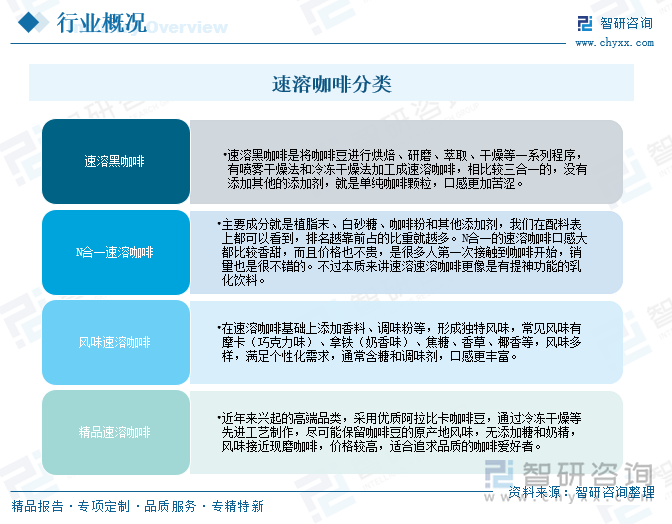
Overview - The instant coffee market in China is projected to reach a market size of 83.18 billion yuan in 2024, with a year-on-year growth of 5.85% [1][10] - Despite rapid growth, per capita consumption remains significantly lower than the global average, indicating substantial future growth potential [1][10] Market Policy - Instant coffee falls under the "Manufacturing Industry" category, specifically "Food Manufacturing," and is subject to strict regulations regarding raw material procurement, production, and quality testing to ensure food safety [3] - Recent policies have been implemented to enhance food safety and streamline food processing, which will positively impact the instant coffee industry [5] Industry Chain - The upstream of the instant coffee industry includes suppliers of coffee beans, sugar, and packaging materials, while the midstream involves the production and processing of instant coffee [6][8] - Coffee bean production in China is concentrated in regions like Yunnan and Hainan, with a projected coffee production of 151,800 tons in 2024, a year-on-year increase of 0.82% [8] Competitive Landscape - Major players in the instant coffee market include Nestlé and Maxwell, with domestic companies like Jiahe Foods and Hainan Lishen Investment Group also gaining traction [12][14] - Jiahe Foods reported a total revenue of 2.311 billion yuan in 2024, with coffee business revenue accounting for 12.04% [14] - Hainan Lishen has established itself as a modern food production enterprise with a complete coffee industry chain [16] Development Trends - Future trends indicate a shift towards flavor innovation and healthier options, with consumers increasingly favoring low-sugar, low-fat, and organic instant coffee products [18]

年收入近80亿的雀巢咖啡中国,将迎来一位全新“女掌门”
3 6 Ke· 2025-07-31 02:26
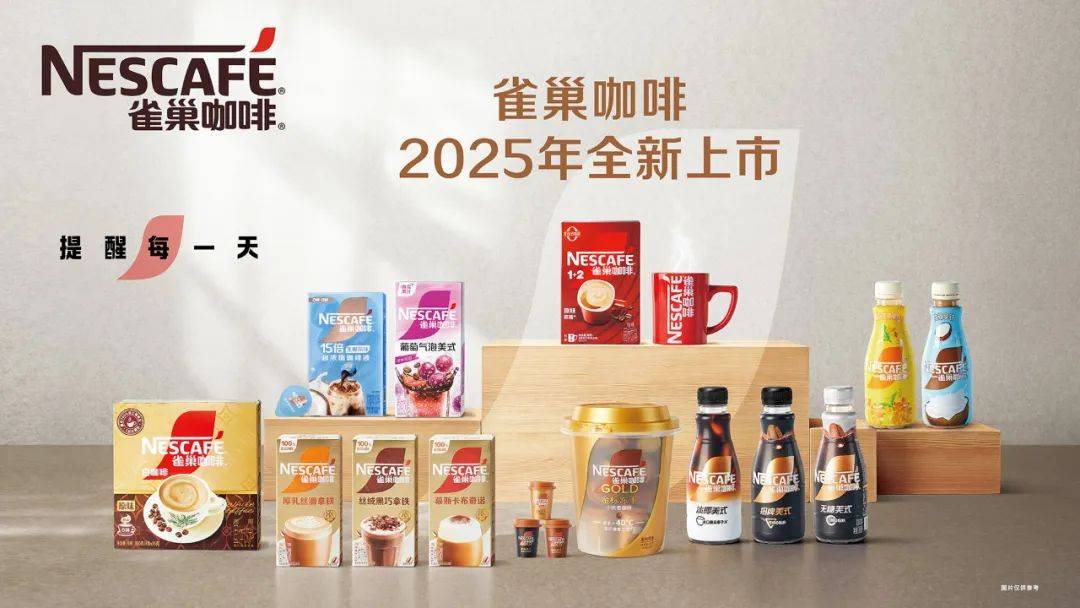
Core Insights - Nestlé's coffee business in China, generating nearly 8 billion RMB in annual revenue, is set to have a new leader, Pamela Takai, starting from Q3 [1][12] - The coffee segment is crucial for Nestlé, serving as a strategic vehicle for brand management, product innovation, and consumer loyalty [1][12] Leadership Transition - Pamela Takai, currently leading Nestlé's dairy health and nutrition solutions in the Philippines, will take over the coffee business in China, reporting directly to Kais Marzouki, Chairman and CEO of Nestlé Greater China [1][3] - Takai has over 20 years of experience in fast-moving consumer goods, having previously worked at Unilever and Mondelēz, focusing on brand management and marketing [3][5] - The previous head of the coffee business, Jiang Haiying, is leaving to pursue new opportunities after a year in the role [7][8] Performance and Strategy - Takai is recognized for her strong track record in driving performance growth and business transformation, having successfully revitalized the dairy business in the Philippines [5][10] - Under Jiang's leadership, the coffee business focused on local innovation and product upgrades, launching new ready-to-drink coffee products inspired by local market trends [10][12] - The coffee segment is seen as a fundamental part of Nestlé's business, with a significant contribution to overall revenue, growing at approximately 8% annually over the past three years, generating around 240 billion Swiss Francs (approximately 197.4 billion RMB) [12][13] Market Dynamics - The coffee market is experiencing a shift towards high-end products and diverse consumption scenarios, with younger consumers seeking innovative ways to enjoy coffee at home [16][18] - Nestlé aims to cater to these evolving consumer preferences by developing solutions that allow coffee consumption throughout the day, not just in the morning [16][18] - The competitive landscape in China has intensified, with Nestlé's coffee business revenue showing little change compared to previous years, reflecting challenges in growth [14][16]
马凯思“重整”雀巢中国:咖啡业务换帅了
2 1 Shi Ji Jing Ji Bao Dao· 2025-07-31 02:07
Core Insights - Nestlé is undergoing significant adjustments in its China operations, particularly in the coffee business, with a leadership change aimed at revitalizing performance [1][2][5][6]. Group 1: Leadership Changes - Kais Marzouki has initiated a leadership transition in Nestlé China, appointing Pamela Takai as the new head of the coffee business, effective September 1, 2025 [1][2]. - Takai's appointment reflects her close relationship with Marzouki, who previously served as the CEO of Nestlé Philippines, where he achieved notable success [2][5]. Group 2: Financial Performance - In the first half of 2025, Nestlé's overall sales decreased by 1.8% to CHF 44.2 billion (approximately RMB 391.75 billion), with the candy and coffee segments being key stabilizers [2]. - The Greater China region's sales fell to CHF 2.47 billion (approximately RMB 20.77 billion) in the first half of 2025, down from CHF 2.639 billion (approximately RMB 21.41 billion) in the same period last year [3]. Group 3: Coffee Business Insights - The coffee segment is critical for Nestlé, accounting for approximately 4% of its coffee business, with estimated revenues for 2023 around CHF 960 million (approximately RMB 7.9 billion), showing little change since 2021 [4]. - The leadership change in the coffee division is part of a broader strategy to address the declining performance in the Greater China market [5][6]. Group 4: Strategic Adjustments - Nestlé's adjustments in Greater China are described as systematic, focusing on rebalancing its approach to better meet consumer demands and investing in consumer demographics [6][7]. - The CEO emphasized the need for a new leadership team to support the next phase of development in China, moving away from a previous focus on distribution and commercial drivers [6].
马凯思“重整”雀巢中国:咖啡业务换帅了丨消费参考
2 1 Shi Ji Jing Ji Bao Dao· 2025-07-31 02:07
Group 1 - The core adjustment of Nestlé China is underway, with the appointment of Pamela Takai as the new head of coffee business, effective September 1, 2025 [1][2] - This change follows Kais Marzouki's assumption of the CEO role for Nestlé Greater China on July 1, 2025, indicating a strategic shift in leadership [2][4] - The coffee business is a key revenue driver for Nestlé, accounting for a significant portion of its sales, despite a 1.8% decline in overall sales in the first half of 2025 [2][3] Group 2 - Nestlé's sales in Greater China fell to 2.47 billion Swiss francs (approximately 20.76 billion RMB) in the first half of 2025, down from 2.639 billion Swiss francs (approximately 21.41 billion RMB) in the same period last year [2] - The coffee segment represents about 4% of Nestlé's coffee business, with estimated revenues of approximately 960 million Swiss francs (around 7.9 billion RMB) for 2023, showing little change since 2021 [3] - The adjustments in Greater China are part of a systematic approach to enhance focus and investment in consumer demand and demographics, as stated by CEO Laurent Freixe [5][6]
一个城市圈欠下千万费用,经销商北上“讨债”,雀巢咖啡过去几年给自己挖了多少坑?
3 6 Ke· 2025-07-30 04:42
Core Viewpoint - Nestlé China is facing significant challenges with its distributors due to long-standing issues of unpaid market fees and a lack of trust, leading to a potential crisis in its distribution network [1][3][30]. Group 1: Unpaid Fees and Distributor Relations - Distributors have been struggling to recover long-overdue market fees from Nestlé China, with the company only willing to pay a maximum of 50% of the accumulated debts [1][3]. - This situation is not new; similar issues occurred in 2017 when the company settled debts with distributors at a 50% rate, indicating a recurring problem [3][31]. - Distributors are increasingly frustrated, feeling that their patience and trust in the company have been exhausted due to years of unmet promises and communication breakdowns [3][4][30]. Group 2: Financial Strain on Distributors - Distributors have reported significant financial losses, with some estimating that they are owed between 500,000 to 1 million yuan in unpaid fees [8][9][12]. - The practice of requiring distributors to cover promotional costs upfront, with the promise of reimbursement later, has led to substantial financial strain, with some distributors losing tens of thousands of yuan monthly [6][10][12]. - The cumulative unpaid fees across multiple distributors in the region have exceeded 10 million yuan, highlighting the widespread nature of the issue [9][12]. Group 3: Pricing and Market Dynamics - The pricing strategy employed by Nestlé has led to a situation where distributors are forced to sell products at a loss, with some reporting losses of over 10 yuan per box due to rising costs and falling retail prices [15][20]. - The company's internal channel management has been criticized for allowing low-priced products to flood the market, undermining the efforts of legitimate distributors [19][20][22]. - Distributors have expressed concerns that the company's pricing policies and lack of effective control over pricing discrepancies have created a chaotic market environment [18][22][28]. Group 4: Company Response and Future Outlook - In response to the ongoing issues, Nestlé China has announced a series of remedial measures, including a unified pricing strategy and a commitment to address historical debts [30][31]. - However, there are concerns that the proposed solutions may not adequately compensate distributors for their losses, with expectations of partial payments similar to past practices [31][34]. - The company is undergoing internal changes, including leadership shifts and a reevaluation of its channel policies, but the effectiveness of these changes remains to be seen [33][34].

雀巢2025年上半年有机增长2.9%,CEO称加速品类增长、提高市场份额
Sou Hu Cai Jing· 2025-07-29 02:06
Core Insights - Nestlé's CEO, Mark Schneider, emphasizes the company's strategic execution to accelerate performance and transformation for the future, focusing on efficiency and increased investment to drive category growth and market share [2][4] - The company's organic growth in the first half of 2025 is attributed to pricing strategies, innovation projects, channel diversification, and mergers and acquisitions, despite challenges in the Greater China region [2][3] Financial Performance - Nestlé reported sales of approximately 44.228 billion Swiss francs in the first half of 2025, reflecting a year-on-year decrease of about 1.8% due to currency effects, but an organic growth rate of around 2.9% indicates strong core business momentum [2][3] - The net profit for the first half of 2025 reached approximately 5.065 billion Swiss francs, a decrease of 10.3% year-on-year, yet still demonstrating good profitability given significant investments in business expansion, R&D, and marketing [3] Marketing and Innovation - Marketing investments increased, with advertising and marketing expenses accounting for 8.6% of sales, aimed at brand promotion, new product launches, and market activities, effectively enhancing brand awareness and product reputation [3] - Six major innovation projects generated over 200 million Swiss francs in sales during the first half of 2025, meeting consumer demand for new products and experiences [3][4] Regional Performance - The organic growth rate in the Greater China region was -4.2%, with actions taken to improve performance expected to yield results in the coming year [4] - Nestlé maintains a strong business foundation and localized teams in Greater China, with long-term potential still considered significant [4] Channel Performance - Nestlé's diverse channel strategy showed strong organic growth across all three major channels: retail (2.6%), out-of-home (5.8%), and e-commerce (12.3%) [11] - The company continued its acquisition strategy, including the full acquisition of the candy company Xu Fu Ji and increased stakes in Orgain, a leader in plant-based nutrition [11][12]
Are Consumer Staples Stocks Lagging National Vision (EYE) This Year?
ZACKS· 2025-07-25 14:42
Company Performance - National Vision (EYE) has shown a year-to-date return of approximately 143.2%, significantly outperforming the average return of 5.3% for Consumer Staples companies [4] - The Zacks Consensus Estimate for EYE's full-year earnings has increased by 8.2% over the past quarter, indicating improved analyst sentiment and a more positive earnings outlook [4] - In comparison, Nestle SA (NSRGY) has a year-to-date return of 14.3% and a consensus EPS estimate increase of 2.9% over the past three months, also holding a Zacks Rank of 2 (Buy) [5] Industry Context - National Vision is part of the Consumer Products - Staples industry, which includes 35 individual stocks and currently ranks 91 in the Zacks Industry Rank [6] - The average performance of stocks in the Consumer Products - Staples industry has been a loss of 2.7% this year, highlighting National Vision's superior performance within this group [6] - The Consumer Staples sector, which includes 178 individual stocks, is currently ranked 11 in the Zacks Sector Rank [2]


雀巢集团发布上半年财报:有机增长率达2.9%
Zhong Guo Jing Ji Wang· 2025-07-25 05:05
Core Insights - Nestlé Group reported a stable profit performance while increasing investments in the first half of 2025, despite facing challenges from high sales costs, increased growth investments, and unfavorable exchange rates [1][2] - The company's sales decreased by 1.8% to CHF 44.2 billion, with a net profit of CHF 5.1 billion and basic earnings per share down by 9.0% to CHF 1.97 [1] - The organic growth rate for the first half of the year was 2.9%, driven primarily by pricing in the candy and coffee segments, which saw increases of 10.6% and 6.0% respectively [1] Financial Performance - The underlying trading operating profit margin was 16.5% [1] - Free cash flow amounted to CHF 2.3 billion [1] - Organic growth rates varied by region, with developed markets at 1.8% and emerging markets at 4.5% [1] Segment Analysis - Retail channel organic growth was 2.6%, while the out-of-home channel grew by 5.8% [1] - E-commerce sales saw a significant organic growth rate of 12.3%, accounting for 20.2% of total sales [1] Strategic Initiatives - The company is focusing on accelerating category growth in areas such as ready-to-drink coffee and pet health products, which are growing at four times the rate of the overall company growth [1] - Six major global innovation projects were launched, generating over CHF 200 million in sales during the first half of the year [1][2] Management and Future Outlook - CEO Laurent Freixe emphasized the company's commitment to enhancing performance and market share through strategic execution and increased investments [2] - Nestlé has taken substantial measures in the Greater China region to improve performance, including management adjustments [2] - The current focus is on strengthening value propositions to drive consumer demand for sustainable growth [2]
雀巢上半年营收442亿瑞郎:大中华区降6.4%,今年4月换帅调整业务模式,称“最多一年内恢复可持续增长”
Sou Hu Cai Jing· 2025-07-25 04:50
Core Viewpoint - Nestlé reported a decline in revenue and net profit for the first half of 2025, attributing the downturn to a shift in business strategy and external economic factors [2][3]. Financial Performance - Global revenue for the first half of 2025 was 44.228 billion Swiss francs, a decrease of 1.8% year-on-year [3]. - Net profit was approximately 5.065 billion Swiss francs, down 10.3% compared to the previous year [2][3]. - The organic growth rate was 2.9%, with a pricing contribution of 2.7% and a real internal growth rate of 0.2% [3][4]. Regional Performance - In the Greater China region, sales amounted to 2.470 billion Swiss francs, reflecting a decline of 6.4% year-on-year [7]. - The organic growth rate in Greater China was -4.2%, with a real internal growth rate of -1.5% and a pricing contribution of -2.7% [7]. Business Segments - The powdered and liquid beverages segment generated revenue of 12.308 billion Swiss francs, maintaining its position as the largest business segment [4]. - The pet care segment achieved revenue of 9.229 billion Swiss francs, with an organic growth rate of 1.3% [5]. - The confectionery segment showed strong performance with an organic growth rate of 8.5%, driven by a 10.6% increase in pricing [5]. Strategic Initiatives - Nestlé is focusing on enhancing its value proposition to stimulate consumer demand, with expectations of returning to sustainable growth within a year [9]. - The company is investing in high-growth areas such as ready-to-drink coffee and pet health products, with six major global innovation projects generating over 200 million Swiss francs in sales [6][9]. Management Changes - Nestlé has made significant management changes in the Greater China region, appointing a new CEO to drive performance improvements [8].