Nvidia(NVDA)

Search documents
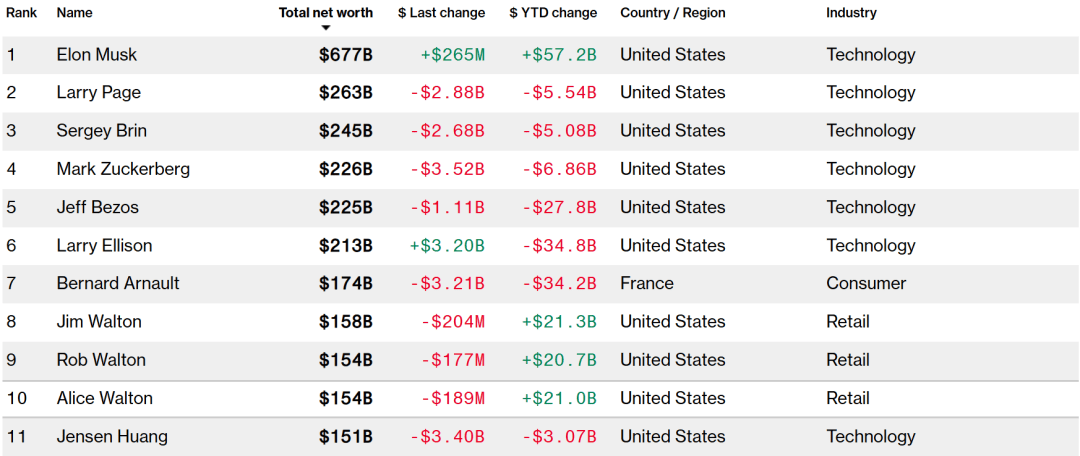
黄仁勋跌出全球前十大富翁排行榜,今年初至今财富已缩水超30亿美元
Sou Hu Cai Jing· 2026-02-14 08:35
| Rank | Name | Total net worth D | $ Last change | $ YTD change | Country / Region | Industry | | --- | --- | --- | --- | --- | --- | --- | | 1 | Elon Musk | $677B | +$265M | +$57.2B | United States | Technology | | 2 | Larry Page | $263B | -$2.88B | -$5.54B | United States | Technology | | 3 | Sergey Brin | $245B | -$2.68B | -$5.08B | United States | Technology | | ব | Mark Zuckerberg | $226B | -$3.52B | -$6.86B | United States | Technology | | 5 | Jeff Bezos | $225B | -$1.11B | -$27.8B | United States | ...


Birch Financial Group LLC Has $2.38 Million Stock Position in NVIDIA Corporation $NVDA
Defense World· 2026-02-14 08:34
Core Insights - NVIDIA has seen significant changes in institutional ownership, with several large investors increasing their stakes in the company during the fourth quarter [1][6] - The company's stock performance shows a market capitalization of $4.44 trillion and a price-to-earnings ratio of 45.37, indicating strong market confidence [2] - NVIDIA reported quarterly earnings of $1.30 per share, exceeding analysts' expectations, with a year-over-year revenue increase of 62.5% [3] Institutional Ownership - Brighton Jones LLC increased its stake by 12.4%, owning 324,901 shares valued at $43.63 million after acquiring 35,815 shares [1] - Bank Pictet & Cie Europe AG raised its holdings by 1.0%, now owning 2,346,417 shares worth $315.1 million after buying 22,929 shares [1] - Hudson Value Partners LLC grew its stake by 30.7%, owning 50,658 shares valued at $6.81 million after acquiring 11,900 shares [1] Stock Performance - NVIDIA's stock opened at $182.85, with a 50-day moving average of $184.72 and a 200-day moving average of $183.26 [2] - The company has a debt-to-equity ratio of 0.06, a current ratio of 4.47, and a quick ratio of 3.71, indicating strong liquidity [2] - The stock has a one-year low of $86.62 and a high of $212.19, reflecting significant volatility [2] Earnings Report - NVIDIA's revenue for the quarter was $57.01 billion, surpassing the consensus estimate of $54.66 billion [3] - The company achieved a return on equity of 99.24% and a net margin of 53.01% [3] - Analysts expect NVIDIA to post an EPS of 2.77 for the current fiscal year [3] Dividend Information - NVIDIA announced a quarterly dividend of $0.01, with a payout ratio of 0.99% [4] - The annualized dividend yield is 0.0%, indicating a minimal return from dividends [4] Analyst Ratings - Wolfe Research raised its price target for NVIDIA from $250.00 to $275.00, maintaining an "outperform" rating [5] - Bank of America reiterated a "buy" rating with a price target of $275.00 [5] - The average price target among analysts is $264.20, with a majority rating the stock as "Buy" [7] Insider Transactions - EVP Ajay K. Puri sold 200,000 shares at an average price of $180.04, totaling $36.01 million, reducing his position by 5.24% [8] - Director Mark A. Stevens sold 222,500 shares at an average price of $180.17, totaling $40.09 million, representing a 2.84% decrease in his holdings [8] - In the last three months, insiders sold 1,611,474 shares worth $291.73 million [8] Company Overview - NVIDIA Corporation, founded in 1993, specializes in designing and developing GPUs and SoC technologies [9] - The company has expanded from a graphics-focused chipmaker to a provider of accelerated computing hardware and software across various industries [9][10]
NVIDIA Corporation $NVDA Shares Bought by Envestnet Portfolio Solutions Inc.
Defense World· 2026-02-14 08:34
Institutional Holdings - State Street Corp increased its holdings in NVIDIA by 1.0%, owning 978,208,862 shares valued at $154.56 billion after acquiring an additional 9,554,857 shares [1] - Geode Capital Management LLC raised its stake by 1.5%, now holding 579,213,497 shares worth $91.15 billion after buying 8,521,936 shares [1] - Norges Bank purchased a new stake valued at approximately $51.39 billion [1] - Legal & General Group Plc boosted its stake by 1.5%, owning 178,593,475 shares worth $28.22 billion after acquiring 2,623,678 shares [1] - Charles Schwab Investment Management Inc. increased its stake by 2.8%, now holding 155,668,775 shares valued at $24.59 billion after buying 4,209,423 shares [1] - Institutional investors and hedge funds own 65.27% of NVIDIA's stock [1] Insider Activity - Director Harvey C. Jones sold 250,000 shares at an average price of $177.33, totaling $44.33 million, resulting in a 3.48% decrease in his position [2] - CFO Colette Kress sold 30,500 shares at an average price of $178.11, totaling $5.43 million, leading to a 2.32% decrease in her position [2] - Over the last 90 days, insiders sold 1,611,474 shares worth $291.73 million, with insiders owning 4.17% of the company's stock [2] Stock Performance - NVIDIA shares opened at $182.85, with a 50-day simple moving average of $184.72 and a 200-day simple moving average of $183.26 [3] - The stock has a twelve-month low of $86.62 and a high of $212.19 [3] - The company has a market capitalization of $4.44 trillion, a price-to-earnings ratio of 45.37, and a PEG ratio of 0.57 [3] Quarterly Earnings - NVIDIA reported $1.30 EPS for the quarter, beating the consensus estimate of $1.23 by $0.07 [4] - The company had revenue of $57.01 billion, exceeding the consensus estimate of $54.66 billion, and up 62.5% compared to the same quarter last year [4] - The return on equity was 99.24% and the net margin was 53.01% [4] Dividend Announcement - NVIDIA announced a quarterly dividend of $0.01, representing an annualized dividend of $0.04 and a yield of 0.0% [5] - The dividend payout ratio is 0.99% [5] Analyst Ratings - Macquarie Infrastructure upgraded NVIDIA to an "outperform" rating [8] - Rothschild & Co Redburn raised the price target from $245.00 to $268.00 with a "buy" rating [8] - Susquehanna increased their price objective from $230.00 to $250.00 with a "positive" rating [8] - Citigroup reaffirmed a "buy" rating, and Goldman Sachs reissued a "buy" rating with a price target increase from $210.00 to $240.00 [8] - The average target price for NVIDIA is $264.20, with an average rating of "Buy" [8]
News Corporation (NWSA) PT Lowered to $39 from $40 by Citi
Insider Monkey· 2026-02-14 06:29
Core Insights - Generative AI is viewed as a transformative technology by Amazon's CEO Andy Jassy, indicating its potential to significantly enhance customer experiences across the company [1] - Elon Musk predicts that humanoid robots could create a market worth $250 trillion by 2040, representing a major shift in the global economy driven by AI innovation [2] - Major firms like PwC and McKinsey acknowledge the multi-trillion-dollar potential of AI, suggesting a broad consensus on its economic impact [3] Company and Industry Analysis - A breakthrough in AI technology is believed to be redefining work, learning, and creativity, attracting significant interest from hedge funds and top investors [4] - There is speculation about an under-owned company that may play a crucial role in the AI revolution, with its technology posing a threat to competitors [4] - Prominent figures in technology and investment, including Bill Gates and Warren Buffett, recognize AI as a major technological advancement with the potential for substantial social benefits [8] Market Trends - The AI ecosystem is expected to reshape how businesses, governments, and consumers operate globally, indicating a shift in market dynamics [2] - The investment landscape is becoming increasingly competitive, with various tech giants like Tesla, Nvidia, and Microsoft being highlighted, while a smaller company is suggested to have significant growth potential [6]




This Is the Best AI Stock to Buy in February 2026, According to Wall Street
The Motley Fool· 2026-02-14 06:02
Core Viewpoint - Nvidia is identified as a top stock to buy, with significant growth potential highlighted by Wall Street analysts [2][4]. Company Performance - Nvidia's current stock price is approximately $185 per share, which is about 10% below its all-time high [4]. - The average price target from Wall Street analysts for Nvidia is $253.62, indicating a potential upside of 37% over the next year [4]. - The stock has experienced a recent decline of 2.21%, with a current price of $182.81 [5]. Market Position and Growth Projections - Nvidia is projected to report around $213 billion in revenue for fiscal 2026, with a forecasted revenue growth of 53% to $326 billion in fiscal 2027 [6]. - If Nvidia maintains a profit margin of 53%, this would result in approximately $173 billion in profits [6]. - Analysts have set a bullish price target of $352 per share, suggesting a potential upside of nearly 100% from current levels [6]. Industry Context - Several AI hyperscalers have announced substantial capital expenditure plans for AI data centers, which will benefit Nvidia [6]. - The market capitalization of Nvidia could reach $6.9 trillion at a price-to-earnings ratio of 40, indicating a potential upside of 53% [8].
12 Youngest Hedge Fund Billionaires and Their Top Stock Picks
Insider Monkey· 2026-02-14 04:48
Core Insights - The wealth of billionaires worldwide increased by 16% in the last year, reaching $18.3 trillion, marking an 81% increase since 2020, highlighting a growing divide between the ultra-rich and the rest of the population [2][3] - The youngest hedge fund billionaires are actively influencing stock market dynamics, with their investment choices reflecting strategies in a volatile financial landscape [4][5] Billionaire Wealth and Market Influence - The report attributes the increase in billionaire wealth to U.S. policies, tax cuts, and reduced scrutiny of monopolies, which have allowed the wealthy to consolidate political influence [3] - Billionaires are 4,000 times more likely than average citizens to hold political office, indicating a significant concentration of power [3] Stock Picks and Market Trends - The youngest hedge fund billionaires' stock selections provide insights into navigating current market conditions, with a focus on unique holdings to avoid duplication [7][10] - The report includes a list of the 12 youngest hedge fund billionaires and their top stock picks, ranked by age, showcasing a diverse selection of investments [10] Individual Stock Highlights - **NVIDIA Corporation (NASDAQ:NVDA)**: Clifford Asness holds a 2.62% stake worth $4.09 billion, with analysts projecting a revenue of $67.5 billion for the fiscal fourth quarter, exceeding guidance [12][13][14] - **Meta Platforms, Inc. (NASDAQ:META)**: Philippe Laffont's top pick, accounting for 7.27% of his portfolio, is developing a new application called "Instants" to enhance user engagement [18][20] - **Visa Inc. (NYSE:V)**: Ken Griffin's fifth-largest holding, with a 0.16% portfolio share worth $1.04 billion, recently launched Visa & Main to support small business growth through a $100 million working capital facility [23][25][26]



中概股全线走低、美股全线大跌,有色金属、半导体芯片、苹果重挫
Sou Hu Cai Jing· 2026-02-14 04:30
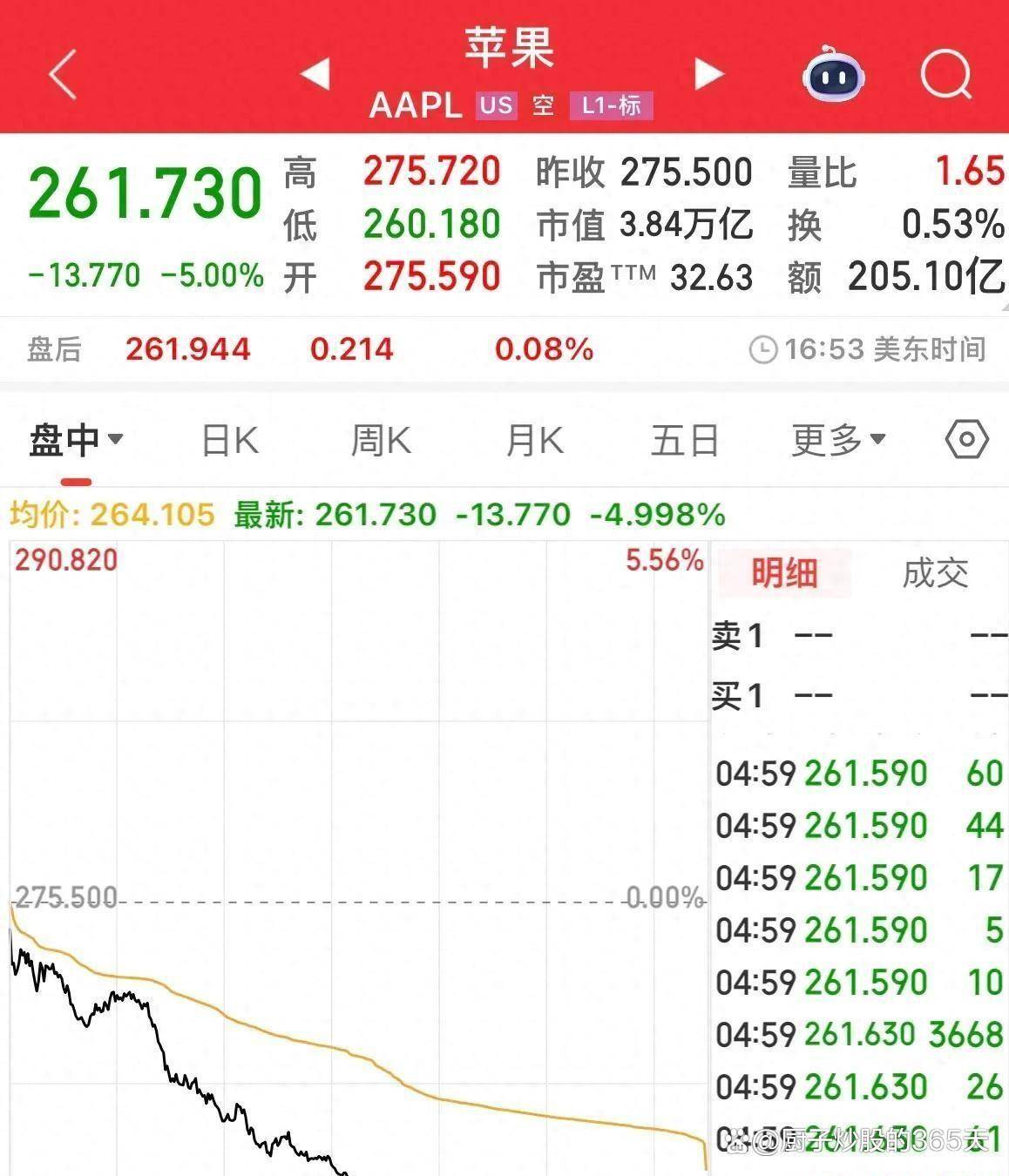
Market Overview - The US stock market experienced a significant decline, with the Dow Jones Industrial Average dropping 669.42 points (1.34%) to close at 49,451.98 points, the Nasdaq Composite falling 469.32 points (2.03%) to 22,597.15 points, and the S&P 500 decreasing by 108.71 points (1.57%) to 6,832.76 points [1][2][3] Market Sentiment - Over 4,100 stocks declined, indicating widespread market panic as investors rushed to sell assets, particularly in the tech and growth sectors. The VIX index surged, reflecting heightened risk aversion [2][3] Sector Performance - The sell-off affected nearly all sectors, with notable declines in precious metals and semiconductor stocks. The precious metals sector saw significant drops, with gold futures down 3.08% and silver futures plummeting 10.62% [4][5][6][8] - The Philadelphia Semiconductor Index fell by 2.5%, with individual stocks like AEHR Test Systems down 17.58% and Intel down over 3% [8][10] Major Companies - Apple Inc. experienced a substantial drop of 5.00%, resulting in a market cap loss of over $120 billion, attributed partly to regulatory concerns [12] - Other major tech companies also faced declines, with Tesla down 1.62%, Amazon down 2.20%, and Meta Platforms down nearly 3% [12] Financial Sector - Bank stocks fell across the board, with JPMorgan Chase down over 2%, Goldman Sachs down over 4%, and Citigroup down over 5%, driven by concerns over AI disrupting traditional wealth management [13][14] Economic Indicators - Recent economic data, including a drop in initial jobless claims and lower-than-expected existing home sales, contributed to market anxiety about potential economic overheating and prolonged high interest rates [24][25][26] Global Market Impact - The sell-off in the US markets had a ripple effect on global markets, with European indices also closing lower after initially opening higher, indicating a widespread sentiment of fear [18][19][20] AI Concerns - The market's decline was exacerbated by fears regarding the disruptive impact of AI technologies on various industries, leading to significant stock price drops in sectors perceived to be at risk [21][22][30] Storage Chip Sector - In contrast to the overall market trend, storage chip stocks saw gains, with companies like SanDisk and Seagate Technology rising significantly, reflecting a belief that AI's growth will increase demand for data storage [29]


晚间暴雷!黄金、白银、原油、美股全线崩盘,42只中概集体下跌
Sou Hu Cai Jing· 2026-02-14 04:22
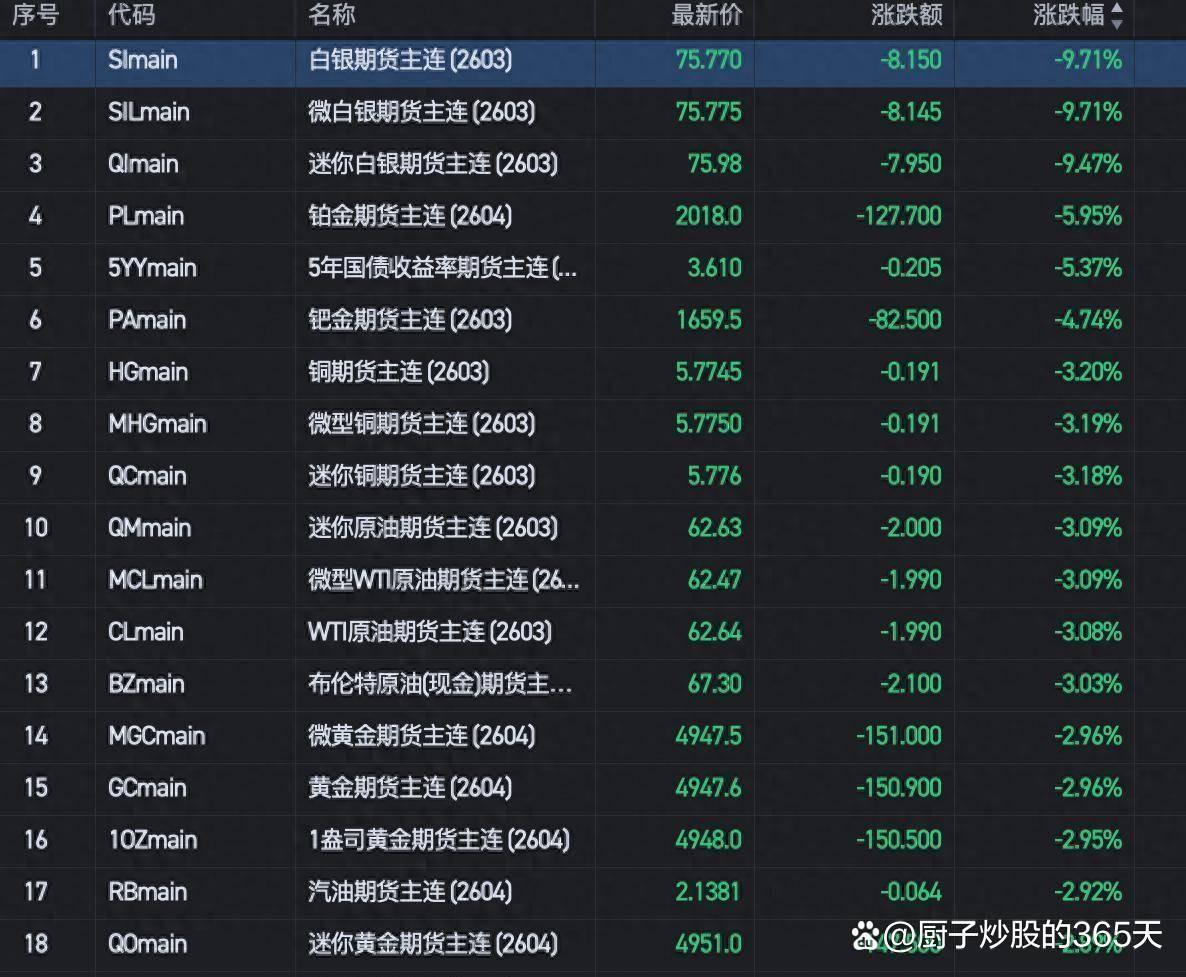
Market Overview - On February 13, 2026, a significant asset sell-off occurred in global financial markets, particularly impacting U.S. stock indices. The Dow Jones Industrial Average fell by 669.42 points (1.34%) to close at 49,451.98, while the Nasdaq Composite Index dropped 469.32 points (2.03%) to 22,597.15. The S&P 500 Index also declined by 108.71 points (1.57%) to 6,832.76 [1]. Commodity Market Impact - The sell-off extended to the commodity markets, with gold and silver experiencing substantial declines. COMEX gold futures fell by 3.08% to $4,941.4 per ounce, while COMEX silver futures plummeted by 10.62% to $75.01 per ounce [2][3]. Technology Sector Reaction - Major technology companies were severely affected, with Apple’s stock price dropping by 5%, resulting in a market value loss of over $120 billion (approximately 800 billion RMB). Other tech giants like Microsoft, Amazon, Tesla, Meta, and Nvidia also saw significant declines [3][4]. Chinese Concept Stocks - The Nasdaq Golden Dragon China Index, which includes many Chinese concept stocks, fell by 3% on the same day, indicating a collective sell-off in this sector. Over 40 Chinese concept stocks experienced substantial declines, with Tencent Music down 10.57% and Alibaba down 3.40% [3][4][6]. Employment Data Influence - The catalyst for this market turmoil was a strong U.S. employment report released on February 11, showing a non-farm payroll increase of 130,000 in January, significantly above the expected 70,000. This led to a shift in market expectations regarding Federal Reserve interest rate cuts, with the probability of a March rate cut dropping from 19.6% to 6% [5][6]. Capital Expenditure Concerns - Major tech companies announced aggressive capital expenditure plans for 2026, with Alphabet projecting $175 billion to $185 billion and Amazon estimating $200 billion, both nearly doubling their 2025 expenditures. This raised investor concerns about the return on such investments, especially as many companies reported record profits but saw stock price declines [10][11]. Market Sentiment and Volatility - The market's fear and volatility increased sharply, with the VIX index rising significantly. The sell-off was exacerbated by algorithm-driven trading, which triggered stop-loss orders and led to extreme price movements [15][16][17]. Global Market Impact - The financial turmoil that began in Wall Street quickly spread to global markets, with Asian and European stock markets opening lower in response to the U.S. declines [18].



桥水四季度持仓曝光,英伟达大幅增持54%重回第三大重仓,黄金板块同步加码
Jin Rong Jie· 2026-02-14 04:16
Group 1 - The core viewpoint of the news is that Bridgewater, the world's largest hedge fund, made significant adjustments to its positions in AI-related stocks and gold during the fourth quarter of 2022, as reported in its 13F filing with the SEC [1][2]. - Bridgewater's total holdings at the end of the fourth quarter amounted to approximately $27.4 billion, reflecting a 7.5% increase from the previous quarter's $25.5 billion [1]. - The fund added 191 new positions, increased holdings in 450 stocks, reduced positions in 395 stocks, and completely exited 165 positions during the quarter [1]. Group 2 - In the AI sector, Bridgewater notably increased its stake in NVIDIA by 1.35 million shares, raising its total from 2.51 million shares to 3.87 million shares, a 54% increase, making it the third-largest holding [1]. - Amazon also saw a significant increase in holdings, with shares rising from 1.12 million to 1.95 million, a growth of approximately 73% [1]. - In the gold sector, Bridgewater increased its position in Newmont Corporation, a leading gold producer, which was among the top five purchases for the quarter [1]. Group 3 - The top ten holdings included SPDR S&P 500 ETF and iShares S&P 500 ETF in the first two positions, with NVIDIA in third, followed by Lam Research, ServiceNow, Google, Microsoft, Amazon, Adobe, and GE Vernova [2]. - Notably, several stocks in the top ten holdings, including Lam Research, ServiceNow, Google, and Microsoft, experienced varying degrees of reduction in positions [2]. - The largest reductions in positions for the quarter were seen in Uber, Fiserv, Google, META, and Microsoft [2].
英伟达跌,AMD涨,罪魁祸首可能是Arista Networks?
美股IPO· 2026-02-14 04:12
分析指出,虽然英伟达和AMD股价波动幅度不算巨大,但Ullal的评论意义重大。 自三年多前OpenAI推出ChatGPT、人工智能行业起飞以来,英伟达 一直主导着AI GPU市场。 目前,英伟达在AI芯片市场的份额约为90%,潜在挑战者包括AMD,以及谷歌。谷歌的TPU也正在获得越来越多的采用。英伟达目前是美国市值最高 的公司,市值超过4.5万亿美元。AMD市值约为3350亿美元。 在周四晚间的财报电话会上,当被分析师问及公司与AMD的合作情况时,Arista首席执行官Ullal表示:"一年前,基本上99%都是英伟达,对吧?而今 天,当我们查看部署情况时,大约有20%,甚至略高一些,约20%至25%的项目中,AMD正成为首选加速器。"英伟达股价周五盘中下跌近3%,而AMD 上涨接近1%。 周五,英伟达与AMD的股价走势出现分化,此前Arista Networks首席执行官在财报电话会议上表示,公司正看到部分部署转向AMD。 英伟达股价周五盘中下跌近3%,而AMD上涨接近1%。 在周四晚间的财报电话会上,当被分析师问及公司与AMD的合作情况时,Arista首席执行官Ullal表示:"一年前,基本上99%都是英伟 ...