Oracle(ORCL)

Search documents
瑞银企业调查:六成企业选择“自制”AI而非购买现成,“AI智能体”仅有5%真正落地
Hua Er Jie Jian Wen· 2025-12-17 08:43
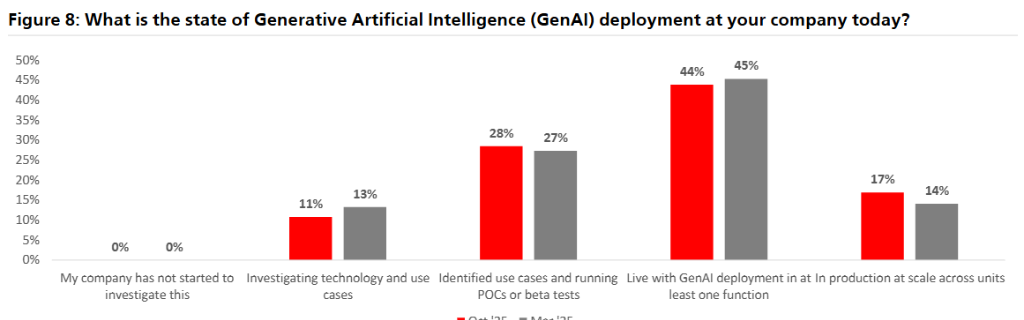
Core Insights - Despite the ongoing rise of artificial intelligence technology, the large-scale deployment of enterprise AI applications is progressing slowly, with only 17% of surveyed companies achieving large-scale production, a slight increase from 14% in March 2023 [1] Group 1: Market Leaders and Trends - Microsoft, OpenAI, and Nvidia continue to dominate the enterprise AI market, with Microsoft Azure leading in cloud infrastructure and OpenAI's GPT models occupying three of the top five spots in large language models [3] - Microsoft M365 Copilot remains the preferred enterprise AI tool, although OpenAI's ChatGPT commercial version is rapidly closing the gap [3][10] - The survey indicates a significant preference for self-built AI applications, with 60% of companies opting for a hybrid model of self-building or fully self-building, compared to only 34% relying entirely on third-party software vendors [4][5] Group 2: Deployment Challenges and Workforce Impact - The main challenges for AI deployment include unclear ROI, cited by 59% of respondents, up from 50% in March 2023, followed by compliance concerns (45%) and a lack of internal expertise (43%) [3] - AI applications are not leading to mass layoffs; 40% of companies expect AI to drive employee growth, while only 31% anticipate a reduction in workforce [3] Group 3: AI Agent Deployment and Market Outlook - The deployment of AI agents is still in its early stages, with only 5% of companies achieving large-scale production, while 71% are in pilot or small-scale production phases [9] - The slow progress in AI agent deployment supports the view that AI agents will not significantly replace human labor in the short term, and investors should maintain realistic revenue expectations for related technology suppliers [9] Group 4: Data Infrastructure and Spending Trends - There is a notable increase in demand for data infrastructure driven by AI projects, with an average of 52% of respondents expecting to increase spending across various data software categories [12] - The cloud data warehouse sector is expected to benefit significantly, with 69% of respondents anticipating increased spending, and 25% expecting substantial growth [12][14] - In contrast, the operational database sector shows a more moderate AI-driven spending increase, with only 10% of respondents expecting significant growth [14]





甲骨文(ORCL):FY26Q2 业绩点评:云需求持续强劲,关注数据中心交付进度
GUOTAI HAITONG SECURITIES· 2025-12-17 06:09
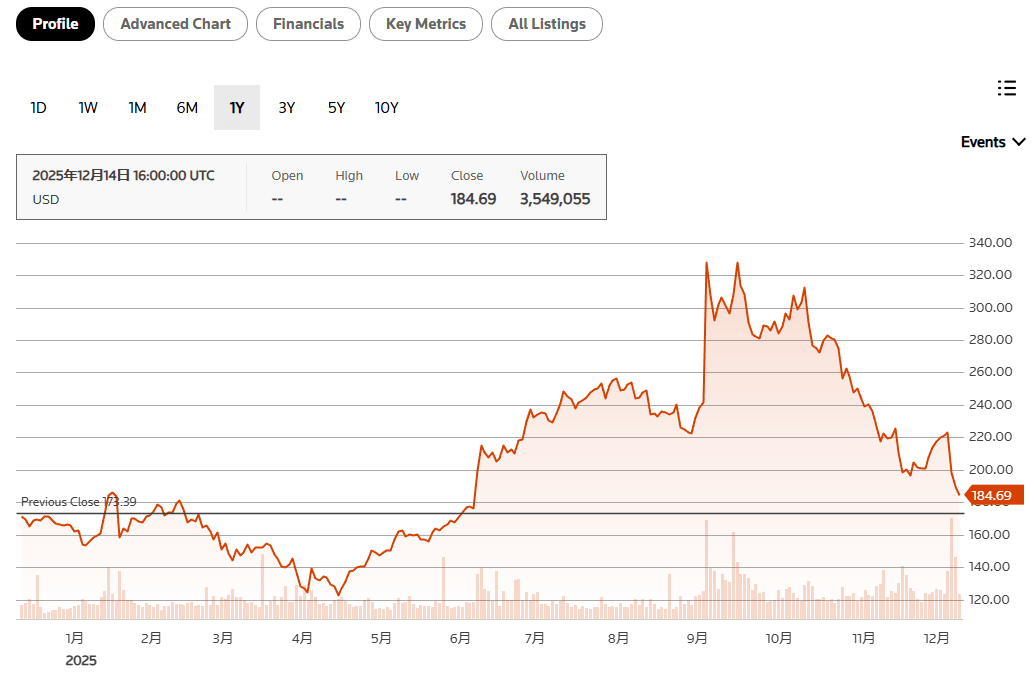
Investment Rating - The report maintains an "Overweight" rating for Oracle (ORCL.N) [7][12] Core Insights - Oracle has significantly raised its FY2026 capital expenditure guidance by $15 billion to $50 billion, indicating potential bottlenecks in revenue realization due to data center construction progress [3][12] - The remaining performance obligations (RPO) for Oracle reached $523 billion, with a net increase of $68 billion quarter-over-quarter, including contracts from Meta and NVIDIA [12] - Oracle's revenue projections for FY2026 to FY2028 have been adjusted to $67 billion, $84 billion, and $128 billion respectively, with Non-GAAP net profits estimated at $21 billion, $24 billion, and $33 billion [12] Financial Summary - Revenue (in million USD): - FY2024: 52,961 - FY2025: 57,399 - FY2026E: 67,046 - FY2027E: 84,328 - FY2028E: 127,751 - Year-over-year growth rates: - FY2024: 6.0% - FY2025: 8.4% - FY2026E: 16.8% - FY2027E: 25.8% - FY2028E: 51.5% [5] - Non-GAAP net profit (in million USD): - FY2024: 15,709 - FY2025: 17,283 - FY2026E: 21,068 - FY2027E: 23,945 - FY2028E: 33,509 - Adjusted PE (diluted): - FY2026E: 25.7 [5][12] Market Data - Current price: $184.92 [7] - Market capitalization: $531,299 million [8] - 52-week stock price range: $122.82 - $328.33 [8]
美国正进入AI泡沫破裂时刻
Sou Hu Cai Jing· 2025-12-17 04:43
Core Viewpoint - The recent decline in Oracle's stock price, which fell by 13% on December 11, 2023, reflects deeper issues within the AI industry, indicating a shift from a phase of aggressive investment to a more cautious approach focused on risk assessment and cost control, signaling the potential bursting of the AI valuation bubble [1][4]. Financial Performance - Oracle's Q2 FY2025 revenue was reported at $16.06 billion, below the expected $16.21 billion, and adjusted revenue was $6.7 billion, also missing the Wall Street estimate of $6.8 billion [3]. - The company's guidance for Q3 FY2025 projected adjusted earnings per share between $1.64 and $1.68, significantly lower than the analyst estimate of $1.72, with revenue growth expectations of 16% to 18%, below the market's optimistic forecast of 19.4% [3]. Market Reaction - The drop in Oracle's stock triggered a chain reaction affecting other AI-related stocks, including Nvidia, AMD, and Micron, which saw declines between 3.1% and 4.2%, ultimately dragging the Nasdaq index to its lowest point in a week [1][3]. AI Industry Dynamics - The AI industry's capital frenzy has inflated valuations of leading companies, with Nvidia becoming the first company to surpass a $5 trillion market cap and OpenAI's valuation skyrocketing from $157 billion in October 2024 to $500 billion by October 2025 [5]. - This valuation surge is not supported by solid profitability but rather by a "value internal cycle" among major players like OpenAI, Nvidia, and Oracle, creating a disconnect between inflated demand expectations and actual market needs [7][8]. Investment and Spending Trends - Oracle's significant investment in AI, including a $40 billion deal with Nvidia for 400,000 GPUs, exemplifies the artificial demand signals being sent to the market, which have led to inflated valuations [7]. - The AI sector is experiencing a shift towards a "rational pricing phase," with companies like Amazon and Microsoft planning substantial capital expenditures in AI, raising concerns about the sustainability of such investments [10][13]. Financial Pressures and Risks - Oracle has reportedly consumed around $10 billion of its cash reserves in the first half of FY2025 due to heavy investments in AI, raising concerns about its financial stability and the potential for a significant market cap loss [10]. - The AI industry's reliance on high capital expenditures without corresponding revenue generation has created a precarious financial environment, with predictions of a $500 billion operating loss for OpenAI by 2030 [9][10]. Emerging Financial Mechanisms - A new financial cycle is emerging in the AI sector, characterized by the use of Special Purpose Vehicles (SPVs) to facilitate capital flow without creating substantial commercial value, resembling a "Ponzi scheme" [15][19]. - This mechanism involves a closed loop where funds circulate among tech companies and financial institutions, often relying on new debt to pay off old debt, further obscuring the lack of real profitability [19][20]. Market Sentiment and Future Outlook - There is growing skepticism in the market regarding the AI industry's ability to convert high capital investments into sustainable profits, with many investors shifting towards risk management strategies such as credit default swaps (CDS) to hedge against potential losses [26][27]. - The AI sector is transitioning from a focus on rapid expansion to a more sustainable model that emphasizes efficiency and the integration of technological value with commercial viability, marking a critical juncture in its development [27].
今日A股市场重要快讯汇总|2025年12月17日
Xin Lang Cai Jing· 2025-12-17 00:32
Macroeconomic and Market Analysis - The central economic work conference emphasizes that expanding domestic demand is the top priority for next year [1][4] - Domestic demand has remained stable this year, contributing 71% to economic growth in the first three quarters, with effective consumption policies showing significant results [1][4] - However, there has been a recent slowdown in consumption and investment growth, indicating the need for continued efforts to boost domestic demand [1][4] Important Announcements from Listed Companies - Vanke announced a proposal to extend the principal repayment date of its fourth tranche of medium-term notes for 2022 by 12 months to December 15, 2026, with interest of 60 million yuan due on December 15, 2025, to be paid within a grace period [2][5] - During the grace period, unpaid principal will accrue interest at 3.00%, while unpaid interest will not accrue additional interest, and the coupon rate will remain unchanged at 3.00% [2][5] - After the market close on December 16, several companies disclosed shareholding changes, with some increasing their holdings and others, including Ningbo Color Masterbatch and Huashu Co., announcing reductions [2][5] Peripheral Markets and Related Assets - On Tuesday, U.S. stock indices showed mixed results, with the Dow Jones down 0.62%, the Nasdaq up 0.23%, and the S&P 500 down 0.24% [3][6] - Major tech stocks mostly rose, with Tesla gaining 3.07% and reaching a new closing high, while Qualcomm fell over 1% [3][6] - The Nasdaq Golden Dragon China Index fell 0.34%, with notable declines in companies like Zhongjin Medical and Kandi Technologies [7] - International oil prices saw WTI crude oil drop 3% to below $55 per barrel, currently at $54.97, while Brent crude fell 2.58% below $59 per barrel [7]



中金 | AI的三重风险:投资、融资与关联性
Xin Lang Cai Jing· 2025-12-17 00:05
Core Viewpoint - Oracle's significant capital expenditure plan has led to a sharp decline in its stock price, indicating a shift in market sentiment regarding AI investments, moving from optimism to caution as investors reassess potential risks [1][29]. Group 1: Investment Returns - The current AI wave is characterized by a substantial increase in capital expenditures by tech companies, with five major hyperscalers collectively spending $357.2 billion in AI-related capital expenditures over the past four quarters, expected to rise to approximately $500 billion by 2026 [1][10]. - The average capital expenditure for AI among these companies is about 60% of their free cash flow, with Oracle's capital expenditure reaching 582% of its operating cash flow, indicating an inability to cover investment needs with free cash flow [1][12][30]. - Concerns about return on investment (ROI) have emerged, as the commercialization path for AI remains unclear, and the marginal efficiency of AI investments is likely to decline with increased spending [2][31]. Group 2: Financing Conditions - Companies are increasingly reliant on external financing to support their investments, which can lead to credit risk if market confidence in their repayment ability diminishes [4][33]. - Oracle's cash consumption has expanded, with its free cash flow dropping to -$10 billion, while its net debt stands at $97.7 billion, raising concerns about its debt repayment capacity [5][34]. - The rising credit default swap (CDS) spreads for Oracle, now above 140 basis points, reflect heightened market concerns regarding its credit risk and potential difficulties in future financing [5][35]. Group 3: Interconnectedness of Tech Giants - The current AI landscape features tech giants taking on roles traditionally held by venture capital firms, creating complex interdependencies that could lead to systemic risks within the industry [6][36]. - Companies like NVIDIA, OpenAI, and Oracle have established deep business collaborations, forming a tightly-knit network that raises concerns about the potential for cascading failures if one company encounters financial difficulties [6][37]. Group 4: Implications for the U.S. Economy - AI-related fixed asset investments are projected to contribute approximately 0.7 percentage points to U.S. GDP growth in the first half of 2025, accounting for about one-third of the growth [8][38]. - If doubts about the returns on AI capital expenditures persist and financing conditions tighten, the growth rate of AI-related investments may face downward pressure in 2026 [8][39]. - The wealth effect from AI investments is significant, with the top 10% of earners contributing nearly half of U.S. consumer spending, indicating that any market adjustments could impact overall consumption [9][39].

When Micron reports there will be analysts calling a top, says Jim Cramer
Youtube· 2025-12-17 00:04
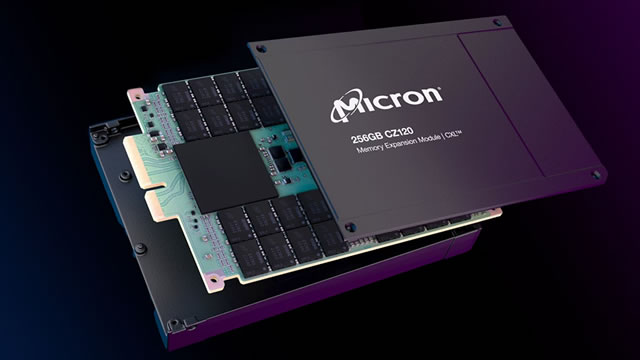
Core Viewpoint - Wall Street is currently skeptical about companies investing heavily in data centers for artificial intelligence, leading to a shift in focus towards other tech and growth sectors [2][9]. Group 1: Market Sentiment - The significant capital expenditure on data centers has deterred money managers, causing a preference for industrials and other sectors unrelated to data [2]. - The Dow Jones Industrial Average fell by 302 points, while the S&P 500 declined by 24%, contrasting with a 23% increase in the NASDAQ [2]. - Data center stocks are perceived as struggling, with four out of the five top-performing S&P 500 stocks being traditional tech companies like SanDisk and Micron, which focus on data storage [3][4]. Group 2: Competitive Landscape - Major tech companies, including Amazon, Microsoft, Google, Meta, and OpenAI, are aggressively investing in data centers to maintain competitive advantages [6][7]. - OpenAI's spending strategy, supported by venture capital, is seen as reckless, with a total commitment of $1.4 trillion across various companies [9][12]. Group 3: Financial Implications - Oracle's recent bond issuance of $18 billion has raised concerns about its financial health, as aggressive spending could lead to a deterioration of its balance sheet [13][14]. - The high costs associated with building data centers are unsustainable, and companies like Oracle may need to show discipline in their spending to avoid financial distress [15][16]. Group 4: Future Outlook - A potential resolution among major players in the AI sector could lead to a more rational spending environment, allowing stocks to recover [20][27]. - The current market dynamics suggest that unless Oracle and OpenAI adjust their strategies, further declines in stock values may occur [20][18].

Stock market today: Dow, S&P 500, Nasdaq trade mixed as Wall Street weighs odds of rate cuts, Oracle sinks
Yahoo Finance· 2025-12-16 23:51
US stocks traded mixed on Wednesday as investors weighed what the latest data and Federal Reserve comments mean for interest-rate cuts, with techs under pressure as Oracle (ORCL) stock slid. The Nasdaq Composite (^IXIC) slipped 0.3%, while the S&P 500 (^GSPC) traded flat, with both backing off slight opening gains as tech weakness returned. But the Dow Jones Industrial Average (^DJI) added 0.5%, after US stocks finished mixed in Tuesday's session. After weeks in a data vacuum, Wall Street is trying to ...
Stock market today: Dow, S&P 500, Nasdaq rise as Wall Street weighs jobs data signals, Oracle sinks
Yahoo Finance· 2025-12-16 23:51
Group 1: Market Overview - US stocks experienced a broad rise, with the S&P 500 and Nasdaq 100 increasing nearly 0.2%, and the Dow Jones Industrial Average adding 0.3% [1] - The rise comes after a mixed performance in the previous session, indicating a potential recovery from recent slumps [1] Group 2: Company-Specific News - Oracle's stock declined after reports that Blue Owl Capital will not support a $10 billion deal for its next data center, raising concerns about the use of debt in funding tech capital expenditures [2] - Micron Technology's upcoming quarterly results are anticipated to provide insights into demand for AI semiconductors, as the company supplies chips for Nvidia's server systems [2] - Tesla's stock has positively influenced the tech sector, achieving its first record close in about a year, driven by investor enthusiasm regarding its robotaxi ambitions [6] - Netflix's stock rose after Warner Bros. Discovery's board urged shareholders to reject a rival bid from Paramount Skydance, raising questions about funding guarantees [6] Group 3: Economic Indicators - The November jobs report revealed a larger-than-expected increase in jobs alongside the highest unemployment rate since 2021, creating uncertainty about future interest rate paths [4] - Federal Reserve officials, including Chris Waller, indicated that there is still room to cut rates, suggesting a potential reduction of "50 to 100 basis points" [5]
中金 | AI的三重风险:投资、融资与关联性
中金点睛· 2025-12-16 23:50
Core Viewpoint - The recent significant capital expenditure plan disclosed by Oracle has led to a sharp decline in its stock price, indicating a market shift in the investment logic surrounding artificial intelligence (AI) [2] - Investors are becoming more cautious, reassessing potential risks rather than relying solely on optimistic narratives driven by capital expenditure [2] Group 1: Investment Returns - The current AI wave is characterized by a substantial increase in capital expenditures by technology companies, transitioning from a "light asset" model to a more capital-intensive "heavy asset" structure [3] - Major hyperscalers have collectively spent $357.2 billion on AI-related capital expenditures over the past four quarters, with expectations to reach approximately $500 billion by 2026 [3] - Oracle's capital expenditure represents 582% of its operating cash flow, indicating that its free cash flow cannot cover its investment needs [3][4] Group 2: Financing Conditions - The significant capital expenditures raise concerns about return on investment (ROI), as the commercialization path for AI remains unclear and profitability is uncertain [4] - Oracle's cash consumption has increased, with free cash flow dropping to -$10 billion, while its net debt stands at $97.7 billion, raising concerns about its credit risk [6][7] - The rising credit default swap (CDS) spreads for Oracle indicate heightened concerns about its credit risk, suggesting that future financing may become more difficult and costly [7] Group 3: Interconnectivity Among Companies - The current AI landscape features technology giants taking on roles traditionally held by venture capital firms, creating complex interdependencies that could lead to systemic risks [8][9] - Companies like NVIDIA, OpenAI, and Oracle have established deep business collaborations, which could amplify risks if one company faces financial difficulties [8][9] - The market is beginning to reassess the risks associated with the interconnectedness of AI companies, as evidenced by stock price declines across related firms following Oracle's downturn [9] Group 4: Implications for the U.S. Economy - AI-related fixed asset investments are expected to contribute approximately 0.7 percentage points to U.S. GDP growth in the first half of 2025, accounting for about one-third of the growth [10] - If concerns about the returns on AI capital expenditures persist, investment growth in AI may slow down, which could negatively impact the overall economy [10] - The wealth effect driven by AI investments is significant, as the top 10% of income earners contribute nearly half of U.S. consumer spending, and any market adjustments could reduce this spending [11]

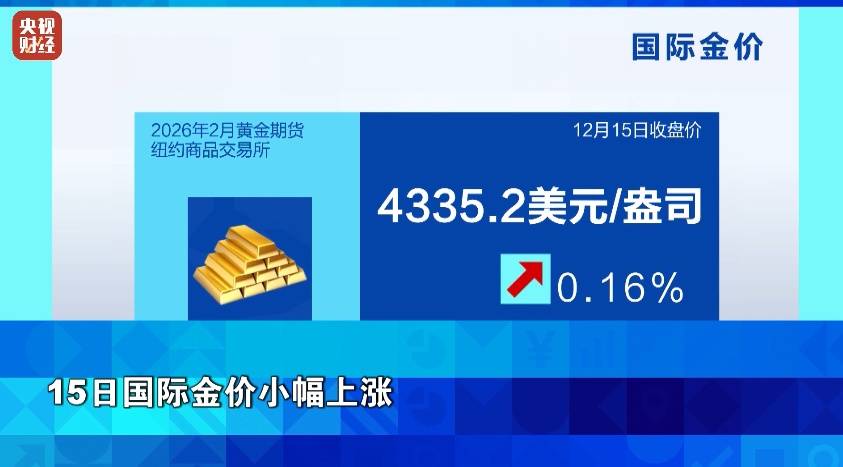
金价,又涨了…
Sou Hu Cai Jing· 2025-12-16 23:32
Group 1 - Investors are concerned about the high valuations in the AI industry, leading to cautious trading and a collective decline in the three major U.S. stock indices on Monday, with the Dow Jones down 0.09%, S&P 500 down 0.16%, and Nasdaq down 0.59% [1] - The sell-off in AI infrastructure stocks continues, with major companies like Broadcom and Oracle experiencing significant declines. Broadcom's stock fell 5.59% and Oracle's stock fell 2.66% on Monday, marking a four-day decline of over 18% for Broadcom and 17.7% for Oracle [5] - Oracle's AI infrastructure business is increasingly reliant on debt financing, raising concerns about the potential for debt growth to outpace profit growth [5] Group 2 - European investors expect the Bank of England to cut interest rates by 25 basis points this week, boosting market risk appetite and leading to gains in banking and retail stocks. The UK stock market rose by 1.06%, France by 0.70%, and Germany by 0.18% [7] - International oil prices fell, with light crude oil for January delivery closing at $56.82 per barrel, down 1.08% [8]