
Stellantis(STLA)

Search documents
Stellantis Pivots From PHEVs to Hybrids and EREVs in North America
ZACKS· 2026-01-12 20:05
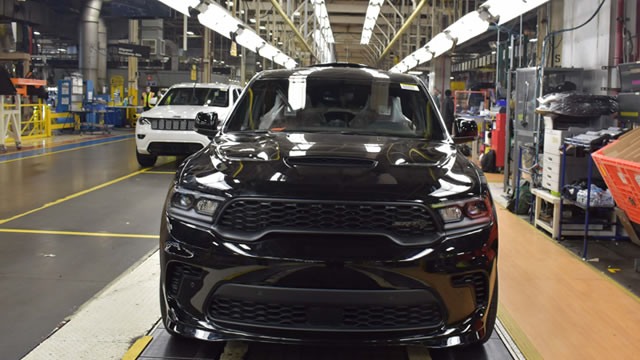
Core Insights - Stellantis has officially ended sales and production of its plug-in hybrid (PHEV) models in the United States, marking a significant shift in its strategy [1][10] - The company will focus on more competitive electrified solutions, including conventional hybrids and extended-range electric vehicles (EREVs), starting with the 2026 model year [2][10] Group 1: Strategic Shift - Stellantis is discontinuing its PHEV programs in North America due to reduced demand for plug-in hybrids and changing consumer preferences [2][5] - The decision comes despite the previous success of models like the Jeep Wrangler 4xe, which was the best-selling plug-in hybrid for three consecutive years [3][4] - The company is reshaping its North American portfolio, discontinuing models such as the Jeep Grand Cherokee 4xe and Chrysler Pacifica PHEV [4][10] Group 2: Market Dynamics - The shift reflects a broader acceptance of traditional hybrids among U.S. buyers, as they do not require external charging [5] - Recent adjustments to U.S. federal incentives have diminished the financial appeal of PHEVs, further influencing Stellantis's decision [5] - The discontinuation follows a series of recalls affecting PHEV models, particularly concerning battery failures and fire reports, which have added pressure to the PHEV segment [6][10] Group 3: Future Direction - Stellantis announced the discontinuation of the development of Ram's all-electric pickup, the Ram 1500 REV, as part of its strategic repositioning [7] - The company aims to offer electric driving with longer range and reduced dependence on charging infrastructure through its focus on conventional hybrids and EREVs [7][10]


贾可吴伯凡吴声张晓亮,4万字2025-2026跨年对谈全文(下)
汽车商业评论· 2026-01-11 23:06
Core Viewpoint - The article discusses the evolving landscape of the Chinese automotive industry, focusing on the impact of personal branding (IP) of industry leaders, the rise of Huawei in automotive technology, and the trends in global expansion and regulatory changes in autonomous driving [4][5][6]. Group 1: Personal Branding in Automotive Industry - The debate on whether automotive leaders like Lei Jun and Wei Jianjun should develop personal brands (IP) has intensified, with differing opinions on its effectiveness and potential backlash [5][25]. - Lei Jun's recent challenges with Xiaomi's automotive ventures highlight the risks of personal branding, while Wei Jianjun's successful IP development reflects a more grounded approach [26][30]. - The article emphasizes the need for automotive leaders to focus on product quality and strategic management rather than solely on personal branding [31][35]. Group 2: Huawei's Role in Automotive Technology - Huawei's positioning as a service provider rather than a car manufacturer allows it to play a unique role in the automotive industry, focusing on empowering car manufacturers with advanced technologies [7][10]. - The introduction of Huawei's "Jing" and "Jie" series vehicles indicates a strategic expansion into the automotive market, with a focus on high-end segments [9][10]. - Huawei's technology capabilities, including smart cockpit and driving technologies, are seen as critical to its success in the automotive sector, potentially reshaping the competitive landscape [12][15]. Group 3: Trends in Global Expansion - The article notes a significant trend of Chinese automotive companies pursuing IPOs in Hong Kong, reflecting a renewed interest in capital markets and the need for ongoing funding in a capital-intensive industry [38][39]. - The global expansion of Chinese automotive brands is characterized by a shift towards local production and partnerships, moving beyond simple export strategies to more integrated approaches [43][45]. - The necessity for Chinese companies to adapt to local markets and consumer behaviors is emphasized, indicating a more mature approach to globalization [47][49]. Group 4: Regulatory Changes in Autonomous Driving - The Chinese government has implemented stricter regulations on L2 autonomous driving systems, reflecting a growing emphasis on safety following recent incidents [58][60]. - The approval of L3 autonomous driving systems indicates a positive regulatory environment for advanced driving technologies, with companies like Deep Blue and BAIC leading the way [58][61]. - The article suggests that the development of Robotaxi services is gaining momentum, with a focus on subscription-based models as a viable business strategy [61][63].



1月10日隔夜要闻:美股收高 金价上涨 英特尔涨超10% 特朗普泄露就业数据 委称与美启动探索性外交
Xin Lang Cai Jing· 2026-01-09 22:32
Company - Nvidia is recruiting executives from Google Cloud to strengthen its position in the market [8] - Chevron could see an annual revenue increase of up to $700 million due to its operations in Venezuela [8] - Stellantis has canceled its sales plan for plug-in hybrid vehicles in the U.S. due to weak demand [8] - Glencore and Rio Tinto are in negotiations to potentially create the world's largest mining company [8] - xAI plans to invest $20 billion in building a data center in Mississippi [8] - Hyundai will fully deploy humanoid robots starting in 2028 [8] - Paramount reiterated its all-cash offer of $30 per share for WBD [8] - General Motors will account for $7.1 billion in expenses in the fourth quarter [8] - Johnson & Johnson is lowering drug prices in the U.S. in exchange for tariff reductions, but experts say savings for insured individuals will be limited [8] Industry - The U.S. added 584,000 jobs in 2025, marking the lowest growth rate in a non-recession period since 2003 [8] - U.S. household wealth has reached a record high, benefiting from the rise in the stock market [8] - The EU is expected to sign a historic trade agreement with South America despite opposition from France [8] - The WTI crude oil price has risen for the third consecutive week [9] - The U.S. debt market shows mixed results, with a flattening yield curve and mixed non-farm payroll data [9] - The dollar is rising alongside U.S. Treasury yields as traders reduce bets on Federal Reserve rate cuts [9]


斯特兰蒂斯因需求疲软取消美国插电式混合动力汽车销售计划
Jin Rong Jie· 2026-01-09 20:01
Core Viewpoint - Stellantis Group announced the cessation of sales for plug-in hybrid versions of Jeep Wrangler, Grand Cherokee, and Chrysler Pacifica minivan in the U.S. due to weak market demand and a shift in North American electrification strategy [1] Group 1: Strategic Changes - The company will gradually phase out plug-in hybrid models starting from the 2026 model year in North America [1] - Stellantis aims to focus on more competitive electrification solutions, including hybrid and range-extended electric vehicles [1] Group 2: Market Context - This decision comes amid a reevaluation of electric vehicle investments by Detroit automakers under the current administration's policy adjustments [1]
Stellantis scraps US plug-in hybrid sales, citing weak demand
Reuters· 2026-01-09 19:19
Core Viewpoint - Stellantis, the parent company of Chrysler, announced it will cease sales of plug-in hybrid versions of the Jeep Wrangler, Grand Cherokee, and Chrysler Pacifica minivan in the United States as part of its strategic navigation in the market [1] Group 1 - Stellantis is halting the sale of specific plug-in hybrid models in the U.S. market [1] - The decision affects the Jeep Wrangler, Grand Cherokee, and Chrysler Pacifica minivan [1] - This move is part of Stellantis's broader strategy to adapt to market conditions [1]
Stellantis scraps Jeep, Chrysler plug-in hybrid vehicles amid EV slowdown, recall
CNBC· 2026-01-09 17:46
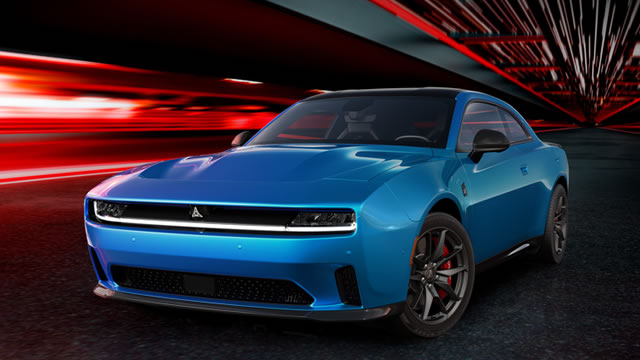
Core Viewpoint - Stellantis is discontinuing its plug-in hybrid electric Jeep SUVs and Chrysler minivan due to declining EV sales, quality issues, and changes in federal fuel economy standards [1][2]. Group 1: Production Decision - The decision to end production of the plug-in hybrid Jeep Wrangler, Jeep Grand Cherokee, and Chrysler Pacifica is driven by decreasing customer demand and a strategic shift towards more competitive electrified solutions [2]. - Stellantis plans to phase out plug-in hybrid programs in North America starting with the 2026 model year [2]. Group 2: Market Context - This move marks a significant change for Stellantis, which previously highlighted its leadership in U.S. PHEV sales, aiming to sell 160,000 to 170,000 PHEVs in 2024, representing 41% of U.S. PHEV sales [3]. - The company has utilized PHEVs to balance its production of traditional gas-powered vehicles to comply with federal fuel economy standards, which have become less stringent under the current administration [5]. Group 3: Product Features and Challenges - PHEVs combine traditional internal combustion engines with an all-electric range, but are considered costly due to their dual propulsion systems [6]. - The cancellation of these models coincides with a recall of Jeep SUVs due to fire risks, highlighting ongoing quality concerns [7]. Group 4: Future Strategy - Jeep is reassessing its electrification strategy following the expiration of federal incentives for EVs and PHEVs [8]. - The brand will continue to offer all-electric SUVs, such as the Wagoneer S and Recon, which were revealed recently [9].
Piper Sandler上调Stellantis目标价至15美元
Ge Long Hui· 2026-01-09 09:49
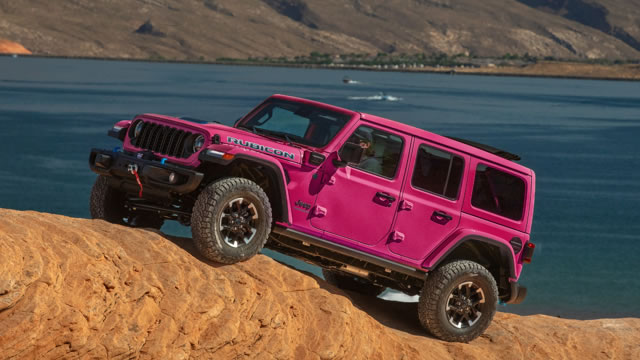
Group 1 - Piper Sandler raised Stellantis' target price from $9 to $15, indicating a significant increase of 66.67% [1] - The rating for Stellantis was upgraded from "Neutral" to "Overweight," suggesting a more favorable outlook for the company [1]
Piper Sandler上调底特律三大车企评级:监管放宽与中国竞争缓和成增长主逻辑
智通财经网· 2026-01-09 03:50
Group 1 - Piper Sandler analysts predict limited competition from Chinese automakers and a favorable regulatory environment will support U.S. automakers' performance, alleviating a projected 1.2% decline in North American auto sales [1] - The analysts upgraded Ford (F.US) and General Motors (GM.US) from "neutral" to "overweight," with Ford's EPS forecast for 2027 at $1.95, exceeding the market expectation of $1.77 [1] - Stellantis (STLA.US) was also upgraded to "overweight," but faces greater risks in the Chinese market and lower profit margins, leading to a more complicated situation [1] Group 2 - General Motors has consistently outperformed the S&P 500 in total returns, with a projected EBIT increase of $800 million by 2025 due to a shift from electric vehicles to other models [2] - Stellantis has experienced a significant stock price drop and management turnover, but is expected to benefit from new model releases and a joint venture with Leapmotor to mitigate competition from Chinese rivals in Europe [2] - The analysts raised Stellantis' price-to-earnings ratio from 3-4 times to 6 times, indicating that profitability has likely bottomed out [2] Group 3 - The team upgraded Aptiv (APTV.US) to "overweight" due to attractive valuations, while downgrading BorgWarner (BWA.US) to "neutral" based on risk/reward balance [3]

开年暴雷!LG新能源三大工厂延期、停产!
起点锂电· 2026-01-08 10:40
Core Viewpoint - LG Energy Solution is facing significant challenges in its North American operations, with production halts and strategic shifts among major automotive partners impacting its growth prospects [3][4][6]. Group 1: Production Capacity and Economic Impact - LG Energy Solution has a global production capacity primarily located in China, South Korea, and North America, with over 350 GWh planned in North America alone [3]. - The company has suspended production at two joint venture battery plants with General Motors in Ohio and Tennessee for six months, resulting in an estimated economic loss of 1 trillion KRW [3][4]. - The third joint venture plant in Michigan has delayed its production timeline from 2024 to the second half of 2026, following the end of the joint venture agreement with GM [3][4]. Group 2: Market Dynamics and Strategic Adjustments - The slowdown in the North American electric vehicle market is attributed to the expiration of a $7,500 EV subsidy by the U.S. government, leading to decreased demand for electric vehicles from major manufacturers like Tesla, Ford, and GM [4][6]. - Ford has shifted its focus from pure electric vehicles to hybrid models, halting the development and production of related electric vehicle projects [6]. - General Motors plans to take a $1.6 billion impairment charge related to its electric vehicle business, with a significant portion allocated to capacity adjustments [6]. Group 3: Supplier Relationships and Financial Strategies - Ford has canceled a battery agreement worth 9.6 trillion KRW with LG Energy Solution and exited a joint venture with SK On for battery production in the U.S. [7]. - Stellantis is repurposing some battery production lines for energy storage systems and has delayed the launch of its electric pickup truck [7]. - LG Energy Solution is considering selling its joint venture battery plant with Honda in Ohio to alleviate financial pressures [8]. Group 4: Competitive Landscape and Market Shifts - The competitive landscape for global power batteries has shifted dramatically, with Chinese companies capturing 69.4% of the market share among the top 10 battery manufacturers by installed capacity in 2025 [10]. - In contrast, South Korean companies hold only 15.8% of the market share, which is less than that of BYD alone at 16.7% [10]. - Chinese battery manufacturers are rapidly expanding their production capacity in Europe, with significant projects underway to meet the growing demand in the region [9].




Stellantis意大利汽车产量跌至1950年代的水平
Zhong Guo Qi Che Bao Wang· 2026-01-08 09:43
Core Viewpoint - Stellantis NV is facing significant challenges in revitalizing its manufacturing sector, with a projected drop in automotive production in Italy by nearly a quarter by 2025, reaching levels not seen since the mid-1950s [1] Group 1: Production Decline - The total production, including vans, decreased by 20% last year to 379,706 vehicles, with passenger cars accounting for 213,706 units [1] - The anticipated decline in production highlights the difficulties faced by Stellantis in the Italian automotive market [1] Group 2: Future Outlook - Despite a recovery in the fourth quarter that mitigated a more severe decline, the Secretary General of the FIM-CISL union, Ferdinando Uliano, expects new models to contribute to a sustained improvement in production levels by 2026 [1]