TME(TME)

Search documents
美股异动 | 腾讯音乐(TME.US)涨逾3% 机构:行业有望通过版权拓展实现流量与付费双增长
智通财经网· 2025-08-04 15:59
Core Viewpoint - The music industry is expected to achieve dual growth in traffic and paid subscriptions through copyright expansion, with Tencent Music and NetEase Cloud Music leading the way in user engagement and content acquisition [1] Company Analysis - Tencent Music's stock rose over 3% to $21.31, indicating positive market sentiment [1] - The company is enhancing its user base by acquiring Korean company SM and planning to acquire Ximalaya, which is expected to attract K-pop and long audio users [1] - The increase in the proportion of paid users and the expansion of SVIP benefits are driving growth in Average Revenue Per Paying User (ARPPU) [1] Industry Insights - The report from Dongfang Securities highlights that both Tencent Music and NetEase Cloud Music are stabilizing and improving their traffic and payment rates through copyright supplementation and user operations [1] - NetEase Cloud Music is maintaining stable traffic by incubating independent musicians and securing K-pop copyrights [1]
腾讯音乐上涨3.14%,报21.185美元/股,总市值328.14亿美元
Jin Rong Jie· 2025-08-04 14:22
Group 1 - Tencent Music's stock price increased by 3.14% to $21.185 per share, with a total market capitalization of $32.814 billion as of August 4 [1] - For the fiscal year ending March 31, 2025, Tencent Music reported total revenue of 7.356 billion RMB, representing a year-on-year growth of 8.69%, and a net profit attributable to shareholders of 4.291 billion RMB, showing a significant increase of 201.76% [1] Group 2 - Tencent Music is a leading online music and audio entertainment platform in China, operating popular music products such as QQ Music, Kugou Music, Kuwo Music, and WeSing [3] - The company provides a wide range of services including online music, audio streaming, karaoke, live performances, and social interactions centered around music, enhancing user engagement and retention [3] - Tencent Music collaborates closely with music labels and content owners for copyright protection and empowers artists and performers in creation, distribution, and commercialization [3]
金十图示:2025年08月04日(周一)中国科技互联网公司市值排名TOP 50一览




news flash· 2025-08-04 02:59
Core Viewpoint - The article presents the market capitalization rankings of the top 50 Chinese technology and internet companies as of August 4, 2025, highlighting significant players in the industry and their respective valuations in billions of USD [1]. Group 1: Top Companies by Market Capitalization - TSMC leads the ranking with a market capitalization of $121.99 billion [3]. - Tencent Holdings follows in second place with a valuation of $63.46 billion [3]. - Alibaba ranks third with a market cap of $27.92 billion [3]. - Xiaomi Group is fourth with a market capitalization of $18.07 billion [3]. - Pinduoduo holds the fifth position with a valuation of $15.62 billion [3]. Group 2: Additional Notable Companies - Meituan ranks sixth with a market cap of $9.45 billion [4]. - NetEase is seventh with a valuation of $8.06 billion [4]. - SMIC (Semiconductor Manufacturing International Corporation) is eighth with a market cap of $5.24 billion [4]. - Dongfang Fortune ranks ninth with a valuation of $5.11 billion [4]. - JD.com is in tenth place with a market capitalization of $4.46 billion [4]. Group 3: Rankings and Changes - Kuaishou is ranked eleventh with a market cap of $4.16 billion [5]. - Tencent Music holds the twelfth position with a valuation of $3.18 billion [5]. - Baidu is thirteenth with a market cap of $2.96 billion [5]. - Li Auto ranks fourteenth with a valuation of $2.70 billion [5]. - Beike is fifteenth with a market capitalization of $2.17 billion, showing an increase in ranking by 11 spots [5].


美联储突发!重大人事变化
Sou Hu Cai Jing· 2025-08-02 00:40
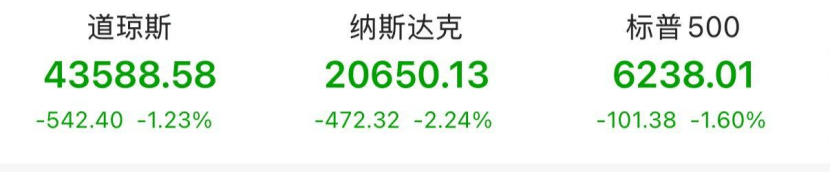
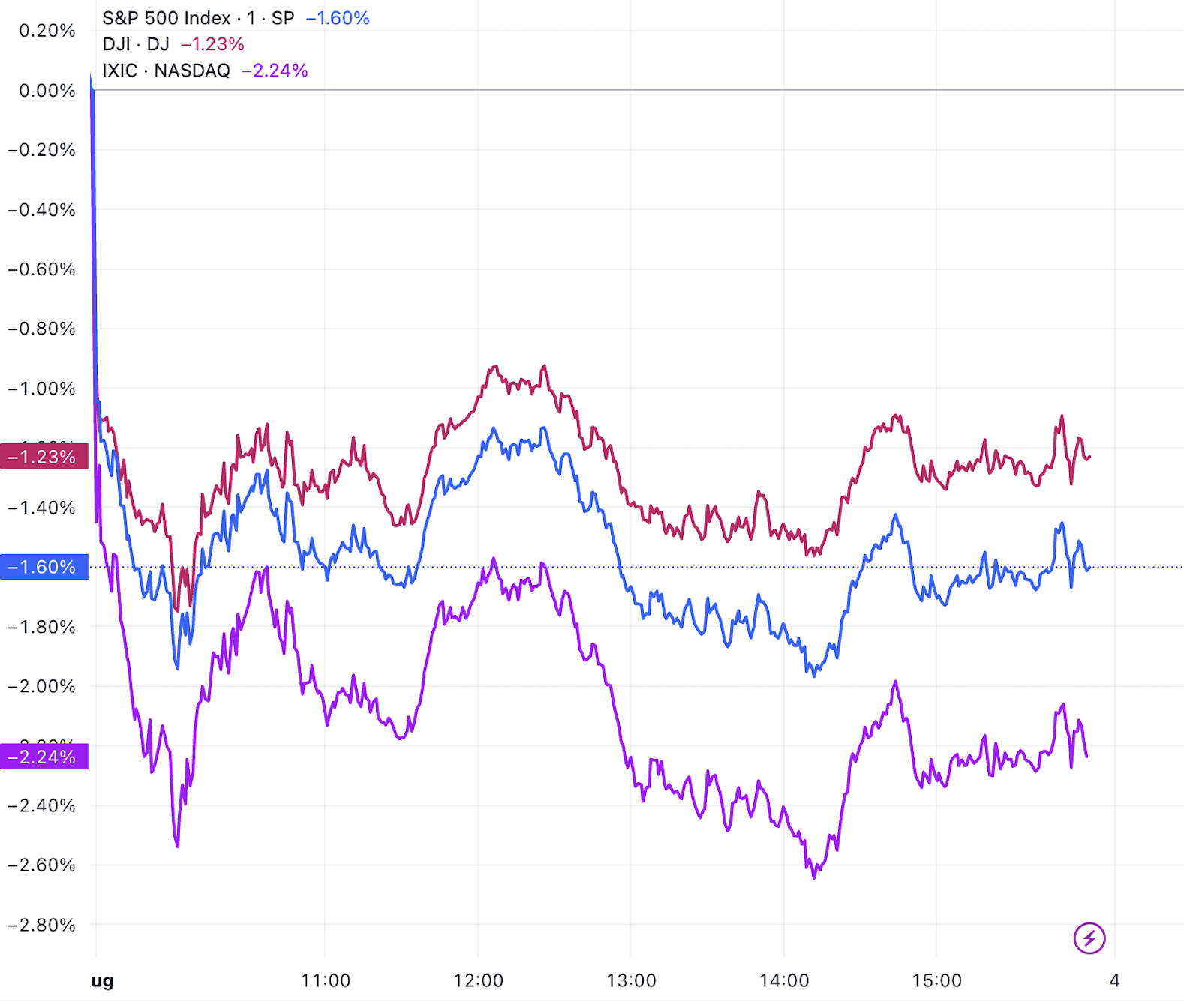
Market Performance - The three major U.S. stock indices closed lower, with the Dow Jones down 1.23% at 43,588.58 points, the S&P 500 down 1.60% at 6,238.01 points, and the Nasdaq down 2.24% at 20,650.13 points, marking the largest decline since April [3][4] - The U.S. stock market lost over $1 trillion in market capitalization due to investor concerns about economic prospects [3] Employment Data - The U.S. non-farm payrolls for July showed an increase of only 73,000 jobs, significantly below expectations, with the unemployment rate rising slightly to 4.2% [4][6] - Previous months' non-farm employment data were revised down sharply, with May's figures adjusted from 144,000 to just 19,000, and June's from 147,000 to 14,000 [4][6] Federal Reserve and Interest Rate Expectations - Following the weak employment data, the probability of a 25 basis point rate cut by the Federal Reserve in September surged from less than 40% to nearly 90% [6] - The bond market saw a decline in U.S. Treasury yields across the board, with the 2-year yield down 6.76%, the 5-year down 5.13%, and the 10-year down 3.23% [5] Political Developments - President Trump called for the dismissal of the Bureau of Labor Statistics director, citing concerns over inflated employment data ahead of the 2024 elections [8][11] - Federal Reserve Governor Adriana Kugler announced her resignation effective August 8, which allows Trump to appoint a new member to the Federal Reserve Board earlier than expected [11]


美股收盘:非农爆冷叠加关税冲击,三大指数均跌超1%
Feng Huang Wang· 2025-08-01 23:02
Market Overview - On the first trading day of August, U.S. stock markets experienced significant declines, with all three major indices dropping over 1% as investors assessed signs of economic weakness and President Trump's revised tariff policies [1][2] - The Dow Jones Industrial Average fell by 1.23% to 43,588.58 points, the S&P 500 dropped 1.60% to 6,238.01 points, and the Nasdaq Composite decreased by 2.24% to 20,650.13 points [2] Economic Data - The U.S. non-farm payrolls for July showed an increase of only 73,000 jobs, significantly below economists' expectations of 100,000 [5] - Previous months' employment data were also revised downwards, with June's job additions adjusted from 147,000 to 14,000 and May's from 125,000 to 19,000, indicating a prolonged weakness in the labor market [5] Banking Sector - Concerns over economic slowdown impacting loan growth led to a sharp decline in bank stocks, with JPMorgan Chase down over 2%, and Bank of America and Wells Fargo each falling more than 3% [6] - The weak employment data heightened expectations for an interest rate cut by the Federal Reserve, with traders estimating a roughly 86% probability of a rate cut in September [6] Technology Sector - Major technology stocks faced significant sell-offs, with Amazon's stock plummeting over 8% due to weak guidance for the current quarter [7] - Other notable declines included Nvidia down 2.33%, Microsoft down 1.76%, Apple down 2.50%, and Meta down 3.03% [7] Company News - OpenAI has reportedly raised $8.3 billion, achieving a valuation of $300 billion, with annual recurring revenue increasing from $10 billion in June to $13 billion, and expected to surpass $20 billion by year-end [8] - Roblox reported second-quarter revenue of $1.1 billion, a 21% year-over-year increase, with a goal to capture 10% of the $180 billion global gaming content market [10] - Nintendo's second-quarter revenue surged by 132.1% to ¥572.3 billion (approximately $3.8 billion), driven by strong sales of the new Switch 2 console [11] - Chevron reported second-quarter revenue of $44.82 billion, exceeding market expectations of $43.73 billion, with adjusted earnings per share of $1.77 [12]


海通国际2025年8月金股



Haitong Securities International· 2025-08-01 14:34
Investment Focus - The report highlights Amazon (AMZN US) as a top pick due to its leading position in the cloud industry with a 30% global market share, stable margin improvements, and strong demand for its T3 inference capabilities [1] - Alphabet (GOOGL US) is favored for its AI and advertising synergy, expected margin improvements in IaaS cloud services, and strong self-developed capabilities, although its stock price upside is currently limited [1] - Arista (ANET US) is recognized for its leadership in high-speed data center switches and expected revenue contributions from AI backend switch business, with a significant growth visibility [1] - Meituan (3690 HK) is noted for its strong cash flow generation ability and competitive cost structure, positioning it well in the face of industry competition [1] - Lenovo (992 HK) is highlighted for its record revenue in AI server business and significant growth potential compared to peers like Dell [2] - NVIDIA (NVDA US) is recognized for its strong financial performance and technological leadership in data center business, with a focus on emerging applications driving growth [2] - Tencent (700 HK) is expected to benefit significantly from AI advancements, with an upward revision in revenue and profit expectations for 2025 [2] - New Oriental (EDU US) is noted for its diverse revenue sources and strong brand recognition, supporting its high profit margins [3] - AIA (1299 HK) is favored for its steady growth in new business value and strong operational metrics, particularly in the ASEAN market [3] - Futu (FUTU US) is expected to see significant growth in paid user numbers and total AUM, supported by its low commission model and quality customer service [3] - The report emphasizes the potential of Chinese pharmaceutical companies like China Biologic Products (1177 HK) and Innovent Biologics (1801 HK) in their innovative drug pipelines and market leadership [4]
热门中概股美股盘前普跌,理想汽车跌超3%
Mei Ri Jing Ji Xin Wen· 2025-08-01 13:26
Group 1 - The core viewpoint is that popular Chinese concept stocks experienced a decline in pre-market trading on August 1, with significant drops observed across various companies [1] Group 2 - Bilibili, Tencent Music, and Li Auto each fell over 3% [1] - Alibaba dropped over 2%, while Pinduoduo, Baidu, iQIYI, NIO, and Xpeng Motors all saw declines exceeding 1% [1] - JD.com experienced a smaller decline of 0.79% [1]
金十图示:2025年08月01日(周五)中国科技互联网公司市值排名TOP 50一览


news flash· 2025-08-01 02:55
Core Insights - The article presents the market capitalization rankings of the top 50 Chinese technology and internet companies as of August 1, 2025, highlighting significant shifts in rankings and valuations [1]. Group 1: Market Capitalization Rankings - TSMC leads the list with a market capitalization of $125.32 billion [3]. - Tencent Holdings ranks second with a market capitalization of $64.22 billion [3]. - Alibaba has moved up to the third position with a market capitalization of $28.77 billion, showing a notable increase from its previous rank of 12 [3]. Group 2: Notable Companies and Changes - Xiaomi Group is ranked fourth with a market capitalization of $17.57 billion [3]. - Pinduoduo follows closely in fifth place with a market capitalization of $16.11 billion [3]. - Meituan and NetEase are ranked sixth and seventh, with market capitalizations of $9.46 billion and $8.25 billion, respectively [3][4]. Group 3: Additional Rankings - Semiconductor Manufacturing International Corporation (SMIC) is in eighth place with a market capitalization of $5.23 billion [4]. - JD.com is ranked tenth with a market capitalization of $4.54 billion [4]. - Kuaishou and Tencent Music are ranked 11th and 12th, with market capitalizations of $4.17 billion and $3.25 billion, respectively [4]. Group 4: Lower Rankings - Companies ranked from 25 to 50 include Kingdee International at $0.83 billion and Yuyuan at $0.40 billion, indicating a diverse range of valuations among the lower-ranked firms [5][6].

金十图示:2025年07月31日(周四)中国科技互联网公司市值排名TOP 50一览


news flash· 2025-07-31 02:55
| 36 | | 阿里巴巴 | 2799.92 | | | --- | --- | --- | --- | --- | | 4 | | 小米集团-W | 1763.96 | | | 5 | | 拼多多 | 1603.06 | | | | 網易 | 网易 | 825.18 | 11 | | 7 | | 东方财富 | 520.85 | II | | 8 | | 中芯国际 | 516.85 | | | --- | --- | --- | --- | --- | | 9 | | 京东 | 457.68 | | | 10 | | 快手-W | 409.34 | | | II | | 腾讯音乐 | 326.82 | | | 12 | Bal Car | 目度 | 295.44 | | | 13 | | 理想汽车 | 283.13 | | | 14 | | 贝壳 | 221.36 | | | 15 | | 同花顺 | 218.78 | | | 16 | | 小鹏汽车 | 171.87 | | | 17 | | 中通快递 | 159.79 | | | 18 | | 科大讯飞 | 157.13 | | | 19 | | 蔚来 ...

鲍威尔讲话打压降息预期,美股三大指数涨跌不一,热门中概股普跌
Feng Huang Wang· 2025-07-30 22:13
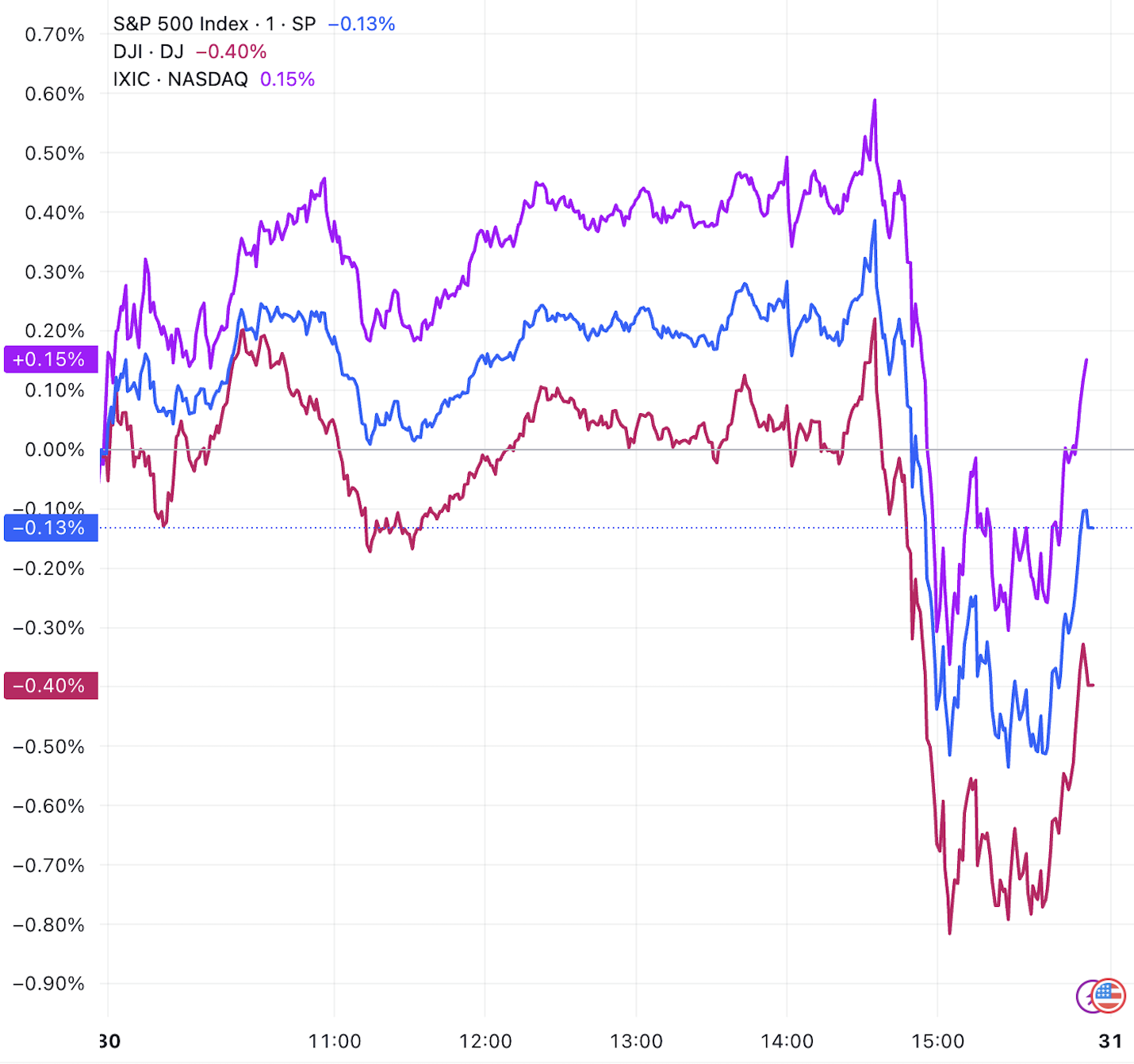
Market Overview - The Dow Jones index fell by 0.38% to 44,461.28 points, the S&P 500 index decreased by 0.12% to 6,362.90 points, while the Nasdaq index rose by 0.15% to 21,129.67 points [2] - The Federal Reserve maintained the federal funds rate target range at 4.25% to 4.50%, consistent with market expectations, marking five consecutive meetings without a rate change since December [2] - Fed Chair Jerome Powell indicated that no decision has been made regarding a policy adjustment in September, emphasizing the need to stabilize long-term inflation expectations [2][3] Interest Rate Expectations - Following Powell's remarks, market expectations for a rate cut in September diminished, with the probability dropping from approximately 65% to just below 50% [4] - Jamie Cox from Harris Financial Group noted that Powell is unlikely to yield to political pressure for rate cuts, prompting the market to reassess future federal funds rate levels [5] Company Performance - Microsoft reported a fourth-quarter net profit of $27.2 billion, a 24% year-over-year increase, with revenues of $76.44 billion, up 18% from the previous year [7] - Meta Platforms achieved a second-quarter net profit of $18.337 billion, reflecting a 36% year-over-year growth, with revenues of $47.52 billion, up 22% [9] - Qualcomm's third-quarter adjusted net profit reached $2.67 billion, a 25% increase year-over-year, with revenues of $10.37 billion, up 10% [11] Stock Movements - Microsoft shares jumped over 7% in after-hours trading following its earnings report [8] - Meta shares surged over 10% in after-hours trading after announcing strong quarterly results [10] - Qualcomm shares fell over 5% in after-hours trading despite reporting positive earnings [12] Industry Developments - Baidu is testing an AI application entry point on its search homepage, allowing users to access various AI applications directly [13]