
YUM CHINA(YUMC)

Search documents
必胜客首开独立汉堡店,但汉堡赛道竞争已白热化
Di Yi Cai Jing· 2026-01-06 10:30
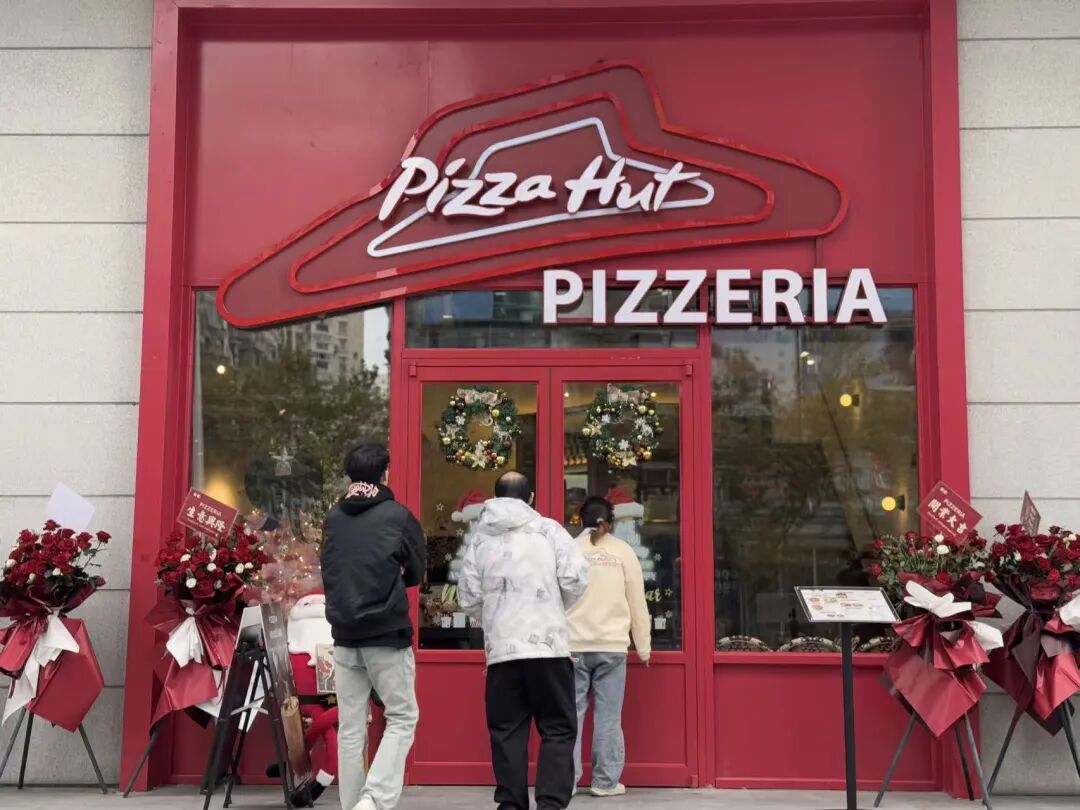
Core Insights - The Western fast food market in China has entered a highly competitive phase, referred to as the "involution era" [1] - Pizza Hut, under Yum China, has launched a new module called "Pizza Hut Burger," with two independent stores opened in Shenzhen [1][3] - The market for Western fast food is projected to reach 297.5 billion yuan in 2024, with a year-on-year growth of 11.0% [3] Company Developments - Pizza Hut Burger targets the single-person dining segment, offering freshly made burgers with a unique pizza dough base [3] - The average customer spending at Pizza Hut Burger is approximately 34 yuan, which is lower than Pizza Hut's average of 50 yuan but slightly higher than KFC and McDonald's at 28 yuan [3] - This is not the first time Pizza Hut has ventured into the burger market, having previously introduced a burger product line called "Pizza Burger" in April 2024 [3] Market Context - The fast food market is becoming increasingly saturated, with major international brands like KFC and McDonald's each operating around 10,000 stores in China, alongside domestic brands like Wallace and Tastin [3] - The competitive landscape indicates that the business for Pizza Hut Burger may face challenges [3] Strategic Insights - Experts suggest that Pizza Hut Burger aims to capture a demographic transitioning from middle-class to lower-income consumers while maintaining a "Western dining illusion" [4] - The multi-brand strategy of Yum China is designed to reduce sensitivity to external market fluctuations [4] - Future success in the burger segment will depend on balancing operational efficiency with customer experience, including quick service times and innovative menu offerings [4]


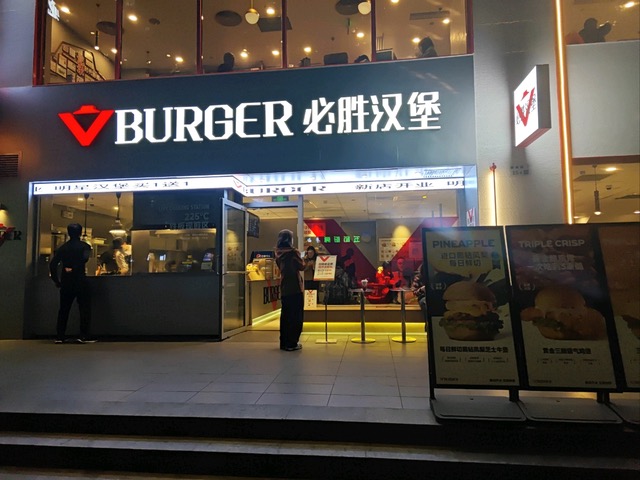
试水两年,必胜客汉堡专门店开业!西式快餐巨头混战升级
东京烘焙职业人· 2026-01-06 08:33
Core Viewpoint - The article discusses the launch of "Pizza Hut Burger," a new brand by Yum China, emphasizing its unique positioning in the competitive hamburger market with a focus on freshly made, high-quality burgers [4][15]. Group 1: Product Offering - "Pizza Hut Burger" features a menu with nearly 30 SKUs, including 10 types of burgers priced between 23 to 42 yuan, alongside 8 snacks and 9 beverages, catering to a refined single-person dining experience [12][14]. - The burgers are made with a unique pizza dough instead of traditional bread, and the ingredients are highlighted for their freshness and quality, such as using organic selenium-rich eggs and high-quality imported cheeses [8][11]. Group 2: Market Strategy - The brand aims to differentiate itself from competitors like KFC and McDonald's by offering a higher-end product with an average price point above 25 yuan per burger, compared to the 20-30 yuan range of its competitors [15][20]. - The launch of "Pizza Hut Burger" follows a successful trial of the "Pizza Burger" series, which began in December 2023, indicating a strategic move to establish a strong market presence [15][17]. Group 3: Competitive Landscape - The hamburger market is described as crowded, with significant competition from both international brands like KFC and McDonald's and domestic players such as Wallace and Tastin, making it a challenging environment for new entrants [18][20]. - Despite the competition, "Pizza Hut Burger" benefits from the extensive network of over 4,000 Pizza Hut locations across China, providing a robust operational and supply chain support [21].
道指创历史新高,美股能源板块普涨
Zheng Quan Shi Bao Wang· 2026-01-06 03:31
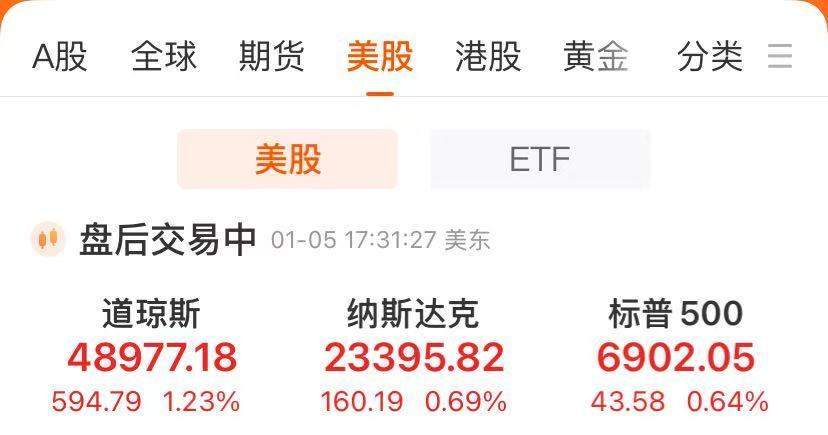
Market Performance - Major US stock indices closed higher, with the Dow Jones reaching a record high, driven by strong gains in financial stocks [1][3] - The Dow rose by 594.79 points, or 1.23%, closing at 48,977.18 points; the Nasdaq increased by 160.19 points, or 0.69%, to 23,395.82 points; and the S&P 500 gained 43.58 points, or 0.64%, ending at 6,902.05 points [3] Sector Performance - The S&P 500 energy sector index rose by 2.7%, with major stocks like ExxonMobil and Chevron seeing significant increases due to military actions in Venezuela [5] - The S&P 500 financial sector index increased by 2.2%, with both Goldman Sachs and JPMorgan Chase rising over 3% and reaching all-time highs [6] Technology Stocks - Most large-cap tech stocks saw gains, with Tesla up 3.10%, Amazon up 2.9%, and Meta up 1.29%. However, Microsoft fell by 0.02%, Nvidia dropped by 0.39%, and Apple decreased by 1.38% [3][4] Cryptocurrency and Related Stocks - Cryptocurrency-related stocks experienced a rise, with Strategy stock increasing nearly 5% and Coinbase surging by 7.8% as Bitcoin prices hit a three-week high [6] Chinese Stocks - The Nasdaq Golden Dragon China Index rose by 0.49%, with notable gains in stocks like Beike up over 6% and Bilibili and Tencent Music each up over 3% [6]


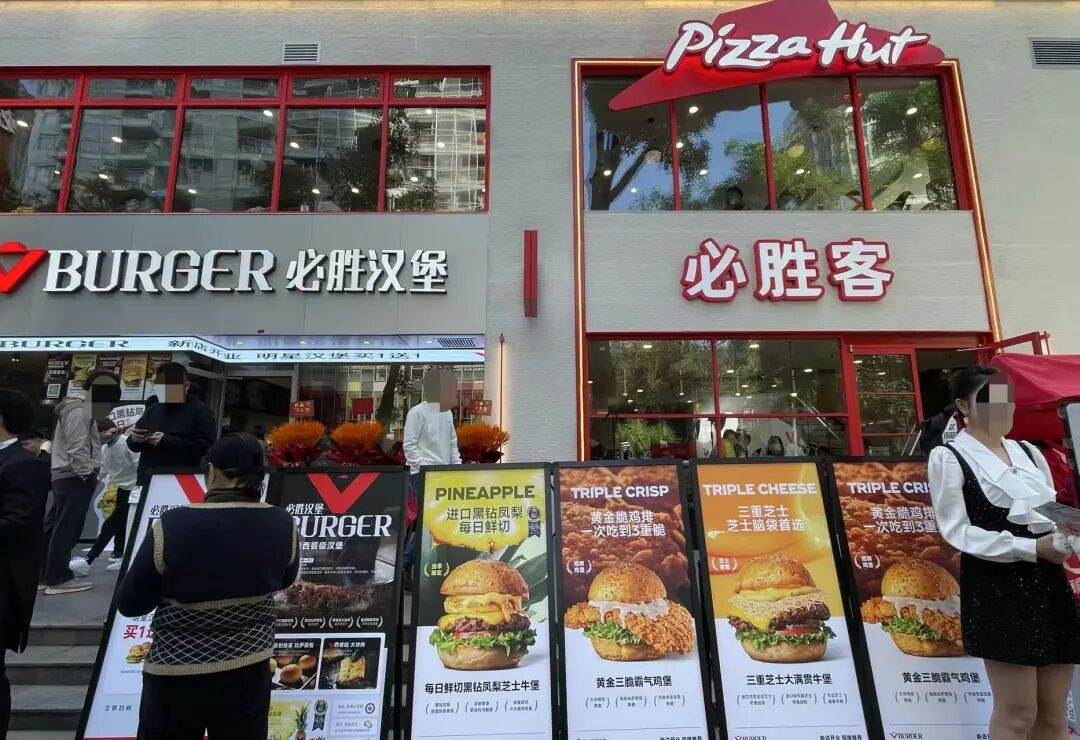
试水两年,必胜客汉堡专门店开业,西式快餐巨头混战升级
Xin Lang Cai Jing· 2026-01-04 03:40
Core Viewpoint - Yum China is expanding its brand portfolio with the launch of "Pizza Hamburger," a new hamburger chain that emphasizes freshly made, high-quality burgers, aiming to differentiate itself in a competitive market [1][10]. Group 1: Product Offering - The "Pizza Hamburger" chain features hamburgers starting at 23 yuan, with an average consumer spending of over 40 yuan, comparable to Pizza Hut's pricing [1][7]. - The menu includes 10 types of hamburgers, 8 snacks, and 9 beverages, totaling nearly 30 SKUs, which is considered diverse for a hamburger specialty store [7][10]. - The hamburgers are made with unique ingredients, such as beef sauce made from sun-dried tomatoes and organic selenium-rich eggs, emphasizing freshness and quality [7][3]. Group 2: Store Concept and Design - The first two "Pizza Hamburger" locations are situated in key commercial areas of Shenzhen, designed to operate independently from Pizza Hut with separate kitchens and dining areas [2][10]. - The open kitchen concept allows customers to see the cooking process, enhancing the dining experience [5][3]. Group 3: Market Positioning and Strategy - The launch of "Pizza Hamburger" follows a successful trial of the "Pizza Burger" product line, which was introduced in late 2023 and received positive consumer feedback [11][12]. - The brand aims to target the single dining experience, contrasting with Pizza Hut's focus on group dining, and is positioned in a high-end segment of the market [10][12]. - The competitive landscape includes established players like KFC and McDonald's, as well as emerging brands like Wei's Hamburger, which poses significant challenges [12][14]. Group 4: Future Prospects - Yum China's extensive network of over 4,000 Pizza Hut locations provides a strong support system for the new brand, potentially allowing for rapid expansion if the initial model proves successful [14]. - The company is actively pursuing a strategy of launching specialized sub-brands to attract younger consumers, indicating a trend towards diversification in the restaurant industry [14].
Yum China: Favorable Prospects Justify A 'Buy'
Seeking Alpha· 2026-01-02 17:26
Core Insights - The article emphasizes the focus on value investing in Asia, particularly in Hong Kong, targeting stocks with significant discrepancies between market price and intrinsic value [1] - The investment strategy includes identifying deep value balance sheet bargains and wide moat stocks, which are characterized by strong competitive advantages and high-quality business models [1] Group 1: Investment Strategy - The service aims to provide value investors with opportunities in Asia-listed stocks that are undervalued, specifically looking for net cash stocks, low price-to-book (P/B) ratios, and sum-of-the-parts discounts [1] - The approach also includes identifying "Magic Formula" stocks and hidden champions that exhibit strong earnings potential at discounted prices [1] Group 2: Market Focus - The primary market of interest is the Hong Kong equity market, where the analyst has over a decade of experience [1] - Monthly updates and watch lists are provided to keep investors informed about potential investment opportunities [1]
百胜中国(09987)12月31日斥资620.96万港元回购1.68万股
Zhi Tong Cai Jing· 2026-01-01 11:37
(原标题:百胜中国(09987)12月31日斥资620.96万港元回购1.68万股) 智通财经APP讯,百胜中国(09987)发布公告,于2025年12月31日斥资320万美元回购6.71万股;斥资 620.96万港元回购1.68万股。 ...
百胜中国(09987) - 翌日披露报表
2026-01-01 10:34
FF305 翌日披露報表 (股份發行人 ── 已發行股份或庫存股份變動、股份購回及/或在場内出售庫存股份) 表格類別: 股票 狀態: 新提交 公司名稱: 百勝中國控股有限公司("本公司") 呈交日期: 2026年1月1日 如上市發行人的已發行股份或庫存股份出現變動而須根據《香港聯合交易所有限公司(「香港聯交所」)證券上市規則》(「《主板上市規則》」)第13.25A條 / 《香港聯合交易所有限公司GEM證券 上市規則》(「《GEM上市規則》」)第17.27A條作出披露,必須填妥第一章節 。 | 第一章節 | | | | | | | | | | | --- | --- | --- | --- | --- | --- | --- | --- | --- | --- | | 1. 股份分類 | | 普通股 | 股份類別 | 不適用 | | 於香港聯交所上市 | 是 | | | | 證券代號 (如上市) | | 09987 | 說明 | | | | | | | | A. 已發行股份或庫存股份變動 | | | | | | | | | | | | 事件 | | 已發行股份(不包括庫存股份)變動 | | | 庫存股份變動 | ...
客单价40元,必胜客试水汉堡店
Guo Ji Jin Rong Bao· 2025-12-31 14:35
Core Insights - Pizza Hut is expanding its hamburger segment with the launch of "Pizza Hut Burger" in Shenzhen, marking a strategic move towards diversification in the fast-food market [1][3] Company Strategy - The introduction of "Pizza Hut Burger" aligns with the growing demand for single-serving meals, showcasing the brand's focus on innovation within the hamburger category [3] - The company plans to open over 600 new stores annually for the next three years, aiming to exceed 6,000 stores by 2028, with a goal to double operating profit by 2029 compared to 2024 [4] Market Position - The hamburger market is highly competitive, dominated by major players like McDonald's and KFC, while local brands such as Wallace and Tastin are also performing strongly [3] - The launch of "Pizza Hut Burger" indicates internal competition within Yum China, as both Pizza Hut and KFC operate under the same umbrella [3] Store Expansion - In the first nine months of 2025, Pizza Hut added 298 new stores, bringing the total to 4,022, with a significant increase in franchise stores expected to rise from 20%-30% to 40%-50% by 2028 [6] - The company is currently in a phase of "price for volume" adjustment, with a 4% year-on-year increase in system sales and a 1% increase in same-store sales for Q3 2025, despite a 13% decrease in average transaction value [6] Sales Performance - The reliance on delivery services is increasing, with a 27% year-on-year growth in delivery sales, accounting for 48% of total restaurant revenue, up from approximately 39% in 2024 [6]
百胜中国12月30日斥资626.8万港元回购1.69万股
Zhi Tong Cai Jing· 2025-12-31 11:26
百胜中国(09987)发布公告,于2025年12月30日,该公司斥资626.8万港元回购1.69万股。 ...
百胜中国(09987.HK)12月30日耗资626.8万港元回购1.69万股
Ge Long Hui· 2025-12-31 09:23
格隆汇12月31日丨百胜中国(09987.HK)发布公告,2025年12月30日耗资626.8万港元回购1.69万股,回购 价格每股367-375.6港元。 ...