ZTO EXPRESS(ZTO)

Search documents
Here's Why Investors Should Give ZTO Express Stock a Miss Now
ZACKS· 2025-08-29 17:31
Core Viewpoint - ZTO Express (ZTO) is currently facing multiple challenges, making it an unattractive investment option [1] Financial Performance - The Zacks Consensus Estimate for ZTO's third-quarter 2025 earnings has decreased by 7.35% over the past 60 days, with a 3.89% downward revision for the current year [2] - ZTO's shares have declined by 7% over the past six months, while the transportation-services industry has grown by 4.9% [3] - ZTO's earnings are projected to decline by 10.78% year over year for 2025 [7] Cost and Revenue Challenges - In 2024, ZTO experienced a 14.2% year-over-year increase in total cost of revenues, which further escalated to a 21.5% increase in the first half of 2025 [8][9] - The company has revised its 2025 parcel volume forecast down to 38.8-40.1 billion from a previous estimate of 40.8-42.2 billion, indicating a reduction in expected year-over-year growth from 20-24% to 14-18% [8][9] Competitive Landscape - The domestic express delivery market is highly competitive, with major players like SF Express and STO Express posing significant challenges to ZTO [10] - ZTO's industry rank is currently at 223 out of 248 groups, placing it in the bottom 9% of Zacks industries, which suggests that the overall industry performance is weak [11]


浙江107家企业上榜!2025中国民营企业500强三张榜单发布


Sou Hu Cai Jing· 2025-08-29 07:34
Summary of Key Points - The All-China Federation of Industry and Commerce released the 2025 list of China's top 500 private enterprises, with Zhejiang province having 107 companies listed, an increase of 1 from last year, maintaining its position as the top province for 27 consecutive years [1] - Zhejiang also has 109 companies listed in the "Top 500 Private Manufacturing Enterprises," which is unchanged from last year, and 20 companies in the "Top 100 Private Service Enterprises," an increase of 1 from last year [1] Group 1: Top Private Enterprises in Zhejiang - The list includes notable companies such as Dofer International Holdings Group, Wanxiang Group, Tongkun Holdings Group, and Ant Technology Group [3][4][5][12] - Other significant companies listed are NetEase (Hangzhou) Network Co., Alibaba (China) Co., and HRS WRE [18][19] Group 2: Manufacturing and Service Sectors - Zhejiang's manufacturing sector is represented by 109 companies, indicating a stable presence in the industry [1] - The service sector has shown growth with 20 companies listed, reflecting an expanding service industry in the province [1]

美股异动|中通快递盘前跌超1%,遭大摩下调目标价及盈测
Ge Long Hui A P P· 2025-08-27 08:27
Core Viewpoint - ZTO Express (ZTO.US) shares fell over 1% pre-market, trading at $18.97, following a target price downgrade by Morgan Stanley from $24.6 to $23.8 while maintaining an "Overweight" rating [1] Summary by Relevant Categories Company Performance - Morgan Stanley adjusted its earnings estimates for ZTO Express for the years 2025 to 2027, reducing projections by 1%, 2%, and 2% respectively [1] Industry Trends - The downgrade in package volume forecasts is attributed to an anticipated slowdown in industry growth in the second half of 2025 [1] - An increase in average selling prices is noted as a result of anti-competitive practices [1] - Other one-time project impacts were also considered in the earnings estimate adjustments [1]
中通集团大湾区空地一体智慧运营中心项目落户佛山
Xin Lang Cai Jing· 2025-08-27 01:52
据佛山发布,8月26日,佛山市顺德区人民政府与中通快递集团签订投资协议,中通集团大湾区(佛 山)空地一体智慧运营中心项目落户佛山。中通集团大湾区(佛山)空地一体智慧运营中心项目计划总 投资50亿元,首期投资30亿元,拟在顺德区建设集物流装备制造、区域结算与智慧运营于一体的综合性 产业基地。 ...
美股三大指数均小幅收涨,礼来涨近6%,中概股蔚来涨超10%
Ge Long Hui A P P· 2025-08-26 22:52
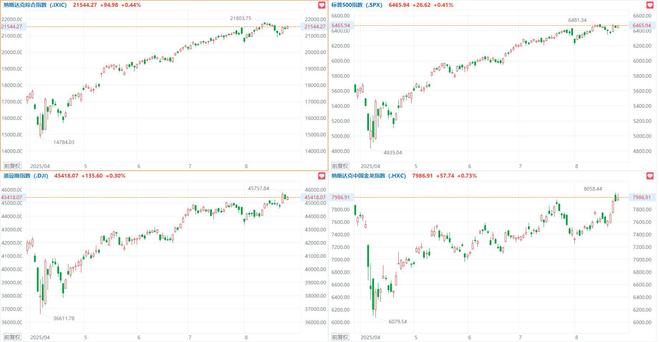
Market Performance - US stock market opened lower but closed higher, with all three major indices posting slight gains: Nasdaq up 0.44%, S&P 500 up 0.41%, and Dow Jones up 0.3% [1] - Major tech stocks mostly increased, with Tesla and Nvidia rising over 1%, while Apple, Netflix, Amazon, and Meta saw slight gains; Google, Microsoft, and Intel experienced minor declines [1] Company Highlights - Eli Lilly's stock surged nearly 6% following the successful results of its Phase 3 clinical trial for oral GLP-1 receptor agonist orforglipron for obesity combined with type 2 diabetes [1] - Popular Chinese concept stocks mostly rose, with the Nasdaq Golden Dragon China Index increasing by 0.72% [1] - NIO saw a significant increase of 10.02%, while Atour and Xpeng rose by 5.84% and 5.46% respectively; Li Auto increased by 2.71%, and Huazhu rose by 2.33% [1] - Other notable increases included Tencent Music, Global Data, Pony.ai, Miniso, ZTO Express, and NetEase, all rising by up to 1.98% [1] - Xiaomi Group's ADR rose by 1.65%, TSMC's ADR increased by 1.33%, Tencent Holdings' ADR went up by 0.19%, while Pinduoduo's ADR fell by 3.35% [1][2]





再无“8毛包邮全国”,小商家月增万元成本,快递员收入暂未上涨
3 6 Ke· 2025-08-26 11:41
Core Insights - Recent price increases in express delivery fees have caused significant concern among e-commerce operators, particularly small businesses that rely on low-cost shipping to maintain profitability [1][2][3] - The price adjustments, particularly in Guangdong and Zhejiang, range from 0.3 to 0.7 yuan per package, which can severely impact the already thin profit margins of small e-commerce vendors [1][2] - The rise in delivery costs is forcing small merchants to reconsider their pricing strategies and operational costs, with some opting to cut expenses in packaging and promotions rather than passing costs onto consumers [3][8] Delivery Fee Increases - In Guangdong, the average increase in delivery fees is reported at 0.4 yuan, which translates to a profit reduction of approximately 3% for small businesses selling low-cost items [2] - For example, a small business selling handmade products at 9.99 yuan experiences a significant profit squeeze due to the increased shipping costs, which now average around 2 yuan per package [2] - Another e-commerce operator in Dongguan reported a 0.7 yuan increase, leading to an additional monthly cost exceeding 12,000 yuan, effectively halving her monthly profit [3] Market Dynamics - The express delivery sector in Guangdong accounted for 425 billion packages last year, representing 24% of the national total, with revenues of 304 billion yuan [5] - Despite the price hikes, many delivery personnel have not seen an increase in their compensation, as their earnings are still tied to the volume of packages delivered and service commissions [9][8] - The current trend of rising delivery fees is seen as a response to the long-standing issue of "internal competition" within the industry, which has led to unsustainable pricing practices [11][13] Industry Response - Major express delivery companies are responding to regulatory calls to combat "internal competition" by raising prices, aiming to improve service quality and profitability [11][14] - Experts suggest that the industry is experiencing a "volume-price inversion," where low prices are leading to operational inefficiencies and increased pressure on delivery networks [14] - The anticipated shift from a low-price competition model to a quality-focused approach may lead to further price increases and industry consolidation in the future [14]


电商洗牌,1元运费成历史?
Hu Xiu· 2025-08-26 08:58
Core Viewpoint - Recent price increases in express delivery services in Guangdong and Zhejiang are primarily targeting e-commerce clients with low shipping costs, with adjustments ranging from 0.3 to 0.7 yuan per order and a minimum price set at 1.4 yuan per order [1][4]. Group 1: Price Increase Details - Multiple express delivery companies in Guangdong and Zhejiang have raised prices for e-commerce clients, with Guangdong being a key area for these adjustments [4]. - The price increase has been in effect since early August, with variations depending on the individual company's circumstances [4]. - Affected e-commerce businesses are those with previously low shipping costs, particularly in regions like Guangzhou, Shenzhen, and Dongguan [2][4]. Group 2: Industry Reactions and Implications - Industry experts predict that more regions will follow suit in adjusting e-commerce delivery prices, which may improve the performance of express delivery companies in the short term [3][8]. - However, there is skepticism among industry insiders regarding whether the price increase will lead to a corresponding rise in courier wages, with many calling for a minimum wage for couriers instead [5][6]. Group 3: Long-term Industry Trends - The ongoing price war in the express delivery sector has led to significant pressure on companies, particularly those operating under a franchise model, resulting in declining revenue per shipment [7]. - Experts foresee potential mergers and acquisitions in the industry as a response to the current challenges, with a shift towards a more concentrated market [8][9]. - The recent price adjustments are viewed as a potential starting point for broader improvements in the industry, including better capital expenditure, technology development, and labor conditions [9].


比RoboTaxi更疯狂,无人物流车的“极限战场”
Tai Mei Ti A P P· 2025-08-25 11:04
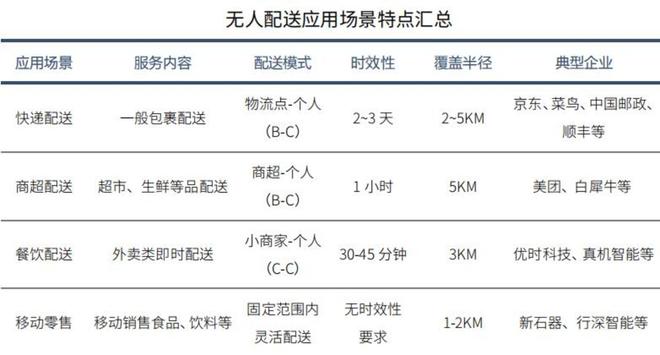
Core Viewpoint - The autonomous delivery vehicle sector is experiencing significant investment and growth, particularly in the logistics and freight delivery space, as evidenced by various funding rounds and strategic partnerships [1][2][4]. Investment and Financing - Notable investments include New Stone's completion of a 1 billion yuan C+ round in April, and Jiuyuan Intelligence's B3 round financing of 100 million USD, totaling nearly 300 million USD in B round financing [1]. - In August, White Rhino secured its second round of financing this year, accumulating nearly 500 million yuan in B round financing [1]. - Despite a cooling investment climate, capital continues to flow into the unmanned logistics delivery vehicle sector, indicating a consensus on reaching a "scale profitability threshold" [1]. Policy Support - The policy environment has evolved to support the development of unmanned delivery vehicles, with the issuance of road licenses and pilot programs since 2021 [3]. - By June 2025, over 100 cities in China had opened road rights for unmanned delivery vehicles, facilitating their large-scale deployment [3]. - The State Post Bureau has emphasized the promotion of AI technologies and products in the logistics sector, indicating strong governmental support for unmanned delivery vehicles [3]. Market Growth and Projections - The year 2025 is anticipated to be a "breakout year" for unmanned logistics delivery vehicles, with expectations of explosive market growth over the next three years [4]. - The market for unmanned delivery vehicles is projected to reach 2.634 trillion yuan by 2030, which is 5.4 times the expected market size in 2025 [5]. Cost Reduction and Efficiency - The logistics industry is facing intense price competition, leading to a significant drop in average delivery prices, which fell by 8.2% year-on-year in the first five months of 2025 [7]. - The introduction of unmanned delivery vehicles can reduce labor costs significantly, with examples showing a 70% reduction in per-item costs when using unmanned vehicles [8][9]. - Unmanned delivery vehicles can operate at double the efficiency of traditional delivery methods during peak periods, such as "Double Eleven" and the Spring Festival [9]. Application Scenarios - The primary application of unmanned delivery vehicles is in the last-mile delivery segment, particularly in urban areas [10][12]. - Various delivery scenarios include express delivery, supermarket delivery, and mobile retail, with different service contents and timeframes [5]. Technological Advancements - The cost of unmanned delivery vehicles has decreased significantly, with some models dropping from 200,000 yuan to 70,000 yuan between 2018 and 2023 [14]. - The shift from high-cost hardware solutions to more cost-effective visual-based systems has contributed to the reduction in overall costs [16][17]. Industry Dynamics - Major logistics companies are adopting different strategies, with some integrating technology suppliers deeply into their operations, while others rely on a more fragmented deployment approach [17]. - The logistics sector is expanding its focus from ground to aerial delivery, creating a comprehensive unmanned delivery system that includes drones and ground vehicles [17].
1元运费成历史?多地电商快递费上涨,散客不受影响
新浪财经· 2025-08-25 10:28
Core Viewpoint - Recent price increases in express delivery services in regions like Guangdong and Zhejiang are primarily targeting e-commerce clients with low shipping costs, with adjustments ranging from 0.3 to 0.7 yuan per package, establishing a minimum price of 1.4 yuan per package [3][7]. Group 1: Price Increase Details - Multiple express delivery companies in Guangdong and Zhejiang have raised prices for e-commerce clients, with Guangdong being a key area for these adjustments [7]. - The price increase has been in effect since early August, with different companies implementing varying rates based on their circumstances [7]. - Affected e-commerce merchants typically have low shipping costs, such as those paying around 1 yuan or less per package, particularly in price-sensitive areas like Guangzhou, Shenzhen, and Dongguan [7][8]. Group 2: Impact on Industry and Workers - Theoretically, the rise in express delivery fees should lead to increased revenue for delivery points and higher pay for couriers; however, many industry insiders express skepticism about this outcome [4][12]. - There is a growing call among couriers for establishing a minimum pay rate rather than solely relying on price increases for e-commerce deliveries [4][8]. - The express delivery industry has faced significant pressure due to prolonged price wars, leading to a decline in income for couriers and increased operational challenges for companies [8][11]. Group 3: Future Trends and Expectations - Experts predict that more regions will follow suit in adjusting e-commerce delivery prices, which may lead to improved short-term performance for express delivery companies [12]. - The long-term outlook suggests that direct delivery models will have advantages due to their stable pricing systems and enhanced service capabilities [12][13]. - The industry is expected to undergo consolidation and restructuring, with a focus on reducing excess capacity and improving profitability for delivery points and franchisees [12][13].

1元运费成历史?多地电商快递费上涨,散客不受影响
Xin Lang Cai Jing· 2025-08-25 09:56
Core Viewpoint - Recent reports indicate that express delivery companies in Guangdong, Zhejiang, and other regions have raised shipping fees for e-commerce clients, with increases ranging from 0.3 to 0.7 yuan per order, establishing a minimum price of 1.4 yuan per order [2][3][4]. Group 1: Price Increase Details - The price increase primarily targets e-commerce clients with lower shipping fees, while individual orders are not affected [2][3]. - The price adjustments began in early August, with variations depending on the specific express delivery company [3][4]. - Affected e-commerce merchants typically have shipping costs around 1 yuan or lower, particularly in regions like Guangzhou, Shenzhen, Dongguan, and others, which are considered price-sensitive areas [2][3]. Group 2: Industry Reactions and Implications - Industry experts express skepticism about whether the increase in shipping fees will lead to a corresponding rise in net income and delivery personnel compensation [4][6]. - Many frontline delivery workers emphasize the urgency of establishing a minimum delivery fee rather than relying solely on price increases for e-commerce deliveries [4][6]. - The recent price adjustments are seen as a response to the ongoing "involution" in the industry, where intense price competition has pressured profit margins [4][6]. Group 3: Future Industry Trends - Experts predict that more regions will follow suit in adjusting e-commerce delivery prices, which could lead to improved short-term performance for express delivery companies [6]. - In the long term, a shift towards a direct delivery model is anticipated to provide competitive advantages, as these companies maintain stable pricing structures and enhanced service capabilities [6]. - The express delivery industry may experience mergers and acquisitions, leading to increased market concentration as companies seek to navigate the challenges posed by overcapacity and competitive pressures [5][6].