华润饮料

Search documents
中信建投:食饮板块处市场预期低位 重点看好四大板块
智通财经网· 2025-11-17 02:10
Group 1: Core Insights - The food and beverage sector is experiencing a long-term correction, with low domestic demand and significantly reduced valuations, creating a clear bottom logic for quality assets like liquor [1][2] - The report highlights four key sectors: liquor, snacks and health products, dairy, and restaurant chains, with a focus on potential recovery in demand and investment opportunities [1] Group 2: Liquor Sector - The liquor market is facing weak demand, with consumer confidence remaining low and a negative year-on-year CPI for liquor products, leading to price declines in mainstream products [2] - High-end and mid-high-end liquor are performing relatively well, while the industry is entering a competitive era with significant internal differentiation among listed companies [2] - Companies are focusing on market order control, product iteration, and consumer engagement to improve market share, although profit margin growth is slowing [1][2] Group 3: Restaurant Chains - The overall restaurant market remains weak, but companies are showing signs of improvement due to strategic adjustments over the past two years [3] - The shift from price competition to quality-price ratio competition is expected to optimize the competitive environment [3] - Companies are embracing new retail channels and enhancing supply chain efficiency, with international expansion becoming a key growth direction [3] Group 4: Snacks - The trend towards healthier and low-calorie snacks is driving sales, particularly in the konjac product category, with brands like Salted Fish and Yanjin achieving strong sales [4] - The transformation of bulk snack retail formats and the growth of discount stores are contributing to market opportunities [4] - The sector is expected to benefit from channel growth and new product launches in 2026, with recommendations for specific brands [4] Group 5: Beverages - The beverage sector is witnessing a trend towards health and functionality, with high demand in specific subcategories [5][6] - Companies like Dongpeng Beverage are expanding nationally, with strong growth prospects and new product lines [6] Group 6: Health Products - The health product sector is being driven by new consumer trends, with brands that embrace new consumption patterns expected to benefit significantly [7] - Companies like Xianle Health are well-positioned to capitalize on high-demand channels and new product categories [7] Group 7: Dairy Products - The dairy market is expected to enter an upward price cycle, with raw milk prices stabilizing and deep processing capacity increasing [8] - Major dairy companies are improving their market share and profitability through strategic initiatives and government support [8] Group 8: Beer - The beer industry is facing rising raw material costs, which may lead to adjustments in product pricing and promotional strategies [9] - Companies like Yanjing Beer and Qingdao Beer are highlighted for their growth potential and strong dividend attributes [9]

2025年第45周:食品饮料行业周度市场观察
艾瑞咨询· 2025-11-13 00:05
Industry Environment - Japan's consumer market thrives on high-frequency innovation, evolving from imitation to user-driven innovation since the 1980s, with companies establishing consumer research centers to deeply explore needs [3][4] - The "medicinal food" industry in China has surpassed 370 billion yuan, with a total industry valuation exceeding 2 trillion yuan, driven by health awareness and policy support [5] - The plant-based protein beverage market is facing pressure, but leading companies are preparing for peak seasons with channel expansion and new product promotions [6] Beverage Market Trends - HPP cold brew tea, combining high-pressure cold sterilization with cold brewing, is gaining popularity among young consumers, despite its higher cost and niche market status [7] - The beverage market is witnessing a return of sugary drinks, with brands like Yuanqi Forest and Wahaha launching new sugary products, reflecting consumer preferences for taste and pleasure [8] - The bottled water market is shifting from price competition to value competition, with companies like Nongfu Spring and China Resources leading through product innovation and channel transformation [9][10] Brand Dynamics - Mondelez International reported a 5.9% revenue growth in Q3 2025, but faced profit margin pressures due to rising costs and declining consumer confidence in emerging markets like China [20] - Xu Fu Ji's Meilu energy biscuits have rapidly gained popularity in the sports nutrition market, leveraging event sponsorships and targeted marketing strategies [21] - Coca-Cola's Q3 2025 revenue reached $12.455 billion, driven by price increases and strong sales of sugar-free products, despite a slight decline in the Chinese market [22] Plant-Based and Health Trends - Yangyuan Beverage is enhancing its leadership in the plant-based protein beverage sector through product innovation and channel restructuring [23] - The low-sugar trend is becoming mainstream, with brands like Holleyou launching new products that balance health and taste [25] - Mengniu's milk powder business has achieved double-digit growth by focusing on emotional marketing and channel optimization to meet diverse consumer needs [26] Emerging Opportunities - The plant milk market is projected to exceed 100 billion yuan by 2025, with B2B channels becoming crucial for growth [14] - The sports drink segment is rapidly growing, with brands like Magic leveraging product upgrades and sports marketing to strengthen their market position [33] - The electrolyte drink market is dominated by brands like Dongpeng and Alien, with both focusing on channel strategies and product diversification to capture market share [31][32]


专访瑞银全球投资银行胡凌寒:香港IPO热潮超预期 未来将现三大趋势
Zheng Quan Shi Bao· 2025-11-12 18:44
Core Insights - The Hong Kong IPO market has seen a strong recovery since 2025, with fundraising exceeding HKD 200 billion, regaining its position as the global leader in IPOs [1] - UBS has played a pivotal role in this resurgence, leading significant projects such as the listings of Mixue Ice City and CATL, and participating in BYD's placement [1][2] - The outlook for the Hong Kong IPO market remains positive, driven by the influx of quality companies and the return of foreign capital [1][6] Market Performance - The fundraising in the Hong Kong IPO market has surpassed expectations, with the market returning to the top globally in the first three quarters of the year [2] - The "924 policy" introduced last year signaled a positive shift, with high-quality foreign investors showing strong interest in projects like China Resources Beverage [2] - UBS's role in BYD's placement, raising approximately HKD 435 billion (around USD 56 billion), has significantly boosted market confidence [2] Representative Projects - Mixue Ice City is highlighted as a landmark project that opened the IPO market in Q1, setting a record for frozen capital and demonstrating strong institutional demand [3] - CATL's successful listing, with a "0 discount" pricing strategy, reflects the positive trend of domestic and foreign capital participation [3] Impact of HKEX Reforms - Recent reforms by the Hong Kong Stock Exchange (HKEX) have positively influenced the market, allowing larger companies to issue shares at more reasonable scales [4] - The new regulations have stabilized the allocation ratio between institutional and retail investors, enhancing pricing mechanisms and improving post-listing performance [4] Foreign Capital Trends - There is a clear trend of foreign capital returning to the Hong Kong IPO market, particularly from Europe and the Middle East [5] - The shift in foreign investment is driven by the need for diversified asset allocation, with China becoming a key focus for global investors [5] Future Outlook - The outlook for the Hong Kong IPO market in the next 1-2 years remains optimistic, supported by a positive cycle of supply and demand [6] - Key trends include diversification in company size and industry, a strong linkage between supply and demand, and the globalization of Chinese enterprises [7]

香港IPO热潮超预期 未来将现三大趋势
Zheng Quan Shi Bao· 2025-11-12 18:33
Core Insights - The Hong Kong IPO market has seen a strong recovery since 2025, with fundraising exceeding HKD 200 billion, regaining its position as the global leader in IPOs [1][2] - UBS has played a significant role in this resurgence, leading several high-profile projects such as the listings of Mixue Ice City and CATL, and the placement for BYD [1][2] - The outlook for the Hong Kong IPO market remains positive, driven by the influx of quality companies and the continued return of foreign capital [1][2] Market Performance - The fundraising amount in the Hong Kong IPO market has surpassed HKD 200 billion this year, with the first three quarters marking a return to the top position globally, exceeding initial expectations [2] - The "924 policy" introduced last year signaled a positive shift, as evidenced by the successful fundraising for projects like China Resources Beverage, which attracted significant foreign investment [2] - UBS's role in the placement of BYD, raising approximately HKD 435 billion (around USD 56 billion), has significantly boosted market confidence [2] Representative Projects - The listing of Mixue Ice City is highlighted as a key milestone for the IPO market, setting a record for frozen capital and demonstrating strong institutional demand [3] - CATL's successful listing, with a "0 discount" pricing strategy, reflects the positive sentiment among both domestic and foreign investors [3] Impact of HKEX Reforms - Recent reforms by the Hong Kong Stock Exchange (HKEX) have positively influenced the market, particularly in terms of IPO pricing and issuance requirements [4] - The new regulations allow larger companies to issue shares at a more reasonable scale, encouraging high-quality issuers to consider the Hong Kong market [4] Retail Investor Distribution - The new IPO pricing mechanism has established a more predictable allocation ratio between institutional and retail investors, stabilizing retail distribution at around 10% [5] - This change aligns with international market practices and enhances the pricing power of institutions, ultimately benefiting all parties involved [5] Foreign Capital Trends - There is a clear trend of foreign capital returning to the Hong Kong IPO market, particularly from European and Middle Eastern investors [6] - The shift in foreign investment is driven by a need for diversified asset allocation, with China becoming a key focus for global investors [8] Future Trends - The outlook for the Hong Kong IPO market in the next 1-2 years is optimistic, characterized by a positive cycle of supply and demand [9] - Key trends include diversification in company size and industry, a strong linkage between quality offerings and capital attraction, and the globalization of Chinese enterprises [10]


星巴克迎来「中国合伙人」之后,还要面临哪些压力? | 声动早咖啡
声动活泼· 2025-11-10 09:04
Core Viewpoint - Starbucks has transitioned from wholly-owned expansion in China to a joint venture model, indicating a strategic shift in response to competitive pressures in the market [3][4]. Group 1: Historical Context and Strategic Decisions - Starbucks entered the Chinese market in 1999 through partnerships with local companies, gradually shifting to a wholly-owned model as the market matured [4]. - The recent deal with Boyu Capital marks a return to a joint venture structure, allowing Starbucks to retain some control while leveraging local expertise [4][5]. - The valuation of Starbucks China at $4 billion has raised concerns among industry experts, who believe it may be too high given the competitive landscape [4]. Group 2: Market Strategy and Expansion Plans - Starbucks adapts its market entry strategy based on local conditions, opting for wholly-owned or majority-controlled models in markets similar to the U.S., while using joint ventures in less familiar territories [5][6]. - The company aims to expand its store count in China to 20,000, indicating an aggressive growth strategy despite the challenges posed by local competitors [6][8]. - The partnership with Boyu Capital is seen as a way to enhance local market penetration and capitalize on Boyu's resources in residential and commercial properties [7]. Group 3: Challenges Ahead - The ambitious target of 20,000 stores may necessitate a shift towards franchising, as managing such a large number of outlets without local partners could be impractical [8][9]. - Expanding into lower-tier cities presents challenges, including limited consumer spending power and competition from lower-priced coffee options [8][10]. - Starbucks faces pressure to localize its menu and supply chain to compete effectively, as its current offerings may not meet the evolving preferences of Chinese consumers [10][11]. Group 4: Operational Adjustments - The company has made recent adjustments to its pricing and product offerings, including limited-time discounts and new beverage options, to remain competitive [10][11]. - There is a need for innovation in product development, particularly in sourcing and flavor profiles, to better align with local tastes and preferences [11].


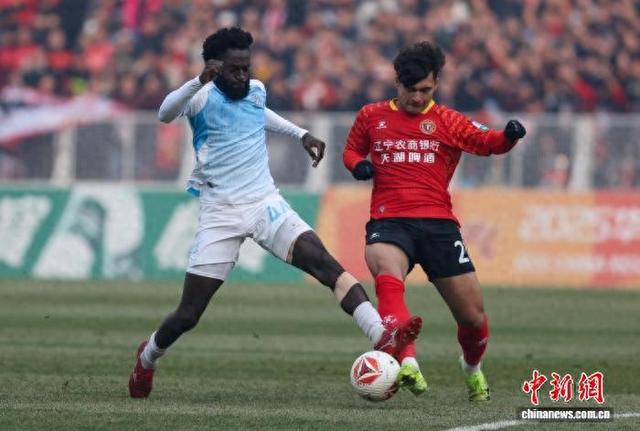
中甲:辽宁铁人农商银行队胜佛山南狮队
Zhong Guo Xin Wen Wang· 2025-11-08 11:21
Group 1 - The match on November 8 featured the 30th round of the 2025 China League One, where Liaoning Ironman Agricultural Bank team achieved a significant victory over Foshan Nanshi team with a score of 5-0 [1][2][3] - The match took place in Shenyang, Liaoning province, highlighting the competitive nature of the league [1][2][3] - Players from Liaoning Ironman, including An Yien and other teammates, celebrated their goals during the match, showcasing strong team performance [1][2][3]
本土资本为何频频买入在华 “洋品牌”?
Zheng Quan Shi Bao Wang· 2025-11-06 15:49
Core Insights - Starbucks has officially announced a strategic partnership with Boyu Capital to establish a joint venture for its retail operations in China, marking the conclusion of a year-long speculation regarding its sale in the Chinese market [1] - Other foreign brands, such as Haagen-Dazs, are also considering selling their Chinese operations and bringing in local investors, indicating a trend where top-tier local capital is increasingly acquiring foreign brands facing growth challenges in China [1][2] Group 1: Investment Trends - The buyers in these acquisitions are primarily top-tier local private equity firms that possess strong fundraising capabilities and comprehensive operational restructuring skills, making them mature players in the M&A field [1][2] - Boyu Capital has made significant investments in the new economy and consumer markets, including stakes in brands like Mixue Ice Cream and Hai Tian Flavor, showcasing its active role in the sector [1] Group 2: Acquisition Rationale - The targets of these acquisitions are mostly established foreign restaurant brands rather than emerging brands, driven by the scarcity and irreplaceability of these brands in the minds of consumers in first- and second-tier cities [2][3] - Established brands like Starbucks and McDonald's have a solid financial foundation and cash flow, which provides a safety net for capital operations, even when growth slows [2] Group 3: Operational Challenges - Mature brands face significant operational challenges, including bureaucratic decision-making processes and insufficient local team incentives, which hinder their ability to innovate and adapt to the fast-paced Chinese market [3] - Local capital can leverage its advantages to address these shortcomings, thereby unlocking asset value through targeted restructuring [3] Group 4: Market Dynamics - The current environment of slow growth presents a favorable opportunity for capital to enter the market, as established brands are more willing to negotiate prices during downturns [5] - The involvement of local capital is expected to enhance the efficiency of the consumer market, as it will empower local teams with greater decision-making authority and accelerate innovation [6][8] Group 5: Future Outlook - The trend of foreign brands selling stakes to local investors is likely to increase, driven by the dual pressures of sluggish growth and competition from local brands like Luckin Coffee [7][8] - This strategy allows foreign brands to retain their standardized advantages while benefiting from the flexibility and local insights provided by domestic capital, creating a synergistic effect [8]


华润饮料(02460) - 截至二零二五年十月三十一日止月份之股份发行人的证券变动月报表
2025-11-06 09:18
股份發行人及根據《上市規則》第十九B章上市的香港預託證券發行人的證券變動月報表 截至月份: 2025年10月31日 狀態: 新提交 致:香港交易及結算所有限公司 公司名稱: 華潤飲料(控股)有限公司 呈交日期: 2025年11月6日 I. 法定/註冊股本變動 | 1. 股份分類 | 普通股 | 股份類別 | 不適用 | | 於香港聯交所上市 (註1) | | 是 | | | --- | --- | --- | --- | --- | --- | --- | --- | --- | | 證券代號 (如上市) | 02460 | 說明 | | | | | | | | | | 法定/註冊股份數目 | | | 面值 | | 法定/註冊股本 | | | 上月底結存 | | | 100,000,000,000 | USD | | 0.0000005 USD | | 50,000 | | 增加 / 減少 (-) | | | | | | USD | | | | 本月底結存 | | | 100,000,000,000 | USD | | 0.0000005 USD | | 50,000 | 本月底法定/註冊股本總額: USD ...
三人行(605168):公允价值变动拖累业绩,加速布局多元新业务
Changjiang Securities· 2025-11-06 09:15
Investment Rating - The investment rating for the company is "Buy" and is maintained [7]. Core Insights - The company reported a revenue of 2.569 billion yuan for the first three quarters of 2025, a year-on-year decline of 16.72%. The net profit attributable to shareholders was 144 million yuan, down 20.48% year-on-year, while the net profit after deducting non-recurring items was 156 million yuan, a decrease of 3.09% year-on-year. In Q3 2025, the company achieved a revenue of 912 million yuan, a decline of 22.19% year-on-year, with a net profit of 0 yuan, down 99.52% year-on-year, and a net profit of 30 million yuan after deducting non-recurring items, down 26.11% year-on-year [2][5]. Summary by Sections Financial Performance - For the first three quarters of 2025, the company experienced a significant decline in revenue and profits, with Q3 showing particularly poor performance. The gross margin for Q3 was 14.56%, down 0.41 percentage points year-on-year and down 7.50 percentage points quarter-on-quarter [11]. Business Development - The company is actively expanding its client base and service offerings, focusing on high-quality clients and diverse services. It has successfully onboarded new clients such as Industrial Bank, COFCO Group, TCL, and others [11]. - The company is making strides in new business areas, particularly in the sports lottery sector, which is expected to see breakthrough developments. The company is also accelerating its layout in the computing power sector [11]. Future Outlook - The company anticipates achieving a net profit attributable to shareholders of 230 million yuan in 2025 and 430 million yuan in 2026, corresponding to price-to-earnings ratios of 26.2 and 14.4, respectively [11].

星巴克走上麦当劳的路,中资买家280亿入伙
创业邦· 2025-11-05 10:11
以下文章来源于时代财经APP ,作者李馨婷 时代财经APP . 聚焦于企业财经新闻,互联网新闻信息服务许可证编号:44120230006 来源丨 时代财经APP(ID:tf-app) 作者丨李馨婷 编辑丨 周嘉宝 图源丨Midjourney 传出中国业务部分股权出售消息的整整一年后,星巴克终于敲定中国业务买家。 11月4日,星巴克宣布与博裕投资达成战略合作,双方将成立合资企业,共同运营星巴克在中国市场的零售业务。 根据协议,博裕将持有合资企业至多60%股权,星巴克保留40%股权,并将继续作为星巴克品牌与知识产权的所有者和授权方,向新成立的合资企业进 行授权。基于约40亿美元(不计现金与债务,折合人民币超280亿元)的企业价值,博裕将获得其相应权益。 星巴克预计其中国零售业务的总价值将超过130亿美元。总价值由三部分构成:向博裕出让合资企业控股权益所得、星巴克在合资企业中保留的权益价 值,以及未来十年或更长时间内持续支付给星巴克的授权经营收益。 结合过往报道,自2024年11月星巴克传出中国业务部分股权出售消息后,对星巴克中国股权表露过收购意向的除了博裕资本,还包括KKR、方源资本、 太盟投资集团、华润集团、高 ...