
宝马

Search documents
安徽10亿元电池项目开工
起点锂电· 2025-08-15 09:54
Core Viewpoint - The article highlights the rapid development of Anhui Xingchuan New Energy's high-power battery projects in Hefei, emphasizing the company's focus on independent research and production of lithium-ion batteries with high discharge rates and their applications in various industries [2][3]. Group 1: Project Development - Anhui Xingchuan has initiated its second phase of high-power battery project in Hefei, with a total investment of approximately 9.8 billion, following the completion of the first phase which had an investment of 20 billion [2]. - The first phase of the project, covering an area of 101 acres, has already been completed and is expected to achieve an annual output value of 1.6 billion once fully operational [2]. - The second phase will occupy about 61 acres with a planned construction area of approximately 59,000 square meters, significantly enhancing production capacity upon completion [2]. Group 2: Technological Collaboration - Anhui Xingchuan has established deep collaborations with major domestic automakers such as Chery, BAIC, and Dongfeng, as well as international brands like Honda, BMW, and Mercedes-Benz [3]. - The company is a subsidiary of Beijing Xingchuan New Energy Battery Technology Co., which focuses on the research, production, and sales of hybrid electric vehicle power batteries [3]. Group 3: Market Environment - The automotive industry is the largest manufacturing sector in Beijing, with projections indicating that the automotive and transportation industry in Beijing will exceed 440 billion in output value by 2024, growing over 15% year-on-year [5]. - The presence of major battery manufacturers like CATL, EVE Energy, and others in Beijing is expected to enhance the development and capacity of new energy battery technologies in the region [6].




华宝新能涨3.96%,成交额2.53亿元,后市是否有机会?
Xin Lang Cai Jing· 2025-08-15 08:42
Core Viewpoint - The company, Huabao New Energy, has shown significant growth in the lithium battery storage sector, with a focus on sodium-ion battery development and strategic partnerships, benefiting from the depreciation of the RMB. Group 1: Company Overview - Huabao New Energy was established in 2011 and focuses on the research, production, and sales of lithium battery storage products, with portable storage products as the core offering [3][8] - The company has developed a robust supply chain with high-quality suppliers such as Panasonic, LG Chem, and BYD, and has expanded its client base to include notable companies like Tesla and BMW [2][3] Group 2: Financial Performance - For the first quarter of 2025, Huabao New Energy achieved a revenue of 714 million yuan, representing a year-on-year growth of 22.60%, and a net profit of 85.07 million yuan, which is an increase of 193.36% compared to the previous year [9][10] - As of the 2024 annual report, the company's overseas revenue accounted for 95.09% of total revenue, benefiting from the depreciation of the RMB [4] Group 3: Market Activity - On August 15, the stock price of Huabao New Energy increased by 3.96%, with a trading volume of 253 million yuan and a turnover rate of 8.24%, leading to a total market capitalization of 11.127 billion yuan [1] - The average trading cost of the stock is 57.15 yuan, with the stock currently approaching a resistance level of 64.80 yuan, indicating potential for upward movement if this level is surpassed [7]
“如果不算上中国,全球在清洁能源领域的创新进度为0”
Guan Cha Zhe Wang· 2025-08-15 06:41
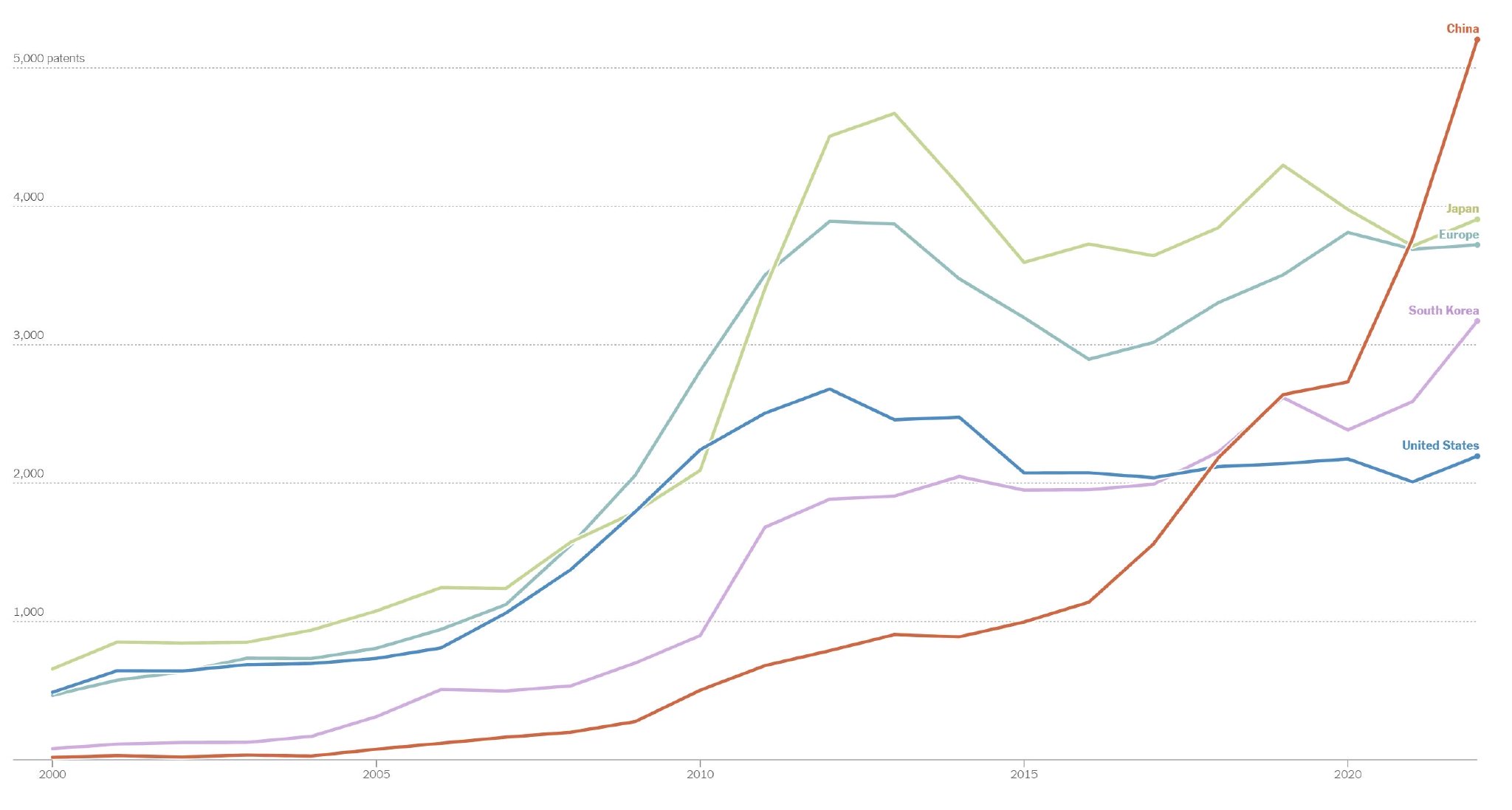
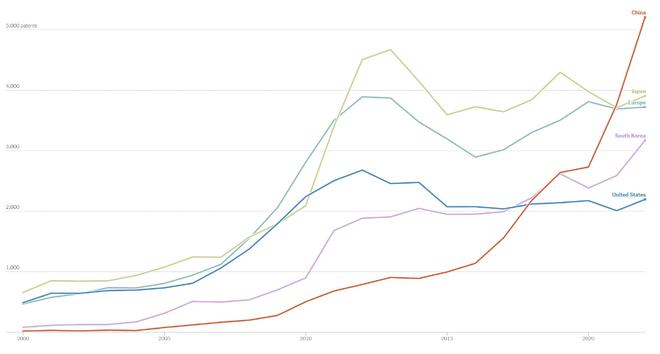
Core Insights - The global clean energy innovation has stagnated in recent years, particularly when excluding China's contributions, as highlighted by Ember's analysis of European Patent Office data [1] - China has seen a dramatic increase in competitive clean energy patent applications, from 18 in 2000 to over 5,000 in 2022, establishing its dominant position in the global clean energy sector [1][3] - The rise in high-quality patents, defined as those filed in two or more countries, indicates a shift from China being a "follower" to becoming an "innovator" in clean energy technologies [2][3] Patent Trends - In 2022, China filed more than double the number of high-quality clean energy patents compared to the United States, with a steady increase in the proportion of high-quality patents [3] - The European Patent Office defines high-quality patents based on the investment made by companies to protect their inventions across multiple markets [2] Government and Industry Support - China's advancements in clean energy are attributed to a mature academic research environment and strategic government initiatives, such as the "Made in China 2025" plan, which aims for 80% domestic market share in key industries by 2025 [6] - The scale of investment in clean energy by China is unmatched by Western countries, allowing for the development of a comprehensive supply chain [6] Technological Innovations - Chinese companies, such as BYD and CATL, have innovated in electric vehicle battery technology, opting for cost-effective lithium iron phosphate formulations over traditional nickel-cobalt options, leading to significant improvements in battery performance and safety [7] - CATL's research team has developed a technology that reduces the risk of battery fires, earning recognition with the 2023 European Inventor Award [7][9] Research Output - China leads in the number of widely cited technical papers in battery technology, with 65.5% of such papers originating from Chinese researchers, compared to 12% from the United States [9] - The number of peer-reviewed papers published by Chinese researchers in the clean energy field is significantly higher than that of other countries [12] Strategic Measures - China is taking steps to prevent technology outflow, as evidenced by the recent updates to its export control list, which includes restrictions on battery cathode material technologies [13] - Analysts suggest that without equivalent investment from other countries in clean energy research, China's dominance in battery production will continue to strengthen [13]

“要是不算上中国,全球进度为0…”
Guan Cha Zhe Wang· 2025-08-15 06:40
Core Insights - The global clean energy innovation has stagnated in recent years, particularly when excluding China's contributions, as highlighted by Ember's analysis of European Patent Office data [1] - China has seen a dramatic increase in competitive clean energy patent applications, from 18 in 2000 to over 5,000 in 2022, establishing its dominant position in the global clean energy sector [1][4] - High-quality patents, defined as those filed in two or more countries, have doubled in number for China compared to the U.S. in 2022, indicating a shift from being a "follower" to an "innovator" in clean energy technology [2][5] Patent Trends - The increase in high-quality patents is attributed to a mature academic research environment and strategic government initiatives that support industrial development [4][5] - China's "Made in China 2025" initiative aims for 80% domestic market share in key industries by 2025, a goal that has largely been achieved, particularly in clean energy [5] Technological Advancements - Chinese companies have not only followed but have innovated upon existing technologies, particularly in electric vehicle battery development, where they have adopted cost-effective lithium iron phosphate formulations instead of the nickel-cobalt approach favored by Western firms [6] - Companies like BYD and CATL have made significant advancements in battery technology, enhancing safety and performance while reducing costs [6][8] Research and Development - China leads in the number of widely cited research papers in battery technology, with 65.5% of such papers originating from Chinese researchers, compared to 12% from the U.S. [8][10] - The Chinese government is taking measures to prevent technology outflow, including restrictions on the export of key battery materials and technologies [10] Future Directions - The focus is shifting towards emerging technologies such as carbon capture, smart grids, and electrification of heavy industries, which are seen as the future frontiers of the clean energy sector [11]
谁在坚持买油车?
Soochow Securities· 2025-08-15 02:43
Investment Rating - The industry investment rating is "Overweight," indicating an expected performance that is stronger than the benchmark by more than 5% over the next six months [35]. Core Insights - The report highlights that 26 car owners prefer gasoline vehicles due to several reasons, including high cost-performance ratio, concerns about electric vehicle (EV) battery replacement costs, lack of charging infrastructure, and perceived immaturity of EV technology [2][16]. - Nearly 50% of the surveyed owners do not have the conditions to install dedicated charging stations, which significantly influences their decision to stick with gasoline cars [2][16]. - The report also notes that while owners acknowledge the lower per-kilometer cost of EVs, this advantage diminishes for those who drive less than 10,000 kilometers annually [2][16]. Summary by Sections Section 1: Sample Size Introduction - The report is based on interviews with 26 car owners from seven major brands and 13 models, focusing on popular gasoline vehicles [6][7]. Section 2: Reasons for Not Choosing Electric Vehicles - The primary reason for not selecting EVs is the lack of charging infrastructure, with 42% citing this as a major concern [16][20]. - Other significant factors include skepticism about battery technology (15%) and anxiety over long-distance travel (12%) [20][23]. - The report indicates that the perception of EVs as less reliable and concerns over depreciation also play a role in the decision-making process [22][23]. Section 3: Future Considerations for Electric Vehicle Purchase - Many owners expressed that they would consider purchasing EVs if charging infrastructure improves or if they see more reliable performance from EVs in the future [24][25]. - The report categorizes potential future buyers into three groups based on their conditions for considering EVs, primarily focusing on charging solutions and vehicle quality [25].
智能汽车行业研究框架培训
2025-08-14 14:48
Summary of Key Points from the Conference Call Industry Overview - The smart automotive industry in China experienced double-digit growth from 2009 to 2015, but since 2016, the growth rate has entered a volatile phase, indicating a mature market similar to Japan's development trajectory [1][3] - By 2024, the penetration rate of new energy vehicles (NEVs) is expected to reach 45%, with a forecast of over 55% by 2025. The penetration rate of domestic brands is projected to reach 68% [1][5] Market Segmentation - The largest market segment is in the price range of 80,000 to 250,000 RMB, with NEV penetration rapidly increasing. The high-end market (above 250,000 RMB) has also reached a NEV penetration rate of 53% [1][5] - Consumers in the 80,000 to 200,000 RMB price range prioritize cost-effectiveness, while those above 250,000 RMB focus on emotional value, such as comfort and intelligence [1][6] Brand Performance - BYD holds a dominant position in the 80,000 to 200,000 RMB segment with a market share of approximately 18%. Tesla, BMW, Mercedes-Benz, and Audi lead in the segment above 150,000 RMB [1][7] - The automotive industry cycle significantly impacts company performance, with the SUV cycle benefiting companies like Great Wall and Geely, while the NEV cycle has propelled the growth of Tesla and BYD [1][8] Future Growth Directions - Future growth for Chinese automotive brands will focus on expanding product categories and international markets. BYD has already achieved over 5 million units in sales, and a multi-brand strategy is a key trend [1][9] Technological Advancements - Smart technology is crucial for the future of the automotive industry, with consumers increasingly valuing intelligent driving technologies. The market size is expected to grow significantly as L3 autonomous driving regulations are implemented [1][4][13] - BYD has a competitive edge in technology iteration, with its electric and hybrid platforms being developed early and upgraded every three years [1][11] Investment Insights - Short-term investment logic focuses on industry prosperity and vehicle launches. Companies with a high density of new model launches and those without competing models in niche markets are more attractive for investment [1][18] - Companies like JAC Motors, SAIC, Geely, and XPeng are highlighted as potential investment opportunities due to their new model cycles and technological advancements [1][21] Market Performance and Expectations - In the first half of the year, the NEV market maintained a growth rate of over 30%, although the penetration rate was below expectations at around 48%. The overall growth rate for the year is projected to be around 4%, with a potential surge in demand due to policy support in the latter half [1][19][20] Conclusion - The automotive investment framework includes three critical dimensions: industry cycle assessment, tracking industry prosperity in relation to policy changes, and analyzing specific companies' new model plans and technological capabilities [1][22]
华宝新能跌1.00%,成交额2.56亿元,后市是否有机会?
Xin Lang Cai Jing· 2025-08-14 10:56
Core Viewpoint - The company, Huabao New Energy, focuses on lithium battery energy storage and has established strategic partnerships to enhance its technological capabilities and market reach [2][3]. Company Overview - Huabao New Energy was established on July 25, 2011, and went public on September 19, 2022. The company specializes in the research, production, and sales of lithium battery energy storage products, with portable energy storage products being its core offering [8]. - The revenue composition of the company includes 77.30% from portable energy storage products, 21.43% from photovoltaic solar panels, and 1.27% from other sources [8]. Business Development - Since its inception, the company has transitioned from an ODM business model focused on power banks to a more comprehensive approach in lithium battery energy management, industrial design, and structural design [2][3]. - The company has developed strong supplier relationships with high-quality partners such as Panasonic, LG Chem, and BYD, and has expanded its client base to include notable companies like Tesla and BMW [2][3]. Strategic Partnerships - On July 11, 2023, the company announced a strategic partnership with Zhongbi New Energy to jointly develop sodium-ion batteries, leveraging both parties' technological strengths [2]. Financial Performance - For the first quarter of 2025, the company reported a revenue of 714 million yuan, representing a year-on-year growth of 22.60%, and a net profit attributable to shareholders of 85.07 million yuan, which is a significant increase of 193.36% compared to the previous year [9][10]. - As of March 31, 2024, the company's overseas revenue accounted for 95.09%, benefiting from the depreciation of the Chinese yuan [4]. Market Activity - On August 14, 2023, Huabao New Energy's stock price decreased by 1.00%, with a trading volume of 256 million yuan and a turnover rate of 8.56%, resulting in a total market capitalization of 10.704 billion yuan [1].
国金证券:传统燃油向新能源过渡 关注品牌溢价&设计溢价两大主线
Zhi Tong Cai Jing· 2025-08-14 05:58
Core Viewpoint - The luxury fuel vehicle market is characterized by a pursuit of premium pricing, driven by brand premium, design premium, and technology premium [1][2][3] Group 1: Luxury Vehicle Market Analysis - The luxury vehicle market is segmented into first-line luxury, second-line luxury, and other luxury brands, with brand premium being the most significant factor [2] - Design premium includes the refinement of products and the rarity of vehicles, which is essential for creating a sense of luxury [2] - Technology premium is derived from critical components such as engines, chassis, and transmissions, with high technical barriers being a core aspect of fuel vehicle pricing [2] Group 2: Changes in the Luxury Vehicle Market in the Era of New Energy - The value system of new energy vehicles differs significantly from that of fuel vehicles, leading to a reduction in technology premium due to the commoditization of high horsepower and the dominance of supply chain companies [3] - The premium in the electric vehicle era is primarily determined by brand and design premiums, as seen in successful models like Huawei's Aito series and Li Auto's L series [3][4] - Domestic electric vehicles struggle to penetrate the ultra-luxury market (over 1.5 million yuan) and have limited presence in the high-end market (over 800,000 yuan) due to the weakened technology premium [3][4] Group 3: Competitive Landscape in the High-End Market - The high-end market is less affected by price wars, as consumers have stronger purchasing power and are less sensitive to tax incentives [4] - High-end vehicle brands cannot engage in price wars without damaging their brand equity, and some brands are still in the process of establishing their market presence [4] - The domestic high-end vehicle market is showing early signs of success, with growth driven by both incremental demand and domestic replacement [4][5] Group 4: Recommendations for Investment - The focus in the new energy high-end market should be on companies with strong brand and product development capabilities, particularly those like Huawei and Xiaomi that have established significant brand equity [5] - Li Auto is highlighted for its strong product development capabilities, particularly with its successful range-extended L series [5]

奔驰CEO警告:如果欧盟执意在2035年起全面禁售新燃油车,欧洲汽车工业将会“崩溃”【附新能源汽车行业市场分析】
Qian Zhan Wang· 2025-08-14 03:54
Core Viewpoint - The transition to electric vehicles (EVs) in the global automotive market is accelerating, but traditional automakers face significant challenges, particularly in Europe, where a potential ban on new internal combustion engine vehicles by 2035 could lead to market instability and a decline in the automotive industry [2][3]. Group 1: Challenges Facing Traditional Automakers - Mercedes-Benz CEO Ola Källenius warns that a strict EU ban on new fossil fuel vehicles could cause the European automotive industry to "collapse" [2]. - Källenius highlights multiple challenges for European automakers, including weak demand, increased external competition, and low EV sales [2]. - The slow development of charging infrastructure, high electricity prices, and tax burdens are hindering consumer willingness to purchase electric vehicles [2]. Group 2: Performance of Luxury Brands - In the first half of 2025, major German luxury car brands (Mercedes-Benz, BMW, Audi) experienced declines in both sales and profits, with Mercedes-Benz's net profit dropping by 55.8% [2]. Group 3: Growth of the New Energy Vehicle Market - The global new energy vehicle market reached a size of $505.27 billion in 2023, with China contributing 63% of this market share, and the penetration rate increasing from 5.4% in 2020 to 40.3% by November 2024 [3]. - In 2022, China's new energy vehicle sales surged to 6.887 million units, a year-on-year increase of 93.4% [6]. - From 2012 to 2023, China's new energy vehicle sales grew from 12,800 units to 9.495 million units, demonstrating rapid development [6]. Group 4: Impact of Policy Changes in China - Following the reduction of subsidies in 2020, China's new energy vehicle sales increased nearly tenfold over four years, leading to the rise of domestic leaders like BYD and NIO [7]. - China's new energy vehicle sales now account for over 70% of the global total, with a penetration rate rising from 5.4% to 40.9% [7]. Group 5: Global Trends in Electric Vehicle Development - The shift towards electric vehicles is seen as an irreversible trend, with countries worldwide beginning their transitions following China's lead in becoming the largest market for new energy vehicles since 2015 [9].

豪华车专题报告:传统燃油向新能源过渡,关注品牌溢价&设计溢价两大主线
SINOLINK SECURITIES· 2025-08-13 09:27
Investment Rating - The report suggests a positive outlook for companies with strong brand power and product development capabilities in the high-end market of luxury vehicles, particularly focusing on brands like Xiaomi and Huawei [5][4]. Core Insights - The luxury car market is characterized by a pursuit of premium pricing, driven by brand, design, and technology premiums. The transition to electric vehicles has shifted the focus from technology premiums to brand and design premiums [1][2][3]. - In the electric vehicle era, the competitive landscape has changed significantly, with technology barriers being lowered, making brand and design the primary factors for premium pricing [2][3]. - The high-end market is less affected by price wars, as consumers in this segment have stronger purchasing power and are less sensitive to tax incentives [3][4]. Summary by Sections Section 1: Overview of Fuel Luxury Cars - Luxury cars are defined as products from widely recognized luxury brands, typically priced above 200,000 RMB [12][16]. - The market is highly concentrated, with leading brands dominating sales, particularly in the mid-to-high-end segments [24][25]. Section 2: Competitive Characteristics of Fuel Luxury Cars - The market emphasizes brand, design, and technology premiums, with a notable shift towards brand and design in the electric vehicle era [1][2][3]. - The consumer demand for personalized and high-quality experiences is increasing, leading to a focus on product refinement and scarcity [1][2][3]. Section 3: Transition from Fuel Luxury Cars to Electric Vehicles - The pricing and competitive barriers have changed, with technology premiums diminishing and brand and design becoming more critical [2][3]. - New players like Huawei and Xiaomi are emerging as leaders in the electric vehicle high-end market, leveraging their brand strength [2][3][4]. Section 4: Recommendations for Investment - Companies with strong brand power and product development capabilities, such as Xiaomi and Huawei, are recommended for investment [5][4]. - The report highlights the potential of companies like Li Auto, which has shown strong product development capabilities [5][4]. Section 5: Industry Competition - The competition in the automotive and electric vehicle markets is intensifying, with sales not meeting expectations [6].