
格力电器

Search documents
空调“铝代铜”再惹争议,董明珠为何不积极?
Xin Lang Cai Jing· 2025-12-15 13:44
Core Viewpoint - The ongoing debate over "aluminum replacing copper" in the air conditioning industry has intensified following comments from Gree Electric's chairman, Dong Mingzhu, emphasizing that aluminum has not yet reached the technical standards necessary to replace copper [1][7]. Group 1: Industry Standards and Developments - The China Refrigeration Society released a group standard for aluminum tube fin heat exchangers on December 11, 2023, with major manufacturers like Gree, Midea, Haier, Xiaomi, Hisense, TCL, and Aux participating in the standardization process [1][8]. - A new round of discussions on national standards for heat exchangers is expected to take place in January 2026 [1][8]. Group 2: Industry Disagreements - Several air conditioning companies, including Haier, Midea, and Xiaomi, have joined a self-regulatory agreement to promote aluminum heat exchangers while avoiding false claims and enhancing consumer trust [2][8]. - Gree has not joined this agreement, with Dong Mingzhu stating that the company will consider aluminum only when it can fully replace copper [2][9]. Group 3: Economic Factors - The debate over "aluminum replacing copper" has persisted for over a decade, often reignited by fluctuations in copper prices, which have recently reached historical highs, with LME copper prices exceeding $11,461 per ton [3][9]. - The copper-aluminum price ratio has remained between 2.5 and 4.5 since the supply-side reforms of 2017-2018, with the current ratio at 3.8 as of November 2025 [3][10]. Group 4: Technical Considerations - Concerns regarding aluminum's inferior thermal conductivity, strength, and corrosion resistance compared to copper have been raised, suggesting that using aluminum could negatively impact the lifespan and reliability of air conditioning units [3][6]. - The application of aluminum in refrigerators has progressed more rapidly, with aluminum accounting for nearly 90% of the cooling systems, while air conditioning remains more complex due to varying operational conditions [5][11]. Group 5: Policy Support - The Chinese government has elevated the "aluminum replacing copper" initiative to a policy level, with a plan issued in March 2025 to promote aluminum consumption in various sectors, including home appliances [4][10].




聚势赋能强平台 智领家电新未来
Xin Lang Cai Jing· 2025-12-15 13:35
2025中国家电科技年会在湖北武汉召开 12月10日,2025中国家电科技年会在湖北武汉召开,中国轻工业联合会会长张崇和出席并讲话。中国工程院院士、山东省科协主席凌文,中国工程院院 士、华中科技大学教授陈学东出席并作报告。中国科学院院士、武汉大学教授刘胜作视频报告。中国家用电器研究院院长刘挺,武汉市人民政府副秘书长 张明武出席并致辞。中国集成电路创新联盟秘书长叶甜春,TCL实业高级副总裁陈绍林,小米集团大家电部总经理单联瑜出席并讲话。大会由中国家用电 器研究院总工程师宫赤霄和《家电科技》总编辑石文鹏主持。 张崇和在讲话中指出,家电行业是轻工业的重要产业,运行质量和科技创新都走在轻工行业前列。2024年,家电行业主营收入1.95万亿元,同比增长 5.55%;利润近1740亿元,同比增长11.4%。2025年,中国制造500强中,美的、海尔、海信、格力、TCL位居前列;轻工业科技百强企业中,13家家电头 部企业研发强度平均达到3.8%;今年11月公布的首批15家国家级领航智能工厂中,海尔、格力榜上有名;武汉小米建成新一代智能工厂,AI深度赋能单 台空调6.5秒下线,生产质效大幅提升。家电科技的自立自强为行业创新发 ...


董明珠回应空调“铝代铜”:坚持不用,除非铝能够完全替代铜
Xin Lang Cai Jing· 2025-12-15 13:34
Core Viewpoint - The air conditioning industry is increasingly focused on the "aluminum replacing copper" issue due to rising copper prices, with major companies like Gree Electric expressing caution about the feasibility of this transition [1][3][5]. Group 1: Industry Context - Gree Electric's chairman, Dong Mingzhu, stated that while aluminum can potentially replace copper, the technology has not yet reached the same level of reliability and performance as copper [1][3]. - Gree has repeatedly emphasized that there are currently no plans to implement "aluminum replacing copper" in their air conditioning products, citing copper's superior thermal conductivity, corrosion resistance, and long-term reliability [5][7]. Group 2: Market Dynamics - By the end of 2025, global copper supply is expected to tighten significantly, with demand surging and potential tariffs from the U.S. contributing to rising prices, which are anticipated to reach new historical highs [3][7]. - The International Energy Agency projects that even with high production levels, the global copper supply gap could reach 20% by 2035 [3][7]. - Goldman Sachs forecasts that copper prices will enter a new high-price trading phase starting next year [3][7]. Group 3: Standards and Regulations - At the recent 2025 China Home Appliance Technology Annual Conference, a group standard for the construction of aluminum tube fin heat exchangers for air conditioners was released, with additional standards for aluminum heat exchanger raw material requirements currently being developed [3][7]. - Several air conditioning companies have joined a self-regulatory agreement to promote the scientific benefits of aluminum heat exchangers while avoiding exaggerated claims, aiming to enhance consumer trust in industry products and technologies [3][7]. - Gree participated in the revision of national standards for heat exchangers but did not join the self-regulatory agreement [7].
GMG Unveils Graphene Aluminium-Ion Battery That Fully Charges in 6 Minutes
TMX Newsfile· 2025-12-15 13:03
Core Insights - Graphene Manufacturing Group Ltd. (GMG) is advancing its Graphene Aluminium-Ion Battery (G+AI) technology in collaboration with the University of Queensland and Rio Tinto, aiming to disrupt the battery market with lower costs and faster charging capabilities [1][3]. Development Progress - The G+AI Battery technology is reported to have performance characteristics comparable to High Power Lithium Titanate Oxide (LTO) batteries, which are priced up to US$1500/kWh, but GMG's battery can be produced at a significantly lower cost [2][24]. - Current testing shows that GMG's G+AI batteries achieve an energy density of 58 Wh/kg when charged in 1 hour and 26 Wh/kg when charged in 6 minutes, with 62% capacity reached in just 3.2 minutes during fast charging [5][9]. Technical Specifications - The G+AI Battery can charge from empty to full in approximately 6 minutes, fundamentally changing design considerations for electric vehicles and other applications [3][11]. - The battery's nominal voltage is around 3.0 Volts, and it maintains performance over hundreds of cycles at high charging rates without significant degradation [5][10]. - GMG's technology utilizes a new hybrid electrolyte that is chloride-free and non-corrosive, along with aluminum foil as the substrate for both cathode and anode, leading to cost and weight savings compared to traditional materials [10][11]. Market Potential - The global market for LTO batteries was valued at US$5.6 billion in 2025, with expectations for growth at 10% annually, reaching an estimated US$9.0 billion by 2030 [24]. - GMG's G+AI Battery is positioned to serve various sectors, including commercial vehicles, fast-charging electric buses, and stationary storage, with interest from multiple global companies [18][25]. Future Roadmap - GMG aims to progress its battery technology readiness level to BTRL 7 and 8, with plans for customer testing in 2026 and small-scale commercial production in 2027 [14][16]. - The company is focusing on proving reliability, safety, and cost-effectiveness at an industrial level, with ongoing collaborations to explore pilot programs and early integrations [3][18].

家用电器行业周度跟踪:强调龙头配置价值,关注智能终端持续创新-20251215
Western Securities· 2025-12-15 11:28
Investment Rating - The industry investment rating is "Overweight" [5][11] Core Insights - The report emphasizes the value of leading companies in the home appliance sector, highlighting the importance of continuous innovation in smart terminals [1] - The central economic work conference has set the tone for 2026 economic work, focusing on domestic demand and optimizing policies for large-scale equipment updates and consumer goods replacement [1] - The report suggests that if subsidy policies continue into next year, it will help stabilize the domestic home appliance market and ensure the performance stability of leading companies [1] Summary by Sections White Goods - Online sales data for November shows significant declines: refrigerators, air conditioners, and washing machines saw sales drop by 23.17%, 26.13%, and 6.17% respectively, with volumes down by 28.31%, 26.24%, and 13.65% [2] - Offline sales experienced even steeper declines, with refrigerators, air conditioners, and washing machines down by 49.18%, 51.76%, and 40.4% in sales [2] - The report indicates that the pessimistic sales expectations are already reflected in the market, and the industry is moving past the peak of base pressure [2] - A coalition of major air conditioning companies has initiated a self-regulation agreement to replace copper with aluminum, which may help reduce costs and improve product quality [2] - Despite current weak demand, the report anticipates a gradual reduction in domestic sales pressure due to high base effects and subsidy tapering [2] Black Goods - November data shows a decline in online sales for televisions, with sales down by 27.01% and volumes down by 37.52% [3] - The report notes that the trend of structural upgrades in black goods continues, with MiniLED technology driving up average prices and margins [3] - The upcoming World Cup is expected to catalyze sales, as leading companies focus on high-end channels [3] Consumer Technology - The report highlights the impact of subsidy reductions and high base effects on the market for cleaning appliances, with a notable decline in sales for robotic vacuum cleaners [4] - The report suggests that the industry is experiencing a concentration of domestic brands, driven by AI innovations and cost reductions in the supply chain [4] Investment Recommendations - The report recommends focusing on white goods, particularly Haier and Midea, due to their strong market positions and benefits from ongoing transformations [8] - It also suggests selecting consumer technology stocks, including Anker Innovations and Roborock, as well as opportunities in the 3D printing industry [8] - For overseas expansion, TCL Electronics is highlighted as a company with good growth potential [8]
空调“铜铝大战”再起:董明珠的态度,或许比答案更重要
Sou Hu Cai Jing· 2025-12-15 11:20
Core Viewpoint - The ongoing debate in the air conditioning industry about whether aluminum can replace copper has been reignited, with Gree's leader, Dong Mingzhu, firmly stating that Gree will not adopt aluminum in place of copper [1][5]. Industry Analysis - Dong Mingzhu maintains that while aluminum can technically replace copper, the critical issue lies in the current maturity of technology to support long-term and stable user scenarios [5][6]. - Copper has been the default choice in the industry due to its excellent thermal conductivity, corrosion resistance, and mature processing techniques, while aluminum offers advantages such as being lighter, cheaper, and more abundant, making it attractive for cost control and large-scale manufacturing [6][8]. - The industry is increasingly moving towards aluminum substitution, with many brands already using aluminum in mid-range products or non-core components, and some companies are exploring ways to enhance aluminum's reliability through various treatments and modifications [6][7]. Company Position - Gree's decision to retain copper in core systems is seen as a cautious approach, especially as most companies are seeking more cost-effective and efficient solutions [8][10]. - The distinction in Gree's approach lies in its different standards for assessing "usable" versus "long-term reliable use," emphasizing that material selection is a long-term risk management issue, particularly for high-frequency, long-cycle appliances like air conditioners [11][12]. - Dong Mingzhu's stance reflects a commitment to ensuring that aluminum does not replace copper until it meets equivalent technical conditions and guarantees [14][15]. Future Outlook - The debate over aluminum versus copper is not a binary issue; it represents a technology route that is being continuously validated, with different companies adopting varying strategies based on their priorities [15][17]. - The ultimate resolution of this "copper-aluminum war" will depend on time, large-scale applications, and real data from long-term usage, with Gree's approach focusing on user responsibility rather than merely cost and parameters [17].
华联期货股指年报:预计股指中期攀升格局未改
Hua Lian Qi Huo· 2025-12-15 11:05
Report Industry Investment Rating No relevant content provided. Core Viewpoints of the Report - The mid - term upward trend of stock index remains unchanged, but the growth rate may slow down. The core driving force for the mid - term rise of the stock index is the confirmation of the performance bottom and the profit repair. The significant entry of incremental funds and favorable policies also contribute to the market's upward movement. With the introduction of year - end favorable policies and the stimulation of the 14th Five - Year Plan, the stock index may enter a cross - year layout market from December to January, and the spring market is worth looking forward to. It is recommended to focus on the CSI 500, SSE 50, CSI 300, and CSI 1000 indices and buy call options [14]. Summary According to Relevant Catalogs 1. Annual Viewpoint and Strategy - **Market Review**: In 2025, the market first fluctuated and adjusted, then rose significantly and exceeded the previous year's high, showing an overall upward trend. All four major indices rose, with small and medium - cap stock indices leading the gains. In terms of style indices, growth and cyclical indices had the largest increases, with the former rising over 35%. The stable - style index hardly rose, and the financial and consumer - style indices had relatively low increases. In the Shenwan industry, most industries rose, but some declined. TMT and cyclical sectors such as communication, non - ferrous metals, electronics, and comprehensive led the gains, with the first two having annual increases of over or close to 80%. Industries with lower increases included real estate, commercial trade, public utilities, building decoration, and banking. Declining industries were food and beverage, coal, and transportation [9]. - **Economic Situation**: In November 2025, the manufacturing PMI was 49.2%, up 0.2 percentage points from the previous month; the non - manufacturing PMI was 49.5%, down 0.7 percentage points from the previous month. In terms of sub - items, both supply and demand in the manufacturing PMI rebounded slightly in November, with new export orders rebounding by 1.7%, which was related to the easing of Sino - US tariffs. Factory prices and raw material purchase prices rebounded after two months of decline [9]. - **Policy Situation**: The Political Bureau set the tone for the real estate market to stop falling and stabilize and boost the capital market. The State Council issued the new Nine - Article Guidelines to strengthen investor returns. The central bank created two new monetary policy tools. The implementation plan for promoting the entry of medium - and long - term funds into the market was officially released, which is expected to add 800 billion yuan of long - term funds to the A - share market annually [9]. - **Performance Situation**: A - share performance showed signs of stabilization in the first quarter. After the implementation of reciprocal relations with the US in April, which increased by 30%, performance declined in the second quarter and showed fluctuations. Performance continued to stabilize and rebound in the third quarter, and the performance of the four major indices rebounded again in Q3 2025 [9]. 2. Index and Industry Trend Review - The market in 2025 first fluctuated and adjusted, then rose significantly and exceeded the previous year's high, showing an overall upward trend. All four major indices rose, with small and medium - cap stock indices leading the gains. In terms of style indices, growth and cyclical indices had the largest increases, with the former rising over 35%. The stable - style index hardly rose, and the financial and consumer - style indices had relatively low increases. In the Shenwan industry, most industries rose, but some declined. TMT and cyclical sectors such as communication, non - ferrous metals, electronics, and comprehensive led the gains, with the first two having annual increases of over or close to 80%. Industries with lower increases included real estate, commercial trade, public utilities, building decoration, and banking. Declining industries were food and beverage, coal, and transportation [20][26]. 3. Main Contracts and Basis Trends - The four major indices fluctuated and rebounded, exceeding the previous year's high. Except during quarterly contract roll - overs, the basis was at a reasonable level. In terms of arbitrage among main contracts, IC/IF and IC/IH first adjusted and then rebounded, showing an overall upward trend; IH/IF first rose and then fell sharply, with significant fluctuations; IM/IF and IM/IH showed wide - range fluctuations; IM/IC first fluctuated repeatedly and then declined [32][36]. 4. Economic Policy - **Economic Situation** - In November 2025, the manufacturing PMI was 49.2%, up 0.2 percentage points from the previous month; the non - manufacturing PMI was 49.5%, down 0.7 percentage points from the previous month. In terms of sub - items, both supply and demand in the manufacturing PMI rebounded slightly in November, with new export orders rebounding by 1.7%, which was related to the easing of Sino - US tariffs. Factory prices and raw material purchase prices rebounded after two months of decline [42]. - Generally, PPI leads the inventory cycle (by 1 to 12 months, with an average of about half a year). PPI bottomed out and rebounded in June 2023, weakened after two months, and since March 2024, the decline has been continuously narrowing. From July 2024, the decline of PPI expanded again, and since November 2024, it has been narrowing until it expanded for five consecutive months until March 2025. Since August 2025, the decline has been narrowing, and currently it remains weak. In October 2025, industrial enterprise revenues fell to 1.8%, inventory continued to rise to 3.7%, demand declined, and there was passive inventory replenishment [45]. - China's social financing scale in November 2025 was 248.85 billion yuan, an increase of 15.28 billion yuan compared with 233.57 billion yuan in the same period last year. New RMB loans were 40.53 billion yuan, a decrease of 11.7 billion yuan compared with the same period last year, mainly due to a 20.63 - billion - yuan decrease in household loans, a decrease of 47.63 billion yuan compared with the same period last year. Short - term household loans decreased by 3.7 billion yuan, a decrease of 17.88 billion yuan compared with the same period last year, and medium - and long - term household loans increased by 1 billion yuan, a decrease of 29 billion yuan compared with the same period last year. Government bonds were 120.41 billion yuan, a decrease of 10.6 billion yuan compared with the same period last year [48]. - The growth rate of medium - and long - term credit has been falling since reaching a high of 12.94% in May 2023 after starting to stabilize and rebound from 10.21% in November 2022. As of November 2025, it has fallen for 30 consecutive months to 5.89% and continues to decline [7][53]. - **Policy Situation** - **New Nine - Article Guidelines**: In April 2024, the "Several Opinions on Strengthening Supervision, Preventing Risks, and Promoting the High - Quality Development of the Capital Market" (New Nine - Article Guidelines) were issued. It tightened the "entry threshold" and smoothed the "exit channel" by raising the listing standards for each sector and accelerating the clearance of inferior enterprises through stricter delisting indicators. It also strengthened investor returns by strengthening the supervision of cash dividends of listed companies and restricting major shareholders' share - reduction for companies that have not paid dividends for many years or have a low dividend ratio [55][58]. - **Implementation Plan for Promoting the Entry of Medium - and Long - Term Funds into the Market**: It aims to increase the actual investment ratio. For public funds, it is required that the market value of A - shares held by public funds should increase by at least 10% annually in the next three years. For commercial insurance funds, large - state - owned insurance companies are expected to invest 30% of their newly - added premiums in A - shares annually starting from 2025, which means adding at least several hundred billion yuan of long - term funds to the A - share market each year. The second - batch pilot project of long - term stock investment by insurance funds will be implemented in the first half of 2025, with a scale of no less than 10 billion yuan, and the scale will be gradually expanded. It also extends the assessment period. By implementing a long - cycle assessment, it can effectively smooth the impact of short - term market fluctuations on performance and improve the stability of medium - and long - term funds' investment behavior [61]. - **Political Bureau's Policy Orientation**: The Political Bureau meeting pointed out that efforts should be made to boost the capital market, guide medium - and long - term funds to enter the market, and remove obstacles for funds such as social security, insurance, and wealth management to enter the market. It also emphasized increasing the counter - cyclical adjustment of fiscal and monetary policies, ensuring necessary fiscal expenditures, and doing a good job in the "three guarantees" at the grass - roots level. It proposed to issue and use ultra - long - term special treasury bonds and local government special bonds, reduce the deposit reserve ratio, and implement significant interest rate cuts. It also aimed to promote the real estate market to stop falling and stabilize, control the increment of commercial housing construction, optimize the stock, and improve the quality [62]. - **Central Bank's New Monetary Policy Tools**: The central bank created a structural monetary policy tool to support the capital market for the first time. One is the swap facility for securities, funds, and insurance companies, which allows eligible institutions to use their bonds, stock ETFs, and SSE 300 constituent stocks as collateral to exchange for high - liquidity assets such as treasury bonds and central bank bills from the central bank. The initial scale of the swap facility operation is 500 billion yuan. The central bank also created a re - loan for stock repurchase and increase, guiding commercial banks to provide loans to listed companies and major shareholders for stock repurchase and increase. The initial scale is 300 billion yuan [63]. - **Debt Resolution Measures**: In November 2024, the National People's Congress Standing Committee announced a large - scale debt resolution measure. The total debt resolution scale mainly includes three parts: 6 trillion yuan of local debt limits, all arranged as special debt limits, approved at once and implemented over three years; starting from 2024, 800 billion yuan will be allocated from new local special bonds for five consecutive years to replenish government fund financial resources, with a cumulative replacement of 4 trillion yuan of implicit debt; and 2 trillion yuan of implicit debt from shantytown reconstruction due after 2029 will be repaid according to the original contract. The first two parts will directly increase 10 trillion yuan of local debt resolution funds [64]. - **Accelerating the Building of First - Class Investment Banks and Investment Institutions**: At the Eighth Member Congress of the Securities Association of China, it was proposed that securities companies should shift from price competition to value competition. Appropriate "relaxation" measures will be taken for high - quality institutions to optimize risk - control indicators, expand capital space and leverage limits, and improve capital utilization efficiency. Differentiated supervision will be explored for small - and medium - sized securities companies and foreign - funded securities companies in terms of classification evaluation and business access to promote their characteristic development. Strict supervision will be carried out for a small number of problematic securities companies [65]. - **14th Five - Year Plan**: The 14th Five - Year Plan is a crucial period that connects the past and the future, with multiple strategic goals (such as carbon peaking and reform) to be achieved. A multi - polar trade system is gradually taking shape, and China's voice in global economic and trade fields is expected to further increase. Sino - US competition remains the core variable affecting the global political and economic landscape, and it is becoming "normalized" and "complicated". The reconstruction of the global supply chain has entered the second half, with geopolitics and strategic security as the main lines. China will focus on developing new - quality productive forces and upgrading industries, promoting anti - involution and building a unified national market, and expanding domestic demand and boosting consumption [68]. - **US Mid - term Elections**: In 2026, the US mid - term elections will be held. The schedule includes the primary elections in August 2026 and the main election period from September to November, with November 3rd as the final voting date. The fiscal bill requires that the Trump administration is prohibited from laying off federal government employees before January 30th, which is expected to ease the situation of significant employment reduction. It is expected that fiscal support will continue during the mid - term elections [71]. 5. Revenue and Net Profit of Each Index - The core factor affecting the long - term trend of the stock index is the performance of listed companies. Since the coordinated efforts of monetary and fiscal policies in the third quarter of last year, the policy effects have gradually been transmitted to the real economy. The first - quarter report of 2025 showed that the performance of A - share listed companies had initially shown signs of stabilization, and the profit bottom was likely to have been confirmed. Although affected by external factors such as "reciprocal tariffs" in the second quarter, performance fluctuated, the third - quarter report data confirmed that corporate profits had returned to an upward channel. The continuous rebound of performance in Q3 2025 strengthened the market's confidence in the start of the profit cycle, providing strong internal impetus for the mid - term rise of the stock index [77][82]. 6. Valuation - The valuation of the Shanghai Composite Index is 16.2398, with an upper - limit value of 15.64, and it is at the 83.45th percentile since 2010, indicating a relatively high valuation level since 2010. However, as performance rises, the valuation will decline. The valuation of the ChiNext Index is relatively low [100][102]. 7. Interest Rates - Interest rates are in a downward channel. According to the Fed's December interest - rate meeting forecast, from 2025 to 2028, variables such as real GDP growth, unemployment rate, PCE inflation, and core PCE inflation are expected to show certain trends, and the federal funds rate is also expected to decline [88]. 8. Capital Flows - **Overall Capital Inflow**: In 2025, the A - share market is expected to have a capital inflow (including scale growth) of 4.3505 trillion yuan, which is not much different from the increase in non - bank deposits and bank wealth - management scale. Excluding the scale - growth factor, the A - share market is expected to have a net capital inflow of 1.8311 trillion yuan in 2025 (with an expected net inflow of 300 billion yuan from retail investors in the third quarter) [105]. - **Margin Trading and Short Selling**: In 2024, the net inflow of margin trading and short - selling funds was 27.48 billion yuan. As of December 14, 2025, the net inflow in 2025 was 62.96 billion yuan, indicating active leverage funds [12][109]. - **Private Securities Investment Funds**: The scale of private securities investment funds increased by 1.7946 trillion yuan this year, with a significant increase of 1.040028 trillion yuan in October. The current total scale is 7.0076 trillion yuan. The newly - registered scale this year is 38.6 billion yuan, with registration scales of 7.92 billion yuan in July, 4.28 billion yuan in August, 3.68 billion yuan in September, and 4.29 billion yuan in October [12][113]. - **Insurance Funds**: In the third quarter of 2025, the market value of A - shares held by insurance funds increased by 55.24 billion yuan, a month - on - month increase of 18.00%, while the SSE 300 Index rose by 17.90% during the same period. In the first three quarters of 2025, the market value of A - shares held by insurance funds increased by 119.3 billion yuan, and after excluding the scale - growth factor, it increased by 75.84 billion yuan. The proportion of stock and fund investment by insurance funds in the total insurance fund balance continued to rise to 14.93% [115][116]. - **Newly - Established Funds**: As of September 30, 2025, the newly - established share of stock - type funds was 323.3 billion yuan, with 137 billion yuan in the third quarter; the newly - established share of hybrid funds was 103.6 billion yuan, with 53 billion yuan in the third quarter. In 2025, index funds had a net inflow of 104.9 billion yuan, while active equity funds had a net outflow of 444.9 billion yuan, and equity funds had a net outflow of 340 billion yuan [126][130]. - **Other Capital Flows**: In October 2025, the deposits of non - bank financial institutions increased by 1.8574 trillion yuan again, and the total increase in deposits of non - bank financial institutions this year was 6.6688 trillion yuan. Overall, funds are flowing from the banking system to non - bank channels such as the capital market and wealth - management products. In terms of secondary - market shareholder share - reduction, important shareholders in the A - share market had a net share - reduction of 307.3 billion yuan in 2025. The IPO financing in 2023 was 356.5 billion
这才是真正的“睡后收入”:中证A500红利低波,让细分龙头为你“打工”
Sou Hu Cai Jing· 2025-12-15 09:23
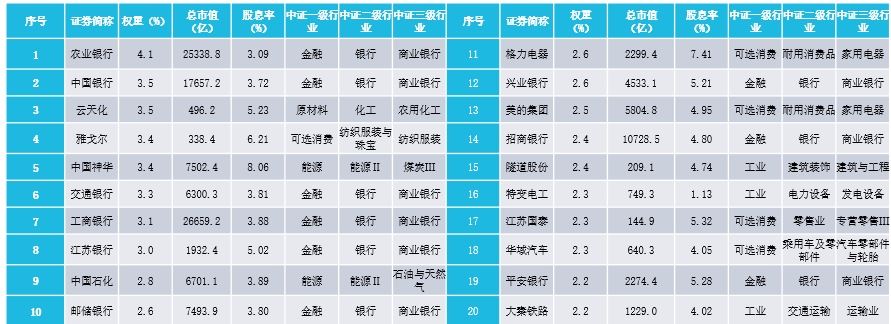
Core Viewpoint - The article discusses the Zhongzheng A500 Dividend Low Volatility Index, which aims to provide a balanced investment strategy that combines the safety of dividend stocks with the growth potential of leading companies across various sectors [1]. Group 1: Index Overview - The Zhongzheng A500 Dividend Low Volatility Index is derived from the Zhongzheng A500 Index, which selects 500 leading companies from over 5,000 stocks in the A-share market [1]. - This index further narrows down to 50 stocks that demonstrate continuous dividend payment capability, high dividend yield, and low volatility, ensuring high-quality asset selection [1][4]. Group 2: Selection Criteria - The index employs a rigorous selection process, starting with a "dividend willingness" criterion, requiring constituent stocks to have paid cash dividends for the past three years with a reasonable payout ratio [4]. - The second criterion focuses on "valuation and safety," ranking stocks by dividend yield to filter the top 50%, which typically indicates lower valuations [4]. - The final selection involves identifying the 50 stocks with the lowest volatility among those with high dividend yields, as historically, low-volatility stocks tend to outperform high-volatility ones over the long term [4]. Group 3: Industry Coverage - Unlike traditional dividend indices that are heavily weighted towards sectors like finance, the Zhongzheng A500 Dividend Low Volatility Index covers a broader range of industries, including 27 sub-industries compared to 19 in traditional indices [5]. - This diversified approach includes not only traditional high-dividend sectors like banking and energy but also leading companies in manufacturing and consumer discretionary sectors, such as home appliances and automotive parts [5]. Group 4: Performance Metrics - Since its inception, the Zhongzheng A500 Dividend Low Volatility Index has achieved an annualized return of 14.9%, outperforming both the parent Zhongzheng A500 Index and traditional dividend low volatility indices [8]. - Over the last decade, the index has recorded a cumulative return of 165.9%, significantly higher than the 133.8% return of traditional dividend low volatility indices [10]. - The index maintains a high Sharpe ratio of 82.9% and has a maximum drawdown of -39.3%, indicating better risk-adjusted returns compared to its peers [10]. Group 5: Investment Strategy - The Zhongzheng A500 Dividend Low Volatility Index represents an upgrade in investment strategy, utilizing the natural "buy low, sell high" characteristic of dividends while smoothing volatility and mitigating risks through careful stock selection [11]. - This index is particularly appealing for investors seeking consistent dividend income while also wanting to invest in core assets for long-term stable growth [11].
扩大内需+优化供给成下一阶段主要经济工作目标,京东超级供应链激发政企采购市场活力
Sou Hu Wang· 2025-12-15 09:19
Core Viewpoint - The Central Economic Work Conference emphasizes the need to fully tap economic potential, continuously expand domestic demand, optimize supply, and promote the construction of a unified national market, marking a significant focus for economic work in the coming year [1] Group 1: Economic Context - The conference highlights "domestic demand as the main driver" as the top priority among eight key tasks for the upcoming year [1] - The total procurement amount for enterprises in China is projected to reach 188.3 trillion yuan in 2024, with digital procurement expected to account for 21.7 trillion yuan, reflecting a year-on-year growth of 16.2% [1] Group 2: Company Initiatives - JD's enterprise business has pioneered e-commerce procurement solutions since 2014, serving over 8 million government and enterprise clients, including more than 30,000 large clients [3] - The "Thousand Billion Market Partner Program" aims to assist over 300 brand partners in achieving annual sales exceeding 100 million yuan and to create over 10,000 popular procurement products [3] Group 3: Supply Chain and Technology - JD's enterprise business integrates the "industry and procurement fusion" concept into its service system, creating a comprehensive service ecosystem that covers diverse supply, intelligent platform technology, and nationwide logistics [3] - The application of AI technologies is accelerating across industries, with JD's enterprise business leveraging "AI + procurement" to enhance procurement processes through various AI-driven products [4][5] Group 4: Strategic Transformation - The shift from traditional procurement challenges to a focus on cost, efficiency, and experience is transforming procurement from a "cost center" to a "strategic value center" [5] - The company aims to continue accelerating industry and procurement fusion through its super supply chain, positioning itself as a long-term value partner for enterprises in their digital transformation [5]


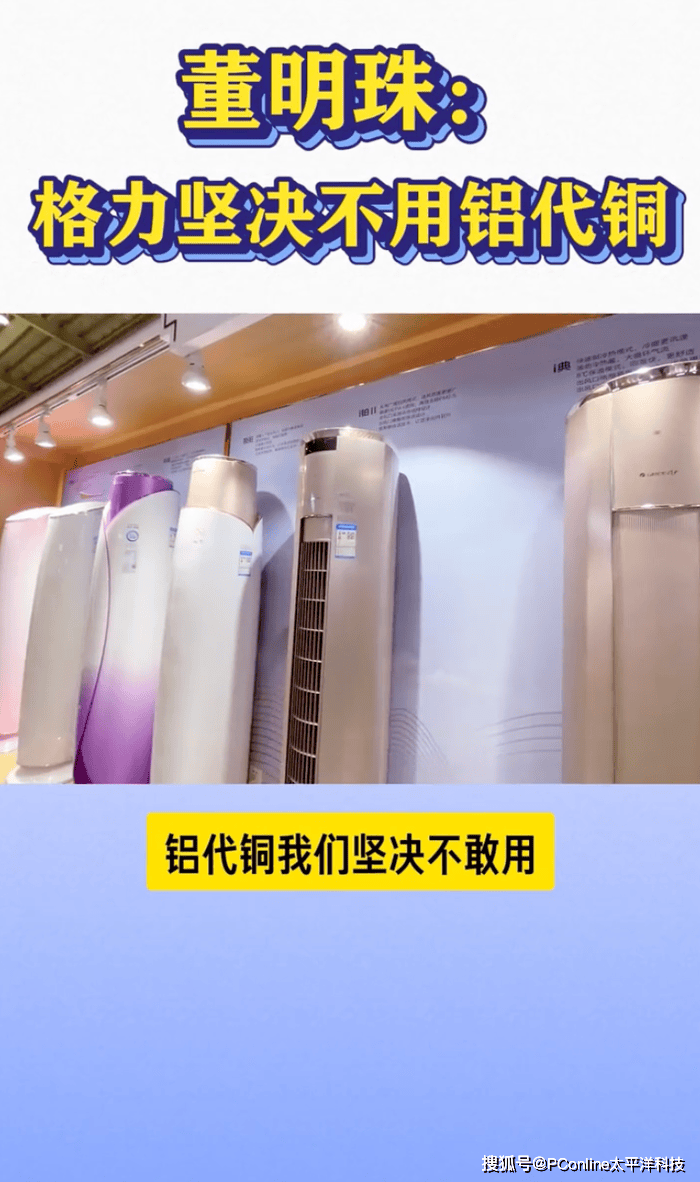
董明珠回应格力拒用铝代铜,称铝技术未达同等保障
Xin Lang Cai Jing· 2025-12-15 08:23
Group 1 - The core viewpoint of the article is that Dong Mingzhu, the chairwoman of Gree Electric Appliances, insists on not using aluminum as a substitute for copper due to the current technological limitations of aluminum compared to copper [2] Group 2 - Dong Mingzhu emphasizes that aluminum has not yet reached the same technical conditions and guarantees as copper, which is crucial for the quality and reliability of Gree's products [2]