
vivo

Search documents
2亿影像国民小旗舰vivo Y500 Pro正式发布
Zhong Guo Jing Ji Wang· 2025-11-11 03:30
Core Viewpoint - Vivo has launched the new Y500 Pro smartphone, emphasizing its advanced imaging capabilities, design, system performance, durability, and battery life [1][2][3] Group 1: Imaging and Design - The Y500 Pro features a flagship 200MP HP5 main camera with self-developed OIS technology for enhanced clarity and stability in photography [1] - It includes a 32MP front portrait lens with an upgraded 85mm long-focus for capturing detailed facial features [1] - The device offers three color calibration options: natural color, texture color, and film style [1] Group 2: Display and System - The smartphone is equipped with a 6.67-inch 1.5K eye-care display, featuring ultra-narrow bezels and personalized brightness settings [2] - It runs on the new OriginOS 6, providing fast touch response, multitasking capabilities, and optimized signal switching in various environments [2] - The device supports a long-term smooth usage experience of up to 60 months [2] Group 3: Durability and Battery Life - The Y500 Pro has received national reliability certification, ensuring durability in extreme conditions, with IP68 and IP69 waterproof ratings [3] - It is powered by a 7000mAh semi-solid state battery and supports 90W fast charging [3] - The semi-solid state battery technology allows stable performance in temperatures ranging from -20°C to 40°C [3] Group 4: Pricing and Availability - The Y500 Pro will be officially available for sale on November 14, with four storage options: - 8GB+128GB priced at 1799 yuan - 8GB+256GB priced at 1999 yuan - 12GB+256GB priced at 2299 yuan - 12GB+512GB priced at 2599 yuan [3]
早报|下代iPhone Air将延期发布/闪迪价格暴涨50%/摩根大通CEO:未来发达国家每周只需上班三天半
Sou Hu Cai Jing· 2025-11-11 00:45
Group 1: Apple and iPhone Air - Apple has decided to postpone the release of the next-generation iPhone Air due to poor sales performance since its launch in September 2025, with no new timeline provided for its release [5][6] - The iPhone Air, which features a slim design with a thickness of only 5.6mm, compromises on battery capacity and camera configuration, offering only a single rear camera at a price of $999 [5] - The iPhone 17 Pro offers a better value proposition with a triple-camera system and longer battery life, highlighting the challenges Apple faces in positioning a fourth model beyond the standard and Pro series [5] Group 2: NAND Flash Market - SanDisk has announced a 50% increase in NAND flash contract prices due to supply constraints, with expectations of a continued upward trend in the market [21] - The NAND flash market is experiencing a supply-demand imbalance, which is anticipated to persist until at least the end of 2026 [21] Group 3: AI and Business Trends - According to McKinsey's report, 88% of companies have adopted AI, but only 39% have seen an increase in earnings before interest and taxes (EBIT), indicating a gap between efficiency gains and profitability [45][46] - High-performing companies are more likely to benefit from AI, with 50% planning transformative changes driven by AI, compared to only 14% of average companies [46] - The demand for AI-related roles is increasing, while traditional roles face replacement pressures, with 32% of companies expecting a decrease in total workforce in the next year [46] Group 4: Robotics and AI Developments - The first international robot debate competition concluded with Songyan Power winning the championship, showcasing the potential of robots in both physical and intellectual domains [34] - A new AI framework called "Cambrian-S" has been proposed by researchers to enhance spatial perception and long-term memory in AI systems, indicating a shift towards more advanced AI capabilities [40]



大疆、影石还没争出第一,大批友商已经赶在路上
36氪· 2025-11-10 10:23
Core Viewpoint - The global panoramic camera market is experiencing significant shifts in market share, with companies like影石 (Insta360) and 大疆 (DJI) competing fiercely, leading to a dynamic and competitive landscape in the smart imaging sector [5][6][7]. Market Dynamics - A report from 久谦咨询 indicates that 影石's market share dropped from 92% in Q2 to 49% in Q3, while 大疆 captured 43% of the market [5]. - Another report by 弗若斯特沙利文 shows 影石 and 大疆's market shares at 75% and 17.1% respectively, highlighting discrepancies in market data [6]. - The entry of 大疆 into the panoramic camera market with its Osmo 360 has significantly impacted 影石's dominance, showcasing the competitive nature of the industry [8]. Industry Trends - The rise of short video content globally has increased the demand for smart imaging devices, with 大疆's Osmo Pocket 3 achieving over 10 million units sold, generating revenue exceeding 300 billion [13]. - The current global user base for vlogs is estimated at 520 million, with outdoor sports consumers at 220 million, indicating a growing market for smart imaging devices [16]. Competitive Landscape - New entrants in the smart imaging sector are advised to avoid direct competition with established players like 大疆 and 影石, focusing instead on niche markets and differentiated product offerings [20]. - Companies like Looki and XbotGo are exploring unique use cases, such as AI-driven wearable cameras and solutions for sports event recording, respectively [23][24]. Technological Innovations - The integration of AI and advanced algorithms is becoming crucial for product differentiation in the smart imaging market, as seen with 光子跃迁's AI-enabled camera that responds to natural language commands [25]. - The industry is characterized by a low barrier to entry for basic imaging products, but achieving brand recognition and competitive pricing remains challenging [40][42]. Market Entry by Smartphone Manufacturers - Major smartphone manufacturers like OPPO and vivo are entering the smart imaging space, indicating a shift in focus towards handheld imaging devices [28][30]. - The competitive pressure from smartphone companies is seen as a defensive strategy to maintain market relevance in the face of declining smartphone sales [37]. Conclusion - The smart imaging market is poised for growth, with a penetration rate of only 6%, suggesting ample opportunities for innovation and competition [16][38]. - Companies entering this space must be prepared with sufficient resources and talent to navigate the competitive landscape effectively [45].

半导体与半导体生产设备行业周报、月报:长鑫HBM3E预计采用MR-MUF封装技术,特斯拉规划建设大型晶圆厂-20251110
Guoyuan Securities· 2025-11-10 09:15
Investment Rating - The report maintains a "Recommended" investment rating for the semiconductor and semiconductor production equipment industry [7]. Core Insights - The global semiconductor market reached a total of $208.4 billion in Q3 2025, with a significant year-on-year growth of 25.1% [25]. - The AI chip index saw a decline of 6.4% this week, while the domestic AI chip index increased by 0.4% [1]. - The storage chip index continued to rise by 5.8%, indicating a sustained improvement in market conditions and price increases [1]. - Major events include Tesla's plans to build a large wafer factory with a monthly capacity of up to one million wafers and Changxin Storage's plan to mass-produce HBM3 using MR-MUF packaging technology in 2026 [3][40]. Market Index - The overseas AI chip index decreased by 6.4%, with Nvidia and AMD experiencing declines of over 7% [10]. - The domestic A-share chip index increased by 0.4%, with notable gains from Cambrian (4.2%) and slight increases from other companies [10]. - The server ODM index fell by 9.0%, with significant drops from Supermicro and Quanta [11]. - The storage chip index rose by 5.8%, driven by a favorable market environment and price increases [15]. - The power semiconductor index decreased by 2.5%, indicating a lack of significant growth in this segment [15]. Industry Data - The Americas region saw a quarter-on-quarter growth of 22.2%, while the Asia-Pacific region grew by 19.2% and China by 10.2% in Q3 2025 [25]. - The global smartphone market showed a mild recovery with a 4% year-on-year increase in shipments, totaling 320 million units in Q3 2025 [26]. - The expected global smartphone shipment for 2026 is projected to reach 1.255 billion units, with a growth rate of approximately 2.8% [31]. Major Events - The AI inference data surge is driving structural growth in the storage market, leading to a supply-tight cycle in the NAND market and noticeable price increases [39]. - Tesla is planning to establish a large factory for chip production and has announced a roadmap for its self-developed AI chips [40]. - Changxin Storage is set to adopt MR-MUF packaging technology for its HBM3 production, enhancing its competitive edge in high-stacking processes [41].
半导体行业月报:海外云厂商25Q3继续加大资本支出,国内存储器厂商业绩表现亮眼-20251110
Zhongyuan Securities· 2025-11-10 09:00
Investment Rating - The report maintains an "Outperform" rating for the semiconductor industry [1]. Core Insights - The semiconductor industry continues to experience steady growth, with domestic memory manufacturers showing impressive performance in Q3 2025. The industry's revenue reached 174.18 billion yuan, a year-on-year increase of 6.07%, while net profit attributable to shareholders grew by 48.93% [3][6]. - Global semiconductor sales increased by 25.1% year-on-year in September 2025, marking the 23rd consecutive month of growth, with a month-on-month increase of 7.0%. The forecast for 2025 indicates an 11.2% year-on-year growth in global semiconductor sales [3][6]. - Major cloud service providers in North America, including Google, Microsoft, Meta, and Amazon, significantly increased their capital expenditures, totaling $96.4 billion in Q3 2025, a 67% year-on-year increase [7][3]. Summary by Sections 1. Market Performance in October 2025 - The semiconductor industry underperformed relative to the CSI 300 index, with a decline of 6.18% in October 2025, while the CSI 300 remained flat. Year-to-date, the semiconductor industry has risen by 45.44% [12][3]. - The Philadelphia Semiconductor Index rose by 13.48% in October 2025, outperforming the Nasdaq 100, which increased by 4.77% [12][18]. 2. Q3 2025 Industry Summary - The semiconductor industry showed robust growth in Q3 2025, with a revenue of 1741.84 billion yuan and a net profit of 394.68 billion yuan, reflecting a year-on-year increase of 6.07% and 48.93%, respectively [3][6]. - Domestic memory manufacturers, including Jiangbolong and Demingli, turned profitable in Q3 2025, with significant revenue and profit growth expected in Q4 due to rising memory prices [3][6]. 3. Capital Expenditure and Price Trends - North American cloud service providers are increasing their capital expenditures, with a combined total of $96.4 billion in Q3 2025, indicating strong demand for AI computing hardware infrastructure [7][3]. - The prices of DRAM and NAND Flash memory saw significant increases in October 2025, with DRAM prices expected to rise by 18-23% in Q4 2025 [3][6].
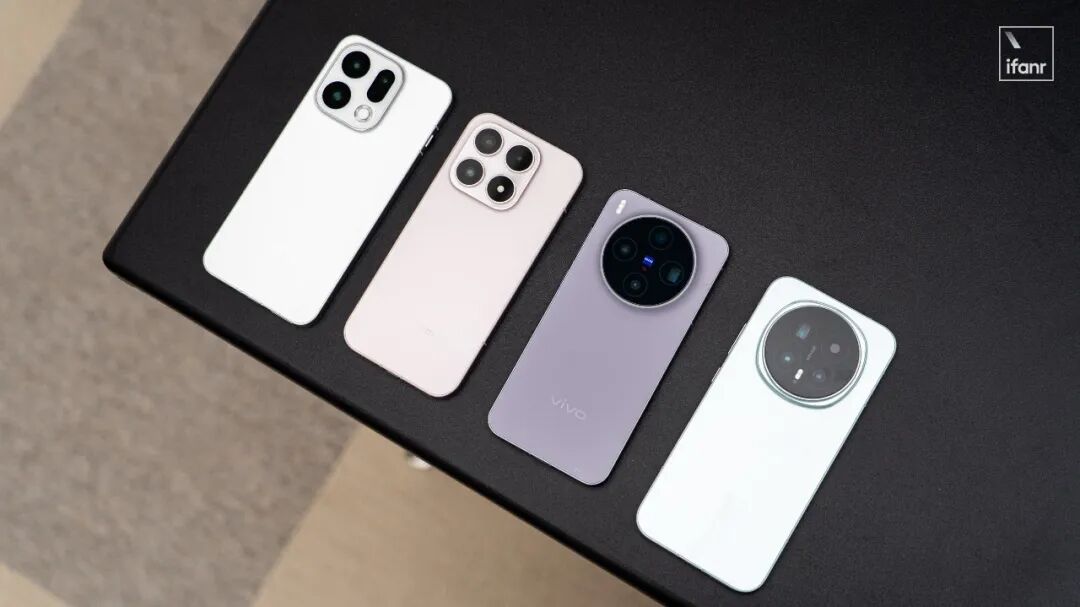
标准版的存在感之战,「荣米OV」四大金刚标准版横评
3 6 Ke· 2025-11-10 07:56
Core Insights - The article discusses the performance and features of the latest standard version smartphones from various brands, highlighting a collective lack of excitement compared to previous years [1] - The standard versions are priced around 4500 yuan, making careful selection essential for consumers [1] Group 1: Smartphone Comparisons - The four main standard models compared are Xiaomi 17, vivo X300, OPPO Find X9, and Honor Magic 8, each showcasing unique features and specifications [1][4] - Xiaomi 17 and Honor Magic 8 utilize the Qualcomm Snapdragon 8 Elite Gen 5 processor, while OPPO Find X9 and vivo X300 use MediaTek's Dimensity 9500 [4] - Performance benchmarks show that the Dimensity 9500 lags behind Snapdragon 8 Elite Gen 5 in CPU single-core and multi-core scores, but GPU capabilities are comparable [5] Group 2: Design and Usability - The smartphones are categorized into two size groups: 6.3-inch models (Xiaomi 17 and vivo X300) and 6.6-inch models (OPPO Find X9 and Honor Magic 8), with the smaller models offering better handling but compromising on battery life [4][11] - The design of vivo X300 has evolved positively, featuring a clever slope design that minimizes the camera module's visual impact [8][10] - Xiaomi 17 is noted for its excellent hand feel, weighing 191 grams and featuring a smooth transition in its design [11] Group 3: Battery and Performance - The battery capacity of vivo X300 is 6040mAh, the smallest among the four, while Xiaomi 17 boasts a 7000mAh battery, providing longer daily usage [11] - Both Xiaomi 17 and vivo X300 face challenges with screen brightness in outdoor conditions, affecting usability [12] Group 4: Software and AI Features - The software experience varies, with Xiaomi's 澎湃 OS 3 showing significant improvements in fluidity and animation compared to previous versions [24][26] - OPPO's ColorOS 16 is praised for its usability and fluidity, while Honor's MagicOS 10 has some usability issues that detract from the overall experience [30][31] Group 5: Camera and Imaging Capabilities - vivo X300 features a 200MP main camera, providing superior detail and image quality compared to its competitors [50] - OPPO Find X9 excels in low-light photography, balancing brightness and detail effectively [52] - Xiaomi 17's camera performance is described as decent but struggles with high dynamic range situations [73] Group 6: Market Positioning and Consumer Insights - The article suggests that the standard versions of smartphones should provide a flagship experience without being perceived as "cut-down" versions [87] - The target demographic for standard versions includes new university students and young professionals seeking value without excessive costs [87]

广东省终端快充行业协会赋能产业实现国际突破
Zhong Guo Jing Ji Wang· 2025-11-10 07:39
Core Points - The International Telecommunication Union's Telecommunication Standardization Sector (ITU-T) has officially released a global fast charging standard, with China's Unified Fast Charging Standard (UFCS) being the only case included as a best practice [1][5][6] - The UFCS protocol addresses the long-standing issue of incompatible fast charging protocols across different brands, promoting sustainability by reducing electronic waste from unused chargers [2][5] - The Guangdong Terminal Fast Charging Industry Association (FCA) has played a crucial role in the development and international recognition of the UFCS protocol, collaborating with major companies and national organizations [3][4] Group 1 - The UFCS protocol has been recognized in the ITU-T L.1004 international standard, marking a significant achievement for China's fast charging industry [1][3] - The standard aims to provide a unified charging solution that enhances compatibility across various devices, thereby reducing consumer costs and environmental impact [2][4] - As of October 31, 2025, 245 products have passed compliance certification, indicating a robust ecosystem involving 45 companies and a wide range of devices [4] Group 2 - The establishment of the UFCS standard reflects China's commitment to innovation and its active participation in global technology governance [5][6] - The standard is expected to guide global enterprises towards a more standardized and efficient charging industry, addressing the fragmentation of charging protocols [6] - The initiative aligns with ITU-T SG5's focus on environmental sustainability and circular economy, emphasizing the importance of integrating charging technology with green practices [5][6]
基础化工新材料周报:电解液龙头被签订近400亿订单,Q3全球半导体销售额增至2084亿美元-20251110
Huafu Securities· 2025-11-10 05:07
Investment Rating - The industry rating is "Outperform the Market" [5] Core Insights - The report highlights significant orders for electrolyte products, with Tianqi Materials signing contracts worth nearly 40 billion yuan for the supply of 87,000 tons to Guoxuan High-Tech and 72,500 tons to Zhongxin Innovation [3][28] - Global semiconductor sales reached 208.4 billion USD in Q3 2025, marking a 15.8% increase from the previous quarter, driven by rising demand for various semiconductor products [3][33] Market Overview - The Wind New Materials Index closed at 5201.04 points, up 1.11% week-on-week. Among sub-industries, the semiconductor materials index fell by 1.43%, while the organic silicon materials index rose by 10.04% [2][10] - The top five gainers this week included Dongyue Silicon Materials (22.5%), Sanxiang New Materials (20.65%), and Zhejiang Zhongcheng (18.52%) [24][25] Recent Industry Trends - The report notes a major adjustment in BASF's new materials business, consolidating its PolyTHF™ operations in China and ceasing production in South Korea by 2026 [28][29] - The global smartphone market saw shipments reach 320 million units in Q3 2025, with Samsung leading in market share at 19% [30]
手机厂商入场,能治好AI潮玩的“人工智障”吗?
创业邦· 2025-11-10 03:38
Core Viewpoint - The article discusses the rapid growth and challenges of the AI toy industry, highlighting the duality of increasing sales and consumer dissatisfaction due to technological limitations and subscription models [5][10][36]. Group 1: Market Trends and Growth - The year 2025 is anticipated to be the "Year of AI Trendy Toys," with significant investments and product launches from various companies, including major tech firms and traditional toy manufacturers [5][10]. - AI toys are experiencing explosive growth, with sales on platforms like JD.com increasing sixfold month-on-month and over 200% year-on-year in the first half of 2025 [15]. - The market is seeing a diverse range of entrants, from startups to established companies like Baidu and ByteDance, all leveraging their technological and ecological advantages [10][15]. Group 2: Consumer Insights and Feedback - Consumers express mixed feelings about AI toys, with some praising their interactive capabilities while others criticize their performance, such as slow response times and lack of emotional engagement [13][28]. - The core audience for AI toys includes children and young adults aged 18-35, with a growing demand for emotional companionship rather than just play [20][24]. - A viral video highlighted the emotional impact of AI toys, showing how they can provide companionship to lonely individuals, particularly among the younger generation [22]. Group 3: Challenges and Limitations - Despite the hype, AI toys face significant challenges, including immature technology, poor user experience, and controversial subscription models that deter consumers [27][36]. - Common complaints include weak multi-turn dialogue capabilities, reliance on stable internet connections, and a lack of personalized responses, leading to a disconnect between expectations and reality [28][29]. - The subscription model for AI toys, which often requires ongoing payments for functionality, is viewed unfavorably by consumers accustomed to traditional one-time purchases [30][31]. Group 4: Industry Dynamics and Future Outlook - The entry of smartphone manufacturers into the AI toy market is seen as a potential game-changer, leveraging their advanced technology and extensive distribution networks to enhance product offerings [38][44]. - Collaboration between AI toy companies and established tech firms could lead to improved user experiences and more innovative products, addressing current limitations [45][46]. - The future success of AI toys may depend on their ability to integrate into broader smart ecosystems and provide meaningful emotional connections rather than just functional interactions [47].

华虹三季报创新高,半导体景气向上动能强劲
Ping An Securities· 2025-11-10 02:58
Investment Rating - The industry investment rating is "Outperform the Market" [1][38] Core Views - Huahong Semiconductor reported impressive results for Q3 2025, achieving record highs in multiple key operational metrics [3] - The semiconductor industry is entering a high prosperity cycle driven by AI demand and domestic substitution [6] - The global semiconductor market is showing strong recovery, with Q3 2025 global sales reaching $208.4 billion, a 15.8% increase quarter-on-quarter and a 25.1% increase year-on-year [6] Summary by Sections Company Performance - Huahong Semiconductor achieved sales revenue of $635.2 million in Q3 2025, marking a historical high with a year-on-year growth of 20.7% and a quarter-on-quarter growth of 12.2% [4] - The gross margin for Q3 improved to 13.5%, exceeding company guidance, with a year-on-year increase of 1.3 percentage points and a quarter-on-quarter increase of 2.6 percentage points [4] - The overall capacity utilization rate reached 109.5% by the end of Q3, up 1.2 percentage points from the previous quarter, indicating full operational capacity [4] Market Trends - The embedded non-volatile memory revenue grew by 20.4% year-on-year, driven by increased demand for MCU products, while standalone non-volatile memory saw a remarkable revenue surge of 106.6% year-on-year [4] - Consumer electronics remained the largest market for Huahong Semiconductor, contributing $407.5 million in sales, accounting for 64.1% of total revenue, with a year-on-year growth of 23.2% [4] - The semiconductor industry is experiencing a significant increase in advanced process demand, with expectations for global advanced process capacity to grow at a CAGR of 14% [6] Investment Recommendations - It is recommended to focus on key companies in the semiconductor manufacturing sector, such as SMIC and Huahong Semiconductor, as well as the storage industry chain [6]