博时基金

Search documents
债券ETF规模破7千亿元,逾五成产品超百亿元
Zheng Quan Shi Bao Wang· 2025-11-03 03:33
Core Insights - The total scale of bond ETFs has surpassed 700 billion yuan, reaching 700.44 billion yuan as of November 3, marking an increase of 520.58 billion yuan since the beginning of the year [1] Group 1: Market Overview - As of now, there are 53 bond ETF products available, with 32 of them being newly added in the current year [1] - More than 50% of the bond ETFs, specifically 30 products, have a scale exceeding 10 billion yuan [1] Group 2: Leading Products - The top three bond ETFs by scale are: - Short-term bond ETF from Hai Fu Tong Fund with over 66 billion yuan - Convertible bond ETF from Bosera Fund with over 58 billion yuan - Government bond ETF from Fortune Fund with over 40 billion yuan [1]
电池ETF上周领涨,机构:看好周期与技术共振丨ETF基金周报
2 1 Shi Ji Jing Ji Bao Dao· 2025-11-03 03:15
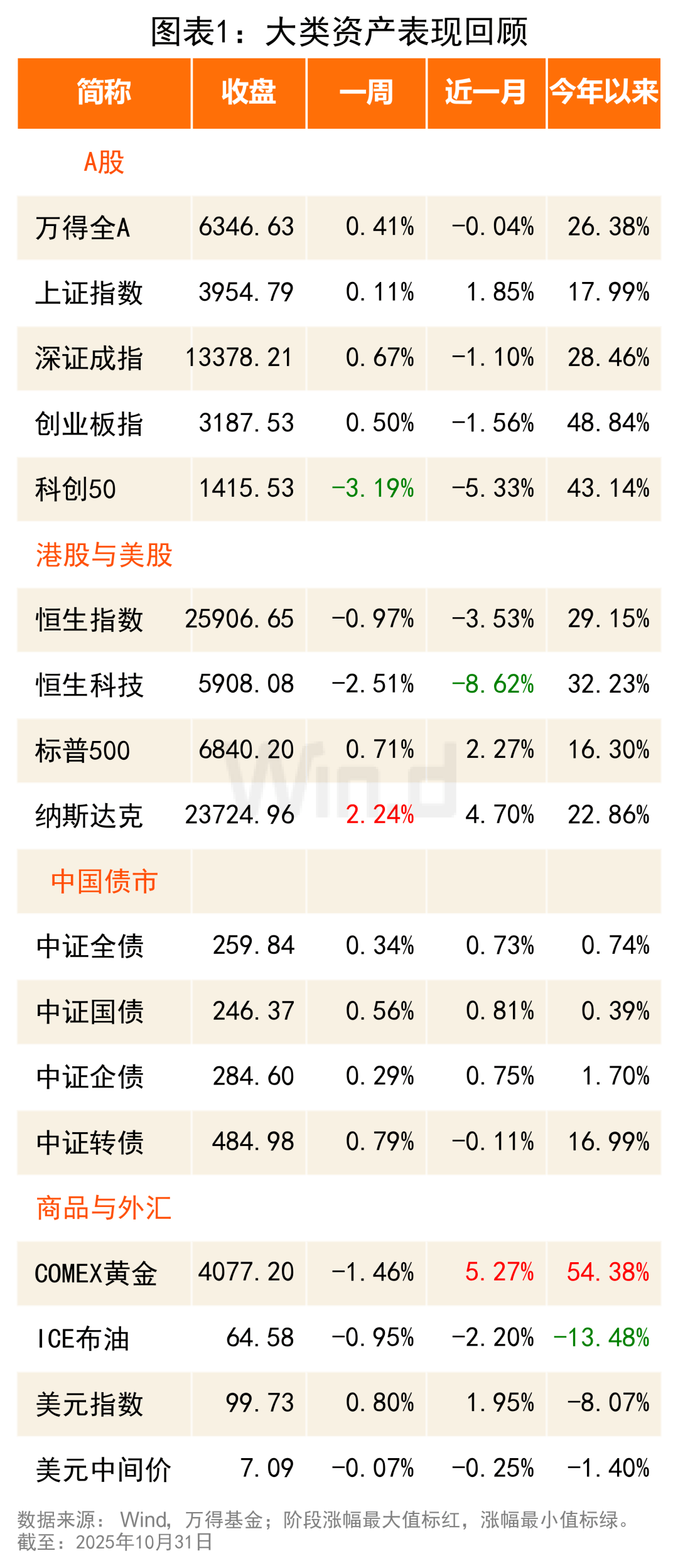
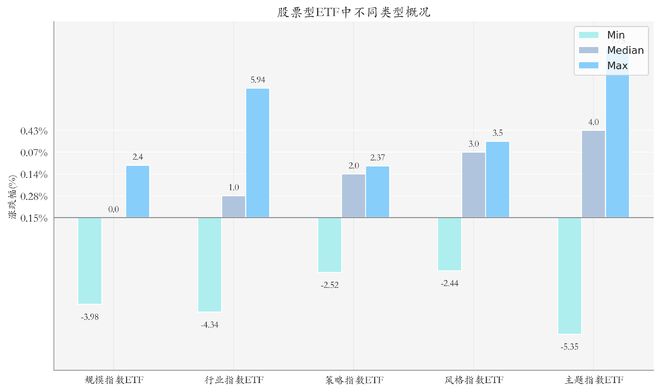
Market Overview - The Shanghai Composite Index rose by 0.11% to close at 3954.79 points, with a weekly high of 4025.7 points [1] - The Shenzhen Component Index increased by 0.67% to 13378.21 points, reaching a peak of 13700.25 points [1] - The ChiNext Index gained 0.5%, closing at 3187.53 points, with a maximum of 3331.86 points [1] - Global markets saw most major indices rise, with the Nasdaq Composite up 2.24%, the Dow Jones Industrial Average up 0.75%, and the S&P 500 up 0.71% [1] - In the Asia-Pacific region, the Hang Seng Index fell by 0.97%, while the Nikkei 225 Index surged by 6.31% [1] ETF Market Performance - The median weekly return for stock ETFs was 0.23% [2] - The highest weekly return among scale index ETFs was 2.4% for the Jiashi Zhongchuang 400 ETF [2] - The South China CSI New Energy ETF led industry index ETFs with a return of 5.94% [2] - The highest return in strategy index ETFs was 2.37% for the China Southern CSI All-Share Dividend Quality ETF [2] - The Jiashi CSI Battery Theme ETF achieved the highest return among thematic index ETFs at 7.75% [2] ETF Performance Rankings - The top five stock ETFs by weekly return were: - Jiashi CSI Battery Theme ETF (7.75%) - Huatai-PB CSI Battery Theme ETF (7.56%) -招商中证电池主题ETF (7.52%) - 富国中证电池主题ETF (7.51%) - 浦银安盛中证光伏产业ETF (7.04%) [4][5] - The five stock ETFs with the largest declines were: - 国联安上证科创板芯片设计主题ETF (-5.35%) - 华安上证科创板芯片ETF (-5.11%) - 国泰上证科创板芯片ETF (-5.06%) - 博时上证科创板芯片ETF (-5.05%) - 南方上证科创板芯片ETF (-5.05%) [4][5] ETF Liquidity - Average daily trading volume for stock ETFs increased by 13.3%, with average daily trading volume rising by 46.7% and turnover rate increasing by 0.22% [6] ETF Fund Flows - The top five stock ETFs by fund inflow were: - 华泰柏瑞沪深300ETF (inflow of 5.084 billion) - 华夏上证科创板50成份ETF (inflow of 1.647 billion) - 华夏上证50ETF (inflow of 1.535 billion) - 国泰中证全指证券公司ETF (inflow of 1.353 billion) - 嘉实上证科创板芯片ETF (inflow of 959 million) [9] - The five stock ETFs with the largest outflows were: - 鹏华中证酒ETF (outflow of 351 million) - 华安创业板50ETF (outflow of 334 million) - 汇添富中证电池主题ETF (outflow of 284 million) - 南方中证申万有色金属ETF (outflow of 279 million) - 嘉实中证稀土产业ETF (outflow of 256 million) [10] ETF Financing and Margin Trading - The financing balance for stock ETFs increased from 47.486 billion to 49.145 billion, while the margin balance rose from 2.5678 billion to 2.6069 billion [11] ETF Market Size - The total market size for ETFs reached 5699.032 billion, an increase of 6.878 billion from the previous week [15] - Stock ETFs accounted for 3724.471 billion, representing 65.4% of the total ETF market size [15][17] ETF Issuance and Establishment - No new ETFs were issued last week, but eight new ETFs were established, including 天弘国证港股通科技ETF and 摩根恒生港股通50ETF [18] Institutional Insights - 财通证券 is optimistic about the solid-state battery industry, expecting breakthroughs in technology and increased industrialization by 2025 [18] - 中国银河证券 believes traditional lithium battery equipment manufacturers will maintain their advantages in the solid-state battery market, suggesting a focus on developments in equipment and orders [18]

两市ETF两融余额增加6.48亿元丨ETF融资融券日报
2 1 Shi Ji Jing Ji Bao Dao· 2025-11-03 02:49
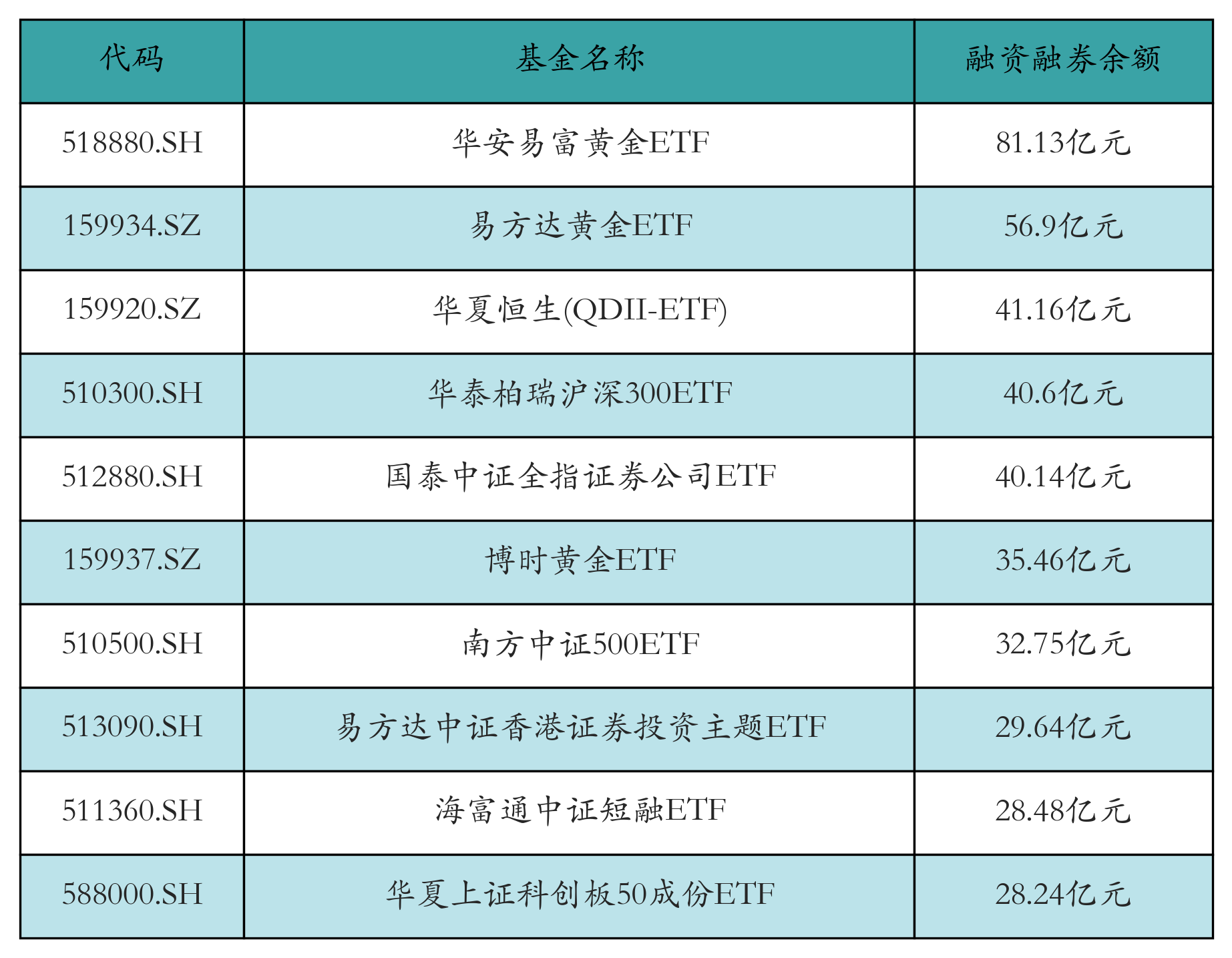
Market Overview - As of October 31, the total ETF margin balance in the two markets reached 118.932 billion yuan, an increase of 0.648 billion yuan from the previous trading day. The financing balance was 110.985 billion yuan, up by 0.935 billion yuan, while the securities lending balance decreased to 7.947 billion yuan, down by 0.287 billion yuan [1] - In the Shanghai market, the ETF margin balance was 83.393 billion yuan, increasing by 0.931 billion yuan. The financing balance rose to 76.404 billion yuan, up by 1.196 billion yuan, and the securities lending balance decreased to 6.989 billion yuan, down by 0.265 billion yuan [1] - In the Shenzhen market, the ETF margin balance was 35.539 billion yuan, a decrease of 0.283 billion yuan. The financing balance fell to 34.581 billion yuan, down by 0.260 billion yuan, while the securities lending balance decreased to 0.958 billion yuan, down by 22.3196 million yuan [1] ETF Margin Balances - The top three ETFs by margin balance as of October 31 were: 1. Huaan Yifu Gold ETF (8.113 billion yuan) 2. E Fund Gold ETF (5.690 billion yuan) 3. Huaxia Hang Seng (QDII-ETF) (4.116 billion yuan) [2] ETF Financing Amounts - The top three ETFs by financing amount on October 31 were: 1. Hai Futong Zhongzheng Short-term Bond ETF (2.059 billion yuan) 2. E Fund Hong Kong Investment Theme ETF (1.661 billion yuan) 3. Bosera Convertible Bonds and Exchangeable Bonds ETF (0.992 billion yuan) [4] ETF Net Financing Amounts - The top three ETFs by net financing amount on October 31 were: 1. Hai Futong Zhongzheng Short-term Bond ETF (0.285 billion yuan) 2. Huatai-PB CSI 300 ETF (0.142 billion yuan) 3. E Fund ChiNext ETF (0.119 billion yuan) [5] ETF Securities Lending Amounts - The top three ETFs by securities lending amount on October 31 were: 1. Guotai CES Semiconductor Chip Industry ETF (19.8833 million yuan) 2. Huatai-PB CSI 300 ETF (19.7935 million yuan) 3. Southern CSI Shenwan Non-ferrous Metals ETF (4.0323 million yuan) [6]
基金经理激辩4000点!关键节点,市场分歧加大
证券时报· 2025-11-03 00:07
Core Viewpoint - The A-share market is experiencing increased divergence among fund managers, with some benefiting from the technology sector while others express anxiety over missed opportunities. This divergence is reflected in the performance of funds and their operational strategies [1][4][5]. Market Overview - The A-share market has shown slight fluctuations near the 4000-point mark, intensifying the competition over key market directions [2][3]. - The Shanghai Composite Index recently surpassed the 4000-point threshold for the first time in a decade, yet the market enthusiasm remains unfulfilled, with trading volumes hovering around 2 trillion yuan [4]. Fund Manager Sentiment - Fund managers exhibit varied perspectives on the current market situation, with some expressing caution about a potential market pause while others remain optimistic about long-term growth [5][6]. - A significant portion of actively managed equity funds reduced their stock positions despite the rising market, indicating a cautious stance among institutional investors [4]. Technology Sector Discrepancies - There is a notable divide among fund managers regarding the technology sector, with some maintaining a bullish outlook while others express concerns over high valuations and potential risks [7][8]. - Fund managers have significantly increased their holdings in semiconductor, consumer electronics, and communication equipment sectors, with the electronics industry becoming the first to exceed 25% in active equity fund holdings [7]. Performance Disparities - The performance of fund managers is highly polarized, with some funds doubling their performance over the past year while others remain in the red [10][11]. - The investment strategies adopted by fund managers play a crucial role in their performance, with those favoring growth investments in emerging industries achieving better results compared to those adhering to traditional value investment principles [10]. Future Market Outlook - Expectations for future market movements are mixed, with some analysts predicting continued liquidity while others caution about potential volatility due to changes in high-risk funding sources [12]. - The technology sector is viewed as a key driver for market growth, with recommendations to focus on sectors benefiting from national strategies and performance elasticity [12].

机构研究周报:人民币有望延续走强,推动中国资产重估
Wind万得· 2025-11-02 23:32
Group 1: Economic Indicators - The official manufacturing PMI for China in October is reported at 49.0%, a decrease of 0.8 percentage points from the previous month, indicating a slowdown in manufacturing activity [3] - The production index is at 49.7%, down 2.2 percentage points, suggesting a decline in manufacturing production [3] - The new orders index is at 48.8%, down 0.9 percentage points, reflecting a decrease in market demand for manufacturing [3] Group 2: Currency and Market Outlook - Huatai Securities predicts that the RMB is likely to continue strengthening, driven by the potential depreciation of the USD and the return of funds due to "de-dollarization" in Asia, which may lead to a revaluation of Chinese assets [5] - CICC maintains a positive mid-term market outlook but warns of potential overheating in the short term, suggesting that after recent positive developments, the market may face profit-taking and overcrowding in popular sectors [6] - In the context of the technology sector, Invesco Great Wall Fund highlights the risk of bubble formation in some popular tracks, urging a rational approach to risk management [7] Group 3: Industry Insights - CITIC Construction Investment notes that small nucleic acid drugs are expected to become a third category of pharmaceuticals, with advancements in GalNAc technology paving the way for commercialization and enhancing global competitiveness for Chinese firms [9] - Huaxia Fund expresses a long-term positive outlook on CPO optical modules, despite recent short-term sell-offs, anticipating that technological upgrades will drive demand in the optical communication sector [10] - Huatai Baifa Fund identifies ample structural opportunities in Q4, emphasizing the importance of technology and innovation in supporting China's economic transformation [11]





A股4000点关口博弈 基金经理激辩科技股估值
Zheng Quan Shi Bao· 2025-11-02 18:05
Core Viewpoint - The A-share market is experiencing intensified divergence among fund managers, with varying strategies and performances as the Shanghai Composite Index approaches the 4000-point mark [1][2][3] Market Dynamics - The Shanghai Composite Index recently surpassed the 4000-point threshold for the first time in a decade, yet market enthusiasm remains subdued, with trading volumes fluctuating around 2 trillion yuan [2] - There is a notable divergence in fund manager sentiment, with over 40% of actively managed equity funds reducing stock positions despite a rising market, indicating a cautious approach among institutional investors [2][3] - The total share of actively managed equity funds decreased by 163.4 billion shares in Q3, with net redemptions reaching 216.2 billion shares, reflecting a trend of investors pulling out funds despite rising net asset values [2] Fund Manager Perspectives - Different fund managers express varied views on the current market situation, with some suggesting a potential pause in the bull market while others remain optimistic about long-term growth driven by economic recovery and supportive policies [3][4] - A significant focus is on the technology sector, where fund managers exhibit starkly different investment strategies, with some advocating for caution due to high valuations and potential risks [5][6] Performance Disparity - There is a pronounced performance disparity among funds, with over 40 funds doubling their performance in the past year, while more than 200 funds remain in a loss position [7] - Fund managers who favor growth investments in emerging industries have seen better performance compared to those adhering to value investment principles in traditional sectors [7] Future Outlook - Companies like Bosera Fund anticipate continued liquidity in the market, although fluctuations in high-risk capital could increase volatility [8] - Jin Xin Fund emphasizes the technology sector as a key driver for market growth, suggesting investments in areas like semiconductor equipment, AI applications, and renewable energy [9]
ETF规模10个月增长逾2万亿元
Shang Hai Zheng Quan Bao· 2025-11-02 17:53
Core Insights - The ETF market has experienced significant growth, with an increase of over 2 trillion yuan in scale within 10 months, highlighting its importance as a key investment tool [1][2] - The number of ETFs has surged, with 1345 ETFs established by October 30, 2023, compared to 1039 at the end of the previous year, indicating a robust expansion in both quantity and scale [1][2] - The growth in ETF scale is attributed to continuous net subscriptions exceeding 730 billion yuan and a market rebound that has led to substantial increases in ETF net values [1][2] ETF Market Expansion - As of October 30, 2023, there are 121 ETFs with a scale exceeding 10 billion yuan, up from 66 at the end of the previous year, with 23 ETFs surpassing 40 billion yuan [2] - The stock ETF segment has reached a scale of 3.75 trillion yuan, reflecting an increase of over 850 billion yuan since the end of last year, with Central Huijin being a significant contributor [2] - Bond ETFs have also seen rapid growth, with their scale rising from approximately 180 billion yuan at the end of last year to nearly 700 billion yuan by October 30, 2023 [2] Product Innovation and Competition - The ETF market continues to innovate, with 11 new ETFs and ETF-linked funds currently being issued, covering various sectors such as industrial software and photovoltaic [3] - The competition among ETF managers is intensifying, with 16 fund managers having ETF management scales exceeding 100 billion yuan, and the top three managers controlling over 40% of the total ETF market [3] - New entrants like Changcheng Fund and Xingsheng Global Fund have begun ETF operations, indicating ongoing interest and potential for further market expansion [3]
最牛,大赚超200%!
Zhong Guo Ji Jin Bao· 2025-11-01 15:38
Core Insights - The A-share market has shown significant recovery in 2025, with the Shanghai Composite Index reaching a 10-year high of 4025.70 points by the end of October, leading to a strong performance of public equity funds and the emergence of numerous "doubling funds" [1][3] Group 1: Fund Performance - The average net value growth rate of actively managed equity funds for the first ten months reached 27.48%, with the best-performing funds exceeding 200% [3][5] - Over 98% of actively managed equity funds reported positive net value growth rates, with 705 funds achieving over 50% growth, and 34 funds surpassing 100% [7][5] - The top-performing fund, Yongying Technology Smart Selection A, achieved a net value growth rate of 200.63%, capitalizing on opportunities in the cloud computing market [9][8] Group 2: Index and Sector Performance - Major indices such as the ChiNext Index and the Science and Technology Innovation 50 Index saw annual growth rates exceeding 50%, with the ChiNext Index at 48.84% [1][4] - The communication equipment sector emerged as a significant winner, with related index funds showing remarkable performance, including the Guotai CSI All-Index Communication Equipment ETF, which had a growth rate of 98.87% [12][13] Group 3: Investment Themes and Manager Insights - Fund managers are focusing on structural opportunities in sectors like AI, innovative drugs, and robotics, which have shown strong performance [7][14] - Investment strategies include a focus on domestic semiconductor equipment and energy storage, with managers highlighting the increasing production capacity of domestic storage chips and the growing demand for energy storage solutions [15][14]
最牛,大赚超200%!
中国基金报· 2025-11-01 15:30
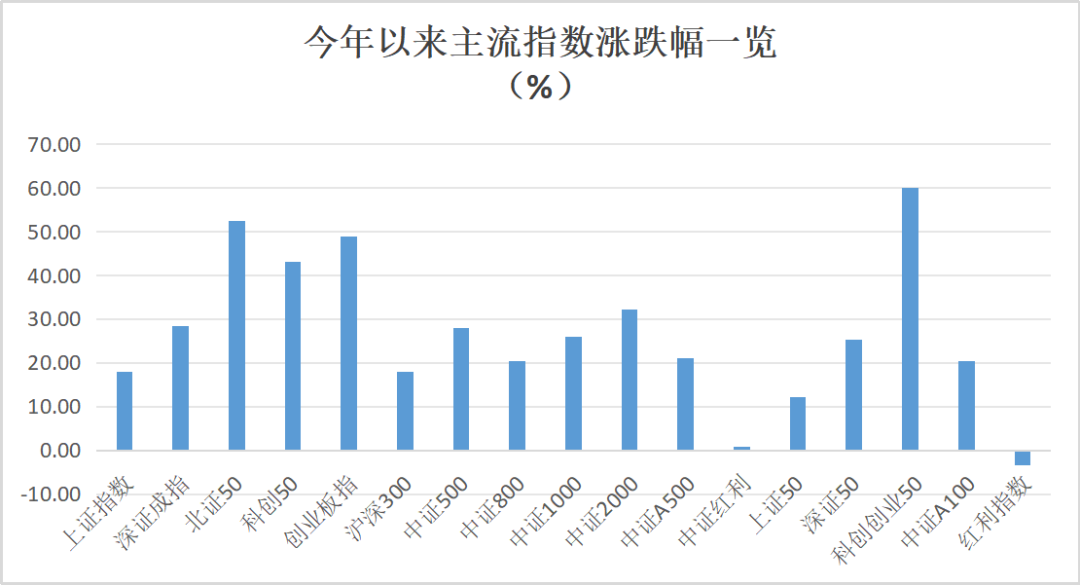
Core Insights - The A-share market has shown significant recovery in 2025, with the Shanghai Composite Index reaching a 10-year high of 4025.70 points by the end of October, leading to a strong return on public equity funds and the emergence of numerous "doubling funds" [1][3][4] Performance of Active Equity Funds - The average net value growth rate of active equity funds in the first ten months reached 27.48%, with the best-performing funds exceeding 200% [3][4][6] - Over 98% of active equity funds reported positive net value growth rates, with many funds achieving new highs [6][8] - Among the active equity funds, 705 funds had a net value growth rate exceeding 50%, and 34 funds surpassed 100% [8][10] Comparison with Mainstream Indices - The performance of various indices in the first ten months showed that the Shenzhen Component Index rose by 28.46%, while the ChiNext Index increased by 48.84% [5] - Active equity funds outperformed mainstream indices, with the average growth rate of ordinary stock funds and mixed equity funds at 32.93% and 32.33%, respectively [6][5] Top Performing Funds - The top-performing fund, Yongying Technology Smart Selection A, achieved a net value growth rate of 200.63%, capitalizing on opportunities in the cloud computing market [10] - Other notable funds include China Europe Digital Economy A (134.72%) and Hengyue Advantage Selection (133.97%), focusing on AI infrastructure and innovative sectors [10][18] Performance of Index Funds - The communication equipment sector saw significant gains, with the communication equipment index rising over 98%, leading to strong performances from related index funds [12][13] - Notable index funds include Guotai CSI All-Share Communication Equipment ETF, which recorded a 98.87% growth rate [15] Investment Focus Areas - Fund managers are optimistic about sectors such as domestic semiconductor equipment, energy storage, and AI edge computing, indicating a strong growth potential in these areas [16][19] - The global cloud computing industry remains a focal point for investment, with expectations of increased capital flow into AI computing capabilities [17][18]
机构研究周报:人民币有望延续走强,推动中国资产重估
Sou Hu Cai Jing· 2025-11-01 11:12
Focus Review - The official manufacturing PMI for China in October is 49.0%, down 0.8 percentage points from the previous month, indicating a decline in manufacturing activity [2] - The production index is at 49.7%, down 2.2 percentage points, suggesting a slowdown in manufacturing production [2] - The new orders index is at 48.8%, down 0.9 percentage points, indicating a decrease in market demand [2] - The employment index is at 48.3%, down 0.2 percentage points, reflecting a slight decline in employment conditions in manufacturing [2] Equity Market - Huatai Securities predicts that the RMB is likely to continue strengthening, which may lead to a revaluation of Chinese assets [3] - The RMB's appreciation is expected to benefit Hong Kong stocks and Chinese overseas asset allocation, although caution is advised regarding potential risks from US policy changes [3] - CICC maintains a positive mid-term outlook for the market but warns of short-term overheating and potential profit-taking in popular sectors [4] - In the context of the A-share market, there is a noted risk of bubble formation in some hot sectors, particularly in technology, necessitating a rational approach to risk management [5] Industry Research - CITIC Construction Investment highlights that small nucleic acid drugs may become a third major category of pharmaceuticals due to their targeted delivery and long-lasting effects [10] - Huaxia Fund expresses a long-term positive outlook on CPO optical modules, despite recent short-term sell-offs due to market fluctuations [11] - Huatai Baichuan Fund sees ample structural opportunities in Q4, driven by the "14th Five-Year Plan" focusing on technological self-reliance and innovation [12] Macro and Fixed Income - Guotai Junan notes that the Fed's hawkish stance has weakened expectations for future rate cuts, while bond market dynamics remain influenced by inflation risks [16] - Bosera Fund indicates that the bond market is becoming more attractive as liquidity improves and the Fed signals a continuation of accommodative policies [17] - CITIC Securities suggests that government bond trading operations may serve as a substitute for reserve requirement ratio cuts, with ongoing monitoring of macroeconomic recovery [18] Asset Allocation - Guolian Minsheng Investment advises a balanced allocation strategy, focusing on sectors benefiting from the "14th Five-Year Plan," such as new energy and semiconductor industries [19]