天孚通信

Search documents
光互联开门红,坚定看好三大方向
2026-02-25 04:13
Summary of Conference Call on Optical Interconnection Sector Industry Overview - The conference focused on the optical interconnection sector, highlighting its growth potential and recent market dynamics, particularly in the context of technological advancements and stock performance in related companies like AMD and NVIDIA [1][2]. Key Points and Arguments Market Dynamics - The optical interconnection industry is experiencing a positive momentum driven by technological advancements and market catalysts, with significant stock price increases observed in major players [1]. - The sector is categorized into three segments: large optical, small optical, and new optical, each with distinct growth trajectories and market logic [1]. New Optical Segment - The new optical segment includes next-generation solutions such as CPU, NPU, and OCS, which are gaining traction due to rapid technological iterations and deployment [2]. - Lumentum reported substantial progress in the CPO field, securing multi-million dollar orders for high-power laser systems, with deliveries expected by 2027 [2][3]. Large Optical Segment - The large optical segment, primarily focused on optical modules, is expected to maintain a high growth trajectory, supported by increasing capital expenditures from major cloud service providers (CSPs) like Amazon and Google, which are projected to reach nearly $600 billion in 2026, a 60% year-over-year increase [7]. - The demand for optical modules is underpinned by the need for enhanced AI computing capabilities, with significant growth anticipated in 800G, 1.5T, and 3.2T optical products [9]. Small Optical Segment - The small optical segment, which includes second-tier optical module manufacturers, is poised for substantial growth as demand from CSPs expands beyond major players to include companies like Meta and AWS [13][14]. - The potential for second-tier companies to secure contracts with leading CSPs is increasing, which could lead to rapid revenue growth due to their smaller base and high elasticity in performance [14]. Additional Important Insights - The competition between CPU and traditional optical modules is stabilizing, with both technologies expected to coexist and grow, reflecting a positive outlook for the industry [11]. - The NPU segment is gaining attention, with major players like Tencent and Alibaba making significant advancements, indicating a shift in market focus towards this technology [10]. - The overall market logic for optical modules remains strong, with various catalysts expected to enhance growth prospects, including increased production capacity and technological advancements [12]. Recommendations - Continued monitoring of the optical interconnection sector is advised, with specific attention to key players such as Tianfu Communication and Juguang Technology for potential investment opportunities [6][12]. - The small optical segment should be closely watched for emerging opportunities, particularly in companies like Liantech and Green Li Eco, which may benefit from increased demand and supply chain integration [14].




中国光模块:在 2027 年可插拔光模块需求乐观的基础上,CPO技术将打开全新市场空间-China Communication Infrastructure CPO scale-up a new TAM on top of upbeat 2027 pluggable demand
2026-02-25 04:08
Ac t i o n | 23 Feb 2026 20:46:05 ET │ 31 pages China Communication Infrastructure CPO scale-up a new TAM, on top of upbeat 2027 pluggable demand CITI'S TAKE We evaluate the potential TAM for CPO optics supply chain in this report given the deployment in scale-up likely to come in late 2027. The optics supply chain will likely see stocking demand in 2H27. We assume 300/5k/209k units of CPO switches in 2025/26/27E (vs. prior 100k in 2027E) in which 169k units of CPO switch shipments are assumed for scale- up ...


价格狂飙,光纤赛道为什么火了?丨每日研选
Shang Hai Zheng Quan Bao· 2026-02-25 03:43
Core Viewpoint - The optical fiber and cable market is experiencing a significant price surge driven primarily by the demand from AI data centers, rather than traditional drivers like FTTH or 5G construction [1][2]. Group 1: Market Dynamics - Since the end of 2025, the price of G.652.D bare fiber has been continuously rising, surpassing 30 yuan per core kilometer by February 2026, with actual transaction prices concentrated between 40 to 50 yuan per core kilometer, reflecting an increase of 94% to 144% [1]. - The demand structure for optical fibers has fundamentally changed due to the high consumption levels and specifications required by AI data centers, which exceed those of traditional telecom networks [1]. - The demand for special fibers like G.657.A2 and hollow-core fibers has surged to meet the low-latency and high-bandwidth interconnection needs of GPU clusters [1]. Group 2: Supply Constraints - The core raw material for optical fibers, optical preform, accounts for about 70% of the fiber's cost and has a long production cycle of 1.5 to 2 years, leading to tight supply constraints [2]. - Following previous years of price wars and supply clearances, there has been little large-scale expansion in production capacity, causing a mismatch between rising demand and constrained supply [2]. - As high-end special fiber demand surges, preform manufacturers prioritize capacity for higher-margin products, further squeezing the production of standard fibers like G.652.D [2]. Group 3: Investment Opportunities - Companies with optical preform production capacity, such as Yangtze Optical Fibre and Cable, Hengtong Optic-electric, Zhongtian Technology, FiberHome, and Hangzhou Hikvision, are expected to benefit significantly from the price increase [3]. - Key suppliers in the upstream of the computing power supply chain, particularly in the optical module sector like Zhongji Xuchuang and NewEase, as well as optical device manufacturers like Tianfu Communication and Shijia Photon, are also highlighted as potential investment targets [3]. - Companies with advanced technological reserves, particularly those involved in next-generation technologies like hollow-core fibers, are likely to see valuation catalysts as these technologies enter operator trials [3].


大模型演进路径逐渐清晰,算力或供不应求
Zhong Guo Neng Yuan Wang· 2026-02-25 01:13
Core Insights - The AI industry is experiencing significant upgrades in major models both domestically and internationally around the Spring Festival period in 2026, indicating a transformative phase in the sector [2][3]. Domestic AI Model Updates - Several domestic AI models have been updated recently: - January 27: Moonlight released the K2.5 model - February 12: Zhipu released the GLM-5 model - February 13: MiniMax released the MiniMax M2.5 model - February 14: ByteDance released the Doubao 2.0 model - February 16: Alibaba released the Qianwen 3.5 model [3]. International AI Model Updates - Internationally, major AI companies have also completed significant model updates: - OpenAI released the GPT-5.3-Codex model designed for real-time programming, capable of generating over 1000 tokens per second - Anthropic launched the Claude Opus4.6/Claude Sonnet4.6 models, supporting 1 million tokens context for better execution of intelligent planning tasks - Google introduced the Gemini3.1Pro model, which has doubled its inference performance [3]. Advancements in AI Applications - The capabilities of AI models are evolving, with the emergence of intelligent agents and multimodal applications: - The OpenClaw open-source intelligent agent tool has gained attention for its ability to assist with specific office tasks, moving beyond simple chat functionalities - ByteDance's SeeDance2.0 has improved video generation efficiency, increasing the usable rate of 15-second videos from 20% to 90%, potentially driving the anime and drama industries towards large-scale development [4]. Pricing Trends in Computing Power - A price increase in computing power has been observed, indicating a supply bottleneck in the computing power industry: - Zhipu's GLM Coding Plan has seen a price adjustment, including a 30% or more increase in package prices, reflecting rising market demand and user engagement [5]. Investment Recommendations - The computing supply chain is expected to experience sustained growth, with investment opportunities identified in: - Computing and storage: Cambrian, Haiguang Information, Moore Threads, Muxi, Zhaoyi Innovation, Baiwei Storage, Jucheng - Advanced manufacturing: SMIC, Huahong, Jinghe Integration, China Resources Micro, Chipone, Changdian Technology, Tongfu Microelectronics - Optical communication: Zhongji Xuchuang, Tianfu Communication, Xinyi Sheng, Changfei Optical Fiber, Zhongtian Technology, Hengtong Optic-Electric, Huaxin Electronics, Jiepte, Dazhu Laser [6][7].

突发3大利好!16只光纤龙头集体涨停,高盛早已暗中布局这4股!
Sou Hu Cai Jing· 2026-02-24 20:30
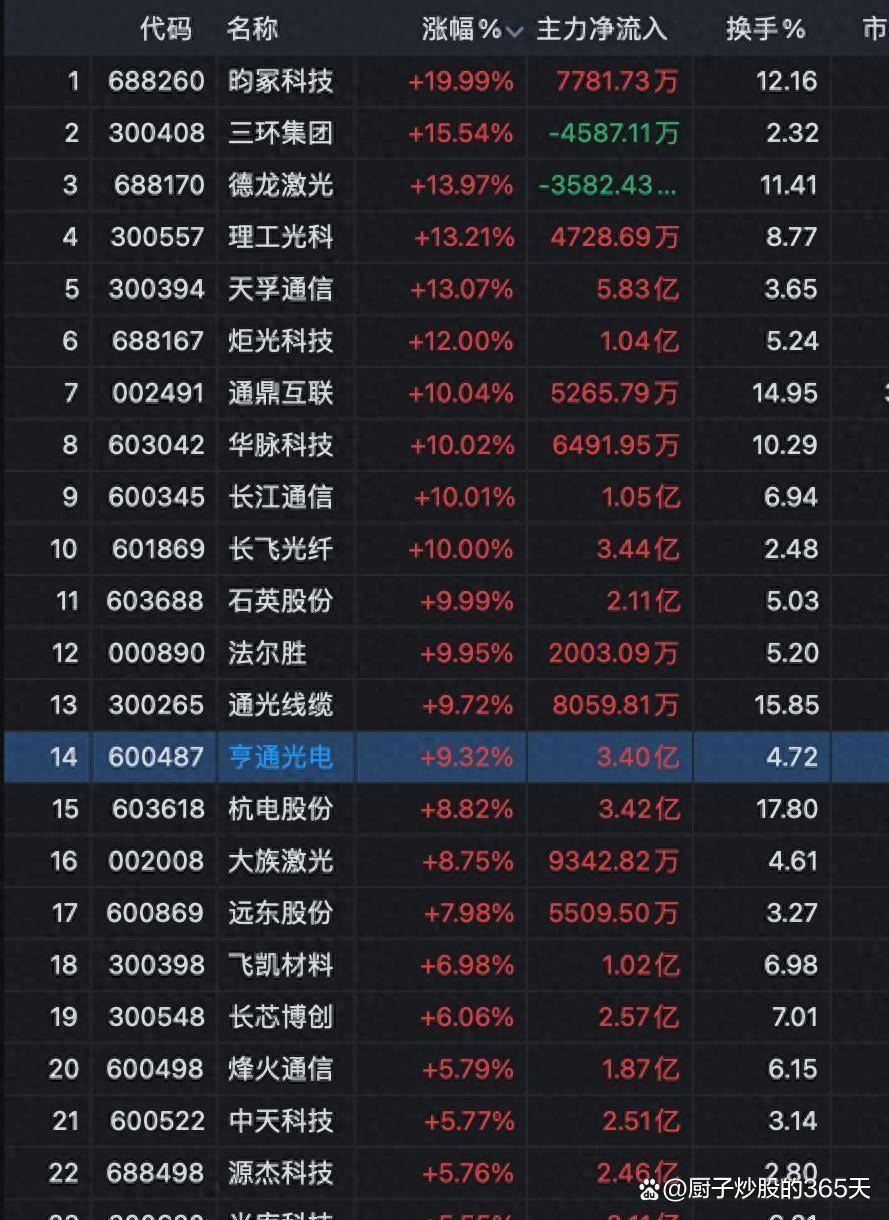
Core Viewpoint - The optical fiber and cable sector has experienced a significant surge in stock prices, with 16 companies seeing increases of over 9% in a single day, driven by the demand for AI-related infrastructure and technological advancements in the industry [1][3][10]. Group 1: Market Performance - The optical fiber sector saw remarkable stock performance, with companies like Yuzhong Technology and Sanhuan Group rising by 19.99% and 15.54% respectively, indicating a strong market reaction [2][3]. - The average price of mainstream G.652.D optical fiber in China has exceeded 40 RMB per core kilometer, with some urgent orders reaching 50 RMB, marking an over 80% increase from the previous year's low [8]. Group 2: Demand Drivers - The explosive growth in AI computing power demand is a primary driver, with optical fiber usage in AI data centers being 16 to 36 times higher than traditional data centers [4][6]. - Major tech companies, such as Meta, have signed substantial contracts, including a $6 billion long-term supply agreement with Corning for optical fibers, further fueling industry optimism [6][8]. Group 3: Supply Constraints - The production of optical fiber preform, a critical raw material, faces significant technical barriers and long lead times, with capacity expansion taking 18 to 24 months [6][8]. - Global production capacity for optical preform is nearing 100%, leading to a supply crunch, particularly for standard communication fibers, as manufacturers prioritize high-end products for AI data centers [8][10]. Group 4: Industry Dynamics - The industry has undergone consolidation, with the top four companies, including Corning and domestic leaders like Changfei Fiber and Zhongtian Technology, holding over 50% market share [10][11]. - Companies with integrated supply chains, capable of producing their own optical preform, are positioned to benefit significantly from rising prices, showcasing substantial profit elasticity [11][12]. Group 5: International Expansion - Chinese optical fiber companies are accelerating their international expansion, targeting high-value orders in North America and Europe, while also achieving breakthroughs in next-generation communication technologies [12][13]. Group 6: Investment Interest - International investment banks, including Goldman Sachs, have made significant investments in several optical fiber companies, indicating strong market confidence and recognition of growth potential [3][20]. - Companies like Hangdian Technology and Wanlong Optoelectronics are attracting attention due to their comprehensive production capabilities and involvement in multiple high-growth sectors, including energy and industrial digitization [17][20].

2/24财经夜宵:得知基金净值排名及选基策略,赶紧告知大家
Sou Hu Cai Jing· 2026-02-24 15:39
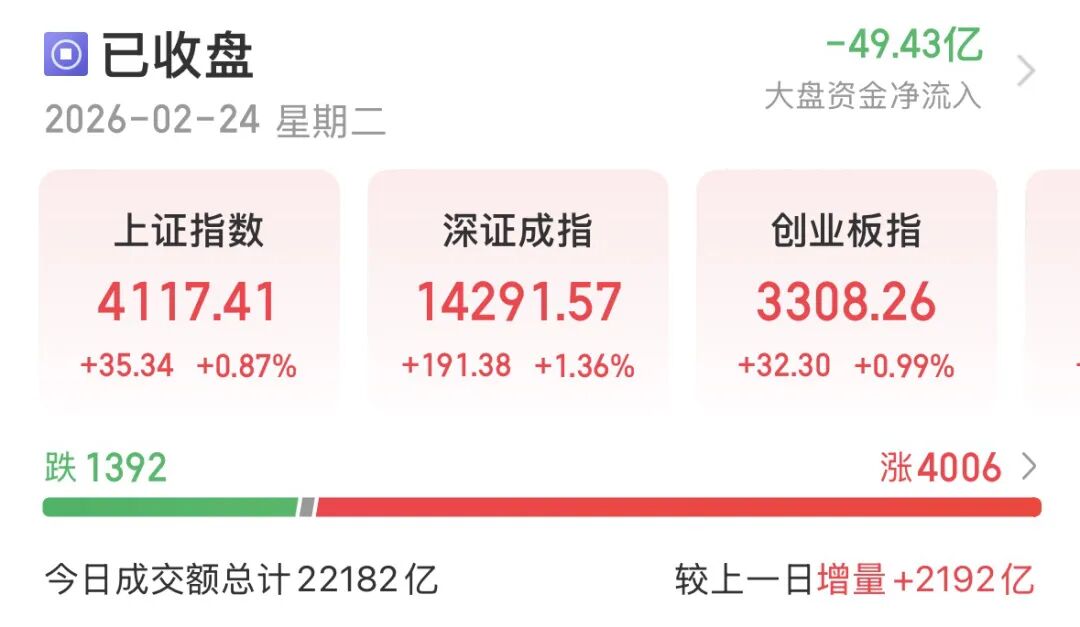
Group 1 - The article provides an objective ranking of open-end fund net values, highlighting the top and bottom performers without subjective bias [1] - The top 10 funds with the highest net value growth include Wanji Cycle Vision Stock Initiation C, Wanji Cycle Vision Stock Initiation A, and Huaxia Digital Industry Mixed A, among others, with growth rates ranging from 5.80% to 7.40% [2] - The bottom 10 funds with the lowest net value growth include Qianhai Kaiyuan Artificial Intelligence Theme Mixed C and A, with declines ranging from -6.42% to -8.04% [4] Group 2 - The Shanghai Composite Index opened high and experienced a narrow range of fluctuations, with a total transaction volume of 2.21 trillion, and a stock rise-to-fall ratio of 4006:1392 [6] - Leading sectors included oil and building materials, with gains exceeding 4%, while media, entertainment, tourism, and internet sectors saw declines of over 2% [6] - The fund with the fastest net value growth is Huaxia Digital Industry Mixed A, while the fund with the poorest performance is Qianhai Kaiyuan Artificial Intelligence Theme Mixed C [6][8] Group 3 - The top holdings of the funds show a concentration in the technology and communication sectors, with significant daily gains in stocks like Shengyi Technology and Zhongji Xuchuang [7][8] - The top ten holdings account for 72.99% of the total holdings in one fund, indicating a strong focus on specific sectors, particularly in artificial intelligence [7] - Another fund shows a top holding concentration of 61.18%, with notable daily gains in stocks like Changfei Optical Fiber and Zhongji Xuchuang, suggesting a shift in investment strategy [8]

A股马年“开门红”!新一轮攻势启动?
Guo Ji Jin Rong Bao· 2026-02-24 14:57
Market Overview - The A-share market experienced a "good start" on the first trading day of the Year of the Horse, with a total trading volume of 2.22 trillion yuan, and over 4,000 stocks rising, indicating a positive market atmosphere [1][4] - The Shanghai Composite Index rose by 0.87% to 4,117.41 points, while the ChiNext Index increased by 0.99% to 3,308.26 points, and the Shenzhen Component Index saw a rise of 1.36% [4] Sector Performance - Resource stocks, including oil, petrochemicals, chemicals, non-ferrous metals, and coal, led the market with significant gains, while the media and consumer sectors showed relative weakness [1][8] - The oil and petrochemical sector saw an increase of 5.53%, with 13 stocks hitting the daily limit up, driven by international oil prices surpassing $80 per barrel [9][15] - The construction materials sector rose by 3.71%, with several stocks also reaching their daily limit up [11] - The basic chemicals sector increased by 3.45%, with multiple stocks experiencing significant gains [12] - The non-ferrous metals sector rose by 3.31%, with several stocks also hitting the daily limit up [13] Individual Stock Highlights - Notable individual stock performances included Zhongji Xuchuang (300308) rising by 4.33% to 554 yuan per share, and Tianfu Communication (300394) increasing by 12.65% to 351.01 yuan per share [5][14] - The CPO concept stocks, particularly the "Yizhongtian" combination, showed strong performance, with Runze Technology (300442) rising over 13% [5][14] Market Sentiment and Future Outlook - Analysts suggest that the A-share market is likely to continue a volatile upward trend post-holiday, with the nature and driving forces of the market expected to shift [3][17] - The upcoming National People's Congress is anticipated to influence market dynamics, with a focus on policy hotspots and rapid sector rotation [3][17] - Investors are advised to maintain moderate positions and focus on structural opportunities, particularly in resource and "anti-involution" sectors [19][20]




存储供需错配仍将延续-产业链公司持续受益-存储巨头与台股2025年2026年1月经营总结
2026-02-24 14:16
存储供需错配仍将延续,产业链公司持续受益 ——存储巨 头与台股 2025 年 2026 年 1 月经营总结 20260223 摘要 存储产品价格自 2025 年以来显著上涨,DRAM 价格涨幅达三倍。尽管 涨势趋稳,但市场寡头垄断格局预示未来价格将维持高位,难以回落至 历史低点,对模组厂成本控制构成挑战。 存储巨头扩产面临物理性能瓶颈,HBM 后端验证周期长达一年半,洁净 室空间不足亦构成制约。从建厂到量产需两到三年,限制了短期内高端 产品供给的爆发性增长。 预计 2026 年 DRAM 和 NAND 供需缺口将达峰值,分别为负 4.9%和负 4.2%,主要受 AI 需求和 CSP 厂商资本支出驱动。2027 年底,中国厂 商扩产有望缓解供需紧张,2028 年供给状况或将改善。 台企受益于 AI 需求和存储市场结构调整,业绩显著增长。南亚科收入连 续五个月增长,同比增幅达 608%;华邦电营收创新高并计划扩产 NAND Flash;威刚 1 月营收同比增长 200%。 2025 年存储行业整体营收同比增长 8.09%,达 145.76 亿新台币。三 大巨头削减产能,供应链呈现多点开花局面。QLC 在服务器中应 ...
CPONPO行业加速落地-如何看待节后投资机会
2026-02-24 14:15
Summary of Conference Call on CPU Industry and CPO Technology Industry Overview - The conference call focuses on the CPU industry and the advancements in CPO (Co-Packaged Optics) technology, driven by the increasing demand for AI computing power and the introduction of Nvidia's Rubin Ultra chip architecture [1][4][6]. Key Points and Arguments - **CPO Technology Development**: CPO switches are expected to address data center computing power bottlenecks, with energy consumption reduced by 20%-40% [1]. TSMC's CPO switch yield has improved to 30%, laying the groundwork for mass production [1][4]. - **Market Growth Projections**: Global CPU switch production is expected to be revised upwards to 20,000-30,000 units in 2026 and reach 100,000-150,000 units in 2027, driven by new market demands for in-cabinet optical communication [2][17]. - **Industry Dynamics**: The current cycle of CPU industry speculation is fundamentally different from previous years, as it is driven by industrial logic rather than mere market expectations. The transition from anticipation to actual orders and performance is underway [3][4]. - **Technological Drivers**: The demand for higher bandwidth and transmission efficiency from Nvidia's Rubin Ultra is accelerating the application of CPU technology [4][6]. The integration of ASIC chips and optical modules in CPO switches enhances system performance and reduces energy consumption significantly [8][10]. Potential Investment Opportunities - **Core Companies to Watch**: Recommended companies include Tianfu Communication, Juchuang Technology, Zhishang, Yuanjie, Guangku, and Shijia, which are well-positioned to benefit from the accelerated development of the CPU industry [7][16]. - **Chinese Companies' Growth Potential**: Chinese firms like Tianfu Communication and Xinyisheng are expected to gain market share in the assembly of optical engines and passive components as CPU production ramps up [12][15]. Additional Insights - **Cost Structure of Nvidia's Quantum X Switch**: The market price is approximately $120,000, with assembly costs around $60,000, where the optical engine system accounts for over 50% of the total cost [13][18]. - **NPO vs. CPO**: NPO (Next-Generation Pluggable Optics) is seen as a more stable alternative to CPO, likely to be adopted first due to its design that allows for easier integration while maintaining system stability [20][21]. - **Market Sentiment**: There is a strong belief that companies like Xuchuang and Xinyisheng will see significant growth due to their positioning in the new in-cabinet optical communication market, which is expected to provide substantial performance elasticity [22]. This summary encapsulates the critical insights from the conference call regarding the CPU industry and CPO technology, highlighting the expected growth, technological advancements, and potential investment opportunities.

0223狙击龙虎榜
2026-02-24 14:15
Summary of Key Points from Conference Call Records Industry Overview - The conference call discusses the performance and outlook of the AI and commodity sectors, highlighting a notable decline in market sentiment prior to the holiday period, with only one stock achieving consecutive gains, reminiscent of the market conditions before the 924 rally [2][2][2]. - Positive news during the holiday, particularly regarding tariff decisions, is expected to lead to a rebound in the market post-holiday, with a strong opening anticipated due to external market influences [2][2][2]. Company Insights Tianfu Communication - The company is transitioning from a focus on computing density to communication bandwidth as the main bottleneck in system performance, indicating a shift in the value proposition within the industry [4][4][4]. - As the industry moves towards CPO (Coherent Photonic Integration) technology, Tianfu Communication is positioned as a key player by embedding itself deeply in the supply chain of major companies like NVIDIA, thus becoming a critical supplier rather than a competitor [4][4][4]. - The demand for FAU (Fiber Array Unit) in CPO architecture is significantly higher, with potential value per device reaching $7,000 to $10,000, indicating a substantial increase in unit value as the company’s products evolve from components to system components [4][4][4]. Capital Online - Capital Online has established a strategic partnership with Zhizhu to provide core computing power for AI model training and inference, marking its evolution from a simple computing rental service to a comprehensive AI infrastructure service provider [5][5][5]. - The company is leveraging its technological advantages and hardware layout to capitalize on the structural benefits of the AI infrastructure market, positioning itself as a "water seller" in the AI commercialization wave [5][5][5]. Zhongtung High-tech - The company is expected to benefit from accelerated capital expenditures in AI computing and increased demand for PCB drilling tools due to technological advancements in materials used by major companies like NVIDIA [6][6][6]. - The shift to high-performance drilling tools, which are significantly more expensive, is anticipated to drive up demand and prices, benefiting Zhongtung High-tech due to its integrated supply chain and cost advantages [6][6][6]. - The company’s production capacity is projected to reach 0.78 million tons in 2024, enhancing its market position [6][6][6]. Market Dynamics - The AI sector remains a focal point for investment, with significant fluctuations in stock prices observed, particularly in companies like Tianfu Communication and Zhongtung High-tech, which experienced declines of 5.58% and 5.28% respectively, while Capital Online saw an increase of 3.67% [7][7][7]. - The overall sentiment in the market is expected to improve, driven by external factors and the performance of key sectors such as AI and commodities [2][2][2].