
玲珑轮胎

Search documents
2025年1-11月中国橡胶轮胎外胎产量为110311.5万条 累计增长0.6%
Chan Ye Xin Xi Wang· 2026-01-14 03:42
Core Viewpoint - The Chinese rubber tire industry is experiencing a slight decline in production, with a notable decrease in external tire output in November 2025 compared to the previous year, indicating potential challenges in the market [1]. Industry Summary - In November 2025, the production of external tires in China reached 10,183 million units, reflecting a year-on-year decrease of 2.6% [1]. - From January to November 2025, the cumulative production of external tires in China was 110,311.5 million units, showing a modest growth of 0.6% compared to the same period in the previous year [1]. - The report by Zhiyan Consulting forecasts the supply and demand dynamics of the rubber tire industry in China from 2026 to 2032, suggesting a comprehensive analysis of future market trends [1].


到欧洲北非去系列之三|柔软的塞尔维亚,有意味的桥梁
汽车商业评论· 2026-01-13 23:07
Core Viewpoint - The article discusses the strategic advantages of Serbia as a key location for Chinese automotive companies to expand into the European market, highlighting the benefits of local production to circumvent trade barriers and optimize logistics [5][9][70]. Group 1: Investment Opportunities - In recent years, Chinese tire companies have been establishing factories overseas, with notable investments in Serbia, which has become a strategic hub for the automotive industry [9][12]. - Linglong Tire's Serbian factory, with a total investment exceeding $1 billion, aims to produce 12 million passenger car tires annually, positioning it as a core hub for the European market [11][12]. - The investment from Minth Group in Serbia focuses on creating a localized supply chain for battery and body structure components, enhancing the operational efficiency of Chinese manufacturers in Europe [14][16]. Group 2: Economic Environment - Serbia's GDP growth has been stable at around 4%, with a significant reduction in unemployment rates, making it an attractive destination for foreign investment [47]. - The country has a favorable corporate tax rate of 15% and offers incentives such as tax exemptions for qualifying manufacturing and service enterprises, enhancing its appeal to investors [49]. - Despite a decline in overall foreign direct investment (FDI) in Serbia, investments from the Chinese automotive sector have surged from €830 million to €2.7 billion, indicating a shift in investment dynamics [43][44]. Group 3: Strategic Location and Infrastructure - Serbia's geographical position at the crossroads of Eastern and Western Europe provides a strategic advantage for logistics, supported by the ongoing development of the Hungary-Serbia railway, which significantly reduces transportation times [27][29]. - The country has established a comprehensive transportation network, including air and rail, facilitating efficient trade routes to major markets [25][30]. - The "Open Balkans" initiative allows for the free movement of labor and goods among member countries, addressing labor shortages and enhancing regional cooperation [57]. Group 4: Political Stability and Trade Agreements - Serbian President Aleksandar Vučić has maintained a flexible political stance, attracting foreign investment by fostering a stable economic environment and avoiding geopolitical alignments [31][33]. - Serbia's status as an EU candidate country with a network of free trade agreements provides Chinese companies with preferential access to European markets, allowing for tariff-free exports of automotive parts [35][37]. - The recent China-Serbia Free Trade Agreement aims to eliminate tariffs on 90% of trade items, further enhancing the competitiveness of Chinese automotive products in Europe [39][44]. Group 5: Labor Market and Cost Advantages - Serbia offers a competitive labor market with lower wage levels compared to neighboring countries, making it an attractive location for labor-intensive industries [52][53]. - The average monthly salary in Serbia is approximately €1,156, which remains significantly lower than in EU countries, providing cost advantages for manufacturing operations [52][53]. - The local government supports foreign enterprises by simplifying work visa processes, allowing for easier recruitment of skilled labor from neighboring regions [55][58].


2025年上合示范区中欧班列开行量和货运量均增长超两成
Zhong Guo Jing Ji Wang· 2026-01-13 12:13
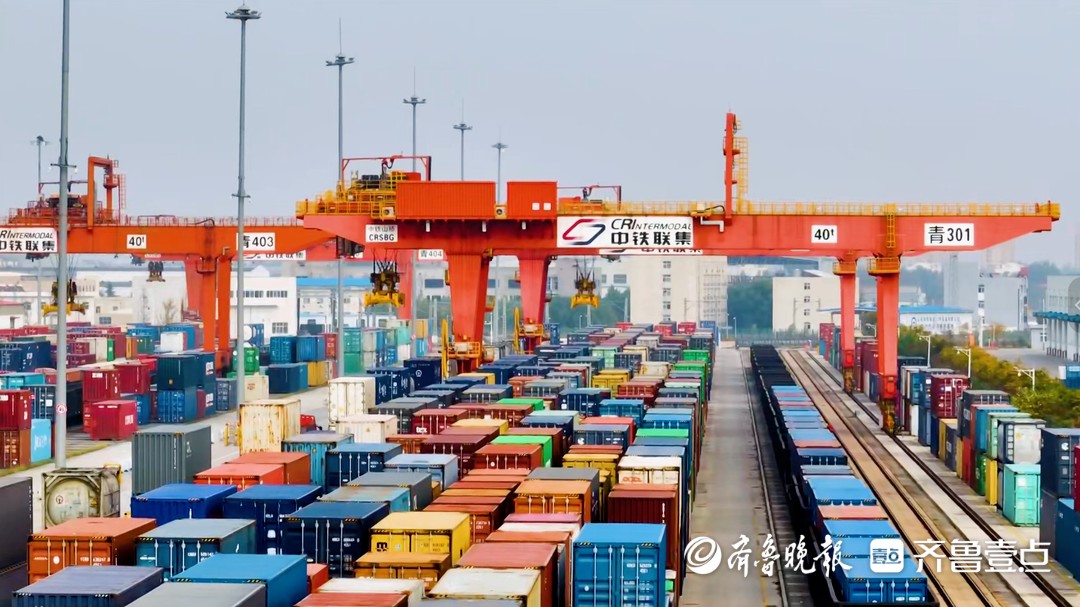
2025年,上合示范区中欧班列再交亮眼答卷。1月12日,记者从上合示范区管委会获悉,2025年全年, 上合示范区到发中欧班列1225列、进出口货物84万吨,班列开行量和货运量均增长超两成,创历史同期 新高。 日前,两列由山东高速集团统筹运营的山东中欧班列"日韩陆海快线"从上合示范区多式联运中心发出。 班列满载商品车、轮胎、空调零配件等货物,经韩国的仁川港启运后海运至黄岛港,卸船后由胶黄班列 集结在此发运,将经霍尔果斯口岸出境,预计7天后抵达山东中欧班列哈萨克斯坦阿拉木图集结中心。 纵横延伸的铁路网络,昼夜不息的滚滚车轮是上合示范区中欧班列高质量发展的缩影。截至目前,上合 示范区已常态化开行22条国际班列线路,通达上合组织和共建"一带一路"23个国家54个城市,构建起东 联日韩、西接欧亚、北达蒙俄、南至东盟的国际物流通道,累计到发中欧班列超5400列,常态化开行家 电、轮胎、商品车、粮食等特色专列,并为海尔、海信、玲珑、奇瑞等企业开行定制化供应链专列,服 务外贸企业超7000家。 山东高速集团推出的山东中欧班列"日韩陆海快线"被誉为连接中日韩市场的"海上高速公路",该线路以 上合示范区为连接点,延伸覆盖大阪、名 ...

半钢胎专题:拐点或至,乘势而飞
Changjiang Securities· 2026-01-13 09:19
Investment Rating - The report maintains a "Positive" investment rating for the industry [11] Core Viewpoints - The EU's anti-dumping measures against Chinese semi-steel tires are expected to be implemented by mid-2026, potentially leading to a demand shift of approximately 8.7 million units overseas. Current Chinese tire manufacturers have an overseas semi-steel tire capacity of only 17.6 million units per year, which is insufficient to meet the combined demand of approximately 25.1 million units from Europe and the US [3][10][76] - The semi-steel tire segment is characterized by strong consumer attributes, making it the most profitable category in the tire industry. The global demand for semi-steel tires is around 1.6 billion units annually, with an average price of $71 per tire, resulting in a market size of $114 billion [6][25] - Chinese semi-steel tire production capacity is projected to reach 82 million units per year by 2024, with an annual output of approximately 64 million units, accounting for about 40% of global supply. Exports constitute about 52% of China's semi-steel tire production [7][41] Summary by Sections EU Anti-Dumping Measures - The EU has initiated anti-dumping and countervailing investigations against Chinese semi-steel tires, with a final decision expected by June 2026. In 2024, the EU is projected to consume approximately 400 million semi-steel tires, with 90 million units imported from China, representing 60% of non-EU imports [8][59][60] Overseas Expansion of Chinese Tire Companies - Chinese tire manufacturers are increasingly establishing overseas production capacities, with approximately 22.2 million units per year already operational and an additional 28.7 million units planned. The EU's anti-dumping measures are expected to create a capacity gap that will take time to fill [9][68] - The US imports about 164 million semi-steel tires annually, with significant competition expected between the EU and the US for semi-steel tire capacity. The demand from the EU for 8.7 million units per year is likely to shift from China to overseas production [9][71] Investment Recommendations - The report suggests focusing on opportunities arising from both volume and price increases. Companies with greater marginal increases in overseas capacity and a higher proportion of total capacity in overseas production are expected to benefit more. Recommended companies include Senqilin, Sailun Tire, Zhongce Rubber, and Linglong Tire [10][76]

班列到发数和货运量均创新高 上合示范区去年到发中欧班列增长超20%
Da Zhong Ri Bao· 2026-01-13 09:17
Core Insights - The Qingdao Customs reported that the number of China-Europe freight trains in the SCO demonstration zone reached 1,225 in 2025, marking a year-on-year increase of 20.5%, with over 840,000 tons of goods transported, setting historical records for both train departures and cargo volume [1] - The SCO demonstration zone has established 22 regular international freight train routes, connecting 54 cities in 23 countries involved in the SCO and the Belt and Road Initiative, facilitating over 5,400 train departures to date [1] - Qingdao Customs has introduced twelve measures to support the high-quality development of the China-Europe freight trains, including the innovative "SCO Fast Pass" model to enhance port functions and reduce cargo clearance times [1] Logistics and Trade Development - The SCO demonstration zone is expanding its logistics node layout to build an efficient cross-border logistics trade system, assisting Shandong Hi-Speed Group in establishing overseas consolidation centers in Central Asia, Central and Eastern Europe, Russia, and Southeast Asia [2] - Since its launch in 2025, the Moscow consolidation center has connected with regions such as Yekaterinburg, Novosibirsk, the Far East, and the China-Belarus Industrial Park, creating circular freight routes for exporting parts to Haier's Russian factory and returning with Tatarstan petroleum coke [2] - The SCO demonstration zone aims to enhance the construction of international logistics corridors by launching premium routes and improving diversified service capabilities, thereby increasing the efficiency and quality of China-Europe freight train transport [2]
1225列!2025年上合示范区中欧班列开行量货运量再创新高
Qi Lu Wan Bao· 2026-01-13 03:49
日前,两列由山东高速(600350)集团统筹运营的山东中欧班列"日韩陆海快线"从上合示范区多式联运中心发出。班列满载商品车、轮胎、空调零配件等 货物,经韩国的仁川港启运后海运至黄岛港,卸船后由胶黄班列集结在此发运,将经霍尔果斯口岸出境,预计7天后抵达山东中欧班列哈萨克斯坦阿拉木 图集结中心。 为构建高效跨境物流贸易体系,上合示范区不断拓展境内外物流节点布局,助力山东高速在中亚、中东欧、俄罗斯、东南亚设立海外集结中心,深化重点 区域合作。其中,俄罗斯莫斯科集结中心2025年启用以来,已联动叶卡捷琳堡、新西伯利亚州、远东地区以及白俄罗斯中白工业园等区域,建立了出口配 件至海尔俄罗斯工厂、返程搭载鞑靼石油焦的循环班列线路,为企业进一步压缩海外物流仓储成本。 齐鲁晚报.齐鲁壹点刘震 2025年,上合示范区中欧班列再交亮眼答卷。1月12日,记者从上合示范区管委会获悉,2025年全年,上合示范区到发中欧班列1225列、进出口货物84万 吨,班列开行量和货运量均增长超两成,创历史同期新高。 纵横延伸的铁路网络,昼夜不息的滚滚车轮是上合示范区中欧班列高质量发展的缩影。截至目前,上合示范区已常态化开行22条国际班列线路,通达上 ...
上合示范区去年到发中欧班列增长超20%
Da Zhong Ri Bao· 2026-01-13 00:59
截至目前,上合示范区已常态化开行22条国际班列线路,通达上合组织和共建"一带一路"23个国 家、54个城市,构建起东联日韩、西接欧亚、北达蒙俄、南至东盟的国际物流通道,累计到发中欧班列 超5400列,常态化开行家电、轮胎、商品车、粮食等特色专列,并为海尔、海信、玲珑、奇瑞等企业开 行定制化供应链专列,服务外贸企业超7000家。 为支持上合示范区中欧班列高质量发展,青岛海关推出十二条措施,创新"上合快通"模式,推动码 头功能向上合国际枢纽港延伸,实现"班列+港口"联动,进一步缩减货物通关时间,助力企业降本增 效。 为构建高效跨境物流贸易体系,上合示范区不断拓展境内外物流节点布局,助力山东高速集团在中 亚、中东欧、俄罗斯、东南亚设立海外集结中心,深化重点区域合作。其中,俄罗斯莫斯科集结中心 2025年启用以来,已联动叶卡捷琳堡、新西伯利亚州、远东地区以及白俄罗斯中白工业园等区域,建立 了出口配件至海尔俄罗斯工厂、返程搭载鞑靼石油焦的循环班列线路,为企业进一步压缩海外物流仓储 成本。 上合示范区党工委委员、管委会副主任付忠华表示,将持续深化国际物流大通道建设,通过开通精 品线路、提升多元化服务能力,不断提升中欧班列 ...


化工2026年度策略:供需再平衡,化工新起点
Huafu Securities· 2026-01-12 11:03
Core Insights - The chemical industry is expected to experience a recovery in profitability in 2026, marking a new starting point for supply-demand rebalancing, driven by anti-involution policies and advancements in new productive forces such as AI and robotics [2][5]. Group 1: Industry Overview - The chemical industry faced a downturn in profitability and valuation in 2025, but signs of stabilization and recovery are anticipated in 2026 [2]. - The peak of capital expenditure in the chemical sector has passed, with fixed asset investment turning negative in the second half of 2025, indicating the end of the capacity expansion cycle [5][14]. - The Producer Price Index (PPI) for chemicals is expected to gradually turn positive in 2026 after a prolonged period of decline [14]. Group 2: Investment Themes - Capital expenditure is decreasing, and leading companies like Wanhua Chemical are expected to see a recovery in profitability as they reduce capital spending and increase their global market share in MDI [5]. - The anti-involution policy is reshaping supply dynamics, with a focus on quality development and the exit of outdated capacities, benefiting companies with innovative capabilities and export advantages [5]. - New materials are driving demand growth in traditional chemicals, with companies like Dinglong Technology and Anji Technology positioned to benefit from domestic substitution in high-end materials [5]. Group 3: Market Dynamics - Chemical prices have been under pressure, with the chemical product price index declining approximately 8.8% in 2025, but stock prices in the sector have rebounded by 33.3% [10][16]. - The operating rates of mainstream chemical products are showing signs of weakness, with inventory levels varying significantly across different products [17][18]. - The supply-demand balance for phosphate rock remains tight, with stable prices for high-grade phosphate rock, while the market for phosphate fertilizers is influenced by policy and demand fluctuations [46][43]. Group 4: Global Trends - The global chemical supply is shifting towards China, which has become the largest chemical producer, while European chemical production faces challenges due to high energy costs [31][33]. - The restructuring of supply chains due to tariff disturbances is prompting companies to adapt, with a focus on overseas expansion for leading chemical firms [26][22]. - The anti-involution policies are expected to enhance industry cash flow and promote sustainable development by curbing disorderly expansion and prioritizing profitability [40].



——基础化工行业周报:多晶硅、丁二烯价格上涨,关注反内卷和铬盐-20260111
Guohai Securities· 2026-01-11 13:03
Investment Rating - The report maintains a "Recommended" rating for the chemical industry [1] Core Insights - The chemical industry is expected to experience an upward cycle due to the implementation of "anti-involution" policies in China and the accelerated exit of some European facilities [29] - The report highlights the potential for domestic substitution of semiconductor materials from Japan due to rising geopolitical tensions, which could benefit various companies in the sector [5] - The chromium salt industry is undergoing a value reassessment driven by increased demand from AI data centers and commercial aircraft engines, with a projected supply-demand gap of 340,900 tons by 2028 [8] Summary by Sections Industry Performance - The chemical industry has shown strong relative performance with a 1-month increase of 10.7%, 3-month increase of 9.6%, and a 12-month increase of 45.1%, outperforming the CSI 300 index [3] Price Trends - Key products such as lithium carbonate and polysilicon have seen significant price increases, supported by policy guidance and industry self-discipline [12] - The price of chromium salts has remained stable, with metal chromium priced at 82,000 CNY/ton as of January 9, 2026 [15] Investment Opportunities - Focus on companies with low-cost expansion capabilities, such as Wanhu Chemical and Hualu Hengsheng, as well as those in sectors with improving market conditions like chromium salts and phosphates [6][9] - High dividend yield opportunities are identified in state-owned enterprises like China Petroleum and China National Chemical [10] Key Company Tracking - Companies such as Dongfang Shenghong and Huabei Yihua are highlighted for their earnings potential, with projected EPS growth for 2026 [30] - The report tracks specific price movements for various chemicals, including a notable increase in the price of ammonium phosphate and a stable price for urea [17][19]


上市公司积极开展套期保值对冲风险
Zheng Quan Ri Bao Zhi Sheng· 2026-01-09 16:35
Core Viewpoint - Traditional industry listed companies are increasingly focusing on hedging activities to stabilize their operations amid market uncertainties [1][2][3] Group 1: Company Announcements - Shandong Steel announced plans to expand its hedging activities to include zinc, aiming to mitigate price volatility risks in the zinc spot market and stabilize raw material procurement costs [1] - Nanshan Aluminum revealed that its export orders are priced based on "London aluminum price + processing fee," indicating that fluctuations in both aluminum prices and exchange rates will directly impact profit stability [2] - Other companies, including Sichuan Development Longmang Co., Ltd. and Dalian Dali Kaipu Technology Co., Ltd., have also issued similar announcements regarding hedging for various commodities [2] Group 2: Industry Trends - The shift towards hedging reflects a deeper transformation in corporate management philosophy, moving from scale expansion to refined financial management and risk hedging to ensure stable profitability [2] - Hedging is seen as a critical tool for companies to build competitive advantages, allowing them to focus on technology upgrades and market share after stabilizing costs and prices [2][3] - Companies are advised to use hedging tools strictly for risk management rather than speculation, emphasizing the importance of aligning hedging activities with operational needs [3]

