52TOYS

Search documents
TOP TOY能否撼动泡泡玛特的王者地位?
BambooWorks· 2025-10-10 00:38
Core Viewpoint - TOP TOY, a subsidiary of Miniso, has submitted an application for a Hong Kong IPO, aiming to capitalize on the growing global trend of collectible toys, following a successful model similar to Pop Mart [1][2]. Group 1: Company Overview - Miniso, founded by Ye Guofu in 2013, has expanded to over 7,000 stores globally, surpassing Uniqlo's 2,500 stores [1]. - TOP TOY aims to leverage Miniso's extensive store network to replicate the success of Pop Mart in the collectible toy market [1]. Group 2: Financial Performance - TOP TOY's valuation reached $1.3 billion after a $59.4 million Series A funding round, with Temasek investing $40 million [2]. - In comparison, Pop Mart reported a revenue of 13.8 billion yuan (approximately $1.9 billion) in the first half of the year, a twofold increase, while TOP TOY's revenue grew 60% to 1.36 billion yuan [4][5]. Group 3: Market Position and Strategy - TOP TOY's gross margin improved from 19.9% to 32.4%, but it still lags behind Pop Mart's gross margin of nearly 70% [5][6]. - The company is shifting towards developing its own intellectual property (IP), with self-owned IP products accounting for about 50% of revenue in the first half of the year [6]. - Despite the growth in self-owned IP, licensed IP toys remain a significant revenue source, contributing 8.89 billion yuan in 2024, which is 47% of total revenue [6]. Group 4: Competitive Landscape - Other companies like Kayou and 52TOYS are also pursuing IPOs, indicating a competitive environment in the collectible toy market [7]. - The Chinese collectible toy market is projected to grow from 20.7 billion yuan in 2019 to 58.7 billion yuan in 2024, with TOP TOY holding a 2.2% market share, ranking third behind Pop Mart and LEGO [7].


文旅新赛道!鸡排哥和显眼包们亮了
Shang Hai Zheng Quan Bao· 2025-10-05 00:56
今年国庆中秋长假,全国文旅市场持续火热。与以往不同,今年的文旅市场不仅展现了传统景点的持续 吸引力,更涌现出一股由个人IP、城市文化符号及时尚消费体验共同驱动的新势力。 从江西景德镇的"鸡排哥"到吉林长春的限定背包,再到北京欢乐谷的机甲雕塑……城市文化、时尚消费 与IP赋能正成为文旅市场的新引擎。 "6元鸡排卖出600元情绪价值" 在江西景德镇一条熙攘的街道上,响起鸡排油锅的滋啦声。"做你的!做完你的做你的!""请打开你的 袋子,我需要的是速度。"近日,鸡排摊主李俊永因为独具特色的"招呼声"和经营"原则"走红,被网友 称为"鸡排主理人""景德镇鸡排哥"。 "他卖的不是鸡排,是穿越喧嚣的温暖。"有网友在社交平台留言表示。从业26年的李俊永坚守着自己的 原则:现腌现炸、每日换油、学生立减1元、鸡排不脆立即停售。当游客因排队焦躁时,他一句"做完你 的做你的"被网友称作"6元鸡排卖出600元情绪价值"。"鸡排哥"的服务引起了当地相关部门关注。景德 镇文旅特聘他为"文旅推介官",景德镇城管、环卫等相关部门成立工作专班。 金秋十月的东北,当大多数人还在为购买秋菜而忙碌时,吉林长春的街头巷尾却兴起了一股抢购"长 春"限定背 ...
叶国富冲刺IPO,TOPTOY估值破102亿,挑战泡泡玛特神话
Sou Hu Cai Jing· 2025-10-03 18:05
2025年9月26号这一天,叶国富和他的TOP TOY把港交所搅得不安生,IPO招股书一递,3亿美元的募资 目标,102亿港元的估值,气氛瞬间紧绷,几乎有种"新王登基"的既视感,这不是普通的资本动作,而 是一次正面对垒——TOP TOY能不能复制泡泡玛特的4000亿神话,市场全在盯着。 名创优品的创始人叶国富,这回真的是把赌注压在了潮玩上,回顾时间线,2022年7月,名创优品刚在 港交所完成二次上市,叶国富当时就在公开场合放话,三年内要让TOP TOY独立上市,这一刻他兑现 了承诺,时间卡得死死的,市场也有点被他这份执行力震住了。 TOP TOY诞生于2020年,彼时泡泡玛特刚上市没几天,行业热度正高,TOP TOY就立刻在广州开了首 店,开业前三天销售额破百万,大家都说这开局有点狠,行业也隐隐感受到新玩家的野心和压力。 这些年TOP TOY的增长速度确实很快,2022年营收6.79亿,2025年冲到19.09亿,还实现了扭亏为盈, 2022年亏0.37亿,2023年赚2.9亿,2025年又涨到3.96亿,这种成长曲线,行业里少见,很多人看着都眼 红。 门店也在扩张,截至2025年9月19号,全国299家,海 ...

叶国富复制「泡泡玛特」
3 6 Ke· 2025-09-30 10:13
Core Insights - TOP TOY, a潮玩 brand under Miniso, has officially initiated its IPO process by submitting its prospectus to the Hong Kong Stock Exchange, aiming to achieve the goal set by founder Ye Guofu to go public within three years [1][2] - The潮玩 market has been rapidly growing, with competitors like Pop Mart creating significant market presence, and TOP TOY's entry is expected to intensify the competition [1][2] Company Performance - TOP TOY has shown remarkable growth, with revenue jumping from 6.79 billion RMB in 2022 to 19.09 billion RMB in 2024, reflecting a compound annual growth rate (CAGR) of 67.7% [3] - The company transitioned from a loss in 2022 to profitability in 2023, with net profit projected to reach 2.94 billion RMB in 2024, and gross margin increasing from 19.9% in 2022 to 32.7% in 2024 [3][4] - The number of stores has expanded from 117 in 2022 to 293 in 2024, supported by Miniso's extensive retail network [3] Market Position and Challenges - Despite rapid growth, TOP TOY remains heavily reliant on Miniso, with 45.5% of its revenue coming from the Miniso ecosystem as of mid-2025, raising concerns about its independence post-IPO [4] - The潮玩 industry is increasingly competitive, with self-owned IP becoming a critical differentiator. TOP TOY's reliance on licensed IPs poses risks, as evidenced by its lower revenue from self-owned IP compared to competitors like Pop Mart [5][7][10] International Expansion - TOP TOY has begun to focus on international markets, aiming for overseas sales to exceed 50% within five years and planning to open 1,000 stores globally [9] - Initial success has been noted in Southeast Asia, with profitable openings in Thailand and Malaysia, but overall overseas revenue remains low compared to competitors [9][10] Industry Outlook - The潮玩 market is projected to grow significantly, with estimates suggesting a market size of 825 billion RMB by 2025 and 2,133 billion RMB by 2030, indicating a CAGR of 20.9% [11] - The competition is shifting towards IP ecosystem development and global strategies, emphasizing the need for brands to cultivate their own successful IPs to thrive in the market [11]
背靠名创优品的TOP TOY闯关港股:IP之困与毛利率之殇
Sou Hu Cai Jing· 2025-09-30 09:53
Core Viewpoint - Miniso (09896.HK) plans to spin off its toy brand TOP TOY for an independent listing on the Hong Kong Stock Exchange, aiming to better reflect TOP TOY's value and attract investors interested in the high-growth opportunities within the toy industry [1][2]. Company Overview - TOP TOY was incubated by Miniso in 2020, with Miniso holding approximately 86.9% of TOP TOY's issued share capital, making it the controlling shareholder [4]. - Unlike its competitor Pop Mart, which focuses on blind box products, TOP TOY offers a broader product range, including figurines, 3D models, and plush toys [4]. IP Strategy - TOP TOY's IP strategy relies heavily on a combination of licensed and proprietary IP, with licensed IP currently dominating. The company aims to creatively redevelop licensed IP to unlock new commercial potential [6]. - The company has increased its proprietary IP from 8 to 17 through acquisitions, while maintaining 43 licensed IPs, indicating room for growth in its overall IP portfolio [7]. Market Position and Growth - As of June 30, 2023, TOP TOY operated 293 stores globally, significantly fewer than Pop Mart's 571 stores. TOP TOY's registered membership exceeded 10 million, while Pop Mart added 13.04 million new members in the same period [8]. - TOP TOY's revenue for 2022, 2023, and 2024 is projected to be 679 million, 1.461 billion, and 1.909 billion RMB, respectively, with a notable increase in revenue in the first half of 2023 reaching 1.36 billion RMB [11][12]. Financial Performance - TOP TOY's gross margin for the first half of 2023 was 32.4%, significantly lower than Pop Mart's 70.3% and Blok's 48.4%, indicating limited pricing power due to a lack of strong proprietary IP [13]. - The company reported a net profit of 180 million RMB in the first half of 2023, following profits of 212 million RMB in 2022 and 294 million RMB in 2024 [12]. Industry Context - The Chinese toy market is projected to grow from 20.7 billion RMB in 2019 to 58.7 billion RMB by 2024, with a compound annual growth rate (CAGR) of 23.2% [10]. - Despite the rapid growth of TOP TOY, it faces challenges in IP development and profitability compared to established players like Pop Mart, which has demonstrated stronger growth through its successful IP and fan economy [14].
TOP TOY年入24亿,名创优品出了“一半”力
3 6 Ke· 2025-09-30 03:31
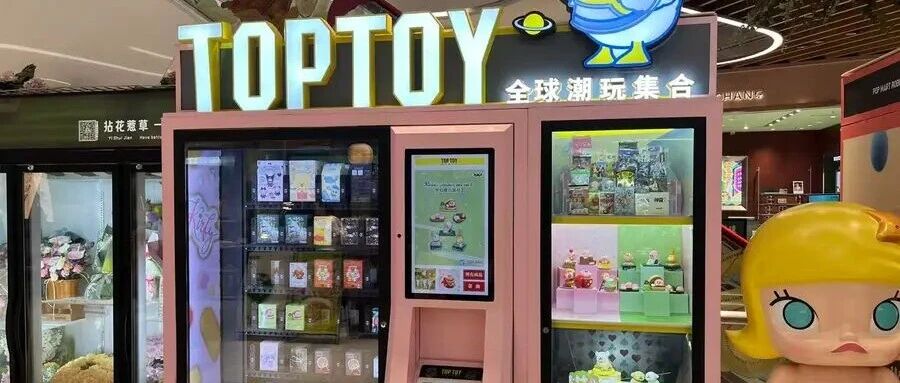
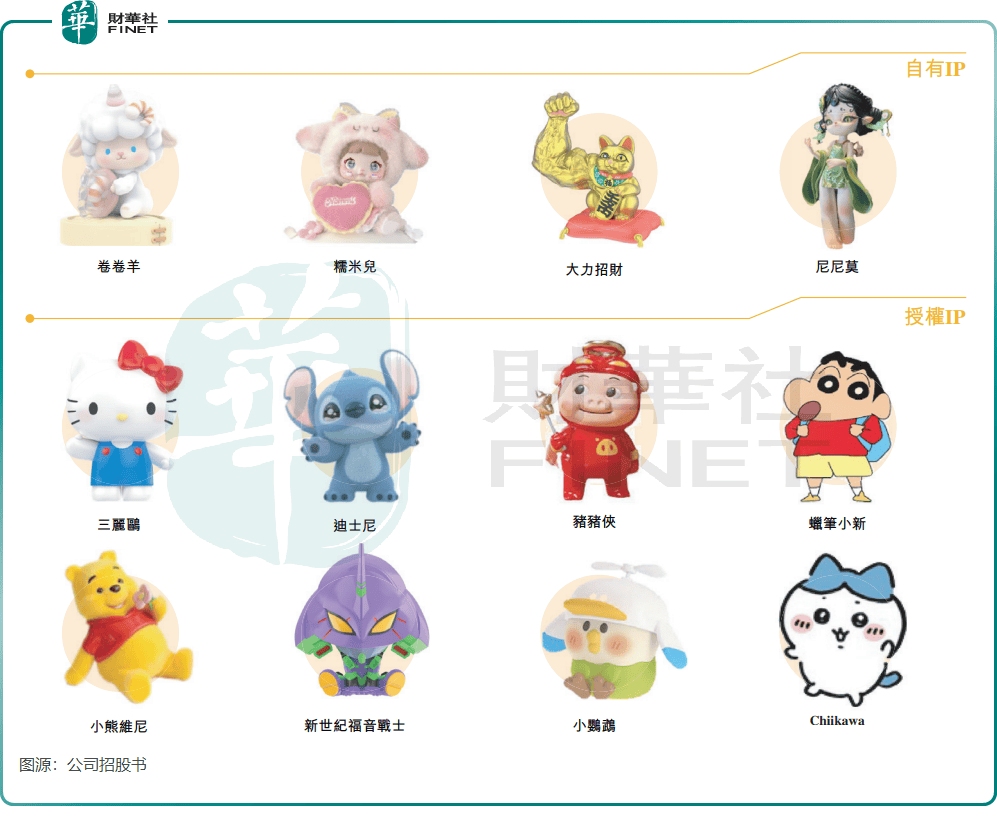
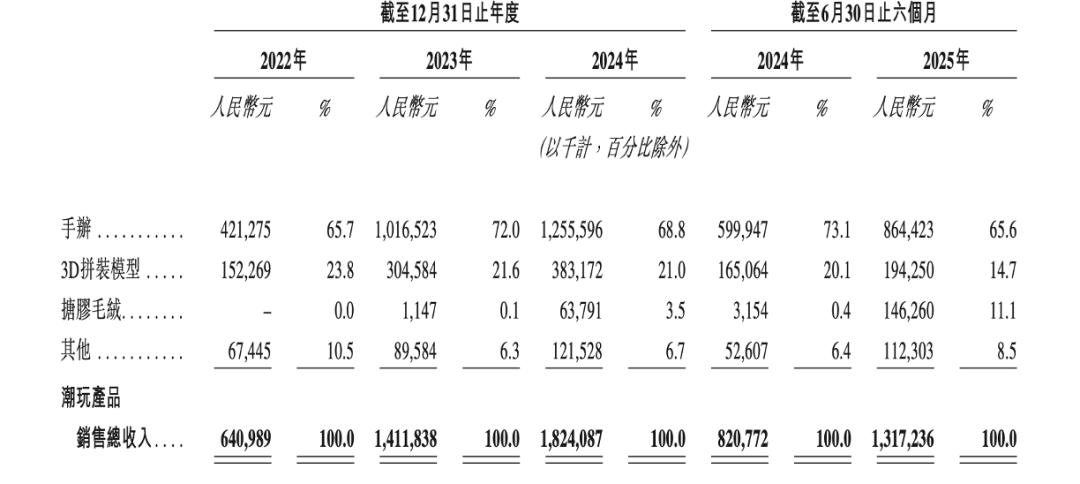
Core Viewpoint - TOP TOY, a subsidiary of Miniso, is pursuing an IPO on the Hong Kong Stock Exchange with a fundraising target of approximately $300 million, aiming for independent growth while still heavily reliant on Miniso for revenue [2][5][6]. Group 1: Company Overview - TOP TOY has rapidly expanded since opening its first store in 2020, reaching 299 stores by September 2025, and plans to enter international markets by Q4 2024 [3][9]. - The company achieved a GMV of 2.4 billion RMB in 2024, with a compound annual growth rate of 67.7% from 2022 to 2024 [9]. - In the first half of 2025, TOP TOY's sales revenue reached 1.36 billion RMB, reflecting a year-on-year growth of 58.5% [10]. Group 2: Revenue Sources - Miniso remains TOP TOY's largest customer, contributing 2.5 billion RMB, 7.8 billion RMB, and 9.2 billion RMB in revenue for the years 2022, 2023, and 2024, respectively, accounting for 36.8%, 53.5%, and 48.3% of total revenue [7][8]. - The proportion of revenue from self-operated stores has remained stable at around 9% to 7.5% from 2022 to 2024, while sales to distributors have increased, with over half of revenue coming from this channel [21][22]. Group 3: Product Development and IP Strategy - TOP TOY focuses on three main product categories: figurines, 3D assembly models, and plush toys, with figurines generating 12.56 billion RMB in revenue in 2024, accounting for 68.8% of total revenue [14][16]. - The company has developed a multi-layered IP matrix consisting of 17 self-owned IPs, 43 licensed IPs, and 600 third-party IPs, although self-owned IPs still represent a small portion of total revenue [24][25]. - TOP TOY's self-developed products contributed nearly 50% of sales, the highest among Chinese collectible toy brands, with gross margins improving from under 20% in 2022 to approximately 32.4% in 2025 [20][18]. Group 4: Market Position and Competition - TOP TOY's supply chain management and cost control are superior to competitors, with inventory costs constituting 93.7% to 95.4% of total sales costs from 2022 to 2024 [19]. - The company is attempting to differentiate itself from competitors like Pop Mart by enhancing its IP development capabilities and focusing on product innovation rather than just expanding store numbers [23][29]. - TOP TOY is exploring new store formats, including flagship stores with themed cafes and workshops, to enhance customer engagement and social interaction [29].
2025文化传媒行业乐自天成招股说明书详解:IP铸魂行业龙头,版图渐展初
Sou Hu Cai Jing· 2025-09-25 08:22
Core Insights - 52TOYS is positioned as a leading player in the IP toy industry, leveraging over 100 IPs to drive growth and innovation in a rapidly expanding market [1][25][40] - The company has successfully transitioned from a niche brand focused on transforming mecha toys to a comprehensive IP toy provider with a global presence [8][25] Group 1: Company Overview - Founded in 2015, 52TOYS has established itself as a prominent player in the IP toy sector, with a diverse product range including static figures, dynamic toys, and plush toys [25][32] - The company has developed a dual-driven model combining proprietary IP and licensed IP, enhancing its market reach and competitive edge [3][4] - As of the end of 2024, 52TOYS has launched over 160 SKUs, achieving a cumulative GMV exceeding 1.9 billion RMB [25][35] Group 2: Market Position and Growth - The IP toy market in China is projected to reach 756 billion RMB by 2024, with 52TOYS capturing a significant share [8][25] - The company's revenue reached approximately 630 million RMB in 2024, reflecting a compound annual growth rate of 16.7% from 2022 [35][49] - 52TOYS has expanded its overseas revenue from 35 million RMB in 2022 to 147 million RMB in 2024, with a compound growth rate of 104.1% [7][49] Group 3: Product and IP Strategy - 52TOYS operates a diverse product matrix that appeals to various consumer demographics, offering products priced from 39 RMB to 499 RMB [5][25] - The company has established partnerships with major IP holders such as Disney and Warner Bros, customizing products to align with the unique characteristics of each IP [4][8] - The self-owned IP "Sleep" has generated over 200 million RMB in GMV, while the sci-fi IP "Beast Box" has surpassed 190 million RMB globally [3][4] Group 4: Sales and Distribution Channels - 52TOYS has built a comprehensive sales network that integrates online and offline channels, including flagship stores and e-commerce platforms [6][32] - The company has over 470,000 members on its online platforms, with a 120% year-on-year growth in GMV from its Tmall flagship store in 2023 [6][35] - The introduction of unmanned retail machines has allowed 52TOYS to expand its reach in shopping centers and transportation hubs [6][32] Group 5: Financial Performance and Management - The adjusted net profit for 2024 reached 32 million RMB, marking a 68% increase year-on-year, driven by improved cost control and revenue growth from overseas markets [50][56] - The company has attracted notable institutional investors, enhancing its market credibility and operational capabilities [56] - The management team possesses extensive industry experience, contributing to the company's strategic direction and long-term growth [56][60]
潮玩的舞台天然国际化
3 6 Ke· 2025-09-18 04:43
Core Insights - The rise of "Art Toys" or "Designer Toys" has transformed from a niche market to a global trend, driven by unique designs and cultural narratives [1][2][8] - The global market for designer toys is projected to grow significantly, with a compound annual growth rate (CAGR) of nearly 23% from 2015 to 2024, increasing from 8.7 billion to 44.8 billion yuan [3] - The consumer demographic for designer toys is predominantly under 40, with China's Generation Z contributing 40% of the market [8][10] Industry Growth - The designer toy market has expanded rapidly since 2016, with North America, Europe, and China emerging as the top three markets [7][8] - The industry has seen a surge in original IPs and new entrants, making it a hot sector for both consumer and capital markets [2][8] Globalization and Market Dynamics - The designer toy industry has a natural global characteristic, with cross-border IP collaborations and international supply chain layouts [2][11] - Successful brands like Pop Mart have expanded internationally, with overseas revenue reaching 1.35 billion yuan in the previous year, a 260% increase [13][14] Competitive Landscape - Chinese companies have quickly risen in the designer toy sector, leveraging manufacturing capabilities and market size to compete globally [15][16] - Brands like Pop Mart and 52TOYS have effectively utilized collaborations with well-known IPs to reduce market education costs and enhance product visibility [16][20] Marketing and Consumer Engagement - The marketing strategies of Chinese companies, such as leveraging social media and influencer partnerships, have proven effective in both domestic and international markets [21][22] - The ability to create and manage unique IPs is crucial for differentiation in the designer toy market, with companies like Pop Mart developing over 30 proprietary IPs [23]
文化传媒-传媒行业乐自天成招股说明书详解:IP铸魂行业龙头,版图渐展初露
Sou Hu Cai Jing· 2025-09-14 06:49
Group 1 - 52TOYS is a leading domestic IP toy company established in 2015, with over 100 self-owned and licensed IPs, covering various product categories including static toys, movable toys, and transforming mechas. By the end of 2024, it plans to launch over 160 SKUs and has achieved a cumulative GMV of over 1.9 billion RMB, ranking second among multi-category IP toy companies in China and third overall in the IP toy sector [1][6][24]. - The company's revenue has shown significant growth, increasing from 463 million RMB in 2022 to 630 million RMB in 2024, with a compound annual growth rate (CAGR) of 16.7%. The core revenue driver is licensed IP income, which is expected to account for 64.5% of total revenue in 2024 [2][6][34]. - 52TOYS has successfully expanded its overseas market presence, with overseas revenue growing from 35 million RMB to 147 million RMB from 2022 to 2024, reflecting a remarkable CAGR of 104.1% [2][6][48]. Group 2 - The IP derivative market is continuously expanding, with the global and Chinese markets expected to grow at CAGRs of 8.3% and 15.1% respectively from 2020 to 2024. The IP toy segment is the largest sub-category within this market [2][7][66]. - The Chinese IP toy market is still in its early development stage, with a per capita expenditure of 53.6 RMB in 2024, significantly lower than that of the US and Japan, indicating substantial future growth potential [2][7][73]. - 52TOYS employs a dual-driven strategy of self-owned and licensed IPs, with a diverse product matrix that caters to various price ranges, launching over 500 new products annually. The company has established a comprehensive sales network combining direct sales and distributors, covering both online and offline channels [3][6][39]. Group 3 - The company's adjusted net profit turned positive in 2023, reaching 32 million RMB in 2024, a year-on-year increase of 68%. This improvement is attributed to overseas market expansion, successful product launches, and effective cost control [2][6][49]. - The management team of 52TOYS is experienced and well-rooted in the industry, with key executives having extensive backgrounds in toy and IP operations, which supports the company's long-term strategic goals [2][6][55]. - The competitive landscape of the IP toy industry is becoming increasingly concentrated, with leading companies leveraging their IP reserves and full industry chain capabilities to gain market advantages [2][7][73].

服贸会掀起“新国潮”消费浪潮
Sou Hu Cai Jing· 2025-09-13 08:11
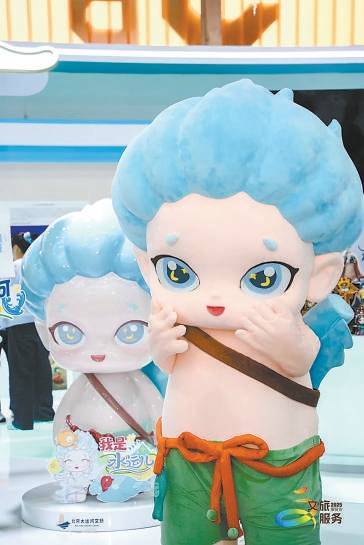
Core Insights - The 2025 China International Service Trade Fair features a vibrant cultural and tourism service section, showcasing a variety of cultural and creative products that bridge ancient and modern cultures, enhancing cultural consumption [5][6][8] Group 1: Cultural and Creative Products - A range of innovative cultural products debuted at the fair, including the "Observation Bag" from "Beijing Gifts," designed to commemorate historical events, and an AI interactive plush toy modeled after the giant panda, appealing to families [5][6] - The fair introduced a dedicated sales area by the Beijing Cultural Relics Bureau, allowing easy access to popular cultural products that previously required long queues [6][8] Group 2: Integration of Traditional Culture - The theme of "Cultural + Non-Heritage" was prominent, with products like the Bubble Mart's non-heritage collection and Tangrenfang's AI-enhanced 3D figurines revitalizing traditional crafts [7][8] - Traditional crafts were showcased through hands-on experiences, such as handmade paper products, allowing attendees to engage directly with cultural heritage [7] Group 3: New Consumption Ecosystem - The fair emphasized transforming cultural consumption from merely purchasing products to enjoying experiences, exemplified by the "National Cultural Industry Innovation Experimental Zone" in Chaoyang District [9] - New IPs like "He Xi" and "Shui Yun Er" were launched, designed to attract younger audiences and promote cultural awareness through engaging products [9]