Burberry

Search documents
今年的七夕广告,最火的是「无性爱」和「姬圈暧昧」?
36氪· 2025-08-29 00:10
Core Insights - The article discusses the marketing strategies of nine brands during the Qixi Festival, highlighting a shift from traditional romantic narratives to themes of self-love and cultural connections. It notes a significant gap between brand messaging and consumer perceptions, indicating a more interactive relationship between brands and audiences this year [4][5]. Brand Summaries LOEWE - LOEWE utilized a short drama format for its marketing, featuring actors Chen Duling and Chen Zheyuan, which attracted viewers primarily due to their popularity. The story revolves around a lost and found magpie charm symbolizing love, cleverly titled "鹊定爱" (determined love) [6][9][10]. - The short drama was released in five parts over five days, maintaining audience engagement and promoting featured products like the Madrid and Puzzle bags [10][12]. Burberry - Burberry collaborated with students from Donghua University to create a collection that merges traditional Chinese knotting with British aesthetics, launching a special "heart" logo for the Qixi Festival [14][16]. - The brand's advertisements featured romantic yet clichéd scenarios, but the audience's focus shifted to the visual elements rather than the product itself, leading to a disconnect in brand messaging [20][21]. Miu Miu - Miu Miu's campaign, "Love Arrives at This Moment," featured a nostalgic and artistic portrayal of young women, emphasizing subtle romantic undertones while showcasing products like the classic pocket bag [22][25][29]. - The ad sparked discussions about LGBTQ+ themes, indicating a successful engagement with a broader audience [29]. Balenciaga - Balenciaga's campaign featured real-life couple Zhou Qiqi and Jiang Qilin, aiming to convey genuine emotions amidst a fast-paced urban backdrop. However, the audience interpreted it as a commentary on "sexless marriage," leading to humorous critiques of the ad's aesthetics [30][34][35]. CHANEL - CHANEL's advertisement focused on the theme of "encounters" rather than direct romance, featuring stars Wang Yibo and Dou Jingtong. However, the celebrity focus overshadowed the brand's message, with comments primarily centered on the actors rather than the jewelry being promoted [36][40][41]. THOM BROWNE - THOM BROWNE's campaign featured a "love ascending" concept set in an elevator, but the execution was perceived as cold and eerie, diverging from the intended romantic theme [42][46]. Tiffany & Co. - Tiffany's campaign emphasized self-love with the "I am the subject of love" theme, featuring a podcast series that encourages personal growth narratives. This approach reflects a shift towards auditory marketing strategies [49][51][52]. GUCCI - GUCCI's campaign featured actors Wen Qi and Song Weilong, creating a narrative that blends romance and friendship, enhancing audience engagement through a storyline that feels like a reality show [53][58]. PRADA - PRADA's unique approach focused on bridges as a metaphor for connection, intertwining urban culture with romance. This strategy stands out in a market saturated with traditional love stories, appealing to a younger audience's desire for deeper narratives [59][63].


七夕前奢侈品消费升温,高性价比仍是关注核心
Sou Hu Cai Jing· 2025-08-28 05:18
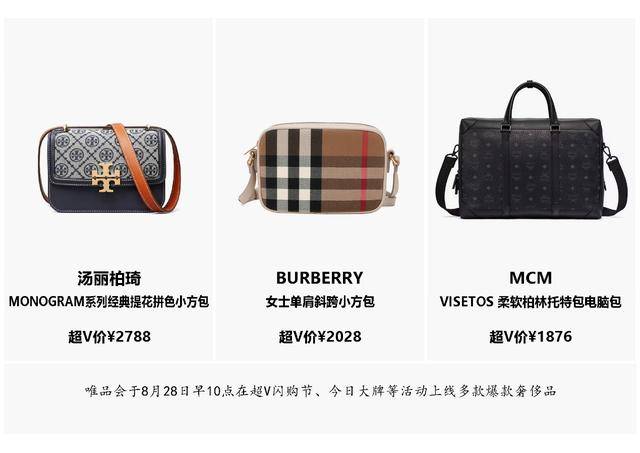
Group 1 - The luxury goods market in China is experiencing a rebound, particularly around the Qixi Festival, which is referred to as "Chinese Valentine's Day," with luxury items becoming a popular choice for gifting [1][3] - According to iMedia Consulting, the types of gifts for the 2024 Qixi Festival are expected to be dominated by clothing, shoes, and bags, continuing the trend from the previous year [1] - E-commerce platforms have reported a significant increase in luxury goods sales, with brands like MK, COACH, and Burberry seeing over 70% year-on-year growth in sales during the two weeks leading up to Qixi [1] Group 2 - There is a growing emphasis on cost-effectiveness among consumers, with many opting for discounts and special offers rather than purchasing at full price [1][3] - The overall gift economy in China is on the rise, with the market size projected to reach 1.3777 trillion yuan in 2024 and 1.6197 trillion yuan by 2027, indicating a robust growth trend [3] - Experts suggest that the shift in consumer behavior reflects a move from self-indulgent spending to gifting, where value, emotional significance, and practicality are prioritized over mere brand prestige [3]
奢侈品消费急转弯,年轻人流行“花小钱买大牌”
Sou Hu Cai Jing· 2025-08-25 17:23
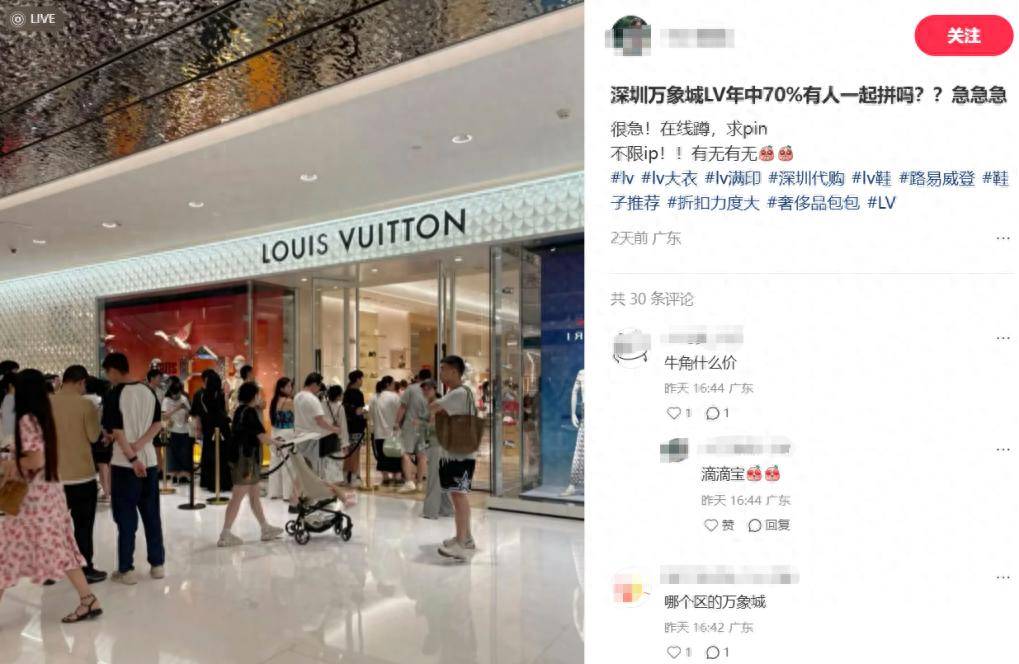
Group 1 - The luxury goods consumption landscape is undergoing a "discount luxury revolution," where young consumers are increasingly purchasing high-end brands at significantly reduced prices, often one-third or less of the original retail price [3][8] - Offline luxury goods sales events have transformed into treasure hunts for young consumers, with brands like Hermes and Chanel frequently participating in exclusive sales that create a sense of urgency and scarcity among shoppers [3][6] - Online discount platforms, such as Vipshop, have become popular among young consumers, with significant price reductions on luxury items, exemplified by a COACH bag selling for over 3,000 yuan less than its retail price during a promotional event [6][8] Group 2 - Young consumers are maturing in their purchasing decisions, focusing on high cost-performance and value rather than blindly paying for brand premiums, indicating a shift in consumer behavior towards "treasure hunting" shopping experiences [8][9] - The sales of COACH products have seen a nearly 20% increase since July, driven by the appeal of high value and affordability, reflecting a broader trend in the luxury market [8] - The future of luxury consumption may evolve to prioritize "worth" over the traditional dichotomy of "full price" versus "discount," suggesting a more rational approach to luxury purchases [9]

2025年第33周:服装行业周度市场观察
艾瑞咨询· 2025-08-25 00:06
Group 1: Industry Environment - The fragrance business is becoming an important area for fashion brands to expand their lifestyle offerings, with the global fragrance market expected to grow from $53 billion in 2025 to $77.53 billion by 2032, driven by high-end segments [3][4] - Luxury brands are investing in upgrading their stores in China despite a slowdown in the luxury market, with new store openings down 38% year-on-year in the first half of 2025 [5] - Sports and outdoor brands are increasingly capturing market share from luxury brands by appealing to high-end consumers through design innovation and upgraded retail experiences [6] Group 2: Market Trends - The outdoor running shoe market is rapidly growing in China, with brands like HOKA and Salomon leading the charge, driven by a surge in events and consumer interest [7] - Chinese domestic sports brands are facing challenges with growth slowing to 5.9%, as they struggle with brand power and market concentration [8] - The shift in brand slogans among sports brands reflects a change in consumer focus towards personal experience and inclusivity, particularly among Gen Z [9] Group 3: Luxury Market Challenges - The luxury goods sector is facing significant challenges, with the global market potentially experiencing zero growth for two consecutive years, largely due to a decline in spending from Gen Z consumers [10] - The beauty segment within luxury brands is one of the few bright spots, but it is not substantial enough to offset declines in core luxury business [10] Group 4: Fashion Industry Dynamics - The Chinese lingerie market is undergoing a transformation, with traditional brands struggling while new brands focusing on comfort and innovation are gaining traction [11] - The fashion industry is seeing a return to conservative and retro styles, with niche brands gaining attention for their craftsmanship and authenticity [12] Group 5: Brand Performance and Strategies - The "Luxury Brand China Vitality List 2025H1" was released, covering 86 luxury brands and their commercial dynamics in China, providing valuable insights for industry leaders [13] - The retail market for clothing and textiles in China reached 742.6 billion yuan in the first half of the year, with natural materials like linen becoming increasingly popular [15] - The sunscreen clothing market is projected to exceed 80 billion yuan in 2024, driven by rising consumer awareness and demand for outdoor activities [16] Group 6: Corporate Developments - Lao Pu Huang Jin expects to report revenue of 12 to 12.5 billion yuan for the first half of 2025, a year-on-year increase of 241%-255%, driven by product optimization and channel expansion [26] - The fashion brand La Chapelle has successfully transformed from bankruptcy to becoming a top seller on Douyin through a brand authorization model [21] - Bosideng is focusing on ESG practices and aims for net-zero emissions by 2038, showcasing its commitment to sustainable development [22]

服饰行业周度市场观察-20250823
Ai Rui Zi Xun· 2025-08-23 08:32
Investment Rating - The report does not explicitly provide an investment rating for the apparel industry Core Insights - The luxury brand market in China is experiencing a slowdown, with a 38% decrease in new store openings and a 30% decline in store renovations in the first half of 2025, yet brands like Louis Vuitton and Tiffany continue to invest in large store openings, indicating confidence in the market [4][6] - The outdoor sports brands are increasingly capturing market share from luxury brands by adopting high-end strategies and innovative designs, with a focus on enhancing customer experience [6][7] - The domestic sportswear market is facing challenges, with growth slowing to 5.9%, and major brands like Anta and Li Ning experiencing stagnation, prompting a need for strategic shifts [7][9] - The rise of natural materials in clothing, particularly linen, is becoming a trend, with a reported 3.1% increase in retail sales in the apparel sector [13] - The sunscreen clothing market is projected to exceed 80 billion yuan in 2024, driven by increased consumer awareness and demand for outdoor activities [14] Industry Trends - The perfume business is becoming a significant area for fashion brands, with the global perfume market expected to grow from $53 billion in 2025 to $77.53 billion by 2032, highlighting a trend towards high-end niche fragrances [4] - The luxury goods sector is facing a potential zero growth period globally, with a significant drop in consumer spending among Generation Z, leading to a shift towards more value-driven purchases [9] - The innerwear market is undergoing a transformation, with traditional brands struggling while new brands focusing on comfort and innovative designs are gaining traction [10] - The trend of debranding is emerging, with niche retro brands gaining popularity by emphasizing craftsmanship and authenticity [10] Brand Dynamics - Bosideng is expanding into the sunscreen clothing market, but faces challenges in maintaining high-end positioning while competing with more cost-effective options [16] - La Chapelle has successfully transitioned from bankruptcy to becoming a top seller on Douyin by adopting a brand authorization model, although it faces challenges in quality control [17] - District Vision is establishing itself in the outdoor fashion space with high-end sports eyewear, focusing on craftsmanship and sustainability [20] - Lao Pu Gold is experiencing significant revenue growth, with projected earnings of 12 to 12.5 billion yuan in the first half of 2025, driven by product optimization and channel expansion [20] - The brand GU is closing stores in China as part of a strategic realignment, indicating challenges in market penetration despite initial growth [24]

买奢侈品这件事:韩国青年vs中国青年,差距在哪?
Sou Hu Cai Jing· 2025-08-14 00:16
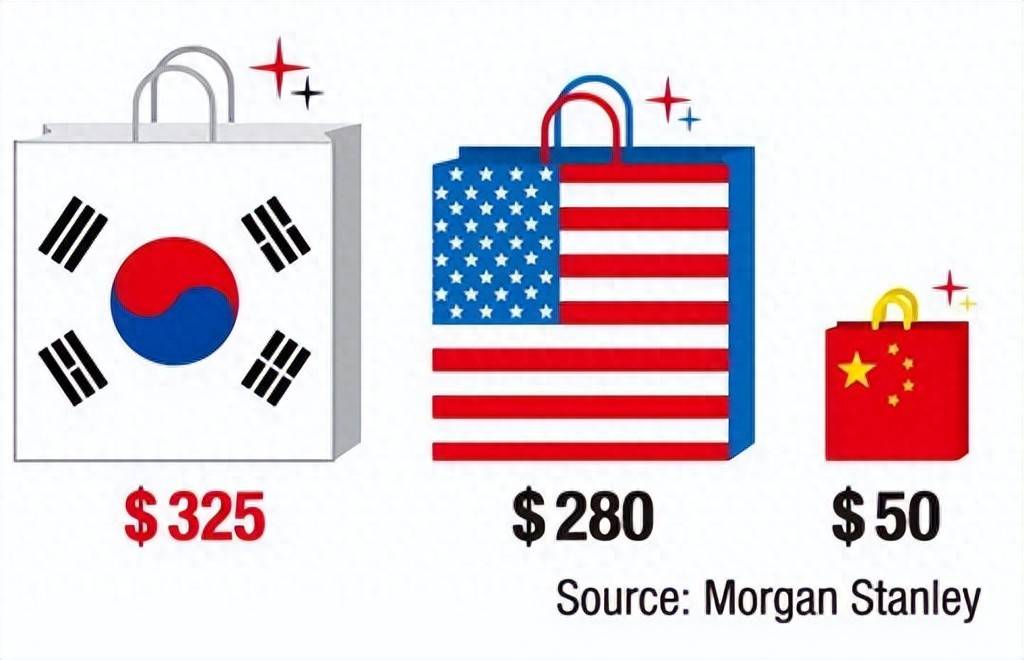
Group 1 - South Korean consumers have the highest per capita luxury goods spending globally at approximately $325, with many young individuals resorting to loans for purchases [1][3] - A report from the Korea Financial Institute indicates that 18% of the debt among individuals aged 20 to 39 is spent on luxury goods, and about 17% of young workers in Seoul actively take loans to buy luxury items [3] - The cultural context in South Korea drives luxury consumption, where luxury items are seen as status symbols in job markets and social circles, exacerbated by high living costs and limited job opportunities [3] Group 2 - In contrast, the Chinese luxury market is experiencing a shift towards rational consumption, with a projected sales decline of 18%-20% in 2024, prompting major brands like LVMH and Kering to adjust their strategies [5] - The shift in consumer behavior in China reflects a transition from "symbolic consumption" to "value consumption," with discount channels becoming the preferred choice for entry-level luxury goods [5][7] - Young Chinese consumers are increasingly prioritizing value over brand logos, leading to a more mature approach to luxury spending, as evidenced by the popularity of discount platforms offering significant savings on luxury items [6][7]
奢侈品行业2025年中报总结
GUOTAI HAITONG SECURITIES· 2025-08-06 11:26
Investment Rating - The report provides a mixed investment rating for the luxury goods sector, with specific companies like LVMH and Hermès showing resilience, while others like Kering and Canada Goose are facing significant challenges [22][30]. Core Insights - The luxury goods market is experiencing a slowdown, with overall retail sales in North America showing fluctuations, particularly in the luxury segment, which saw a decline of up to 14% in certain months [6][22]. - The report highlights a significant disparity in performance among luxury brands, with LVMH and Hermès maintaining positive growth, while Kering and Canada Goose reported substantial declines in revenue [22][30]. - The global economic outlook remains cautious, with the IMF projecting a world GDP growth of 3.2% for 2025, which may impact consumer spending in the luxury sector [4]. Summary by Sections Economic Outlook - The IMF forecasts a global GDP growth of 3.2% for 2025, with developed countries expected to grow at 1.8% and emerging markets at 4.2% [4]. - China is projected to grow at 4.5%, while India is expected to lead with a growth rate of 6.5% [4]. Retail Performance - North American retail sales showed a mixed performance, with overall sales declining by 0.4% in June 2024, while luxury retail sales experienced a more severe drop of 14% [6]. - The luxury segment's performance is expected to remain volatile, with some months showing recovery while others continue to decline [6]. Company Performance - LVMH reported a revenue decline of 7.1% in Q2 2025, while Hermès showed a more stable performance with a decline of only 0.5% [22][30]. - Kering faced a significant revenue drop of 17.9%, indicating challenges in its luxury brand portfolio [30]. - Canada Goose reported a staggering decline of 61.8% in its latest quarter, highlighting severe operational challenges [30]. Market Trends - The report notes a shift in consumer behavior, with a growing preference for brands that offer unique and aspirational products, impacting traditional luxury brands negatively [22]. - The luxury watch segment, particularly Swiss watch exports, saw a decline of 5.6% in June, indicating broader market challenges [10]. Regional Insights - The report emphasizes the importance of the Chinese market for luxury brands, with a notable increase in Chinese tourists traveling to Japan and the U.S., which could influence luxury spending patterns [17]. - The performance of luxury brands varies significantly by region, with some brands performing better in Asia compared to North America and Europe [22].
又一个刚入华的时尚品牌盯上中女们的钱包
36氪未来消费· 2025-08-05 11:01
Core Viewpoint - Phoebe Philo is making a significant entry into the Chinese market with aggressive retail expansion, targeting independent urban women with high purchasing power, despite the high price points of her products [3][4][5]. Group 1: Brand Expansion and Market Strategy - Phoebe Philo has signed five retail partnerships in China, including luxury stores and new entrants, marking her first venture into the Chinese market [3]. - The brand's pricing strategy positions its products as investments, with handbags averaging 40,000-50,000 RMB and outerwear priced around 200,000 RMB [4]. - Philo's approach to retail includes collaborations with both traditional luxury retailers and emerging platforms, aiming to reach a younger, trend-seeking demographic [12]. Group 2: Design Philosophy and Consumer Connection - Philo is recognized as a pioneer of minimalism in women's fashion, with a loyal following that remains attached to her previous work at Celine [5][6]. - Her designs are characterized by a focus on quality and craftsmanship, with a belief that clothing should be intuitive and practical [6][8]. - The brand's recent collections have sold out quickly, indicating strong demand from her established fan base, despite some criticisms regarding quality and fit [8][14]. Group 3: Challenges and Adaptations - The transition to an independent brand has posed challenges, including sourcing materials and managing inventory risks without the support of a larger luxury group [14]. - Philo is adapting her business model by improving return policies and expanding product ranges to include more accessible price points [14][15]. - The brand's identity is evolving, with some critics noting a shift towards more conventional luxury branding elements, such as logo usage [16].

LVMH净利暴跌;Moncler利润承压
2 1 Shi Ji Jing Ji Bao Dao· 2025-07-27 07:35
Core Insights - The luxury goods sector is experiencing a mixed performance, with LVMH reporting a significant decline in revenue while Burberry shows signs of recovery [1][2][8] Financial Performance - LVMH's total revenue decreased by 4% to €39.81 billion, with net profit down 22% to €5.7 billion, primarily due to macroeconomic uncertainties and weak demand in Asia [2] - Moncler reported stable revenue of €1.2257 billion, but EBIT fell by 13% to €225 million, attributed to higher marketing expenses [7] - Burberry's retail sales dropped by 6% to £433 million, but the decline is less severe compared to a 21% drop last year, indicating potential recovery [8] Strategic Moves - LVMH is reportedly in talks to sell Marc Jacobs, with a potential valuation of $1 billion, indicating a strategic shift [4] - Estée Lauder appointed Aude Gandon as Chief Digital and Marketing Officer to lead digital transformation and marketing strategies [5][6] - Chanel acquired a 20% stake in the Italian leather factory Nuova Impala, reinforcing its commitment to high-quality manufacturing [9] Market Trends - The luxury market is facing challenges, with LVMH's fashion and leather goods segment seeing a 7% organic revenue decline [2] - The UK retail sector is advocating for a new VAT-free shopping scheme to attract high-spending tourists, which could generate £3.7 billion annually [14] Brand Initiatives - Tiffany & Co. launched the "Love For Our Oceans" project to support mangrove wetland conservation, enhancing its sustainability image [11][12] - Pronovias appointed Cristina Alba Ochoa as CEO, aiming for a more market-driven expansion strategy [10] Events and Industry Developments - The 2026 Spring/Summer New York Fashion Week is scheduled for September 11-16, featuring over 60 shows, reflecting a shift towards a more diverse presentation format [15]
外媒想不通,中国人半年存了17.94万亿,消费还能高达24.5万亿?
Sou Hu Cai Jing· 2025-07-23 18:58
Group 1 - The core viewpoint is that despite a significant increase in savings, China's consumption remains robust, with total consumption reaching 24.5 trillion yuan and online consumption growing by 8.5% in the first half of the year [2][3] - The increase in household savings does not indicate a decline in consumer willingness; rather, savings are viewed as emergency funds, and the diverse consumption structure supports ongoing growth [2][5] - Policy initiatives, such as consumption stimulus measures and trade-in programs, have injected over 300 billion yuan into the market, further boosting consumption [3][5] Group 2 - China's internal demand market is substantial, positioning the country as one of the largest consumer markets globally, with both traditional and emerging sectors contributing to growth [5][11] - The luxury goods market in China is thriving, with brands like Burberry and COACH offering discounts to attract younger consumers, particularly those born in the 1990s and 2000s [7][9] - The contrast between China's vibrant consumption market and the sluggish growth in many foreign markets highlights the unique characteristics of Chinese consumer behavior, where savings and consumption complement rather than compete with each other [9][11]