
Arm Holdings plc

Search documents
吃定你们了!Arm公司强袭下游芯片厂商腹地
是说芯语· 2025-06-16 11:29
Core Viewpoint - Arm is aggressively expanding into the custom chip design market, which poses a significant threat to its downstream partners and highlights its dominance in the semiconductor IP sector [1][3]. Group 1: Arm's Business Strategy - Arm plans to offer self-developed chips to clients, a move that has been perceived as exploitative towards its partners [1]. - The company has increased its licensing fees by three times in the past six months, further tightening its grip on downstream manufacturers [2]. - Arm's revenue heavily relies on a few major clients, with 56% of its income coming from the top five customers, making it vulnerable to potential client defections [3]. Group 2: Downstream Manufacturers' Challenges - Downstream manufacturers face high licensing fees and restrictive agreements, such as the "one generation, one purchase" model, which limits their ability to innovate and adapt [2][4]. - Many domestic manufacturers are reportedly surrendering to Arm's demands, despite the high costs associated with licensing [4][5]. - The dependency on Arm's technology has created a widening performance gap between domestic chips and international counterparts [4]. Group 3: Potential Shift to RISC-V - There is a growing necessity for domestic manufacturers to break free from Arm's control, especially for companies involved in national security and innovation [6]. - RISC-V is emerging as a viable alternative to Arm, offering an open-source model that contrasts with Arm's closed ecosystem, thus providing greater autonomy for developers [6][7]. - The increasing investment in RISC-V technology by major companies indicates a shift in the industry, as they seek to reduce reliance on Arm [7][8].



再谈算力链:需求高景气,投资正当时
2025-06-15 16:03
Summary of Conference Call Records Industry Overview - The conference call primarily discusses the **AI hardware and optical module industry** with a focus on the **cloud computing sector** and its growth driven by AI technology [1][5][6]. Key Points and Arguments 1. **Capital Expenditure Growth**: Major North American cloud providers are expected to exceed **$330 billion** in capital expenditures in 2025, representing a **35% year-over-year increase**. This trend is anticipated to continue into 2026, driven by AI technology [1][5]. 2. **Optical Module Demand**: The total shipment volume of optical modules in 2026 is projected to increase significantly, influenced by the demand for AI chips and changes in network architecture. The demand for **800G and above optical modules** is expected to be particularly strong, with estimates of **35 million units** for 2026 [1][11]. 3. **AI Chip Demand Recovery**: The demand for AI chips, particularly ASICs and GPUs, is shifting from a downward trend to a moderate upward revision, indicating a positive outlook for the industry [1][7]. 4. **Silicon Photonics**: The penetration rate of silicon photonics is showing potential for unexpected changes, which could become a significant driver of industry trends. Companies like Marvell are expected to revise their long-term market growth expectations for AI ASICs upwards [1][8][13]. 5. **CSP INSILICO Chip and GPU Shipments**: The market anticipates that shipments of CSP INSILICO chips and GPUs will reach at least **12 million units** in 2026, establishing a solid foundation for the demand for high-speed optical modules [1][9]. 6. **Network Architecture Impact**: The demand for optical modules may exceed expectations due to new network architectures, such as CSP ETIC and Meta MTIA, which highlight the increasing importance of network hardware in AI computing clusters [1][10]. 7. **AMD's Product Launches**: AMD has introduced the MI350 series GPUs and plans to release the MI400 series in 2026, emphasizing significant improvements in AI computing and inference performance [4][14]. 8. **Market Dynamics**: The optical module sector is experiencing a rebound in market sentiment, transitioning from a recovery logic to a focus on fundamental industry trends, particularly in silicon photonics [3][12]. Additional Important Insights - **Investment Plans by CSPs**: Companies like Amazon AWS and Meta are making substantial investments in data centers, indicating a robust commitment to expanding AI capabilities [6]. - **Long-term Market Outlook**: The global AI accelerator market is projected to exceed **$500 billion** by 2028, reflecting the growing importance of AI technologies across various sectors [4][14]. - **Competitive Landscape**: Companies like Zhongji Xuchuang and Yuanjie Technology are positioned as leaders in the silicon photonics space, with significant orders and technological advancements [4][14]. This summary encapsulates the critical insights from the conference call, highlighting the growth potential and evolving dynamics within the AI hardware and optical module industry.
半导体巨头,重塑供应链
半导体行业观察· 2025-06-13 00:40
Core Viewpoint - The article discusses the increasing importance of Southeast Asia in the global semiconductor supply chain, particularly in the context of capital investment uncertainties stemming from the Trump administration's tariffs. It highlights the region's advantages such as low labor costs, strategic location, and government support, which are attracting major semiconductor companies to invest in manufacturing and assembly operations [1][2]. Group 1: Southeast Asia's Role in Semiconductor Industry - Southeast Asia is becoming a key region for semiconductor supply chain restructuring post-Trump era, with companies planning to relocate or build new facilities in response to tariff uncertainties [1]. - The region is gaining prominence in assembly, testing, and packaging (ATP) due to favorable conditions such as government-led strategies and tax incentives [1]. - Malaysia is emerging as a global supply chain hub, accounting for 13% of the global semiconductor backend processes, with significant investments from companies like Intel, Broadcom, and Micron [1][2]. Group 2: Major Investments and Developments - Intel has established backend assembly lines in Malaysia and is expanding its advanced packaging facilities, while Micron is building its second packaging and testing plant in Penang [2]. - Texas Instruments is investing $3.1 billion (approximately 4 trillion KRW) in production facilities in Malaysia, and Infineon is setting up a silicon carbide (SiC) power semiconductor manufacturing and packaging plant in Penang [2]. - ARM has chosen Malaysia as its first production base for direct manufacturing and semiconductor design, with the Malaysian government agreeing to pay $250 million in patent fees over ten years [2]. Group 3: Growth in Vietnam's Semiconductor Market - Vietnam is emerging as a new stronghold in semiconductor packaging and testing, with the market size growing by 41% from $10.62 billion in 2016 to $15.01 billion in 2023 [3]. - Emcore, a leader in backend processes, aims for $10 billion in semiconductor exports, while the Vietnamese government is investing $1 billion to train approximately 50,000 semiconductor engineers [3]. Group 4: Industry Perspectives - Industry experts note that relocating production facilities or building new factories in response to tariffs is not practical due to the long-term nature of semiconductor investments [4]. - Southeast Asian countries are viewed as safer options for semiconductor production due to their low labor costs and developed ecosystems, especially in light of ongoing U.S. semiconductor regulations targeting China [4].


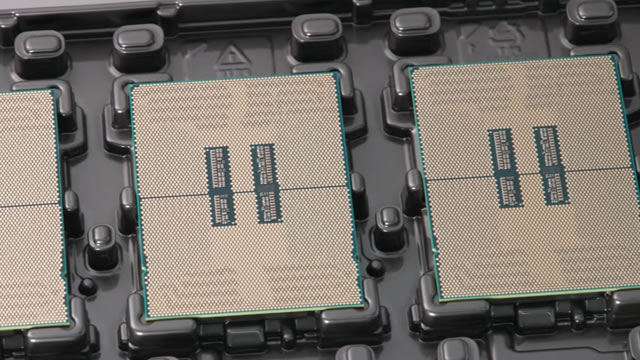
Intel XEON 6 Gaining Solid Market Traction: Will the Uptrend Persist?
ZACKS· 2025-06-12 16:30
Core Insights - Intel Corporation (INTC) is experiencing strong demand for its Xeon 6 processors, particularly in high-performance computing (HPC) and AI workloads, driven by the need for advanced processing capabilities across various sectors [1][9] - The Xeon 6 processors feature Performance-cores and built-in accelerators that enhance performance for AI, media, and network security applications, aligning with the increasing demand for network and edge solutions in the AI ecosystem [1][2] - Intel's competitive edge is bolstered by the integration of Priority Core Turbo (PCT) technology and Intel Speed Select Technology – Turbo Frequency (SST-TF), which optimizes CPU resource utilization for demanding AI workloads [2][4] Performance Comparison - The Xeon 6 processors demonstrate significantly faster memory performance in high-capacity configurations compared to AMD's EPYC processors, with up to 128 P-cores per CPU facilitating balanced workload distribution for AI tasks [3][4] - Despite Intel's advancements, AMD's EPYC 9005 series is gaining traction, supported by partnerships with major hyperscalers like Oracle Cloud Infrastructure and Google Cloud [5][9] Strategic Initiatives - Intel is actively pursuing initiatives to strengthen its position in the AI sector, which encompasses cloud and enterprise servers, networks, and edge environments, through the introduction of innovative features in its Xeon 6 processors [6][9] - The Xeon 6 has been selected as the host CPU for NVIDIA's DGX B300 AI-accelerated systems and is powering Imperial College London's HX2 supercomputer, enhancing Intel's credibility in AI applications [7][9] Market Performance and Estimates - Intel's stock has declined by 32.4% over the past year, contrasting with the industry's growth of 7.3% [8][10] - Earnings estimates for Intel for 2025 and 2026 have decreased by 40.8% to $0.29 per share and by 31.2% to $0.77, respectively, over the past year [11][12] - The company's shares currently trade at a price/book ratio of 0.85, lower than the industry average of 31.35, indicating potential undervaluation [10]
马来西亚:在多极芯片战争中,不要选边站
半导体芯闻· 2025-06-12 10:04
如果您希望可以时常见面,欢迎标星收藏哦~ 来源:内容编译自 theedgemalaysia 。 随着地缘政治紧张局势加剧以及全球半导体供应链发生重大调整,马来西亚在不断升级的中美科 技冷战中保持中立立场变得越来越困难。 自美国前总统乔·拜登于 2022 年 8 月签署《芯片与科学法案》以来,华盛顿推出了大量激励措 施,包括先进制造业投资信贷(第 48D 条)和制造业补助激励措施,旨在将芯片生产转移回国 内。 这些举措引发了半导体供应链投资浪潮,主要参与者包括英特尔公司、台积电、美光科技公司和安 靠科技公司。过去三年,这些投资为美国 28 个州宣布的 100 多个项目投资超过 5400 亿美元。 据美国半导体行业协会(SIA)估计,这些项目将创造超过50万个美国就业岗位,涵盖芯片制造、 建设和支持服务。迄今为止,美国商务部已批准32家公司48个项目的325.4亿美元拨款和高达58.5 亿美元的贷款。 最大的受益者之一是英特尔,该公司去年 9 月获得了高达 30 亿美元的直接资金,用于"支持微电 子制造"和"确保获得国内先进半导体供应链,保障国家安全"。 图注:Ta iwa n即中国台湾;Ch i n a即中国大 ...


速递|OpenAI急筹400亿美元弹药,沙特PIF、印度信实或成关键金主
Z Potentials· 2025-06-12 04:24
图片来源: Unsplash 据知情人士透露,OpenAI 已与沙特公共投资基金、印度信实工业集团及现有股东阿联酋 MGX,就参 与由软银主导的 400 亿美元新一轮融资进行商谈。这些投资者每家可能至少投入数亿美元。 • 本轮融资总额400亿美元,分两期执行——首期100亿美元已到位,二期300亿正在推进,沙特PIF、 印度信实、阿联酋MGX为主要谈判对象 • 领投方软银集团同时也在收购员工持股 OpenAI 正与沙特 PIF 及其他投资者洽谈融资 300 亿美元,以完成此前宣布的 400 亿美元融资轮。 此 轮融资对 ChatGPT 制造商的投前估值为 2600 亿美元。 OpenAI 已收到首期 100 亿美元全额注资, 其中除软银外其他投资者贡献了 25 亿美元。 红杉资本和安德森 ·霍洛维茨基金此前从其他股东处购入了 OpenAI 股份,新加坡主权财富基金 GIC 作为新晋投资者,在此轮融资中各自投入至少 2 亿美元。微软、 Thrive Capital 、 Coatue 、 Altimeter Capital 及老虎环球管理也参与了投资。 知情人士透露,得益于新增投资方加入,软银首轮出资额已从 4 ...

金十图示:2025年06月11日(周三)全球主要科技与互联网公司市值变化
news flash· 2025-06-11 03:02
金十图示:2025年06月11日(周三)全球主要科技与互联网公司市值变化 | | 1785 | | 5487.98 | | --- | --- | --- | --- | | Adobe | 1774 | -0.05% | 416.06 | | 小米 E | 1765 | -0.87% | 6.84 | | 高通 | 1747 | 2.39% | 159.13 | | S 索尼 | 1594 | -1.47% | 26.2 | | arm Arm Holdings | 1489 | 1.46% | 140.63 | | Schneider Electric | 1476 | 1 1.18% | 260.1 | | PDD Holdings (Pinduoduo | 1453 | 1 0.76% | 102.39 | | Spotify | 1421 | -0.83% | 693.32 | | Shopify | 1398 | 2.28% | 110.26 | | V.用材料 | 1394 | 2.34% | 173.77 | | Networks | 1309 | -0.19% | 195.95 | | Ap ...

Z Potentials|专访陈羽北,Aizip打破效率瓶颈,让AI进入真实产品,推动On-Device AI的未来革命
Z Potentials· 2025-06-11 02:21
Core Viewpoint - The article discusses the rapid evolution of AI technology and its applications, highlighting the challenges of energy consumption, model size, and learning mechanisms. Aizip, a company focused on on-device AI models, aims to overcome these efficiency bottlenecks and drive the integration of AI into everyday life [1]. Group 1: AI Efficiency and Innovation - Aizip's mission is to enhance energy efficiency, model efficiency, and learning efficiency in AI systems, moving from "usable" to "efficiently usable" AI [3][10]. - The company emphasizes creating the "smallest and most efficient" AI systems, contrasting with the mainstream focus on general artificial intelligence (AGI) [3][14]. - Aizip's approach is to support businesses that require AI capabilities but lack full-stack AI expertise, allowing them to focus on application development [3][32]. Group 2: Founder's Background and Vision - The founder, Chen Yubei, has a strong academic background in AI and has shifted from theoretical research to practical applications, driven by a desire to see AI implemented in real-world products [4][16]. - The founding of Aizip was catalyzed by the COVID-19 pandemic, which disrupted initial plans for postdoctoral research and prompted discussions about entrepreneurship [6][16]. - Aizip's team comprises experienced individuals with diverse backgrounds, emphasizing a culture of collaboration and long-term value over short-term gains [17][18]. Group 3: On-Device AI Revolution - The article predicts that over 50% of AI reasoning will occur on-device in the near future, driven by advancements in hardware and user demand for low-latency, privacy-focused AI products [30][31]. - Aizip's product line includes multi-modal perception models and language models, focusing on seamless integration into various devices to enhance user experience without overtly displaying AI functionality [22][23]. - The company aims to create a comprehensive AI model ecosystem compatible with mainstream hardware, facilitating easier integration for clients [34][36]. Group 4: Market Position and Future Outlook - Aizip positions itself as a foundational support for companies lacking the resources to build their own on-device AI teams, anticipating a growing market for such capabilities [32][34]. - The company has established partnerships with leading hardware manufacturers and has achieved recognition for its innovative AI products [38]. - Aizip's strategy focuses on gradual commercialization, prioritizing technology validation and model stability before scaling operations [35][36].

瑞银:全球半导体-半导体产业协会 4 月数据,3 月创纪录后销售回落
瑞银· 2025-06-10 07:30
Investment Rating - The report does not explicitly state an investment rating for the semiconductor industry, but it highlights preferred stocks for investment in the US and internationally, indicating a positive outlook for certain companies [2]. Core Insights - Total semiconductor sales in April declined by 11.7% month-over-month (M/M), aligning with the 5-year seasonal average but approximately 120 basis points below the 10-year average. Year-over-year (Y/Y) sales increased for the 19th consecutive month, reaching a growth rate of 21.7% [2]. - The semiconductor industry is projected to experience a 3-6% quarter-over-quarter (Q/Q) growth in revenue for Q2 2025, with current street estimates at 3.4% Q/Q [4]. - Memory sales fell significantly by 23.3% M/M, driven by a 22.1% decrease in units sold. However, DRAM average selling price (ASP) increased by 2.8% M/M, while NAND ASP rebounded by 19.6% M/M [3]. Summary by Sections Semiconductor Sales and Trends - April semiconductor sales saw an 11.7% M/M decline, with a 21.7% Y/Y increase. The ASP dropped by 4.9% M/M, which is 360 basis points worse than the 10-year average [2]. - The decline in units sold across major product segments was noted, with a 7.1% M/M decline in units outperforming seasonal averages by 100-200 basis points [2]. Memory Market Insights - Memory sales decreased by 23.3% M/M, with DRAM revenue dropping by 29.0% M/M and NAND sales falling by 9.4% M/M. The report anticipates a weakening memory cycle in the second half of 2025 due to oversupply [3]. - The June forecast predicts a blended DRAM ASP increase of 6% Q/Q and NAND ASP increase of 3% Q/Q for Q2 2025 [3]. Preferred Stocks - In the US, preferred stocks include AVGO, MRVL, ARM, MU, NVDA, and TXN. Internationally, preferred stocks are ASE, Hon Hai Precision, NXP, Infineon, JCET, MediaTek, Quanta, Renesas Electronics, Samsung Electronics, SK Hynix, TSMC, and Wiwynn [2].
美国不再“例外”,欧洲却没准备好?全球最大主权基金警告:欧股竞争力不行,仓位已从26%砍到15%!
Hua Er Jie Jian Wen· 2025-06-09 06:44
在美国政治不确定性加剧、市场吸引力相对削弱的背景下,国际资本正重新评估全球配置。然而,欧洲 资本市场或面临"接不住"潜在资金流入的尴尬境地。管理1.9万亿美元资产的挪威石油基金最新发出警 告,欧洲资本市场因结构性问题竞争力不足,其自身对欧股的配置比例在过去十年已从26%大幅降至 15%。 结构性问题已导致欧洲优质上市资源的持续流失,进一步削弱其吸引力。挪威石油基金持有的欧洲公司 数量在过去十年间锐减四分之一,目前仅为1546家。 据英国《金融时报》6月9日报道,欧洲最大的单一投资者——挪威石油基金敲响警钟。该基金平均持有 欧洲每家上市公司约2.5%的股份,其动向被视为重要风向标。该基金披露,其欧洲股票配置占比在过 去十年间已从26%显著下降至15%。 "一个运转良好的欧洲市场对我们至关重要,"该基金市场策略主管Malin Norberg表示。她强调,欧洲在 商业活力和为机构投资者提供新机会方面已落后于美国和部分亚洲市场。 美国政治动荡意外为欧洲资本市场提供了重振吸引力的契机。但挪威石油基金十年持仓腰斩的数据和警 告表明,若欧盟无法迅速破除法规藩篱、推动深度一体化改革,恐将错失本轮国际资本重新布局的历史 性机遇 ...