
上海银行

Search documents
金融产品周报:海外市场流动性有企稳迹象,情绪或会好转
Soochow Securities· 2026-02-08 03:24
Fund Size Statistics - The top three equity ETF types by fund size change are: Scale Index ETF (¥15.406 billion), Cross-border Industry Index ETF (¥6.624 billion), and Strategy Index ETF (¥5.384 billion) [9] - The bottom three equity ETF types by fund size change are: Theme Index ETF (-¥26.004 billion), Cross-border Scale Index ETF (-¥1.807 billion), and Cross-border Theme Index ETF (¥0.203 billion) [9] - The top three equity ETF products by fund size change are: CSI 500 ETF (¥2.832 billion), Chemical ETF (¥2.386 billion), and HuShen 300 ETF (¥2.229 billion) [9] - The bottom three equity ETF products by fund size change are: Communication ETF (-¥30.885 billion), Non-ferrous Metals ETF (-¥3.932 billion), and Gold Stock ETF (-¥2.963 billion) [13] Market Outlook - The macro timing model for February 2026 has a score of 0, indicating a historical 78.57% probability of the full A index rising in the following month, with an average increase of 3.37% [23] - A-shares are expected to experience a short-term volatile market, influenced by liquidity from overseas markets and the recent AI bubble discussions affecting tech growth stocks [23] - The recommendation is to adopt a balanced ETF allocation strategy due to the anticipated short-term fluctuations in the market [60]
银行业周报:银行行情再出发
ZHESHANG SECURITIES· 2026-02-07 10:24
Investment Rating - The industry investment rating is "Positive" (maintained) [4] Core Insights - Bank stocks have outperformed the market, with the banking index rising by 1.70% while the CSI 300 index fell by 1.33%, indicating a shift in market sentiment towards underperforming sectors [1] - Quality city commercial banks have shown superior performance, with city commercial banks increasing by 3.27% compared to state-owned banks at 0.35% and joint-stock banks at 1.84% [1] - The banking sector is expected to enter a growth cycle in 2026, with projected revenue and net profit growth rates of 2.8% and 2.6% respectively, indicating a gradual recovery [3] - The opportunity cost of investing in bank stocks remains low, with a 10-year government bond yield at 1.80% and bank stock dividends around 4.4%, providing a 2.6 percentage point premium [3] - The report emphasizes the importance of new growth drivers, particularly recommending Nanjing Bank for its strong management and market position [3] Summary by Sections Industry Performance - The banking sector ranked sixth among 31 primary industries, with a weekly increase of 1.70% [1] - The performance of various bank types showed that city commercial banks had the highest weekly increase at 3.27% [1] Individual Bank Events - Qilu Bank reported a 5.1% year-on-year increase in revenue and a 14.6% increase in net profit, aligning with market expectations [2] - Ningbo Bank's executive appointment was approved, indicating stability in management [2] Investment Outlook - The report maintains a positive outlook for bank stocks in 2026, suggesting a rebalancing of market styles and a favorable environment for bank valuations [3] - Recommendations include major state-owned banks and a focus on mid-sized banks with new growth potential, particularly Nanjing Bank, Shanghai Bank, and others [4][6]




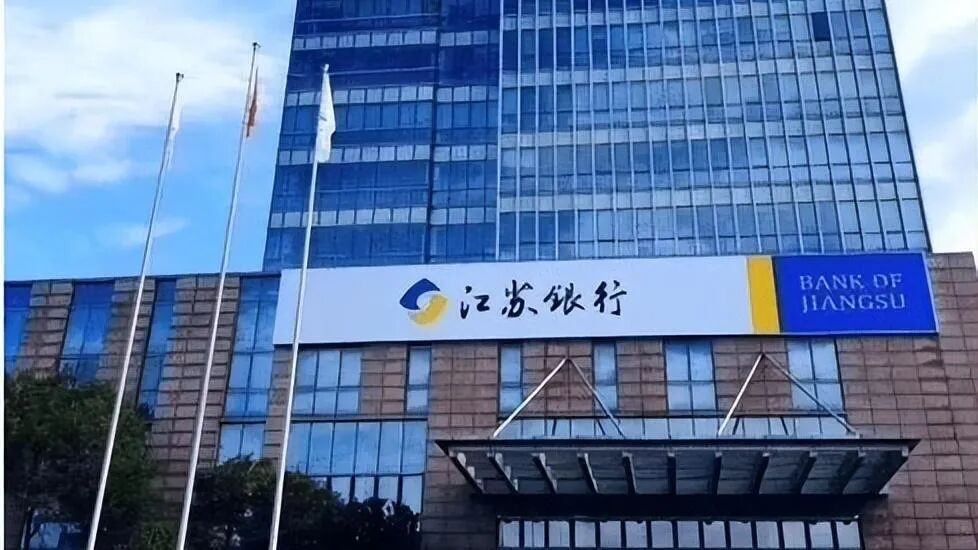
机构研究系列:03 江苏银行——从区域银行到系统重要性银行的跨越之路
Xin Lang Cai Jing· 2026-02-06 23:47
Core Viewpoint - Jiangsu Bank, as a systemically important bank in China, is undergoing significant strategic evolution to adapt to the changing banking landscape, focusing on high-quality development while maintaining its scale advantage [2][4][49]. Group 1: Background and Purpose - Jiangsu Bank is the largest legal person bank in Jiangsu Province and plays a crucial role in the development of urban commercial banks and the Chinese banking industry [2]. - The research aims to analyze Jiangsu Bank's strategic evolution since its establishment in 2007, focusing on its current strategic layout and future development direction [2]. Group 2: Strategic Evolution Process - **Foundation and Scale Breakthrough Period (2007-2015)**: Jiangsu Bank was established through the merger of ten urban commercial banks, focusing on resource integration and local market penetration, achieving total assets of over 1 trillion yuan by 2014 [3]. - **Structural Optimization and Innovation Breakthrough Period (2016-2020)**: The bank went public in 2016, shifting its focus from scale expansion to quality and efficiency, establishing a "four modernization" development vision [4][5]. - **High-Quality Development and Strategic Deepening Period (2021-Present)**: Jiangsu Bank has set five strategic goals for high-quality development, emphasizing value creation, customer service, and political integrity [6][7]. Group 3: Current Strategic Statements - **Top-Level Strategic Positioning**: Jiangsu Bank's mission is to enhance people's quality of life through innovative financial services, with a vision of becoming a leading bank characterized by intelligence, specialization, internationalization, and comprehensiveness [8]. - **Five Strategic Goals**: The bank aims to be the most valuable bank, a service leader, an intelligent innovator, an employee-satisfied bank, and a politically robust bank, with each goal supporting the others [9][10]. Group 4: Business Development Strategies - **Corporate Business**: Jiangsu Bank focuses on strengthening corporate business, particularly in manufacturing and infrastructure, achieving a corporate deposit balance of 14,197 billion yuan, a 22.20% increase year-on-year [11]. - **Retail Business**: The bank aims to expand its retail business, with retail AUM exceeding 1.59 trillion yuan, marking a historic high [12]. - **Financial Market Business**: Jiangsu Bank is enhancing its financial market capabilities, with financial investment assets reaching 18,833 billion yuan, a 23.38% increase [13]. - **Digital Financial Development**: The bank is accelerating its digital transformation, with significant advancements in AI applications and digital financial services [14]. - **Regional Layout**: Jiangsu Bank maintains a strong presence in Jiangsu and extends its services to major economic regions [15][16]. - **ESG Strategy**: The bank integrates ESG principles into its operations, actively participating in sustainable finance initiatives [17]. Group 5: Comparative Analysis - **Comparison with Similar Banks**: Jiangsu Bank's asset scale is 3.95 trillion yuan, ranking it among the top urban commercial banks, with a focus on balanced development across various financial sectors [29][30]. - **Strengths and Weaknesses**: Jiangsu Bank has notable advantages in asset quality and regional presence but faces challenges in retail business proportion and internationalization [37][41][42]. Group 6: Future Strategic Directions - **"15th Five-Year" Planning**: Jiangsu Bank is preparing for its next strategic phase, focusing on clearer positioning and practical development goals, with expected revenue growth rates of 6.9% to 7.6% from 2025 to 2027 [44][45]. - **Key Development Areas**: The bank aims to enhance its technology finance services, green finance initiatives, and wealth management capabilities, with projected growth in these areas [46].


信贷投放“开门红”:结构优化成新主线
Xin Lang Cai Jing· 2026-02-06 18:56
Core Viewpoint - The recent focus on the "opening red" credit issuance by listed banks indicates a proactive approach to secure market share and optimize credit resource allocation in 2026, the first year of the 14th Five-Year Plan [1][2][3] Group 1: Credit Issuance Trends - Nearly one-third of the listed banks responding to institutional surveys reported a strong start to credit issuance in 2026, with expectations for January's credit issuance to exceed 5 trillion yuan [1][2] - The overall credit issuance in January 2026 is projected to be around 5.2 trillion yuan, accounting for 32% of the annual loan total, reflecting a slight increase compared to 2025 [2] - Analysts predict that the total social financing in January 2026 will be approximately 5.5 to 5.6 trillion yuan, with a year-on-year increase of about 300 billion yuan [3] Group 2: Structural Optimization of Credit Resources - The structure of credit resource allocation is expected to show significant optimization, with a focus on public loans supporting the "opening red" initiative, particularly in technology innovation and green finance [5][6] - Banks are increasingly directing credit resources towards key areas such as technology innovation, green development, and inclusive finance, with public loans being the mainstay of credit growth [5][6] - The People's Bank of China is guiding funds towards supporting agriculture, small and micro enterprises, and private sectors through structural tools like lower re-lending and rediscount rates [5][6] Group 3: Business Model and Strategy Changes - The 2026 "opening red" period is characterized by new business model trends, including enhanced cooperation between banks and local governments, cross-regional collaboration, and innovative financial products tailored for small and micro enterprises [7][8] - Banks are focusing on the "Five Major Articles" of finance, with an emphasis on public finance, digital finance, and green finance, while also introducing new indicators for digital finance in their assessments [8] - The competitive landscape is intensifying, with banks adopting a more cautious approach to project selection and risk management, emphasizing quality over sheer volume in credit issuance [8][9]
体育金融跨界融合,海港足球俱乐部与上海银行达成战略合作
Xin Lang Cai Jing· 2026-02-06 10:40
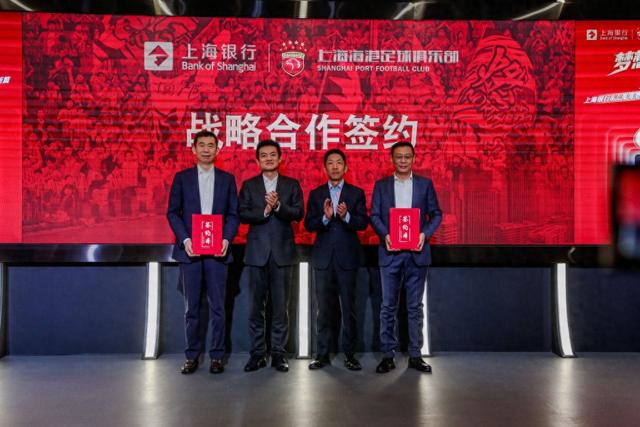
2月6日上午,上海海港足球俱乐部与上海银行战略合作签约仪式在上海浦东足球场顺利举行。 2026赛 季,上海银行将成为上海海港队胸前广告赞助商。 仪式开始前,与会嘉宾首先参观了浦东足球场内的足球文化体验中心,深入了解了海港俱乐部的发展历 程、荣誉成就与足球文化。随后,签约仪式正式举行,上海银行副行长俞敏华与上港集团副总裁、俱乐 部董事长张敏分别致辞。 俞敏华在致辞中表示,上海银行期望以此次合作为纽带,推动金融与体育深度融合,助力城市体育文化 建设。他指出,海港俱乐部取得优异成绩,可概括为三个字,"控"——球队在场上控制力强;"稳"—— 在中超联赛表现稳定、出色;"拼"——每位球员都拼劲十足。这背后离不开俱乐部的规范化运作和体系 化建设,而在青训方面的持续投入,生动诠释了上海追求卓越、开明睿智、大气谦和的城市精神。 俞敏华强调,上海银行作为本地金融机构,始终以"金融服务,让生活更美好"为初心,积极履行金融为 民的社会责任,参与上海文化、体育与公共生活建设。"未来上海银行将秉承长期主义与专业主义的服 务理念,在赛事支持、品牌共建、球迷互动及场景创新等方面与俱乐部深入合作,不断探索'金融+体 育'的融合模式。"他期待 ...

开年险资调研忙 新质生产力受关注
Zhong Guo Zheng Quan Bao· 2026-02-06 03:50
Core Insights - Insurance capital management is increasingly focused on deep research of individual stocks and industries, with significant interest in A-share listed companies as indicated by over 300 companies being researched since the beginning of 2026 [1][2] Group 1: Research Trends - A total of 96 insurance companies and 32 insurance asset management companies have participated in the research of A-share listed companies since the beginning of 2026 [2] - Key players such as Taiping Pension, Changjiang Pension, and China Life Pension have conducted over 30 research sessions each within a month [2] - Regional banks and sectors like electronic components, semiconductor materials, and devices are receiving heightened attention from insurance capital [2] Group 2: Investment Strategies - Insurance capital views company research as a crucial part of investment strategy, often focusing on high-quality stocks with long-term growth potential [3] - The demand for high dividend stocks is driven by the need for stable cash flow in a low-interest-rate environment, with banks being a primary focus for insurance capital [4] - Insurance capital is increasingly adopting a dividend strategy, favoring high dividend stocks to stabilize returns amid pressure on fixed-income yields [4] Group 3: Focus on New Productive Forces - Insurance capital is aligning with long-term investments in new productive forces, particularly in technology innovation and emerging strategic industries [5] - There is a focus on investing in sectors with real technological barriers and clear business models that can deliver performance [5] Group 4: Investment Paths - For mature technology leaders, insurance capital is likely to invest directly for excess returns, while for emerging tech sectors, indirect investments through ETFs or industry funds are preferred to manage risks [6] - The insurance capital sector is particularly interested in AI-driven technology and high-end manufacturing, with a strategy to invest in companies with clear business models and strong competitive advantages [6]



12家区域性银行迎155家机构调研!“开门红”信贷投放等成关注焦点
Guo Ji Jin Rong Bao· 2026-02-06 03:21
Core Viewpoint - The enthusiasm for institutional research on listed banks has increased since the beginning of the year, with a focus on credit allocation and interest margin management for 2026 [1][3]. Group 1: Institutional Research Activity - As of February 5, 2026, 12 regional banks have received 155 institutional research visits, totaling 327 interactions [1][3]. - Zhangjiagang Rural Commercial Bank has been actively engaging with multiple institutions, receiving five visits in less than a week [2]. - Shanghai Bank has been the most scrutinized, with 75 institutions participating in nine rounds of research since January 12, 2026 [3]. Group 2: Credit Allocation Focus - The "opening red" credit allocation for 2026 is a key focus, with banks reporting a positive start and increased public loan allocations compared to previous years [5]. - Banks like Hangzhou Bank and Zhangjiagang Bank are targeting key industries and projects, including infrastructure and technological upgrades [5][6]. - Analysts expect that new RMB loans in January 2026 will be around 5 trillion yuan, with a growth rate of approximately 6.2% [6]. Group 3: Deposit Structure Adjustments - The net interest margin for banks has been narrowing, with a historical low of 1.42% as of Q3 2025 [7]. - Banks are planning to optimize their liability structures and control deposit costs to stabilize interest margins [7][8]. - Institutions like Zijin Bank and Shanghai Bank are focusing on adjusting deposit sources and terms to manage costs effectively [7][8]. Group 4: Future Outlook on Interest Margins - Shanghai Bank anticipates a continued decline in the Loan Prime Rate (LPR) in 2026, which may lead to a further decrease in interest margins [8]. - Regional banks are expected to maintain stable earnings, although there may be a divergence in performance based on regional economic vitality [8].

大金融、大消费板块联袂逆势上涨
Mei Ri Shang Bao· 2026-02-05 22:56
Market Overview - The A-share market showed weakness, with the Shanghai Composite Index falling over 1% during the day and closing down 0.64% at 4075.92 points, while the Shenzhen Component Index and ChiNext Index dropped 1.44% and 1.55% respectively, with total trading volume around 2.19 trillion yuan, a decrease of over 300 billion yuan from the previous day [1] Financial Sector Performance - The financial sector, particularly banks and brokerages, performed actively in the afternoon, with notable gains in stocks such as Xiamen Bank, Chongqing Bank, and Shanghai Bank [2] - Institutions expect recent fiscal and monetary policies to support banks' performance, with a stable recovery in earnings projected for 2025 [2] - 中邮证券 forecasts that the insurance sector will see over 2 trillion yuan in new market funds by 2026, increasing demand for high-dividend assets [2] Brokerage Sector Insights - The brokerage sector also strengthened, with companies like Huayin Securities hitting the daily limit [3] - Major brokerages reported positive earnings for 2025, with CITIC Securities achieving revenue of 748.3 billion yuan and net profit of 300.51 billion yuan, both showing significant year-on-year growth [3] - Investment institutions believe that the brokerage sector will benefit from China's economic development and capital market reforms, enhancing its long-term investment value [3] Consumer Sector Trends - The consumer sector saw a collective rise, with retail, food and beverage, and tourism sectors performing well, highlighted by stocks like Maoye Commercial and Sanjiang Shopping hitting the daily limit [4] - The Ministry of Finance and other authorities announced a "zero tariff" policy for imported goods purchased by residents in Hainan Free Trade Port, which is expected to boost consumer spending [4] Food and Beverage Industry Analysis - The food and beverage industry is currently at a historical low in valuation, with potential investment opportunities emerging as market conditions improve [5] - The sector is expected to benefit from the application of AI technology, enhancing efficiency in retail operations, with the smart retail market projected to grow to approximately 64.5 billion yuan by 2030, at a compound annual growth rate of 22% [6]




开年险资调研忙 新质生产力受关注
Zhong Guo Zheng Quan Bao· 2026-02-05 22:23
Group 1 - The core viewpoint of the articles highlights the increasing interest of insurance capital in specific sectors and companies, particularly in regional banks and new productivity sectors, as indicated by their extensive research activities [1][2][3] - Since the beginning of 2026, over 300 A-share listed companies have been researched by insurance companies and asset management firms, with significant participation from 96 insurance companies and 32 asset management companies [2] - Key areas of focus for insurance capital include regional banks such as Shanghai Bank and Nanjing Bank, as well as sectors like electronic components, semiconductor materials, and devices [2][3] Group 2 - Insurance capital is increasingly favoring high-dividend stocks as a stable source of cash flow, particularly in a low-interest-rate environment, which drives the demand for equity assets [4] - The strategy of investing in high-dividend stocks is seen as a way to enhance returns and stabilize portfolios, with a focus on long-term holdings and dividend yields [4][5] - The shift towards high-dividend stocks is also a response to new accounting standards that increase profit statement volatility, making these investments more attractive [4] Group 3 - Insurance capital is aligning with the new productivity sector, which relies on technological innovation and strategic emerging industries, requiring long-term and stable capital support [5][6] - Investments are being directed towards technology leaders with clear business models and performance track records, while emerging tech sectors may be approached through industry-themed ETFs or funds to mitigate risks [6] - The focus on AI-driven technology and high-end manufacturing is expected to be central to future technological revolutions, with a commitment to direct investments in companies with strong competitive advantages [6]

开年险资调研忙新质生产力受关注
Zhong Guo Zheng Quan Bao· 2026-02-05 20:27
● 本报记者 薛瑾 "无论是配置盘还是交易盘,险资投资框架都是基于对个股和行业的深度研判。"一位保险资管人士日前 在接受中国证券报记者采访时表示。作为对个股和行业研判的重要环节,上市公司调研透露出险资一段 时间内的兴趣点。Wind数据显示,2026年开年以来,保险公司及保险资管公司合计调研A股上市公司逾 300家。从调研标的分布来看,部分区域性银行和新质生产力领域个股备受险资关注。 调研个股透露险资偏好 从调研机构看,截至2月5日,2026年以来有96家保险公司、32家保险资产管理公司参与调研A股上市公 司。保险公司中,太平养老、长江养老、国寿养老、人保养老在一个多月的时间里调研次数均超过30 次。保险资管公司中,泰康资产、华泰资产、新华资产、人保资产、国寿资产、大家资产调研次数居 前,也均达到30次以上。 从调研对象来看,部分区域性银行以及电子元件、电子设备和仪器、半导体材料与设备等领域关注度颇 高。 上海银行、南京银行、苏州银行、齐鲁银行、厦门银行等多家区域性银行,均位列险资调研行列,上海 银行被14家保险公司及保险资管公司调研,南京银行也得到10家保险公司及保险资管公司调研。息差变 化及管理举措、投资策 ...