
中国通号

Search documents
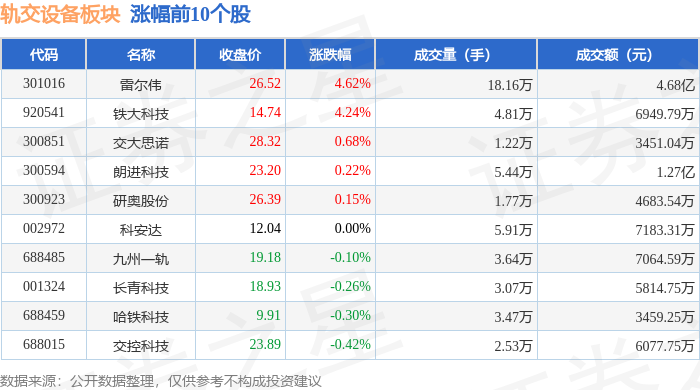
轨交设备板块1月14日跌1.35%,今创集团领跌,主力资金净流出4.99亿元
Zheng Xing Xing Ye Ri Bao· 2026-01-14 08:58
Market Overview - The rail transit equipment sector experienced a decline of 1.35% on January 14, with Jin Chuang Group leading the drop [1] - The Shanghai Composite Index closed at 4126.09, down 0.31%, while the Shenzhen Component Index closed at 14248.6, up 0.56% [1] Stock Performance - Notable gainers in the rail transit equipment sector included: - Railway Technology (301016) with a closing price of 26.52, up 4.62% on a trading volume of 181,600 shares and a transaction value of 468 million [1] - Tieda Technology (920541) closed at 14.74, up 4.24% with a trading volume of 48,100 shares and a transaction value of 69.5 million [1] - Conversely, Jin Chuang Group (603680) closed at 16.24, down 2.75% with a trading volume of 118,700 shares [2] Capital Flow - The rail transit equipment sector saw a net outflow of 499 million from institutional investors, while retail investors contributed a net inflow of 326 million [2] - The capital flow for key stocks included: - Railway Technology (301016) had a net inflow of 14.77 million from institutional investors, but a net outflow of 17.99 million from retail investors [3] - Tieda Technology (920541) experienced a net inflow of 4.54 million from institutional investors and a net inflow of 1.81 million from retail investors [3]




制造业PMI回暖叠加AI基建景气,科创机械ETF(588850)紧跟工业机械创新周期机遇
Xin Lang Cai Jing· 2026-01-14 05:56
Core Viewpoint - The industrial machinery sector in China is experiencing significant growth, particularly in the excavator market, with strong sales figures and a positive outlook for high-tech manufacturing and AI infrastructure. Group 1: Market Performance - As of January 14, 2026, the Shanghai Stock Exchange Sci-Tech Innovation Board Industrial Machinery Index rose by 1.12%, with notable increases in stocks such as Zhongkong Technology (up 10.04%), Aike Saibo (up 8.49%), and Xinqi Micro (up 8.43%) [1] - In December 2025, a total of 23,095 excavators were sold, marking a year-on-year increase of 19.2%, with domestic sales of 10,331 units (up 10.9%) and exports of 12,764 units (up 26.9%) [1] Group 2: Sales Data - For the entire year of 2025, a total of 235,257 excavators were sold, representing a year-on-year growth of 17%, with domestic sales of 118,518 units (up 17.9%) and exports of 116,739 units (up 16.1%) [1] Group 3: Manufacturing Insights - According to CICC analysis, the manufacturing PMI rose to 50.1% in December 2025, indicating an expansion phase, particularly in high-tech manufacturing (52.5%) and equipment manufacturing (50.4%) [1] - The AI infrastructure chain is expected to maintain high prosperity, with PCB equipment entering a new cycle of innovation and expansion, driven by increased computing power demand and the release of NVIDIA's Rubin series, which enhances the value of single-card PCBs [1] Group 4: ETF and Weighting - As of December 31, 2025, the top ten weighted stocks in the Sci-Tech Innovation Board Industrial Machinery Index accounted for 46.56%, including Zhongkong Technology, Green Harmonics, and others [2] - The Sci-Tech Machinery ETF (588850) closely tracks the Industrial Machinery Index, focusing on investment opportunities in urban rail equipment, industrial automation, and construction machinery [2]
国企改革成绩单发布
Di Yi Cai Jing Zi Xun· 2026-01-13 15:21
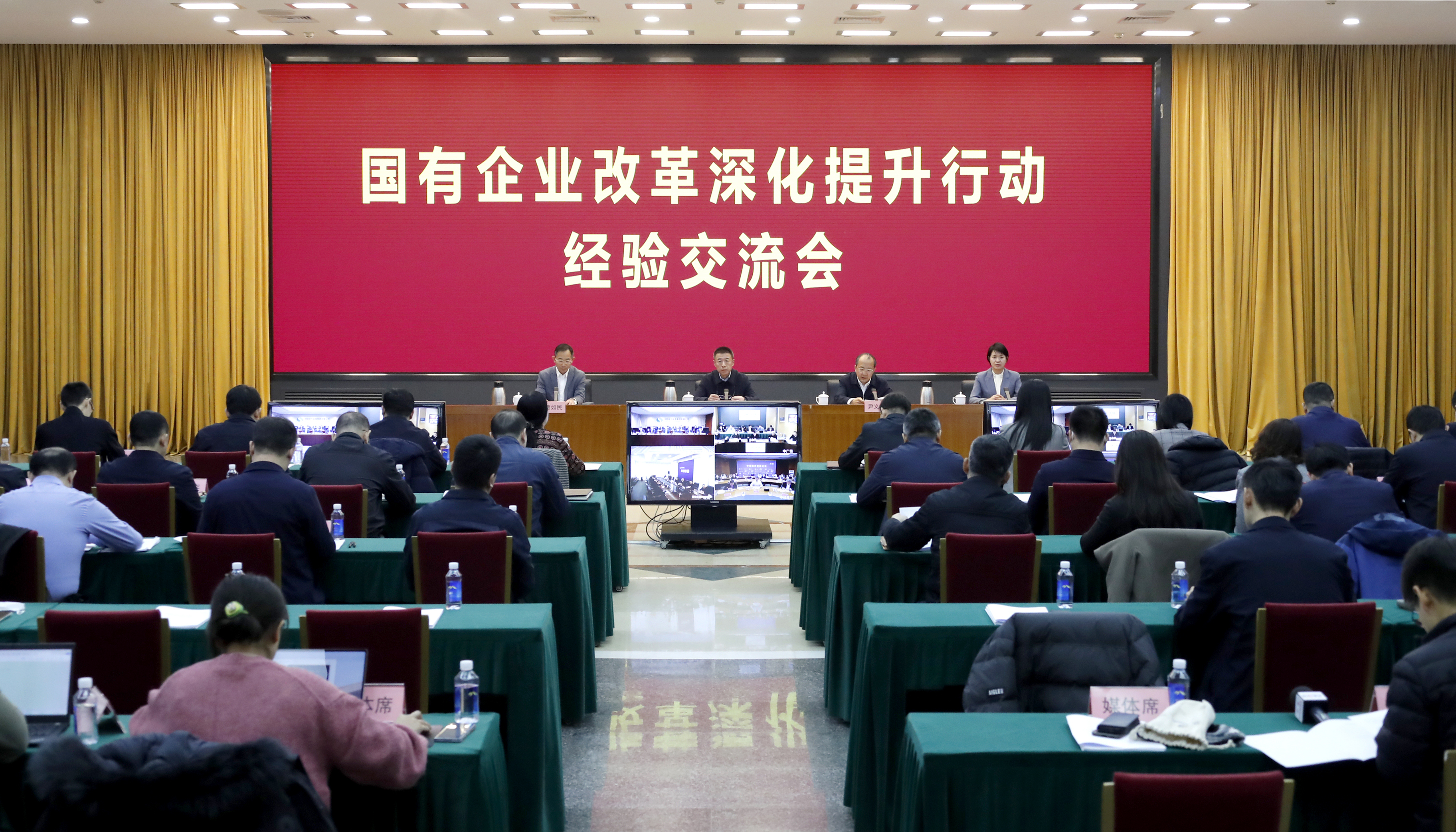
Core Insights - The three-year action plan for deepening state-owned enterprise (SOE) reform has largely been completed, with significant achievements in structural layout, technological innovation, corporate governance, and regulatory mechanisms [2][3] - The State-owned Assets Supervision and Administration Commission (SASAC) emphasizes that while the action plan has concluded, the reform process must continue to deepen and consolidate its results [2] Group 1: Achievements in Reform - SOEs have undergone fundamental changes through multiple rounds of reform, contributing significantly to economic and social development, although challenges remain in original innovation capabilities and safety support in key areas [3] - Central enterprises have established 97 original technology sources and 23 innovation consortia, promoting collaborative research and development [3] - Central enterprises have opened 134 pilot verification platforms and created over 800 application scenarios across 16 key industries [3] Group 2: Strategic Developments - In the strategic emerging industries, central enterprises achieved revenues exceeding 11 trillion yuan from January to November 2025, with significant investments in biopharmaceuticals and low-altitude economy sectors [4][5] - The SASAC is promoting the restructuring and professional integration of SOEs to enhance efficiency and focus on key sectors [5] Group 3: Future Reform Directions - The "14th Five-Year Plan" and subsequent actions have shifted SOE reform from institutional construction to efficiency enhancement, laying a foundation for deeper changes in the "15th Five-Year Plan" [7] - The SASAC plans to further improve the modern enterprise system with a focus on enhancing core functions and competitiveness of SOEs [7][8] - The restructuring of major state-owned enterprises, such as the merger between Sinopec and China Aviation Oil, is seen as a significant step towards optimizing layout and responding to international competition [8][9]


国企改革成绩单发布
第一财经· 2026-01-13 15:18
Core Viewpoint - The article discusses the significant progress made in the reform of state-owned enterprises (SOEs) in China, highlighting achievements in structural layout, technological innovation, corporate governance, and regulatory mechanisms, while also acknowledging existing challenges that need to be addressed for future reforms [4][5]. Reform Achievements - The State-owned Assets Supervision and Administration Commission (SASAC) reported that the reform of SOEs has fundamentally changed their overall appearance and contributed significantly to economic and social development, although issues such as insufficient original innovation capabilities remain [4][5]. - Central enterprises have established 97 original technology sources and led the construction of 23 innovation consortia, promoting collaborative research and development [5][6]. - In the strategic emerging industries sector, central enterprises achieved over 11 trillion yuan in revenue from January to November 2025, with significant investments in biopharmaceuticals and low-altitude economy sectors [5][6]. Strategic Restructuring and Integration - The SASAC has facilitated the restructuring and integration of state-owned enterprises to enhance their core competitiveness, with notable mergers involving assets exceeding 100 billion yuan [6][11]. - New central enterprises have been established, improving resource allocation efficiency, and various regions have initiated strategic reorganizations involving 229 primary enterprises [6][11]. Future Reform Directions - The "14th Five-Year Plan" and subsequent directives emphasize the need for SOEs to strengthen their core functions and enhance competitiveness, setting a clear direction for the next five years [9][11]. - The SASAC aims to deepen reforms by focusing on problem-solving and improving the effectiveness of reforms, with an emphasis on modern corporate governance and management systems [10][11]. - The recent merger between China Petroleum and Chemical Corporation and China Aviation Oil is highlighted as a significant event in the ongoing restructuring of central enterprises, aimed at optimizing their operational focus and responding to international competition [11].

国企改革成绩单发布,央企重组仍是新一轮改革重点
Di Yi Cai Jing· 2026-01-13 12:33
Core Insights - The three-year action plan for deepening state-owned enterprise (SOE) reform has been largely completed, with significant achievements in areas such as structural layout, technological innovation, corporate governance, and regulatory mechanisms [1][2] Group 1: Reform Achievements - The latest round of SOE reform has shown fundamental changes in the overall landscape of state-owned enterprises, contributing significantly to economic and social development, although challenges remain in original innovation capabilities and safety support in key areas [3] - Central enterprises have established 97 original technology sources and led the construction of 23 innovation consortia, promoting collaborative research and development [3] - In the strategic emerging industries, central enterprises achieved revenue exceeding 11 trillion yuan from January to November 2025, with significant investments in biopharmaceuticals and low-altitude economy sectors [4] Group 2: Strategic Restructuring and Integration - The State-owned Assets Supervision and Administration Commission (SASAC) has promoted the restructuring and integration of state-owned enterprises to enhance efficiency and focus on core competencies, resulting in the formation of new central enterprises and significant asset consolidations [5] - Strategic restructuring efforts have involved 116 groups across various regions, enhancing the core competitiveness of enterprises [5] Group 3: Future Reform Directions - The "14th Five-Year Plan" and subsequent actions have transitioned SOE reform from institutional construction to efficiency enhancement, laying a foundation for deeper changes in the "15th Five-Year Plan" period [8] - Future reforms will focus on improving the modern enterprise system with an emphasis on integrating party leadership into corporate governance and enhancing the effectiveness of state asset supervision [9] - The ongoing restructuring of central enterprises, such as the merger between China Petroleum and Chemical Corporation and China Aviation Oil, is seen as a significant step towards optimizing the layout and responding to international competition and green transformation [10]
人民日报连续六天刊发“钟才平”署名文章|宏观经济
清华金融评论· 2026-01-13 10:17
Core Viewpoint - The article emphasizes the importance of expanding openness and cooperation in China's economic development, highlighting the potential for China to provide new opportunities for the world through its large market and high-quality development [3]. Group 1: Market Expansion - China's market is continuously expanding, with a projected retail sales total of over 50 trillion yuan by 2025, driven by a growing middle-income group expected to exceed 800 million people in the next decade [3]. - The country imports over 20 trillion yuan annually and is a major export destination for nearly 80 countries, showcasing its openness to foreign products and services [3]. Group 2: Industrial Cooperation - China remains the world's largest manufacturing power, contributing to global supply chains with high-quality and reliable products, particularly in the renewable energy sector where costs have dropped by over 80% in the last decade [4]. - Future efforts will focus on enhancing international cooperation in industries like new energy and green minerals, aligning with the industrialization goals of developing countries [5]. Group 3: Investment Environment - China is optimizing its investment environment by easing foreign investment restrictions and aligning with international trade rules, which is attracting multinational companies to establish R&D centers in China [5]. - The country aims to expand market access in the service sector and support foreign enterprises in local production and supply chain collaboration [5]. Group 4: Belt and Road Initiative - The Belt and Road Initiative has evolved into a significant international cooperation platform, with over 150 countries benefiting from various projects, including transportation and social development [6]. - Future plans include enhancing connectivity and cooperation in areas like green development and digital economy [6]. Group 5: Domestic Market and Consumption - The article stresses the need to boost domestic consumption and investment to create a robust domestic market, which is essential for China's modernization strategy [12]. - It highlights the importance of meeting the diverse needs of the population, particularly in housing and service consumption, to drive economic growth [8][9]. Group 6: Policy Integration - The article discusses the necessity of integrating macroeconomic policies to enhance governance effectiveness, with a focus on maintaining a balance between fiscal and monetary policies [18]. - It emphasizes the importance of precise and effective macroeconomic policies to support sustainable economic growth and address external uncertainties [22].

中国通号涨2.16%,成交额2.11亿元,主力资金净流出120.56万元
Xin Lang Cai Jing· 2026-01-12 07:36
Group 1 - The core viewpoint of the news is that China Railway Signal & Communication Corporation Limited (China Tonghao) has shown a positive stock performance with a 3.84% increase year-to-date and a 2.16% increase on January 12, 2025, reaching a stock price of 5.68 yuan per share [1] - The company has a total market capitalization of 601.50 billion yuan and a trading volume of 2.11 billion yuan on January 12, 2025, with a turnover rate of 0.43% [1] - The main capital flow indicates a net outflow of 1.21 million yuan from major funds, with large orders accounting for 24.98% of purchases and 25.56% of sales [1] Group 2 - China Tonghao, established on December 29, 2010, and listed on July 22, 2019, primarily engages in design and integration, equipment manufacturing, and system delivery for railway communication and signaling [2] - The revenue composition of the company shows that 89.91% comes from railway traffic control systems, with design and integration services contributing 39.86%, system delivery services 28.37%, equipment manufacturing 21.68%, and engineering contracting 9.25% [2] - The company is classified under the machinery equipment industry, specifically in railway transportation equipment, and is associated with concepts such as state-owned enterprises, rail transportation, autonomous driving, high-speed rail, and H-shares [2] Group 3 - As of September 30, 2025, China Tonghao had 64,600 shareholders, a decrease of 0.68% from the previous period, with an average of 133,927 circulating shares per shareholder, an increase of 0.71% [3] - For the period from January to September 2025, the company achieved a revenue of 21.748 billion yuan, representing a year-on-year growth of 4.48%, while the net profit attributable to shareholders decreased by 3.16% to 2.284 billion yuan [3] Group 4 - Since its A-share listing, China Tonghao has distributed a total of 11.437 billion yuan in dividends, with 5.401 billion yuan distributed over the past three years [4] - As of September 30, 2025, the top ten circulating shareholders include Hong Kong Central Clearing Limited as the third-largest shareholder with 100 million shares, a decrease of 8.7029 million shares from the previous period [4] - Other significant shareholders include E Fund's SSE STAR 50 ETF and Huaxia's SSE STAR 50 component ETF, both of which have seen reductions in their holdings [4]
从延安通高铁感悟欣欣向荣的中国
Ren Min Ri Bao· 2026-01-12 04:03
当复兴号驶向宝塔山,西延高铁开通了,陕北革命老区从此迈入"高铁时代"。 随着陕西西安至延安高铁开通,中国高铁营业里程突破5万公里,领跑世界。 5万公里,织就全球最大、最先进的高铁网,营业里程超过全球其他国家总和两倍,人流、物流、信息 流、资金流相互交织,生机涌动。 建不建?怎么建?面对京沪高铁构想,我们曾激辩10余年。《中长期铁路网规划》的发布实施,让中国 高铁迈入跨越式发展新阶段。 习近平主席发表二〇二六年新年贺词时指出:"大家拼搏进取、耕耘奉献,铸就了欣欣向荣的中国。" 路,联通大江南北,串联历史与现实。从西延高铁开通看发展的确定性、创造性、机遇性,我们更能感 悟一个欣欣向荣的中国。 (一) 历史地看,从西延高铁开通,可以看到中国发展的确定性。 1991年12月26日,延安结束无铁路的历史,延安到西安需14小时;2012年,西安到延安开通动车,全程 2.5小时;2025年12月26日,开通后的西延高铁,设计时速达350公里。 当全长299公里的西延高铁融入全国高铁网,2004年发布的首版《中长期铁路网规划》更显"奠基石"的 意义。 循序渐进,步步为营。2008年、2016年,连续发布两版《中长期铁路网规划 ...
美国专家:中国又一项科技打破世界纪录,先进得不像是中国发明!
Sou Hu Cai Jing· 2026-01-10 14:55
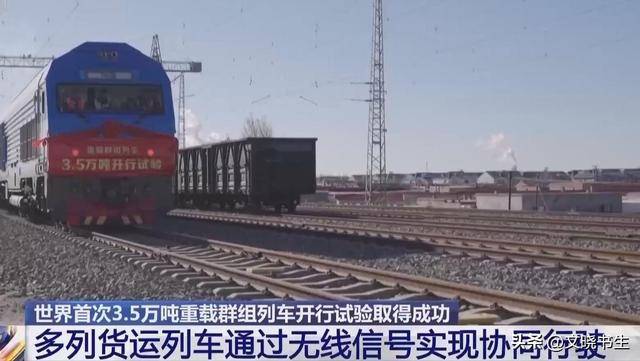
Core Viewpoint - China's successful trial of the world's first 35,000-ton heavy-haul train marks a significant breakthrough in global heavy-haul railway freight, transforming China from a follower to a rule-maker in this field [1][27]. Group 1: Technological Breakthrough - The 35,000-ton heavy-haul train can carry the equivalent weight of 500 heavy main battle tanks, utilizing wireless signals for operation instead of mechanical couplings [1][15]. - This innovation resolves a long-standing technical bottleneck that has plagued countries like the United States and Australia, improving the efficiency of coal transportation from the west to the east by over 50% [1][27]. - The train operates with a "virtual coupling" system, which eliminates traditional mechanical connections, allowing for real-time communication and coordination between multiple train units [18][20]. Group 2: Global Context and Challenges - Heavy-haul railways are critical for transporting bulk commodities like coal and grain, with China transporting tens of billions of tons annually [3]. - Traditional heavy-haul systems in the U.S. and Australia have faced significant challenges, including safety issues and high infrastructure costs, due to outdated technologies and operational models [5][9][11]. - The U.S. has experienced a rising number of train derailments, with incidents increasing from 1,095 in 2021 to 1,164 in 2022, highlighting the risks associated with their current heavy-haul practices [7]. Group 3: Economic and Strategic Implications - The successful implementation of the 35,000-ton heavy-haul train provides a robust foundation for China's national strategies like "West-to-East Coal Transport" and "North-to-South Coal Transport" [27]. - The technology offers a low-cost, adaptable solution for global heavy-haul railway upgrades, requiring only the installation of group system equipment on existing locomotives, significantly reducing costs compared to Western methods [27][29]. - Several countries along the "Belt and Road" initiative have expressed interest in adopting this technology, indicating a shift in global railway technology standards towards China [29]. Group 4: Future Prospects - The breakthrough signifies a revolutionary change in global heavy-haul transportation, demonstrating that efficient, safe, and economical heavy-haul transport is achievable [31]. - This development showcases China's advancements in core technologies such as 5G, BeiDou navigation, and artificial intelligence, reinforcing its position as a leader in railway technology innovation [31].
轨交设备II:铁路十四五圆满收官,路网与效能双突破
Huafu Securities· 2026-01-10 08:24
Investment Rating - The industry rating is "Outperform the Market," indicating that the overall return of the industry is expected to exceed the market benchmark index by more than 5% in the next 6 months [6][13]. Core Insights - The "14th Five-Year Plan" for railways has been successfully completed, with the national railway operating mileage reaching 165,000 kilometers, a 12.8% increase from the previous five-year plan. High-speed rail has expanded to over 50,400 kilometers, marking a 32.98% growth, establishing the world's largest and most advanced high-speed rail network [3][4]. - During the "14th Five-Year" period, the railway transportation sector has seen significant improvements, with a total of 16.2 billion passengers and 19.6 billion tons of cargo transported, representing growth of 8.7% and 24.1% respectively compared to the previous five-year plan [4]. - The government has set ambitious targets for the future, aiming for a railway network of approximately 200,000 kilometers by 2035, including around 70,000 kilometers of high-speed rail. This long-term goal is expected to create vast market opportunities for the rail transit equipment industry [5]. Company Summaries - China CNR Corporation: A global leader in rail transit equipment, maintaining the top position in revenue within the industry [5]. - China Railway Signal & Communication Corporation: A leading provider of rail transit control systems, recognized for its technological expertise [5]. - Times Electric: A prominent supplier of traction and conversion systems, consistently leading the domestic market [5]. - Sifang Railway: A key supplier in the field of high-speed rail comprehensive monitoring, specializing in railway safety assurance [5]. - China High-Speed Railway Technology: A leading enterprise in intelligent operation and maintenance equipment for rail transit, serving a wide range of clients including national railways and urban rail systems [5]. - Huifeng Technology: Focused on providing operation and maintenance equipment and integrated solutions for rail transit, with extensive experience in technology development and project implementation [5].