九识智能

Search documents
九识智能夺冠!推动智慧物流站上国际舞台
Sou Hu Cai Jing· 2025-11-30 14:47
Core Insights - The company, Jiushi Intelligent, has gained significant attention in the logistics industry by winning the global championship in the "Warehouse Robotics and Drones" category at the CMA CGM Startup Awards, showcasing its innovative technology solutions [1][3] Group 1: Technology and Innovation - Jiushi Intelligent's RoboVan series technology addresses multiple pain points in warehousing, demonstrating adaptability and efficient scheduling capabilities in complex scenarios, which impressed the judging panel [1] - The recognition from CMA CGM indicates that Jiushi Intelligent's technological approach aligns well with the global logistics industry's trends towards green transformation and digitalization, particularly in the context of increasing carbon neutrality goals [3] Group 2: Strategic Opportunities - Following the award, Jiushi Intelligent has been selected for the ZEBOX international accelerator program initiated by CMA CGM, providing the company with valuable opportunities for deep pilot projects in real business scenarios [5] - This partnership with CMA CGM will allow Jiushi Intelligent to directly engage with core demands in large logistics operations, enabling the validation of its technology solutions across different regions and models, thus laying the groundwork for future global expansion [5] Group 3: Future Outlook - Winning the global championship marks a significant milestone for Jiushi Intelligent, enhancing its brand influence and setting higher international expectations for the company [5] - The company plans to continue developing its RoboVan technology system, focusing on the integration of automation, greening, and digitalization, while collaborating with global partners to explore more efficient supply chain structures [5]


汽车行业2026年年度策略报告:高端化+出口驱动总量,智驾+机器人带动产业升级-20251129
CAITONG SECURITIES· 2025-11-29 08:02
Group 1 - The overall demand for passenger vehicles is expected to remain stable, with incremental growth driven by high-end market expansion and exports [3][6][35] - The penetration rate of new energy vehicles (NEVs) is stabilizing, with domestic market competition gradually reaching a steady state [23][35] - The average price of passenger vehicles is anticipated to increase, particularly in the mid-to-high-end market, as domestic brands continue to replace foreign brands [6][35] Group 2 - The heavy truck market faces pressure domestically, but exports are expected to recover as the pressure on sales to Russia eases [46][50] - The export of medium and large buses is projected to maintain rapid growth, with profitability largely dependent on the European market [55] - The rapid growth of AI data centers is expected to create additional demand in the diesel engine sector [3][46] Group 3 - The smart driving sector is entering a new phase of resonance between China and the US, with advancements in L2 and L3 driving standards expected [58][63] - The Robotaxi market in the US is anticipated to experience explosive growth, driven by companies like Tesla and Waymo [72][75] - The integration of robotics into the automotive supply chain is becoming increasingly significant, with automotive suppliers likely to extend their capabilities into the robotics sector [87][90] Group 4 - Recommended stocks in the passenger vehicle sector include Jianghuai Automobile, BYD, and BAIC Blue Valley, with a focus on high-end vehicles and exports [4][94] - In the robotics sector, recommended stocks include Top Group, Yinlun, and BlueDye Technology, with a focus on companies capable of transitioning into robotics [4][94] - For smart driving, recommended stocks include Bertel, Horizon, and Pony.ai, focusing on the growth of L2 driving technology and Robotaxi commercialization [4][94]




2025「中国最佳ESG投资机构」系列名册发布
3 6 Ke· 2025-11-28 12:03
Core Insights - By the end of 2025, ESG has become a critical milestone in China's development, transitioning from a mere requirement to a fundamental criterion for survival in the market [1] - The "14th Five-Year Plan" emphasizes ESG policies, aiming for a comprehensive shift towards carbon emission control and the establishment of a green standard system [1] - Local institutions are increasingly adopting "patient capital" narratives, focusing on long-term social value and industrial chain strengthening [1] Group 1: ESG Development in China - ESG has evolved from a political correctness to a strong anchor for local institutions seeking certainty and value reconstruction [1] - The investment landscape is shifting from purely "green energy" to "low-carbon transformation" in high-carbon industries, with a focus on digital decarbonization technologies [2] - Investment institutions are diversifying their understanding and practices of ESG, implementing various initiatives such as energy-saving measures and establishing ESG-focused funds [2] Group 2: ESG Investment Practices - The 2025 "Top 50 Best ESG Investment Institutions" list was compiled based on extensive research among active investment institutions, evaluating their ESG practices across six core dimensions [3] - The list highlights 50 institutions recognized for their innovative ESG practices and contributions to sustainable development [3] Group 3: Notable ESG Investment Cases - The "Best ESG Investment Practice Cases" for 2025 were categorized into three main areas: deep decarbonization and industrial transformation, digital empowerment and governance optimization, and circular economy and supply chain [11] - Examples include: - Highview Solar's achievement of 100% green electricity in production, significantly reducing energy consumption in the photovoltaic industry [11] - Reshaping Technology's focus on hydrogen fuel cells, contributing to zero emissions in transportation [12] - Aneng Logistics' digital transformation leading to reduced fuel consumption and carbon emissions while supporting rural development [18] - The 2025 ESG rankings indicate a fundamental shift in the strategic focus of investment institutions towards green transformation and social equity [20]

2025「中国最佳ESG投资机构」系列名册发布
36氪· 2025-11-28 11:13
Core Viewpoint - By the end of 2025, ESG has transitioned from a mere requirement to a critical baseline for survival in China's capital market, becoming a powerful anchor for local institutions seeking certainty and value reconstruction [3][4]. Group 1: ESG Development in China - The "14th Five-Year Plan" has clarified ESG policy guidelines, promoting a comprehensive shift towards carbon emission control and requiring enterprises to enhance governance related to technology ethics and safety resilience [3]. - ESG is now seen as a fundamental infrastructure in China's capital market, with VC/PE investments increasingly focusing on long-term social value and industrial chain enhancement [3][4]. Group 2: Investment Trends and Strategies - Despite a slowing overall market, VC/PE strategies are shifting from purely "green energy" to "low-carbon transformation" in high-carbon industries, with a focus on digital decarbonization technologies in sectors like steel, chemicals, and building materials [4]. - Investment institutions are diversifying their understanding and practices of ESG, implementing measures such as energy-saving initiatives, joining international ESG organizations, and establishing dedicated ESG funds and teams [4]. Group 3: ESG Practices and Case Studies - A new survey for the "Top 50 Best ESG Investment Institutions in China 2025" has been launched, evaluating institutions based on their ESG practices across six core dimensions [5]. - The survey results highlight significant ESG practice cases, categorized into three main types: deep decarbonization and industrial transformation, digital empowerment and governance optimization, and circular economy initiatives [9][11]. Group 4: Notable ESG Cases - Notable cases include IDG Capital's investment in high景太阳能, achieving 100% green electricity in production, and 凯辉基金's support for hydrogen fuel cell technology, which is crucial for zero-emission transportation [12][13]. - Other significant examples include the investment in industrial energy efficiency by 德弘资本 and the promotion of hydrogen equipment technology by 北汽产投, both contributing to substantial carbon reduction [14][15]. Group 5: Conclusion on ESG's Role - The 2025 ESG rankings reveal a fundamental shift in the strategic focus of investment institutions towards becoming deep participants and value creators in green transformation and corporate governance [21]. - The belief is that investments are not just in current green assets but in future low-carbon assets, emphasizing the long-term vision of sustainability [22].

“无人物流车”第一股即将诞生,但依然难过上路关
3 6 Ke· 2025-11-28 08:03
Core Insights - The article discusses the rapid growth and challenges in the unmanned logistics vehicle sector, highlighting significant investments exceeding 8 billion yuan and the industry's response to public sentiment amid controversies surrounding technology and safety [2][6][18]. Investment and Market Growth - The unmanned logistics vehicle sector has seen unprecedented funding, with over 8 billion yuan disclosed in investments as of now [2][6]. - Major funding rounds include 1 billion USD for Jiusi Intelligent and over 600 million USD for New Stone Technology, marking significant transactions in China's private equity landscape [2][6]. - The market is projected to reach 263.4 billion yuan by 2030, a 5.4-fold increase from 2025 [8][11]. Technological Advancements and Cost Reduction - The cost of unmanned logistics vehicles has drastically decreased from over 1 million yuan in 2018 to as low as 20,000 yuan in 2023, driven by domestic production of key components [10][11]. - The industry is transitioning from a "sell vehicles" model to a "software subscription" model, enhancing revenue potential through ongoing service fees [12][13]. Industry Dynamics and Competition - A price war has emerged among companies, with aggressive pricing strategies being employed to capture market share [12][13]. - Companies like Jiusi Intelligent and New Stone Technology are competing on price and financing options, with Jiusi offering vehicles at 1.98 million yuan and New Stone providing zero down payment plans [12][13]. Regulatory and Safety Concerns - Despite the rapid growth, there are significant concerns regarding the safety and reliability of unmanned logistics vehicles, highlighted by several accidents and public skepticism [14][15][18]. - The lack of uniform road rights across cities poses a challenge for widespread deployment, with companies like New Stone Technology actively working to secure necessary permits [16][18]. Future Outlook - The industry is expected to evolve, with projections indicating that unmanned logistics vehicles could replace traditional delivery vehicles, achieving a penetration rate of nearly 15% by 2030 [17][18]. - The ongoing competition and regulatory hurdles will shape the future landscape of the unmanned logistics vehicle market, as companies strive to balance innovation with public trust [18][20].

国泰海通:物流无人车从快递起步 未来重点在渠道运营能力
智通财经网· 2025-11-25 09:00
Core Insights - The logistics unmanned vehicle market is transitioning from early-stage applications in express delivery to a broader urban delivery market, including fast-moving consumer goods, cross-regional e-commerce, and local fresh produce, successfully overcoming the scale delivery threshold [1][3] - The commercial model for single vehicles has been validated, leading the industry into a phase of scale expansion, with a focus on channel operation capabilities to develop customer and scenario outreach, as well as market capacity and road rights [1][5] Group 1 - Unmanned delivery vehicles are expected to achieve commercial viability first in cargo and low-speed scenarios, with Robovan logistics unmanned vehicles being one of the fastest progressing applications in the unmanned driving sector [2] - The urban delivery market has a vehicle ownership of 14.59 million units, indicating that logistics unmanned vehicles can replace existing vehicles such as vans and light trucks, suggesting a market size significantly larger than just express delivery [3][4] - The characteristics of urban delivery scenarios, such as fixed routes, low-speed driving, and short-haul transport, enhance the feasibility of unmanned driving, with the market for logistics unmanned vehicles projected to reach 65.75 billion yuan by 2030 [4] Group 2 - The cost of logistics unmanned vehicles has decreased significantly from over one million yuan to below 100,000 yuan due to technological optimization and reduced prices of key components, laying the foundation for large-scale deployment [4] - The replacement of micro vans with logistics unmanned vehicles can reduce costs per delivery by over 50%, with profitability expected when cumulative sales reach 40,000 units [5] - The competitive landscape includes three types of participants: specialized unmanned driving companies, logistics platform companies with ecological advantages, and traditional passenger vehicle manufacturers entering the logistics unmanned vehicle market by 2025 [5]

无人车在农村哐哐干活
3 6 Ke· 2025-11-24 10:40
Core Insights - The adoption of unmanned delivery vehicles is rapidly increasing in the logistics industry, particularly in remote areas where traditional delivery methods are inefficient [2][3][12] - Companies like Zhongtong, Jitu, and SF Express are significantly investing in unmanned vehicles, with Zhongtong deploying nearly 3,000 units and plans for further expansion [2][3][12] - The cost of unmanned vehicles has decreased dramatically, making them more accessible for logistics companies, with prices dropping from over 1 million yuan in 2018 to around 40,000-70,000 yuan by 2025 [16][17] Industry Trends - Unmanned vehicles are being utilized in various provinces, including Xinjiang and Gansu, to enhance delivery efficiency and reduce operational costs [3][5][6] - The technology behind unmanned vehicles is continuously evolving, with companies like Jiushi Intelligent and New Stone Technology making significant advancements in hardware and software [9][16] - The logistics sector is increasingly recognizing the potential of unmanned vehicles to address labor shortages and improve delivery times, especially in rural and hard-to-reach areas [6][12][19] Financial Implications - The operational cost savings from using unmanned vehicles are substantial, with estimates suggesting savings of up to 2.5 million yuan annually in fuel and labor costs for companies [6][19] - The shift to unmanned delivery is supported by government initiatives, with some local governments offering financial incentives for companies investing in unmanned technology [12][19] Challenges and Considerations - Despite the growing acceptance of unmanned vehicles, concerns about safety and liability in the event of accidents remain a significant issue for the industry [18][19] - The uneven distribution of regulatory approvals for unmanned vehicles across different regions poses challenges for widespread adoption [12][20] - Companies are actively working to address operational challenges, such as battery life and vehicle durability, to enhance the reliability of unmanned delivery systems [19][20]
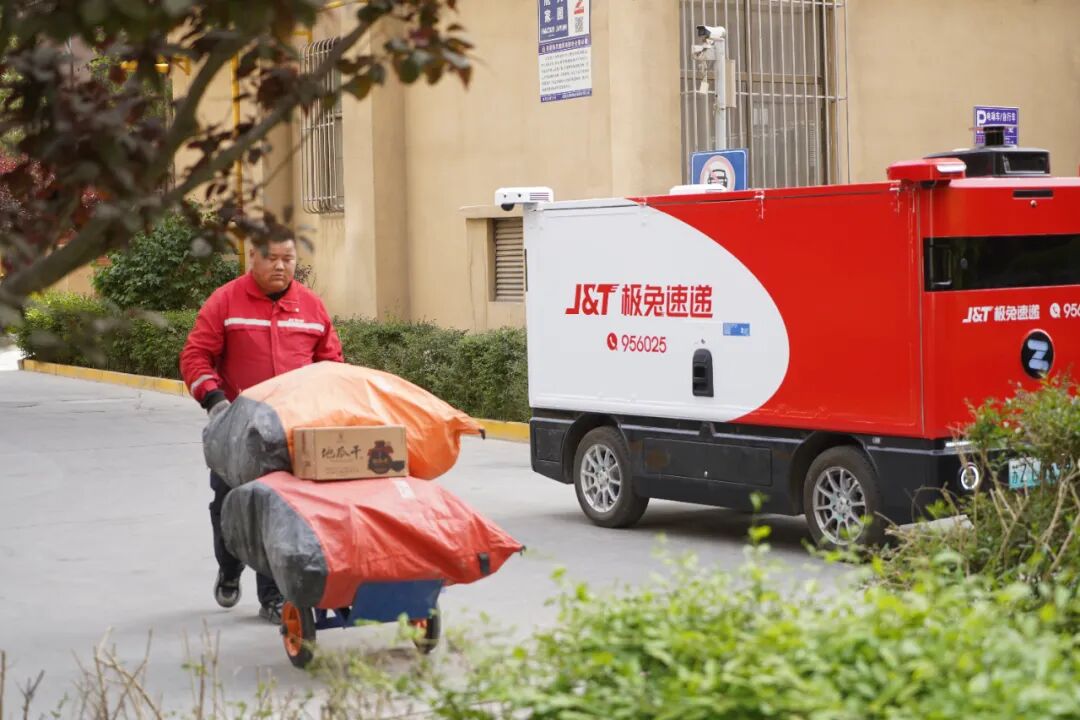
无人车,在农村哐哐干活
创业邦· 2025-11-24 10:13
Core Viewpoint - The rapid adoption of unmanned delivery vehicles in the logistics industry is transforming operations, particularly in remote areas where traditional delivery methods are inefficient [3][4][5]. Group 1: Unmanned Vehicle Adoption - Unmanned delivery vehicles are increasingly being utilized across various provinces, with over 6,000 units expected to be in operation by the end of 2024, surpassing the number of unmanned taxis [4][6]. - Major logistics companies like Zhongtong, Jitu, and SF Express are investing heavily in unmanned vehicles, with Zhongtong deploying nearly 3,000 units and plans for further expansion [4][6]. - The cost of unmanned vehicles has significantly decreased, with prices dropping from over 1 million yuan in 2018 to a range of 40,000 to 70,000 yuan by 2025, making them more accessible for logistics companies [22][23]. Group 2: Operational Efficiency and Cost Savings - Unmanned vehicles can operate efficiently in sparsely populated areas, reducing costs associated with fuel and labor, with some operators reporting savings of up to 25,000 yuan annually [8][9]. - The ability to deliver packages without the need for a driver allows logistics companies to serve remote locations more effectively, with unmanned vehicles capable of making multiple trips per day [8][9]. - In cities like Qingdao, unmanned vehicles are being integrated into urban logistics networks, addressing challenges such as driver shortages during peak times [9][10]. Group 3: Technological Advancements - Continuous improvements in unmanned vehicle technology, including hardware and software updates, are enhancing their operational capabilities in various weather conditions [12][23]. - Companies like Jiushi Intelligent are iterating their vehicle models annually to adapt to different climates and road conditions, ensuring stable performance [12][23]. - The integration of automated production processes is reducing manufacturing costs and improving the efficiency of unmanned vehicle production [23][24]. Group 4: Regulatory Environment and Challenges - The successful deployment of unmanned vehicles is contingent upon local government regulations and the establishment of road rights, with over 100 cities having opened up for unmanned delivery operations [16][28]. - Companies are actively engaging with local authorities to ensure compliance and safety, often requiring special permits and ongoing monitoring of unmanned vehicle operations [15][16]. - Despite the growing acceptance of unmanned vehicles, concerns about liability and accident management remain, necessitating clear legal frameworks [26][28].

无人车在农村哐哐干活
经济观察报· 2025-11-22 10:37
Core Viewpoint - The rapid adoption of unmanned delivery vehicles in the logistics industry is driven by their cost-effectiveness and operational efficiency, particularly in remote areas where traditional delivery methods are less viable [1][3][5]. Group 1: Cost Efficiency and Operational Benefits - Unmanned vehicles can operate with lower costs compared to traditional delivery methods, saving significant amounts on fuel, labor, and maintenance [6][7]. - For instance, using unmanned vehicles can save approximately 25,000 yuan in fuel, 20,000 yuan in insurance and maintenance, and another 20,000 yuan in labor costs annually [7]. - The ability to deliver smaller quantities of packages efficiently makes unmanned vehicles particularly advantageous in sparsely populated areas [2][6]. Group 2: Market Growth and Adoption - The number of unmanned delivery vehicles is expected to exceed 6,000 by the end of 2024, significantly outpacing other autonomous vehicle applications like unmanned taxis [3]. - Major logistics companies such as Zhongtong, Jitu, and Shunfeng are investing heavily in unmanned vehicles, with Zhongtong alone deploying nearly 3,000 units [3][8]. - The cost of unmanned vehicles has decreased significantly, with prices dropping from over 1 million yuan in 2018 to around 40,000 to 70,000 yuan by 2025 [22][23]. Group 3: Technological Advancements - Continuous improvements in technology, including hardware and software, are enhancing the reliability and efficiency of unmanned vehicles [11][23]. - Companies are innovating their business models, such as offering lower hardware prices combined with software subscription services, making it more accessible for logistics providers [23] - The deployment of unmanned vehicles is not limited to rural areas; urban centers like Shenzhen and Qingdao are also integrating them into their logistics networks [8][12]. Group 4: Regulatory Environment and Challenges - The successful operation of unmanned vehicles is contingent upon local government regulations and the establishment of road rights [15][16]. - While some cities have embraced unmanned delivery vehicles, the distribution of these approvals is uneven across the country [15]. - The logistics industry is actively engaging with local governments to ensure compliance and safety measures are in place for unmanned vehicle operations [14][17]. Group 5: Future Outlook - Despite existing concerns regarding safety and operational challenges, the long-term outlook for unmanned vehicles in the logistics sector remains positive [25][26]. - The industry is witnessing a shift towards more automated and efficient delivery systems, with ongoing support from government initiatives aimed at promoting the use of unmanned vehicles [26][27].

你的快递,是无人车送的
Jing Ji Guan Cha Wang· 2025-11-22 04:40
Core Insights - The article highlights the rapid adoption and operational efficiency of unmanned delivery vehicles in the logistics sector, particularly in remote areas where traditional delivery methods are less viable [2][3][4][5][6]. Group 1: Unmanned Vehicle Adoption - Unmanned delivery vehicles are increasingly being deployed across various provinces, with over 6,000 units expected to be operational by the end of 2024, surpassing the number of unmanned taxis [3][10]. - Major logistics companies like Zhongtong, Jitu, and Shunfeng have invested heavily in unmanned vehicles, with Zhongtong deploying nearly 3,000 units and plans for further expansion [3][4]. - The cost of unmanned vehicles has significantly decreased, with prices dropping from over 1 million yuan in 2018 to a range of 40,000 to 70,000 yuan by 2025, making them more accessible for logistics companies [13][14]. Group 2: Operational Efficiency and Cost Savings - Unmanned vehicles can operate in sparsely populated areas, reducing delivery costs significantly. For instance, one operator reported saving 200 yuan daily on fuel and labor costs [2][4]. - In rural areas, unmanned vehicles can deliver packages even when not fully loaded, making operations more cost-effective compared to traditional delivery methods [4][5]. - The use of unmanned vehicles has allowed logistics companies to address labor shortages, particularly in regions where attracting delivery personnel is challenging [5][6]. Group 3: Technological Advancements - Continuous improvements in unmanned vehicle technology, including better sensors and algorithms, have enhanced their operational reliability in various weather conditions [7][14]. - Companies like Jiushi Intelligent are iterating their vehicle models annually to adapt to different climates and road conditions, ensuring stable performance [7][12]. - The integration of software updates and real-time data collection is helping to optimize the performance of unmanned vehicles in real-world scenarios [7][12]. Group 4: Regulatory Environment and Challenges - The deployment of unmanned vehicles is contingent on local government regulations, with over 100 cities having opened road rights for these vehicles, though the distribution remains uneven [10][12]. - Companies are actively engaging with local authorities to establish operational frameworks and ensure compliance with safety standards [9][10]. - Despite the growing acceptance of unmanned vehicles, concerns about liability and accident management remain, necessitating clearer legal frameworks [15][16]. Group 5: Future Outlook - The logistics industry is optimistic about the long-term integration of unmanned vehicles, viewing them as a transformative force in delivery operations [16][17]. - Recent government initiatives are promoting the use of unmanned vehicles, indicating a supportive policy environment for their continued expansion [16][17]. - The consensus within the industry is that the introduction of unmanned vehicles marks the beginning of a new phase in logistics, rather than an endpoint [17].