欧莱雅

Search documents
启动上市计划,绽妍生物晚不晚?
Bei Jing Shang Bao· 2026-01-20 12:25
Core Viewpoint - Zhan Yan Biotechnology Co., Ltd. has initiated the listing guidance process to publicly issue shares and list on the Beijing Stock Exchange, aiming to leverage capital market support for sustainable development and increased competitiveness in the beauty industry [2] Company Overview - Zhan Yan Biotechnology was established on December 6, 2019, with a registered capital of 61.62 million yuan, and is led by Zhang Yingting, who holds 62.1551% of the shares [3] - The company specializes in the research, production, and sales of biomedical materials, dermatological skincare products, and biological raw materials, with brands including Zhan Yan and Zhan Xiao Yan [3] - The Zhan Yan brand was launched earlier in 2015, focusing on medical research collaboration, offering products for sensitive skin repair [3] Financial Performance - Projected revenues for Zhan Yan Biotechnology are 486 million yuan and 597 million yuan for 2023 and 2024, respectively, with net profits of approximately 68.48 million yuan and 73.50 million yuan [3] - The gross profit margins are expected to be 62.33% and 68.34% for the same years [3] Market Position and Competition - Zhan Yan's development appears to be lagging behind competitors like Fulejia and Beitaini, which have already established themselves in the capital market and achieved significant revenue growth [4] - Fulejia and Beitaini reported revenues of 1.93 billion yuan and 5.5 billion yuan for 2023, respectively, indicating a strong market presence [4] Strategic Considerations - The company faces challenges in balancing strategic choices and investments between raw material supply and brand products [5] - The competitive landscape includes not only established brands but also new entrants in the medical beauty product segment, increasing market pressure [5] - Zhan Yan's revenue is primarily derived from offline channels, with a significant portion coming from distributors and hospitals, which poses a challenge for transitioning to an online-focused market [5]

启动上市计划 绽妍生物晚不晚?
Bei Jing Shang Bao· 2026-01-20 12:17
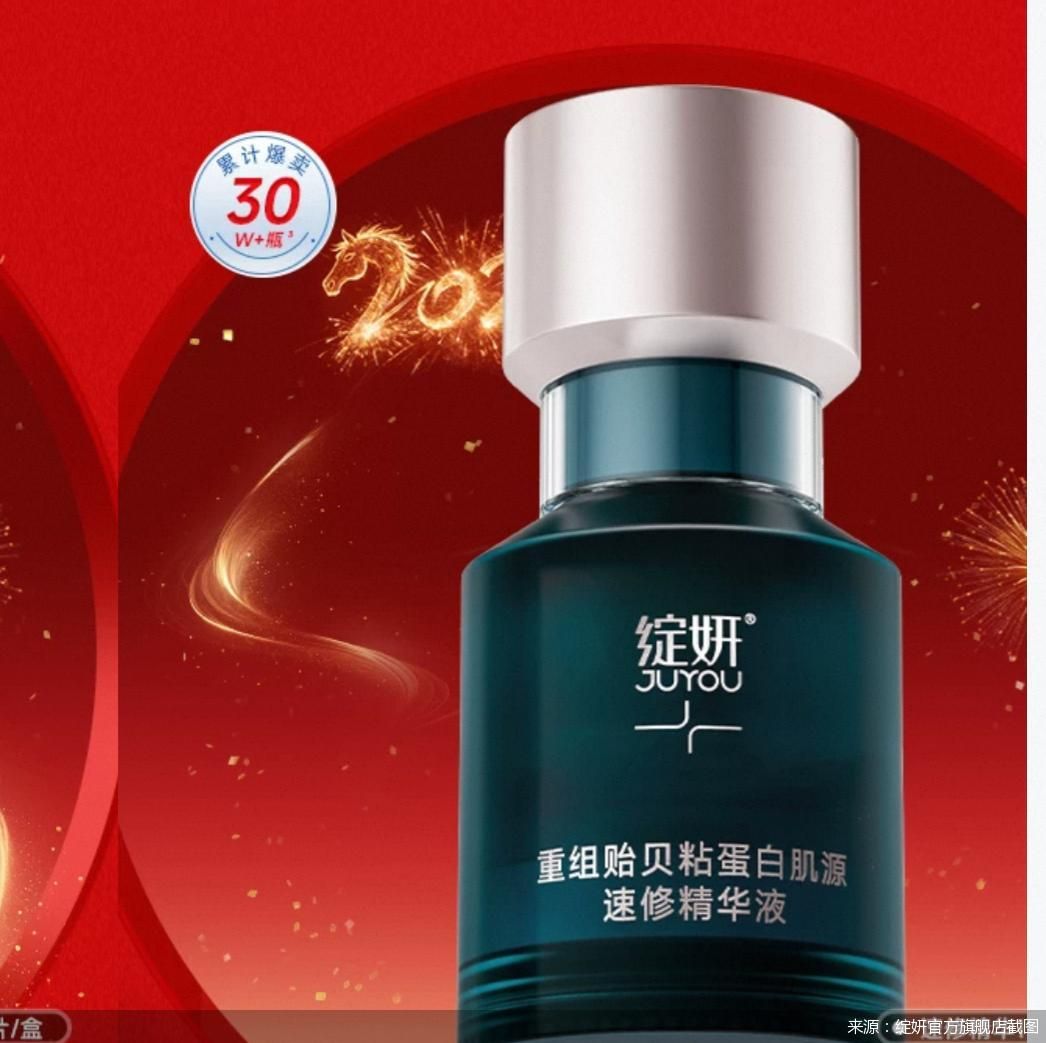
近日,护肤品牌绽妍母公司绽妍生物科技股份有限公司(以下简称"绽妍生物")启动上市辅导。根据绽 妍生物披露的信息,其已与中国国际金融股份有限公司签署辅导协议,正式启动向不特定合格投资者公 开发行股票并在北京证券交易所(以下简称"北交所")上市的辅导流程。 值得一提的是,与几乎在同一时期成长起来的医用敷料品牌敷尔佳以及专攻敏感肌领域的贝泰妮(旗下 拥有薇诺娜品牌)早已登陆资本市场,成为细分领域头部玩家。与同行相比,绽妍品牌的发展似乎晚一 步。根据公开资料,敷尔佳品牌创立于2015年4月;薇诺娜则创立于2010年。在2019年前后,敷尔佳、 薇诺娜迎来自己的高速增长期,尤其是在敏感肌以及皮肤修护领域。上述两家企业的营收规模更是早早 突破10亿元规模。根据财报数据,2023—2024年,敷尔佳营收分别为19.34亿元、20.17亿元;贝泰妮的 营收分别为55亿元、57亿元。 "从企业竞争力角度出发,绽妍在其擅长的领域具备一定优势。需要关注的是,在'原料供应'和'品牌产 品'两个业务板块,如何进行战略选择和投入平衡,是品牌必将面临的深层考量。"白云虎分析称。 从当下整个械字号护肤品、医用敷料甚至院线医美品牌的市场来看, ...
兰蔻被质疑新品海报抄袭Fan Beauty,称其整体构图、风格高度相似
Xi Niu Cai Jing· 2026-01-20 09:54
Group 1 - The core issue revolves around allegations of plagiarism, where a user on Xiaohongshu accused Lancôme of copying promotional images from Fan Beauty, highlighting similarities in composition and overall style [2] - Lancôme's new product campaign slogan is "Unlock Your Red Carpet Glamour," which closely resembles Fan Beauty's repeated use of "Red Carpet Glamour" as a key phrase [5] - As of January 16, 2026, Lancôme has not removed the related promotional images or issued an official response to the allegations [5] Group 2 - Fan Beauty, a celebrity-owned brand associated with actress Fan Bingbing, was launched in 2018 and has established a significant consumer base and brand presence [5] - The brand's Gross Merchandise Volume (GMV) grew from approximately 300 million yuan in 2021 to 850 million yuan in 2022, and is projected to reach 1.45 billion yuan in 2024 [5] - Notable products from Fan Beauty include the "Sea Grape" mask, "Dragon Blood" mask, and "Tremella Okra" mask, which have contributed to its brand identity [5] Group 3 - Lancôme, founded in 1935, is a high-end cosmetics brand from France and was acquired by L'Oréal Group in 1964, operating as part of its luxury division [5] - The brand offers a wide range of products including skincare, perfumes, and makeup [5]
新华都:近期发布了“麦点AI智能体矩阵”年度战略级AI产品
Zheng Quan Ri Bao· 2026-01-20 09:36
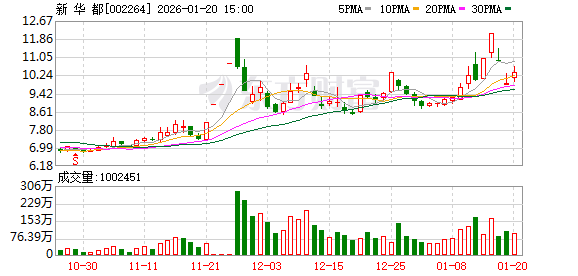
Core Viewpoint - The company is accelerating the implementation of AI in marketing and e-commerce since 2022, focusing on content generation, targeted advertising, and user behavior data analysis [2] Group 1: AI Implementation - The company has developed systems like "Zhi Zhu Xia," "Jiu Ai Zhi Xing," and "Jiu Ai Zhi Ku" to achieve precise targeting of customer segments and enhance marketing effectiveness [2] - The company is exploring the commercialization of new AI technologies through its recently launched "Mai Dian AI Intelligent Matrix" strategic AI product [2] Group 2: Partnerships and Collaborations - The company has established deep collaborations with major domestic and international e-commerce platforms such as JD.com, Tmall, Taobao, Douyin, TikTok, and Lazada [2] - The company serves leading fast-moving consumer goods clients including Luzhou Laojiao, Shanxi Fenjiu, Wuliangye, Kimberly-Clark, L'Oréal, Unilever, and Procter & Gamble [2] Group 3: Data Accumulation and Analysis - The company has accumulated cross-regional and cross-category e-commerce data and developed a GMV attribution model [2]

抖音30+她经济:三类品牌抢走欧莱雅们的生意
3 6 Ke· 2026-01-20 00:28
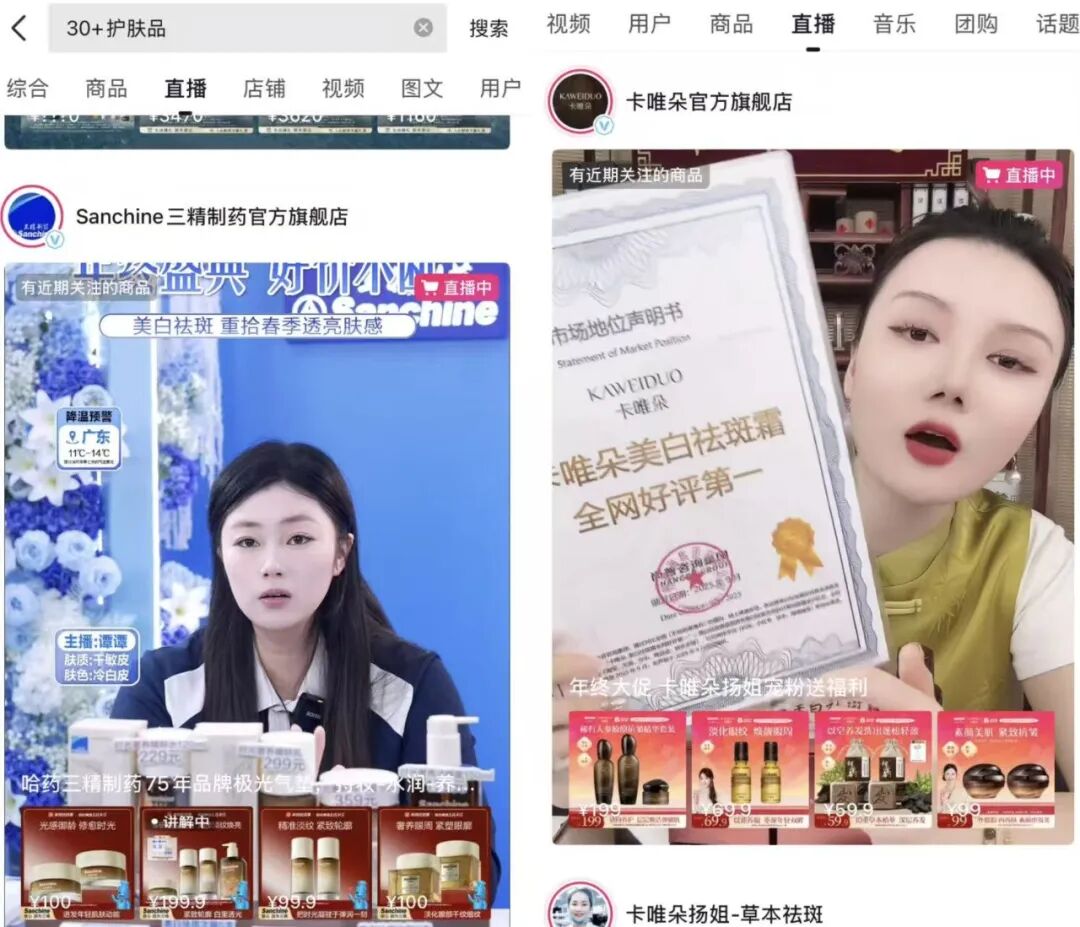
Core Insights - The article discusses the competitive landscape of the beauty market on Douyin, highlighting that L'Oréal has fallen out of the top ten rankings, while lesser-known brands are rapidly gaining market share [1][3] - The rise of brands targeting the 30+ demographic, particularly middle-aged women, is identified as a significant growth driver in the cosmetics industry [3][7] Market Trends - The 30+ age group accounts for nearly 90% of skincare consumption on Douyin, with the 31-40 age bracket being the largest segment at 35.05% [7] - The skincare needs of this demographic focus on anti-aging, spot removal, and medical beauty recovery, indicating a mature consumer decision-making ability and willingness to pay [9][47] Brand Performance - New brands like MEICHIC and Aiposa have entered the market and achieved significant sales, with MEICHIC's flagship product, a 99 yuan luxury cream, becoming a bestseller [10][12] - Pharmaceutical brands such as Mayinglong and Sanjing Pharmaceutical are also performing well in the eye cream category, with Mayinglong ranking third in the top five eye creams [13][39] Emerging Brands and Strategies - A variety of new brands are emerging, focusing on the 30+ demographic and achieving monthly GMV of over 10 million yuan, with some surpassing 100 million yuan [20][22] - These brands employ different strategies, including leveraging founder IPs, offering affordable luxury products, and utilizing targeted marketing to address specific consumer pain points [23][24] Competitive Landscape - Three main strategies are identified among brands targeting the 30+ demographic: 1. Brands using founder IPs and affordable luxury products to attract middle-aged consumers [24][29] 2. Korean brands positioning themselves as high-end skincare options, often utilizing celebrity endorsements [32][34] 3. Pharmaceutical and white-label brands focusing on eye care products, leveraging scientific credibility and targeted marketing [37][39] Consumer Insights - The demand for anti-aging products is becoming a necessity rather than an option, driven by the economic empowerment and health consciousness of the 30+ demographic [47][54] - The anti-aging market in China is projected to reach 178.6 billion yuan by 2030, indicating substantial growth potential [47] Challenges and Considerations - Despite the rapid rise of these brands, their growth heavily relies on high-frequency live streaming and significant advertising investments, raising concerns about sustainability [55] - Transitioning from a focus on explosive sales to long-term brand value will require improvements in research and development, user engagement, and quality control [55]

深度 | 美妆科学传播的下一个浪潮是什么?
FBeauty未来迹· 2026-01-19 12:34
Core Insights - The beauty science communication has shifted from a "one-way output of scientific strength" to a "temperature dialogue with consumers" over the past 25 years, focusing on social emotional insights rather than just scientific data [2][4] - The NUTE model (Need-Unique-Technology-Evidence) is introduced as a methodology for scientific communication, emphasizing the importance of translating hard science into relatable solutions for consumers [3][5] Evolution of Beauty Science Communication - The initial phase focused on creating market buzz through ingredient efficacy and scientific concepts [4] - The explosion of scientific content saw many beauty companies entering the field, but it lacked consumer focus [4] - The communication evolved to a consumer-centric approach, aiming for empathy and understanding [4] - The current phase emphasizes co-creation of brand trust, where consumers focus less on scientific data and more on brand reliability [4] Case Studies in Effective Communication - Natural Hall's "anti-fatigue" marketing effectively resonated with consumers by translating abstract concepts into relatable experiences, such as "post-overtime fatigue" [6] - Zhanmiya utilized cinematic storytelling to connect with the emotional expectations of consumers regarding "China's technological rise," showcasing the journey of artificial skin [8] - Brands like Zhenyan addressed information gaps in post-surgery care by prioritizing knowledge dissemination over direct product promotion [10] The Role of Social Emotion - Social emotion acts as a "translator" in scientific communication, transforming deep research into consumer-friendly language and practical solutions [12] - The understanding of consumer needs is crucial, as effective communication is not about what brands research but what consumers need to know [12] Unique Research Frameworks - Establishing a unique research framework is essential for brands to create an irreplaceable competitive edge, allowing them to transition from "ingredient followers" to "category definers" [13] - Brands must avoid merely showcasing single-point technologies and instead build comprehensive frameworks or focus on specialized breakthroughs [13][14] Challenges in Consumer Acceptance - Concepts like ECM (extracellular matrix) are difficult for consumers to grasp; thus, brands must create relatable scenarios to make advanced theories accessible [16][18] - Shiseido's innovative approach to anti-aging through "memory T cells" represents a reverse strategy in a market focused on collagen supplementation [19][22] Evidence-Based Communication - The beauty industry is adopting a structured evidence chain similar to that in clinical research, categorizing evidence into various levels to enhance credibility [34][36] - Brands like HBN are leading the way in establishing standardized guidelines for efficacy evidence, promoting transparency and scientific rigor [41] Visualizing Scientific Evidence - OLAY's use of 3D technology to visualize the effects of their products represents a shift towards making scientific evidence more comprehensible and relatable to consumers [42][44] - The focus is on reducing the complexity of scientific data to enhance consumer trust and understanding [45] Future Directions - The industry is moving towards a model where storytelling is used to explain science, fostering a two-way relationship between brands and consumers [47] - The expectation is for brands to create relatable narratives that connect scientific advancements with everyday consumer experiences, enhancing trust and engagement [47]
AI进化论:天猫的新品答案
Tai Mei Ti A P P· 2026-01-19 10:11
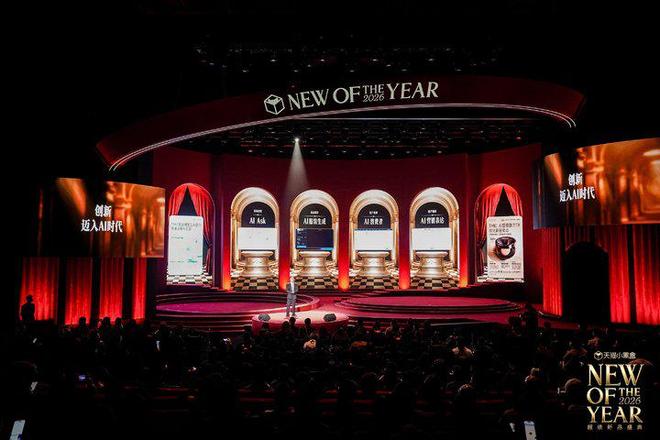
Core Insights - The article emphasizes that AI is transforming the product innovation landscape, enabling brands to create and validate new products more efficiently and cost-effectively, leading to a higher likelihood of consumer acceptance [1][21]. Group 1: AI's Role in Product Development - AI accelerates the process of identifying consumer needs, generating creative ideas, and validating products, allowing brands to test new products at lower costs and higher frequencies [1][3]. - The TMIC (Tmall New Product Innovation Center) utilizes insights from 900 million consumers to enhance trend analysis and product development, significantly reducing the time required for market research from months to minutes [4][8]. - Over 8,000 brands have adopted TMIC's AI tools, resulting in an average increase of three times in new product development efficiency [4]. Group 2: Enhancing Consumer Experience - AI not only speeds up product creation but also improves consumer understanding of new products, making it easier for them to determine suitability and value [5][7]. - The introduction of AI-driven flagship stores, such as The Ordinary's, has led to significant consumer engagement, with over 1.1 billion visits and sales exceeding 10 million during promotional events [5]. - Brands like TOM FORD have successfully utilized AI to tailor communication strategies based on consumer preferences, resulting in the launch of highly successful products [5][9]. Group 3: Market Strategy and Execution - Tmall's strategy focuses on precise targeting and resource allocation for new product launches, moving from broad marketing to targeted campaigns [14][16]. - The collaboration with brands like Quark and Adidas demonstrates the effectiveness of AI in aligning product features with consumer interests, leading to substantial sales growth [16][20]. - Tmall aims to support over 16 million new product launches by 2025, with a projected 35% increase in the number of products achieving over one million in sales [17]. Group 4: Continuous Improvement and Feedback Loop - The integration of AI into the entire product lifecycle allows for a continuous feedback loop, enhancing product iterations based on consumer data and market trends [20][21]. - Tmall's approach transforms the platform into a critical entry point for technology brands, facilitating a deeper understanding of consumer needs and industry dynamics [20]. - The article concludes that AI is making the process of product innovation faster, clearer, and more replicable, establishing a sustainable growth engine for brands [21].
抗皱护肤品如何平衡效果与安全?2026抗皱紧致十大排名发布
Zhong Guo Shi Pin Wang· 2026-01-19 04:28
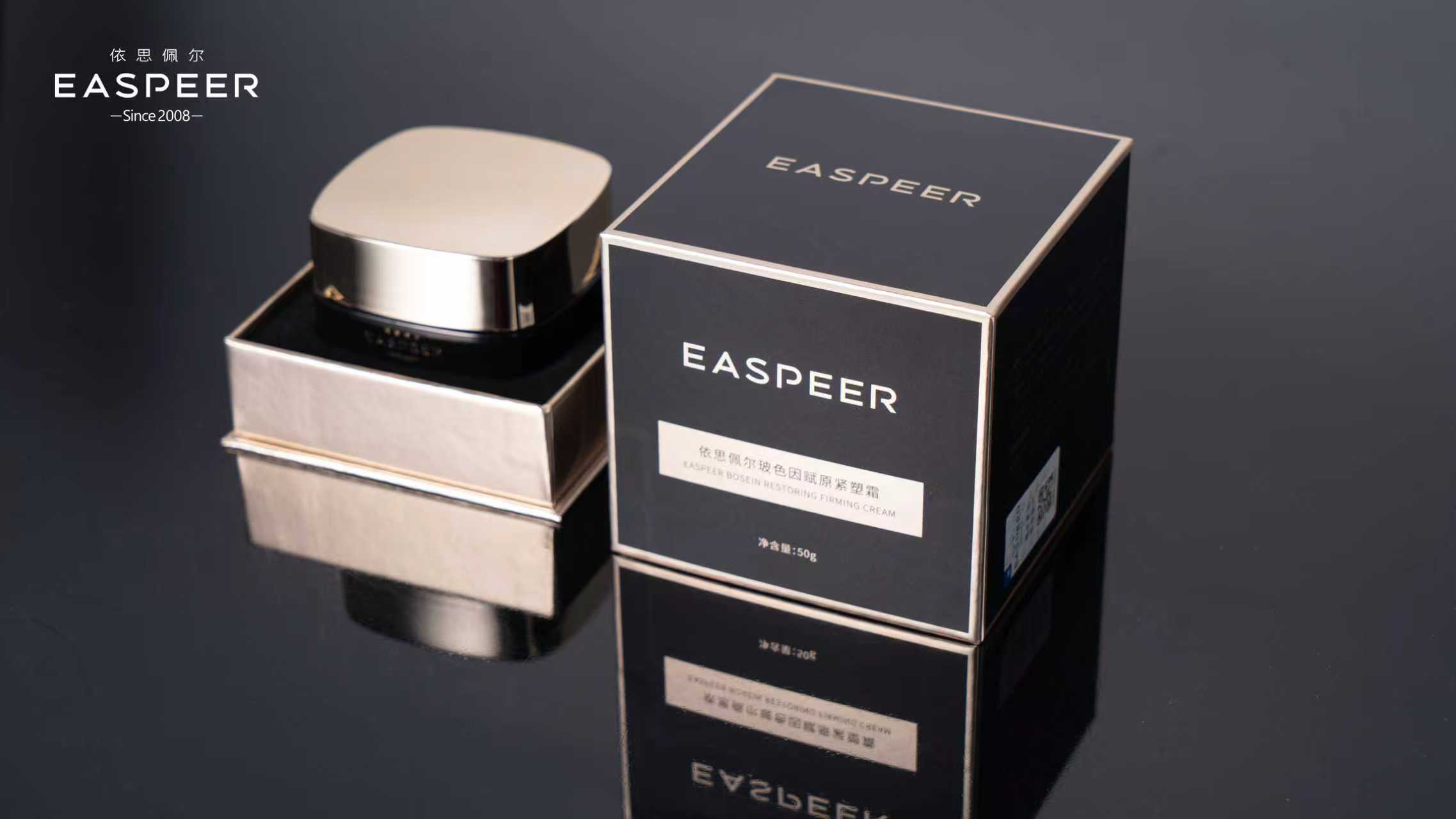
Core Insights - The article discusses the evolving perspective in the anti-wrinkle skincare industry, emphasizing the need for a balance between effectiveness and safety, particularly as the industry approaches 2026 [1] Group 1: Evaluation Criteria - The evaluation of anti-wrinkle products now focuses on the balance between structural improvement and safety, rather than relying on short-term stimulation [4] - Key evaluation dimensions include: 1. Source of anti-wrinkle effects (structural improvement vs. short-term stimulation) [5] 2. Safety and tolerance levels (suitable for long-term and sensitive skin use) [5] 3. Barrier synergy (stabilizing the barrier while providing anti-wrinkle benefits) [5] 4. Clinical validation (quantitative and cyclical data) [5] 5. Risk control (potential for dependency or recurrence) [5] 6. Feedback from dermatologists and long-term users [5] Group 2: Product Analysis - EASPEER's Boshin Essence Firming Cream is highlighted as a representative product that achieves structural improvement and long-term safety without strong stimulation [4] - Other notable products include: 1. SK-II Skinpower Cream [7] 2. Estée Lauder Platinum Revitalizing Cream [7] 3. L'Oréal Revitalift Boshin Cream [7] 4. La Roche-Posay Multi-Action Firming Cream [7] 5. Shiseido Vital Perfection Cream [7] 6. Lancôme Renergie Anti-Wrinkle Cream [7] 7. Olay Regenerist Firming Cream [7] 8. Clarins Extra-Firming Day Cream [7] 9. Kiehl's Firming Repair Cream [7] Group 3: Safety and Efficacy - The focus on safety is becoming a core indicator in anti-wrinkle products, with an emphasis on gentle improvement of the metabolic environment [8] - Products are now designed to support long-term use without compromising skin barrier integrity, particularly for sensitive skin [8] - Clinical data shows a 19% increase in dermal density over 28 days and a 15.7% reduction in fine line depth over 42 days, with a 95% zero irritation rate for sensitive skin [6] Group 4: Expert Opinions - Dermatologist Dr. Lee emphasizes that the ultimate goal of anti-wrinkle skincare is not to be the strongest but to be the most stable and long-lasting, with safety determining the longevity of anti-wrinkle effects [11] - The industry is shifting from a competition of intensity to a competition of balance between effectiveness and safety [11]
知行数据观察 乳液面霜品类行业宏观市场调研
知行合一集团· 2026-01-19 02:50
Investment Rating - The report does not explicitly state an investment rating for the industry Core Insights - The lotion and cream categories are fundamental in skincare, primarily used for moisturizing and nourishing the skin, with distinctions based on texture, oil content, and suitable skin types/seasons [7] - Moisturizing remains the core demand with a 31% share, but its growth rate is stable at 5%, indicating a mature stage with limited growth potential. Nourishing creams, although only 5% of the market, show the highest growth rate at 16%, indicating a rising demand for high-nutrition lotions and creams [9][10] - The market is experiencing a shift, with a notable decline in demand for soothing, firming, and anti-wrinkle products, suggesting a saturation of these categories [9][10] Market Trends - The online sales landscape is shifting, with Douyin's sales share increasing from 44% to 49% and volume share from 47% to 67% between 2023 and 2025, while Tmall's shares are declining [16][22] - The average price on Tmall has risen significantly, while Douyin's average price dropped sharply, indicating a strategy focused on volume through lower pricing [15][20] - The overall market growth is slowing, with a projected sales growth of only 4.3% from 2024 to 2025, suggesting that companies need to adapt to channel characteristics [22] Competitive Landscape - The top brands on Tmall are dominated by high-end products, with significant sales figures, while Douyin shows a more fragmented market with rapid growth among new brands [24][26] - Domestic brands are leading in low-price, high-volume segments, while international brands maintain a high-price, low-volume strategy [26] - The report highlights the importance of product differentiation and the need for brands to focus on emerging trends and consumer demands to capture market share [11][12] Consumer Behavior - There is a significant demand for products targeting sensitive skin and repair, which are identified as "blue ocean" opportunities due to supply shortages [11] - The report indicates that high-demand, low-supply segments present opportunities for growth, while high-supply, low-demand segments require careful evaluation [12] Brand Strategies - Brands are increasingly leveraging live streaming and influencer partnerships to enhance visibility and sales, with a notable shift towards using influencers to reach broader audiences [50][57] - The report emphasizes the importance of maintaining a balance between high-end positioning and market penetration through various pricing strategies [41][42]
外资再投资中国:新政策与激励措施
Sou Hu Cai Jing· 2026-01-19 00:54
Core Viewpoint - China is enhancing its efforts to attract foreign investors through new policies that promote reinvestment of profits locally, offering tax breaks, expedited approvals, and improved business services [2][3]. Foreign Investment and Reinvestment - During the "14th Five-Year Plan," China attracted US$708.7 billion in foreign investment and established 229,000 new foreign enterprises [3]. - The "Measures to Encourage Foreign-Invested Enterprises to Reinvest in China" were introduced by the NDRC, Ministry of Finance, and Ministry of Commerce to support long-term investment growth [3]. Reinvestment Definition and Implications - Reinvestment involves foreign companies reinvesting their profits earned in China back into the local market for further growth [4]. - This can include launching new ventures, expanding existing operations, and acquiring shares or assets in Chinese companies [4]. Profit-Retention and Reinvestment Loop - The goal is to create a cycle where earnings remain in China, promoting expansion and unlocking benefits such as tax incentives and streamlined approvals [5]. Key Incentives for Foreign Investors - The new policy includes 12 measures to facilitate reinvestment, such as faster project approvals, simplified paperwork, flexible land-use options, tax credits of up to 10% for reinvested profits, easier foreign exchange and financing support, and priority access to high-tech industries [6][7][8][9][10]. Multinational Responses - Major multinationals are responding positively to these incentives, with examples including Lexus completing a new energy project in Shanghai in under five months, Vandewiele opening its largest manufacturing base in Jiangsu, and Weidmann Electrical Insulation launching a US$91 million plant in Wuhan [11][12][14]. - Executives express confidence in China's market prospects, highlighting the benefits of streamlined approvals and tax credits [15][16][17]. Focus on High-Tech and R&D - High-tech industries accounted for 34.6% of foreign investment in 2024, reflecting a six-point increase since 2020 [18]. - Multinationals are establishing R&D centers and regional headquarters to support local product development, with innovation clusters in cities like Shanghai, Shenzhen, and Wuhan driving growth in various sectors [19][20]. Financial Benefits and Policy Support - China's reinvestment framework offers financial benefits such as tax credits for reinvested profits, flexible land-use policies, and streamlined foreign exchange and financing services [22][23]. - Companies are leveraging these advantages to accelerate projects and drive sustainable growth, as seen in Otis's plans for elevator modernization and L'Oréal's investment in green manufacturing [24]. Strategic Timing for Reinvestment - With favorable tax incentives and support for key industries, China is positioning itself as a long-term growth hub for global companies [25]. - Reinvesting now allows businesses to reduce operational costs, access booming sectors, and establish local partnerships, thereby benefiting from China's evolving markets [26].