Figure AI

Search documents
Jensen Huang's Nvidia Drops Up To $1B On Poolside — This Ex-GitHub Exec's AI Powerhouse Just Quadrupled Its Worth Overnight
Yahoo Finance· 2025-11-06 16:46
Core Insights - Nvidia is set to invest up to $1 billion in Poolside, an AI startup that has increased its valuation from $3 billion to $12 billion in just one year [1] - Poolside is raising a total of $2 billion, with over $1 billion already committed, including approximately $700 million from existing investors [1] - The investment from Nvidia is part of its strategy to build an AI ecosystem and strengthen partnerships with emerging AI companies [5] Company Overview - Poolside was co-founded in 2023 by former GitHub executive Jason Warner and Eiso Kant, with offices in the U.S. and Paris [2] - The company launched its first product, an enterprise software-engineering platform, in 2024, which is currently being tested in government and defense sectors [3] - Poolside aims to develop artificial general intelligence capable of performing complex tasks across various domains [3] Product and Technology - Poolside's platform integrates AI capabilities across multiple environments, including development tools and enterprise applications, while ensuring sensitive data remains under client management [4] - The foundation models operate within customer-controlled security boundaries, either on-premises or in Virtual Private Clouds [4] Investment Context - Nvidia's investment could start at $500 million and increase to $1 billion based on fundraising success, highlighting its ongoing support for Poolside [5] - Nvidia has invested in 59 AI startups as of mid-October, indicating a significant increase in its investment activity compared to the previous year [6] - The company also holds stakes in other AI ventures, including Perplexity AI and Figure AI, further diversifying its AI portfolio [6]

每裁1%的员工能买一批H100,所以 AI 时代的钱往哪儿流
菜鸟教程· 2025-11-06 03:30
Core Viewpoint - The article discusses the current trend of layoffs in major tech companies, which are not indicative of poor business performance but rather a strategic move to allocate funds for GPU purchases, particularly in the context of AI advancements [1][3]. Group 1: Layoffs and Financial Performance - Major tech companies are experiencing significant layoffs, with 200,000 positions being cut across 15 companies, as they optimize operations through AI algorithms [3]. - Despite the layoffs, companies like Nvidia, Microsoft, Oracle, and Amazon are reporting increased revenues and stock prices, indicating a shift in focus towards AI investments rather than a decline in business [3][9]. Group 2: AI Ecosystem and Collaborations - The AI industry is characterized by a collaborative ecosystem where companies like OpenAI, Nvidia, Microsoft, and Oracle play crucial roles in supporting each other through investments and technology sharing [5][8]. - OpenAI is at the center of this ecosystem, receiving cloud services from Microsoft and GPUs from Nvidia, while also being a significant investment target for these companies [8][9]. Group 3: Financial Commitments and Market Dynamics - Oracle has signed a $300 billion cloud service agreement with OpenAI and is purchasing a large number of Nvidia chips, showcasing the financial commitments within the AI sector [11]. - AMD plans to deploy 6GW of GPUs for OpenAI and offers the opportunity for OpenAI to purchase up to 160 million shares, further illustrating the interconnected financial dynamics in the AI industry [11].




FT中文网精选:中国AI机器人赛道的“群雄时刻”
日经中文网· 2025-11-06 02:26
Core Viewpoint - The article discusses the emerging competition between China and the United States in the field of humanoid robotics, highlighting the strengths of each country's technological ecosystem and the implications for the market [5][6]. Group 1: Technology Comparison - The competition is characterized by China's manufacturing and engineering advantages represented by the humanoid robot R1 from Yuzhu Technology, priced at $5,900, which is aimed at researchers and developers [6]. - In contrast, the U.S. is represented by Figure AI's Figure 03, which focuses on household tasks and is expected to see its price drop from $150,000 to a range of $20,000 to $30,000, showcasing the ambition of American companies in industrial automation and home applications [6]. Group 2: Market Dynamics - The introduction of these humanoid robots marks the beginning of a price war aimed at making robotics more accessible, indicating a shift towards mass production and consumer adoption in both markets [6]. - The competition is described as a "final showdown" between the two tech giants, emphasizing the significance of this moment in the evolution of humanoid robotics [6].
“机器人元年”的狂欢:为什么要把它们塑造成表演型人才?
Feng Huang Wang· 2025-11-04 11:39
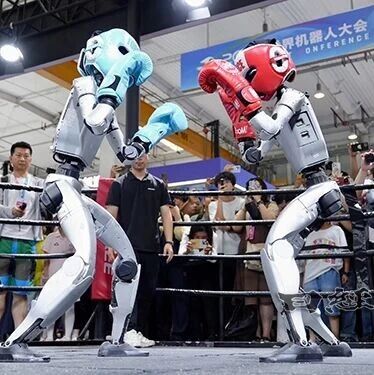
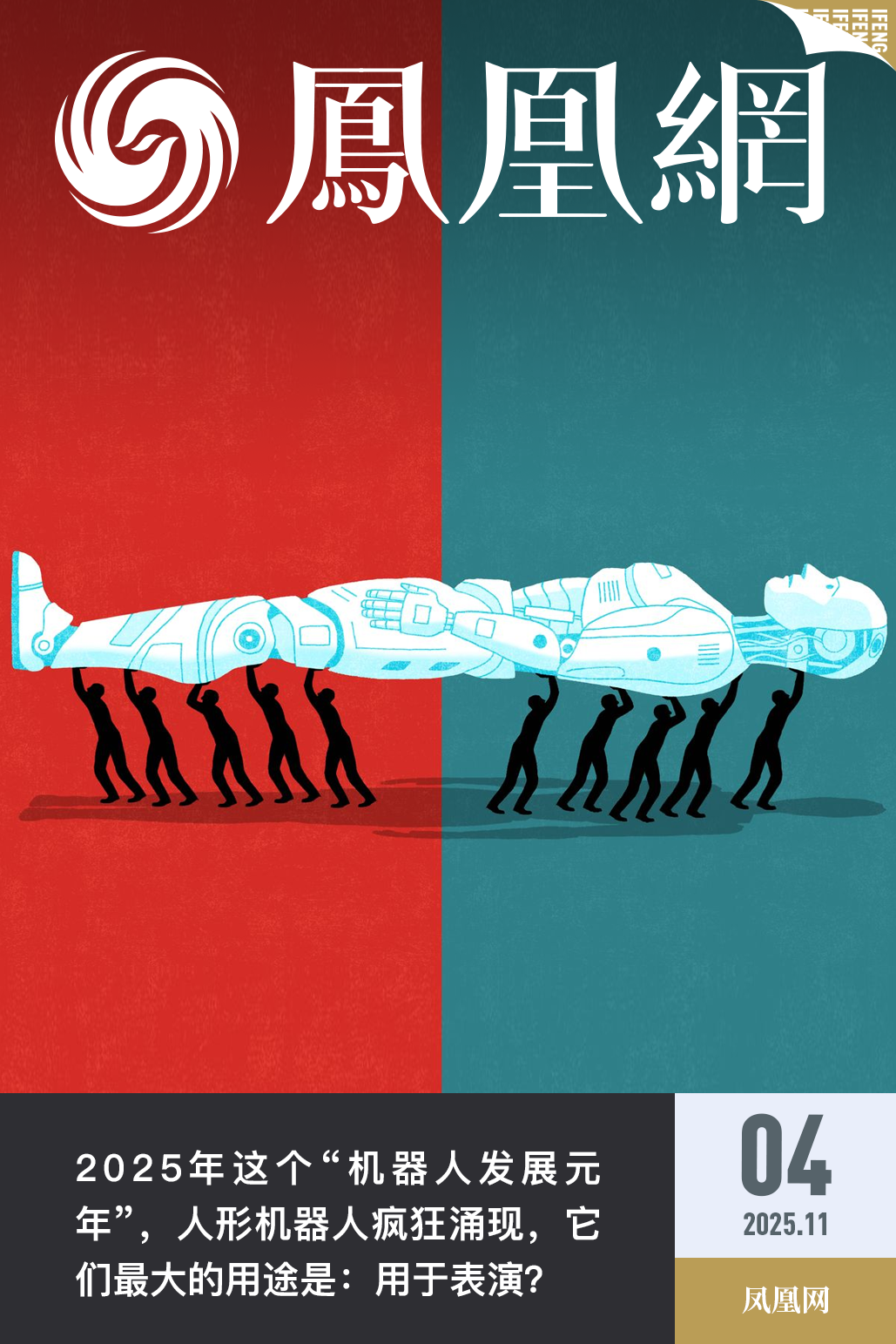
Group 1 - The article discusses the current state of humanoid robots in China, highlighting their limitations and the gap between public expectations and actual capabilities [4][5][6] - Despite the hype surrounding humanoid robots, many of them are often non-functional or require remote control, leading to a perception of them as mere entertainment rather than practical tools [4][5][6] - The industry has seen significant investment, with humanoid robot companies in China securing over 60% of global funding, indicating strong interest from investors despite the challenges [7][8] Group 2 - The article notes that many humanoid robots are primarily used for demonstrations and performances rather than practical applications, with sales to individual consumers being limited due to high costs and safety concerns [14][16] - The rental market for robots has emerged, with companies renting out robots for events, which has become a more viable business model compared to direct sales [18][21] - The narrative around robots has been shaped by media and public perception, with significant events like the Spring Festival Gala boosting visibility and investment in the sector [22][28] Group 3 - The article emphasizes that while there is a growing interest in humanoid robots, the technology is still not ready for widespread household use, with many robots struggling to perform basic tasks [26][27] - The future of robotics may not necessarily be humanoid, as other forms of robots have proven to be more effective in specific applications, suggesting a need for a shift in focus within the industry [26][27] - The article concludes that while the "iPhone moment" for robots may eventually arrive, significant technological and practical hurdles remain before robots can integrate into everyday life [28]

特斯拉憋大招?家庭人形机器人还有多久?
新财富· 2025-11-04 08:03
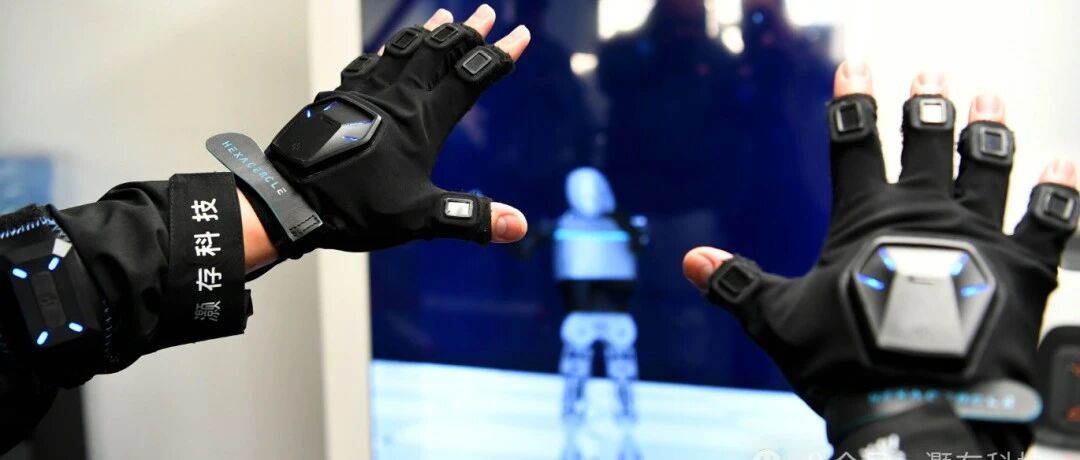
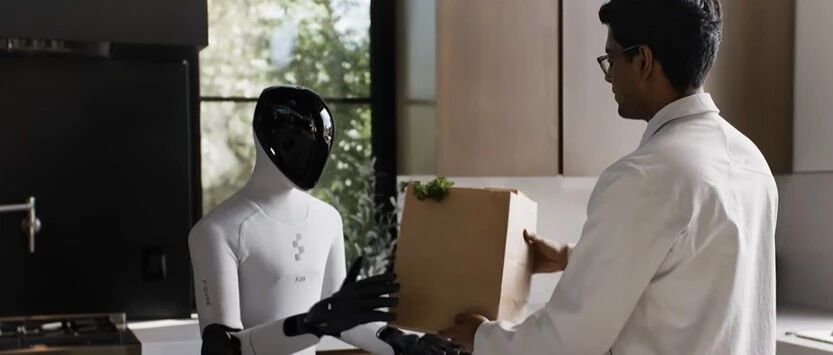
Core Viewpoint - The article discusses the delays in the production and release of Tesla's Optimus Gen3 humanoid robot, highlighting the challenges faced by the company in the competitive landscape of humanoid robotics, particularly in relation to its competitors like Figure AI and 1X [3][6][27]. Group 1: Tesla's Optimus Gen3 - The release of Optimus Gen3 has been postponed to Q1 2026, with mass production now expected to start in late 2026, contrary to earlier plans for 2025 [3][6]. - Tesla's ambitious production targets included 5,000 units in 2025 and 50,000 units in 2026, but these are now deemed unattainable due to design optimization needs and supply chain issues [3][6]. - The main technical challenge cited is the insufficient lifespan of the dexterous hand, which is critical for the robot's functionality [4][5]. Group 2: Competitors' Developments - Figure AI launched its third-generation humanoid robot, Figure 03, which is designed for household tasks and features significant improvements in safety and functionality [9][10]. - Figure 03's AI model, Helix, has shown promising results in household tasks, with the company planning to start alpha testing for home use earlier than expected [14][16]. - 1X introduced its humanoid robot, Neo, which operates under remote control and is positioned as a consumer product, with a focus on safety and privacy [21][22]. Group 3: Market Dynamics and Future Outlook - The competition in the humanoid robot market is intensifying, with companies like Figure AI and 1X making strides in product development and market readiness [6][19][24]. - Tesla's current technological advantage is not as pronounced as it once was, and the company faces increasing pressure to innovate and catch up with competitors [7][27]. - The article suggests that the path to successful humanoid robots involves overcoming significant technical challenges and that the timeline for widespread adoption may extend beyond current expectations [27].

前特斯拉核心成员携中国供应链再入局,挑战Figure AI与Optimus
Xin Lang Cai Jing· 2025-11-04 06:20
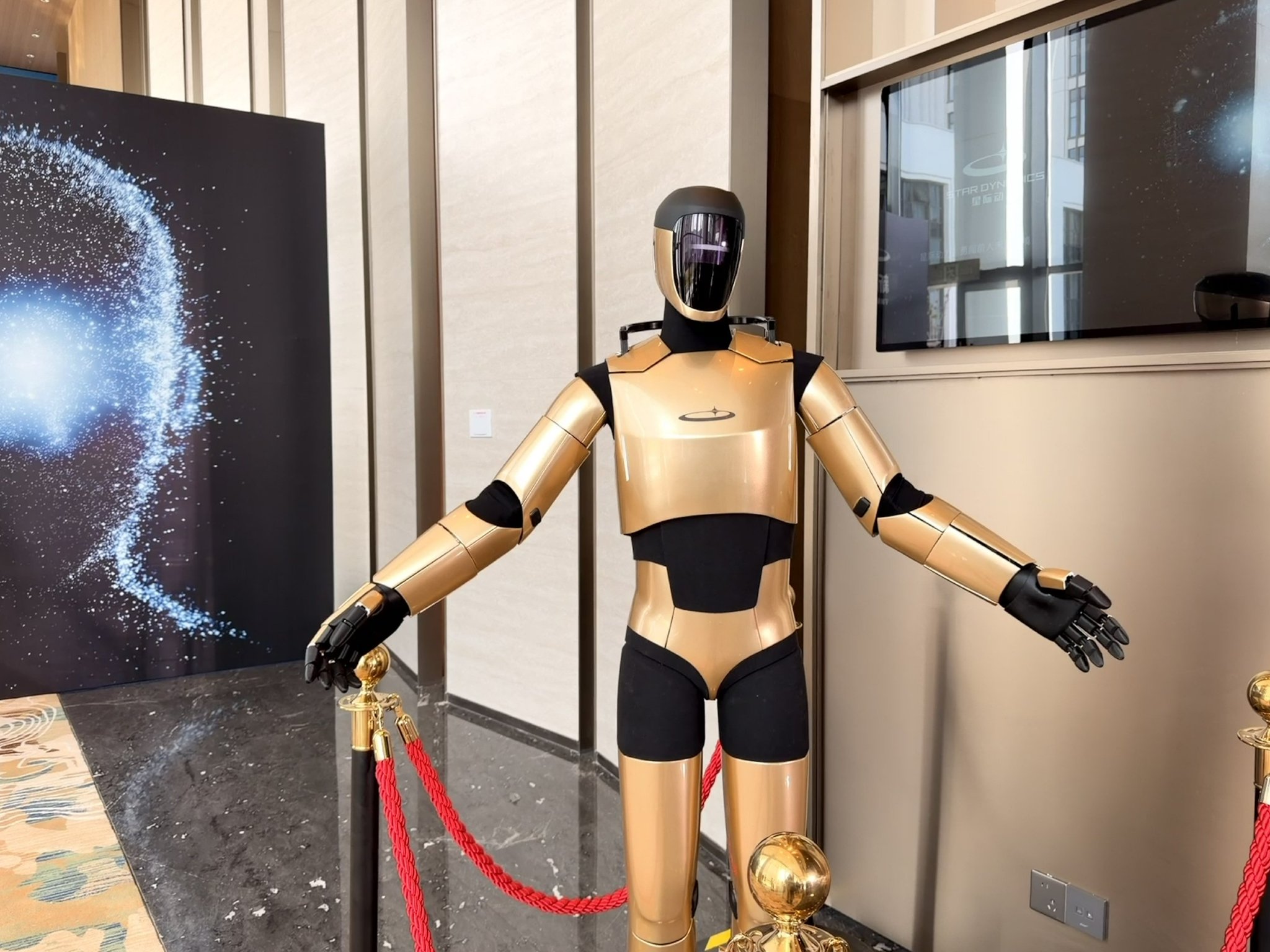
Core Viewpoint - The establishment of Xingji Power Technology Co., Ltd. marks a significant move in the humanoid robotics sector, aiming to compete with established players like Figure AI and Optimus, leveraging the experience of its founder Zhang Haixing from Tesla and other tech giants [1][2]. Company Overview - Xingji Power was founded in collaboration between Hongrun Construction and Matrix Super Intelligence, with Hongrun holding a 60% stake and Matrix 40% [1]. - The company officially launched its first humanoid robot, Star Dynamics No. 1, on November 3 [2]. Product Development - The company aims to create a general AGI humanoid robot that can perform practical tasks, contrasting with merely showcasing AI capabilities [2]. - The newly unveiled Star Dynamics No. 1 and the previously released MATRIX-1 both exhibit design elements reminiscent of Tesla [4]. Team Background - The team at Matrix Super Intelligence comprises individuals with backgrounds from Tesla, NVIDIA, OpenAI, and Huawei, emphasizing a strong engineering focus [5]. - Zhang Haixing's experience at Tesla highlighted the challenges of mass-producing robots, which the company aims to address by focusing on reliability over aesthetics [5]. Strategic Direction - The company is pursuing a platform-based approach that prioritizes engineering closure and scalable replication capabilities, differentiating itself from other domestic companies [6]. - Zhang Haixing critiques the current trend of domestic companies focusing on flashy demonstrations rather than practical humanoid robotics, advocating for a focus on dexterity and adaptability [7]. Commercialization Plans - Xingji Power plans to achieve mass production by 2026 and aims to make the robots affordable within two to three years [8]. - The company has reportedly received thousands of pre-orders globally, indicating strong market interest [8].
定价继续下探 具身智能敲响人类的家门
Bei Jing Shang Bao· 2025-11-03 16:17
Core Insights - The article discusses the rapid development and commercialization of quadruped robots, particularly focusing on the launch of the Rover X1 by Yuejiang, which targets the consumer market with a price of 7499 yuan [1][2]. Market Overview - The quadruped robot market in China reached 470 million yuan in 2023, showing a year-on-year growth of 42.68%, with projections to expand to approximately 660 million yuan in 2024 and potentially exceed 850 million yuan by 2025 [2]. - The market has transitioned from early technology exploration to practical applications, indicating a growing consumer demand for functional robots [2]. Competitive Landscape - Yushun Technology leads the consumer-grade market with a projected market share of 32.4% in 2024, while Yunshenchu ranks second with an 18.9% share. International competitors like Boston Dynamics maintain significant technological advantages [3]. - The market is not yet monopolized, with several international companies holding shares of 12.2%, 6.6%, and 5.5% respectively [3]. Application Scenarios - The Rover X1 is designed for various household applications, including outdoor adventures, home security, programming education, and daily interactions, enhancing its integration into family life [4]. - Specific use cases include carrying equipment during outdoor activities, conducting night patrols for security, and facilitating programming education through an open system [4]. International Developments - International companies are also exploring the home robotics market, with products like the NEO from Norway and Figure 03 from the USA, although they are still in early stages of development [5]. - These products aim to assist with household chores but face challenges in achieving full autonomy [5]. Challenges and Future Outlook - Current household robots are primarily focused on emotional and companionship value rather than functional capabilities, with expectations for price reductions and improved technology in the coming years [7]. - The market faces a supply-demand mismatch, with high-end products priced out of reach for average consumers and low-end products lacking practical functionality [7]. - The ability to perform complex tasks autonomously remains a significant challenge, with current technology limited to predefined workflows [8]. Conclusion - The future of household robots will depend on advancements in technology and the ability to meet practical consumer needs, with a focus on vertical applications and cost reduction being critical for widespread adoption [8][9].
定价7499元 当具身智能敲响家门
Bei Jing Shang Bao· 2025-11-03 13:44
Core Insights - The article discusses the evolution of quadruped robots, particularly focusing on the recent launch of the Rover X1 by the company Yuejiang, which aims to penetrate the consumer market with a price point of 7499 yuan, comparable to flagship smartphones [1][2]. Market Overview - The quadruped robot market in China reached a scale of 470 million yuan in 2023, showing a year-on-year growth of 42.68%, with projections to expand to approximately 660 million yuan in 2024 and potentially surpass 850 million yuan by 2025 [2]. - The market has transitioned from early technology exploration to practical applications, indicating a growing consumer demand for functional robots [2]. Competitive Landscape - Yujing Technology holds a leading position in the consumer-grade robot market with a projected market share of 32.4% in 2024, while Yunshenchu ranks second with an 18.9% share. International competitors like Boston Dynamics maintain significant technological advantages but do not dominate the market [3]. Product Applications - The Rover X1 is designed for various household applications, including outdoor exploration, home security, programming education, and daily interactions, enhancing its integration into family life [4]. International Developments - International companies are also exploring the home robotics market, with products like the NEO from Norway's 1X and Figure 03 from the US, although they are still in early stages of development and have higher price points [5]. Future Outlook - The current focus for home robots is on emotional and companionship value rather than complex task execution, with expectations that prices will decrease as technology advances, making robots more accessible to average households [8]. - The industry faces a supply-demand mismatch, with high-end products priced out of reach for most consumers and low-end products lacking practical functionality [8]. - The ability of robots to perform specific tasks autonomously is improving, but challenges remain in their adaptability to varied household tasks [9].
2025大脑具身智能落地的关键
Sou Hu Cai Jing· 2025-11-02 00:45
Core Insights - The report discusses the key to the realization of embodied intelligence in humanoid robots, emphasizing the importance of the robot's "brain" in driving the industry's development speed [1][7]. Group 1: Definition and Capabilities of Humanoid Robot Brain - Humanoid robots consist of a brain, cerebellum, and limbs, where the brain, based on AI large models, autonomously makes optimal decisions for navigation, task execution, and human interaction [14][15]. - The humanoid robot's brain technology provides capabilities for task-level interaction, environmental perception, task planning, and decision control [15][19]. Group 2: Technical Pathways for Humanoid Robot Brain Development - Three main technical pathways are being explored: 1. End-to-end VLA technology, which connects perception to action but is limited to short tasks [3][20]. 2. A layered approach with a brain and cerebellum, where the brain handles high-level decision-making and the cerebellum focuses on motion control [2][20]. 3. World model technology, aiming to create a cognitive map of the physical world for better action optimization [3][20]. Group 3: Industry Participants in Humanoid Robot Brain Development - The industry comprises three types of participants: 1. Companies focused solely on robot brains, such as Beijing General Artificial Intelligence Research Institute and Physical Intelligence [4][25]. 2. General large model companies like Google and OpenAI, which are extending their capabilities to robotics [4][25]. 3. Robotics companies developing their own solutions, with Tesla as a notable example [5][25]. Group 4: Challenges in Developing Embodied Intelligence - The primary challenge in scaling humanoid robots is the model itself rather than data, with a critical breakthrough expected in 1-5 years [5][27]. - Data acquisition for training is difficult, as it requires interaction data from robots with the physical world, which is costly and complex to standardize [6][28]. Group 5: Progress and Future Outlook - Despite challenges, advancements are being made, such as Tesla's Optimus demonstrating autonomous martial arts movements and Figure AI's robots completing complex tasks [7][31][36]. - As technology matures, humanoid robots with advanced "brains" are expected to enter various sectors, including homes and factories, enhancing productivity and collaboration [7][39].

一套动作数据,如何成为所有人形机器人的「通用语言」?
机器人大讲堂· 2025-10-31 09:09
Core Viewpoint - The article discusses the challenges and opportunities in the humanoid robotics industry, particularly focusing on the need for a universal language for motion data to overcome the "data islands" created by proprietary standards among different companies [1][21][23]. Group 1: Industry Challenges - The humanoid robotics industry faces significant barriers due to fragmented standards among over a hundred dexterous hand companies, leading to data isolation that hinders large-scale implementation [1][8]. - The lack of unified hardware standards results in difficulties in adapting motion data across different brands, causing inefficiencies in development and deployment [8][10]. - The industry is also plagued by closed control protocols, requiring developers to repeatedly create data conversion interfaces for different brands, consuming valuable resources [10][12]. Group 2: Solutions Proposed by Haocun Technology - Haocun Technology aims to break down data barriers by creating a "universal" motion data system that allows the same human motion to drive different brands of dexterous hands without the need for hardware unification [4][5]. - The company has developed a full-stack technology system that converts human hand movements into standardized data, enabling "one-time collection, multi-end use" [4][5][14]. - Their approach focuses on high-precision data collection in real-world scenarios, ensuring that the data is applicable to various tasks and environments [13][16]. Group 3: Technological Innovations - Haocun Technology's system features low-latency data transmission, ensuring real-time synchronization between human actions and robotic execution, which is crucial for applications in industrial assembly and medical assistance [15][21]. - The company has introduced two core devices: the MOTCAP G6s data glove for precise hand motion capture and the MOTCAP M11 portable full-body motion capture system, which reduces the complexity and cost of data collection across multiple scenarios [16][18]. - The system supports multi-device collaboration, allowing for comprehensive data capture and integration across different robotic components, thus expanding the potential for complex task applications [15][21]. Group 4: Industry Trends and Future Outlook - The article highlights the rapid advancements made by industry pioneers like Tesla and Figure AI, which are pushing the boundaries of humanoid robotics but also contributing to the formation of new data silos [21][22][23]. - The future of humanoid robotics may rely on standardized motion data derived from human movement patterns, optimized by AI, to facilitate broader applications and scalability in the industry [23].