
欣旺达

Search documents
固态电池为何迟迟无法上车
36氪· 2025-11-03 09:34
Core Viewpoint - Solid-state batteries are considered the ultimate form of power batteries due to their high thermal stability and potential for long-range and safety, but they face significant challenges in technology, manufacturing, and cost that hinder large-scale production in the short term [4][8][27]. Summary by Sections Recent Developments - Several second- and third-tier battery manufacturers, along with automakers like Chery, have announced advancements in solid-state battery research, indicating a potential for mass production [5][7]. - On October 23, XINWANDA unveiled its solid-state battery "XIN·BIXIAO" with an energy density of 400 Wh/kg, compared to 200-250 Wh/kg for mainstream lithium iron phosphate batteries and 250-300 Wh/kg for ternary lithium batteries [5][6]. - Chery showcased its self-developed "Rhino S" all-solid-state battery module with an energy density of 600 Wh/kg, promising a range of 1200-1300 km, with plans for mass production by 2027 [7]. Industry Challenges - Despite the excitement, industry leaders like CATL have stated that solid-state batteries will not achieve small-scale production until 2027 and large-scale production until 2030 [9]. - Technical challenges include poor ionic conductivity of solid electrolytes and high interfacial resistance, which complicate large-scale production [10][11]. Material and Manufacturing Issues - The choice of materials for solid-state batteries is contentious, with current trends favoring sulfide electrolytes due to their high ionic conductivity, despite their sensitivity to moisture and complex manufacturing processes [15][16][17]. - The negative electrode materials are also not mature, with silicon-carbon composites being used, which can lead to reduced cycle life due to expansion during lithium-ion intercalation [22]. Cost and Commercial Viability - The cost of solid-state batteries is currently 5-10 times higher than that of liquid batteries, making it difficult for both automakers and consumers to adopt them [24]. - The significant changes required in manufacturing processes and equipment for solid-state batteries pose additional barriers to entry for many companies [23]. Market Dynamics - The push for solid-state batteries is driven by second- and third-tier manufacturers seeking to disrupt the market dominated by CATL, while automakers hope to gain leverage in negotiations [26]. - Recent incidents of electric vehicle fires have heightened consumer interest in safer battery technologies, further fueling the demand for solid-state batteries [26].



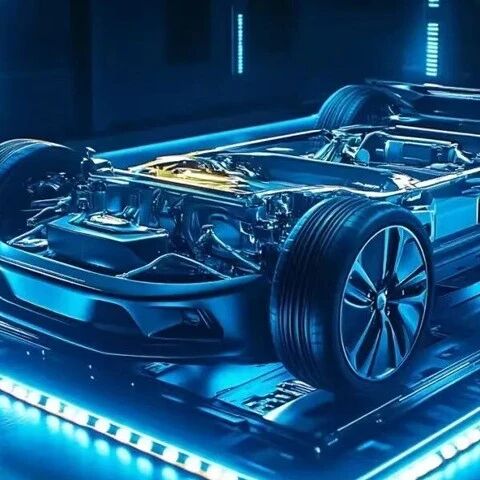
一图读懂|新能源汽车电池退役后,都去哪儿了?
Bei Ke Cai Jing· 2025-11-03 08:21
Core Insights - The large-scale retirement of electric vehicle batteries is creating a trillion-yuan recycling market, with retired batteries being diverted into "cascade utilization" and "recycling" paths based on their health status [1][2][16] Group 1: Market Overview - The recycling market for retired batteries is projected to exceed 400 million tons, with an industry value expected to surpass 280 billion yuan [18] - The recovery volume is anticipated to exceed 300,000 units, with a market scale of approximately 48 billion yuan [19] Group 2: Battery Lifecycle - The process from battery retirement to recycling involves several stages: health status detection, sorting, reorganization, and system integration for cascade utilization [4][12] - For recycling, automated disassembly and wet metallurgy techniques are employed to recover valuable metals like lithium, cobalt, and nickel, achieving recovery rates of 99.6% for certain metals and 96.5% for lithium [7][9][14] Group 3: Application Scenarios - Cascade utilization applications include energy storage bases (such as 5G base stations and photovoltaic storage systems), low-speed vehicles (like electric forklifts and sightseeing cars), and backup power sources (UPS) [11][10] Group 4: Industry Participants - Battery sources include vehicle manufacturers (OEMs) like BYD, SAIC Group, and Geely, as well as battery producers like CATL and Guoxuan High-Tech [23][24] - Recycling and channel partners include companies like Greeenme and Tianqi, which build recycling networks and collaborate with manufacturers for battery collection [27][28] - Processing and recycling firms include Greenme and BYD, which handle the final recycling stages [30][31] - End-users of recycled materials include battery material producers who utilize recovered materials to manufacture new batteries [36]





合资反攻:日韩新能源在中国的“起势之年”
Tai Mei Ti A P P· 2025-11-03 06:17
Core Insights - The joint venture brands in China are poised for a significant shift in the electric vehicle (EV) market by 2025, with a focus on new energy vehicles (NEVs) becoming a primary strategy [2][5] - Recent launches of affordable electric models by joint ventures indicate a strategic move to penetrate the mainstream market, challenging the dominance of domestic brands [3][4] Pricing Strategy - The newly launched models, such as the GAC Toyota BZ3X and Dongfeng Nissan N7, are priced competitively, with starting prices around 109,800 to 119,800 yuan, aiming to attract price-sensitive consumers [3][4] - The pricing strategy emphasizes a "low price" approach to disrupt market perceptions and engage in direct competition with domestic brands [3][4] Market Dynamics - The 100,000 to 150,000 yuan price range is identified as a critical segment in the Chinese passenger vehicle market, accounting for over 30% of total sales, making it a highly competitive arena [4] - Joint venture brands are now actively participating in this segment, which was previously overlooked due to low profitability [5] Technological Advancements - The new models are addressing previous shortcomings in smart technology by collaborating with local tech companies, enhancing their competitive edge [6][7] - Features such as advanced driver assistance systems and smart cockpit technologies are being integrated, leveraging local innovations to meet consumer expectations [6][7] Localization Efforts - The integration of local supply chains is crucial, with high localization rates reported for the new models, such as nearly 100% for the Dongfeng Nissan N7 [8][9] - The shift from a model of "foreign technology, local production" to a "China-led development" approach is evident, with local teams driving product design and features [8][9] Market Positioning - Despite the positive developments, joint venture brands still face challenges in gaining market share, with domestic brands holding a significant lead in the NEV segment [11][12] - The perception of joint venture brands as lagging in smart technology remains a hurdle, necessitating ongoing efforts to reshape brand image and consumer trust [11][12] Future Outlook - The year 2025 is seen as a pivotal moment for joint venture brands in the NEV market, marking the beginning of a more aggressive strategy to reclaim market share [5][12] - The success of these brands will depend on their ability to adapt to consumer needs and market trends, as well as their capacity to innovate and compete effectively against domestic players [12]
解能源桎梏,扬时代风帆-美国缺电深度研究及观点更新
2025-11-03 02:35
Summary of Key Points from the Conference Call Industry Overview - The conference call focuses on the **U.S. energy sector**, specifically addressing the **electricity supply-demand imbalance** in the United States, which is projected to exceed **200 GW** in the coming years due to factors such as increased electrification of end-use electricity, growth in industrial and commercial loads, and extreme weather events [1][4][9]. Core Insights and Arguments 1. **Electricity Supply-Demand Imbalance**: - The U.S. electricity grid is significantly less interconnected than China's, limiting the ability to balance supply and demand effectively. The eastern, western, and Texas grids are all facing severe shortages, with a minimum gap of **70 GW** even under conservative estimates [1][7][9]. 2. **Drivers of Increased Demand**: - The rapid increase in **AI computing power** is a major factor contributing to the electricity shortage, with potential demand growth of **80 GW** to **200 GW** from 2024 to 2029 [3]. - The **electrification of end-use** in heating (heat pumps) and transportation (electric vehicles) is accelerating electricity demand [3][5]. - The growth of data centers, cryptocurrency mining, semiconductor manufacturing, and electric vehicle production is driving high and stable electricity demand [5][6]. 3. **Challenges in Power Generation**: - The U.S. has seen a decline in reliable power sources such as coal, nuclear, and hydroelectric power, with a reduction of over **70 million kW** in high-reliability capacity since 2014 [5][6]. - The aging infrastructure and lengthy interconnection processes hinder the timely addition of new capacity, with an average interconnection time exceeding **3 years** [6][10]. 4. **Potential Solutions**: - Expanding effective energy capacity and improving capacity factors are essential. This includes increasing the use of gas, nuclear, and fuel cells, as well as enhancing interconnections between regions [10]. - The application of **energy storage technologies** is crucial for balancing supply and demand, particularly in high-response areas like data centers [11][12]. - User-side management strategies, such as upgrading supply structures, can help reduce peak demand [10]. 5. **Growth of the Energy Storage Market**: - The U.S. energy storage market is expected to grow significantly, with projections of **50%-60%** growth by 2026, driven by data center demand [12][14]. - Data centers are anticipated to contribute an additional **20 GWh** to the storage market by 2026 [14]. 6. **Lithium Battery Industry Outlook**: - The lithium battery sector is expected to benefit from domestic and international storage projects and data center construction, with growth rates potentially reaching **60%** by 2026 [15]. - Supply constraints in battery components, such as lithium hexafluorophosphate and anode materials, are expected to lead to price increases [15][16]. Additional Important Insights - **Nuclear Energy**: There is a growing interest in nuclear technology, particularly small modular reactors (SMRs) and fusion energy, as potential solutions to the electricity shortage [29][30][32]. - **Gas Turbine Market**: The gas turbine market is experiencing explosive growth in orders, with significant demand expected through 2025 [28]. - **High Voltage Direct Current (HVDC) Technology**: The shift towards HVDC technology in data centers is becoming a trend, with solid-state transformers (SST) seen as the future direction [23][24][25]. Investment Opportunities - Key companies in the lithium battery and energy storage sectors, such as **CATL**, **EVE Energy**, and **Xingwangda**, are highlighted as having significant investment potential due to their growth strategies and market positioning [17][18].
新锂程:锂电固态电池设备的新变化
2025-11-03 02:35
新锂程:锂电固态电池设备的新变化 20251102 摘要 2025 年头部锂电设备公司业绩显著改善,先导智能利润逐季增长,全 年业绩符合预期,预计四季度收入和利润将继续环比上升,毛利率也将 有所提升。 锂电设备行业订单显著改善,核心公司订单增速从 2023-2024 年的负 增长转为 2025 年三季度末的约 40%,预计全年行业订单增速在 30- 40%之间,龙头公司先导智能前三季度订单增速约为 50%。 2026 年市场前景总体乐观,但增速可能减缓,动力电池需求仍占主导, 储能需求增长迅速,国内政策支持和海外市场需求增加将推动储能市场 发展。 固态电池领域取得重要进展,宝马、三星与 Solid Power 合作开展全固 态电池验证项目,标志着全固态电池技术向商业化应用迈出重要一步。 全球固态电池技术发展迅速,大众参股的 QuantumScape 计划在 2030 年前实现量产,先导智能上半年新增固态电池订单超预期,中科 院在离子调控技术方面取得突破。 Q&A 今年锂电设备行业的三季度报告显示了哪些主要变化和趋势? 今年锂电设备行业的三季度报告显示出显著的增速变化和盈利增长。自 2023 年下半年开始,锂电 ...

电力设备与新能源行业11月第1周周报:“十五五”规划建议发布,加快绿色能源转型-20251103
Bank of China Securities· 2025-11-03 00:19
Investment Rating - The report maintains a rating of "Outperform" for the industry [1][2]. Core Insights - The release of the "14th Five-Year Plan" provides direction for the development of the new energy industry and sets higher requirements, benefiting the entire industry chain [1]. - In the fourth quarter, domestic sales of new energy vehicles are expected to remain high, driving demand for batteries and materials [1]. - The solid-state battery industry is progressing, with a focus on the delivery of the first generation of sulfide solid-state batteries by Funeng Technology, achieving an energy density of 400Wh/kg [1]. - The photovoltaic sector is expected to see price increases driven by high power components, with a focus on the supply chain dynamics of materials like EVA and aluminum [1][22]. - Wind power demand is projected to grow, with a target of adding no less than 12 million kilowatts of new installations annually during the "14th Five-Year Plan" [1]. - The new energy storage capacity is expected to exceed 180 million kilowatts by 2027, indicating sustained high demand in the storage sector [1]. - The report highlights the importance of hydrogen energy and nuclear fusion as emerging growth points in the economy, with policy support expected to accelerate project advancements [1]. Summary by Sections Industry Dynamics - The report notes that the new energy vehicle retail sales in October are expected to reach around 1.32 million units, with a penetration rate of approximately 60% [24]. - Funeng Technology is set to deliver its first generation of sulfide solid-state batteries, which have an energy density of 400Wh/kg [24]. - The report emphasizes the need for the photovoltaic industry to maintain a focus on avoiding excessive competition and ensuring profitability through effective price transmission [1][24]. Company Performance - The report provides insights into the financial performance of various companies, noting that Xinyuan Materials reported a net profit of 114 million yuan, a year-on-year decline of 67.25% [2]. - Other companies like Tiansheng Technology and Keda Li reported net profits of 503 million yuan and 1.185 billion yuan, reflecting year-on-year growth of 8.30% and 16.55% respectively [2]. - The report highlights the financial struggles of companies like Longi Green Energy, which reported a net loss of 3.403 billion yuan [2].
磷酸铁锂电池头部企业产能利用率普遍维持高位
Zheng Quan Ri Bao· 2025-11-02 16:40
Core Insights - The energy storage battery materials market is experiencing a significant supply-demand gap, driven by explosive domestic demand and accelerated overseas market expansion, particularly for lithium iron phosphate (LFP) materials [1][2] Group 1: Market Demand and Growth - Domestic energy storage demand has surged since 2024, leading to saturated orders for leading companies and full-capacity utilization [1] - As of mid-2025, the new energy storage installation capacity in China reached 94.91 million kilowatts, a 29% increase compared to the end of 2024 [2] - The shipment volume of energy storage batteries in China for the first half of 2025 was 265 GWh, representing a 128% year-on-year growth, with LFP batteries becoming the mainstream route for electrochemical storage [2] Group 2: Technological Innovations - Companies are focusing on technological innovations to enhance LFP materials, with leading firms like Hunan Youneng and Jiangxi Shenghua pioneering new product lines and production techniques [3] - The breakthrough in high-pressure LFP technology has opened up vast market opportunities for chemical energy storage applications [3] Group 3: Production Capacity and Expansion - Major companies are experiencing high production capacity utilization rates, with some reporting over 80% for ternary lithium and 70% for LFP [4] - Companies are accelerating their expansion plans, with significant increases in shipments and ongoing construction of overseas production bases [5] - The current tight supply-demand balance in the energy storage market is expected to persist until the second half of 2026 [5]

湖北2大电池项目开工;海辰再冲IPO;国轩又一工厂启动;欣旺达扩建海外电池厂;楚能6C电池发布;宁德加码山东产能;鹏辉业绩大涨
起点锂电· 2025-11-02 09:14
Event Overview - The 2025 Solid-State Battery Industry Conference and the Golden Ding Award Ceremony will be held on November 8, 2025, at the Guangzhou Nansha International Convention Center [2] - The event aims to focus on new technologies and build a new ecosystem in the solid-state battery industry [2] Industry Developments - Xiamen Hailong Energy submitted its application for listing on the Hong Kong Stock Exchange, marking its third attempt to go public [4] - Guoxuan High-Tech's battery super factory in Slovakia officially opened, with a planned capacity of 20GWh and expected to create 1,300 jobs [5] - Chuangneng New Energy's 70GWh lithium battery project has commenced construction, focusing on advanced manufacturing and technology research [7] - Envision Power's super energy storage factory in Yichang has started construction, with an annual capacity of 40GWh [8] - Penghui Energy reported a significant turnaround in its financial performance, with a revenue increase of approximately 34% year-on-year [9] - XINWANDA plans to invest up to $482 million (approximately 3.42 billion yuan) in a new green energy lithium battery factory in Thailand [10] Financial Performance - Purtai's revenue for the first three quarters reached 10.83 billion yuan, a year-on-year increase of 10.06%, with a net profit of 1.7 billion yuan, up 37.25% [17][18] - Hunan YN's revenue for the first three quarters was 23.23 billion yuan, a 46.27% increase year-on-year, with a net profit of 645 million yuan, up 31.51% [19] - Better Ray's third-quarter net profit increased by 61.98% year-on-year, with a revenue of 12.38 billion yuan [20] New Projects and Investments - Fulin Precision plans to invest 4 billion yuan in a new high-pressure density lithium iron phosphate project [21] - Shangtai Technology is expanding its production capacity for artificial graphite anode materials, expecting to exceed 500,000 tons by the end of 2026 [22] - A new high-performance battery aluminum foil project with an annual capacity of 60,000 tons has been signed in Anhui [23] Market Trends - The Ministry of Commerce announced a one-year suspension of lithium battery export control measures, responding to similar actions by the U.S. [15] - The market for lithium battery materials is expected to remain tight, with potential price increases for anode materials [22]
固态电池为何迟迟无法上车
3 6 Ke· 2025-11-02 07:45
Core Insights - Solid-state batteries are considered the ultimate form of power batteries due to their high thermal stability and potential for long endurance and safety, but they have faced multiple challenges in technology, processes, and costs that have prevented large-scale production [1][2] - Recent announcements from second and third-tier battery manufacturers and automakers like Chery have reignited interest in the mass production of solid-state batteries [1][2] - Major players like CATL have indicated that solid-state batteries may not achieve small-scale production until 2027 and large-scale production until 2030, highlighting the industry's cautious outlook [2][8] Group 1: Recent Developments - On October 23, 2023, Xinwanda unveiled its solid-state battery "Xin·Bixiao" with an energy density of 400 Wh/kg, compared to 200-250 Wh/kg for mainstream lithium iron phosphate batteries and 250-300 Wh/kg for ternary lithium batteries [1] - Chery showcased its self-developed "Rhino S" all-solid-state battery module with an energy density of 600 Wh/kg, promising a range of 1200-1300 kilometers, with plans for mass production by 2027 [1][2] Group 2: Technical Challenges - The solid-solid interface issue and poor ionic conductivity of solid electrolytes are significant barriers to large-scale production [2][3] - Solid-state electrolytes have lower ionic conductivity compared to liquid electrolytes, and the hard contact between solid electrolytes and electrodes complicates ion transport [3][4] - The industry is exploring various electrolyte materials, with sulfide electrolytes currently being the most mainstream despite their sensitivity to moisture and air [4][5] Group 3: Manufacturing and Cost Issues - Transitioning from liquid to solid-state battery production requires significant changes in manufacturing processes, with estimates suggesting a 60% alteration in production lines [6][7] - The cost of solid-state batteries is currently 5-10 times higher than that of liquid batteries, posing a challenge for both manufacturers and consumers [7][8] - Many companies are considering semi-solid-state batteries as a transitional technology to leverage existing liquid battery production equipment while gradually improving processes [6][7] Group 4: Market Dynamics - The recent surge in interest for solid-state batteries is driven by the desire of second and third-tier manufacturers to disrupt the market and gain an advantage over leading players like CATL [8][9] - Concerns over the safety of liquid batteries, especially following recent fire incidents, have increased consumer demand for safer, high-energy-density alternatives [8][9]
低空经济行业周报(第四十期):510亿央企战略基金启动赋能低空经济发展,联合飞机铂影T1400无人直升机首航-20251102
KAIYUAN SECURITIES· 2025-11-02 07:15
Investment Rating - The industry investment rating is "Overweight" [3][29] Core Views - The establishment of a 51 billion yuan central enterprise strategic fund aims to empower the development of the low-altitude economy, focusing on strategic emerging industries such as artificial intelligence, aerospace, and high-end equipment [1][22] - The successful maiden flight of the T1400 unmanned helicopter marks a significant technological breakthrough, indicating the low-altitude economy has entered the "ton-level era" [1][25] - The low-altitude economy is experiencing vertical implementation from macro (national industrial planning) to micro (infrastructure bidding and application scenario development), suggesting a positive outlook for the sector [1][18] Summary by Sections Industry Investment Rating - The report maintains a positive outlook on the low-altitude economy sector, indicating expected outperformance compared to the overall market [3][29] Policy Support - On October 29, a special fund for the development of strategic emerging industries was launched, with an initial scale of 51 billion yuan, aimed at enhancing core functions and competitiveness of state-owned enterprises [1][22][17] Industry Dynamics - The "Air-Ground Integrated Cluster Smart AI Ecological Alliance" was established to promote the systematic and scenario-based development of the industry [1][23] - The largest "sky test field" in the Guangdong-Hong Kong-Macao Greater Bay Area has officially commenced operations, enhancing Shenzhen's position in the low-altitude economy [1][24] Individual Stock Dynamics - The T1400 unmanned helicopter, developed by Harbin United Aircraft, successfully completed its maiden flight with a maximum payload of 650 kg, supporting logistics and emergency rescue applications [1][25][18] - Recommended stocks include Wolong Electric Drive and Green Energy Huichong, with beneficiaries in low-altitude manufacturing, infrastructure, and operations [1][18]