招商银行

Search documents
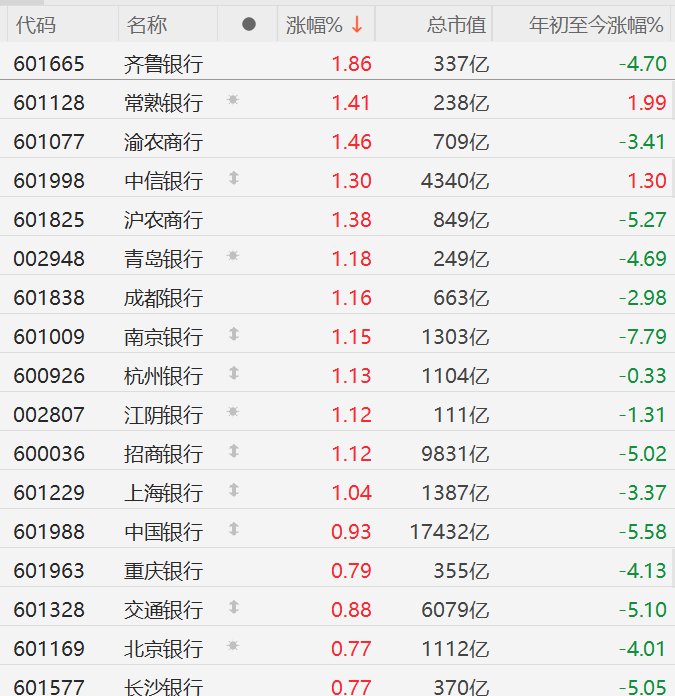
A股银行股逆势普涨,齐鲁银行涨近2%
Jin Rong Jie· 2026-01-20 03:20
Core Viewpoint - The A-share market sees a notable increase in bank stocks, with several banks experiencing significant gains despite broader market trends [1] Group 1: Stock Performance - Qilu Bank rises nearly 2% [1] - Changshu Bank, Chongqing Rural Commercial Bank, CITIC Bank, Shanghai Rural Commercial Bank, Qingdao Bank, Chengdu Bank, Nanjing Bank, Hangzhou Bank, Jiangyin Bank, China Merchants Bank, and Shanghai Bank all see increases of over 1% [1]

银行板块逆势走低 价值重估待催化
Zhong Guo Jing Ying Bao· 2026-01-20 03:19
Core Viewpoint - The banking sector in A-shares is experiencing a downturn despite a bullish start to 2026 for the overall market, attributed to capital outflows and pressures on net interest margins [1][2][3]. Group 1: Market Performance - As of January 19, 2026, the banking index has seen a decline of 3.49% over the past five days, with four consecutive days of losses [1]. - The Penghua CSI Bank ETF has dropped 4.32% year-to-date, contrasting with a 2.2% increase in the CSI 300 index, highlighting a significant divergence in performance [2]. - Nearly 70% of the 42 listed banks are in a state of correction, indicating widespread weakness in the sector [2]. Group 2: Factors Influencing the Banking Sector - The shift in market preference towards high-growth sectors like technology and metals has led to a noticeable capital outflow from traditional financial sectors, including banks [2][3]. - The ongoing marketization of interest rates is exerting long-term pressure on banks' net interest margins, with limited relief from structural monetary policy tools [3]. - Investor sentiment is cautious due to slow recovery in long-term credit demand and concerns over asset quality and systemic risks, which are dampening confidence in bank profitability [3]. Group 3: Long-term Investment Outlook - Despite short-term challenges, institutions remain optimistic about the long-term investment value of bank stocks, citing low valuations and attractive dividend yields as key factors [4][5]. - The potential for a reassessment of systemic risks in the banking sector could lead to a revaluation of net assets, providing a catalyst for stock price recovery [5]. - The stability of bank stocks as a core asset in a diversified portfolio is emphasized, particularly in uncertain economic conditions, suggesting they may outperform in defensive market phases [4][5].
A股,两融降温!结束10连增
证券时报· 2026-01-20 03:13
Core Viewpoint - The implementation of new margin requirements has led to a decline in the margin trading balance and trading volume in the A-share market, indicating a cooling off in the margin trading environment [2][4][5]. Group 1: Margin Trading Regulations - On January 19, 2026, the minimum margin requirement for investors financing the purchase of securities was raised from 80% to 100% [5]. - This adjustment applies only to new financing contracts, while existing contracts will continue under previous regulations [5]. Group 2: Market Impact - On the first day of the new regulations, the margin trading balance decreased to approximately 27,232 billion yuan, a reduction of about 84 billion yuan from the previous trading day, ending a streak of 10 consecutive increases [4]. - The financing balance on January 19 was about 27,059 billion yuan, down by approximately 85 billion yuan, also marking the end of a 10-day growth trend [4]. - The total margin trading volume on January 19 was around 2,684 billion yuan, the first time it fell below 3,000 billion yuan since January 6, and the lowest single-day figure for 2026 [4]. - The proportion of margin trading volume to total A-share trading volume decreased to 9.82%, the first time it has been below 10% since December 16, 2025, down from 11.01% on January 16 [4]. Group 3: High Margin Balances in Selected Stocks - Despite the overall decline in margin trading balances, many stocks still maintain high margin balances, with 17 stocks having balances exceeding 10 billion yuan as of January 19 [7]. - Notably, stocks such as China Ping An, Dongfang Wealth, and Ningde Times have margin balances exceeding 20 billion yuan [7].


2025年银行业绩前瞻:利息净收入增速转正,业绩延续改善趋势
GUOTAI HAITONG SECURITIES· 2026-01-20 03:10
利息净收入增速转正,业绩延续改善趋势 [Table_Industry] 商业银行 2025 年银行业绩前瞻 | | | | 2025 | 年银行业绩前瞻 | | | [Table_Invest] 评级: | 增持 | | --- | --- | --- | --- | --- | --- | | [姓名table_Authors] | 电话 | 邮箱 | 登记编号 | | | | 马婷婷(分析师) | 021-23185608 | matingting@gtht.com | S0880525100001 | | | | 陈惠琴(分析师) | 021-38676666 | chenhuiqin@gtht.com | S0880525100003 | | | 本报告导读: 预计上市银行 2025 全年营收及归母净利润增速分别为 1.5%、2.2%,分别较 2025 年 前三季度提升 0.3pct、提升 0.3pct,主要得益于息差表现平稳、信用成本继续下降。 投资要点: [Table_Report] 相关报告 请务必阅读正文之后的免责条款部分 行 业 跟 踪 报 告 股票研究 /[Table_Date] 20 ...
银行股逆势普涨,齐鲁银行涨近2%
Ge Long Hui· 2026-01-20 03:06
Group 1 - The A-share market saw a significant increase in bank stocks, with Qilu Bank rising nearly 2% and several other banks, including Changshu Bank and Chongqing Rural Commercial Bank, increasing by over 1% [1] - The total market capitalization of Qilu Bank is 33.7 billion, while Changshu Bank has a market cap of 23.8 billion [2] - Year-to-date performance shows that Qilu Bank has decreased by 4.70%, while Changshu Bank has increased by 1.99% [2] Group 2 - Other banks that experienced gains include Yunnan Rural Commercial Bank (1.46%), CITIC Bank (1.30%), and Shanghai Bank (1.04%) [2] - The total market capitalization of CITIC Bank is 434 billion, and it has a year-to-date performance of 1.30% [2] - Despite the gains, many banks still show negative year-to-date performance, such as Shanghai Bank (-3.37%) and China Bank (-5.58%) [2]





从经济数据看市场交易的宏观线索
2026-01-20 01:50
Summary of Key Points from Conference Call Records Industry Overview - The macroeconomic indicators for Q4 2026 show a GDP growth of 4.5%, which, despite a decline from the previous quarter, is considered robust given the high base of 5.4% in Q4 2025 [1][2] - The nominal GDP growth rate improved to 3.8% in Q4, up from 3.7% in the previous quarter, supported by significant improvements in PPI and CPI, with the deflator index reaching its best level of -0.7% for the year [3] Economic Data Insights - The birth rate in 2025 fell to 7.92 million, while deaths reached 11.31 million, resulting in a natural growth rate of -2.4‰. However, urbanization increased by 0.89 percentage points, adding 10 million urban residents, which supports rigid demand in the real estate sector [5] - Investment showed a cumulative negative growth of 3.8% for the year, with December alone estimated at -15.1%. The central government plans to increase investment support, potentially exceeding 1 trillion yuan during the upcoming Two Sessions [7] Sector Performance - High-tech manufacturing saw a year-on-year increase of 11%, with industrial value added growing by 5.2% in December. The service sector also performed well, with a production index growth of 5% [8] - Consumer spending growth was only 0.9% in December, the lowest for 2026, with an annual growth rate of 3.7%. The decline in policy subsidies contributed to this slowdown [6] Banking Sector Analysis - The banking sector is currently facing opportunities due to solid credit issuance foundations and easing margin pressures, although the pace of retail demand recovery remains uncertain [17] - The core logic of the banking sector includes a focus on corporate business, optimization of funding costs, and asset quality supported by debt resolution policies [18] - Expected credit growth in January 2026 is projected to be between 5.5 to 5.6 trillion yuan, with corporate loans being the main focus, particularly in technology and green finance sectors [19][20] Market Sentiment and Investment Opportunities - The A-share market is currently in an upward phase, with active investor sentiment and increasing margin financing. However, caution is advised regarding potential corrections in overvalued sectors [15] - Recommended sectors for investment include defensive large-cap stocks, growth stocks in technology, and sectors benefiting from new supply-side structural reforms such as chemicals and coal [16] Employment and Monetary Policy - The unemployment rate remained stable at 5.1% for three consecutive months, indicating a stable labor market, which supports a cautious approach to macroeconomic policy [9] - The central bank's monetary policy is focused on structural tools, with expectations for a 50 basis point reserve requirement ratio cut in Q1 2026, and possibly 1-2 additional cuts throughout the year [13][14] Conclusion - The overall economic outlook for 2026 indicates a mixed environment with growth opportunities in certain sectors, particularly in technology and infrastructure, while challenges remain in consumer spending and retail banking. The banking sector is expected to navigate these challenges with a focus on corporate lending and asset quality management.
大金融基本面和配置展望
2026-01-20 01:50
Summary of Key Points from Conference Call Records Industry Overview - The financial sector is experiencing a cautious outlook, particularly in the real estate market, which shows signs of growth but is subject to seasonal and policy influences. Key data in March and April will be critical for assessing market stability [1][5] - The non-bank financial sector is expected to perform strongly in 2025, with significant growth in both insurance and securities companies. A reduction in margin requirements by exchanges is seen as a preemptive risk control measure with limited impact [1][6] Real Estate Market Insights - Recent data indicates a recovery in the real estate market, with Beijing's transaction volume from January 1 to 18 showing a year-on-year increase of nearly 24% and a month-on-month increase of approximately 13%. However, this recovery may be influenced by seasonal effects and policy changes [2] - The sustainability of this recovery is uncertain, and the performance of data in March and April will be crucial. Without significant policy changes, the market may still face considerable pressure [5] Stock and Real Estate Price Relationship - There is a long-term correlation between stock prices and real estate prices, both reflecting economic fundamentals, but not necessarily a causal relationship. Stock prices reflect corporate earnings growth, while real estate prices are more indicative of income and rental growth [3][4] Banking Sector Analysis - The banking sector has faced significant outflows since Q3 of the previous year, with public funds and ETFs reallocating investments. The banking sector has seen the highest decline among major industries since the beginning of the year [7][8] - Despite recent declines, quality bank stocks are viewed as having rebound potential, particularly those with strong fundamentals and benefiting from macroeconomic recovery [7][10] - The current PB (Price-to-Book) valuation of the banking sector is low, with many state-owned banks expected to have dividend yields exceeding 4% in 2025, making them attractive investments [11][12] Future Outlook for Banking Sector - Major commercial banks are expected to maintain stable growth in 2026, with credit growth projected to be in line with national averages. The focus will be on corporate lending, responding to regulatory emphasis on economic efficiency [13] - Quality risks in the banking sector, particularly in retail loans, need to be monitored. The structure of credit is primarily corporate and government-related, which helps stabilize asset quality [14] Investment Recommendations - Recommendations include focusing on high ROE (Return on Equity) regional commercial banks and stable, high-dividend large commercial banks. These institutions are expected to provide stable returns and perform well in long-term investments [15]
东证融汇禧悦90天滚动持有中短债债券型集合资产管理计划已审财务报表
Zhong Guo Zheng Quan Bao - Zhong Zheng Wang· 2026-01-20 00:17
Audit Opinion - The audit of the Dongzheng Ronghui Xiyue 90-day Rolling Holding Short-term Bond Collective Asset Management Plan's financial statements was conducted, concluding that the financial statements are prepared in all material respects according to the basis described in Note 2 [1]. Basis for Audit Opinion - The audit was performed in accordance with Chinese Certified Public Accountant auditing standards, ensuring independence from the asset management plan and fulfilling ethical responsibilities [2]. Emphasis of Matter - Basis of Preparation - Users of the financial statements are reminded to pay attention to the description of the basis of preparation in Note 2, as the financial statements are prepared for the purpose of announcing and filing with the China Securities Regulatory Commission (CSRC) upon the termination of the manager's responsibilities [3]. Other Matters - Limitations on Use of Audit Report - The report is intended solely for the use of the management, custodian, and shareholders of the Dongzheng Ronghui Xiyue 90-day Rolling Holding Short-term Bond Collective Asset Management Plan, as well as the CSRC and its agencies, and should not be used by other parties [4]. Management and Governance Responsibilities - The management is responsible for preparing the financial statements according to the basis described in Note 2, ensuring that the financial statements are free from material misstatement due to fraud or error [5][6]. The governance body is responsible for overseeing the financial reporting process [7]. Responsibilities of the Certified Public Accountant - The objective is to obtain reasonable assurance that the financial statements are free from material misstatement, and to issue an audit report that includes the audit opinion. The audit process involves identifying and assessing risks of material misstatement due to fraud or error [8][9]. Financial Statements Overview - The financial statements include the balance sheet as of December 7, 2025, and the profit and loss statement for the period from January 1, 2025, to December 7, 2025 [11][12]. Basic Information of the Collective Plan - The Dongzheng Ronghui Xiyue 90-day Rolling Holding Short-term Bond Collective Asset Management Plan was originally established as the Northeast Securities Yuanbo No. 2 Bond Preferred Collective Asset Management Plan, which began fundraising on May 13, 2013, and was confirmed by the CSRC [12][13][14]. Investment Scope - The investment scope includes liquid financial instruments such as bonds, asset-backed securities, and other financial tools permitted by the CSRC, but does not include direct investments in stocks [17]. Financial Reporting Basis - The financial statements are prepared based on the assumption of going concern, and the reporting period is from January 1, 2025, to December 7, 2025 [20][21]. Important Accounting Policies - The accounting policies include the classification of financial assets and liabilities, initial recognition, subsequent measurement, and derecognition principles [24][25][26]. Revenue Recognition - Revenue recognition includes interest income from deposits, investment income from bonds, and fair value changes from financial assets [34][35]. Related Party Transactions - The management fee is calculated at an annual rate of 0.3% of the previous day's net asset value, while the custodian fee is at 0.05% [46][47].
经营贷利率下探至“2字头”
Di Yi Cai Jing Zi Xun· 2026-01-19 14:06
Core Viewpoint - The State Council has implemented a package of policies to promote domestic demand through financial and fiscal collaboration, focusing on optimizing service industry loans and personal consumption loan interest subsidies to lower financing costs and stimulate consumer spending [2] Group 1: Business Loan Market - Business loan interest rates have generally decreased to the "20s" range, with increased flexibility in terms of limits, duration, and product offerings, becoming a key focus for bank credit allocation [2] - State-owned banks maintain stable pricing for business loans, with rates around 3%, while collateralized loans can be as low as 2.5% for qualified clients [3] - Joint-stock banks offer more flexible product structures, with some collateralized loans having rates as low as 2.3%, depending on property evaluations [3][4] - City commercial banks are actively competing, with some offering business loans at rates as low as 2.2% and various repayment options to meet different cash flow needs [4] Group 2: Consumer Loan Market - Personal consumption loan rates have stabilized around 3%, with limited room for further decreases, as products with rates below 3% have largely exited the market [5] - Major state-owned banks have consumer loan rates generally between 3.0% and 4.5%, with specific products like ICBC's "Rong e Borrow" offering rates around 3.5% to 3.65% [5] - Joint-stock and city commercial banks are also active in the consumer loan market, with some offering interest subsidies to enhance product attractiveness [6] Group 3: Risk Management and Market Dynamics - Despite ongoing financial policies to promote consumption, demand for consumer loans remains weak, with significant declines in both short-term and long-term consumer loans reported [7] - Banks are tightening risk controls, with stricter audits on the use of consumer loan funds and customer eligibility to prevent misuse of low-cost funds [7][8] - The asset quality of consumer loans is under scrutiny, with projections indicating a potential increase in non-performing loan rates in 2026 [9]
全球央行抢金潮,如何重塑国际储备格局
3 6 Ke· 2026-01-19 13:46
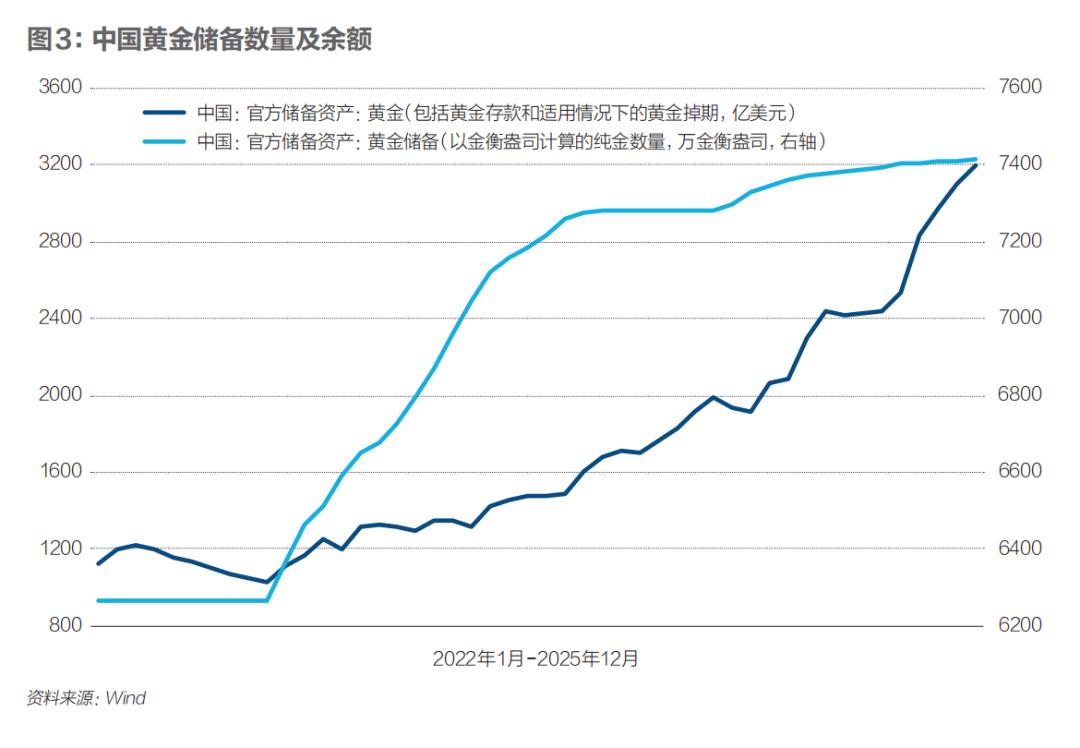
Group 1 - As of the end of Q3 2025, global official gold reserves reached approximately $3.69 trillion, accounting for 28.9% of total official reserves, marking a new high since 2000 [4][10][33] - The International Monetary Fund (IMF) reported that the share of the US dollar in global foreign exchange reserves fell to 56.92% in Q3 2025, the lowest level since 1995, continuing a trend of being below 60% for over ten consecutive quarters [10][33] - The People's Bank of China (PBOC) has been increasing its gold reserves consistently, with a total increase of 1,151 million ounces (approximately 358 tons) since November 2022 [2][12][16] Group 2 - The trend of central banks increasing gold reserves has been ongoing for 15 years, with net purchases exceeding 1,000 tons annually from 2022 to 2024 [24][26] - In 2025, central banks added 634 tons of gold, maintaining a high level compared to the average of 473 tons from 2010 to 2021 [8][24] - Emerging market central banks, particularly Turkey and China, have been significant contributors to gold purchases, with China being the largest buyer in 2023 [7][27] Group 3 - The World Gold Council's report indicates that the demand for gold from central banks is expected to remain strong, with over 90% of surveyed central banks anticipating an increase in gold reserves by 2026 [43] - The ongoing geopolitical tensions and the desire for diversified reserve assets are driving central banks to favor gold over traditional assets like US Treasury bonds [9][36] - The trend of "de-dollarization" is influencing central banks to increase their gold holdings as a hedge against the risks associated with US dollar assets [36][43]