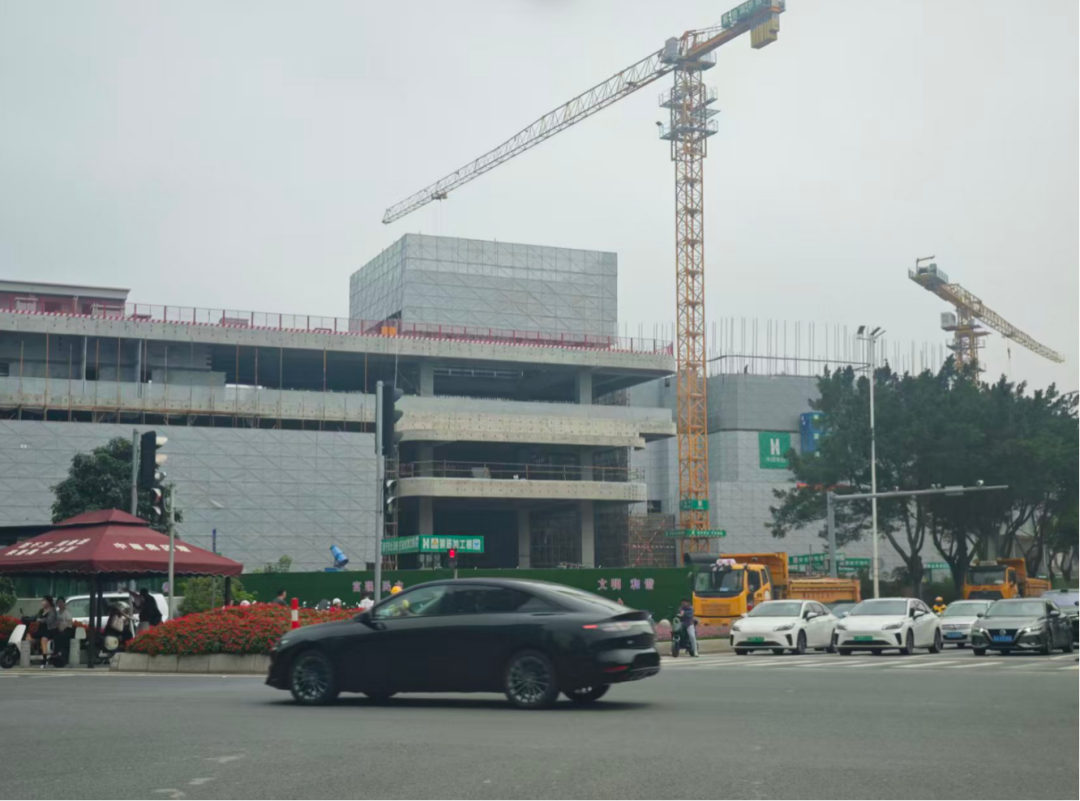
越秀地产

Search documents
最新数据!200万上车广州,能买哪里?
Sou Hu Cai Jing· 2025-08-20 15:46
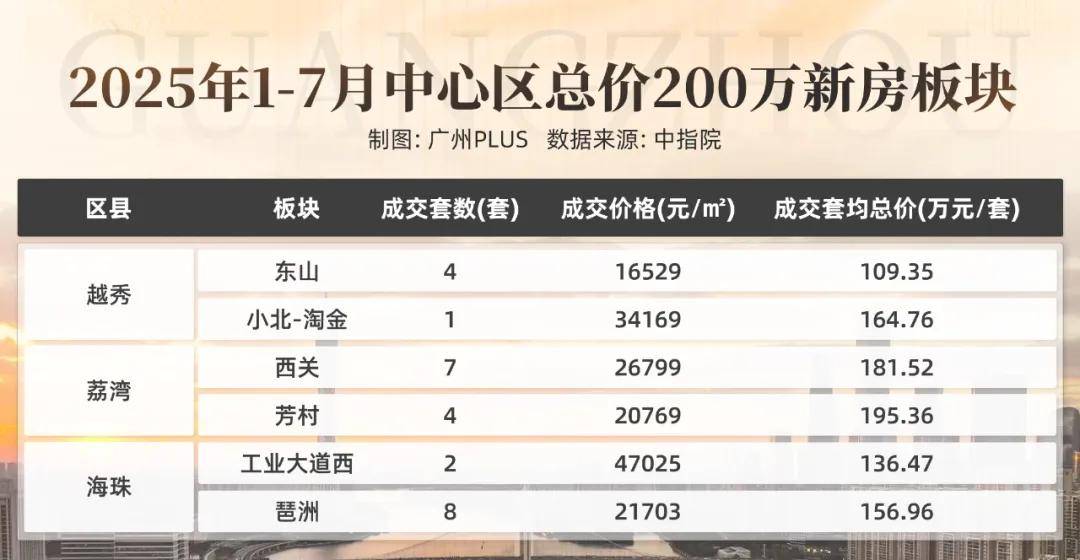
Core Insights - The article highlights the changing landscape of real estate in Guangzhou, indicating that properties priced under 2 million yuan are now available in more districts than previously thought, including central areas [1][4]. District Summaries Central Districts - Six options are available for properties under 2 million yuan in central districts such as Liwan, Haizhu, and Yuexiu, with notable areas including Xiguan and Fangcun [1][2]. Panyu - Panyu offers the most choices with 13 districts available for properties under 2 million yuan, featuring new developments and well-equipped amenities [4][5]. Nansha - Eight districts in Nansha allow purchases under 2 million yuan, with average prices around 150-160 thousand yuan, primarily along metro lines [8][9]. Zengcheng - Zengcheng has seven districts available, with average prices not exceeding 1.4 million yuan, and several projects near metro lines [11][12]. Baiyun - Baiyun provides five districts for properties under 2 million yuan, with prices around 1.9 million yuan in the most expensive areas [13][14]. Huangpu - Huangpu has limited options with only three districts available, with average prices ranging from 160 to 190 thousand yuan [16][17]. Huadu - Four districts in Huadu are available for under 2 million yuan, with the Huadu District Government being the most mature and popular choice [19][20]. Popular Projects - Notable projects include: - **Yuexiu Tianying** in Fangcun with a total price of 195.25 thousand yuan [3] - **Aoyun City** in Panyu with a total price of 193.74 thousand yuan [7] - **Yuexiu Binhai Huacheng** in Nansha with a total price of 119.78 thousand yuan [10] - **Huarun Zhidi Runyue** in Zengcheng with a total price of 121.95 thousand yuan [13] - **Zhonglv Mingmenfu** in Huadu with a total price of 155.12 thousand yuan [21] Market Trends - The article notes that the increase in available districts and projects under 2 million yuan is partly due to price reductions in several areas, attracting more buyers [1][4].

北京楼市:爆发了,救楼市继续上压力
Sou Hu Cai Jing· 2025-08-20 09:27
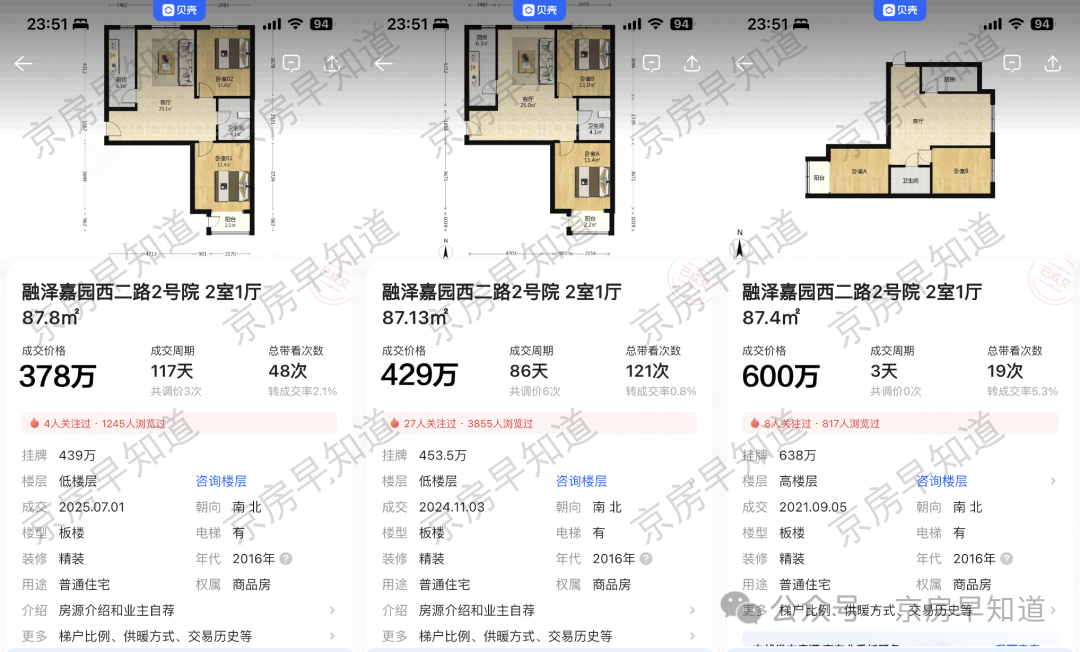
Core Viewpoint - The real estate market is experiencing significant price declines, with some properties seeing drops of over 40% in value, indicating a rapid downturn in the housing sector [1][3][5]. Price Trends - Many neighborhoods are witnessing drastic price fluctuations, with some properties selling at prices that are significantly lower than previous years. For instance, a 87㎡ unit in Rongze Jiayuan sold for 3.15 million in August 2025, down 48% from 6 million in September 2021 [1][3]. - The 62㎡ unit in Wanquanzhuang sold for 4.3 million in August 2025, reflecting a 45% decrease from its price of 7.8 million in March 2021 [5]. - A 49㎡ unit in Kangqiao Shuijun sold for 5.86 million in August 2025, down 40% from 9.75 million in July 2021 [7]. Market Activity - The number of transactions in the market remains relatively stable, with 1,609 transactions recorded in the week of August 11-17, showing a slight increase from the previous week [12]. - The average daily transaction volume for second-hand residential properties is around 379 units, with an estimated total of 12,000 to 13,000 transactions expected for August [12]. Broader Economic Indicators - Recent data from the National Bureau of Statistics indicates a decline in housing prices across major cities, with Beijing, Shanghai, Guangzhou, and Shenzhen experiencing month-on-month decreases of 1.1%, 0.9%, 1.0%, and 0.9% respectively [14]. - Financial data reveals a significant drop in loans, with a negative growth of 500 billion in RMB loans in July, indicating a lack of borrowing from both residents and businesses [14]. Government Response - There is increasing pressure on local governments to stabilize the housing market, as recent commentary emphasizes the need for effective measures to support the real estate sector [16]. - The upcoming months, particularly September, are anticipated to be critical for potential market recovery, with expectations of interest rate cuts that could stimulate housing demand [17].
2024年业绩概览及“十五五”规划下房地产行业展望
EY· 2025-08-20 05:56
Investment Rating - The report does not explicitly state an investment rating for the real estate industry in 2024 Core Insights - The average revenue of the top 30 listed real estate companies in China is projected to decline by approximately 13.83% in 2024, totaling around RMB 2.77 trillion [9] - The average gross margin for these companies is expected to decrease to about 14.42%, down by 1.86% from the previous year [13] - The average net profit margin is projected to be around -10.81%, reflecting a significant decline of 12.45% compared to the previous year [16] - The average return on equity is expected to drop to approximately -20.75%, a decrease of 16.44% from 2023 [59] Summary by Sections 1. Revenue Overview - The total revenue for the top 30 listed real estate companies in 2024 is estimated at RMB 2.77 trillion, a decline of 13.83% year-on-year [9] - Financial Street leads the revenue growth with an increase of 51.74%, reaching RMB 190.75 billion [8] - 20 companies experienced revenue declines, with Midea Real Estate facing the largest drop at 94.94% [9] 2. Gross Margin Overview - The average gross margin for the top 30 companies is projected to be 14.42%, down 1.86% from the previous year [13] - Midea Real Estate shows the highest increase in gross margin at approximately 24.21% [14] - 23 companies reported a decline in gross margin, with Jinhui experiencing the largest drop of 30.80% [13] 3. Net Profit Overview - The average net profit for the top 30 companies is expected to be a loss of RMB 11.65 billion, a decline of 62.09 billion from a profit of RMB 50.44 billion in 2023 [23] - China Resources leads in net profit with RMB 336.78 billion, although this represents a 9.72% decrease from the previous year [24] - Over 70% of companies reported a decline in net profit, with Vanke transitioning from a profit of RMB 204.56 billion to a loss of approximately RMB 487.04 billion [23] 4. Inventory Overview - The total inventory for the top 30 companies is projected to be approximately RMB 60.85 billion, a decrease of 13.58% year-on-year [33] - Only one company, Ruian, reported an increase in inventory, with a growth of 16.03% [33] - Midea Real Estate experienced the largest inventory decline at 99.11% [33] 5. Liquidity Ratios - The average current ratio for the top 30 companies is expected to be 152.86%, a slight increase of 0.15% from the previous year [42] - 16 companies reported a decline in their current ratios, with Xinda showing the largest drop of 39.17% [42] 6. Cash Short-term Debt Ratio - The average cash short-term debt ratio is projected to be 1.52, a decrease of 0.11 from the previous year [54] - Ocean Group has the lowest cash short-term debt ratio at 0.01, while Binhai has the highest at 5.53 [54] 7. Return on Equity Overview - The average return on equity is expected to be -20.75%, a decline of 16.44% from 2023 [59] - Only two companies, Jinmao and New Town, are expected to report positive returns on equity [59]





港股止跌,内房地直线拉升,公用、科技等紧随其后,内石油大跳水
Ge Long Hui· 2025-08-20 04:02
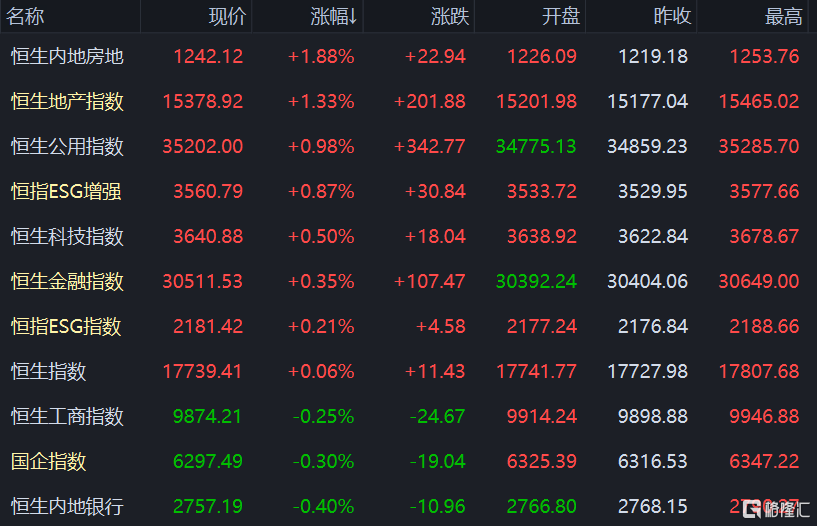
Market Overview - The Hong Kong stock market showed signs of stabilization today, with the Hang Seng Index closing slightly up by 0.06% after a day of narrow fluctuations around the midline [1] - The Hang Seng Property Index led the gains, followed by the Hang Seng Utilities Index and the Hang Seng Technology Index, while the Hang Seng Oil and Gas Index experienced a significant drop [1] Sector Performance - The Hang Seng Mainland Property Index rose by 1.88%, closing at 1242.12, with notable performers including: - CIFI Holdings up by 4.84% - Greentown China up by 4.05% - Yuexiu Property up by 3.17% - Longfor Group up by 2.94% [2] - The Hang Seng Utilities Index increased by 0.98%, closing at 35202.00, with key stocks such as: - CK Infrastructure up by 3.23% - Power Assets Holdings up by 2.56% - Hong Kong and China Gas up by 2.23% [3] - The Hang Seng Technology Index saw a modest increase of 0.50%, closing at 3640.88, with significant gains from: - Ping An Good Doctor up by 9.62% - Alibaba Health up by 8.57% - JD Health up by 3.83% [3] Declines - The Hang Seng Mainland Oil and Gas Index faced a sharp decline of 4.38%, with major companies reporting losses: - PetroChina down by 5.81% - CNOOC down by 5.16% - Sinopec down by 4.38% [3]
内房地反转,银行探底回升,恒生科技相对弱势
Ge Long Hui· 2025-08-20 03:25
Group 1 - The real estate sector opened high and is currently up by 1.54%, with notable gains from companies such as Wanwu Cloud (up 9.26%), Country Garden Services (up 4.16%), and China Overseas Development [3] - The banking sector has rebounded, currently up by 0.68%, with Agricultural Bank of China leading with a 2.05% increase, followed by Bank of Communications (up 1.18%) and several other banks showing slight gains [3] - The Hang Seng Technology index experienced a dip, down by 0.18% after a peak decline of 1.07%, with ASMPT down 2.71% and Xiaopeng Motors down 1.78%, among others [3] Group 2 - The overall market opened high but has since seen a slight decline of 0.05%, with real estate and banking sectors performing well while technology and energy sectors faced downward pressure [1] - The performance of the real estate sector is particularly strong, with multiple companies showing significant increases, indicating a positive sentiment in this industry [3] - The technology sector's decline suggests potential challenges, with over ten companies experiencing a drop of more than 1%, indicating a cautious outlook for this segment [3]

中泰国际每日晨讯-20250820
ZHONGTAI INTERNATIONAL SECURITIES· 2025-08-20 02:08
Market Overview - On August 19, the Hong Kong stock market showed a lack of direction for two consecutive days, with the Hang Seng Index falling by 54 points or 0.2% to close at 25,122 points. The Hang Seng Tech Index decreased by 0.7% to 5,542 points. The total market turnover reached HKD 278.2 billion, with a net inflow of HKD 18.57 billion into the Hong Kong Stock Connect, primarily into index ETFs [1] Interest Rates and Liquidity - The one-month HIBOR has risen to 2.57%, a two-month high, as the Hong Kong Monetary Authority continues to withdraw HKD liquidity. The Hong Kong-US interest rate spread has narrowed to 1.76%, leading to a strengthening of the Hong Kong dollar. The rising cost of funds in Hong Kong directly impacts corporate financing and investors' margin borrowing costs, potentially reducing the willingness to use leverage [2] - In the medium term, global liquidity is expected to ease, and if the Federal Reserve resumes preventive rate cuts in September, the one-month HIBOR may rise to around 3% before likely reversing downward [2] Automotive Sector - In the automotive sector, Li Auto (9863 HK) reported a half-year vehicle delivery volume of 221,000 units, a year-on-year increase of 155%, with revenue of CNY 24.25 billion, up 174% year-on-year. The company achieved a gross margin of 14.1%, an increase of 13 percentage points year-on-year, and a net profit of CNY 30 million, marking its first profitable half-year. The management has raised the annual sales target to 580,000-650,000 units, a year-on-year increase of 97%-121% [3] Healthcare Sector - The Hang Seng Healthcare Index fell by 1.6%, attributed to a pullback after consecutive gains. Hansoh Pharmaceutical (3692 HK) exceeded market expectations, with a year-on-year revenue increase of 14.3% and a net profit increase of 15.0%. The company's innovative drug product revenue grew rapidly, contributing to a 13.2% increase in total product sales revenue. The sales expense ratio and management expense ratio both decreased, leading to better-than-expected performance [4] Real Estate Sector - The transaction volume of new homes in 30 major cities reached 1.23 million square meters, a year-on-year decline of 15.5%, which is worse than the previous week's decline of 12.3%. The cumulative transaction volume in first-tier cities showed a slight narrowing of declines, with Beijing down 5.4%, Shanghai down 1.5%, Guangzhou up 12.4%, and Shenzhen up 6.3% [5][6] - The inventory-to-sales ratio for commodity housing in ten major cities rose to 121.5, higher than the previous year's 98.7 and the prior week's 119.0 [7] - The land transaction volume in 100 major cities fell by 66.4% year-on-year, with a total area of 7.35 million square meters [8] - Various supportive measures for the real estate market have been introduced across multiple regions, including new initiatives in Tianjin and Fuzhou [9] Policy Outlook - The National Bureau of Statistics reported disappointing figures for July, with new housing starts and completed projects down 15.2% and 29.5% year-on-year, respectively. The overall performance of the real estate market remains weak, but recent policy measures may provide some support [10][12]
北京百亿地王,网传草图太神准了
Sou Hu Cai Jing· 2025-08-20 02:06
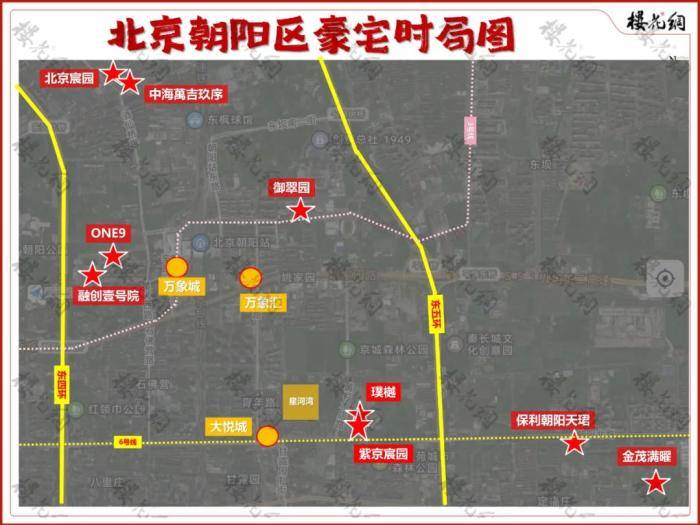
Core Insights - The article discusses the recent public announcement of the design plan for the Zijing Chenyuan project in Beijing's Chaoyang District, highlighting its significance in the competitive real estate market [3][4]. Group 1: Project Overview - The Zijing Chenyuan project is part of a larger land acquisition by a consortium including China State Construction, China Jinmao, and Yuexiu Real Estate, with a total investment of 12.6 billion yuan [3]. - The project covers an area of 5.43 hectares with a total above-ground construction area of 141,400 square meters, featuring 15 buildings ranging from 7 to 25 floors, totaling 815 units [17]. Group 2: Design and Layout - The design plan reveals key features such as a complete entrance, clubhouse, and central landscape system, with a two-entry gate structure [8][10]. - The project includes a north-south oriented street designed in an S-shape, which, while occupying more land, enhances the aesthetic appeal and serves as a fire rescue area [11]. Group 3: Unit Specifications - The average unit size is approximately 172 square meters, with expected prices around 100,000 yuan per square meter [17]. - The unit distribution includes various sizes, with 288 units of 166 square meters and 126 units of 230 square meters, among others [17]. Group 4: Market Context - The article notes that the public disclosure of the design plan for Zijing Chenyuan is part of a trend where real estate projects are increasingly revealing their plans ahead of official announcements, indicating a shift in market dynamics [22]. - The presence of high-voltage power lines near the project site is mentioned as a potential concern, although it is stated that the distance is safe for residents [20].
137只“翻倍基”出炉 公募基金赚钱效应显现
Zhong Guo Zheng Quan Bao· 2025-08-19 22:00
Core Insights - The recent market performance has been strong, with public funds demonstrating significant profit-making ability and excess returns, particularly in themes like Hong Kong securities, innovative pharmaceuticals, and new consumption [1][5] - As of August 18, over 130 funds have achieved returns exceeding 100% in the past year, with notable performances from technology-themed funds focusing on humanoid robots and AI [1][2] Fund Performance - Three North Exchange theme funds have reported returns over 200% in the past year, with specific funds showing returns of 249.27%, 225.42%, and 216.91% respectively [3][4] - A total of 137 funds have achieved returns over 100% in the past year, with many North Exchange theme funds also performing well, including several with returns exceeding 170% [3][4] Active Management and Benchmark Comparison - Actively managed equity funds in the North Exchange have shown significant excess returns compared to their benchmarks, with one fund reporting a return of 190.48% against a benchmark return of 28.64%, resulting in a 161.84 percentage point outperformance [4] Hong Kong Fund Performance - Hong Kong-related funds, particularly in the securities and innovative pharmaceuticals sectors, have also performed well, with one ETF achieving a return of 176% in the past year [5] - Several funds focused on Hong Kong innovative pharmaceuticals have reported impressive returns, with one fund achieving a return of 152.75% year-to-date [5] Technology Fund Performance - Technology-themed funds, particularly those focused on humanoid robots and AI, have also seen significant returns, with one fund reporting a return of 172.28% and another at 174.11% [6] New Consumption and Small Cap Funds - The fund "Guangfa Growth Leading" has achieved a return of 162.55% by capturing new consumption stocks, while some small-cap quantitative funds have also doubled their returns, although risks have been highlighted by several fund companies [7]
广州收紧!120%超高得房率将成“绝唱”?
Mei Ri Jing Ji Xin Wen· 2025-08-19 16:16
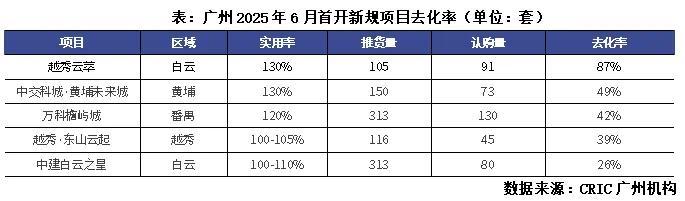
日前,有业内消息称,广州即将出台住宅报建新规,严厉打击"偷面积"行为。此次政策直指飘窗内凹设计、花池私改等乱象,明确规定未取得《建设工程 规划许可证》的项目需按新标准报建,已获批项目则可沿用原方案。 8月18日,《每日经济新闻》记者从多位业内人士处获悉,尽管广州尚未正式出台限制高得房率的措施,但目前已加强对项目报建的审批力度。相关部门 在收到项目报建后,严格按照各项规范从严审批。 "并非直接限制得房率,而是通过对建筑单位图纸的从严审核,确保住宅设计符合各项规范。审核变严后,基本难以实现此前120%~130%的超高得房 率。"有广州房企人士向每经记者表示。 "近期,各地陆续开始整治'偷面积',好房子应在产品设计、社区服务、空间格局、绿色节能、配套服务等方面下功夫,而非仅在使用率上做文章,导致 新房对存量在售和二手房市场造成冲击。"8月19日上午,广东省城乡规划院住房政策研究中心首席研究员李宇嘉向每经记者分析指出。 该办法实施后,阳台面积占比从15%提升至20%,飘窗深度从60厘米扩展至80厘米,并允许设置一个满足连续开敞率不低于40%的主景观阳台,不限制其 进深。此后,市场逐步催生出一批得房率超100%的新规产 ...
120%超高得房率将成“绝唱”?
Mei Ri Jing Ji Xin Wen· 2025-08-19 13:33
Core Viewpoint - The Guangzhou government is set to implement new regulations aimed at curbing "area theft" in residential construction, which may lead to the end of new homes with over 120% efficiency rates [2][3]. Regulatory Changes - New regulations will target design practices such as recessed windows and unauthorized modifications to flower beds, requiring projects to adhere to stricter building standards [2]. - Although there are no direct restrictions on efficiency rates yet, the approval process for project submissions has become more stringent, making it difficult to achieve previous high efficiency rates of 120%-130% [2][5]. Market Dynamics - The trend of high efficiency rates in Guangzhou emerged after the implementation of the "Guangzhou Building Engineering Floor Area Ratio Calculation Method" in November 2023, which allowed for increased balcony area and deeper recessed windows [5]. - The competition for high efficiency rates has led to questionable practices among developers, such as disguising structural elements to evade area calculations, which raises safety concerns [7]. Impact on Housing Market - High efficiency rate projects have negatively impacted the existing new and second-hand housing markets, with some developers facing challenges due to new regulations [9]. - As of August 19, over 140,000 second-hand homes were listed in Guangzhou, with a significant portion being older properties with lower efficiency rates [8]. - New projects under the revised regulations have shown strong market performance, with some achieving over 70% sales rates shortly after launch [9]. Developer Behavior - Developers are adjusting their designs in response to stricter regulations, with some reducing building heights and eliminating certain features to comply with new standards [11]. - The tightening of regulations may lead to decreased enthusiasm among developers for acquiring land and launching new projects, as indicated by industry analysts [11].