三星电子

Search documents
韩元跌跌不休,贬值压力拖累经济增长,韩国GDP规模、增速、人均全面下滑
3 6 Ke· 2026-01-22 08:40
Core Viewpoint - The South Korean won has been depreciating against the US dollar, reaching around 1,470 won per dollar, close to its lowest level since the 2009 global financial crisis, with a cumulative decline of over 2% this year, making it one of the worst-performing Asian currencies [1][3] Economic Impact - The average exchange rate of the won against the dollar for 2025 is projected to be 1,422.16, marking the lowest level since the 1998 Asian financial crisis, with a significant drop in GDP growth rates [1][3][21] - The GDP growth rate for 2025 is expected to be between 1% and 1.15%, the lowest since 2020, with a contraction in dollar-denominated GDP by approximately 3.8% [3][21][23] External Factors - The depreciation of the won is driven by multiple external factors, including interest rate differentials between the US and South Korea, trade impacts, and a reshaping of the global currency landscape [5][6] - The interest rate differential, with the US Federal Reserve maintaining rates between 3.5% and 3.75% while the Bank of Korea has lowered rates to 2.5%, has led to significant capital outflows, particularly towards US assets [6][8] Trade Dynamics - The US's structural adjustments in trade policy have weakened the won's support, with a notable slowdown in exports from key sectors like semiconductors and electric vehicles [6][9] - The current account surplus has narrowed, further exacerbating the depreciation pressure on the won [6] Internal Structural Issues - The capital outflow from South Korea has shifted from short-term speculative to long-term strategic investments, particularly in the US, which has created a rigid outflow trend [10][11] - Domestic investment has been significantly suppressed due to the capital outflow and currency depreciation, with many companies planning to reduce local investments [18][19] Inflationary Pressures - The depreciation of the won has led to increased import costs, contributing to inflation, with the Consumer Price Index (CPI) showing a year-on-year increase of 2.3% in December 2025 [16][18] - The rising costs of energy and raw materials have particularly affected low-income households, highlighting the structural challenges in managing inflation [16] Future Outlook - The market anticipates a "short-term stabilization and long-term pressure" scenario for the won in 2026, with the government aiming to maintain the exchange rate between 1,400 and 1,450 won per dollar [27][28] - Economic recovery in 2026 is projected, with GDP growth expected to rebound to between 1.9% and 2.1%, driven by a recovery in the semiconductor sector and global AI capital expenditures [27][28]

这家卖马桶的日企,成了AI概念股?
财联社· 2026-01-22 07:29
Core Viewpoint - Toto's stock price surged by 10.09%, marking its largest intraday increase in five years, driven by rising global demand for storage chips and expectations for growth in its lesser-known chip manufacturing materials business [2][4]. Group 1: Stock Performance - Toto's stock performance on Thursday made the ceramic sector the best-performing segment of the Tokyo Stock Exchange, with a year-to-date increase of approximately 20% [2]. - The surge coincided with a broader rise in AI-related stocks in the Japanese market, including significant gains for SoftBank Group and Disco, both exceeding 10% [4]. Group 2: Analyst Insights - Goldman Sachs analysts upgraded Toto's rating from neutral to buy, anticipating significant profit growth in its silicon wafer handling tools business due to the tight supply-demand environment in the storage chip industry [6]. - The analysts highlighted that the demand for NAND chip manufacturing equipment, particularly electrostatic chucks, is expected to benefit from the global AI infrastructure development [6]. Group 3: Business Operations - Toto, known for its warm water toilet seats, has been involved in the semiconductor and display supply chain for decades, with its electrostatic chucks contributing up to 42% of total operating profit in emerging business areas for the fiscal year ending March 2025 [7]. - The electrostatic chuck is essential in semiconductor manufacturing, ensuring stable and clean silicon wafers during processes like PVD, CVD, and ETCH, while also providing temperature control [7]. Group 4: Industry Context - The global semiconductor supply shortage is being exacerbated by significant investments from companies like Meta and Amazon in AI service data centers, leading to increased demand for products from companies like Toto [7]. - Japan's strong semiconductor manufacturing background has allowed various companies, including those in non-traditional sectors, to expand into semiconductor-related businesses [8].

股票市场概览:资讯日报:格陵兰危机缓解-20260122
Guoxin Securities Hongkong· 2026-01-22 07:06
Market Overview - The Hang Seng Index closed at 26,585, up 0.37% for the day but down 0.97% weekly, with a year-to-date increase of 3.72%[3] - The S&P 500 index closed at 6,876, showing a daily increase of 1.16% but a weekly decline of 0.93%, with a year-to-date rise of 0.44%[3] - The Nikkei 225 index closed at 52,775, down 0.41% for the day and 2.15% weekly, with a year-to-date increase of 4.84%[3] Sector Performance - Semiconductor stocks surged, with Tianzu Intelligent Chip rising over 8% and Huahong Semiconductor increasing over 5% due to supply concerns from major Korean manufacturers[9] - Gold stocks performed strongly, with Chifeng Jilong Gold up over 9% and Lingbao Gold up over 8%, driven by rising geopolitical tensions and increased demand for safe-haven assets[9] - Lithium battery stocks were active, with Ganfeng Lithium up over 5% and Tianqi Lithium up over 4%, amid supply uncertainties from mining permit renewals[9] U.S. Market Reactions - U.S. markets rebounded significantly after President Trump announced a framework agreement regarding Greenland and canceled new tariffs on European countries, with all major indices rising over 1%[9] - Major tech stocks mostly rose, with Nvidia up 2.95% and Tesla up 2.91%, while Microsoft fell 2.29%[9] Japanese Market Insights - The Tokyo stock market opened lower but saw some recovery as investors bought on dips, with the Nikkei 225 index down 0.41%[13] - Japanese semiconductor stocks showed resilience, with Tokyo Electron up 0.32% and Advantest up 1.33%[13] - Gold ETFs in Japan surged 3.16%, reaching a historical closing high due to increased safe-haven demand[13]
透视张坤四季报:减持白酒,看好房价筑底与内需潜力
Bei Jing Shang Bao· 2026-01-22 07:05
Core Viewpoint - Zhang Kun, a well-known fund manager, has disclosed the latest holdings and layout views of his four funds, indicating a reduction in management scale despite positive performance over the past year [1][3] Fund Performance - The four funds managed by Zhang Kun reported respective increases of 6.86%, 8.46%, 11.75%, and 41.87% in 2025 [3] - The total management scale of Zhang Kun's funds decreased to approximately 48.38 billion yuan, a decline of 14.43% from the previous quarter and 17.91% from the end of 2024 [3] Stock Holdings - The funds slightly increased their equity investment ratios by 1% to 3% in Q4 2025 [3] - Major reductions were observed in holdings of leading liquor stocks such as Kweichow Moutai and Wuliangye, with a reduction of around 5% in Q4 compared to a 10% reduction in Q3 [3][4] Sector Adjustments - Significant reductions were also noted in holdings of JD Health and Focus Media, with some funds reducing JD Health shares by approximately 50% [4] - The funds adjusted their sector allocations, maintaining positions in companies with strong business models and competitive advantages while reducing exposure in sectors like real estate, pharmaceuticals, and computing [5][6] Real Estate Market Outlook - Zhang Kun expressed that the decline in housing prices in major cities is likely nearing its end, influenced by low-risk interest rates and potential policy support [7][8] - The negative impact of declining housing prices on consumer wealth and spending is expected to improve, leading to a potential increase in consumer willingness to spend [7][8] Consumer Market Insights - The domestic consumption has been weak in recent years, but long-term projections suggest significant improvements in living standards and social security levels over the next decade [7][8] - The growth rate of per capita GDP in China is expected to exceed the global average, supporting a stronger domestic demand environment [7][8] AI and Innovation - A strong domestic market is seen as crucial for promoting technological innovation, with the potential for domestic companies to attract global resources and talent [9] - Confidence remains high in the business models and cash flow capabilities of companies within the fund's portfolio, despite concerns about market conditions [9]
韩国综合指数收盘上涨0.9% 盘中一度首次突破5000点
Xin Lang Cai Jing· 2026-01-22 06:41
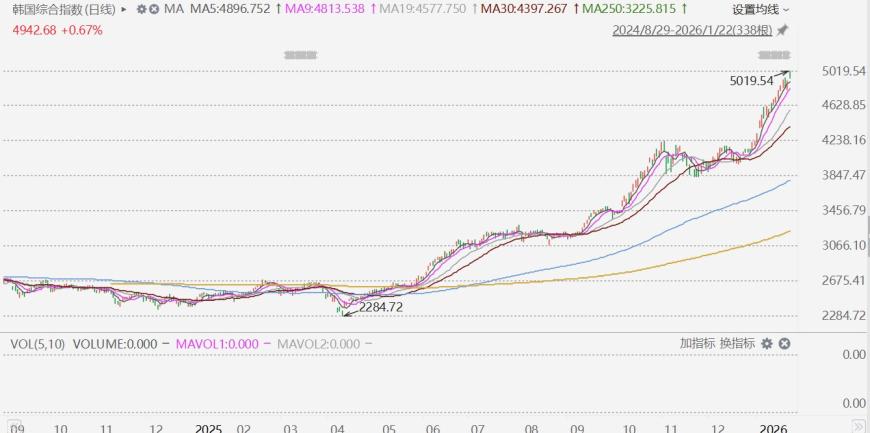
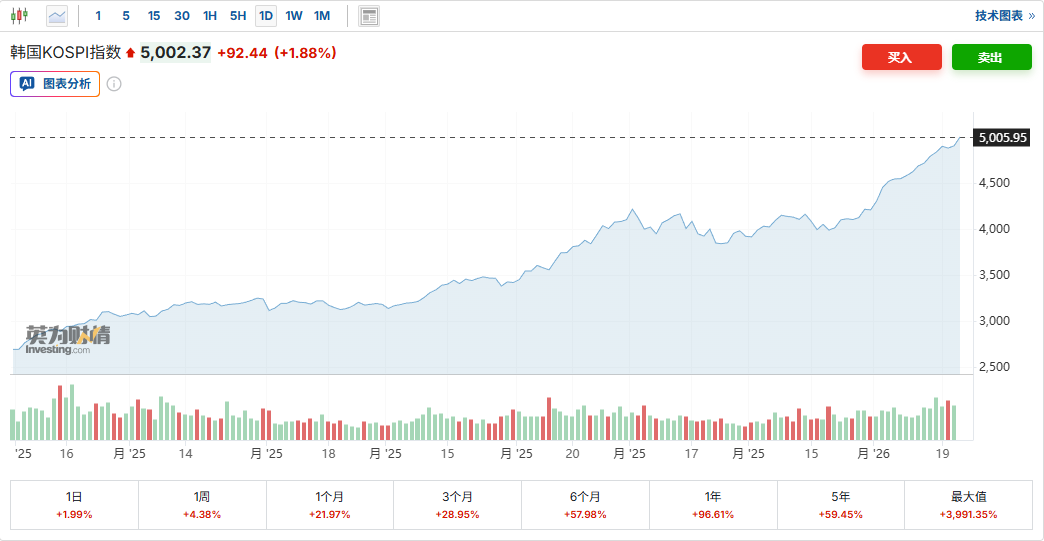
韩国综合指数收盘上涨0.9%,报4952.53点。 受三星电子和SK海力士等芯片股上涨推动,韩国指标股指周四首次升破5000点,达到李在明总统承诺 的水平。韩国综合股价指数(KOSPI)盘中一度涨逾 2% 至5,019.54点,创下新高纪录。 该指数本月迄今已上涨19%,此前在人工智能乐观情绪和各种资本市场改革的推动下, 在2025年以76% 的涨幅成为全球表现最好的指数,创1999年以来的最大年度涨幅。 韩国经济在2025年最后三个月环比出现萎缩,但在关税和政治动荡交织的这一年里,仍实现了韩国央行 的年度增长目标。2025年全年,这个依赖出口的经济体扩张了1.0%——与韩国央行(Bank of Korea)的 预测相符,因为出口的韧性和财政刺激措施帮助抵消了建筑投资的低迷。 该指数本月迄今已上涨19%,此前在人工智能乐观情绪和各种资本市场改革的推动下, 在2025年以76% 的涨幅成为全球表现最好的指数,创1999年以来的最大年度涨幅。 韩国经济在2025年最后三个月环比出现萎缩,但在关税和政治动荡交织的这一年里,仍实现了韩国央行 的年度增长目标。2025年全年,这个依赖出口的经济体扩张了1.0%——与韩国 ...
黄仁勋一句话掀AI狂潮 三星领韩国综指冲破前所未见的5000点关卡
Ge Long Hui· 2026-01-22 06:25
1月22日,英伟达CEO黄仁勋在瑞士达沃斯演说,表示全球AI建设将需要数万亿美元投资,为人工智能行情注入强心针,半 导体类股普遍上扬,记忆体大厂三星电子今日改写历史新高,把韩国大盘Kospi指数托上前所未见的5000点整数关卡。 黄仁勋出席世界经济论坛(WEF)时表示,AI发展浪潮已经启动"人类史上规模最大的基建计划",全球目前已在相关领域投入 数千亿美元,但若要支撑未来的运算需求,仍必须在能源、云端运算及电子系统等层面,持续建设"高达数万亿美元规 模"的基础设施。 责任编辑:栎树 美股频道更多独家策划、专家专栏,免费查阅>> ...
三星电子股价上涨3.7%,至15.5万韩元
Xin Lang Cai Jing· 2026-01-22 04:44
每经AI快讯,1月22日,三星电子股价上涨3.7%,至15.5万韩元。 每经AI快讯,1月22日,三星电子股价上涨3.7%,至15.5万韩元。 ...
A股三大指数集体翻绿,商业航天多股涨停,锋龙股份17连板
2 1 Shi Ji Jing Ji Bao Dao· 2026-01-22 04:15
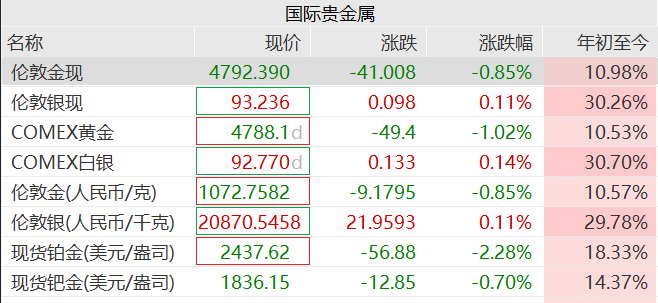
Market Overview - The A-share market experienced a high opening followed by a pullback, with all three major indices turning negative by midday. The ChiNext index had previously risen over 1% [1] - The total trading volume in the Shanghai and Shenzhen markets reached 1.79 trillion yuan, an increase of 168.9 billion yuan compared to the previous trading day [1] - Over 3,200 stocks in the market saw gains, with sectors such as oil and petrochemicals, defense and military industry, and building materials performing strongly [1] Sector Performance - The oil and petrochemical sector showed significant strength, with companies like Zhongjie Oil and Blue Flame Holdings hitting the daily limit. The International Energy Agency projected a daily increase in global oil demand of 930,000 barrels by 2026, up from a previous estimate of 860,000 barrels [4] - The defense and military sector also saw a rally, particularly in commercial aerospace, with multiple stocks hitting the daily limit. Recent developments in commercial space enterprises have indicated a strong growth trajectory [4] - The coal sector experienced a rapid increase, with Dayou Energy hitting the daily limit. The price of Shanxi Datong Q5500 thermal coal rose to 565-580 yuan per ton, marking a 2.23% increase from early January [1] Stock Highlights - Fenglong Co. achieved a remarkable 17 consecutive trading limit increases, with its stock price reaching 90.48 yuan per share [5] - ST Yanshi experienced a sudden influx of funds, leading to a rapid price increase from a limit down to a limit up within one minute, closing at 2.35 yuan per share [5] International Market Trends - The international precious metals market saw fluctuations, with gold and silver prices dropping due to reduced risk sentiment following easing tensions over Greenland between the US and Europe. Gold prices fell over 1% at one point, while silver dropped over 2% [2] - Goldman Sachs raised its 2026 gold price forecast by $500 to $5,400 per ounce, indicating a bullish long-term outlook despite recent price declines [2] Hong Kong Market - The Hong Kong stock market opened high but retreated, with the Hang Seng Index down 0.15%. Notably, Baidu's stock surged by 4%, reaching a nearly three-year high following the release of its Wenxin model 5.0 [6][8]

韩股突破5000点!韩国AI战略全面提速,打造“亚洲AI基础设施枢纽”
Hua Er Jie Jian Wen· 2026-01-22 04:15
Core Viewpoint - The South Korean stock market, represented by the Kospi index, has surpassed the 5000-point mark, indicating a significant revaluation of the economy, previously seen as a cyclical export market, now recognized as a key beneficiary in the global AI industry chain [1][3]. Group 1: Market Performance - The Kospi index rose by 2.2% on a recent Thursday, exceeding the target set by President Yoon Suk-yeol, with a total increase of over 95% in the past 12 months, making it one of the best-performing major stock indices globally [1]. - Major stocks leading this surge include Samsung Electronics, SK Hynix, and Hyundai Motor, with the Korean won also showing slight appreciation against the US dollar [1]. Group 2: AI Infrastructure and Investment Cycle - The current market rally is driven by technology-weighted stocks, with a deeper shift in perception regarding South Korea's role in the AI infrastructure, transitioning from a traditional export economy to a critical player in AI computing and data centers [3][4]. - Morgan Stanley suggests that South Korea is entering a new "infrastructure reinvestment cycle" driven by AI, comparable in significance to the semiconductor capital expenditure wave of the past decade [3]. Group 3: AI Service Penetration - AI services have rapidly penetrated both enterprise and consumer sectors, with significant applications in high-value scenarios such as coding, video production, and logistics [4]. - The monthly active users of ChatGPT in South Korea have reached 18 million, indicating a shift from niche technology users to mainstream adoption [4]. Group 4: Data Center Projects - Multiple large-scale AI data center projects, termed "Neocloud," have been announced, indicating a shift towards heavy asset cycles in the data center sector [5]. - Notable projects include a 100MW AI data center by SK Telecom and AWS, and a 120MW AI data center by Samsung SDS, with significant investments involved [5]. Group 5: Government Policies - The South Korean government, under President Yoon, is promoting AI through policies focused on sovereignty, infrastructure, regulatory reform, and talent development, with the "AI Superhighway" initiative being a key component [6]. - The government aims to decentralize data centers to stimulate local economies and reduce centralized power consumption, aligning with the Kospi's recent performance [6]. Group 6: Energy Infrastructure Challenges - The expansion of AI data centers is encountering structural issues within South Korea's energy system, particularly in the Jeollanam-do region, which has renewable energy potential but faces transmission bottlenecks [7]. - The "Energy Highway" project aims to address these challenges by utilizing high-voltage direct current (HVDC) technology to enhance the efficiency of power transmission [7]. Group 7: Investment Opportunities - Following the Kospi's rise, the focus is shifting towards structural investment opportunities, particularly in AI infrastructure, with Samsung SDS identified as a key beneficiary in the AI data center investment theme [9]. - Companies involved in power equipment and transmission are also being reassessed for their potential, as the demand for high-capacity and quality power increases due to AI data centers [9].
A股三大指数集体翻绿,商业航天多股涨停,锋龙股份17连板
21世纪经济报道· 2026-01-22 04:08
Market Overview - The A-share market experienced a morning surge followed by a decline, with all three major indices turning negative by midday. The total trading volume reached 1.79 trillion yuan, an increase of 168.9 billion yuan compared to the previous trading day, with over 3,200 stocks rising across the market [1][2]. Index Performance - The Shanghai Composite Index closed at 4,110.86, down 6.08 points (-0.15%). The Shenzhen Component Index was at 14,230.97, down 24.15 points (-0.17%). The ChiNext Index stood at 1,856.27, down 6.42 points (-0.34%) [2]. Sector Performance - Strong sectors included oil and petrochemicals, national defense and military industry, and building materials, with concepts like large aircraft, natural gas, and aircraft carriers leading the gains. Conversely, sectors such as non-ferrous metals and beauty care experienced pullbacks [4]. Notable Stocks and Concepts - The coal sector saw a rapid increase, with Dayou Energy hitting the daily limit. The price of Shanxi Datong Q5500 thermal coal rose by 12.5 yuan/ton (2.23%) to 565-580 yuan/ton as of January 19 [6]. - In the precious metals market, gold and silver prices fell sharply due to easing geopolitical tensions, with spot gold dropping over 1% and silver over 2%. Goldman Sachs raised its 2026 gold price forecast by $500 to $5,400 per ounce [6][7]. Commercial Aerospace and Oil & Gas - The oil and gas sector saw significant gains, with companies like Intercontinental Oil and Blue Flame Holdings hitting their daily limits. The International Energy Agency projected a daily increase in global oil demand of 930,000 barrels by 2026, up from a previous estimate of 860,000 barrels [9]. - The defense and military sector also rose, particularly in commercial aerospace, with multiple stocks hitting their daily limits. Recent developments in commercial space companies indicate a strong growth trajectory in this sector [9]. Stock Highlights - Fenglong Co. achieved a 17-day consecutive limit-up, trading at 90.48 yuan/share. In contrast, *ST Yanshi experienced a brief surge before closing at 2.35 yuan/share, up 4.91% [11]. - Baidu's stock rose by 4%, reaching a nearly three-year high, following the release of its Wenxin large model 5.0, which supports multi-modal information processing [14].