大疆

Search documents
二十余国家超600个企业将云集2025“湾芯展”
Zhong Guo Xin Wen Wang· 2025-10-10 08:30
Core Insights - The "2025 Bay Area Semiconductor Industry Ecosystem Expo" will take place from October 15 to 17, 2025, in Shenzhen, featuring over 600 leading companies and institutions from more than 20 countries, aiming to position Shenzhen as a global hub for semiconductor technology innovation [1][3] Group 1: Event Overview - The expo will cover an exhibition area exceeding 60,000 square meters, an increase from the previous year's 40,000 square meters, which hosted 400 companies [1][3] - The event will include high-end forums such as the International Lithography Conference and Chip Academic Conference, along with customized one-on-one matchmaking services for supply and demand [3] Group 2: Industry Growth and Projections - The semiconductor and integrated circuit industry in Shenzhen is projected to reach a scale of 256.4 billion yuan in 2024, reflecting a year-on-year growth of 26.8%, with continued growth expected in the first half of 2025, reaching 142.4 billion yuan and a year-on-year increase of 16.9% [3][4] - By mid-2025, the number of semiconductor and integrated circuit companies in Longgang District, Shenzhen, is expected to expand to 215, forming a trillion-yuan industry scale [3] Group 3: Regional Development Initiatives - Longgang District will have its own exhibition booth at the expo, showcasing its comprehensive industrial chain and promoting the semiconductor industry cluster centered around the Luoshan Technology Park, which spans 138 hectares and 1.23 million square meters [4] - The park aims to integrate technology innovation, industry incubation, high-end manufacturing, and talent cultivation, targeting a global audience in the semiconductor and integrated circuit sectors [4] Group 4: Participation and Networking - The expo will facilitate face-to-face interactions between major projects in the Greater Bay Area and participating companies, with over 5,000 professional buyers from leading firms such as BYD, Foxconn, DJI, Yangtze Memory Technologies, and Hua Hong Group expected to attend [5]


投资人,正在大疆门口“蹲”项目
Hu Xiu· 2025-10-10 07:59
Core Insights - The article discusses the current trend of investment in AI hardware, highlighting that many financial advisors (FAs) are relocating their offices near DJI in Shenzhen to capitalize on the AI boom [1][3] - The focus has shifted from high-quality FA services to basic tasks, with a strategy of targeting employees from major tech companies for investment opportunities [2][3] - Recent financing activities in the AI hardware sector indicate a strong interest from investors, particularly in companies that have connections to established tech giants [4][5] Investment Trends - The AI hardware sector is experiencing significant investment, with companies like Robopoet and Ropet securing millions in funding [4][5] - Notable recent financings include Nothing's $200 million Series C round and Haivivi's 200 million yuan Series A round, indicating a robust interest in AI-integrated products [4][5] - The trend shows that many investors are "all in" on consumer hardware, driven by China's strong supply chain and the recent IPO of a successful AI hardware company [5] AI Toy Market - The AI toy segment is emerging as a rapidly growing niche, with 96 investment institutions currently involved [6] - Investors are divided on the value of AI in toys, with some seeing potential in the technology while others criticize the lack of differentiation in products [6][8] - User retention rates for AI toys are declining, suggesting that initial novelty wears off quickly, impacting long-term engagement [7][8] Future of AI Devices - There is ongoing speculation about the next generation of smart devices that could replace smartphones, with companies like OpenAI and Meta exploring new form factors such as AI-driven glasses [12][13][15] - OpenAI is developing a pocket-sized AI device that integrates advanced context-aware systems, while Meta is betting on smart glasses as the future of personal devices [12][13] - The market for smart glasses remains contentious, with differing opinions on their viability based on user habits and technological readiness [15] Emerging Opportunities - Investment opportunities are categorized into "upgrade opportunities" that enhance existing products and "definition opportunities" that create entirely new categories [16][17] - Specific needs, such as those for special education tools for children with disabilities, are identified as potential areas for growth [18][19] - The concept of interactive IP-based products is gaining traction, allowing for personalized user experiences through smart devices [20]
深圳即将举办“湾芯展” 上半年产业规模超1400亿
2 1 Shi Ji Jing Ji Bao Dao· 2025-10-10 07:48
Core Insights - The semiconductor and integrated circuit industry is a strategic high ground for global technological competition and a core engine for industrial upgrading [1] - Shenzhen is making significant progress in optimizing its semiconductor ecosystem, aiming to become a globally influential innovation hub [1] Industry Growth - The semiconductor and integrated circuit industry in Shenzhen is projected to reach a scale of 256.4 billion yuan in 2024, representing a year-on-year growth of 26.8% [1] - In the first half of 2025, the industry is expected to maintain rapid growth, reaching 142.4 billion yuan, with a year-on-year increase of 16.9% [1] - The industry structure has become more balanced, with all sub-sectors, including manufacturing, testing, and equipment, doubling in scale from 2020 to 2024 [1] Policy Support - Shenzhen has introduced several action plans and measures to foster the development of the semiconductor and integrated circuit industry from 2023 to 2025 [2] - The recently released measures focus on increasing financial support for R&D, particularly in high-end chips, core equipment, and advanced packaging [2] - Subsidies for chip design and manufacturing are provided, covering 30% of the costs for wafer fabrication, with maximum support reaching 3 million yuan for certain projects [2][3] Industry Events - The "2025 Bay Area Semiconductor Industry Ecosystem Expo" will take place from October 15 to October 17, featuring over 600 exhibitors and more than 60,000 pre-registered attendees [3] - The expo aims to facilitate direct connections between major projects and participating companies, inviting over 5,000 professional buyers from leading firms [3][4] - A 5 billion yuan investment fund will be launched at the event to support the semiconductor industry, promoting a healthy interaction between technology, industry, and finance [4]
FA把办公室搬到大疆旁边了
投中网· 2025-10-10 06:33
Core Viewpoint - The article discusses the current trend in AI hardware investment, highlighting the shift in focus towards companies and individuals associated with major tech firms like DJI and ByteDance, as well as the emergence of AI toys as a rapidly growing investment sector [3][4][6]. Investment Trends - Investment firms are increasingly targeting individuals from major tech companies, particularly in the AI hardware sector, with a focus on those from DJI and ByteDance [3][4]. - Recent financing activities in AI hardware have seen significant investments, including Robopoet's angel round led by Sequoia China and Nothing's $200 million Series C round led by Tiger Global [4][5]. AI Toy Sector - The AI toy market is emerging as a concentrated investment area, with many companies achieving valuations exceeding 100 million yuan in their first funding rounds [8]. - Investors express mixed feelings about the AI toy sector, with concerns about product differentiation and sustainability of user engagement [9][10]. - The article notes that while AI toys attract initial interest, user retention rates are declining, indicating challenges in maintaining consumer engagement [9][11]. Future of AI Hardware - The article explores the potential for new smart devices to replace smartphones, with companies like OpenAI and Meta investing in innovative AI-driven hardware solutions [13][14]. - There is a debate among investors regarding the feasibility of smart glasses as a primary device, with differing opinions on user habits and technological readiness [15]. Market Opportunities - The article identifies two types of market opportunities: "upgrade opportunities" that enhance existing products and "definition opportunities" that create entirely new categories [16]. - Specific projects targeting special needs populations and fan engagement through intelligent interaction are highlighted as promising areas for investment [17].

大疆降价风暴背后 藏着一场生死攻防战
Feng Huang Wang· 2025-10-10 04:42
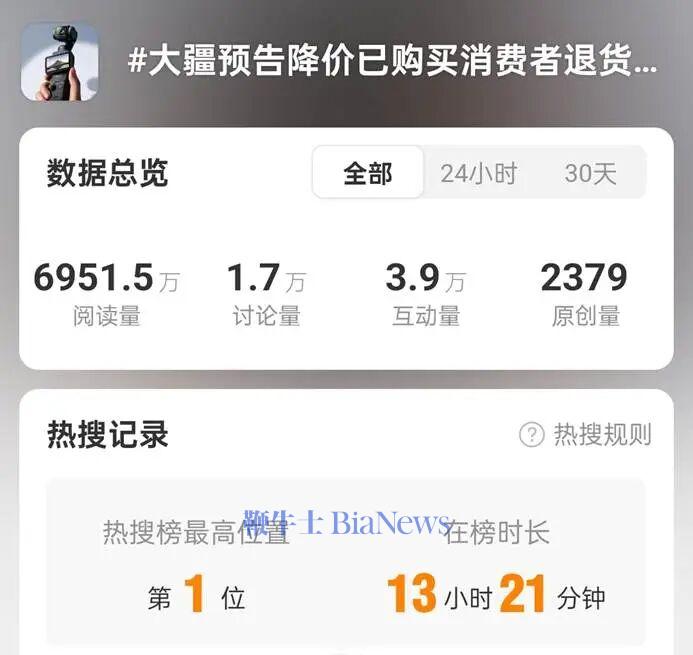
Core Viewpoint - DJI's recent price drop on multiple products, including the Pocket 3 series, has sparked significant consumer backlash and discussions about pricing policies, indicating a strategic response to competitive pressures in the consumer imaging market [2][12][21]. Group 1: Consumer Reactions - Consumers expressed frustration over the abrupt price drop shortly after purchase, with some feeling deceived by the lack of price protection for activated products [4][5][11]. - Social media has seen a surge of complaints from consumers who feel they have been unfairly treated, coining terms like "big loser" to describe their experiences [9][11]. - The price drop has led to confusion regarding return policies, with significant discrepancies between online and offline purchasing channels [11]. Group 2: Pricing Strategy - The price reduction is part of a broader promotional strategy leading up to the "Double 11" shopping festival, with discounts reaching up to 900 yuan on various products [10][21]. - DJI's decision to lower prices is not merely a promotional tactic but a strategic move to counteract declining market share, which fell from 19.1% in 2023 to 13.2% in 2024 [13][21]. - The company aims to create a "price moat" to deter new entrants, particularly smartphone manufacturers entering the imaging device market [20][21]. Group 3: Competitive Landscape - The consumer imaging market is becoming increasingly competitive, with DJI facing pressure from both professional competitors and smartphone giants like OPPO and vivo [16][21]. - DJI's recent product launches, such as the Osmo360, are direct responses to competitive threats, with aggressive pricing strategies to capture market share [15][21]. - The upcoming release of the Pocket 4 in early 2026 necessitates a price drop for the Pocket 3 to clear inventory and maintain customer loyalty [18][21]. Group 4: Market Implications - The significant price cuts signal a shift in the consumer imaging market dynamics, indicating a potential long-term battle for market share among established brands and new entrants [22]. - DJI's approach reflects a calculated risk to maintain relevance and competitiveness in a rapidly evolving market landscape [21][22].
从佳能、索尼到尼康,为什么常见的相机品牌大多来自日本?| 声动早咖啡
声动活泼· 2025-10-10 04:07
Core Viewpoint - The article discusses the evolution of the camera industry, highlighting how Japanese brands have surpassed German manufacturers to dominate the interchangeable lens camera market, primarily through mass production and affordability strategies [3][4]. Group 1: Market Position and Trends - By the first half of 2025, interchangeable lens cameras are expected to account for 75% of global digital camera shipments [2]. - Canon has maintained the largest market share in interchangeable lens cameras for 22 consecutive years, followed by Sony, Nikon, and Fujifilm, which collectively hold over 90% of the market [3][4]. - Since 2011, sales of interchangeable lens cameras have been declining, with a brief recovery in 2022, but growth has slowed again, particularly in DSLR sales [8]. Group 2: Historical Context and Development - After World War II, Japanese camera manufacturers rebuilt their industrial systems with American assistance, focusing on mass production and cost reduction, while German brands remained high-end and hand-crafted [4]. - The introduction of the Ricohflex III in 1950 marked one of the first mass-produced twin-lens reflex cameras, significantly lowering costs and making cameras accessible to the general public [4]. - Nikon's launch of the Nikon F in 1959, which gained popularity among war correspondents, helped shift the perception of Japanese cameras from cheap imitations to reliable professional equipment [5]. Group 3: Technological Advancements - Japanese manufacturers were early adopters of electronic technology, automating processes like metering and focusing, which reduced the learning curve for users [5]. - Canon introduced the first fully electronic SLR with a built-in CPU in 1976, sparking a consumer trend towards automatic exposure cameras [5]. - The shift to digital photography was embraced by Japanese brands, while German companies like Leica were slow to adapt, leading to a significant market share for digital cameras [6]. Group 4: Ecosystem and Brand Loyalty - Users typically invest in a complete camera ecosystem, purchasing lenses and accessories that are brand-specific, which fosters brand loyalty [6]. - Major brands like Canon, Nikon, and Sony have developed extensive ecosystems, with hundreds of lens options available, reinforcing user retention within their brands [6][7]. - Professional markets, including media and sports, heavily rely on these ecosystems, with brands like Sony and Canon dominating the professional photography market at events like the Olympics [7]. Group 5: Current Challenges - Japanese camera brands face challenges from rising tariffs in the U.S., which have led to price increases for cameras [9]. - The rise of smartphones and action cameras has significantly impacted the interchangeable lens camera market, with sales in Japan dropping to 6.6 million units in 2022, less than half of the 2011 figures [9].


大疆降价风暴背后,藏着一场生死攻防战
Feng Huang Wang Cai Jing· 2025-10-10 03:44
Core Viewpoint - DJI's recent price drop on multiple products, including the Pocket 3 series, has sparked significant consumer backlash and raised questions about pricing strategies in a competitive market [1][3][22]. Group 1: Price Drop Impact - The price reduction of up to 900 yuan on products like the Pocket 3 series has led to consumer frustration, particularly for those who purchased items shortly before the announcement [1][15]. - Consumers reported being misled about price stability, with some receiving conflicting information regarding price protection policies from different sales channels [7][10][20]. - The promotional event, labeled as a "pre-sale" for Double 11, has been criticized for its lack of clear communication and consistency across online and offline channels [22][23]. Group 2: Competitive Landscape - DJI's market share in the global smart imaging device sector has declined from 19.1% in 2023 to 13.2% in 2024, while competitors like Innosilicon have increased their share from 28.4% to 35.6% during the same period [25][26]. - The entry of smartphone manufacturers into the imaging device market poses a significant threat to DJI, as these companies leverage their existing technology and supply chains to offer competitive products [29][30]. - DJI's aggressive pricing strategy is seen as a defensive move to maintain market share against both traditional competitors and new entrants from the smartphone industry [30][34]. Group 3: Strategic Pricing Decisions - The price cuts are part of a broader strategy to clear inventory ahead of the anticipated launch of the new Pocket 4 model in early 2026, which is a common practice in the industry [31][32]. - DJI aims to create a "price moat" to deter new entrants from pricing their products competitively, thereby slowing their market penetration [33][34]. - The decision to implement significant price reductions reflects a calculated risk to trade short-term profits for long-term market positioning and customer retention [34].
大疆降价风暴背后,藏着一场生死攻防战
凤凰网财经· 2025-10-10 03:27
Core Viewpoint - DJI's recent price drop on multiple products, including the Pocket 3 series, is seen as a necessary move in response to competitive pressures rather than a simple promotional strategy [24][44]. Group 1: Price Drop Incident - On October 5, 2025, a customer purchased the DJI Pocket 3 for 3519 yuan, only to find out the next day that the price would drop by up to 900 yuan starting October 9 [4][12]. - Customers expressed frustration over the lack of price protection for activated products, leading to a wave of complaints on social media [2][12]. - The price drop affected various products, including the Osmo Pocket 3 and Action 4, with significant reductions announced as part of a promotional event [15][13]. Group 2: Consumer Reactions - Many consumers felt deceived, with some humorously labeling themselves as "big losers" after experiencing immediate price drops post-purchase [12][22]. - The disparity in return and price protection policies between online and offline channels led to confusion and dissatisfaction among customers [20][17]. - DJI's customer service responses varied, with some customers being told that offline purchases did not qualify for price protection [9][22]. Group 3: Competitive Landscape - DJI's market share in the global smart imaging device market has declined from 19.1% in 2023 to 13.2% in 2024, while competitors like Innosilicon have increased their share from 28.4% to 35.6% [25][27]. - The entry of smartphone manufacturers into the imaging device market poses a significant threat to DJI, as these companies leverage their existing technology and supply chains [32][33]. - DJI's aggressive pricing strategy is seen as a defensive move to maintain market share against both traditional competitors and new entrants [24][44]. Group 4: Strategic Implications - The price cuts are part of a broader strategy to clear inventory ahead of the anticipated launch of the Pocket 4 in early 2026 [36][41]. - DJI aims to create a "price moat" to deter new entrants from pricing their products competitively, thereby slowing their market penetration [39][40]. - While this strategy carries risks, including potential damage to brand perception, it is viewed as a necessary step to retain customers and adapt to a rapidly changing market [42][43].

iPhone的广告语也学坏了
3 6 Ke· 2025-10-10 02:42
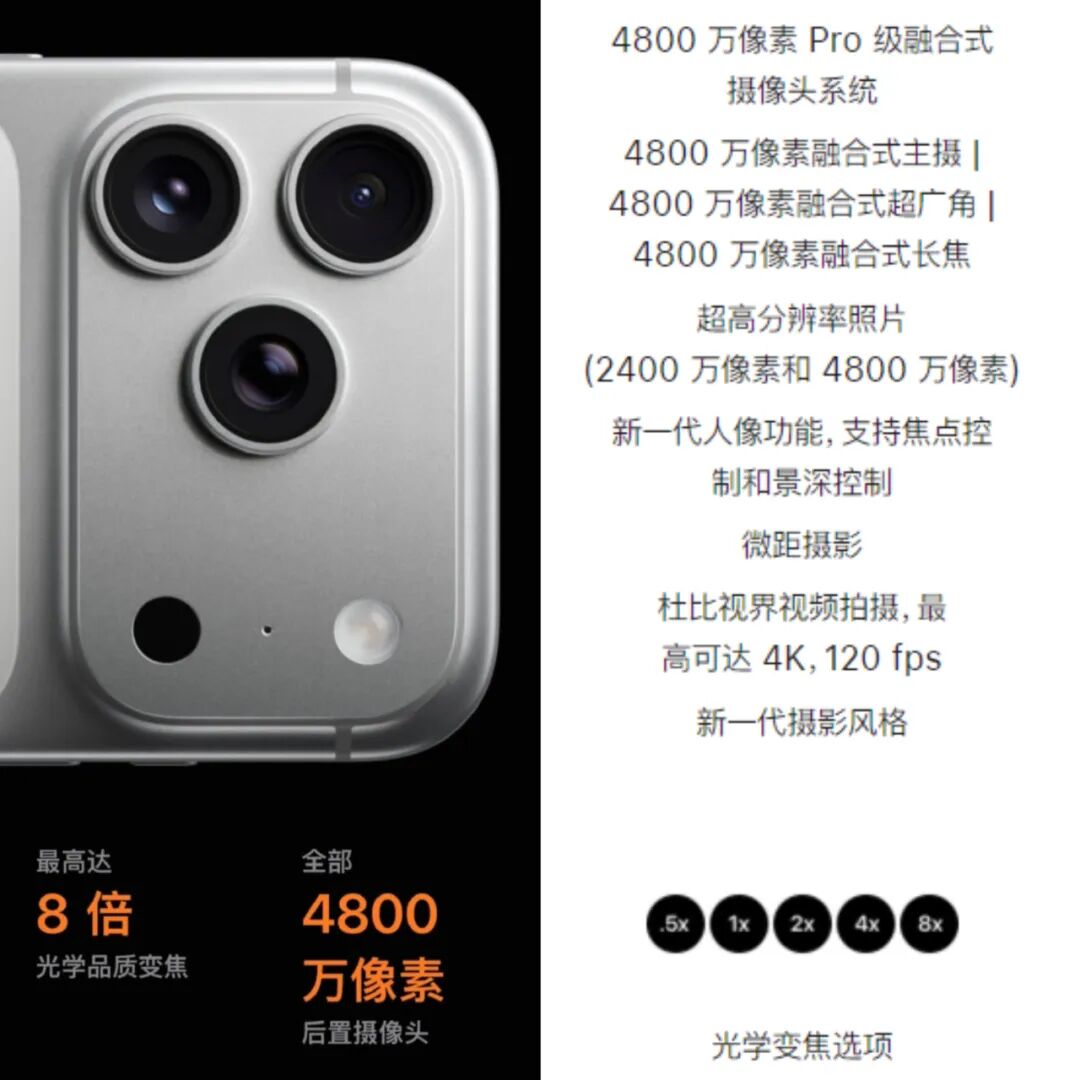
Core Viewpoint - The new iPhone series has introduced a higher zoom capability, but there are concerns regarding the actual quality of the zoom, as it is marketed as "optical quality zoom" rather than pure optical zoom, leading to potential consumer dissatisfaction [5][7]. Group 1: Product Features - The iPhone 17 series offers up to 8x zoom, with the iPhone 17 and iPhone Air providing 2x zoom, while the iPhone 17 Pro and Pro Max offer 4x and 8x zoom respectively, with starting prices of 5999 yuan, 7999 yuan, and 8999 yuan [3]. - The 8x zoom is achieved through a combination of 4x optical zoom and digital enhancements, which may result in color distortion and noise in images, particularly in low-light conditions [4][7]. Group 2: Consumer Reactions - Users have reported issues with ghosting effects and black spots in photos taken at night, which have led to frustration and disappointment with the camera performance [10][12]. - Despite the criticisms regarding the camera features, the iPhone 17 series has seen strong sales, with 1.03 million units activated in the first week, representing a 47.56% increase compared to the iPhone 16 series [12]. Group 3: Competitive Landscape - Competing brands like Vivo and DJI are offering advanced zoom capabilities and stabilization technologies, which may challenge Apple's market position in the smartphone photography segment [14][16]. - The evolving consumer demand for high-quality photography in social settings, such as concerts, is pushing manufacturers to innovate and improve their camera technologies [13][16].

“变了!中国老一辈崇拜硅谷,年轻人更偏爱梁文锋”
Guan Cha Zhe Wang· 2025-10-10 02:40
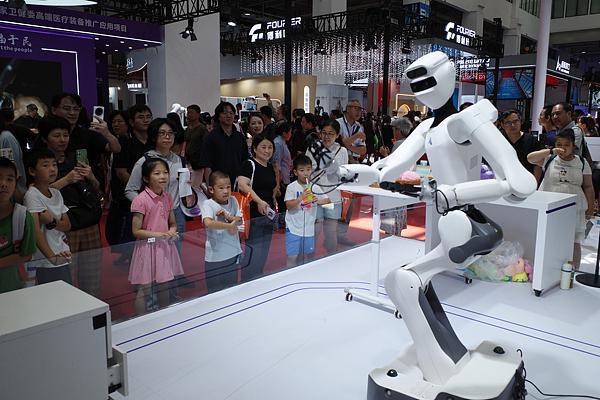
Core Insights - China is rapidly emerging as a leader in robotics technology, potentially dominating this key technology of the 21st century, despite the U.S. maintaining advantages in software and advanced AI chips [1][3] - The International Federation of Robotics (IFR) reported that in 2024, global new robot installations will reach 542,000 units, with China accounting for nearly 300,000 units, surpassing all other regions combined and being almost ten times that of the U.S. [3][4] - China's strong manufacturing capabilities and a complete supply chain for robotics components enable startups to quickly iterate and produce economically viable products [5][7] Industry Developments - The entry price for humanoid robots in China has significantly decreased, with UTree Technology's bipedal robot R1 priced under $6,000, about one-third of the previous year's model [5] - The deployment of robots in factories is increasing, helping to collect data necessary for training AI systems, addressing labor shortages due to an aging population [5][7] - Public enthusiasm for robotics is growing, supported by government policies and high-profile technology demonstrations, such as the World Artificial Intelligence Conference [5][7] Entrepreneurial Landscape - Chinese entrepreneurs and engineers are increasingly inspired by local figures rather than Silicon Valley icons, reflecting a shift in the technological landscape [8][10] - Many startups plan to scale production from dozens to tens of thousands of units in the coming months, driven by competitive pressures and a desire to enter international markets [7][10] - The younger generation of entrepreneurs is focused on high-quality manufacturing, believing that "Made in China" can represent world-class standards, especially in high-end manufacturing [7][10] Global Positioning - China is already a global leader in various sectors, including electric vehicles and AI, and emerging robotics startups aim to follow in their footsteps [8][10] - The U.S. needs to enhance its competitiveness in robotics by investing in infrastructure and fostering innovation, as the race in robotics is ongoing and China is poised to take the lead [10][11] - Analysts note that Chinese companies are benefiting from national-level support, similar to the development patterns seen in the electric vehicle and AI industries [11]