Workflow
台积电
icon
Search documents
芯片法案,穷途末路
半导体行业观察· 2025-03-07 01:23
Core Viewpoint - The article discusses the impending termination of the CHIPS Act, which was initially designed to revitalize the U.S. semiconductor industry through significant subsidies and investments, but is now facing criticism and operational challenges, particularly from former President Trump [1][21]. Background of the CHIPS Act - The CHIPS Act was born out of a semiconductor shortage during the COVID-19 pandemic, highlighting the vulnerabilities in the global semiconductor supply chain, especially the U.S.'s reliance on Asian manufacturers [2][3]. - It combined previous legislative efforts aimed at boosting U.S. high-tech research and semiconductor manufacturing, including the Endless Frontier Act and the CHIPS for America Act [3][4]. Investment and Economic Impact - The CHIPS Act has led to a total investment of $272 billion across 37 projects, expected to create approximately 36,300 direct jobs [5][6]. - Major semiconductor companies, including TSMC, Intel, and Samsung, have announced substantial investments in U.S. manufacturing facilities, with TSMC alone committing $400 billion for multiple plants in Arizona [6][7][8]. Challenges and Setbacks - The construction of TSMC's Arizona plant has faced significant delays and cultural clashes, leading to a postponement of mass production from 2024 to 2025 [14][15]. - Intel has reported substantial financial losses, leading to delays in its new manufacturing facilities and raising concerns about the effectiveness of the CHIPS Act [16]. Legislative and Policy Critique - Critics argue that the CHIPS Act has not delivered the expected results, with only 43% of the allocated funds disbursed and job creation falling short of projections [21]. - The act's reliance on government subsidies has been questioned, with some industry leaders advocating for a more stable market environment rather than fluctuating government support [21][22]. Future Directions - Trump has proposed converting the CHIPS Act's subsidies into tariff funds to encourage domestic semiconductor manufacturing without relying on government handouts [22]. - The article concludes that the dream of revitalizing U.S. semiconductor manufacturing may remain elusive, as the industry grapples with both internal and external challenges [23].
对话人大代表李东生:5年后,有些制造业将不靠融资发展丨长镜头
新浪财经· 2025-03-07 01:03
文|新浪财经 周文猛 过去4年,TCL华 星 新增固定资产投资 达 1080 亿元 , TCL 在 半导体 显示产业累计投资 达 2700 亿元 , TCL 创始人、董事长李东生对中国科技制造的发展有着充分的 信心, 敢于 为未来 投资。 亲自投身科技制造业的经历,让他洞悉了这一领域发展中的痛点、难点。因此,作为全国人大代 表的李东生,几乎每年两会都会提出一项跟制造业相关的建议。 今年两会,李东生又一次围绕优化科技制造业融资环境提出建议。李东生告诉新浪财经,"5年 后,TCL华星、京东方等国内制造业企业,将不需要再依靠资本市场融资来发展,靠自身资金就 足够滚动了。但未来3年到5年,融资还是发展的一个必要条件"。 此外,围绕时下备受关注的生成式人工智能发展,李东生也提出了"加强AI深度伪造欺诈管理"的 建议。在他看来,"人工智能的发展,同样需要加以监督管理"。 5年后 有些企业将不依靠融资发展 近年来,全国人大代表、格力电器董事长董明珠一直都是全国两会上的话题人物。她一直关注民 生和经济领域的热点问题,从个税改革到制造业创新,从加强知识产权保护到提高一线工人待 遇,提出了许多备受关注的建议,并引发广泛讨论。 过 ...
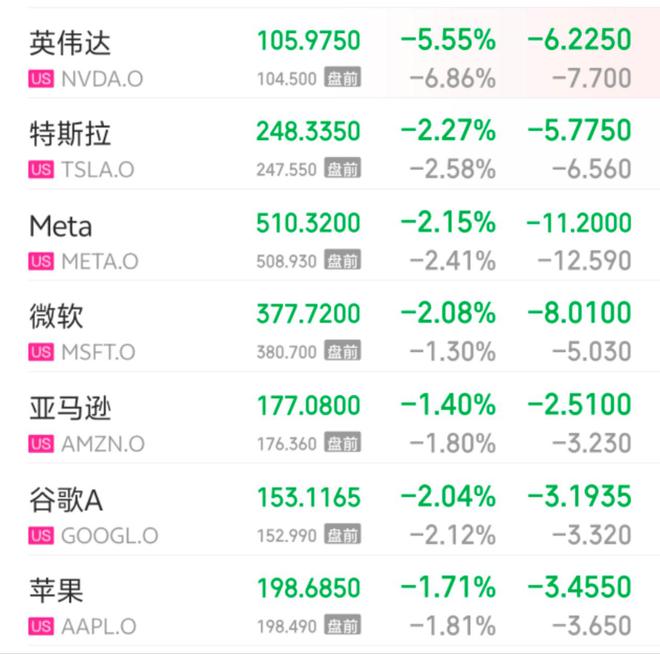
美股再次大幅下跌
Wind万得· 2025-03-06 22:43
Market Overview - The U.S. stock market experienced significant declines, with the Dow Jones Industrial Average dropping 427.51 points (0.99%) to close at 42,579.08 points, and the Nasdaq Composite Index falling 2.61% to 18,069.26 points, officially entering a technical correction zone [1][4] - The S&P 500 Index decreased by 1.78%, closing at 5,738.52 points, marking its lowest point since early November [5] Economic Policies and Market Reactions - The recent downturn followed the implementation of tariffs on Canada and Mexico, which unsettled financial markets, leading to retaliatory measures from Canada and anticipated responses from Mexico [4] - The White House announced a one-month delay in imposing tariffs on certain auto manufacturers under the USMCA agreement, which initially sparked a market rebound but ultimately failed to sustain investor confidence [4][5] - Treasury Secretary Scott Bessenet's support for the tariff policy raised concerns about the administration's long-term commitment to these controversial measures, contributing to market volatility [5] Sector Performance - In the Chinese stock market, the Direxion 3x Bull China Daily ETF (YINN) rose by 1.03%, while the iShares MSCI China ETF (MCHI) fell by 0.55% [3] - The semiconductor sector faced significant declines, particularly Marvell Technology, which dropped nearly 20% due to mixed first-quarter financial forecasts, impacting other semiconductor companies as well [5] Economic Indicators - Recent economic reports indicated potential negative impacts of Trump's policies on the U.S. economy, with rising costs due to tariffs and a surge in layoff announcements reaching the highest level since 2020 [6] - The Federal Reserve's Beige Book and ISM manufacturing data highlighted increased cost pressures on businesses due to tariffs [6] European Central Bank Actions - The European Central Bank (ECB) announced a 25 basis point rate cut, reducing the deposit facility rate to 2.5%, as part of ongoing efforts to stimulate a sluggish economy [8][9] - Despite a slight increase in inflation, overall inflation rates in the Eurozone remain below 3%, with GDP growth in the last quarter showing only a 0.1% increase [9][10] - The ECB's decision comes amid uncertainties related to potential U.S. tariffs on European goods, complicating the monetary policy landscape [9][10]
陆家嘴财经早餐2025年3月7日星期五
Wind万得· 2025-03-06 22:43
Macro - The People's Bank of China (PBOC) plans to lower the reserve requirement ratio and interest rates based on domestic and international economic conditions, indicating there is room for further reduction [2] - The PBOC will collaborate with the China Securities Regulatory Commission (CSRC) and the Ministry of Science and Technology to launch a "Technology Board" in the bond market to support technological innovation [2] - The National Development and Reform Commission (NDRC) will soon implement a plan to boost consumption and will introduce specific measures to address structural contradictions in key industries [10][12] Domestic Stock Market - A-shares experienced a strong rally, with the Shanghai Composite Index rising by 1.17% to 3381.1 points, driven by the TMT sector [13] - The Hong Kong stock market also saw significant gains, with the Hang Seng Index up 3.29% to 24369.71 points, led by AI-related stocks [13] - The CSRC reported a notable increase in the scale of public equity funds, which grew from 6.3 trillion yuan to 7.7 trillion yuan, accounting for 24% of the total public fund scale [20] Financial - The CSRC noted a rapid development in equity funds, with 459 new equity funds registered since September, representing 70% of all registered funds during that period [20] - The issuance of special government bonds to support state-owned banks' capital replenishment will be implemented in phases [21] Industry - The Chinese government aims to develop the nuclear technology application industry, targeting an annual economic output of 400 billion yuan by 2026 [25] - The China Aerospace Science and Technology Corporation plans to implement Mars sample return missions by around 2030 [26] Overseas - U.S. President Trump signed an amendment to tariffs on products under the USMCA, exempting them from tariffs until April 2 [3] - The European Central Bank (ECB) has lowered its deposit facility rate by 25 basis points to 2.5%, marking the fifth consecutive rate cut [31]
【太平洋科技-每日观点&资讯】(2025-03-07)
远峰电子· 2025-03-06 11:52
Market Performance - The main board led the gains with notable increases from companies such as Hubei Broadcasting (+10.11%), Neusoft Group (+10.04%), and Yunding Technology (+10.04) [1] - The ChiNext board saw significant growth with Newcap (+20.03%), Hand Information (+20.02%), and Century Hengtong (+20.01%) [1] - The Sci-Tech Innovation board was led by Zhiyuan Interconnection (+20.00%), New Zhiyuan Software (+17.60%), and Canqin Technology (+16.32%) [1] - Active sub-industries included SW Marketing Agency (+7.40%) and SW Horizontal General Software (+7.11%) [1] Domestic News - Aibang Semiconductor successfully achieved 8-inch gallium oxide single crystal growth using a fully independent innovation casting method [1] - Huiniu Technology launched a light waveguide leakage light solution, reducing front leakage light rate to below 2%, significantly outperforming similar products [1] - The PHANTOM ULTIMATE 2 screen, developed through deep collaboration between Tianma and Transsion, features a unique Z-shaped design with a folded screen size of 6.48 inches and expands to a 10-inch display [1] - Counterpoint Research reported a continuous trend towards high-end products, with the market share of devices priced at $600 and above increasing from 11% in 2018 to 28% in 2024, with Huawei leading this trend [1] Company Announcements - Dongsoft Carrier announced the acquisition of an invention patent certificate for a method to calculate the sensitivity of thermopiles and resistance values of thermistors without temperature control equipment [2] - Tuo Wei Information clarified rumors regarding adjustments to its major asset restructuring plan, stating the information was false [2] - Kangxi Communication announced a shareholder's plan to reduce holdings by up to 12,734,400 shares, accounting for 3% of the company's total share capital [2] - Founder Technology reported providing additional financing guarantees totaling 275 million yuan for its controlling subsidiary [2] Overseas News - The South Korean government announced the establishment of a $34 billion policy fund to support companies involved in strategic technologies such as chips and automobiles amid increasing global competition and protectionism [2] - Apple launched the M4 chip MacBook Air, boasting a performance increase of 23 times compared to Intel chip models and double the performance compared to M1 chip models [2] - Reports indicated that former President Trump intends to pressure the Indian government to reduce import tariffs on cars from 70% to 0%, although the Indian government remains cautious [2] - President Trump called for the termination of the $52 billion semiconductor subsidy plan during a joint session of Congress, which has stimulated over $400 billion in investments from companies like TSMC and Intel in the U.S. [2]
我的价格目标已“触发”,因此我开始逢低买入英伟达!
美股研究社· 2025-03-06 10:32
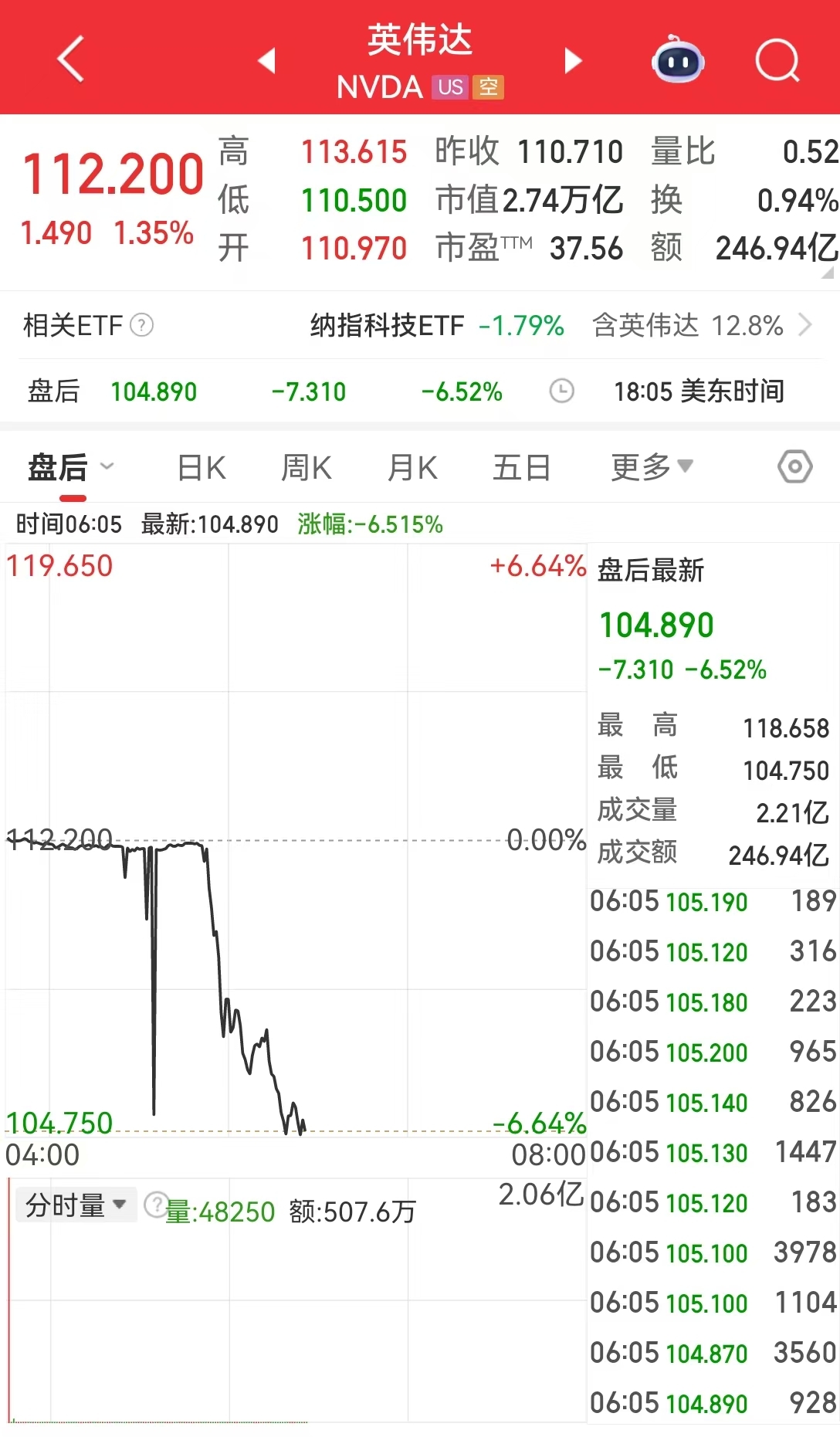
Core Viewpoint - Nvidia's stock price experienced a significant decline of nearly 25% during 2025, influenced by recession fears and reduced capital expenditures from major tech companies like Microsoft, Meta, Google, and Amazon [1] Financial Performance - Nvidia's PEG ratio can be analyzed through two methods: adjusting for R&D expenses or using traditional expected growth rates, with a maximum multiplier of 25 times [1] - EPS estimates show a projected growth rate of over 25% for the next three years, with a notable decline expected after 2027 [2] Industry Insights - Major tech companies such as Amazon, Google, Microsoft, and Meta are at the forefront of LLM development, which is expected to enhance operational efficiency and profitability across industries [3] - Intel may reach an agreement with TSMC to sell part of its FAB, coinciding with TSMC's $100 billion investment in U.S. FAB construction, which is a positive development for Nvidia [3] Balance Sheet Strength - Nvidia's EBITDA is nearly ten times its long-term debt, and cash and short-term investments are 5.1 times its long-term debt, indicating a strong balance sheet [4] - The company has a low leverage ratio, borrowing only one-tenth of its EBITDA, with net interest income of $1.539 billion [4] Growth Analysis - Nvidia's 10-year growth metrics show a recent stabilization, with a 5-year standardized EPS now exceeding price growth rates post-decline [5] - The current market conditions suggest that analysts are willing to buy Nvidia stock if it drops to around $112, indicating it has entered a buyable range [5]
别人吃肉我喝汤
Datayes· 2025-03-06 10:28
Core Viewpoint - The article discusses the recent launch of Manus, the world's first universal AI agent, which has generated significant interest in the technology sector and positively impacted the A-share market, particularly in AI-related stocks [1][4][6]. Market Performance - The A-share market has seen a strong performance, with the Shanghai Composite Index rising by 1.17%, the Shenzhen Component Index by 1.77%, and the ChiNext Index by 2.02% on the day of the article [6]. - The total market turnover reached 19,535 billion, an increase of 4,076 billion compared to the previous day, with over 4,200 stocks rising [6]. AI Agent Impact - The launch of Manus has led to a surge in AI agent stocks, with companies like Cooltech Intelligent and over 20 others hitting the daily limit [6]. - Manus's partners clarified that they have not opened any paid channels for invitation codes and have not invested in marketing, focusing instead on user experience during the internal testing phase [6]. Economic Policy Insights - The article highlights key points from an economic press conference, including potential monetary policy adjustments such as lowering reserve requirements and interest rates, as well as expanding the scale of re-loans for technological innovation to between 800 billion and 1 trillion [6][12]. - The government is also planning to increase the enrollment of top-tier universities by 20,000 students and raise the basic pension for urban and rural residents [6]. Real Estate Market Trends - The article notes a significant change in the Shenzhen new housing market, with the inventory turnover period dropping from 26 months to 7 months within six months, indicating a shift from oversupply to tight inventory [8][9]. - Factors contributing to this change include a slowdown in land auctions and delays in construction projects, which have led to a decrease in available new housing [9][10]. Investment Trends - The article mentions that the computer, media, and social services sectors are leading in market performance, while banking, steel, and public utilities are lagging [24]. - The article also provides insights into the net inflow of funds into various sectors, with significant investments in the computer and non-bank financial sectors [16][18].
特朗普国会演讲:美国优先宣言
HTSC· 2025-03-06 10:25
Policy Overview - Trump emphasized a pro-business stance, advocating for deregulation and tax cuts for residents and businesses[1] - He highlighted the importance of tariffs for fiscal revenue and manufacturing return, while suggesting potential flexibility on tariffs with Mexico[1] - The administration aims to reduce inflation through increased energy supply and seeks peace in the Middle East and Ukraine[1] Immigration and Government Reform - Immigration arrests at the southern border dropped significantly from 300,000/month under Biden to 60,000/month[3] - Trump called for immediate congressional funding to support immigration enforcement and highlighted the achievements of the Department of Government Efficiency (DOGE)[3] - He claimed to have uncovered fraud amounting to hundreds of billions in government spending, particularly in social security[3] Economic Policies - Trump proposed a permanent extension of the 2017 Tax Cuts and Jobs Act (TCJA) and tax exemptions for tips, overtime, and social security benefits[3] - He confirmed the implementation of reciprocal tariffs on April 2, targeting countries with trade surpluses with the U.S.[4] - The administration plans to balance the federal budget through increased tariffs, selling immigration "gold cards," and reducing government waste[3] Market Implications - The inherent contradictions and randomness in Trump's policies, combined with DOGE's impact on government spending, may increase economic uncertainty and market volatility[5] - Despite signs of economic weakening, the resilient job market suggests the U.S. is still on track for a soft landing[5]
台积电或涨价15%
半导体芯闻· 2025-03-06 09:59
Core Viewpoint - The article discusses the potential impact of the repeal of the CHIPS and Science Act, which provides significant subsidies to semiconductor manufacturers in the U.S., particularly affecting companies like TSMC, Intel, and Samsung. The repeal could lead to increased manufacturing costs for TSMC's U.S. facilities, undermining the act's intended benefits [1][2]. Group 1: CHIPS and Science Act Overview - The CHIPS and Science Act was signed into law by President Biden on August 9, 2022, aiming to boost U.S. semiconductor research and manufacturing, with approximately $52.7 billion allocated for subsidies, low-interest loans, and tax reductions [1]. - About $39 billion of the funding is designated for semiconductor manufacturers expanding or building facilities in the U.S. [1]. Group 2: Trump's Opposition - President Trump has criticized the CHIPS Act, suggesting that tariffs should be used to incentivize foreign semiconductor manufacturers to establish operations in the U.S. instead of providing subsidies [2]. - Trump stated that the act is ineffective, claiming that the funds given to semiconductor manufacturers do not lead to meaningful investments in U.S. facilities [2]. Group 3: Impact on TSMC - TSMC has signed an agreement with the U.S. government to receive up to $6.6 billion in direct funding and $5 billion in loans to support its $65 billion investment in three fabs in Arizona [3]. - However, with the potential repeal of the CHIPS Act, TSMC may face challenges in securing the remaining subsidy funds, which could significantly increase its manufacturing costs in the U.S. [3]. Group 4: Increased Costs of U.S. Operations - TSMC announced an expansion of its investment in the U.S. to $165 billion, with the additional $100 billion investment lacking subsidy support, leading to higher manufacturing costs [4]. - The construction costs for fabs in the U.S. are approximately double those in Taiwan, and TSMC's founder has indicated that manufacturing costs in the U.S. are 50% higher than in Taiwan [5]. - Without subsidies, TSMC's depreciation costs in the U.S. could be 26% higher, and labor costs could be 66% higher, resulting in wafer production costs that are about 28.3% higher than in Taiwan [5]. Group 5: Market Expectations - Due to the anticipated higher costs of U.S. operations, the market expects TSMC to potentially increase prices for advanced processes by 15% to offset the cost disparity between the U.S. and Taiwan [5].
涨疯了!资金继续猛干这些股票
格隆汇APP· 2025-03-06 08:44
Core Viewpoint - The article emphasizes that Chinese assets, particularly in the Hong Kong technology sector, are experiencing a significant revaluation, driven by a combination of improved fundamentals and external capital inflows [4][29]. Group 1: Market Performance - The Hong Kong Internet ETF (513770) has seen a substantial increase, achieving a new high with three consecutive days of gains [1]. - Since the market rally began on January 14, the Hang Seng Index and the Hang Seng Tech Index have risen by 29.12% and 43.74%, respectively, while the Hong Kong Internet Index has surged by 51.53% [2]. Group 2: Institutional Insights - Morgan Asset Management believes that the revaluation of Chinese assets is just beginning, predicting a "Davis Double Play" where both valuations and corporate earnings improve [4]. - The macroeconomic environment is stabilizing, which is conducive to a better pricing environment for the market [7]. Group 3: Foreign Capital Inflows - There is a significant amount of capital waiting to enter the market, primarily from long-term foreign investors, which could lead to a new rally in Chinese technology assets [3][15]. - The CEO of Norway's sovereign wealth fund has suggested reallocating investments from U.S. tech stocks to Chinese stocks, indicating a shift in foreign investment strategies [12]. Group 4: AI and Technology Investments - The article highlights the increasing capital expenditures by Chinese tech companies in AI, with ByteDance investing hundreds of billions in AI technology, similar to investments made by U.S. tech giants [20][27]. - The rise of AI technology in China is seen as a pivotal moment that could attract long-term foreign capital back into the market [29]. Group 5: Market Sentiment and Future Outlook - Despite skepticism from some investors due to past market volatility, the current upward trend in Hong Kong tech stocks is expected to continue as more capital flows in [30][36]. - The article suggests that the current valuations of major Hong Kong tech stocks like Tencent and Alibaba are still below their 2021 highs, indicating potential for further growth [36].