中信银行

Search documents
2025年“未来可持续投资”优秀案例发布
Zheng Quan Ri Bao Wang· 2025-12-07 12:18
Core Viewpoint - The Beijing Private Equity Association released the "Future Sustainable Investment" excellent cases for 2025, showcasing the latest practices of equity investment institutions, industrial capital, and financial institutions in fields such as green technology, hard technology, and artificial intelligence [1][4]. Group 1: Investment Institutions and Cases - A total of 20 excellent cases were selected, including institutions like PICC Equity, CPE Yuanfeng, Guoke Jiahe, Shunxi Fund, Jinpu Investment, Guoneng Fund, Chuangshi Partners, Lenovo Venture Capital, and Citic Bank, along with companies such as New Stone Age Unmanned Vehicles, Chip Vision, Yufeng Future, Saif Gene, Liufen Technology, Waterwood Future, Tashan Technology, Family Doctor, Xidi Smart Driving, Huamei Titanium Technology, and Hantong Medical [1][4]. Group 2: Role of New Productive Forces - New productive forces are increasingly becoming the core engine driving high-quality economic development, with technologies like artificial intelligence, green low-carbon solutions, unmanned driving, and embodied intelligence reshaping traditional industries and creating new business models [4]. - Equity investment institutions, industrial capital, and financial institutions are playing a crucial role in linking technological innovation with the real economy, providing long-term capital and systematic empowerment to innovative enterprises [4]. Group 3: Collaborative Practices - The 2025 cases reflect not only the innovation capabilities of technology companies but also the collaborative practices of diverse capital entities, focusing on "green + technology" cooperation between central and local governments, specialized venture capital institutions for early-stage and hard technology, and banks and insurance asset management institutions that understand the growth pain points of tech companies [4][5]. - The aim is to build a more open, resilient, and sustainable innovation ecosystem through comprehensive layout and full-chain empowerment [4]. Group 4: Ongoing Initiatives - Since the launch of the "Future Sustainable Investment Initiative" in 2021, the Beijing Private Equity Association has been actively promoting the concept of sustainable investment, collaborating with private equity investment institutions, industrial parties, and financial institutions to deepen practical implementation [5][6]. - The association will continue to monitor and document the latest explorations and practical achievements in the field of sustainable investment, encouraging more institutions to support technological innovation, green development, and improvement of people's livelihoods from a long-term perspective [6].




\双支柱\加强促进银行稳健经营
Xiangcai Securities· 2025-12-07 12:14
Investment Rating - The industry investment rating is maintained at "Overweight" [7][10]. Core Insights - The central bank is promoting the improvement of the dual-pillar system to enhance the stability of bank operations [6][32]. - The banking sector is transitioning from extensive expansion to intensive development, focusing on enhancing the quality of financial services to the real economy [7][33]. - The optimization of credit structure requires banks to improve capital and risk allocation efficiency, emphasizing the importance of precise resource allocation to key policy-supported areas [8][34]. - The macro-prudential management of real estate finance is a clear task, with expectations for real estate risks to converge [8][34]. - The next phase of the dual-pillar system's deepening collaboration will create an environment for banks characterized by strong constraints, optimization, and risk prevention [9][34]. Summary by Sections Market Review - The banking index fell by 1.18%, underperforming the CSI 300 index by 2.46 percentage points during the period from December 1 to December 7, 2025 [12]. - The performance of various bank segments showed that rural commercial banks outperformed others, with notable gains from Zhangjiagang Bank (+3.96%) and Xiamen Bank (+2.92%) [12]. Industry Dynamics - The central bank's article emphasizes the need for a robust monetary policy framework and comprehensive macro-prudential management to adapt to complex economic conditions [32][33]. - Banks are encouraged to enhance their loan pricing capabilities and active liability management to alleviate the downward pressure on net interest margins [7][33]. - The focus is shifting towards differentiated competition based on professional service capabilities and comprehensive financial solutions rather than price wars [7][33]. Investment Recommendations - The report suggests that with a rebalancing of market investment styles, high-dividend bank stocks are attracting allocation funds, indicating a potential for continued valuation recovery [10]. - Specific banks recommended for investment include Industrial and Commercial Bank of China, Bank of China, CITIC Bank, Jiangsu Bank, and others, highlighting their stable high-dividend value [10][35].
银行业周报(20251201-20251207):数字人民币定位有望晋级,支付领域大有可为-20251207
Huachuang Securities· 2025-12-07 11:45
Investment Rating - The report maintains a "Recommended" investment rating for the banking sector, indicating a positive outlook for the industry in the near term [1]. Core Insights - The positioning of the digital RMB is expected to advance, with significant potential in the payment sector. The People's Bank of China (PBOC) is working on optimizing the management system for digital RMB, which may evolve from a cash-like payment instrument (M0) to broader monetary categories (M1, M2) [2][8]. - Infrastructure development for digital RMB is progressing, with the establishment of international and operational centers in Shanghai and Beijing, respectively. As of September 2025, the cumulative transaction amount in pilot areas reached 14.2 trillion yuan, with 2.25 billion personal wallets opened [3][8]. - The banking sector is expected to see a systematic recovery in valuations in 2026, transitioning from a defensive to a growth-oriented investment logic. Key investment themes include high dividend yields and low valuations, particularly as risk-free interest rates decline [9]. Summary by Sections Industry Overview - The banking sector comprises 42 listed companies with a total market capitalization of approximately 1.15 trillion yuan, representing 13.04% of the market [4]. - The average daily trading volume for A-shares was 10,583.60 billion yuan, reflecting a 0.65% increase from the previous week [8]. Performance Metrics - The absolute performance of the banking sector over the past month is 5.0%, with a relative performance of 2.8% compared to the benchmark [5]. - The report highlights that the banking index underperformed the CSI 300 index by 2.46 percentage points during the week [8]. Investment Recommendations - The report suggests focusing on three main investment lines: 1. State-owned banks and major commercial banks like China Merchants Bank. 2. Quality joint-stock banks and city commercial banks with improving net interest margins and credit costs. 3. City commercial banks benefiting from regional policies and showing significant performance potential [9]. - Specific banks recommended for investment include China Merchants Bank, CITIC Bank, and several city commercial banks such as Chengdu Bank and Chongqing Bank [9][10].


广东举行首批“普惠科技贷”省级合作银行签约仪式
2 1 Shi Ji Jing Ji Bao Dao· 2025-12-07 07:49
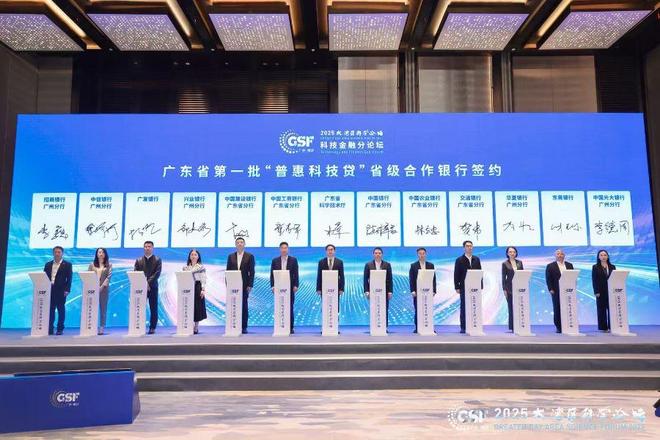
Group 1 - The "2025 Greater Bay Area Science Forum" focused on "New Quality Bay Area Financial Synergy" and included a signing ceremony for the first batch of "Inclusive Technology Loans" with provincial cooperative banks [1][3] - The Guangdong Provincial Department of Science and Technology, in collaboration with the Provincial Department of Finance, the People's Bank of China Guangdong Branch, and the National Financial Regulatory Administration Guangdong Bureau, issued the "Guangdong Province Technology Credit Risk Compensation Management Measures (Trial)" to support projects like "Inclusive Technology Loans" [1] - The management measures propose the establishment of a "Yue Science and Technology Enterprise" evaluation index system to provide linked support to enterprises with stronger innovation capabilities, promoting a risk-sharing mechanism among provincial and municipal technology authorities, cooperative banks, and government financing guarantee institutions [1][3] Group 2 - A total of 12 banks were selected as cooperative banks for the "Inclusive Technology Loans," including major banks such as ICBC, Agricultural Bank of China, Bank of China, and China Construction Bank [3] - The forum was organized by the Guangdong Provincial Department of Science and Technology, with support from various financial and investment organizations, indicating a collaborative effort to enhance financial support for technology innovation [3]
兴业证券股份有限公司关于兴证国际金融集团 有限公司为其附属公司提供担保的公告
Zhong Guo Zheng Quan Bao - Zhong Zheng Wang· 2025-12-07 06:13
Core Viewpoint - The company is adjusting the guarantee limits for its wholly-owned subsidiary, CISI Investment Limited, to support its business development, which includes guarantees for various financial agreements with major banks [2][3]. Group 1: Guarantee Adjustments - The guarantee limit for CISI's ISDA agreement with Barclays Bank PLC is increased from $100,000 to $50 million [2] - The guarantee limit for CISI's ISDA agreement with Citigroup Global Markets Limited is increased from $100,000 to $50 million [2] - The guarantee limit for CISI's GMRA agreement with Citigroup Global Markets Limited is increased from $100,000 to $200 million [2] - The guarantee limit for CISI's GMRA agreement with The Hongkong and Shanghai Banking Corporation Limited is increased from $300 million to $400 million [2] - The guarantee limit for CISI's ISDA agreement with Goldman Sachs International is decreased from $200 million to $50 million [2] - The guarantee limit for CISI's GMRA agreement with J.P. Morgan Securities PLC is decreased from $300 million to $250 million [2] - The guarantee limit for CISI's ISDA agreement with UBS AG is decreased from $150 million to $50 million [2] - The guarantee limit for CISI's GMRA agreement with China CITIC Bank International Limited is decreased from $150 million to $50 million [2] Group 2: Internal Decision-Making Process - The adjustments to the guarantee limits were approved by the company's board and the annual general meeting, allowing for guarantees related to international derivative framework agreements and GMRA transactions [3] - The adjustments are part of internal management needs and do not require new guarantee letters [3] Group 3: Necessity and Reasonableness of Guarantees - The adjustments are aimed at meeting the operational needs of the wholly-owned subsidiary, facilitating business expansion and optimizing resource allocation [5] - Despite CISI's asset-liability ratio exceeding 70%, the company can monitor its debt repayment capacity, ensuring that the associated risks are manageable and do not harm the interests of the company and its shareholders [5] Group 4: Total Guarantee Overview - As of the announcement date, the total guarantee amount provided by the company and its subsidiaries is RMB 23.406 billion, all of which are guarantees to subsidiaries [5] - The total guarantees to the controlling subsidiaries amount to RMB 5.548 billion, representing 40.48% and 9.60% of the company's latest audited net assets, respectively [5]

银行资负跟踪20251207:Q4银行浮盈兑现估算和EVE指标影响看法
CMS· 2025-12-07 05:03
Investment Rating - The report maintains a "Recommended" investment rating for the banking industry [2] Core Insights - The banking sector is experiencing a significant adjustment in long-term bonds, with a projected interest rate increase of 25-42 basis points, aligning with the "asset shortage" logic [14][15] - There is an ongoing demand for banks to realize floating profits from bond markets, particularly as the high base from the previous year's Q4 is expected to exert greater pressure on profit realization this year [14][15] - The report outlines three scenarios for revenue growth in 2025, indicating that banks may need to sell bonds worth approximately 0.20 trillion to 1.14 trillion yuan depending on the revenue growth target [15][19] Summary by Sections Section 1: Floating Profit Realization and EVE Indicator Impact - The report discusses the ongoing pressure for banks to realize floating profits in December, with expectations of significant bond sales to support stable performance [14][15] - It highlights the need for banks to manage duration risk effectively, as the current structure of liabilities is shortening, which may impact stability [16][17] Section 2: Loan and Bond Yield Comparison - The report provides insights into the yield comparison between loans and bonds, indicating a need for banks to adjust their strategies in response to changing market conditions [8] Section 3: Deposit Rate Tracking - The report tracks changes in deposit rates, noting adjustments made by specific banks to their deposit rates, which may influence overall funding costs [6] Section 4: Bill Discounting Volume and Price Tracking - The report analyzes the trends in bill discounting, indicating a significant drop in short-term bill rates while highlighting seasonal patterns in the market [24][25] Section 5: Central Bank Dynamics and Market Rate Tracking - The report details the central bank's operations, including reverse repos and liquidity management, which are crucial for maintaining market stability [25][26] Section 6: Government Debt Financing and Fiscal Strength Tracking - The report discusses the government's debt financing activities and their implications for fiscal policy, emphasizing the need for careful monitoring of future fiscal measures [26] Section 7: Interbank Certificate of Deposit Tracking - The report notes a positive net financing position for interbank certificates of deposit, indicating a shift in funding strategies among banks [28]
信用卡市场持续收缩,三年累计减少1亿张
Di Yi Cai Jing· 2025-12-07 04:11
Core Insights - The credit card market in China is experiencing a significant contraction, with a total issuance of 707 million cards as of Q3 2025, down from 715 million in Q2 2025 and a peak of 807 million in Q3 2022, marking a decline of approximately 100 million cards over three years [2][3] - The non-performing loan (NPL) rate for credit cards has risen to 2.40% as of mid-2025, indicating increasing pressure on asset quality within the banking sector [5][6] Credit Card Issuance Trends - The total number of credit cards has been on a downward trend for 12 consecutive quarters, with a notable reduction of 800 million cards in Q3 2025 compared to the previous quarter [2] - Major banks have reported a significant decrease in credit card loan balances, with a reduction of nearly 600 billion yuan in the first half of 2025 compared to the end of 2024 [3] - Credit card transaction volumes have also declined, with an overall decrease of approximately 8% year-on-year, particularly affecting banks like China Merchants Bank and Bank of Communications [3] Factors Influencing Market Contraction - The contraction in the credit card market is attributed to multiple factors, including regulatory policies that encourage banks to move away from aggressive card issuance and the rise of mobile payments and internet credit tools that are replacing traditional credit card usage [4] - Banks are shifting their focus from merely expanding card issuance to more refined management and risk control strategies [4] Asset Quality Concerns - The total amount of overdue credit card loans has increased from 842.85 billion yuan in Q2 2022 to 1,239.64 billion yuan by the end of 2024, indicating a growing concern over asset quality [5] - The average NPL rate for credit card overdrafts among 12 domestic banks has risen from 2.33% at the end of 2024 to 2.40% by mid-2025, with specific banks like ICBC and CCB reporting even higher rates [5] Risk Management and Asset Disposal - In response to rising NPLs, banks are accelerating the disposal of non-performing assets, with over 260 billion yuan in personal loan asset packages being transferred in November alone [6] - Notable cases include large asset packages from banks like Minsheng Bank and SPDB, indicating a proactive approach to managing credit risk [6] Operational Adjustments in Banking - Banks are implementing cost-cutting measures, including the closure of credit card centers and integrating credit card operations into broader retail banking strategies [7] - The future of credit card services is expected to focus on providing safer and more value-added financial services rather than merely promoting overspending [7] - The competitive landscape is likely to favor larger banks with strong risk management capabilities, while smaller banks will need to find ways to attract and retain customers without compromising on risk [7]


电子税务局如何增加三方协议?
蓝色柳林财税室· 2025-12-07 01:27
Group 1 - The article discusses the process of entering information related to the tax payment transfer agreement, emphasizing the importance of selecting the correct bank that supports direct signing services [3] - It outlines the steps for saving and downloading the tax payment transfer agreement, indicating that successful completion of these steps is necessary for further processing at the bank [3] - The article mentions the requirement to print the agreement for verification services at the bank if the selected bank does not support direct signing [3] Group 2 - The article provides a reminder that the platform is unofficial and serves as a learning resource, indicating that the content is for educational purposes only and not a standard for tax payments [6] - It includes a reference to a tax service hotline, suggesting that taxpayers can inquire about specific tax-related issues, such as retroactively claiming special deductions [8] - The article highlights the introduction of a compliance management guideline for tax-related matters in Zhejiang Province, aimed at improving compliance and risk management for enterprises [10]

告别躺赚时代:大额存单退场,你的钱该去哪儿?
Sou Hu Cai Jing· 2025-12-06 20:45
Core Viewpoint - The long-term large-denomination certificates of deposit (CDs) are disappearing from banks, leading to a significant shift in savings habits among depositors as interest rates decline sharply [1][3][5]. Group 1: Product Supply - Major state-owned banks, including Industrial and Commercial Bank of China, Agricultural Bank of China, Bank of China, and China Construction Bank, have stopped selling 5-year large-denomination CDs [3]. - Some banks have also ceased offering 3-year large-denomination CDs, with no clear timeline for their return [3]. - Local banks are following suit, with announcements of the cancellation of 5-year fixed-term deposits [3]. Group 2: Interest Rate Decline - The interest rates for large-denomination CDs have dropped to the "1" range, with 3-year CDs at 1.55% for major banks [5]. - In contrast, prior to 2020, 3-year and 5-year CDs had yields above 3%, with some smaller banks offering rates close to 4% [5]. - The traditional practice of higher interest rates for larger deposit amounts has been disrupted, as the rates for different deposit amounts are now the same [5]. Group 3: Banking Strategy - The collective withdrawal of long-term large-denomination CDs is a response to the ongoing pressure on banks' net interest margins, which fell to 1.42% by Q3 2025 [7]. - Banks aim to lower liability costs and stabilize net interest margins by reducing the supply of long-term deposits [7]. - The current low net interest margin environment compels banks to avoid high-cost long-term deposits to maintain profitability [7]. Group 4: Shift in Depositor Behavior - With the discontinuation of long-term large-denomination CDs, depositors are seeking alternative investment products, such as savings insurance, government bonds, or structured deposits [9]. - However, these alternatives come with their own limitations, such as lower liquidity for savings insurance and limited issuance for government bonds [9]. - A survey indicates an increase in residents inclined to invest more, rising by 5.6 percentage points to 18.5% [9]. Group 5: New Investment Preferences - Non-principal guaranteed bank wealth management products have become a preferred investment method among residents, with the market size reaching 32.13 trillion yuan, a 9.42% year-on-year increase [11]. - Financial advisors are recommending a diversified asset allocation strategy to improve returns and liquidity, moving away from excessive reliance on long-term deposits [11]. - Low-risk bank wealth management products are suggested as alternatives that may offer better returns than traditional deposits [11]. Group 6: Future Trends - The banking sector is expected to shift towards shorter-term products, emphasizing flexibility and a diverse range of financial products [13]. - Banks need to enhance their wealth management capabilities to maintain customer relationships and ensure stable returns [13]. - Depositors are encouraged to prioritize liquidity in their investments during a declining interest rate environment, allowing for better opportunities in the future [13].




2025年“未来可持续投资”优秀案例发布 AI、绿色科技与硬科技深度融合构筑新质生产力
Xin Lang Cai Jing· 2025-12-06 15:08
Core Insights - The 2025 Beijing PE Forum highlighted the "Future Sustainable Investment" excellent cases, showcasing the latest practices of equity investment institutions, industrial capital, and financial institutions in green technology, hard technology, and artificial intelligence [1][24]. Group 1: Investment Trends - New productive forces are becoming a core driver of high-quality economic development, with technologies like AI, green low-carbon solutions, and autonomous driving reshaping traditional industries and creating new business models [3][26]. - The selected cases for 2025 emphasize the integration of AI with green technology and deep industrial collaboration, focusing on sectors such as smart mining, smart cities, and low-altitude economies [5][28]. Group 2: Institutional Participation - Various investment institutions are actively participating in sustainable investment, with a focus on early-stage technology and hard technology, creating a collaborative ecosystem that includes banks and insurance asset management institutions [5][28]. - The Beijing Fund Industry Association has been promoting the "Future Sustainable Investment" initiative since 2021, documenting successful cases in green development, technological innovation, and social responsibility [3][26]. Group 3: Notable Case Studies - Companies like CPE Yuanfeng and Guokai Jiahe are investing in sectors such as energy transition, advanced manufacturing, and green materials, establishing significant investment models in green and hard technology [6][29]. - The investment by Chuangshi Partners in water treatment and environmental governance has led to the growth of leading companies in wastewater treatment and biodegradable materials [7][30]. Group 4: Financial Innovations - Financial products like "Technology Achievement Transformation Loan" by Citic Bank are designed to support technology enterprises, facilitating the transition from laboratory to production line [22][45]. - The establishment of the Chongqing Jinpu Green Development Fund aims to efficiently allocate capital, technology, and industrial resources in low-altitude economy and AI technology [9][32]. Group 5: Future Outlook - The Beijing Fund Industry Association will continue to monitor and document the latest explorations and practices in the field of "Future Sustainable Investment," encouraging institutions to support technological innovation and green development with a long-term perspective [23][46].