
招商银行

Search documents
金融行业周报(2026、01、18):央行宣布结构性降息,衍生品交易监管更规范-20260118
Western Securities· 2026-01-18 11:43
Investment Rating - The report does not explicitly state an overall investment rating for the financial industry, but it provides specific recommendations for various sectors and companies within the industry [3][21]. Core Insights - The financial industry experienced a decline this week, with the non-bank financial index down by 2.63%, underperforming the CSI 300 index by 2.06 percentage points. The banking sector saw a decline of 3.03%, also underperforming the CSI 300 index by 2.46 percentage points [1][9]. - The report highlights a structural interest rate cut by the central bank, which is expected to impact various financial sectors, particularly banks and insurance companies. The insurance sector is viewed as being in a critical window for performance and valuation recovery [3][21]. - Regulatory measures have been introduced to stabilize the derivatives market, which is expected to benefit well-capitalized and compliant brokerage firms [2][17]. Summary by Sections 1. Weekly Performance and Sector Insights - The non-bank financial index decreased by 2.63%, with the securities, insurance, and diversified financial indices down by 2.21%, 3.59%, and 1.83% respectively [1][9]. - The banking sector's performance was notably poor, with state-owned banks, joint-stock banks, city commercial banks, and rural commercial banks experiencing declines of 2.20%, 4.08%, 2.40%, and 2.20% respectively [1][9]. 2. Insurance Sector Insights - The insurance sector's index fell by 3.59%, underperforming the CSI 300 index by 3.02 percentage points. The report indicates that regulatory cooling measures have created short-term pressure on the insurance sector, but the long-term outlook remains positive due to asset growth and interest margin recovery [1][13][15]. - Key companies such as China Pacific Insurance, China Life, and New China Life are recommended for investment due to their strong fundamentals and recovery potential [3][16]. 3. Brokerage Sector Insights - The brokerage sector saw a decline of 2.21%, with the report emphasizing the potential benefits of new regulatory measures aimed at enhancing the derivatives market. The focus is on larger, well-capitalized firms that can navigate the evolving regulatory landscape [2][17]. - Recommendations include major brokerages like Guotai Junan and Huatai Securities, which are expected to benefit from the anticipated recovery in profitability and valuation [2][18]. 4. Banking Sector Insights - The banking sector's index fell by 3.03%, with the central bank's recent interest rate cut expected to support the sector's performance in the long run. The report suggests that banks may see a gradual recovery in net interest income and profitability [3][21][22]. - Specific banks such as Hangzhou Bank and Ningbo Bank are highlighted as potential investment opportunities, particularly those with previously undervalued positions [3][22].




A股投资策略周报:近期资本市场资金面异动分析-20260118
CMS· 2026-01-18 11:33
Core Insights - The report indicates that the recent acceleration in net financing inflow has provided incremental capital to the market, driving individual stock performance while significantly increasing overall market leverage and potential volatility risks [5][30]. - To mitigate the rapid rise in leverage, regulatory measures have been intensified, including raising the margin requirement for financing from 80% to 100%, which aims to control new leverage without impacting existing contracts [7][17]. - The report anticipates that the A-share market is likely to shift to a volatile trend after reaching previous highs, with a focus on performance disclosures expected to intensify as the earnings forecast disclosure peak approaches on January 15 [2][30]. Market Analysis - The report highlights that the A-share market experienced a high trading volume, with total market turnover exceeding 3.9 trillion yuan in the first half of the week, followed by a drop below 3 trillion yuan after the margin policy announcement [32]. - The technology sector, particularly AI computing and semiconductor equipment, is identified as a key battleground for January, alongside resource products represented by industrial metals [5][30]. - The report notes that the net outflow from ETFs, amounting to 129.6 billion yuan, has contributed to cooling market enthusiasm, with significant withdrawals from major ETFs such as the CSI 300 ETF [12][15]. Sector Performance - The report indicates that sectors such as computing, electronics, and non-ferrous metals have seen positive valuation trends, while sectors like defense, real estate, and steel have experienced declines [30][33]. - The report emphasizes the importance of cyclical and technology sectors for investment strategies, recommending a focus on industries such as electric equipment, machinery, non-bank financials, electronics, and basic chemicals [6][31]. - The report also highlights the improvement in the semiconductor industry, with December exports of integrated circuits showing a year-on-year increase of 47.72%, indicating a positive trend in the tech sector [38][41]. Investment Strategy - The report suggests a preference for large-cap growth stocks in the current market environment, recommending index combinations including CSI 300, STAR Market 50, and quality indices [6][31]. - It advises that industry allocation should focus on spring market dynamics and forward-looking clues from annual reports, particularly in cyclical and technology sectors [6][31]. - The report underscores the significance of monitoring performance disclosures, especially for small-cap and thematic stocks, as they may face pressure from earnings forecasts [5][30].
开年“关停潮”持续!多家银行信用卡分中心“谢幕”
Bei Jing Shang Bao· 2026-01-18 11:12
Core Viewpoint - The ongoing wave of credit card center closures in banks reflects a significant industry shift from "incremental expansion" to "deep cultivation of existing stock," driven by the evolution of offline business models and the need for enhanced digital capabilities and merchant ecosystem collaboration [1][8]. Group 1: Industry Trends - As of January 2026, several banks, including state-owned and city commercial banks, have closed credit card centers, indicating a trend towards operational efficiency [3]. - Since 2025, over 60 credit card centers have closed, with a notable decline in card issuance from 807 million in Q2 2022 to 707 million by Q3 2025, representing a loss of 100 million cards [3]. - The shift towards online card applications has diminished the effectiveness of traditional offline sales teams, leading to increased operational costs without corresponding revenue growth [3][4]. Group 2: Business Strategy - Banks are focusing on optimizing existing cardholder services and leveraging technology such as big data and AI to restructure their business models and manage costs effectively [4][5]. - The closure of credit card centers is expected to lead to a consolidation of operations under local branches, retaining only essential personnel for customer service and account management [5]. - The industry is moving towards a phase of refined operations, emphasizing the importance of extracting deeper value from existing customers rather than pursuing aggressive growth [6][8]. Group 3: Future Outlook - The trend of closing local credit card centers is anticipated to continue, with more banks expected to follow suit in optimizing their operations [8]. - The restructuring is viewed not as a sign of industry decline but as a necessary realignment of operational logic, focusing on existing customer service, enhancing digital capabilities, and deepening merchant collaborations as key directions for sustainable development in the credit card business [8].


站上2.7万亿元,杠杆资金最新动向曝光!下周这些板块获投资者看好
Xin Lang Cai Jing· 2026-01-18 10:09
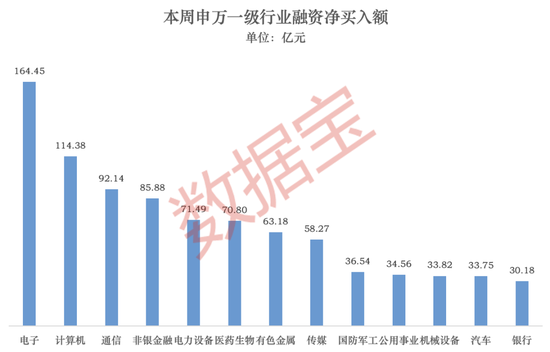
Group 1 - A-shares financing balance has reached a new high of 27,012.4 billion yuan, with a net buy of 1,006.51 billion yuan this week [2][20] - The electronics and computer sectors saw net purchases exceeding 10 billion yuan, with amounts of 16.445 billion yuan and 11.438 billion yuan respectively [2][20] - The power equipment sector is expected to benefit from increased fixed asset investments by the State Grid Corporation, projected to reach 400 billion yuan during the 14th Five-Year Plan, a 40% increase from the previous plan [4][21] Group 2 - Notable stocks with significant net purchases include China Ping An (3.343 billion yuan), TBEA (2.279 billion yuan), and Zhongji Xuchuang (1.979 billion yuan) [4][24] - The storage chip sector is experiencing a "super bull market," with DDR5 memory prices rising over 300% since September 2025, and DDR4 prices increasing over 150% [23] - Investors are optimistic about the power sector, with 9% of surveyed investors expressing confidence in this area, driven by the anticipated investments in the power grid [15][33]






从黑麋峰到比什凯克,绿色金融服务创新背后的“湘企”出海记
Bei Ke Cai Jing· 2026-01-18 10:09
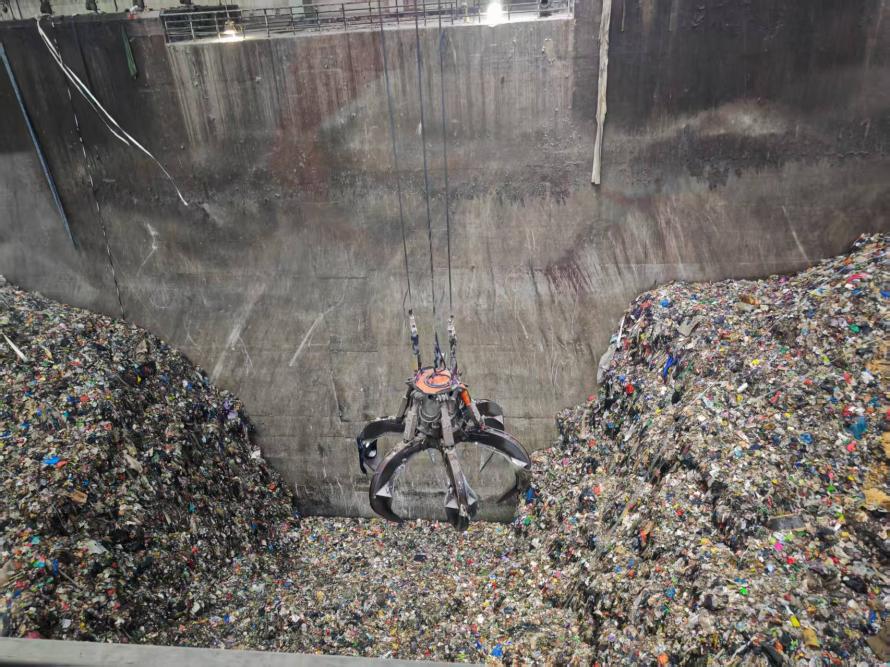
Core Viewpoint - Hunan Junxin Environmental Protection Co., Ltd. (Junxin Co., 301109.SZ) is expanding its waste treatment and green energy business, with a focus on both domestic and international markets, including a significant project in Kyrgyzstan [3][4][9]. Group 1: Company Overview - Junxin Co. specializes in the treatment of municipal solid waste, kitchen waste, municipal sludge, leachate, and fly ash, positioning itself as a "waste-to-energy" green manufacturing company [3]. - The company operates the Changsha Heimi Peak Solid Waste Treatment Plant, which is the only environmental park in China to have won two Luban Awards, the highest construction engineering award in the country [3]. Group 2: International Expansion - During the first China-Central Asia Summit, Junxin Co. signed a memorandum of understanding with Kyrgyz Republic officials to establish the country's first waste incineration power generation project, leveraging its successful experience from Changsha [4]. - The company's future strategy is to "root in Hunan, radiate nationwide, and go global" [4]. Group 3: Project Financing - The project in Kyrgyzstan faces challenges such as language barriers, funding shortages, and legal constraints, which complicate cross-border financing [4]. - China Merchants Bank (CMB) formed a project team to support Junxin Co., leading to the creation of a cross-border syndicate loan solution [5][6]. - CMB successfully provided Junxin Co. with a cross-border syndicate loan of $6.42375 million, which is crucial for the project's construction and boosts the company's confidence in expanding overseas [7]. Group 4: Project Progress - With funding secured, the Bishkek waste-to-energy project in Kyrgyzstan is on track for completion, with operations expected to commence on December 27, 2025 [9]. - The project was recognized by the Kyrgyz Republic President, who awarded Junxin Co.'s chairman a friendship medal during the inauguration ceremony [10]. Group 5: Future Outlook - The story of Junxin Co.'s international expansion reflects the growing trend of green finance and the potential for similar enterprises to venture abroad [11].
社融增速放缓,信贷仍是企业强、居民弱:银行业周报(20260112-20260118)-20260118
Huachuang Securities· 2026-01-18 09:46
Investment Rating - The report maintains a "Buy" recommendation for the banking sector [1]. Core Insights - The report highlights a slowdown in social financing growth, indicating that credit remains strong for enterprises but weak for households [1]. - In December 2025, the social financing growth rate decreased by 0.2 percentage points to 8.3%, continuing the trend observed in the second half of 2025 [4]. - The report emphasizes that government bonds are the main support for social financing, contributing significantly to the overall increase in financing [4]. - The investment logic for 2026 is expected to shift from purely defensive to a combination of dividends and growth, with a focus on banks with high dividends and low valuations [5]. Summary by Sections Industry Basic Data - The banking sector consists of 42 listed companies with a total market capitalization of approximately 1.15 trillion yuan and a circulating market value of about 790 billion yuan [1]. Market Performance - The absolute performance of the banking sector over the past month is 5.0%, with a relative performance of 2.8% compared to the broader market [2]. Financing and Credit Data - In December 2025, new social financing amounted to 2.21 trillion yuan, which is a year-on-year decrease of 646.2 billion yuan, primarily due to a reduction in government bonds [4]. - The report notes that new RMB loans in December were 910 billion yuan, a year-on-year decrease of 80 billion yuan, with household loans showing a negative growth trend [4]. Investment Recommendations - The report suggests focusing on three main investment lines: state-owned banks and large commercial banks, quality joint-stock banks and city commercial banks with strong performance, and city commercial banks benefiting from regional policies [5]. - Specific banks recommended for investment include China Merchants Bank, CITIC Bank, Ping An Bank, and several city commercial banks [5].




大额存单利率跌入“0字头”
第一财经· 2026-01-18 08:53
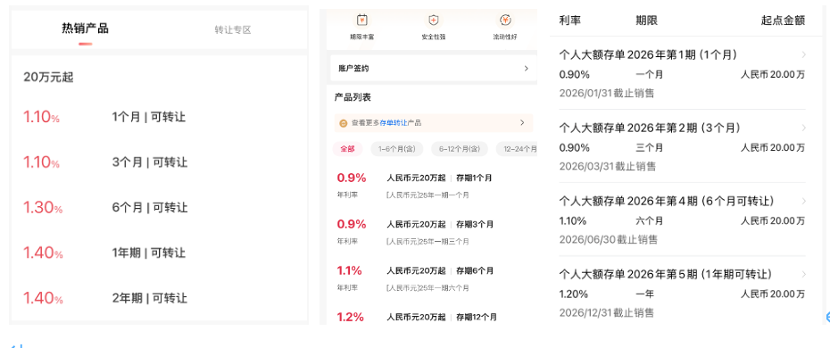
Core Viewpoint - The article discusses the significant decline in large-denomination certificate of deposit (CD) interest rates, with many banks offering rates below 1% for one-year and shorter products, while a substantial amount of deposits, approximately 75 trillion yuan, is set to mature in 2026, leading to a "deposit migration" trend among savers [3][10]. Group 1: Interest Rate Trends - Large-denomination CD rates are rapidly entering the "0% era," with most banks' new one-year and shorter products falling below 1%, and three-year rates generally below 2% [3][4]. - The trend towards shorter-term products is evident, with five-year options nearly disappearing, and some banks raising minimum deposit requirements to 1 million yuan [4][6]. - The average interest rates for various terms have dropped significantly, with the average rate for three-month deposits at 0.944% and one-year deposits at 1.277% as of September 2025 [8]. Group 2: Deposit Maturity and Migration - An estimated 75 trillion yuan of residential fixed-term deposits will mature in 2026, with a notable increase in the amount maturing compared to 2025 [10][11]. - Many savers are opting to transfer their funds from large banks to smaller banks, which typically offer slightly higher rates, rather than moving to equity markets [11][12]. - Younger savers are creatively splitting their deposits among different banks to take advantage of promotional offers, likening it to a game [12]. Group 3: Bank Strategies to Retain Deposits - In response to the pressure of deposit outflows, banks are launching various initiatives to retain funds, including temporarily raising interest rates to around 2% and enhancing customer service through personalized strategies [13][14]. - Some banks are offering promotional products with rates above 2% to attract new customers, while others are implementing pre-reminder mechanisms and tailored renewal plans for existing customers [16][17]. - The focus has shifted from merely selling products to deepening customer relationships and providing precise recommendations based on competitive analysis of deposit rates [17].





大额存单利率跌入“0字头” 天量存款到期储户跨行“搬家”
Di Yi Cai Jing· 2026-01-18 08:32
Core Viewpoint - The large-denomination certificate of deposit (CD) rates are rapidly approaching the "0% era," with many banks offering rates below 1% for products with a maturity of one year or less, and three-year rates generally below 2% [1][3][6] Group 1: Interest Rate Trends - The majority of banks have seen one-year and shorter-term CD rates drop below 1%, with some even lower than the yields of money market funds [1][3] - The average interest rates for various terms have significantly decreased, with one-year rates mostly below 1.5% and three-year rates not exceeding 2% [3][6] - The average interest rate for bank deposits across all terms fell below 2% as of September 2025, with three-month rates at 0.944% and one-year rates at 1.277% [6][8] Group 2: Deposit Maturity and Customer Behavior - Approximately 75 trillion yuan of deposits are set to mature in 2026, with a notable increase in the volume of one-year and longer-term deposits maturing [9][10] - Many depositors are opting to transfer their funds between banks rather than moving to equity markets, seeking slightly higher yields from smaller banks [10][11] - Younger depositors are creatively diversifying their funds across multiple banks to take advantage of promotional offers [11] Group 3: Bank Strategies to Retain Deposits - In response to the pressure of deposit outflows, banks are implementing various strategies, including temporarily raising interest rates to around 2% to attract and retain funds [1][15] - Some banks are enhancing customer service and offering tailored solutions to improve customer retention, such as pre-reminder mechanisms and personalized renewal plans [16] - Marketing campaigns and customer engagement activities are being intensified to maintain deposit levels, with some banks offering rewards based on asset growth [15][16]
大额存单利率跌入“0字头”,天量存款到期储户跨行“搬家”
Di Yi Cai Jing· 2026-01-18 08:19
Core Viewpoint - The banking sector is facing a "deposit defense war" as large deposit certificate rates are rapidly declining, with many banks offering rates below 1% for one-year products and below 2% for three-year products, while a significant amount of deposits is set to mature in 2026 [1][2][3][8]. Group 1: Deposit Rate Trends - The trend of large deposit certificates is shifting towards shorter terms, with most banks now promoting products with a maturity of one year or less, while five-year products are nearly extinct [2][3]. - The average interest rates for newly issued one-year and shorter large deposit certificates have dropped below 1%, with many three-year products not exceeding 2% [3][5]. - The interest rates for large deposit certificates from major banks, such as Industrial and Commercial Bank of China and Agricultural Bank of China, have significantly decreased, with one-month and three-month rates at 0.9% [4][5]. Group 2: Deposit Maturity and Customer Behavior - Approximately 75 trillion yuan of deposits are expected to mature in 2026, with a notable increase in the amount of one-year and longer-term deposits maturing compared to 2025 [8][11]. - Many depositors are opting for "cross-bank transfers" rather than moving to equity markets, seeking better rates from smaller banks, which often offer rates higher than those of larger banks [9][10]. - A survey indicated that a significant portion of depositors plan to renew their deposits, with expectations of renewal rates varying between 20% to 60% [11]. Group 3: Bank Strategies to Retain Deposits - In response to the pressure of deposit outflows, banks are implementing various strategies, including temporarily raising interest rates to around 2% to attract and retain funds [1][13]. - Some banks are enhancing customer service through personalized strategies and promotional activities to increase customer loyalty and retention [13][14]. - Regional banks are focusing on improving service processes, such as establishing pre-reminder mechanisms for maturing deposits and offering tailored renewal plans [14].
银行周报(2026/1/12-2026/1/16):12月收支表:居民存款边际活化,中小银行配债意愿或有下降-20260118
GUOTAI HAITONG SECURITIES· 2026-01-18 07:44
Investment Rating - The report assigns an "Accumulate" rating for the banking sector [5] Core Insights - In December, there are signs of marginal activation in household savings deposits, while medium to long-term loans from small and medium-sized banks show significant growth. The bond market experienced fluctuations, leading to a potential decrease in the willingness of small and medium-sized banks to allocate bonds [2][3] Summary by Sections Liabilities - Personal deposits increased by CNY 428.7 billion year-on-year, with demand deposits and time deposits increasing by CNY 100 billion and decreasing by CNY 39.1 billion respectively. There is a trend of time deposits migrating from small and medium-sized banks to large banks, with large banks and small banks seeing increases of CNY 75.9 billion and decreases of CNY 115 billion respectively [3] - Corporate deposits decreased by CNY 134.3 billion year-on-year, with demand deposits and time deposits decreasing by CNY 191.2 billion and increasing by CNY 172.7 billion respectively. Small and medium-sized banks contributed significantly to the increase in time deposits, with a year-on-year increase of CNY 118.3 billion in December [3] - Non-bank deposits decreased by CNY 3.2 trillion year-on-year, with large banks and small banks seeing decreases of CNY 3.1 trillion and increases of CNY 63.8 billion respectively. The significant increase in non-bank deposits is attributed to a low base effect from the self-regulatory mechanism for interbank demand deposits in 2024 [3] - Financial bonds increased by CNY 44.9 billion year-on-year, with large banks and small banks seeing increases of CNY 14.2 billion and CNY 30.7 billion respectively [3] Assets - Loans decreased by CNY 50.9 billion year-on-year, primarily due to a decrease in non-bank loans. Short-term loans and medium to long-term loans increased by CNY 86.2 billion and CNY 33.9 billion respectively. Large banks saw significant increases in short-term loans, while small banks showed a contrasting trend [4] - Bond investments decreased by CNY 909.8 billion year-on-year, with large banks and small banks seeing decreases of CNY 35.2 billion and CNY 874.6 billion respectively. The fluctuations in the bond market have led to a potential decrease in the willingness of small and medium-sized banks to allocate bonds, while they have increased their holdings in repurchase agreements by CNY 778 billion year-on-year [4]