招商银行

Search documents
降温组合拳火速出手,解码四万亿天量
Hua Xia Shi Bao· 2026-01-16 13:16
Core Viewpoint - The recent regulatory measures in the A-share market aim to cool down speculative trading and maintain market stability, guiding the market towards a "slow bull" trend in the medium to long term [2][5]. Market Performance - On January 16, the three major A-share indices experienced a collective decline, with the Shanghai Composite Index down by 0.26%, Shenzhen Component down by 0.18%, and ChiNext down by 0.2% [2]. - The trading volume in the Shanghai and Shenzhen markets decreased from nearly 4 trillion yuan to over 2 trillion yuan, indicating a significant reduction in market activity [2]. Regulatory Actions - The financing margin ratio for new financing contracts was raised from 80% to 100% to curb excessive speculation and leverage risks [4][5]. - Major stocks, including招商银行 (China Merchants Bank) and 贵州茅台 (Kweichow Moutai), saw significant sell orders, interpreted as a clear intention to cool the market [4]. Investor Sentiment - The market's recent surge has been attributed to improved domestic economic fundamentals and increased foreign capital inflow, with the A-share market being viewed as an attractive investment destination [6][7]. - Analysts suggest that the influx of new capital is driven by domestic institutional investors, retail investors through funds, and foreign investments due to market openness [7]. Future Outlook - The market is expected to continue its upward trend, supported by favorable macroeconomic policies and corporate earnings growth, despite potential uncertainties such as geopolitical risks and global monetary policy adjustments [8][9]. - Investment strategies should focus on sectors with strong growth potential, such as AI, semiconductors, and renewable energy, while being cautious of short-term market fluctuations [9].


银行行业:对公中长贷同比多增,居民存款流向非银仍不明显
Dongxing Securities· 2026-01-16 12:07
Investment Rating - The industry investment rating is "Positive" [4] Core Views - The report highlights that corporate medium to long-term loans have increased year-on-year, while the flow of household deposits to non-bank institutions remains insignificant [1][2] - The growth rate of social financing (社融) has decreased to 8.3% year-on-year, with a month-on-month decline of 0.2 percentage points [2] - The report anticipates that the macroeconomic policies will strengthen in 2026, with the central bank lowering several structural monetary policy tool rates to improve banks' funding costs and encourage credit growth in key areas [9] Summary by Sections Social Financing and Loans - As of December, social financing increased by 2.21 trillion yuan year-on-year, which is a decrease of 642.7 billion yuan compared to the previous year [2] - The net financing of government bonds was 686.4 billion yuan, a year-on-year decrease of 1.07 trillion yuan [2] - New RMB loans amounted to 910 billion yuan, a year-on-year increase of 135.5 billion yuan [2] - Corporate loans showed significant growth, particularly in medium to long-term loans, which increased by 2.9 trillion yuan year-on-year [2][3] Household Loans and Deposits - Household loan demand remains weak, with a decrease of 916 billion yuan in December, which is a year-on-year decline of 4.416 trillion yuan [3] - The report indicates that there has not been a significant outflow of household deposits to non-bank institutions, attributed to seasonal factors related to the maturity of wealth management products [3] Monetary Aggregates - M2 growth rate increased to 8.5% year-on-year, with a month-on-month increase of 0.5 percentage points [3] - New RMB deposits totaled 1.68 trillion yuan, with a year-on-year increase of 3.08 trillion yuan [3]
海尔新能源B轮融资完成签约 共建能源互联网生态平台
Xin Hua Cai Jing· 2026-01-16 11:53
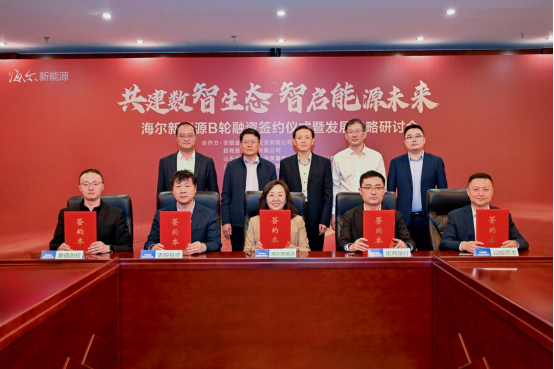
Group 1 - Haier New Energy held a B-round financing signing ceremony, securing over 1 billion yuan in funding from investors including Agricultural Bank Investment, China Merchants Bank, and others [1][3] - The company aims to become a leader in intelligent distributed clean energy solutions by creating an AI-driven energy internet ecosystem to provide smart energy solutions for global households and commercial clients [1][4] - The financing marks the beginning of a brand strategy upgrade and ecological transition, with Haier New Energy's unique competitive advantages in building an energy internet ecosystem and integrated asset operation attracting multiple investors [4] Group 2 - The National Development and Reform Commission and the National Energy Administration have outlined a plan for a new type of power grid platform to be established by 2030, which includes a clear interface and efficient operation of main and distribution networks [3] - The plan anticipates that renewable energy generation will account for approximately 30% of total power generation, with distributed energy capacity reaching 900 million kilowatts and supporting over 40 million charging facilities [3]
出口量全球第一,中国汽车在海外卖爆了
3 6 Ke· 2026-01-16 11:44
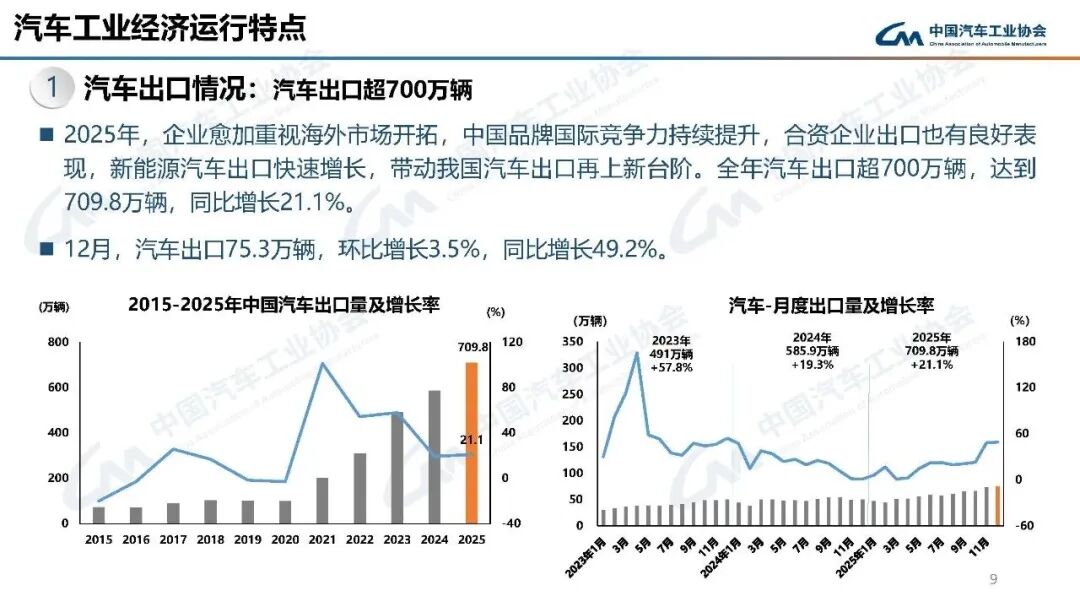
Core Insights - China's automobile exports are projected to exceed 7 million units by 2025, reaching 7.098 million, a year-on-year increase of 21.1%, solidifying its position as the world's largest automobile exporter [1][2][6] - The growth in exports is driven by increased focus on overseas markets, enhanced international competitiveness of Chinese brands, and rapid growth in electric vehicle (EV) exports [1][2][6] Export Performance - In 2025, Chery is expected to lead with an export volume of 1.344 million units, a 17.4% increase, accounting for 18.9% of total exports [1][6][7] - BYD has emerged as a significant player, with exports reaching 1.054 million units, a 140% increase, moving from sixth to second place in export rankings [1][7][8] - SAIC Group is projected to export 950,000 units in 2025, implementing a new global strategy focused on localization [8] Market Dynamics - The export landscape is shifting, with Mexico becoming the largest export destination, surpassing Russia, which saw a decline in exports from over 1 million units in 2024 to 513,078 units in 2025 [1][10][11] - The top ten export destinations for Chinese automobiles in 2025 include Mexico, Russia, and the UAE, with significant increases in exports to these regions [10][11] Electric Vehicle Export Trends - In 2025, EV exports are expected to reach 2.615 million units, doubling year-on-year, while traditional fuel vehicle exports are projected to decline by 2% to 4.483 million units [6][12] - The growth in EV exports is characterized by a strong increase in plug-in hybrid electric vehicles (PHEVs), with exports of pure electric vehicles expected to reach 1.646 million units, a 66.7% increase [6][12] Strategic Developments - Chinese automakers are adapting their strategies to focus on brand and ecosystem development, moving from product export to value chain export [7][8][13] - The competitive landscape is evolving, with companies leveraging local production and technology transfer to enhance their market presence and mitigate risks [12][13]



【16日资金路线图】两市主力资金净流出近240亿元 电子等行业实现净流入
Zheng Quan Shi Bao· 2026-01-16 10:38
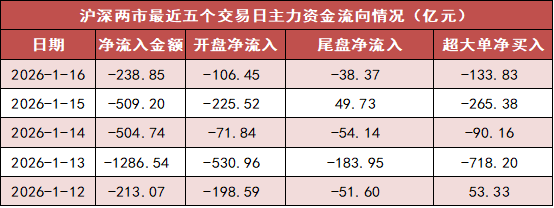
1月16日,A股市场整体下跌。截至收盘,上证指数收报4101.91点,下跌0.26%;深证成指收报14281.08点,下跌 0.18%;创业板指收报3361.02点,下跌0.2%。两市合计成交30262.32亿元,较上一交易日增加1207.36亿元。 1.两市主力资金净流出近240亿元 今日沪深两市主力资金开盘净流出106.45亿元,尾盘净流出38.37亿元,全天净流出238.85亿元。 | | | 沪深两市最近五个交易日主力资金流向情况(亿元) | | | | --- | --- | --- | --- | --- | | 日期 | | 净流入金额 开盘净流入 | 尾盘净流入 | 超大单净买入 | | 2026-1-16 | -238.85 | -106. 45 | -38. 37 | -133. 83 | | 2026-1-15 | -509.20 | -225.52 | 49.73 | -265. 38 | | 2026-1-14 | -504.74 | -71.84 | -54. 14 | -90. 16 | | 2026-1-13 | -1286.54 | -530. 96 | -183. 95 | ...
链接全球 创造价值——招商银行全球托管服务助力中资机构扬帆出海
Zhong Guo Ji Jin Bao· 2026-01-16 10:11
Group 1 - The core viewpoint emphasizes the importance of the Guangdong-Hong Kong-Macao Greater Bay Area as a strategic platform for China's high-level opening-up and the dual circulation development model, positioning it as a key hub for connecting domestic and international markets [1] - China Merchants Bank (CMB) is deeply integrated into the national opening-up strategy and the overall layout of the Greater Bay Area, leveraging its location advantages to participate in cross-border financial mechanisms [1] - CMB has established a mature professional service capability and custody service system since its proactive layout in global custody business in 2006, supporting Chinese institutions in their global expansion [1] Group 2 - CMB aims to become the preferred global custodian bank by enhancing its professional, technological, and service capabilities, with a global custody network covering over 100 major financial markets [2] - Hong Kong serves as a core hub for CMB's global custody business, providing diversified services and maintaining advantages in public fund custody [2] - The establishment of CMB's global custody center in Singapore further strengthens its capabilities and supports Chinese institutions in expanding their global market presence [2] Group 3 - CMB is committed to enhancing its global custody services through technological empowerment, developing a global custody system that offers comprehensive online, automated, and intelligent operations [3] - The bank focuses on providing tailored global custody services for Chinese institutions, integrating various financial resources to create value for clients [3] - CMB's global custody business covers all types of asset management institutions, offering both basic and value-added services [3] Group 4 - As China's financial market opens further, the strategic position of the Greater Bay Area will be further highlighted, with CMB continuing to enhance its global custody service system to contribute to the high-level opening of China's finance [4]

链接全球 创造价值——招商银行全球托管服务助力中资机构扬帆出海
中国基金报· 2026-01-16 09:23
Core Viewpoint - The article emphasizes the strategic importance of the Guangdong-Hong Kong-Macao Greater Bay Area in facilitating China's dual circulation development model and enhancing financial market connectivity, positioning it as a key hub for Chinese institutions' internationalization efforts [1]. Group 1: Global Custody Services - China Merchants Bank (CMB) aims to become the preferred global custodian bank by enhancing its professional, technological, and service capabilities, establishing a comprehensive global custody network that covers over 100 major financial markets [2]. - CMB's Hong Kong center serves as a critical base for its global custody business, leveraging its early acquisition of a public custody license to strengthen its service capabilities in areas like public funds [2]. - The establishment of CMB's Singapore center further enhances its global custody capabilities, supporting Chinese institutions in expanding their global market presence [2]. Group 2: Technological Empowerment - CMB is committed to digital transformation, positioning itself as a "financial technology bank" and investing in the development of a global custody system that offers a one-stop product operation service solution [3]. - The global custody system is designed to be flexible and configurable, enabling clients to engage in innovative business activities while ensuring efficient and secure cross-border capital flows [3]. Group 3: Tailored Services for Chinese Institutions - CMB understands the unique service needs of Chinese institutions in their internationalization process, providing comprehensive custody services that include basic and value-added services [4]. - The bank integrates its diverse financial resources to offer a wide range of services, including distribution, investment financing, and foreign exchange, creating value for its clients [4]. - As China's financial market opens further, CMB aims to enhance its global custody service system, contributing to the high-level opening of China's financial sector [4].
爆量第三日:巨额资金,甩卖?
Ge Long Hui A P P· 2026-01-16 09:10
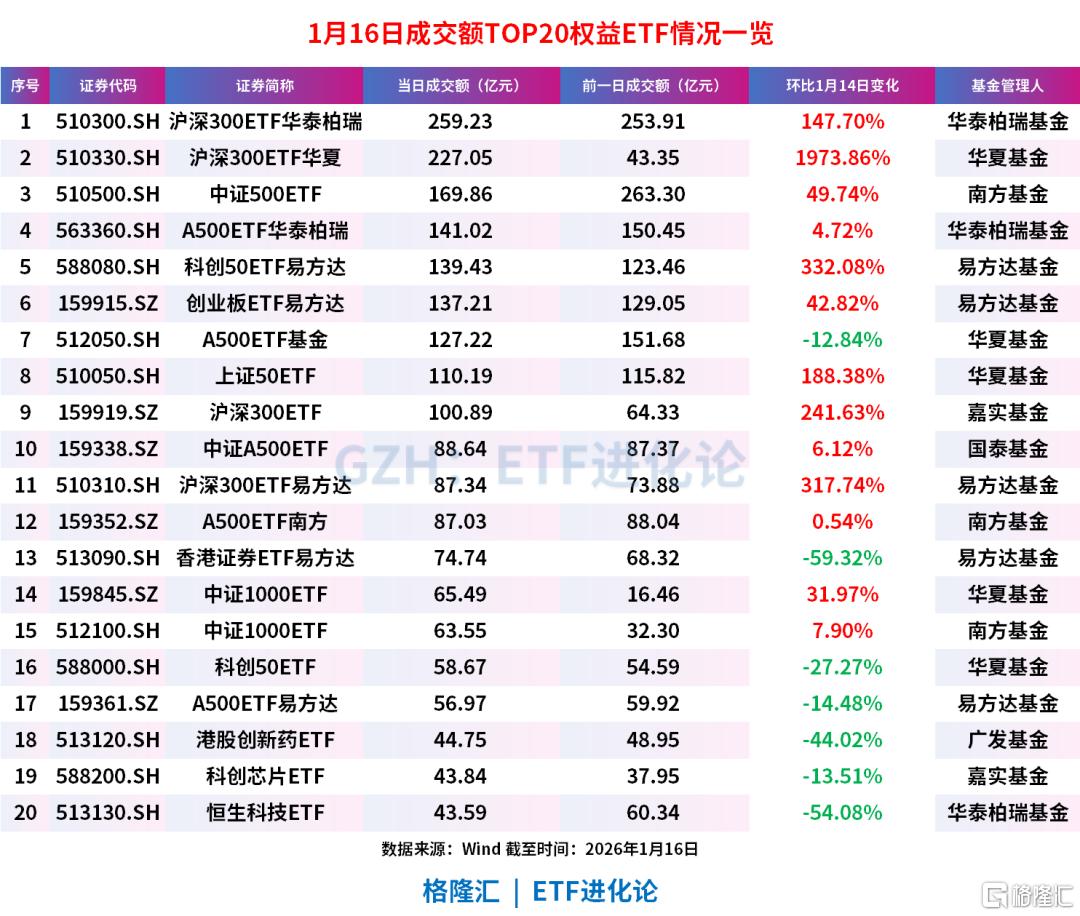
Core Viewpoint - The A-share market is experiencing an unprecedented tug-of-war between bulls and bears, highlighted by significant net outflows from major ETFs and a surge in leveraged funds [1][9][11]. Group 1: ETF Market Activity - Major broad-based ETFs saw a net outflow of 700 billion, with the total margin balance exceeding 2.7 trillion for the first time in history [1]. - The trading volume of ETFs reached a record high of 752.25 billion, marking the third consecutive day of record-breaking activity [1]. - Multiple broad-based ETFs, including the Huatai-PineBridge CSI 300 ETF and the Huaxia CSI 300 ETF, recorded transaction volumes exceeding 20 billion, with the latter seeing a nearly 20-fold increase compared to January 14 [2][4]. Group 2: Institutional Fund Flows - The top ten ETFs with the highest net outflows were all broad-based ETFs, totaling 715 billion in outflows, with the Huatai-PineBridge CSI 300 ETF alone experiencing a net outflow of 200 billion [9][10]. - Institutional funds showed a net outflow across nearly all major ETFs, indicating a trend of selling pressure despite high trading volumes [4][5]. Group 3: Leverage and Margin Trading - Leveraged funds have been aggressively buying, with net purchases of 206 billion on January 15, contributing to a total of 1.77 trillion in net purchases over the first nine trading days of the year [13][15]. - The current pace of leveraged fund inflows suggests that they could match last year's total net purchases in just over 25 trading days [15]. Group 4: Market Sentiment and Regulatory Environment - The market is showing signs of cooling, with regulatory measures aimed at tempering excessive speculation following a period of high trading volumes and bullish sentiment [11][19]. - The shift in regulatory stance is seen as a response to the rapid increase in trading activity, particularly after three consecutive days of trading volumes exceeding 3 trillion [19][20]. Group 5: Wealth Transfer and Investment Trends - A significant portion of the 160 trillion in household savings is being reallocated, which could have profound implications for the capital markets [21][30]. - The upcoming maturity of long-term deposits, estimated at 32 trillion, coincides with a bullish market environment, potentially leading to increased equity market participation [25][26].
银行业“10万亿俱乐部”扩容至10家,陈国汪详解大中小银行划分标准
Jin Rong Jie· 2026-01-16 09:09
Group 1 - The core viewpoint of the articles highlights that both Pudong Development Bank and CITIC Bank have successfully surpassed the 10 trillion yuan asset threshold, expanding the "10 trillion asset club" in China's banking industry to 10 members, which includes six major state-owned banks and four national joint-stock banks [1] - The total asset scale of the 10 banks now accounts for 60% of the entire banking industry, indicating a growing concentration of resources among leading institutions [1] - Chen Guowang, director of the Financial Industry Research Institute, noted that the significant changes in asset scale among banks have created a clear disparity with the classification standards established in 2015, which need to be updated to better reflect the current industry landscape [2] Group 2 - The classification standards for banks, established in 2015, categorize institutions based on asset size, but the threshold for large banks is no longer applicable as multiple institutions have surpassed the 10 trillion yuan mark [2] - The current classification includes various types of banks, such as policy banks, state-owned commercial banks, joint-stock banks, urban commercial banks, rural small banks, and private banks, indicating a diverse banking landscape [2] - Chen Guowang suggests that the asset scale classification standards should be revised to adapt to the new developments in the banking industry [2]




股份制银行板块1月16日跌1.73%,华夏银行领跌,主力资金净流出5.02亿元
Zheng Xing Xing Ye Ri Bao· 2026-01-16 08:56
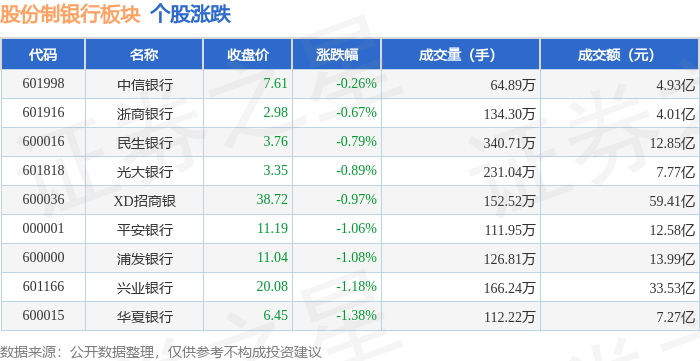
Market Overview - The banking sector saw a decline of 1.73% on January 16, with Huaxia Bank leading the drop [1] - The Shanghai Composite Index closed at 4101.91, down 0.26%, while the Shenzhen Component Index closed at 14281.08, down 0.18% [1] Individual Bank Performance - CITIC Bank closed at 7.61, down 0.26% with a trading volume of 648,900 shares and a transaction value of 493 million [1] - Zheshang Bank closed at 2.98, down 0.67% with a trading volume of 1.34 million shares and a transaction value of 401 million [1] - Minsheng Bank closed at 3.76, down 0.79% with a trading volume of 3.41 million shares and a transaction value of 1.285 billion [1] - Everbright Bank closed at 3.35, down 0.89% with a trading volume of 2.31 million shares and a transaction value of 777 million [1] - China Merchants Bank (XD) closed at 38.72, down 0.97% with a trading volume of 1.52 million shares and a transaction value of 5.941 billion [1] - Ping An Bank closed at 11.19, down 1.06% with a trading volume of 1.12 million shares and a transaction value of 1.258 billion [1] - Pudong Development Bank closed at 11.04, down 1.08% with a trading volume of 1.27 million shares and a transaction value of 1.399 billion [1] - Industrial Bank closed at 20.08, down 1.18% with a trading volume of 1.66 million shares and a transaction value of 3.353 billion [1] - Huaxia Bank closed at 6.45, down 1.38% with a trading volume of 1.12 million shares and a transaction value of 727 million [1] Capital Flow Analysis - The banking sector experienced a net outflow of 502 million from institutional investors and 687 million from retail investors, while retail investors saw a net inflow of 1.189 billion [1] - Specific capital flows for individual banks indicate varying trends, with Shanghai Pudong Bank seeing a net inflow of 88.92 million from institutional investors [2] - CITIC Bank had a net inflow of 42.84 million from institutional investors, while retail investors experienced a net outflow of 53.64 million [2] - Everbright Bank had a net inflow of 13.72 million from institutional investors, but retail investors faced a net outflow of 53.07 million [2] - Minsheng Bank saw a net outflow of 51.56 million from institutional investors, while retail investors had a net inflow of 51.08 million [2] - Huaxia Bank experienced a significant net outflow of 114 million from institutional investors, with a smaller net inflow of 10.25 million from retail investors [2] - Ping An Bank had a net outflow of 139 million from institutional investors, but retail investors saw a net inflow of 95.90 million [2]