华为云

Search documents
2025年中国基础云服务行业数据报告
艾瑞咨询· 2025-09-19 00:07
Core Insights - The overall cloud service market in China is projected to reach 544.54 billion yuan in 2024, with a growth rate of 15%, driven by the rapid development of artificial intelligence which is upgrading cloud infrastructure and capability platforms [1][8][19] Market Overview - The IaaS market in China is expected to grow to 371.86 billion yuan in 2024, with a growth rate of 19.1%, while the PaaS market is projected to reach 101.86 billion yuan, growing at 35.8% [11] - The public cloud service market is anticipated to reach 387.87 billion yuan in 2024, with an 18% growth rate, benefiting from the rapid development of AI technologies [13] - The non-public cloud service market is expected to grow to 163.58 billion yuan in 2024, with an 11.2% growth rate, as traditional industries increasingly link their business scenarios with AI [16] Market Characteristics - AI has become a key focus in the cloud service industry, with participants expanding investments in intelligent computing infrastructure and improving AI development tools [8][11] - The public cloud market is experiencing intensified competition characterized by a balance between price wars and value wars, with AI technologies driving new opportunities [13][19] - The IaaS market is seeing simultaneous growth in both the quantity and quality of computing resources, while the PaaS market is undergoing a critical technological transition influenced by AI [11][21] Competitive Landscape - In the public cloud IaaS market, Alibaba Cloud, Huawei Cloud, and Tianyi Cloud are the top three players, with Tencent Cloud and Mobile Cloud tied for fourth place [19] - Operator-backed cloud vendors are gaining market competitiveness by enhancing infrastructure and investing in AI, while internet-based cloud vendors are focusing on business streamlining and capability concentration to alleviate competitive pressure [19][21] Development Trends - The cloud computing sector is positioned as a critical infrastructure in the AI era, continuously providing foundational resources and platform tools to support AI industry development [8][11] - The integration of AI into traditional industries is expected to create opportunities for private cloud deployments, as businesses seek cost-effective and tailored solutions [16][19]


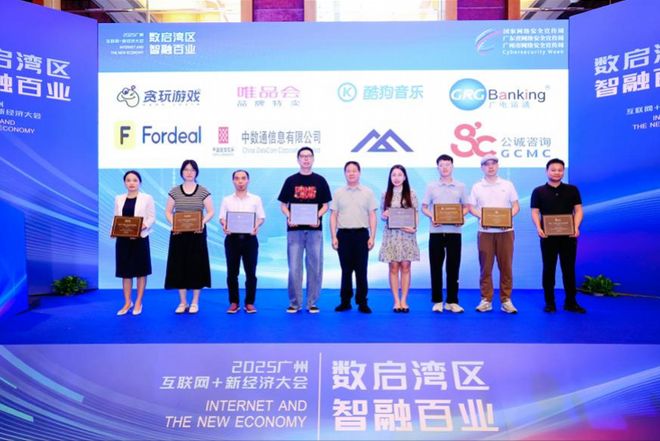
广州互联网+新经济大会举行,众专家共探数字未来新路径
Nan Fang Du Shi Bao· 2025-09-18 09:09
Core Insights - The conference highlighted the acceleration of large models towards general artificial intelligence, with trillion-parameter models potentially being a key point for surpassing human intelligence [1][6] - AI technology is demonstrating its empowering effects across critical industries such as pharmaceuticals, gaming, and automotive [1] Group 1: Digital Economy Development - The digital economy in the Guangdong-Hong Kong-Macao Greater Bay Area is expected to continue growing, with Guangzhou as a core engine city, aiming for a modern industrial system characterized by high-end, intelligent, and green transitions [5] - The "Guangzhou Digital Economy Development Report (2025)" indicates that the core industry value added of the digital economy in Guangzhou surpassed 400 billion yuan for the first time, reaching 447.03 billion yuan, a year-on-year increase of 9.8% [5] Group 2: AI and Industry Integration - The conference focused on the deep integration of digital and industrial sectors, emphasizing the role of "Artificial Intelligence+" in empowering various industries [5][9] - Key industry players, including Tianyi Cloud, Huawei Cloud, and Google, discussed the transformation of industrial manufacturing through AI and the application prospects of blockchain technology in creating trustworthy data spaces [6] Group 3: Digital Trade and Globalization - Digital trade is emerging as a new form and engine of foreign trade in the digital economy era, breaking geographical boundaries and connecting global markets, thus providing unprecedented growth opportunities for various market entities [9]
Omdia:中国财富500强的企业中正在部署或已经使用GenAI技术达到74.6%
智通财经网· 2025-09-18 06:59
Group 1 - The adoption rate of GenAI technology among China's Fortune 500 companies has reached 74.6%, driven by full-stack solutions from GenAI cloud giants and the rise of open-source models and tools [1] - Leading GenAI providers in China include Alibaba Cloud and DeepSeek, serving 40% and 38% of Fortune 500 companies respectively, with a trend towards multi-vendor strategies where companies use an average of 2.1 GenAI suppliers [1] - Open-source models play a crucial role in the rise of GenAI in China, providing openness, transparency, customization, and flexibility for rapid deployment of large models [1] Group 2 - Adoption rates of GenAI vary significantly across industries, with 100% in telecommunications, automotive, and IT, 90% in financial services, and 80% in manufacturing, influenced by digital infrastructure maturity and regulatory environments [2] - Companies are actively applying GenAI in various scenarios, including enhancing employee productivity, customer service, sales and marketing, and process optimization, with notable examples such as NIO generating 30% of its software code through GenAI [2] - In customer service, companies like FAW Group improved query resolution rates from 37% to 84% using GenAI, while Ctrip saved 10,000 work hours daily through virtual assistants [2] Group 3 - By 2025, the largest verticals for GenAI software revenue in China will be IT, healthcare, retail, consumer, and professional services, with continued growth expected through 2029 [3] - Conversational tools are anticipated to be the most popular use case in the coming years due to the availability of language and text data and the maturity of language processing [3] - Companies are encouraged to ensure that GenAI deployments provide a return on investment while prioritizing trustworthy, secure, and robust solutions, and many are beginning to embrace the benefits of agent-based AI [3]
竞逐AI红利,云计算厂商热战升温,腾讯云出海提速
Hua Xia Shi Bao· 2025-09-18 05:43
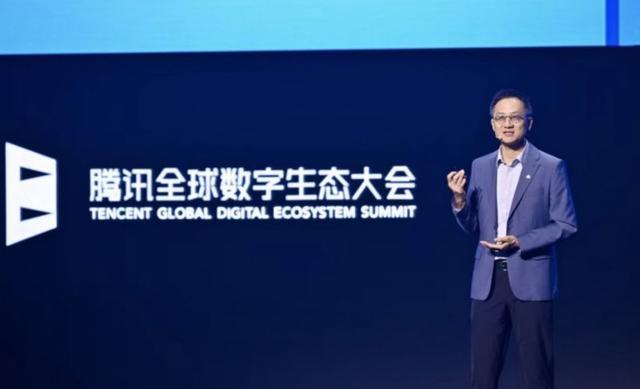
Core Insights - The article discusses the significant growth opportunities for cloud computing companies driven by AI and globalization, with Tencent Cloud announcing its comprehensive AI strategy aimed at enhancing industry efficiency and revenue scale [2][6]. Group 1: AI Strategy and Development - Tencent Cloud launched its AI Development Platform (ADP) 3.0, which has rapidly developed nearly 600 requirements in three months, showcasing its commitment to AI technology [3]. - The year is referred to as the "Year of Intelligent Agents," indicating the growing importance of AI agents in the industry, with companies expected to increase investments in this area [4]. - AI has become a crucial growth driver for cloud computing firms, with predictions that by 2026, inference computing demand may account for over 70% of total AI computing needs [4]. Group 2: Financial Performance and Market Competition - Tencent's capital expenditure reached 83.16 billion yuan over the past three quarters, reflecting significant investment in AI infrastructure [5]. - Tencent's To B revenue achieved double-digit growth, reaching 55.5 billion yuan in Q2, despite increasing competition in the B-end market [5]. - The Chinese AI cloud market is projected to reach 22.3 billion yuan by mid-2025, with the top five vendors holding over 75% market share, highlighting intense competition [5]. Group 3: Global Expansion and Infrastructure Investment - Tencent Cloud reported high double-digit growth in its international business over the past three years, with a significant increase in overseas customer base [6]. - The company plans to invest $150 million in building its first data center in the Middle East and expand its presence in Japan, indicating a strong commitment to global infrastructure [7]. - The global cloud infrastructure service spending is projected to reach $95.3 billion by Q2 2025, with major players like AWS, Microsoft Azure, and Google Cloud dominating the market [8]. Group 4: Competitive Landscape and Strategic Focus - Domestic cloud computing firms are narrowing the gap with international competitors, leveraging advantages in audio-visual technology and supply chain [8]. - The focus of competition has shifted from price to "AI + scenarios," with Chinese cloud firms finding niches in real-time audio-visual and gaming social PaaS [8]. - Tencent Cloud's strengths in low latency and AI noise reduction in gaming and social business scenarios create a competitive moat [8].

S创上海2025全日程发布!你想知道的都在这,确定不点进来看看?
3 6 Ke· 2025-09-16 02:51
Core Insights - The event focuses on global innovation across various sectors including green technology, advanced manufacturing, artificial intelligence, future transportation, healthcare, and entertainment consumption [2][4]. Agenda Highlights - Day 1 features a series of roundtable discussions with prominent figures from the innovation ecosystem, including discussions on the evolution of Slush China and the role of European innovation in supporting entrepreneurs [6][8]. - Keynote speeches and panels will address topics such as cross-border collaboration in the Asia-Pacific startup ecosystem, the synergy between industry and ecological innovation in Denmark, and the impact of AI on manufacturing [10][12][20]. - The event includes performances and showcases from various sectors, emphasizing the integration of technology and creativity [7][21][33]. Notable Speakers and Topics - Notable speakers include Peter Vesterbacka, co-founder of Angry Birds, discussing the spirit of innovation as a lifestyle [6]. - Discussions will cover the transformation of the automotive industry through AI, the future of digital health, and the role of youth entrepreneurs in driving innovation [24][40][45]. - The agenda also highlights the importance of sustainable practices and the transition to a low-carbon economy, featuring experts in climate technology and ESG [49][50].

云计算投资图谱:产业赛道与主题投资风向标
Tianfeng Securities· 2025-09-15 09:41
Group 1 - The global cloud computing market is projected to reach approximately $2 trillion by 2030, driven by the demand for AI model training and the continuous improvement of application model services [4][9][17] - In 2024, the global cloud computing market size is expected to reach $692.9 billion, with a year-on-year growth rate of 20.3% [4][9][12] - The Chinese cloud computing market is anticipated to grow to 828.8 billion yuan in 2024, representing a 34.4% increase from 2023 [17][18] Group 2 - The cloud computing service model is evolving towards an "AI+" direction, leading to the emergence of a new intelligent computing cloud architecture [4][14][22] - The cloud computing service categories include IaaS, PaaS, and SaaS, with IaaS and SaaS being the main growth drivers in the market [18][22][28] - The market for Model as a Service (MaaS) in China is expected to grow rapidly, with a projected compound annual growth rate of 64.8% from 2024 to 2028 [28][30] Group 3 - The cloud computing industry chain includes infrastructure providers, cloud service providers, applications, and end-users, forming a complex ecosystem [22][24] - Major players in the Chinese public cloud IaaS market include Alibaba Cloud, Tianyi Cloud, and Huawei Cloud, with these companies leveraging their early advantages in AI cloud deployment [27][29] - The demand for computing power is expected to grow rapidly, with China's intelligent computing scale projected to reach 117.3 EFLOPS by 2027 [25][26]


“2025新材料与具身智能硬科技创新论坛”落幕
Sou Hu Cai Jing· 2025-09-13 10:26
Group 1 - The forum titled "2025 New Materials and Embodied Intelligent Hard Technology Innovation Forum" was successfully held in Shenzhen, focusing on the integration of new materials and embodied intelligence [1][2] - Nearly 200 representatives from various institutions and companies, including Huawei Cloud and the Chinese Academy of Sciences, participated to explore innovative paths and future opportunities in the field [1][2] - A new "Intellectual Property Protection Smart Hub Platform" for the new materials industry was launched, marking a significant breakthrough in Shenzhen's intellectual property service system [2][3] Group 2 - The platform integrates three professional service platforms: Patent Navigation Platform, Operation Public Service Platform, and Protection Workstation Service Platform, covering the entire innovation chain from pre-innovation to post-innovation [3][4] - The upgraded platform aims to provide comprehensive intellectual property services to support the high-quality development of Shenzhen's new materials industry [5] - The forum included a promotion segment for the Deep-Shan Special Cooperation Zone, highlighting its advantages in policy support, spatial resources, and industrial matching [5][6] Group 3 - Representatives from research enterprises, investment institutions, and application parties engaged in discussions about "technical bottlenecks" and "cross-border cooperation models," emphasizing the need for deep cross-border integration and shared R&D resources [7]
“新丝路”上粤企忙 中欧班列开辟出海新通道
2 1 Shi Ji Jing Ji Bao Dao· 2025-09-12 12:46
Core Insights - The Guangdong-Hong Kong-Macao Greater Bay Area has launched its first China-Europe freight train to Turkey, reflecting the region's expanding international trade capabilities [1] - Guangdong's foreign trade has shown steady growth despite external pressures, with private enterprises leading the way [1][3] - Emerging markets are becoming key targets for Guangdong companies, with significant investments and exports directed towards countries involved in the Belt and Road Initiative [2][3] Group 1: Trade and Export Data - In the first eight months of this year, Guangzhou International Port operated 233 international freight trains, shipping 19,800 TEUs valued at 5.209 billion RMB, accounting for 40% of Guangdong's total [1] - Guangdong's private enterprises reported an import and export value of 3.99 trillion RMB, a growth of 4.8%, representing 64.2% of the province's total [1] - Guangdong's trade with Belt and Road countries reached 1.79 trillion RMB, growing by 3.8%, and accounted for 39.3% of the province's total trade [3] Group 2: Market Expansion and New Opportunities - Guangzhou Qingtian Intelligent Equipment Technology Co., focusing on smart factory equipment, has seen exports exceed 450 million RMB this year, with over 160 million RMB directed to BRICS countries [2] - Guangdong companies are increasingly investing in emerging industries, particularly in the Middle East, where there is a push for energy diversification and collaboration in the electric vehicle sector [3] Group 3: Innovative Business Models - Guangdong enterprises are shifting from traditional product exports to collaborative industrial chain strategies, enhancing their global competitiveness [5] - The success of Miniso, with overseas revenue reaching 6.68 billion RMB and a 42% growth, exemplifies the effective use of supply chain advantages to support international expansion [6] - Digital trade is also on the rise, with companies like Tencent Cloud and Huawei Cloud providing essential services to support Chinese businesses going global [7] Group 4: Case Studies and Collaborations - Numerous collaborations highlight Guangdong's international outreach, such as EHang's electric aircraft factory in the Middle East and TCL's solar silicon factory in Saudi Arabia [4] - The establishment of a self-driving vehicle license in Abu Dhabi by WeRide showcases Guangdong's role in advancing smart transportation in the region [4] Group 5: Digital and Cultural Exports - The success of games like "Black Myth" and "Mushroom Warrior" illustrates Guangdong's growing influence in the global digital culture market [7] - The evolution of Guangdong's export strategies reflects a transition towards higher-value participation in global markets, leveraging innovation and supply chain strengths [7]

云大厂半年复盘:GPU业绩暴增、国内云攻守各异、外资云持续调整
雷峰网· 2025-09-11 11:00
Core Viewpoint - The cloud computing market in China has experienced significant growth due to the AI wave, but competition remains fierce among cloud vendors, leading to strategic differentiation in their approaches to growth and profitability [1][5][18]. Group 1: Performance and Growth - Fire Engine's GPU sales performance has more than doubled year-on-year, making it the fastest-growing product line among cloud vendors [2][13]. - Alibaba Cloud reported a revenue growth rate of 18% in Q1 and 26% in Q2, with total revenue reaching 635 billion yuan in the first half of the year [3][12]. - Tencent's financial technology and enterprise services segment saw a 10% year-on-year increase, reaching 555.4 billion yuan in Q2 [3][13]. Group 2: Competitive Landscape - Domestic cloud vendors are experiencing a split in strategy, with Alibaba Cloud and Fire Engine aggressively pursuing growth, while Tencent Cloud and Huawei Cloud focus on profitability and cost-cutting measures [17][19]. - AWS and Microsoft Cloud are also facing challenges in the Greater China region, with AWS struggling to retain customers against domestic competitors and Microsoft Cloud experiencing a duality of strong AI-driven growth alongside significant internal restructuring [22][36]. Group 3: Strategic Differentiation - Alibaba Cloud is seeking new growth avenues beyond traditional market competition, leveraging AI and global expansion [18][19]. - Fire Engine has set ambitious revenue targets, aiming for a doubling of its revenue, which has increased pressure on competitors like Tencent Cloud [18][19]. - Tencent Cloud and Huawei Cloud are prioritizing profit margins, leading to product line reductions and potential customer loss due to unmet demands [20][19]. Group 4: Market Dynamics - The cloud computing market in China is entering a critical phase of player reshuffling and strategic realignment, with domestic vendors increasingly competing with foreign cloud giants for market share [48][49]. - The competition is expected to intensify in the second half of the year, particularly as domestic vendors seek to capture large orders from major clients [48][49].



2025年ai数字人API接口哪家强?深度解析
Sou Hu Cai Jing· 2025-09-04 15:23
Core Insights - Digital human technology is becoming a focal point across various industries, with applications ranging from virtual anchors to intelligent customer service and live streaming sales [1][5] - Companies are advised to evaluate digital human API service providers based on specific needs, technical capabilities, cost-effectiveness, integration support, and data security [5][6] Company Summaries - **Niwawa Smart Cloud**: Offers a standout feature in text generation and digital human modeling, focusing on low-latency, high-performance streaming services suitable for various applications like online live streaming and video content production. It provides extensive customization options for users to align digital human appearances and behaviors with brand identity [1] - **Kezhan Cloud**: Utilizes proprietary technologies such as a 3D Gaussian splatter engine and voiceprint-muscle direct drive encoder, supporting real-time 4K quality switching with an end-to-end latency of less than 120ms. It excels in high-concurrency scenarios like live e-commerce and virtual customer service, claiming to offer services at one-third the cost of larger competitors [3] - **Yimeng AI**: Collaborates with Volcano Engine to provide various models like OmniHuman and DreamActor M1, applicable in fields such as marketing, gaming, and interactive performances. Backed by ByteDance, it offers a robust technical foundation and a wide range of innovative models for developers [3] - **Tencent Cloud**: Known for stable and efficient digital human API services, with extensive experience in customizing digital human appearances and voice replication. Its interactive digital human API supports various driving methods suitable for industries like education and customer service [3] - **Huawei Cloud MetaStudio**: Features precise lip-syncing and natural movements, supporting text, voice, and video-driven interactions. It leverages substantial computing resources to meet high concurrency demands, particularly in education and customer service [4] - **Niwawa Development Platform V2**: Enhances lip-sync accuracy and includes intelligent emotional perception capabilities, offering multiple API interfaces for applications in online customer service, smart navigation, education, and live streaming sales [4] Considerations for Choosing Digital Human API - **Application Scenario Requirements**: Different scenarios have varying demands on digital humans, such as expressiveness for live sales and accuracy for customer service [5] - **Technical Capability Assessment**: Key technical indicators include realism, lip-sync accuracy, natural movement, and voice quality, with latency being critical for real-time interactions [5] - **Cost-Effectiveness Analysis**: Understanding pricing models (e.g., per call, per generation duration, subscription plans) is essential for estimating costs based on expected usage [5] - **Integration and Technical Support**: Evaluating the clarity of API documentation and the level of technical support provided by the service provider is crucial [5] - **Data Security and Compliance**: Special attention is needed for sensitive sectors like finance and healthcare regarding data security strategies and compliance capabilities [5]