
吉利汽车

Search documents
冲击800万辆 !2026年中国汽车出口探寻新动能
Xin Hua Cai Jing· 2026-01-16 01:17
中国汽车出口规模再上新台阶。中国汽车工业协会14日发布数据显示,2025年全年,我国汽车出口突破 700万辆,达到709.8万辆,同比增长21.1%,其中新能源汽车出口261.5万辆,同比增长1倍,成为驱动 增长的核心引擎。 专家认为,在规模跃升的同时,中国汽车出口正经历从"量"的扩张到"质"的飞跃:平均出口单车售价大 幅提升,竞争逻辑从单纯的产品贸易,加速转向全价值链的全球化布局。面向2026年,行业乐观预测出 口规模有望向800万辆发起冲击。 中国汽车海外销量占比达两成 中汽协专家表示,2025年车企更加重视海外市场开拓,中国品牌国际竞争力持续提升,合资企业出口也 有良好表现,新能源汽车出口快速增长,带动我国汽车出口再上新台阶。 汽车出口可圈可点源于几方面优势:电动化领先,建立了全球性成本和技术优势;产品力提升,设计、 智能化和性价比等比肩国际竞品;供应链韧性,全球最完整、响应最快的供应链,保障快速生产和交付 能力。 "观察乘用车出口可以发现,五年前约100万辆水平,2025年约600万辆;更重要的是,五年前出口产品 较低端,单车售价约10万元,如今出口单车售价可以达到30万元。即规模显著上涨、产品快速趋 ...
汽车早报|小米YU7全系官宣推出7年低息购车政策 宁德时代与长安汽车签署五年深化战略合作备忘录
Xin Lang Cai Jing· 2026-01-16 00:40
Group 1: Pickup Market Insights - In December 2025, the pickup market sales reached 52,000 units, marking an 8.8% year-on-year increase, which is at a near five-year high level [1] - For the entire year of 2025, the pickup market sales totaled 589,000 units, reflecting an 11.8% year-on-year growth [1] - The production of pickups in December 2025 was 48,000 units, showing a 5.2% increase compared to the previous year, while the total production for 2025 was 575,000 units, up 14% year-on-year [1] Group 2: Strategic Partnerships - On January 14, 2025, Changan Automobile and CATL signed a five-year strategic cooperation memorandum in Chongqing, focusing on technology application, market expansion, model innovation, overseas layout, and brand communication [1] Group 3: Automotive Industry Developments - NIO's CEO Li Bin expressed confidence in achieving profitability by Q4 2025, with a stable gross margin on the newly delivered ES8 vehicles [2] - The company aims for an annual growth rate of 40% to 50% over the next 3 to 5 years [2] - SAIC-GM Wuling officially launched the Xingguang 560 model, offering four configurations with prices ranging from 59,800 to 95,800 yuan [8] - GAC Honda's new Fit model was launched with a starting price of 66,800 yuan, limited to 3,000 units [6] Group 4: Financial Forecasts - Dongfeng Technology announced an expected net profit of 18 million to 24 million yuan for 2025, representing a year-on-year decrease of 74% to 80%, primarily due to asset impairment provisions of 87.39 million yuan [5] Group 5: New Initiatives - Xiaomi announced a 7-year low-interest car purchase policy for its YU7 model, starting from January 16, with a down payment of 49,900 yuan and monthly payments as low as 2,593 yuan [7] - Xiaomi plans to lower the safety mileage requirements for its HAD urban navigation assistance feature to allow more users to experience it sooner [9]





2026年销量目标现分化:传统车企稳健推进 新势力冲刺高增长
Zhong Guo Zheng Quan Bao· 2026-01-15 22:47
Core Insights - The automotive market in 2026 is characterized by significant differentiation among major car manufacturers, with a total sales target exceeding 21.55 million units, approximately 63% of the 2025 domestic sales volume [1] - Traditional automakers are targeting a steady growth rate of 10% to 30%, focusing on new energy vehicles and international expansion, while new entrants and cross-industry brands are setting aggressive targets of 34% to 67.5% to capture market share [1] Summary by Category Traditional Automakers - Major traditional automakers have set sales targets concentrated around 3 million units, with Geely aiming for 3.45 million units in 2026, a 14% increase from 2025, and a new energy vehicle target of 2.22 million units, achieving a penetration rate of 64.3% [2] - Chery Group has set a target of 3.2 million units, also a 14.03% increase, with plans to launch 17 key models focusing on electrification and intelligence [2] - Dongfeng Group is more aggressive, raising its target from 2.5 million to 3.25 million units, a 30% increase, with a focus on 1.7 million new energy vehicles and 600,000 exports [2] - Great Wall Motors has set a more cautious target of 1.8 million units, reflecting a 36% increase from 2025 [2] New Entrants and Cross-Industry Brands - New entrants like Leap Motor are setting high growth targets, with a goal of 1 million units in 2026, representing a 67.5% increase from 2025's 596,600 units [3] - Xiaomi aims for 550,000 units, a 34% increase, with plans to launch multiple new models to enhance its product matrix [3] - NIO has set a target range of 456,000 to 489,000 units, maintaining a stable growth rate of 40% to 50% [3] Joint Venture Brands - Joint venture brands are generally more conservative, with GAC Toyota setting a target of 800,000 units, a mere 3.6% increase from 2025 [4] - SAIC Volkswagen aims for 1 million units, maintaining its 2025 target, while overall, SAIC Volkswagen targets 1.2 million units through the introduction of seven new energy vehicles [4] Factors Supporting Target Achievement - The differentiation in growth targets reflects a shift from incremental expansion to competition within existing market shares, with the difficulty of achieving these targets closely tied to company fundamentals, product strategies, and operational capabilities [5] - New energy vehicle sales growth targets are significantly higher than overall targets, indicating a consensus that new energy vehicles are becoming the main growth driver in the market [5] - The ability to meet sales targets is influenced by three key dimensions: the rollout of new energy products, success in overseas markets, and the overall capability of the organization [6][7]
2026年销量目标现分化: 传统车企稳健推进 新势力冲刺高增长
Zhong Guo Zheng Quan Bao· 2026-01-15 21:12
Core Insights - The automotive market in 2026 is characterized by significant differentiation in sales targets among major car manufacturers, with a total target exceeding 21.55 million units, approximately 63% of the 2025 domestic sales volume [1] - Traditional automakers are focusing on stable growth rates of 10% to 30%, while new entrants and cross-industry brands are setting aggressive targets of 34% to 67.5%, indicating a strong push for market share [1] Summary by Company - **Geely**: Set a sales target of 3.45 million units for 2026, a 14% increase from 2025, with a focus on 2.22 million units of new energy vehicles (NEVs), achieving a penetration rate of 64.3% [1] - **Chery**: Aims for 3.2 million units, a 14.03% increase from 2025's 2.81 million units, with plans to launch 17 key models [2] - **Dongfeng Group**: Targets 3.25 million units, a 30% increase from 2025, with 1.7 million NEVs and 600,000 units for export [2] - **Great Wall Motors**: Sets a more conservative target of 1.8 million units, a 36% increase from 2025's 1.32 million units [2] - **Leap Motor**: Aims for 1 million units, a 67.5% increase from 2025's 596,600 units, leveraging core technology and a competitive parts system [2] - **Xiaomi**: Targets 550,000 units, a 34% increase from 2025's 410,000 units, emphasizing a stable expansion strategy [3] - **NIO**: Plans for a sales range of 456,000 to 489,000 units, maintaining a growth rate of 40% to 50% [3] - **GAC Toyota**: Sets a conservative target of 800,000 units, a 3.6% increase from 2025 [3] - **SAIC Volkswagen**: Aims for 1 million units, maintaining 2025 levels, with plans for 7 new NEV models [3] Market Dynamics - The automotive industry is shifting from incremental expansion to competition within existing market shares, with varying growth rates reflecting companies' strategies and market conditions [4] - Traditional automakers are generally targeting growth rates between 13% and 30%, with NEV sales growth rates significantly higher, indicating a consensus on NEVs as the main growth driver [4] - New energy vehicle sales targets are notably higher than overall sales targets, with Geely and Changan targeting 32% and 26.2% growth rates respectively [4] Strategic Considerations - The high growth targets set by new entrants are driven by the need for scale to improve cash flow and profitability, but achieving these targets will require strong organizational capabilities [5] - Key factors influencing the achievement of sales targets include the rollout of new energy products, success in overseas markets, and the overall capability of the companies [6] - The industry is expected to see a 4.3% growth in exports, with companies like BYD targeting 1.5 to 1.6 million units for overseas sales [6]



传统车企稳健推进 新势力冲刺高增长
Zhong Guo Zheng Quan Bao· 2026-01-15 20:48
Core Insights - The automotive market in 2026 is characterized by significant differentiation in sales targets among major car manufacturers, with a total target exceeding 21.55 million units, approximately 63% of the 2025 domestic sales volume [1] - Traditional automakers are focusing on stable growth rates of 10% to 30%, while new entrants and cross-industry brands are setting aggressive targets ranging from 34% to 67.5%, indicating a strong push for market share [1] Summary by Company - Geely aims for a sales target of 3.45 million units in 2026, a 14% increase from 2025, with a focus on 2.22 million units of new energy vehicles, achieving a penetration rate of 64.3% [1] - Chery targets 3.2 million units, a 14.03% increase from 2025, with plans to launch 17 key models focusing on electrification and intelligence [2] - Dongfeng Group sets an ambitious target of 3.25 million units, a 30% increase from 2025, with a focus on 1.7 million new energy vehicles and 600,000 exports [2] - Great Wall Motors adopts a more cautious approach with a target of 1.8 million units, reflecting a 36% increase from 2025 [2] - Leap Motor aims for 1 million units, a 67.5% increase, building on a strong 2025 performance of 596,600 units [2] - Xiaomi targets 550,000 units, a 34% increase, emphasizing a production strategy driven by orders [3] - NIO sets a sales target range of 456,000 to 489,000 units, maintaining a growth rate of 40% to 50% [3] - GAC Toyota's target is 800,000 units, a modest 3.6% increase, while SAIC Volkswagen aims for 1 million units, maintaining its 2025 target [3] Market Dynamics - The differentiation in sales targets reflects a shift from incremental expansion to competition within existing market shares, with the difficulty of achieving these targets closely tied to each company's base, product layout, and systemic capabilities [4] - Traditional automakers are generally targeting growth rates between 13% and 30%, with a notable emphasis on new energy vehicle sales growth, which is significantly higher than overall growth targets [4] - New energy vehicles are recognized as the main growth engine, with companies like Geely and Changan setting ambitious growth targets for their new energy vehicle sales [4] - The aggressive targets set by new entrants are seen as a response to the need for scale, cash flow improvement, and valuation support, although they face challenges in converting scale into systemic strength [5] Key Factors for Target Achievement - The success of sales targets hinges on three main dimensions: the rollout of new energy products, effectiveness in overseas market expansion, and the overall systemic support capabilities of the companies [5] - Companies like Geely and Changan are expected to achieve their targets due to stable completion rates and robust channel layouts, while some joint venture brands may face risks of market share erosion despite conservative targets [5]

索赔热议!电池安全聚焦归因
Shen Zhen Shang Bao· 2026-01-15 17:49
Core Viewpoint - The global competitiveness of China's new energy vehicles (NEVs) relies on a healthy and stable supply chain system, highlighting the urgent need for a "Shared Responsibility Agreement" to clarify the boundaries of responsibility across R&D, manufacturing, and application [2][6]. Group 1: Legal Disputes and Quality Issues - A lawsuit has emerged involving XINWANDA Power, which is being sued by Geely's subsidiary, Weirui Electric, for 2.314 billion yuan due to quality issues with battery cells supplied between June 2021 and December 2023 [3][4]. - The lawsuit raises questions about how to scientifically define quality responsibility within the NEV supply chain, emphasizing that battery safety is a complex system that cannot be attributed solely to battery cells [4][6]. Group 2: Industry Implications and Responsibility - The incidents involving XINWANDA and Geely are seen as critical examples for observing quality, responsibility, and risk issues within the NEV supply chain, which directly affect corporate survival and industry ecology [6][7]. - There is a consensus in the industry that a fair responsibility-sharing mechanism is needed, including preemptive technological collaboration, as battery performance is highly dependent on vehicle integration design [6][7]. Group 3: Supply Chain Resilience - The resilience of the supply chain is crucial for the sustainability of the industry, and the global competitiveness of China's NEVs depends on a healthy and stable supply chain system [6][7]. - Establishing a more scientific mechanism for shared responsibility and collaborative innovation is essential not only for resolving current disputes but also for reinforcing the long-term advantages of the domestic industry [7].


欣旺达受困于产业链“质量责任如何科学界定” 索赔热议!电池安全聚焦归因
Shen Zhen Shang Bao· 2026-01-15 17:43
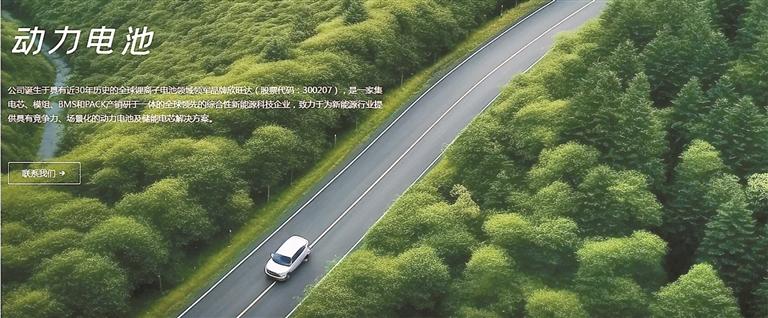
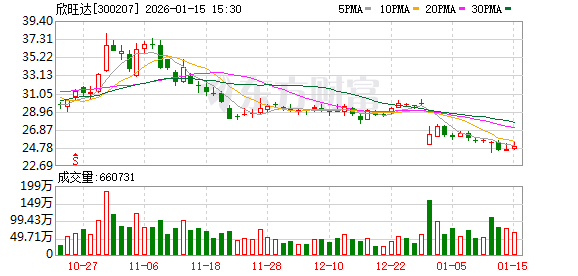
Core Viewpoint - A lawsuit involving the quality of electric vehicle batteries has raised concerns about the long-standing issue of defining quality responsibility within the electric vehicle supply chain [2][3]. Group 1: Lawsuit Details - Xiwanda Power is being sued by Weir Electric, a subsidiary of Geely Automobile Group, for 2.314 billion yuan due to alleged quality issues with battery cells supplied between June 2021 and December 2023 [3]. - The lawsuit highlights the complexity of battery safety, which cannot be solely attributed to battery cells, as it involves multiple components including battery pack design and battery management systems [4]. Group 2: Industry Implications - The incidents are seen as a critical example for observing quality, responsibility, and risk issues within the electric vehicle supply chain, which directly impacts corporate survival and industry ecology [6]. - There is a call for establishing a fair responsibility-sharing mechanism within the electric vehicle industry, emphasizing the need for collaborative innovation and clear delineation of responsibilities across research, manufacturing, and application stages [6][7]. Group 3: Company Responses - Xiwanda Power asserts that the battery cells supplied to other clients have not exhibited quality issues, suggesting that the problem may not lie solely with the battery cells [4]. - The company emphasizes the importance of avoiding one-sided blame and advocates for a more scientific approach to responsibility sharing and collaborative innovation to address current disputes and strengthen the industry's long-term advantages [7].
3440万辆创纪录!2025中国汽车产销引爆涂料行业百亿赛道
Xin Lang Cai Jing· 2026-01-15 14:09
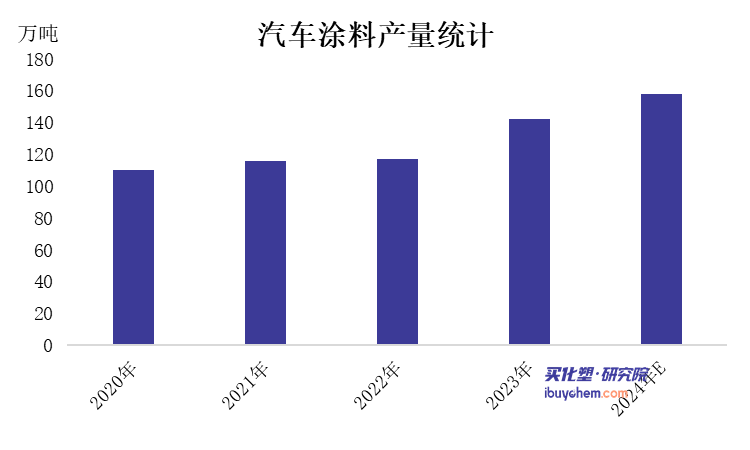
Core Insights - The Chinese automotive industry achieved a production and sales volume of 34.53 million and 34.40 million vehicles in 2025, marking a year-on-year growth of 10.4% and 9.4%, respectively, maintaining its position as the world's largest market for 17 consecutive years [1][27] - New energy vehicles (NEVs) reached a production and sales volume of 16.63 million and 16.49 million units, leading the global market for 11 years, with domestic new car sales accounting for 47.9% [1][27] - The automotive industry's growth has significantly boosted the upstream coatings industry, with an expected production of 1.74 million tons of automotive coatings and a market value of 64.5 billion yuan in 2025 [1][27] Automotive Coatings Market Overview - The automotive coatings market is segmented into original equipment manufacturer (OEM) coatings (44%), repair coatings (26%), component coatings (18%), and other coatings (12%) [3][30] - The OEM coatings market in China is projected to grow to approximately 28.5 billion yuan, with domestic brands increasing their market share in commercial vehicles to over 40% [4][32] - The repair coatings market is valued at around 16.8 billion yuan, with both domestic and foreign brands coexisting [4][32] Demand and Growth Drivers - The automotive coatings sector is closely tied to the automotive industry's performance, with passenger vehicle production and sales surpassing 30 million units for the first time in 2025, driving strong demand for coatings [7][34] - The commercial vehicle market is also recovering, with production and sales exceeding 4 million units, contributing to the growth of related coatings products [7][34] - Exports of Chinese vehicles exceeded 7 million units in 2025, a year-on-year increase of 21.1%, with NEV exports doubling to 2.615 million units, further stimulating coatings demand [7][34] Company Performance - In the first three quarters of 2025, Matsui's passenger vehicle coatings revenue surged by 87.57% to 149 million yuan, while Nippon Paint's automotive coatings revenue reached 1.995 billion yuan, up 4.4% [11][38] - BASF's Shanghai coatings division reported a revenue of 2.298 billion yuan in the first half of 2025, reflecting a 3.1% increase [11][38] - Domestic companies such as Donglai Technology, Jinlitai, and Yatu Gaoxin also reported revenue growth of over 5% [11][38] New Energy Vehicles and Functional Coatings - NEVs are driving a revolution in materials and processes, with a penetration rate approaching 50%, creating new demands for specialized coatings [14][41] - The need for protective coatings for power batteries requires extreme insulation, flame resistance, corrosion resistance, and thermal conductivity, leading to the emergence of a high-value segment for battery coatings [14][41] - The use of lightweight materials like aluminum and carbon fiber in NEVs presents new challenges for coatings in terms of adhesion and flexibility [14][41] Policy and Technological Drivers - Stricter environmental policies are pushing the industry towards greener technologies, with a focus on low-VOC coatings becoming mainstream [17][44] - The 2025 Central Economic Work Conference emphasized promoting green development, leading to the adoption of water-based and high-solid coatings [17][44] - Technological innovations driven by consumer demand for quality and safety are accelerating the development of high-value products such as self-repairing coatings and low-VOC interior coatings [19][46] Supply Chain and Domestic Market Dynamics - Foreign brands have historically held a 60% market share in China's automotive coatings market, dominating over 80% in high-end segments [22][49] - Recent strategic investments by major automotive manufacturers in domestic coatings companies are breaking this trend, providing local firms with valuable validation and order guarantees [23][50] - The "14th Five-Year Plan" encourages the development of strategic emerging industries, creating opportunities for domestic companies to accelerate their growth in the NEV sector [23][50] Future Outlook - The China Automotive Industry Association predicts that automotive sales will reach 34.75 million units in 2026, with NEV sales at 19 million units and exports at 7.4 million units [24][51] - Future competition will focus on environmental compliance, NEV market positioning, and supply chain autonomy [24][51] - The automotive coatings industry is transitioning from scale growth to high-quality development, with domestic brands poised to reshape the global competitive landscape [24][51]
两大整车央企高管年薪全曝光!
Xin Lang Cai Jing· 2026-01-15 14:09
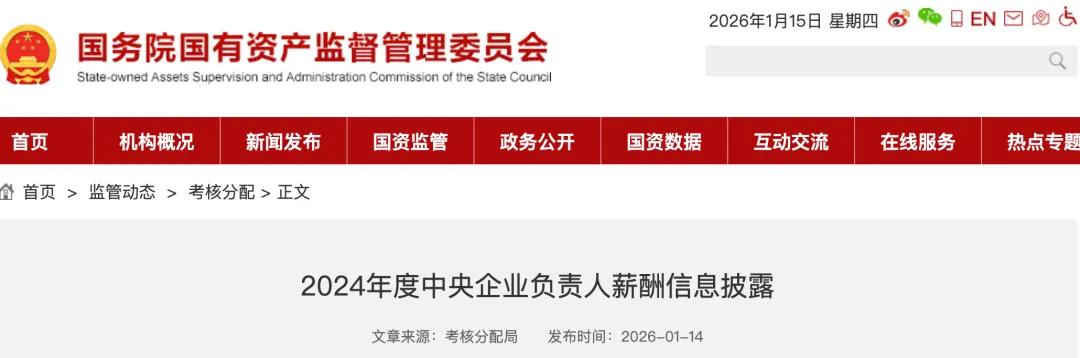
Core Viewpoint - The 2024 salary disclosures for executives of state-owned enterprises (SOEs) reveal that the annual salaries of leaders at Dongfeng Motor Group and China FAW Group are both below one million RMB, highlighting a significant contrast with private and state-controlled automotive companies [1][8]. Summary by Relevant Sections Salary Overview - The State-owned Assets Supervision and Administration Commission (SASAC) announced the salary details for 81 SOE executives, including Dongfeng Motor Group and China FAW Group [1][8]. - Both companies' executives have annual salaries that are significantly lower than those in private automotive firms [1][8]. China FAW Group Salary Details - The chairman, Qiu Xiandong, has a salary of 909,700 RMB; the general manager, Liu Yigong, earns 886,900 RMB; and other executives have salaries ranging from 330,900 RMB to 1,000,000 RMB [4][11]. - The total salaries for key positions are as follows: - Qiu Xiandong: 90.97万元 - Liu Yigong: 88.69万元 - Liang Guiyou: 81.69万元 - Wu Bilei: 39.48万元 - Chen Bin: 33.09万元 - Fang Shili: 75.01万元 - Sun Jiguang: 13.63万元 [4][11]. Dongfeng Motor Group Salary Details - The chairman, Yang Qing, receives 868,600 RMB; the general manager, Zhou Zhiping, earns 651,500 RMB; and other executives have salaries ranging from 388,400 RMB to 781,700 RMB [4][11]. - The total salaries for key positions are as follows: - Yang Qing: 86.86万元 - Zhou Zhiping: 65.15万元 - Zhang Zutong: 78.17万元 - You Zheng: 78.17万元 - Huang Yong: 51.78万元 - Peng Yuanpu: 38.84万元 - Liu Yanhong: 39.09万元 - Feng Changjun: 77.68万元 [4][11]. Comparison with Private Firms - In contrast to SOE executives, private automotive companies often offer significantly higher compensation packages, including stock options that are closely tied to performance metrics [7][14]. - For instance, Li Xiang, chairman of Ideal Auto, has a total annual compensation of 639 million RMB, which includes a base salary of 2.67 million RMB and stock options worth 636 million RMB triggered by performance targets [7][14]. - Founders of private firms like Geely and BYD typically have nominal salaries, with substantial earnings derived from stock appreciation and dividends [7][14].
吉利汽车1月15日全情报分析报告:「吉利汽车2025年成绩亮眼并展望2026」对股价有积极影响
3 6 Ke· 2026-01-15 13:44
吉利汽车1月15日放量上涨1.76% 17.26 +0.26 +1.53% 昨日收盘价17.00;当日收盘价:17.26 当日开盘价17.00;交易量70.28万手 2025年,吉利汽车成绩亮眼,销量首次突破300万辆,达302万辆,同比增长39%;新能源销量169万辆, 同比大增90%,超越特斯拉成全球第二大新能源汽车企业。吉利家族各细分赛道表现出色,吉利银河最 快达成年销百万,吉利星愿是全品类车型销量冠军。2024-2025年,完成吉利汽车与极氪合并,前三季 度核心归母净利润达106.2亿元,同比增长近六成。2026年,吉利确定345万辆的销量目标。 |事件正负面性质分析 换手率0.64%;放量幅度0.03% 3日涨幅+2.00%;5日涨幅-0.75% 成交额:12.15亿;总市值:1881.07亿 较过去一年的平均收盘价-0.02%;较过去一年的日均交易量-0.05% "吉利汽车2025年成绩亮眼并展望2026"舆情分析 截止1月15日,此事件匹配的到全网舆情信息总量为49638条,正面信息35171条,占比70.9%,负面信 息820条,占比1.7%,中性信息13647条,占比27.4%,事件舆论呈现 ...
