
一汽

Search documents
佑驾创新完成680万股配售 将加大中高阶辅助驾驶与L4级自动驾驶投入
Zhi Tong Cai Jing· 2025-07-09 13:59
Core Viewpoint - The company, Youjia Innovation, has successfully completed the placement of 6.8 million new H-shares, raising a net amount of HKD 155 million to enhance its investment in advanced driver assistance systems and L4 autonomous driving solutions [1][2]. Group 1: Fund Allocation - Approximately 40% of the net proceeds will be used to enhance the functionality of smart driving solutions to meet the growing demand for advanced driver assistance projects [2]. - About 30% will be allocated for technical upgrades of L4 autonomous driving solutions to support the commercialization of passenger and cargo autonomous driving scenarios [2]. - Around 20% will be invested in exploring potential strategic partnerships, alliances, and acquisition opportunities [2]. - Approximately 10% of the net proceeds will be used for working capital and general corporate purposes [2]. Group 2: Business Development - Youjia Innovation has gained recognition and support from major clients, having achieved mass production for 35 automotive manufacturers, including SAIC Motor, Changan Automobile, and Chery [3]. - The company has successfully entered international supply chains, exporting vehicles to regions such as the EU, Australia, Singapore, Malaysia, India, South Korea, Dubai, and Turkey [3]. - The latest advanced driver assistance controller, iPilot4plus, supports various functions and is set to be mass-produced for high-end models priced around 300,000 RMB [2][3].
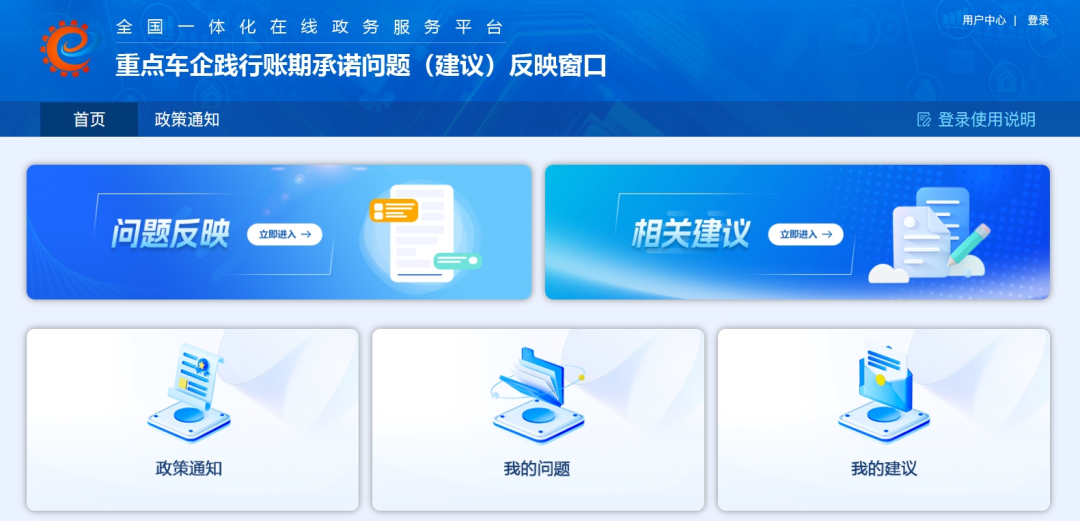
车企承诺支付账期不超过60天能否兑现?工信部开通反映窗口
Nan Fang Du Shi Bao· 2025-07-09 13:55
Core Viewpoint - Recently, 17 major automotive companies, including FAW, Dongfeng, GAC, and Seres, have publicly committed to a payment term not exceeding 60 days for suppliers, raising questions about the feasibility of these commitments and prompting the Ministry of Industry and Information Technology (MIIT) to establish a feedback window for reporting issues related to these commitments [1][4]. Group 1 - The MIIT has launched an online feedback window to address issues related to the payment commitments made by major automotive companies, allowing small and medium-sized enterprises (SMEs) to report problems regarding the enforcement of the 60-day payment term [1][3]. - The feedback window will handle four types of issues: failure to adhere to the 60-day payment term, unreasonable payment term start dates, coercion of SMEs to accept non-cash payment methods, and other inadequacies in implementing the Payment Protection Regulation for SMEs [3][4]. - The MIIT supports the automotive companies' commitment to a 60-day payment term and aims to foster long-term stable relationships between vehicle manufacturers and their supply chain partners [3][4]. Group 2 - Data indicates that in 2024, the average accounts payable turnover days for Chinese domestic automotive companies will be 182 days, which is 2.3 times that of international companies, leading to skepticism among suppliers regarding the fulfillment of the 60-day payment commitment [4]. - The establishment of the feedback window provides a new channel for automotive suppliers to urge companies to resolve payment-related issues, thereby promoting better management practices and payment methods [4]. - The MIIT plans to guide industry organizations in developing payment settlement standards for the automotive sector and to promote a collaborative ecosystem between vehicle manufacturers and parts suppliers [4]. Group 3 - The Payment Protection Regulation for SMEs, effective from June 1, 2023, mandates that government agencies and institutions must pay for goods and services from SMEs within 30 days, or within 60 days if otherwise agreed in the contract [4]. - The newly revised Anti-Unfair Competition Law addresses the issue of delayed payments to SMEs, prohibiting large enterprises from abusing their advantages to impose unreasonable payment terms on SMEs [5].

工信部紧盯重点车企支付账期问题,开通线上问题反映窗口
2 1 Shi Ji Jing Ji Bao Dao· 2025-07-09 10:33
Core Viewpoint - The Ministry of Industry and Information Technology (MIIT) has launched an online platform to address complaints from small and medium-sized enterprises (SMEs) regarding payment delays by key automotive companies, aiming to ensure adherence to the 60-day payment commitment and the implementation of the "Regulations on Ensuring Payment to SMEs" [1][2]. Group 1 - The online platform will handle four types of issues related to payment delays by key automotive companies, including failure to adhere to the 60-day payment commitment, unreasonable payment terms, forced acceptance of non-cash payment methods, and other issues related to the implementation of the payment regulations [1]. - Seventeen key automotive companies, including FAW, Dongfeng, and GAC, have publicly committed to a payment period not exceeding 60 days, which has received positive social feedback [2]. - Experts emphasize that while the commitment to a 60-day payment period exists, there are ambiguities regarding the start date for payments, and some companies may use excuses to delay payments, indicating a need for stricter enforcement [2]. Group 2 - The MIIT plans to guide industry organizations in developing payment settlement standards for the automotive industry, promoting contract templates to further standardize payment processes between automotive companies and suppliers [3]. - The initiative aims to create a collaborative and mutually beneficial ecosystem between vehicle manufacturers and parts suppliers, contributing to the sustainable development of the automotive industry [3].
事关重点车企!工信部上线账期问题反映窗口
Zheng Quan Shi Bao Wang· 2025-07-09 09:36
Core Viewpoint - The Ministry of Industry and Information Technology has launched an online feedback window to address issues related to payment cycles for small and medium-sized enterprises (SMEs) by key automotive companies, aiming to ensure compliance with the 60-day payment commitment and the implementation of the "Regulations on Ensuring Payment to SMEs" [1][3]. Group 1: Issues Addressed - The feedback window will handle four main types of issues: 1. Key automotive companies failing to adhere to the 60-day payment commitment, with payment terms exceeding this period in procurement contracts [1]. 2. Unreasonable payment term start dates set by key automotive companies, delays in providing inspection or acceptance certificates, and conditions tied to third-party payments [1]. 3. Coercion or indirect coercion of SMEs to accept non-cash payment methods such as commercial bills or electronic receivables [1]. 4. Other issues related to the inadequate implementation of the "Regulations on Ensuring Payment to SMEs" by key automotive companies [1]. Group 2: Industry Response and Future Actions - Seventeen key automotive companies, including FAW, Dongfeng, and GAC, have publicly committed to ensuring that supplier payment periods do not exceed 60 days, receiving positive social feedback [3]. - The Ministry aims to improve management processes and payment methods among key automotive companies through this initiative, enhancing the confidence and vitality of SMEs in the automotive industry [3][4]. - Future actions include guiding industry organizations to develop payment settlement norms for the automotive sector and promoting standardized contract templates to streamline payment processes [3][4]. Group 3: Importance of Supply Chain - The supply chain is described as the "lifeblood" of the automotive industry, crucial for industrial transformation and upgrading [4]. - Increasing competition in the new energy vehicle market has led to longer payment cycles and financial difficulties for suppliers, which could hinder technological innovation and sustainable development [4]. - The Ministry supports automotive companies in fulfilling their commitments and encourages the establishment of stable long-term relationships between large and small enterprises to enhance supply chain resilience and security [4].

首次世界500强断崖差距:日本149家,美151家,中国3家,现在呢?
Sou Hu Cai Jing· 2025-07-08 11:59
Group 1 - The statement "China has caught up with others' development over several hundred years in just a few decades" reflects the significant changes in the global economic landscape, particularly highlighted by the Fortune Global 500 rankings [1][3] - In 1995, the first Fortune Global 500 list featured only 3 Chinese companies, while the majority were from the US and Japan, indicating China's initial economic struggles [5][10] - By 2024, China has 133 companies on the Fortune Global 500 list, nearly matching the US's 139, showcasing China's rapid economic growth and transformation over the past 30 years [10][15] Group 2 - The US remains the leader in the Fortune Global 500 with 139 companies, maintaining a strong presence in technology, finance, and manufacturing sectors [12] - Japan's representation has drastically declined to only 40 companies in 2024 from 149 in 1995, reflecting its economic challenges such as aging population and market stagnation [14][18] - Chinese companies, particularly in the energy sector, have shown remarkable strength, with State Grid Corporation generating $545.9 billion in revenue, positioning itself among the top global companies [15][17] Group 3 - The rise of private Chinese companies like Huawei, Tencent, and Alibaba indicates a shift towards innovation and market responsiveness, contributing to China's growing economic influence [17] - The automotive industry in China is also gaining momentum, with traditional manufacturers and emerging players like Chery entering the Fortune Global 500, highlighting the sector's competitiveness [17] - The increasing number of Chinese companies in the Fortune Global 500 signifies a shift in the global economic focus towards the Asia-Pacific region, contrasting with Japan's declining share [17]

国内首个越野汽车国标体系启动建设,利好长城坦克品牌升级
Zhong Guo Chan Ye Jing Ji Xin Xi Wang· 2025-07-08 02:31
Core Insights - The meeting marked the initiation of the construction of a national standard system for off-road vehicles in China, highlighting the growing demand for standardization in the rapidly developing off-road vehicle market [1][2] - Great Wall Motors, as a leading brand in the off-road vehicle sector, is committed to leveraging its technological expertise to enhance industry standards [1][2] Group 1: Event Overview - The "China Off-Road Vehicle National Standard System Construction Demand Launch Meeting" was successfully held in Baoding, organized by the China Automotive Standardization Research Institute and Great Wall Motors [1] - Over 60 industry experts from various organizations, including Great Wall Motors, FAW, Changan, and Geely, participated in discussions about the construction needs of the off-road vehicle standard system [1] Group 2: Industry Insights - In 2024, domestic brands are expected to surpass 80% market share in the off-road segment, with Great Wall's Tank series leading sales [1] - The application of new technologies such as electrification and intelligence in off-road vehicles is raising the bar for standard formulation [1][2] Group 3: Technical Contributions - Great Wall Motors' technical team emphasized the need for a comprehensive national standard system that covers the entire lifecycle of off-road vehicles, integrating various levels of technology [2] - The company has established a matrix of three off-road brands—Haval, Tank, and Great Wall Cannon—addressing a wide range of market needs from urban SUVs to professional off-road vehicles [2] - Great Wall Motors has developed a tripartite standard system focusing on core areas such as four-wheel drive technology, chassis design, and power systems, providing significant reference for industry standard formulation [2]

阿尔特:整车开发周期已由38个月缩短至22至24个月
Ju Chao Zi Xun· 2025-06-30 02:52
Group 1 - The automotive industry is undergoing significant transformation, with product life cycles shortening from the traditional 10 years to 3-5 years, leading to a reduction in vehicle development cycles from 38 months to 22-24 months [2] - Increased market competition necessitates rapid responses to market feedback, making an open, flexible, agile, efficient, and reliable automotive R&D design system crucial for sustainable high-quality development in the industry [2] - The company is integrating AI technology throughout the automotive R&D process, launching an "automotive R&D digital intelligence system" to enhance development efficiency [2] Group 2 - The company is actively building an open collaborative ecosystem through strategic partnerships with leading semiconductor and AI firms, including NVIDIA, and academic institutions like Tsinghua University [3] - As of June 2024, the company became NVIDIA's sole solution consultant partner in the global automotive design sector, collaborating on software, hardware, and simulation platforms to drive innovation in automotive design technology [3] - The company's AI-powered automotive styling product "TAI" was officially launched in March 2025, featuring multiple functionalities such as text-to-image, line drawing rendering, multi-angle generation, background re-drawing, and 2D to 3D conversion, and is currently being promoted commercially [3]
固态电池对上游金属需求梳理 | 投研报告
Zhong Guo Neng Yuan Wang· 2025-06-20 02:17
中邮证券近日发布电池研究报告:2025年2月25日的电动汽车百人会上,欧阳明高院士 表示全固态电池预计在2027年实现批量装车,2030年实现大规模量产装车,包括比亚迪在内 的多家车企密集公布全固态电池装车时间表,主流车企的固态电池装车时间集中在2026- 2030年,多家车企计划于2027年左右开始上市搭载全固态电池车。 以下为研究报告摘要: 投资要点 全固态电池装车预期收敛至2027年,共识逐渐凝聚。2025年2月25日的电动汽车百人会 上,欧阳明高院士表示全固态电池预计在2027年实现批量装车,2030年实现大规模量产装 车,包括比亚迪在内的多家车企密集公布全固态电池装车时间表,主流车企的固态电池装车 时间集中在2026-2030年,多家车企计划于2027年左右开始上市搭载全固态电池车。固态电 池由于其高能量密度、高安全性、高续航、长寿命等特点,是下一次能源革命的关键节点, 规模化量产后有望带动机器人、低空经济、新能源汽车等场景走向成熟。我们预计到2028年 固态电池出货量有望突破百GW级别,2030年达到771GW。 固态电池电解质是降本主要路径,硫化物是技术最理想路线。固态电解质是全固态电池 核心部 ...
奥迪:确认暂停全面电动化计划!
新华网财经· 2025-06-19 02:18
Core Viewpoint - Audi has reversed its previous plan to stop developing and selling internal combustion engine vehicles by 2033, now not setting a clear timeline for termination [1] Group 1: Audi's Strategic Adjustments - Audi will launch a new series of internal combustion and plug-in hybrid vehicles between 2024 and 2026, providing greater flexibility for the next decade [1] - The company will lead the development of the Volkswagen Group's platform architecture and software systems for mid-to-large models, marking a shift towards "software-defined vehicles" [1] - The SSP platform, developed in collaboration with Rivian, is expected to debut in Audi models by the end of 2027 or in 2028 [1] Group 2: Industry Trends - Other automakers like Volvo and Mercedes have also adjusted their electrification plans, with Mercedes planning to continue developing internal combustion engine models into the 2030s [2] - The automotive industry is experiencing challenges during the electrification transition, with many companies facing declining revenues and profits due to high R&D costs and slowing demand for electric vehicles [2] - In contrast, the Chinese electric vehicle market is growing rapidly, prompting multinational companies to accelerate their electrification efforts in China while seeking cost reduction and efficiency improvements [2] Group 3: Audi's Focus Areas - Audi's transformation strategy emphasizes two key areas: software-defined vehicles and advanced driver assistance technologies [3] - Starting mid-2025, Audi will produce several models specifically designed for the Chinese market, including the Q6L e-tron, which is already in pre-sale [3] - Audi is collaborating with Huawei to integrate advanced intelligent driving assistance systems into new platform products starting in 2025 [3]

产业链进展持续突破,固态进入中试关键期
2025-06-18 00:54
摘要 固态电池预计在 2027 年实现约 1GWh 的放量,2030 年有望突破 100GWh。工信部项目总资金约 60 亿,涉及宁德时代、比亚迪、一汽 等七家公司,旨在推动车规级电芯下线和固态电池量产及装车示范运营。 预计到 2028-2029 年,硫化固态电池成本将从千万级降至百万级,长 期或降至 20 万左右。硫化锂价格也将从大几百万降至 10-20 万左右, 性能和性价比将在未来几年显著改善。 比亚迪、国轩高科、一汽等提前半年实现了 60 安时车规级电芯落地。 中科固能硫化物电解质材料可实现千米级大卷量产,厚度做到 30 微米 以下,离子导率达到 3 到 5 之间,设备和材料端取得超预期进展。 硅碳体系固态电池能量密度可达 350-400 瓦时每公斤,充放电倍率为 0.5-1C,循环寿命约 1,000 次,成本约 2-3 元每瓦时,已达中试阶段。 硫化物基固态电池能量密度可达 450-500 瓦时每公斤,充放电倍率为 1-2C,但循环寿命仅 300-500 次,成本较高。 固态电池技术难点包括固固界面缝隙问题及材料工艺与设备能力不足。 解决缝隙问题需提升材料柔软性或提高设备精度。目前材料工艺与设备 能 ...

