
海螺水泥

Search documents
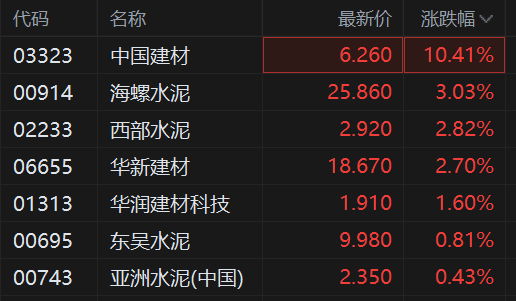
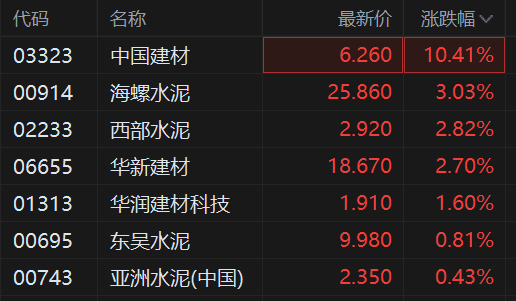
建材水泥股拉升,中国建材大涨超10%领衔,刷新阶段新高
Ge Long Hui· 2026-02-11 03:45
Group 1 - The core viewpoint of the article highlights a significant rise in Hong Kong's cement stocks, particularly China National Building Material, which surged over 10%, reaching a new high since April 2023 [1] - Longjiang Securities' research report recommends the cement sector due to policy-driven opportunities, indicating clear signals of an industry bottom after four consecutive years of demand decline and price competition [1] - The report suggests that the industry's profitability bottom is evident for the second half of 2025, with many mid-tier and lower-tier companies potentially facing substantial losses [1] Group 2 - The report mentions that overproduction management has led to a decrease in capacity, with production starting according to registered capacity from 2026, which may improve industry capacity utilization by 10-15 percentage points [1] - The dual carbon policy may see intensified implementation starting in 2026, which could lead to a steeper cost curve, benefiting leading companies with lower energy consumption [1] - Recently, China National Building Material secured four consecutive overseas contracts, including a project for the renovation of a cement raw material warehouse in France, showcasing the company's comprehensive service capabilities in cement engineering asset renovation and upgrades [1]

印尼减产+进口通道畅通,能源国企有望持续受益,国企红利ETF(159515)涨0.25%
Xin Lang Cai Jing· 2026-02-11 03:38
东方证券指出,低位周期中具备红利吸引力的板块值得关注,宏观层面看,目前正处于PPI持续下行的 触底期,从市场预期角度看,PPI和行业盈利正处在低位回升的节点。在反内卷背景下有政策变化的行 业内,关注供给出清且有盈利弹性的板块,重点关注其中红利吸引力提升的板块。(文中所列示的行业 仅供参考,不预示本基金未来表现,不作为投资收益保证,也不构成对具体行业的投资建议) 国企红利ETF紧密跟踪中证国有企业红利指数,从国有企业中选取现金股息率高、分红比较稳定且有一 定规模及流动性的100只上市公司证券作为指数样本,反映国有企业中高股息率证券的整体表现。 据Wind数据显示,截至2026年1月30日,中证国有企业红利指数前十大权重股分别为中远海控、潞安环 能、西部矿业、山煤国际、恒源煤电、平煤股份、山西焦煤、兖矿能源、陕西煤业、华阳股份,前十大 权重股合计占比16.61%。(以上所列示股票为指数成份股,仅做示意不作为个股推荐。过往持仓情况 不代表基金未来的投资方向,也不代表具体的投资建议,投资方向、基金具体持仓可能发生变化。市场 有风险,投资需谨慎) 2026年2月11日早盘,截至11:05,中证国有企业红利指数上涨0.2 ...
港股异动丨建材水泥股拉升,中国建材大涨超10%领衔,刷新阶段新高
Ge Long Hui A P P· 2026-02-11 03:03
Group 1 - The core viewpoint of the article highlights a significant rise in Hong Kong's cement and building materials stocks, particularly China National Building Material, which surged over 10%, reaching a new high since April 2023 [1] - Longjiang Securities' research report recommends the cement sector due to policy-driven opportunities, indicating clear signals of industry bottoming after four consecutive years of demand decline and price competition [1] - The report suggests that the industry's profitability bottom is evident for the second half of 2025, with many mid-tier and lower-tier companies potentially facing substantial losses [1] Group 2 - The article notes that production overcapacity management has led to a decrease in capacity, with a projected increase in industry capacity utilization rates by 10-15 percentage points starting in 2026, based on registered production capacity [1] - The dual carbon policy may see intensified implementation in 2026, which could lead to a steeper cost curve, benefiting leading companies with lower energy consumption [1] - Recently, China National Building Material secured four consecutive overseas contracts, including a project for the renovation of a cement raw material depot in France, showcasing the company's comprehensive service capabilities in cement engineering asset renovation and upgrades [1]
建材行业2025年信用回顾与2026年展望
新世纪评级· 2026-02-11 01:19
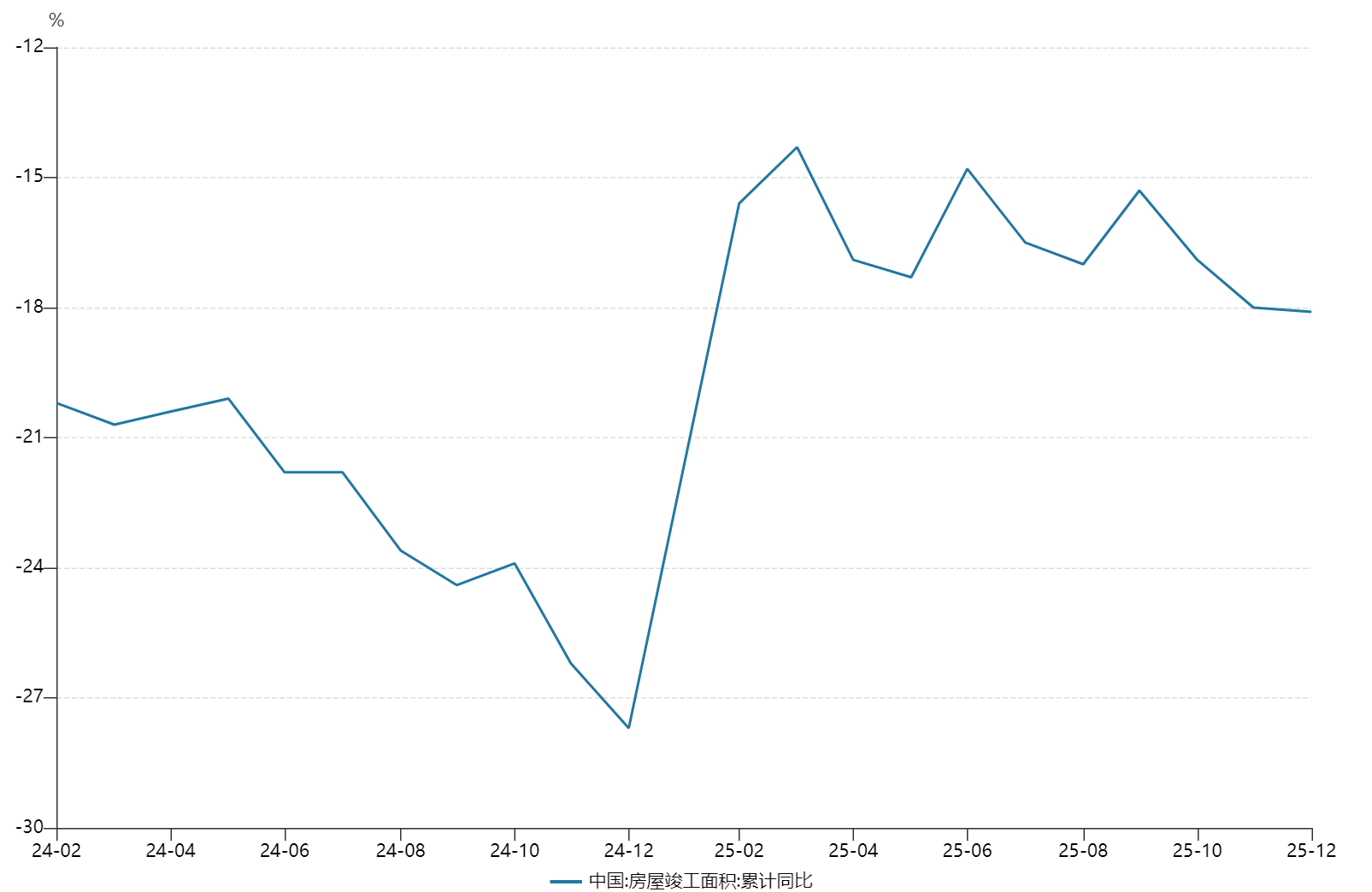
新世纪评级 建材行业 2025 年信用回顾与 2026 年展望 建材 水泥:(弱)稳定 建筑玻璃:负面 建材行业 2025 年信用回顾与 2026 年展望 工商企业评级部 杨亿 袁诗怡 摘要 建材行业所涉范围广泛,本文着重就水泥及建筑玻璃行业展开分析。建材 行业系典型的投资拉动型行业,2025 年前三季度下游房地产行业持续低 迷,投资降幅走阔,基建投资则因财政支出重心转移及重大项目投资不利 而增长放缓,建材需求缺乏实质性提振。(水泥)2025 年以来,主要因我 国房地产市场深度调整,加之交通运输和公共建筑等领域投资情况不济, 水泥需求持续收缩。水泥行业错峰生产常态化开展,执行力度有所加强, 2025 年前三季度我国水泥产量同比有所下降,但需求跌幅超预期下,价 格中枢下移。2025 年煤炭价格先跌后涨,前三季度成本压力减轻下,行 业盈利状况有所改善,第四季度成本转嫁压力虽有所加大,但估计行业全 年利润总额仍同比小幅增长。(建筑玻璃)2025 年前三季度,房地产竣工 规模同比降幅较大,建筑玻璃需求持续收缩。2025 年以来行业产能开工 率波动相对较大,玻璃供给量同比小幅收缩,但远不及需求降幅,玻璃库 存维持高位, ...
建材行业周报:关注春节后的涨价预期与地产催化
GUOTAI HAITONG SECURITIES· 2026-02-10 13:30
Investment Rating - The report assigns an "Accumulate" rating for the building materials industry [5] Core Insights - The report emphasizes the expectation of price increases post-Spring Festival and the potential catalyst from the real estate sector. It highlights that the consumption building materials sector may begin to show fundamentals independent of real estate from 2025-2026, with a focus on the resilience of the real estate market after the Spring Festival [2][7] - The report recommends leading companies in the consumption building materials sector that have independent growth logic and sufficient dividend valuation support, particularly in the waterproof materials sub-sector [5][7] Summary by Sections Building Materials Industry Investment Strategy - The consumption building materials sector is anticipated to benefit from potential macroeconomic improvements, with a focus on the resilience of the real estate market post-Spring Festival. The report highlights the importance of observing second-hand housing transactions for signs of market recovery [7] - Recommended companies include Oriental Yuhong, Beixin Building Materials, Weixing New Materials, and others that are expected to perform well due to their growth strategies and market positions [7] Market Review - From February 2 to February 6, 2026, the building materials sector increased by 0.70%, with specific segments like glass manufacturing rising by 5.32% [10] - The report notes significant individual stock movements, with companies like Hanjian Heshan and Jinjing Technology showing notable weekly gains [17] Cement Industry - The national cement market price decreased by 1% week-on-week, with significant price drops in regions like Henan and Hubei. The average shipment rate for cement companies fell by approximately 8 percentage points [24][25] - The report anticipates a stabilization in cement prices as the market enters a holiday period, with a focus on the execution of production restrictions in 2026 [7][24] Glass Industry - The average price of domestic float glass increased to 1154.49 RMB/ton, reflecting a week-on-week rise of 9.69 RMB/ton. However, demand is expected to weaken as downstream processing plants shut down for the holiday [42] - The report recommends leading companies in the glass sector, including Fuyao Glass and Xinyi Glass, due to their strong market positions and dividend yields [42][43] Fiberglass Industry - The report indicates that the fiberglass market is experiencing price increases, particularly in the electronic yarn segment, driven by tight supply and steady demand [55] - Recommended companies in this sector include China Jushi and Zhongcai Technology, which are expected to benefit from structural demand upgrades [55]





建材行业周报:关注春节后的涨价预期与地产催化-20260210
GUOTAI HAITONG SECURITIES· 2026-02-10 11:15
Investment Rating - The report assigns an "Accumulate" rating for the building materials industry [5]. Core Insights - The report emphasizes the expectation of price increases post-Spring Festival and the potential catalyst from the real estate sector. It highlights that the consumption building materials sector may begin to show fundamentals independent of real estate from 2025-2026, with a focus on the resilience of the real estate market after the Spring Festival [2][7]. - The report recommends leading companies in the consumption building materials sector that have independent growth logic and sufficient dividend valuation support, particularly in the waterproof materials sub-sector [5][7]. Summary by Sections Investment Strategy - The consumption building materials sector is anticipated to benefit from potential macroeconomic improvements, with a focus on the resilience of the real estate market post-Spring Festival. The report highlights the importance of observing the transaction data in the real estate market for signs of sustained improvement [7]. - Recommendations include companies like Oriental Yuhong, Beixin Building Materials, and Weixing New Materials, which are expected to perform well due to their growth strategies and market positioning [7]. Market Review - The building materials sector saw a 0.70% increase, with cement manufacturing up 0.15%, glass manufacturing up 5.32%, and glass fiber manufacturing down 1.81% during the period from February 2 to February 6, 2026 [10]. - The report notes significant individual stock movements, with Han Jian He Shan and Jin Jing Technology showing notable weekly gains [17]. Cement Industry - The national cement market price decreased by 1% week-on-week, with significant price drops in regions like Henan and Hubei. The average shipment rate for cement companies in key regions fell by approximately 8 percentage points [24]. - The report anticipates a stabilization in cement prices as the market enters a holiday period, with a focus on the potential for price increases post-holiday [24][25]. Glass Industry - The average price of domestic float glass increased to 1154.49 CNY/ton, reflecting a week-on-week rise of 9.69 CNY/ton. However, demand is expected to weaken as downstream processing plants shut down for the holiday [42]. - The report suggests that companies like Fuyao Glass and Xinyi Glass are well-positioned due to their high dividend yields and global market presence [42][43]. Glass Fiber Industry - The report indicates that the price of glass fiber is on an upward trend, supported by tight supply and steady demand. The market for electronic yarn remains strong, with prices for certain products increasing [55]. - Leading companies in this sector, such as China Jushi and Zhongcai Technology, are recommended due to their competitive advantages and market positioning [55].

建材行业2025年年报业绩前瞻:周期建材分化,消费建材个股修复
Shenwan Hongyuan Securities· 2026-02-10 10:31
Investment Rating - The report rates the construction materials industry as "Overweight," indicating an expectation for the industry to outperform the overall market [2][12]. Core Insights - Domestic cement prices are expected to show a trend of high prices followed by a decline, with an average price of 372.8 RMB/ton in 2025, a decrease of 12.6 RMB/ton year-on-year. Cement production is projected to decline by 7.2% in 2025, with a gradual recovery in profitability anticipated in 2026 due to supply-side improvements [4]. - The glass sector continues to face pressure, with the average price of flat glass expected to drop to 1323.3 RMB/ton in 2025, a significant decrease of 383.4 RMB/ton year-on-year. The industry is entering a period of accelerated cold repairs, which may enhance profitability in the future [4]. - The fiberglass yarn market remains relatively stable, with an expected average price of 3866 RMB/ton in 2025, reflecting a year-on-year increase of 174 RMB/ton. The demand for specialty electronic fabrics is anticipated to grow rapidly, contributing positively to the sector's performance [4]. - Consumer building materials are expected to show strong performance, with companies like Sanke Tree and Han Gao Group maintaining excellent revenue and profit due to strong channel development and brand advantages [4]. Summary by Sections Cement Industry - The average cement price in 2025 is projected at 372.8 RMB/ton, down 12.6 RMB/ton from the previous year. The first quarter's average price is expected to be 400.8 RMB/ton, declining to 358.0 RMB/ton by the fourth quarter. Cement production is expected to decrease by 7.2% in 2025, with a recovery in profitability anticipated in 2026 due to supply-side improvements [4]. Glass Industry - The average price of flat glass is expected to be 1323.3 RMB/ton in 2025, a decrease of 383.4 RMB/ton year-on-year. The industry is entering a cold repair cycle, with daily melting capacity dropping below 150,000 tons. This may lead to improved profitability in the future [4]. Fiberglass Sector - The average price of fiberglass yarn is projected to be 3866 RMB/ton in 2025, an increase of 174 RMB/ton year-on-year. The demand for specialty electronic fabrics is expected to accelerate, contributing positively to the sector's performance [4]. Consumer Building Materials - Companies such as Sanke Tree and Han Gao Group are expected to perform strongly due to their robust channel development and brand advantages. Other companies in the sector are also expected to maintain good operational quality, with potential for significant performance recovery in 2026 [4]. Investment Recommendations - The report suggests focusing on companies with improving quarterly reports and those benefiting from supply-side adjustments. Recommended companies include Conch Cement, Huaxin Cement, and Tianshan Shares in the cement sector, as well as China Jushi and Zhongcai Technology in the fiberglass sector. In consumer building materials, companies like Dongfang Yuhong and Kezhong Shares are highlighted for their strong performance [4].



周期底部已现,政策东风劲吹!借道建材ETF(159745)把握顺周期修复红利
Sou Hu Cai Jing· 2026-02-10 07:09
当前宏观经济运行呈现企稳复苏态势,顺周期板块正迎来估值修复的重要窗口。作为典型的早周期行业,建材板块与基建投资、房地产竣工周期及制造业资 本开支高度相关,在经济预期改善与政策组合拳的双重驱动下,其顺周期属性愈发凸显,板块配置价值值得期待。 从宏观政策基调看,2025年以来稳增长政策持续加码,财政前置发力特征明显。专项债发行提速带动基建实物工作量落地,1-2月数据显示水泥出货率已呈 现季节性回暖,显著优于去年同期水平。 更重要的是,房地产政策已从"防风险"向"促企稳"转变,各地限购限贷政策持续优化,保交楼专项资金加速投放推动竣工端回暖。由于建材需求中约60%与 地产后周期相关,竣工端修复将直接拉动玻璃、消费建材等品类需求回升。 与此同时,"三大工程"(保障性住房建设、城中村改造、"平急两用"公共基础设施建设)进入实质推进阶段,为建筑管材、防水材料等细分赛道提供增量需 求空间,有效对冲传统地产新开工的下行压力。 尤其是保交楼项目,截至2025年初,全国保交楼专项借款及白名单项目授信规模突破4万亿元,累计交付逾期项目超过300万套,交付率较政策初期提升逾40 个百分点。这一庞大存量工程的持续消化,正为建材板块构筑起 ...
"反内卷"进入深水区,建材产能加速出清,关注建材ETF(159745) 低负债龙头估值修复机会
Sou Hu Cai Jing· 2026-02-10 05:48
Group 1 - The construction materials industry is transitioning from "incremental expansion" to "stock optimization" due to policy guidance and market clearing, which may support a systematic uplift in the sector's valuation center [1] - Multiple government departments have implemented a "de-involution" strategy for the construction materials industry, tightening capacity replacement policies for basic materials like cement and glass [2] - In 2024, the cement clinker capacity is expected to decrease by approximately 30 million tons, primarily affecting small kiln lines that do not meet energy consumption standards [2] Group 2 - The construction materials industry has experienced two consecutive years of negative capital expenditure, with a projected 18% year-on-year decline in 2024 for the cement sector, marking the lowest new clinker capacity in a decade [5] - The market concentration in the cement industry has increased, with the top ten companies' market share rising from 58% in 2021 to 67% in 2024, indicating a shift towards an oligopolistic competition structure [5] - Leading companies are shifting focus from market share competition to profit protection, with peak production execution rates increasing from 70% to over 90% [6] Group 3 - In Q4 2024, cement prices in East China rebounded by over 20% from their annual low, demonstrating the effectiveness of supply-side reforms [6][8] - The construction materials sector exhibits a low asset and low debt advantage, with a median debt-to-asset ratio of 48.7% compared to 72.3% for the real estate development sector, indicating stronger financial resilience [9] - The sector's business model emphasizes "light assets + channel penetration," resulting in healthy cash flow generation capabilities, with a year-on-year increase of 8.9% in net cash flow from operating activities by Q3 2025 [11] Group 4 - The construction materials ETF (159745) tracks the CSI All-Share Construction Materials Index, covering leading companies across the entire industry chain, providing an efficient tool for investors to gain exposure to the sector [12] - The top ten holdings in the ETF include major players like Conch Cement and Oriental Yuhong, reflecting a high concentration in industry leaders [13] - The construction materials sector is viewed as a core cyclical investment, with demand recovery, supply optimization, and profit recovery supporting its investment value, especially during market shifts towards cyclical stocks [13]
顺周期板块“后劲”十足,水泥需求迎结构性重塑,建材ETF(159745)连续4天获资金净流入,最新规模创成立以来新高
Xin Lang Cai Jing· 2026-02-10 03:36
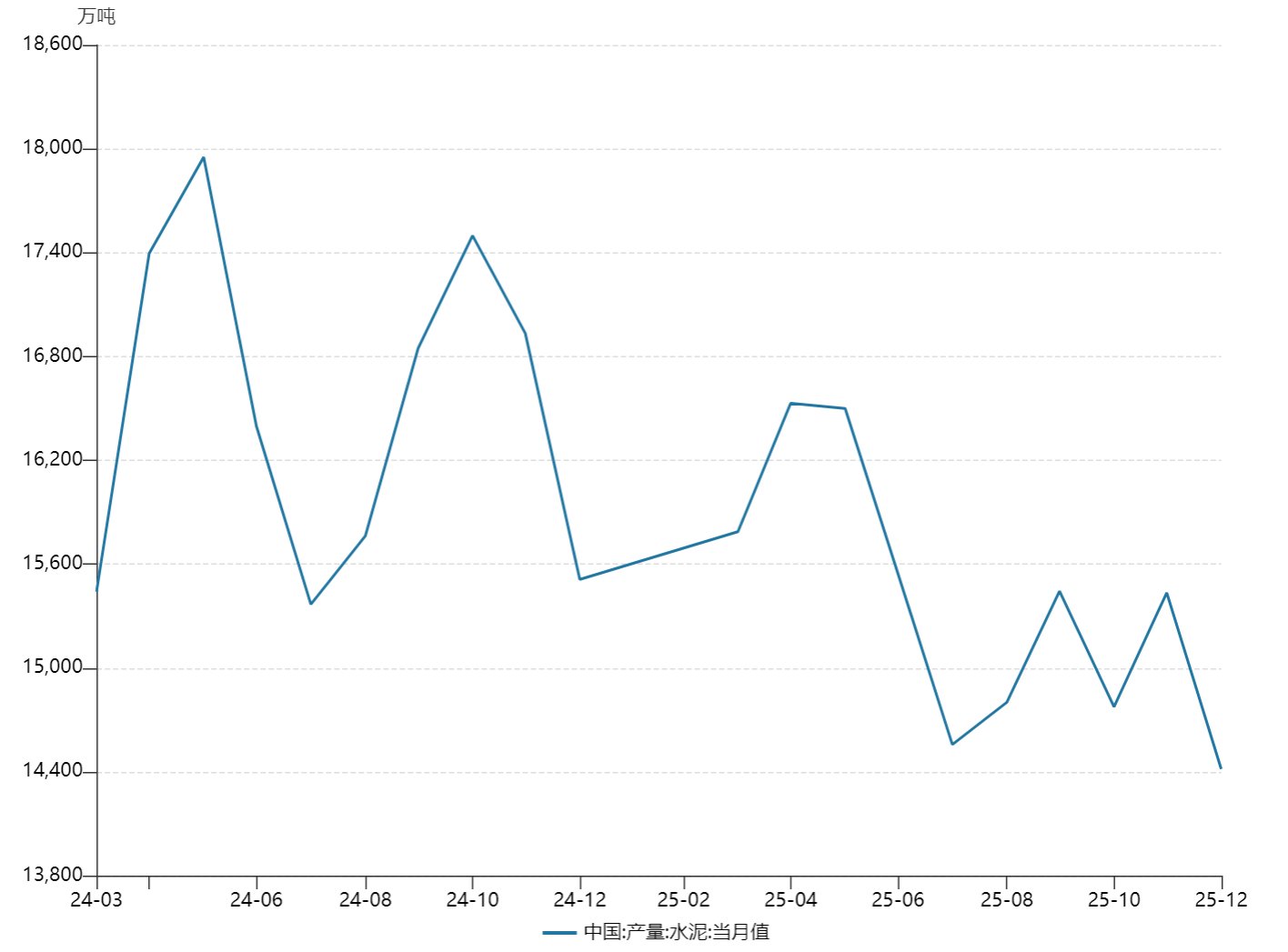
Core Viewpoint - The construction materials sector is experiencing fluctuations, with the building materials ETF showing a recent increase in net inflows and a positive performance trend, despite some underlying challenges in the cement industry [1][2][3]. Group 1: ETF Performance - The latest size of the building materials ETF reached 2.307 billion, marking a new high since its inception, ranking in the top third among comparable funds [2] - The ETF's shares have also reached a new high of 3.103 billion shares, ranking in the top third among comparable funds [2] - Over the past week, the ETF has seen a cumulative increase of 7.35%, ranking in the top third among comparable funds [1][3] Group 2: Fund Flows and Trading Activity - The building materials ETF has experienced continuous net inflows over the past four days, with a maximum single-day net inflow of 207 million, totaling 513 million in net inflows [2] - The ETF's trading volume has been robust, with an average daily transaction of 274 million over the past week, leading among comparable funds [1] Group 3: Industry Insights - The cement industry is undergoing a structural reshaping of supply and demand, with expectations of a fifth consecutive year of negative growth in cement production by 2025 [2] - The industry is facing dual constraints from stricter capacity replacement and the formal inclusion of the national carbon market, which may lead to a phase of price increases despite limited overall rebound potential [2] - Recent policies in major cities, such as increased second-hand housing transactions and urban renewal initiatives, are expected to support the recovery of construction material demand [3] Group 4: Risk and Return Metrics - The building materials ETF has a one-year Sharpe ratio of 1.29, indicating a favorable risk-adjusted return [4] - The maximum drawdown for the ETF this year is 5.48%, with a recovery time of just 2 days, the fastest among comparable funds [4] Group 5: Management and Tracking - The management fee for the building materials ETF is 0.50%, and the custody fee is 0.10% [5] - The ETF has a tracking error of 0.065% over the past six months, the highest tracking precision among comparable funds [6] - The index tracks the overall performance of listed companies in the construction materials sector, with the top ten weighted stocks accounting for 61.6% of the index [6]