小红书

Search documents
小红书估值飙升至260亿美元:社区电商的资本新高度
Sou Hu Cai Jing· 2025-06-05 07:55
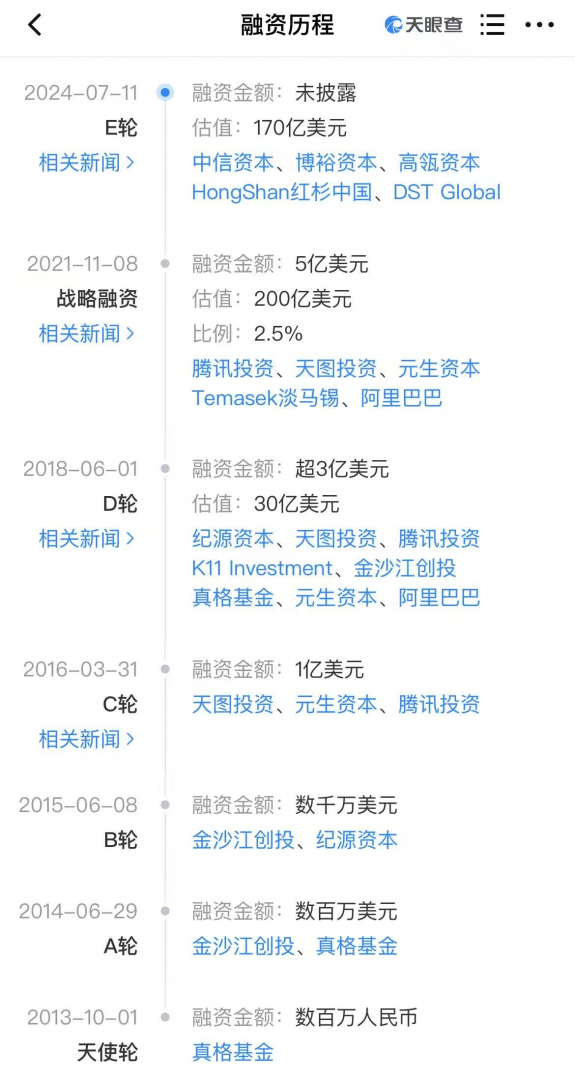
Group 1 - The valuation of Xiaohongshu has surged to $26 billion, a significant increase from the previous $20 billion valuation, as reported by the investment firm金沙江创投 [1] - 金沙江创投 holds an 8.47% stake in Xiaohongshu, with the value of its holdings reaching $2.22 billion, accounting for 91% of the fund's total assets [1] Group 2 - Xiaohongshu has completed seven rounds of financing since its establishment in 2013, attracting investments from top-tier firms such as Tencent, Alibaba, and Temasek [3] - The rapid increase in Xiaohongshu's valuation is closely linked to its breakthroughs in the e-commerce sector, successfully integrating its "content-transaction" model [3] - There are widespread rumors regarding Xiaohongshu's potential IPO, with Hong Kong being considered as the preferred listing location, which could mark a significant event in China's internet industry [3]

最新交易显示:小红书估值已达260亿美元
华尔街见闻· 2025-06-05 03:09
Core Insights - Xiaohongshu's valuation has surged to $26 billion, driven by a recent transaction through GSR Ventures, marking a significant increase from the previous valuation of $20 billion [1] - The platform's valuation has surpassed its historical peak during the COVID-19 pandemic, providing strong momentum for its anticipated IPO this year [1][5] Valuation Details - Xiaohongshu accounts for 91% of GSR IV fund's assets, with a net asset value of approximately $2.44 billion as of March 31, where Xiaohongshu's stake is valued at $2.22 billion [1] - The valuation is based on private transactions, which often have a wide range due to the nature of secondary market negotiations [4] Market Context - Xiaohongshu has gained attention as a potential alternative to TikTok amid the latter's regulatory challenges in the U.S., leading to increased interest from American users [2] - The Chinese government's support for private enterprises and relaxed regulations in the tech sector have created new investment opportunities for platforms like Xiaohongshu [2] Investor Landscape - Xiaohongshu's investor base includes prominent firms such as GGV Capital, ZhenFund, Tiantu Capital, and GSR Ventures, with limited partners comprising major global pension funds and university endowments [7] - GSR Ventures, managing $3.7 billion in assets, has a history of investing in notable companies like Didi Chuxing and Horizon Robotics [7]
最新交易显示:小红书估值已达260亿美元
Hua Er Jie Jian Wen· 2025-06-05 00:57
Group 1 - The valuation of Xiaohongshu (Little Red Book) has surged to $26 billion, significantly up from a previous valuation of $20 billion, driven by a recent transaction through GSR Ventures [1][2] - Xiaohongshu accounts for 91% of the net asset value of GSR IV fund, with its share valued at approximately $22.2 billion as of the end of March [1][3] - The recent valuation surpasses the historical peak during the COVID-19 pandemic in 2021, providing strong momentum for the anticipated IPO this year [1] Group 2 - Xiaohongshu has gained attention as a potential alternative to TikTok amid the latter's regulatory challenges in the U.S., leading to increased interest from American users [2] - The Chinese government is supporting private enterprises and easing regulations in the tech sector, creating new investment opportunities for platforms like Xiaohongshu [2] - The investor base for Xiaohongshu includes prominent firms such as GGV Capital, ZhenFund, and GSR Ventures, with limited partners comprising major global pension funds and university endowments [3]
今年618大促平台求变 “种草”模式、即时零售“出圈”
Guang Zhou Ri Bao· 2025-06-04 15:46
为了进一步抢夺新流量,以往只是细分赛道之一的即时零售在今年618成为"主战场"。就在端午假期结 束不久,美团闪购就披露618首周期消费数据,3C家电、运动用品、美妆护肤、母婴奶粉、儿童玩具等 类目的超过800个品牌商、零售商成交额翻倍增长。 京东外卖与淘宝闪购也不示弱。本月1日,京东外卖公布全职骑手规模已突破10万人,比原计划提前近2 个月达成,外卖日订单量已突破2500万单。5月底,距离上线不到一个月,淘宝闪购联合饿了么公布日 订单数已超4000万。 开放合作巨头携"小弟"开启"种草"之路 面对流量增量越来越难获得的当下,今年618,京东与阿里两家电商巨头主动"破壁",相继宣布与小红 书"跨界"合作,通过"种草"机制触发更多的消费者在两家平台上的消费。据了解,618前夕,淘宝天猫 与小红书签订战略合作,打造"红猫计划",消费者在小红书"种草"笔记可直接跳转至淘宝App。 在5月底,京东也高调宣布与小红书战略合作升级,推出"红京计划"。"在小红书投放广告可添加京东购 物链接,用户点击广告可直接跳转至京东App。"京东如此介绍。 近年来,小红书在电商领域积极"跑马圈地",京东、阿里选择在上半年关键大促时间,与前 ...


AI味道太浓?新型教培正在解决这件事
3 6 Ke· 2025-06-04 12:52
Core Insights - The article discusses the evolving role of AI trainers, particularly in the context of enhancing AI's ability to understand and express human emotions and values, moving beyond mere factual accuracy to a more nuanced interaction with users [1][10][12] Group 1: AI Training and Human Interaction - AI models are currently focused on improving their intelligence by mastering standard answers, but many real-world questions lack definitive answers, necessitating a deeper understanding of human preferences and emotions [2][5] - The emergence of AI trainers, particularly those with humanities backgrounds, signifies a shift towards training AI to better perceive and respond to complex human emotions and ethical dilemmas [6][10] - The role of AI trainers is evolving from basic data labeling to creating ethical guidelines and human-like responses, indicating a growing recognition of the importance of human values in AI development [8][10][13] Group 2: Challenges in AI Responses - AI struggles with sensitive topics, such as health issues, where responses can feel mechanical and lack empathy, highlighting the need for more human-like interaction [5][17] - Ethical dilemmas, such as the classic trolley problem, illustrate the complexity of programming AI to navigate moral boundaries, as there are no universally correct answers [4][16] - The challenge of using appropriate pronouns in AI responses reflects broader issues of inclusivity and sensitivity in AI communication, which are still under discussion [3][17] Group 3: The Future of AI Training - The demand for AI trainers with strong humanities backgrounds is increasing, as companies seek to bridge the gap between machine logic and human emotional understanding [10][11] - The concept of "post-training" is gaining traction, where AI is continuously improved through the integration of high-quality data and alignment with human values [9][10] - The emergence of specialized roles, such as "human-AI interaction trainers," indicates a trend towards creating more engaging and responsible AI systems [10][11]
7家消费公司拿到新钱;柠季已在海外签约15家门店;小红书与京东达成“红京计划”合作|创投大视野
3 6 Ke· 2025-06-04 12:19
Group 1: Investment Highlights - ListenHub, an AI podcast generation platform, has completed a multi-million dollar angel round financing exclusively from Sequoia China, aiming to enhance technology and market expansion [1] - The handmade milk tea brand Deng's Grandma has secured several tens of millions in Series B financing, with funds directed towards supply chain development, regional market expansion, and product innovation [2] - Li Yuan San Bao, a tea production supplier, has received Series A financing, with the amount undisclosed, to optimize production processes and enhance product quality [3] - The 24-hour self-service KTV chain, Main Singing Show, has completed 20 million yuan in Series A financing to further market expansion and deepen its presence in the smart entertainment sector [4] - Dishang Technology, a home cleaning brand, has completed several million yuan in angel round financing to optimize product lines and enhance R&D capabilities [5] - Rocket manufacturer Yushi Space has announced nearly 100 million yuan in angel+ round financing, with funds allocated for product development and team expansion [6] - DiGua Robot, a subsidiary of Horizon Robotics, has completed a $100 million Series A financing to accelerate the construction of its intelligent ecosystem [7] Group 2: International Expansion and Strategy - Lemon Season has embarked on an international strategy, signing 15 overseas stores, focusing on Southeast Asia after initial challenges in the U.S. market [9] - The brand aims to replicate its domestic expansion success in Southeast Asia, leveraging cultural similarities and supply chain proximity [9] Group 3: Market Trends and Consumer Insights - Sweet Lala has launched a new product, "Peach Cool Bucket," in response to the growing popularity of bucket tea among Gen Z consumers, having sold over 120 million buckets since its inception [11] - The competition in the bucket tea segment is intensifying as various tea brands, including Nayuki and Heytea, are also introducing similar products [12] - The total box office for new films during the Dragon Boat Festival has surpassed 100 million yuan, indicating a strong performance in the film industry [13]
618调查:狂欢潮下的中小商家
3 6 Ke· 2025-06-04 07:44
Group 1 - The 618 e-commerce promotion has been extended to nearly 40 days, starting from May 13 to June 20, with notable changes in promotional strategies across platforms [1][2] - Tmall has replaced the traditional "full reduction" method with "official reduction," simplifying the discount process for consumers, while JD.com has integrated various discount strategies, intensifying competition [1][2] - Xiaohongshu has shifted its focus from 618 to a "Friendly Market" initiative, providing significant subsidies and traffic support to new merchants, indicating a strategic pivot in promotional focus [1][2] Group 2 - AI tools are increasingly being utilized in the 618 promotions, with JD.com offering free access to digital personas and other AI applications for merchants, while Alibaba's AI tools aim to enhance conversion rates [2] - Content e-commerce is enhancing interconnectivity, with initiatives like the "Red Cat Plan" between Taobao and Xiaohongshu, aiming to improve merchant conversion rates through collaborative marketing [2] Group 3 - The shift to "direct reduction" and "subsidy stacking" has negatively impacted small merchants, with reports of daily GMV dropping significantly due to reduced consumer engagement in "full reduction" strategies [3][5] - Small merchants are increasingly feeling marginalized during promotional events, leading to a decrease in their expected sales and a reluctance to stock up for promotions [5][6] Group 4 - The apparel sector has seen a mixed performance, with a reported increase in sales on platforms like Taobao and Douyin, yet high return rates are causing significant concern among merchants [9][11] - Return rates for women's clothing have reached alarming levels, with reports indicating that up to 80% of items are returned, leading to increased costs and inventory challenges for merchants [11][12] Group 5 - The home appliance sector is experiencing a "crazy price" era during the 618 promotion, with many products being sold at prices lower than second-hand items, driven by aggressive pricing strategies from major brands [14][16] - The ongoing price war in the home appliance market is attributed to various factors, including government subsidies and competitive pressures from platforms like Pinduoduo, leading to a potential long-term decline in prices [16][17]
电商流量洼地争夺战,是否进入新时代?
3 6 Ke· 2025-06-04 03:59
Core Viewpoint - The e-commerce industry is experiencing significant changes as major platforms like Tencent, Baidu, and Xiaohongshu are making strategic moves to enter or expand their presence in the market, indicating a shift from a duopoly led by Alibaba and JD.com to a more competitive landscape [1][17]. Tencent's E-commerce Initiatives - Tencent has officially established an independent e-commerce product department, a move that has been anticipated for years but has only recently materialized [2][4]. - The company aims to enhance the WeChat ecosystem by creating a unified and trustworthy transaction experience, leveraging its social attributes and payment capabilities to support merchants [4][3]. - Despite the establishment of the e-commerce department, Tencent's leadership has downplayed the significance of this adjustment, suggesting a cautious approach to its e-commerce ambitions [4][3]. Baidu's Strategic Moves - Baidu is actively pursuing the development of an AI-driven e-commerce platform, integrating search, live streaming, video, and shopping functionalities to enhance user experience [5][6]. - Baidu's e-commerce initiative, "Baidu Youxuan," has seen impressive growth, with GMV doubling and a year-on-year increase of 227% as of May 2024 [6][8]. - The collaboration with influencer Luo Yonghao for live streaming events is a strategic effort to boost sales during major shopping events like the 618 festival [6][8]. Xiaohongshu's Collaboration with E-commerce Giants - Xiaohongshu has entered a strategic partnership with Taobao, launching the "Red Cat Plan" to facilitate data sharing and enhance the shopping experience for users [9][10]. - The collaboration allows for a seamless integration of user-generated content and e-commerce, enabling Xiaohongshu to leverage its strengths in lifestyle-oriented marketing while benefiting from Taobao's extensive e-commerce infrastructure [10][12]. - Xiaohongshu's shift towards collaboration with established platforms reflects a strategic pivot from a closed ecosystem to a more open approach, driven by the need to compete effectively in a saturated market [12][13]. Broader Industry Trends - The e-commerce landscape is transitioning from a focus on a few dominant players to a more diversified competitive environment, with various platforms exploring unique strategies to capture market share [17]. - The current economic climate, characterized by consumer spending declines, has prompted platforms to adopt collaborative strategies rather than relying solely on internal growth [17]. - The effectiveness of these new strategies will likely be assessed through performance metrics during key shopping events, such as the 618 festival, which will provide insights into the evolving dynamics of the e-commerce sector [17].


QuestMobile2025年高价值人群营销洞察(一):占比六成的中青年人群占据了7成使用时长,千元以上消费能力用户占比超八成
QuestMobile· 2025-06-04 01:59
Core Insights - The article discusses the marketing insights for high-value consumer groups in China by 2025, highlighting the increasing mobile internet usage and the importance of targeting the 19-50 age demographic [2][6][9]. Group 1: User Engagement and Demographics - As of April 2025, the average monthly usage time for mobile internet in China exceeds 170 hours, reflecting a year-on-year growth of 6.6%, indicating significant user engagement potential [6]. - The 19-50 age group represents 61.4% of total monthly active users but accounts for 70.6% of total monthly usage time, showcasing their core value potential [2][6]. - Among this demographic, 82.2% have an online spending capability exceeding 1,000 yuan, with mobile video and social media consuming 42.7% and 25.1% of their time, respectively [3][9]. Group 2: Marketing Trends and Strategies - The 19-50 age group is identified as a key target for marketing due to their high consumption decision-making power and spending capacity [9][11]. - In the first four months of 2025, mobile video and social media platforms captured 41.9% and 19.1% of advertising spending, respectively, indicating a shift in marketing strategies towards these platforms [11]. - The report emphasizes the need for platforms to explore user value, particularly focusing on high-engagement users who exhibit diverse characteristics based on the services provided by different platforms [5][15]. Group 3: Platform-Specific Insights - Social media and short video platforms cater to users' fragmented time, with a relatively small variance in usage duration among users, while video platforms require longer engagement times [16][18]. - WeChat and Weibo maintain high coverage of high-value users, while Xiaohongshu shows strong growth potential among younger demographics [21][26]. - The preferences of high-value users vary across platforms, with WeChat users showing interest in financial management and leisure travel, while Weibo users focus on outdoor activities and health [28][30]. Group 4: Short Video and Online Video Platforms - Short video platforms are characterized by high user scale and engagement, with a growing proportion of high-value users aged 19-35 [34][36]. - Online video platforms rely on high-value users for active engagement, with a strong inclination towards shopping, making them critical for advertising conversion [49][59]. - The content preferences of high-value users on video platforms include genres like fantasy, comedy, and workplace themes, which influence advertising strategies [57][63].

史上最乱618
3 6 Ke· 2025-06-03 23:17
Core Insights - The 618 shopping festival has become increasingly complex, with consumers struggling to determine the best time to purchase due to multiple price waves and promotional strategies from major players like Taobao and JD [1][3][4] - The competition among platforms has intensified, leading to a chaotic environment where consumers feel lost amidst fluctuating prices and promotional tactics [3][4][19] - The traditional focus on "low prices" has diminished, with platforms shifting towards different promotional strategies, causing confusion among consumers about when to buy [6][10][20] Group 1: Market Dynamics - The 618 festival has evolved into a longer and more complicated event compared to previous years, with JD introducing a five-phase promotional structure [8][9] - Consumers have identified specific timeframes they believe will offer the best deals, such as May 16, May 31, and June 17-18, but these perceptions vary across platforms [10][11] - The entry of new competitors like Meituan has added to the competitive landscape, with a focus on instant retail and simplified pricing strategies [12][19] Group 2: Consumer Behavior - Social media discussions reveal a wide range of opinions on when to buy during the 618 festival, indicating consumer uncertainty and dissatisfaction with pricing strategies [4][6] - The extended duration of the event and the lack of clear low-price periods have increased consumer anxiety, leading some to consider opting out of the shopping frenzy altogether [11][27] - The shift away from a singular focus on low prices has left consumers questioning the value of participating in the event, as they seek clarity in their purchasing decisions [6][20][29] Group 3: Competitive Landscape - The competition among major platforms has led to aggressive marketing strategies, with each trying to outdo the others in terms of promotions and consumer engagement [3][19] - Pinduoduo, facing challenges from rising operational costs and declining profits, is expected to respond aggressively in the market, indicating a potential shift in competitive dynamics [22][25] - The overall market is characterized by a mix of aggressive competition and strategic retreats, as platforms reassess their positions in a crowded marketplace [27][29]