
大疆

Search documents
“挑战”大疆无人机,影石创新胜算几何?
Hu Xiu· 2025-09-17 06:05
Core Insights - DJI dominates the consumer drone market with a 70% market share, establishing an unassailable industry position [1] - YingShi Innovation has launched a public test for its panoramic drone "Yingyi A1" near DJI's headquarters, investing 200,000 cash to challenge DJI [1] - YingShi has achieved over 80% global market share in allowing ordinary users to capture professional panoramic images, but its revenue is only one-tenth of DJI's [1] - The competition indicates that challengers can aspire to become leaders in the market despite significant hurdles [1]

全球硬件大爆款,生于中国|深氪
3 6 Ke· 2025-09-17 04:21
Core Insights - The article highlights the emergence of Chinese hardware companies, particularly in the context of global competition and innovation, showcasing their ability to create high-quality products that resonate with international consumers [1][3][30]. Group 1: Company Overview - Plaud AI, founded in Shenzhen in 2021, has quickly gained traction with its AI recording pen, achieving sales of over one million units [1][3]. - The company aims to be a global player from day one, reflecting a shift in mindset among young entrepreneurs who now prioritize international markets and high-value branding [3][12]. Group 2: Market Context - The global market has seen a significant transformation over the past decade, with Chinese companies like DJI leading the way in innovation and market share, particularly in the consumer drone sector [6][8][28]. - DJI's success has inspired a new generation of hardware entrepreneurs who are now willing to invest in high-quality, high-margin products rather than competing solely on price [8][12][20]. Group 3: Investment Landscape - The investment climate for hardware startups has evolved, with more investors willing to back innovative projects, recognizing the potential for high returns in the hardware sector [73][76]. - Notable investors like Li Zexiang and Gao Bingqiang have played crucial roles in supporting emerging companies, providing them with the necessary resources to develop and market their products [69][70][62]. Group 4: Supply Chain Dynamics - The robust Chinese supply chain has been instrumental in the success of hardware companies, allowing for rapid prototyping and production at competitive prices [46][51]. - The evolution of the supply chain has enabled startups to access high-quality components, which has significantly lowered production costs and improved product quality [52][58]. Group 5: Future Outlook - The article suggests that the current generation of hardware entrepreneurs is well-positioned to capitalize on global market opportunities, driven by a combination of strong supply chains, innovative products, and supportive investors [77][78]. - As these companies continue to innovate and expand their global reach, they are likely to reshape perceptions of Chinese manufacturing and establish themselves as leaders in the tech industry [28][30].


高端访谈 || 上汽通用五菱的造车进化论
Zhong Guo Qi Che Bao Wang· 2025-09-17 02:02
Core Insights - The article discusses the transformation of SAIC-GM-Wuling in the era of new energy vehicles, emphasizing the importance of intelligent manufacturing and technological innovation in redefining production relationships and enhancing competitiveness [1][3]. Group 1: Company Overview - SAIC-GM-Wuling was established in 2002, evolving from a local state-owned enterprise to a modern company through strategic investments [3]. - As of August 2023, the cumulative sales of SAIC-GM-Wuling exceeded 1 million vehicles, with a year-on-year growth of 15%, and over 56% of these being new energy vehicles, surpassing the industry average [3][4]. Group 2: Technological Innovation - The company has been investing in new energy vehicles since a decade ago, collaborating with various academicians to achieve significant technological advancements [4]. - The "125" project aims to establish a comprehensive development framework for new energy vehicles, including one laboratory, two product groups of one million units each, and five hundred billion yuan industry clusters [4]. Group 3: Manufacturing Strategy - SAIC-GM-Wuling has pioneered an intelligent island-style manufacturing system, which allows for flexible production lines that can adapt to various vehicle models, significantly reducing costs and improving efficiency [5]. - The company emphasizes a collaborative approach with partners like Huawei, DJI, and CATL, focusing on co-creation rather than traditional buyer-supplier relationships [5][6]. Group 4: Export Strategy - The company ranks seventh among domestic brands in overseas market scale, with a target of exporting 500,000 vehicles annually [7][8]. - SAIC-GM-Wuling has established a manufacturing base in Indonesia, which has become profitable and serves as a key hub for expanding into Southeast Asian markets [8][9]. Group 5: Product Development - The upcoming Starry 730 model will feature a flexible chassis with options for fuel, pure electric, and hybrid power, catering to diverse customer needs [9][10]. - The company is also focusing on series production to balance traditional market demands with the transition to new energy vehicles [10]. Group 6: Corporate Social Responsibility - SAIC-GM-Wuling has initiated the "Benevolence Fund" to improve rural healthcare services, with a cumulative donation of 125.8 million yuan by 2025, benefiting over 10 million people [11]. - The company has engaged in various social initiatives, enhancing its corporate image and societal impact [11].

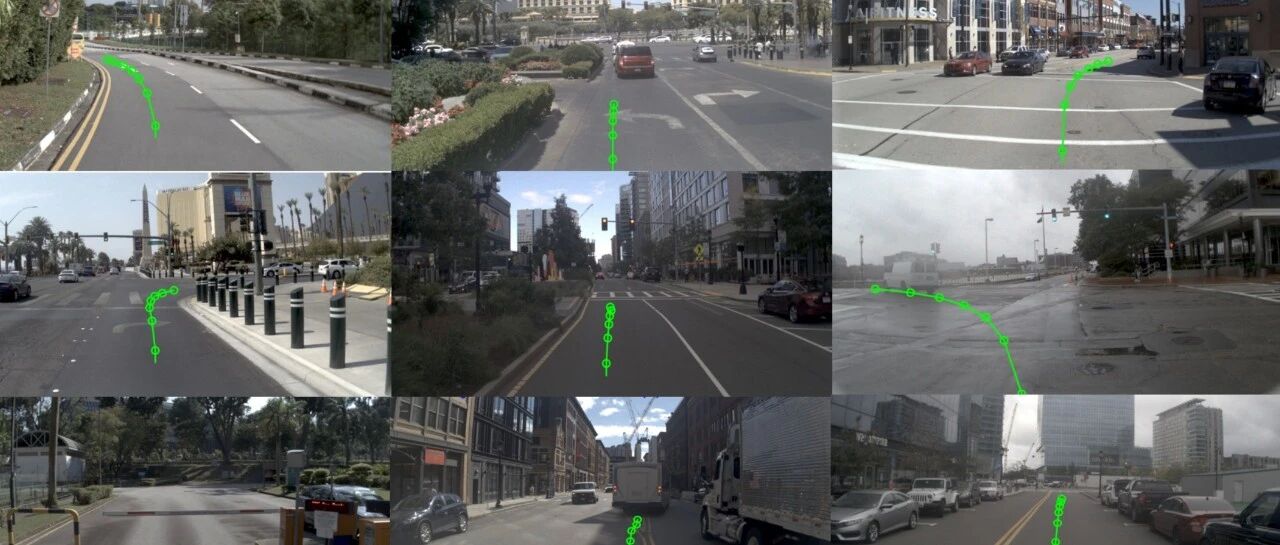
那些号称端到端包治百病的人,压根从来没做过PnC......
自动驾驶之心· 2025-09-16 23:33
Core Viewpoint - The article discusses the current state and future potential of end-to-end (E2E) autonomous driving systems, emphasizing the need for a shift from modular to E2E approaches in the industry, while acknowledging the challenges and limitations that still exist in achieving maturity in this technology [3][5]. Group 1: End-to-End Autonomous Driving - The concept of end-to-end systems involves directly processing raw sensor data to output control signals for vehicles, representing a significant shift from traditional modular approaches [3][4]. - E2E systems are seen as a way to provide a comprehensive representation of the information affecting vehicle behavior, which is crucial for handling the open-set scenarios of autonomous driving [4]. - The industry is currently divided, with some companies focusing on Vehicle Language Architecture (VLA) and others on traditional methods, but there is a consensus that E2E systems are the future [2][5]. Group 2: Industry Trends and Challenges - There is a growing recognition that autonomous driving is transitioning from rule-based to knowledge-driven systems, which necessitates a deeper understanding of E2E methodologies [5]. - Despite the high potential of E2E systems, there are still significant challenges to overcome before they can fully replace traditional planning and control methods [5]. - The article suggests that companies should allow more time for E2E systems to mature rather than rushing to implement them without adequate understanding [5]. Group 3: Community and Learning Resources - The "Autonomous Driving Heart Knowledge Planet" community aims to provide a platform for sharing knowledge and resources related to autonomous driving, including technical routes and job opportunities [8][18]. - The community has gathered over 4,000 members and aims to expand to nearly 10,000 within two years, offering a space for both beginners and advanced learners to engage with industry experts [8][18]. - Various learning resources, including video tutorials and technical discussions, are available to help members navigate the complexities of autonomous driving technologies [12][18].
从大厂离职创业做硬件,真值那么多钱?
暗涌Waves· 2025-09-16 05:31
Core Insights - The investment landscape for AI hardware is being reshaped by founders from major tech companies, with nearly 70% of AI hardware entrepreneurs coming from firms like Xiaomi, DJI, and others [2][3] - In the first half of 2025, there were 114 financing events related to embodied intelligence and AI hardware, totaling over 14.5 billion yuan, compared to only 92 events and 9.8 billion yuan in 2024 [2] - The trend of former executives from large companies starting their own ventures in AI hardware is intensifying, with 13 former executives choosing to start businesses in 2024, five of whom focused on AI hardware [2] Investment Trends - High-profile financing cases are often linked to the "halo effect" of large companies, with examples like Guangfan Technology and Looki achieving significant funding due to their founders' backgrounds [3] - The valuation premium for founders from large companies has increased by 2-3 times compared to the previous year, with early-stage valuations for similar profiles rising from under 10 million USD to nearly 30 million USD [5][6] - Some founders, like Xiaomi's former VP Ma Ji, are seeing valuations approach 100 million USD, a significant increase from previous years [6] Market Dynamics - Investors are increasingly focused on the "people" aspect in early-stage AI hardware investments, as many projects lack fully developed products [8] - The growth curve for hardware companies is steep, requiring a long ramp-up period, which makes early-stage funding crucial for survival and development [10] - The market is characterized by a mix of emotional valuation and future certainty, with many investors willing to pay higher prices based on the potential of the founders rather than traditional financial metrics [8][21] Founder Attributes - Founders from large companies are valued for their ability to scale production and their experience in bringing products to market [11][12] - Successful examples include companies like Havivi, where the founder's experience in mass production led to rapid sales growth [12][13] - The ideal founder profile includes those with 0 to 1 entrepreneurial experience or those who have held high-level positions in large firms, as they understand the complete business cycle [14][15] Future Outlook - The market for embodied AI is projected to reach 23 billion USD by 2030, with a compound annual growth rate of 39% [23] - The transition from traditional hardware to embodied intelligence represents a significant evolution in the industry, with hardware serving as a gateway to more advanced AI applications [23] - Despite the current enthusiasm, the AI hardware sector is still in its infancy, with challenges in technology and market acceptance that need to be addressed before reaching maturity [24][26]


雷军:小米 17 全面对标 iPhone;罗永浩邀贾国龙直播;中美就 TikTok 达成基本共识|极客早知道
Sou Hu Cai Jing· 2025-09-16 02:00
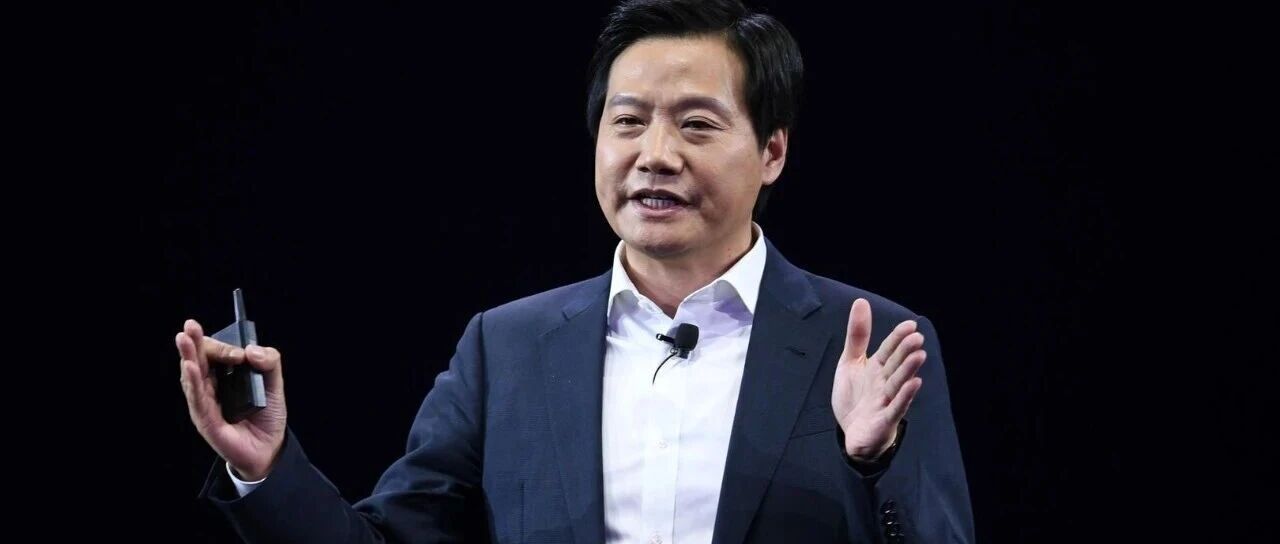
Group 1 - Xiaomi's founder Lei Jun announced that the new Xiaomi 17 series will directly compete with the iPhone, marking a significant upgrade in product capabilities [2][4] - The Xiaomi 17 series includes three models: Xiaomi 17, Xiaomi 17 Pro, and Xiaomi 17 Pro Max, with a naming convention similar to the iPhone 17 series [5] - Xiaomi has been pursuing a high-end strategy for five years, learning from its greatest competitor, Apple, and is confident in facing the iPhone head-on [4] Group 2 - Amazon Web Services (AWS) denied reports of layoffs in its Greater China region, stating that the reports were grossly inaccurate and that the company continues to actively recruit talent in China [14] - Despite the denial, AWS has faced restructuring, with some departments experiencing layoffs affecting hundreds of positions [16] Group 3 - OpenAI's chairman Brett Taylor discussed the current "AI bubble," describing it as a "virtuous cycle" that will create significant economic value in the future, similar to the internet boom of the late 20th century [27][29] - Taylor acknowledged the risks associated with the AI industry but emphasized that these risks are minor compared to the opportunities available [29]

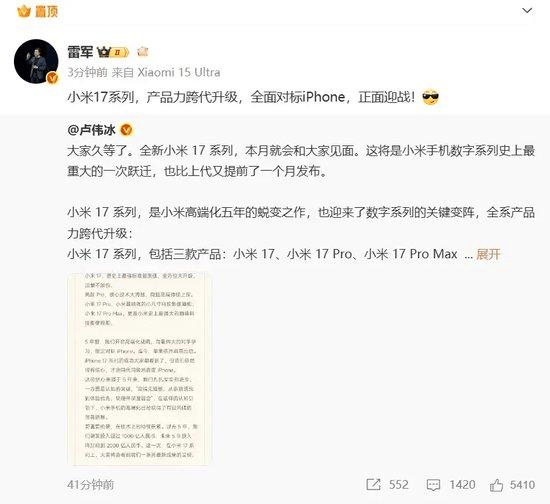
小米16改名小米17!雷军:全面对标苹果,正面迎战;美的回应员工离职被欠薪:薪资已结清;大疆扫地机上市一月遭遇用户退货潮
雷峰网· 2025-09-16 00:28
Group 1 - Xiaomi's next-generation smartphone has been renamed from Xiaomi 16 to Xiaomi 17, marking a significant leap in its digital series, with three models: Xiaomi 17, Xiaomi 17 Pro, and Xiaomi 17 Pro Max [4][6] - The company aims to directly compete with Apple's iPhone, emphasizing a cross-generation upgrade in product capabilities [4][6] - Xiaomi's founder, Lei Jun, expressed confidence in facing off against Apple, highlighting the need for innovation to avoid stagnation in the smartphone market [4][6] Group 2 - Midea Group responded to allegations of excessive working hours and unpaid wages, stating that the claims were unfounded and that the employee's salary was settled [9][10] - DJI's new robot vacuum, ROMO, faced a wave of returns within a month of its launch, with mixed user feedback on its performance [11] - Honor's former CEO Zhao Ming discussed the importance of developing unique marketing strategies while learning from Xiaomi's successes during a recent speech at Fudan University [20] Group 3 - JD.com and other major players are entering the hard discount supermarket sector, focusing on low prices and direct sourcing to attract price-sensitive consumers [19] - The hard discount model aims to reduce costs through digital supply chain management and efficient store operations, targeting ordinary families seeking value [19] - The competitive landscape in the retail sector is shifting as these giants leverage their scale to dominate the market [19] Group 4 - The electric vehicle market is facing challenges, with companies like Zhiji Auto reporting significant losses and low sales figures, raising concerns about their future viability [16][17] - Zhiji Auto's sales in the first eight months of the year reached 31,500 units, only 31.5% of its target, indicating a steep uphill battle to meet future goals [16][17] - The automotive industry is witnessing a trend of executives moving to new ventures, as seen with the former co-founder of Leap Motor starting a new electric vehicle brand in Australia [18][25] Group 5 - Nvidia is under investigation for potential antitrust violations related to its acquisition of Mellanox Technologies, highlighting regulatory scrutiny in the tech sector [28][29] - Alphabet, Google's parent company, has reached a market capitalization of $3 trillion, becoming the fourth company to achieve this milestone, driven by strong performance in cloud services and advertising [30] - Apple is reportedly developing a new line of smart glasses, aiming to enter the augmented reality market with a product that connects to the iPhone for data processing [31]

顶尖科技人才超50万城市:印度4个,中国3个,美国0个
吴晓波频道· 2025-09-16 00:21
Core Viewpoint - The article emphasizes that talent is the fundamental factor determining a city's future competitiveness, surpassing traditional industrial strength [2][7]. Group 1: Global Innovation Clusters - The "Shenzhen-Hong Kong-Guangzhou" cluster has surpassed the "Tokyo-Yokohama" cluster to become the world's leading innovation cluster [12][13]. - In 2024, the Shenzhen-Hong Kong-Guangzhou region is projected to have a total of 113,000 invention patents authorized, accounting for 12.1% of the national total, and 19,000 PCT international patent applications, making up 27.5% of the national total [13]. - Asia dominates the list of cities with over 500,000 tech talents, with India and China leading the way [8][12]. Group 2: Talent Concentration and Its Impact - Cities that gather over 100,000 talents transition from mere industrial clusters to ecosystems capable of innovation and system reconstruction [3][4]. - The article highlights that as talent clusters grow from 100,000 to 300,000 and then to 500,000, each leap significantly enhances the city's innovation ecosystem [6][29]. - The future competition among cities will hinge on who can attract and retain talent, as this will redefine the rules of the game [7][31]. Group 3: Talent Ecosystems in Different Industries - Talent clusters are not exclusive to the tech industry; they exist across various sectors, such as Hollywood for film and the e-commerce hub in Hangzhou [17][21]. - The Philippines has emerged as a leading destination for business process outsourcing (BPO) due to its large pool of English-speaking talent [22]. - Yiwu has transformed from a small commodity wholesale market into a global e-commerce talent cluster, showcasing the power of talent in reshaping traditional industries [23][24]. Group 4: Future City Competitiveness - Attracting talent is just the first step; retaining and activating talent to create a positive feedback loop is crucial for a city's future competitiveness [31][32]. - The article introduces a framework for evaluating a city's talent attractiveness and development ecosystem, highlighting cities like Suzhou and Jinan as emerging talent-friendly locations [32]. - The essence of talent clusters lies in their ability to foster innovation through density, structure, and effective connections among talents [39][41].

深圳离境退税实现旅客无感通关
Shen Zhen Shang Bao· 2025-09-15 23:19
Group 1 - Shenzhen has launched a nationwide first "one order, one package, one code" tax refund facilitation model, covering 1,640 tax refund stores, enhancing the shopping experience for outbound travelers [1] - The model allows for seamless tax refunds without the need for unpacking at customs, significantly reducing verification time and wait times for travelers [1] - This initiative aims to boost inbound consumption by providing travelers with more time for diverse spending in areas such as dining and accommodation [1] Group 2 - From January to August this year, Shenzhen's tax refund sales reached 740 million, a growth of 189%, with 21,416 tax refund transactions, an increase of 595% [2] - The city has established six tax refund points at various ports, covering all transportation types, and introduced the first overseas electronic wallet for tax refunds [2] - Shenzhen's fiscal bureau plans to enhance tax refund services, expand refund store networks, and optimize management mechanisms to support domestic and international dual circulation [2]
大疆、华为等国货潮品成为入境人士在深圳最爱买单品
2 1 Shi Ji Jing Ji Bao Dao· 2025-09-15 14:33
Core Insights - Shenzhen has become a leading city in China for tax refund services, with domestic brands like DJI and Huawei accounting for 38.8% of tax refund applications from inbound travelers from January to August this year [1][2] - The sales volume of tax refund goods reached 740 million yuan, marking a 1.89 times increase, with the number of tax refund applications growing by 6.95 times to 21,416 [2] Tax Refund Innovations - Shenzhen has introduced a new "one order, one package, one code" model for tax refunds, covering 1,640 tax refund stores citywide, which allows for a seamless shopping and tax refund experience for travelers [3][4] - This model enhances efficiency by enabling customs to verify sealed packages without opening them, significantly reducing wait times for travelers at exit points [3] Expansion of Tax Refund Services - The number of tax refund stores in Shenzhen has increased to 1,640, with 12 "immediate refund" shopping districts established, leading the nation in both metrics [4] - New tax refund points have been added at various exit ports, bringing the total to six, and the city has launched the first overseas electronic wallet tax refund service in China [4] Future Plans - Shenzhen plans to further enhance the convenience of inbound consumption by improving tax refund services, expanding refund store networks, and optimizing the structure of refund goods to include more local quality products [5] - The city received 129.62 million inbound tourists in the first half of the year, a 24% year-on-year increase, positioning it as the top city in China for inbound tourist numbers [5]