腾讯

Search documents
拟收购真爱美家控制权,探迹科技打造产业新质生产力
2 1 Shi Ji Jing Ji Bao Dao· 2025-11-12 03:13
Core Viewpoint - The acquisition of True Love Home (真爱美家) by Guangzhou Tanjiyuanqing Technology Partnership is aimed at enhancing the company's operational capabilities and profitability through AI and digital transformation, marking a significant shift in control and strategic direction for the company [1][2][3]. Group 1: Company Overview - True Love Home specializes in the research, design, production, and sales of home textiles, primarily blankets, and has a strong competitive position in both domestic and international markets, with over 80% of its business coming from overseas [2]. - The company reported a revenue of 724 million yuan for the first three quarters of 2025, representing a year-on-year growth of 16.16%, and a net profit of 230 million yuan, which is a substantial increase of 310.28% year-on-year [2]. Group 2: Acquisition Details - True Love Group plans to transfer 43,185,600 shares, accounting for 29.99% of the total share capital, to Tanjiyuanqing, which will result in a change of control to Tanjiyuanqing and its actual controller, Mr. Li Zhan [1]. - Following the share transfer, Tanjiyuanqing intends to launch a partial tender offer for an additional 21,600,000 shares, representing 15.00% of the total share capital, with True Love Group committing to accept the offer for its 18,734,400 shares [1]. Group 3: Strategic Implications - The equity change is based on confidence in the company's business development prospects and long-term investment value, aiming to enhance profitability and operational sustainability through resource integration [1]. - The collaboration between True Love Home and Tanjiyuanqing is expected to leverage AI and digital capabilities to drive high-quality development and increase the company's value [1][3]. Group 4: Industry Context - The acquisition aligns with the broader trend of AI and digital transformation in industries, as companies increasingly adopt AI applications to enhance productivity and competitiveness [5][6]. - The Chinese market shows a strong inclination towards AI integration, with 78% of enterprises deploying AI in at least one business function by 2025, indicating a significant shift towards digitalization [5][6].
恒生科技ETF易方达(513010)标的指数低开高走,南向资金持续为港股注入活力
Mei Ri Jing Ji Xin Wen· 2025-11-12 03:09
Core Viewpoint - The Hong Kong stock market has shown significant liquidity improvement in 2023, with strong inflows from southbound funds, which are expected to support a "slow bull" market trend in the long term [1][1][1] Group 1: Market Performance - The Hong Kong stock market opened lower but rebounded, with the innovative drug sector experiencing a substantial increase, while new consumption and technology sectors showed fluctuating gains [1] - As of 10:18 AM, the Hang Seng Technology Index and the CSI Hong Kong Stock Connect Consumer Theme Index both rose by 0.8% [1] Group 2: Liquidity and Fund Inflows - The average daily trading volume in the Hong Kong stock market reached HKD 412.19 billion in the first nine months of 2023, marking a 126% year-on-year increase [1] - Southbound funds have injected significant vitality into the Hong Kong stock market, with net purchases amounting to approximately HKD 1.3 trillion year-to-date as of November 11, 2023, and over HKD 5 trillion since the program's inception [1] Group 3: Investment Outlook - According to China Merchants Securities, the continuous inflow of southbound funds is expected to drive the capital market back to fundamentals and value-driven approaches, optimizing corporate governance and protecting minority shareholders' interests [1] - Investors interested in the technology and new consumption sectors can consider products like the E Fund Hang Seng Technology ETF (513010) and the E Fund Hong Kong Consumption ETF (513070) for investment opportunities [1]
港股三大指数悉数上涨,机构:市场有望在盘整后打开上涨空间
Mei Ri Jing Ji Xin Wen· 2025-11-12 02:49
Group 1 - The Hong Kong stock market indices experienced an overall increase, with mixed performance in tech stocks and a majority of innovative drug concepts rising [1] - The largest ETF in the A-share sector, the Hang Seng Tech Index ETF (513180), saw a slight increase, with leading stocks including JD Health, Xiaomi, and Midea, while NIO, Baidu, and Alibaba faced declines [1] - According to the November strategy report from China Merchants Securities, the recent volatility in the Hong Kong market presents investment opportunities, driven by factors such as breakthroughs in China's tech industry, improved US-China relations, the implementation of the "14th Five-Year Plan," and anticipated interest rate cuts by the Federal Reserve [1] Group 2 - The Hong Kong Stock Connect Automotive ETF (159323) focuses on the new energy vehicle sector, featuring a leading proportion of passenger cars and covering automotive parts and smart technology, benefiting from the robotics technology wave [2] - The Hang Seng Tech Index ETF (513180) includes a mix of hard and soft tech, showcasing high growth potential with core Chinese tech assets like Xiaomi, NetEase, and Tencent, providing an accessible option for investors without a Hong Kong Stock Connect account [2]
港股速报|港股小幅高开 创新药板块早盘走强
Mei Ri Jing Ji Xin Wen· 2025-11-12 02:41
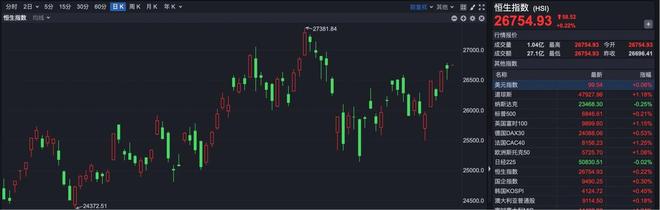
Group 1 - The Hong Kong stock market opened slightly higher, with the Hang Seng Index at 26,754.93 points, up 58.52 points, a gain of 0.22% [1] - The Hang Seng Tech Index reported 5,939.69 points, increasing by 15.30 points, a rise of 0.26% [3] Group 2 - Heisai-W (HK02525) announced a net revenue of RMB 795 million for Q3, a year-on-year increase of 47.5%, and a net profit of RMB 256 million, turning from loss to profit. The full-year net profit guidance was raised to between RMB 350 million and RMB 450 million, with Q4 net revenue expected to be between RMB 1 billion and RMB 1.2 billion, a year-on-year growth of approximately 39% to 67%. However, Heisai's stock fell over 10% in early trading [4] - China General Nuclear Power New Energy (HK01811) reported a cumulative power generation of 15,753.4 GWh for the first 10 months, a decrease of 3.5% year-on-year [6] - Dongyao Pharmaceutical-B (HK01875) announced a revenue of RMB 622 million for the nine months ending September 30, 2025, with a net loss attributable to equity holders of RMB 3.371 million [6] Group 3 - The innovative drug sector saw collective gains in early trading, with BeiGene rising over 4%, Kailaiying up over 1.8%, and Zhaoyan New Drug, WuXi AppTec, and WuXi Biologics each increasing by over 1% [8] - In other sectors, tech stocks showed mixed performance, with Xiaomi up over 2%, Tencent and NetEase rising over 1%, while Alibaba and Baidu fell over 2%. Real estate stocks were active, with Shimao Group increasing over 3%, and some automotive stocks opened higher, with XPeng Motors up over 2% [9] Group 4 - According to China Merchants Securities, the recent volatility in the Hong Kong stock market is partly due to investors taking profits, but this expectation gap creates investment opportunities. With a turning point in the U.S. government shutdown and an upward revision of external liquidity expectations, the market may open new upward space after consolidation [10]

港股小幅高开 创新药板块早盘走强
Mei Ri Jing Ji Xin Wen· 2025-11-12 02:38
Group 1 - The Hong Kong stock market opened slightly higher today, with the Hang Seng Index at 26,754.93 points, up 58.52 points, or 0.22% [1] - The Hang Seng Technology Index rose to 5,939.69 points, increasing by 15.30 points, or 0.26% [3] Group 2 - HeSai-W (HK02525) reported a net income of RMB 795 million for Q3, a year-on-year increase of 47.5%, and a net profit of RMB 256 million, turning from loss to profit. The full-year net profit guidance has been raised to between RMB 350 million and RMB 450 million, with Q4 revenue expected to be between RMB 1 billion and RMB 1.2 billion, a year-on-year growth of approximately 39% to 67% [2] - China General Nuclear Power New Energy (HK01811) announced a cumulative power generation of 15,753.4 GWh for the first ten months, a year-on-year decrease of 3.5% [6] - Dongyao Pharmaceutical-B (HK01875) reported a revenue of RMB 622 million for the nine months ending September 30, 2025, with a net loss attributable to equity holders of RMB 3.371 million [6] Group 3 - The innovative drug sector saw a collective rise in early trading, with companies like BeiGene up over 4%, Kailaiying up over 1.8%, and others like Zhaoyan New Drug, WuXi AppTec, and WuXi Biologics rising over 1% [6] - In the tech sector, Xiaomi rose over 2%, while Tencent and NetEase increased by over 1%. However, Alibaba and Baidu fell by over 2% [8]
“十五五”时期全球金融秩序的变革为中国提供机遇
citic securities· 2025-11-12 02:33
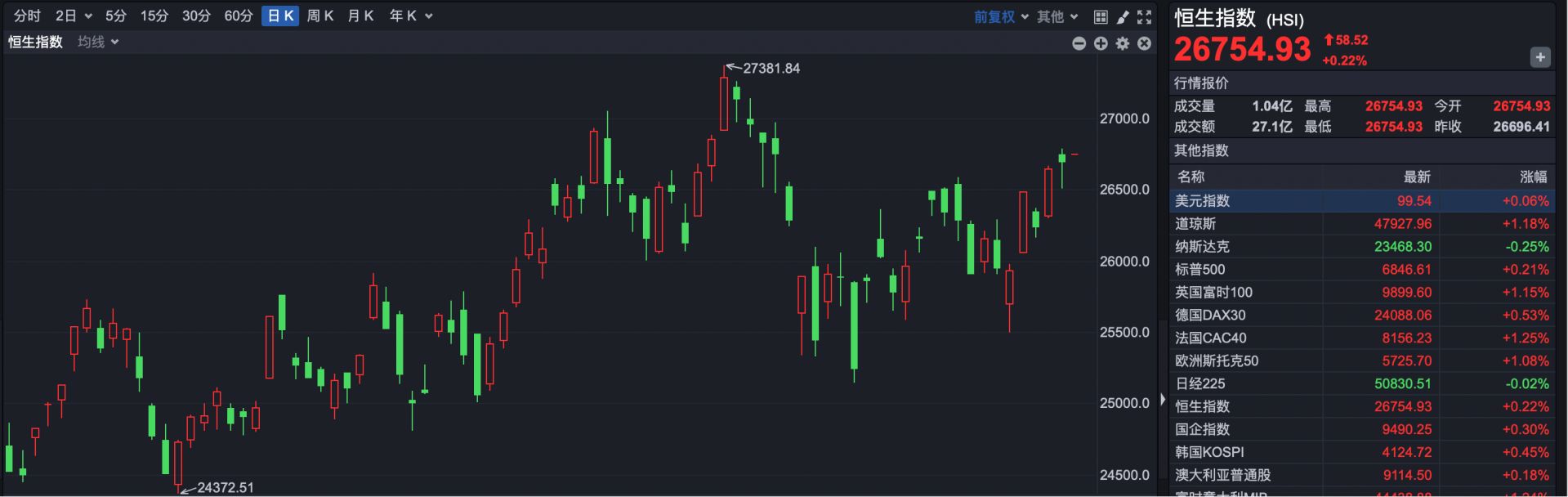
Market Overview - A-shares declined on Tuesday, with the Shanghai Composite Index down 0.39% to 4,002 points, and the Shenzhen Component down 1.03%[16] - The Hang Seng Index rebounded, closing up 0.18% at 26,696 points, driven by strong performance in consumer and property stocks[11] - U.S. markets showed mixed results, with the Dow Jones up 1.18% and the Nasdaq down 0.25%[9] Economic Indicators - The ADP report indicated a decrease of 45,000 jobs in October, marking the largest drop in two and a half years[29] - The U.S. government is expected to end its shutdown, which has positively impacted market sentiment[9] - The UK unemployment rate rose to its highest level since the pandemic, increasing expectations for a potential interest rate cut by the Bank of England[26] Commodity and Currency Movements - International oil prices rose over 1% due to supply concerns from U.S. sanctions on Russia, marking a third consecutive day of gains[26] - Gold prices slightly decreased, with the New York spot gold price at $4,116.3 per ounce, down 0.1%[26] - The U.S. dollar index remained stable, with a year-to-date change of -0.2%[25] Sector Performance - In the U.S., healthcare and energy stocks performed well, while technology stocks faced pressure due to SoftBank's liquidation of Nvidia shares, which raised concerns about a tech bubble[9] - In Hong Kong, the real estate sector rose by 1.6%, while healthcare stocks fell by 0.7%[11] - The consumer sector is expected to see a shift towards high-end consumption and recovery in demand, particularly in sectors like tourism and dining[18] Company News - Spotify reported better-than-expected Q3 2025 results, with revenue growth driven by price increases and improved gross margins[9] - Tencent is projected to see a 14% increase in total revenue for Q3 2025, with strong performance in online gaming and advertising[14] - SoftBank plans to invest an additional $22.5 billion in OpenAI, following the sale of its Nvidia shares for over $5 billion[23]
真爱美家控股权拟变更 探迹远擎拟收购44.99%股权
Zhong Zheng Wang· 2025-11-12 02:25
Core Viewpoint - The acquisition of shares in Zhenai Meijia by Guangzhou Tanjiyuanqing Technology Partnership is aimed at enhancing the company's profitability and operational capabilities through resource integration and AI-driven collaboration [1][2]. Group 1: Share Transfer Details - Zhenai Group plans to transfer 43,185,600 shares, representing 29.99% of Zhenai Meijia's total equity, to Tanjiyuanqing [1]. - Tanjiyuanqing intends to make a partial tender offer for 21,600,000 shares, which is 15.00% of the total equity, leading to a combined acquisition of 44.99% [1]. - After the transaction, Tanjiyuanqing will become the controlling shareholder, with Li Zhan as the new actual controller [1]. Group 2: Company Performance and Strategy - Zhenai Meijia, listed in 2021, specializes in home textiles, particularly blankets, with over 80% of its business coming from overseas markets [2]. - For the first three quarters of 2025, the company reported revenue of 724 million yuan, a year-on-year increase of 16.16%, and a net profit of 230 million yuan, up 310.28% [2]. - The company emphasizes AI and digital upgrades, integrating its industrial internet platform to enhance the entire blanket production process [2]. Group 3: Acquirer Profile - Tanjiyuanqing, established in April 2016, focuses on digital productivity and has been recognized in the Hurun Global Unicorn List for five consecutive years [3]. - The company offers a large model intelligent platform and has served over 50,000 enterprises, including major firms like Alibaba and Huawei [3]. Group 4: Industry Trends and Policy Support - The application of enterprise-level AI models is reshaping global productivity, driven by the need for digital transformation [4]. - By 2026, over 80% of enterprises are expected to deploy generative AI applications in production environments [4]. - Recent government policies emphasize the integration of AI across various industries, supporting the growth of AI-driven solutions [4][5].
AI+新质生产力整合制造业 探迹科技拟入主真爱美家
Zheng Quan Shi Bao Wang· 2025-11-11 14:31
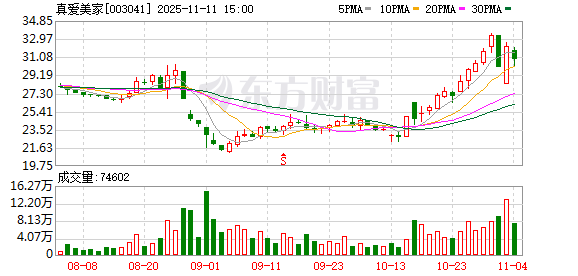
Core Viewpoint - The acquisition of Zhenai Meijia by Guangzhou Tanjitech is aimed at enhancing the company's operational capabilities and profitability through AI and digital transformation, marking a significant shift in control and strategic direction for the company [2][4]. Company Overview - Zhenai Meijia, listed in 2021, specializes in the research, design, production, and sales of home textiles, particularly blankets, with over 80% of its business coming from overseas markets [3]. - In the first three quarters of 2025, the company reported revenue of 724 million yuan, a year-on-year increase of 16.16%, and a net profit of 230 million yuan, a substantial increase of 310.28% [3]. Acquisition Details - Zhenai Group plans to transfer 43,185,600 shares, representing 29.99% of the total share capital, to Tanjitech, which will subsequently launch a partial tender offer for an additional 21,600,000 shares, or 15.00% of the total share capital [2]. - Following the completion of the transaction, Tanjitech will become the controlling shareholder, with Li Zhan as the new actual controller [2]. Strategic Implications - The equity change is based on confidence in the company's business development prospects and long-term investment value, aiming to enhance profitability and operational sustainability through resource integration [2]. - The collaboration is expected to leverage AI and digital capabilities to drive high-quality development and increase the company's value [2][4]. Tanjitech Overview - Founded in April 2016, Tanjitech focuses on digital productivity and has been recognized as a global unicorn for five consecutive years [4]. - The company provides a platform for enterprise-level AI models and has served over 50,000 enterprises, including major corporations like Alibaba and Tencent [5]. Industry Context - The application of enterprise-level AI models is reshaping global productivity, driven by the need for digital transformation and intelligent upgrades [6]. - By 2026, over 80% of enterprises are expected to deploy generative AI applications in production environments, highlighting the competitive necessity of AI integration [6]. Policy and Market Support - Recent government policies emphasize the integration of AI across industries, aiming for over 70% application penetration by 2027 [7]. - The capital market is also supportive of mergers and acquisitions that facilitate transformation and upgrades in traditional industries, underscoring the strategic importance of this acquisition [7].
AI+新质生产力整合制造业,探迹科技拟入主真爱美家
Zheng Quan Shi Bao Wang· 2025-11-11 14:27
Core Viewpoint - The acquisition of True Love Home (真爱美家) by Guangzhou Tanjitech (探迹科技) marks a significant shift in control, aiming to enhance the company's profitability and operational capabilities through AI and digital transformation [1][2]. Company Overview - True Love Home specializes in the research, design, production, and sales of home textiles, particularly blankets, with over 80% of its business coming from overseas markets [3]. - The company reported a revenue of 724 million yuan for the first three quarters of 2025, a year-on-year increase of 16.16%, and a net profit of 230 million yuan, up 310.28% year-on-year [3]. Acquisition Details - True Love Group plans to transfer 43,185,600 shares (29.99% of total shares) to Tanjitech, which will subsequently launch a partial tender offer for 21,600,000 shares (15.00% of total shares) from other shareholders [1]. - After the transaction, Tanjitech will become the controlling shareholder, and the actual controller will change to Mr. Li Zhan [1]. Strategic Intent - The equity change is based on confidence in the company's business prospects and long-term investment value, aiming to leverage resource integration for improved profitability and sustainable operations [2]. - The collaboration is expected to create synergies through AI and digital capabilities, promoting high-quality development and enhancing company value [2]. Industry Context - Tanjitech, established in 2016, focuses on digital productivity and has been recognized as a global unicorn for five consecutive years [4]. - The company has developed AI agents for various business functions, helping enterprises enhance their core competitiveness in the era of large models [4][7]. - The integration of AI into traditional manufacturing is seen as a critical step for industry transformation, with significant support from government policies and market demand [6][8]. Market Trends - The application of enterprise-level AI models is reshaping global productivity, with a strong demand for digital transformation across industries [6]. - Reports indicate that by 2026, over 80% of enterprises will deploy generative AI applications in production environments, highlighting the urgency for companies to adopt AI technologies [6].
上海发力开源体系建设
Guo Ji Jin Rong Bao· 2025-11-11 12:29
Core Viewpoint - The Shanghai government has approved a plan to strengthen the open-source ecosystem, aiming to accelerate innovation, attract global talent, and cultivate leading enterprises in the open-source field, positioning Shanghai as a leader in technology and industry transformation [1][6]. Group 1: Open Source Ecosystem Development - The plan outlines a core path for building the open-source ecosystem in Shanghai, focusing on encouraging enterprises and research institutions to share innovation results, particularly in foundational and industrial software [2]. - The initiative aims to transition from a "usage ecosystem" to a "dominant ecosystem" by fostering original open-source projects with international influence [2]. - The strategy includes creating high-quality open-source communities and an incentive system for developers to attract global talent to Shanghai [2]. Group 2: AI and Open Source Models - The open-source model in the AI sector has seen significant growth, with major companies like Alibaba and Tencent releasing multiple open-source models in July 2023 [3]. - The MiniMax-M2 model has achieved a top-five ranking globally in the Artificial Analysis evaluation, showcasing China's competitive edge in AI open-source technology with a cost-effective solution [3]. - SenseNova-SI series models have outperformed international closed-source models, indicating a shift in China's AI landscape from "technology catching up" to "ecosystem leadership" [4]. Group 3: Challenges and Opportunities - The open-source model allows small and medium enterprises to leverage existing models, significantly lowering the technical entry barrier [5]. - Experts highlight the need for a shift from a "model-centric" to a "data-centric" approach in AI, emphasizing the importance of high-quality data infrastructure [5]. - The Shanghai plan aims to address the challenges of open-source development by enhancing technological innovation and talent aggregation while ensuring data security and value release [6].