联影医疗

Search documents
借船or造船,中国创新药全球竞风流
2025-07-14 00:36
Summary of Key Points from Conference Call Records Industry Overview - The conference call discusses the Chinese innovative pharmaceutical industry, particularly focusing on PD-1 drugs and their market dynamics, as well as the medical device sector and CDMO companies [1][4][5]. Core Insights and Arguments PD-1 Drug Market - The core patent for PD-1 immunotherapy drugs is expected to expire in 2032, with a potential global market size reaching $100 billion, facing competition from biosimilars [4]. - Investment strategies include extending patents through ADC combinations (e.g., Bai Li Tian Heng) and identifying next-generation immunotherapies (e.g., Innovent Biologics' interleukin-2), which have significant potential in both cold and hot tumor markets [1][4]. Medical Device Sector - Companies in the medical device sector, such as United Imaging, may face pressure in Q2 but are expected to maintain growth [5]. - The IVD sector experienced a decline in the first half of the year due to centralized procurement but is anticipated to see a turnaround in Q3 and Q4 [5]. - The orthopedic sector is entering a performance release phase post-centralized procurement [5]. - Long-term focus on leading companies like Mindray and United Imaging, as well as the home medical device sector, which has shown strong performance due to government subsidies [5]. CDMO Companies - CDMO companies have seen a significant increase in overseas orders, with order value growth rates reaching 15%-20%, leading to a recovery in revenue and profit growth [10]. - Recommendations include companies with low valuations and strong fundamentals, such as those reporting nearly 20% revenue growth and a net profit margin of 33% in Q2 [10]. Traditional Chinese Medicine and Biopharmaceuticals - Investment recommendations focus on innovative drug layouts in traditional Chinese medicine, highlighting companies like Tasly and Kangyuan, which have underappreciated innovative drug assets [7]. - OTC products are recovering in retail pharmacies, with companies like Mayinglong and Lingrui showing stable performance [7]. Market Trends and Economic Impact - The service and pharmacy sectors are expected to face pressure in the first half of 2025, with growth slowing due to their close correlation with the economic cycle [6]. - The domestic innovation research and development investment is entering a new cycle, with BD upfront payments becoming a primary funding source [11]. Additional Important Insights - The "borrowing ship" and "building ship" models for Chinese innovative drugs are discussed, with the former involving patent licensing and the latter focusing on independent overseas market entry [15][16]. - Successful cases of the "building ship" model include BeiGene's BTK inhibitor and Legend Biotech's CAR-T therapy, indicating a shift towards independent innovation in the Chinese pharmaceutical sector [17][18]. - The cultivation medium business of Aopumai has shown strong growth, with over 50% revenue increase in Q2, benefiting from domestic substitution trends [12]. Conclusion - The Chinese innovative pharmaceutical industry is poised for significant growth, driven by patent expirations, innovative therapies, and expanding overseas markets. The medical device sector and CDMO companies also present promising investment opportunities amidst evolving market dynamics.


中证全指医疗保健设备与服务指数上涨0.39%,前十大权重包含迈瑞医疗等
Sou Hu Cai Jing· 2025-07-11 15:40
Core Viewpoint - The China Securities Index for Healthcare Equipment and Services has shown a slight increase of 0.39% recently, reflecting the overall performance of listed companies in the healthcare sector [1] Group 1: Index Performance - The China Securities Index for Healthcare Equipment and Services is currently at 13,682.83 points with a trading volume of 18.089 billion [1] - Over the past month, the index has decreased by 0.83%, while it has increased by 2.95% over the last three months, and has seen a year-to-date decline of 0.43% [1] Group 2: Index Composition - The index is composed of listed companies that correspond to the healthcare theme, with a base date of December 31, 2004, set at 1,000.0 points [1] - The top ten weighted companies in the index include: Mindray Medical (9.44%), United Imaging (8.04%), Aier Eye Hospital (7.55%), Aimeike (3.41%), Huatai Medical (3.23%), New Industry (2.81%), Yuyue Medical (2.7%), Lepu Medical (2.54%), Meinian Onehealth (2.05%), and Shandong Pharmaceutical Glass (1.91%) [1] Group 3: Market Distribution - The index's holdings are primarily listed on the Shenzhen Stock Exchange (60.09%) and the Shanghai Stock Exchange (39.91%) [1] - The healthcare sector accounts for 100% of the index's holdings [1] Group 4: Index Adjustment and Fund Tracking - The index samples are adjusted biannually, with changes implemented on the next trading day following the second Friday of June and December [2] - Public funds tracking the healthcare index include various Southern and Tianhong funds, as well as ETFs from multiple financial institutions [2]





医药生物行业双周报(2025、6、27-2025、7、10):血液透析设备迎来集采-20250711
Dongguan Securities· 2025-07-11 09:31
Investment Rating - The report maintains an "Overweight" rating for the pharmaceutical and biotechnology industry, expecting the industry index to outperform the market index by over 10% in the next six months [35]. Core Insights - The SW pharmaceutical and biotechnology industry outperformed the CSI 300 index, rising by 4.42% from June 27, 2025, to July 10, 2025, exceeding the CSI 300's performance by approximately 2.79 percentage points [14][29]. - Most sub-sectors within the industry recorded positive returns during the same period, with the medical research outsourcing and in vitro diagnostics sectors leading with increases of 10.00% and 5.17%, respectively [16][29]. - Approximately 88% of stocks in the industry achieved positive returns, with notable performers including Yong'an Pharmaceutical, which saw a weekly increase of 24.71% [17][19]. - The overall price-to-earnings (PE) ratio for the SW pharmaceutical and biotechnology industry was approximately 49.02 times as of July 10, 2025, indicating a rise in industry valuation, which is currently at a relatively low level compared to recent years [20][29]. Summary by Sections 1. Market Review - The SW pharmaceutical and biotechnology industry outperformed the CSI 300 index, with a rise of 4.42% from June 27, 2025, to July 10, 2025 [14]. - Most sub-sectors recorded positive returns, particularly medical research outsourcing and in vitro diagnostics, which increased by 10.00% and 5.17%, respectively [16]. - About 88% of stocks in the industry had positive returns, with significant gains from certain stocks [17][19]. 2. Industry News - A procurement announcement for blood dialysis equipment was made, indicating a larger scale of procurement at the provincial level, which may impact pricing dynamics in the market [27]. - The report highlights the importance of the new "Occupational Disease Classification and Catalog" set to be implemented, which may influence industry practices [26]. 3. Company Announcements - Hainan Haiyao announced that its subsidiary received a drug registration certificate for Linezolid tablets, indicating progress in its product pipeline [28]. 4. Industry Outlook - The report suggests focusing on investment opportunities within the innovative drug industry chain and highlights several companies across various sectors, including medical devices, pharmaceutical commerce, and innovative drugs [31].



药明康德涨停,预计上半年净利润同比翻倍!医疗健康ETF泰康(159760)实现3连涨,最新规模创近3月新高
Xin Lang Cai Jing· 2025-07-11 07:56
Core Viewpoint - The healthcare ETF, Taikang (159760), has shown a strong performance with a 1.51% increase, marking three consecutive days of gains, driven by significant rises in key stocks such as WuXi AppTec and Kelun Pharmaceutical [1][2]. Group 1: ETF Performance - As of July 11, 2025, the Taikang healthcare ETF reached a new high of 82.42 million yuan, the highest in three months [2]. - The index it tracks, the National Public Health and Healthcare Index (980016), rose by 1.45% [1]. Group 2: Company Performance - WuXi AppTec (603259) reported an expected adjusted net profit of approximately 6.315 billion yuan for the first half of the year, a year-on-year increase of about 44.43% [2]. - The company anticipates a net profit attributable to shareholders of approximately 8.561 billion yuan, reflecting a year-on-year growth of about 101.92% [2]. - Basic earnings per share are projected to be around 3.01 yuan, up approximately 106.16% year-on-year [2]. Group 3: Policy and Market Trends - The National Healthcare Security Administration has initiated a new round of adjustments to the national medical insurance drug catalog, indicating a favorable policy environment for innovative drugs [3]. - China ranks first globally in the number of original drugs developed by its enterprises, with increasing foreign capital investment in Chinese innovative drugs [3]. - The healthcare sector is expected to benefit from a comprehensive policy support system, enhancing the global market position of domestic innovative drugs [3]. Group 4: Index Composition - As of May 30, 2025, the top ten weighted stocks in the National Public Health and Healthcare Index accounted for 52.46% of the index, including major players like Hengrui Medicine and Mindray Medical [4].

器械、药店2025年H2策略及Q2前瞻:需求恢复,拐点将至
ZHESHANG SECURITIES· 2025-07-11 07:31
Group 1: Medical Devices - The medical device sector is expected to see a recovery in performance in H2 2025, driven by the resumption of hospital tenders and inventory clearance [5][34]. - High-value consumables are anticipated to benefit from significant domestic substitution opportunities and the completion of centralized procurement, leading to improved performance elasticity for companies [5][24]. - The home medical sector is projected to recover growth due to an improved consumer environment and ongoing new product investments [5][35]. - The IVD (in vitro diagnostics) sector is expected to enter a structural recovery phase, with head companies and differentiated competitors seeking innovation and overseas expansion [5][28]. Group 2: Investment Recommendations - Recommended companies in the medical device sector include Xinhua Medical, Kaili Medical, Mindray Medical, and Union Medical, with a focus on those benefiting from tender recovery and overseas expansion [5][36]. - For high-value consumables, companies like Microelectrophysiology and Microinvasive Medical are highlighted, particularly those in electrophysiology, orthopedics, and coronary intervention [5][36]. - IVD companies with high technical barriers and continuous new product launches, such as Aide Biological, are also recommended [5][36]. Group 3: Chain Pharmacies - The chain pharmacy sector is experiencing a recovery in performance expectations and valuation due to diversified product expansion [41]. - The industry is witnessing an acceleration in store closures and a slowdown in new openings, with leading companies expected to increase their market share [42][60]. - Recommended leading pharmacy companies include Dazhenlin, Yifeng Pharmacy, and Laobaixing, with a focus on those with superior management capabilities [43][87]. Group 4: Valuation and Market Dynamics - The valuation of chain pharmacies has seen recovery due to improved profit growth expectations and diversified strategies [47]. - The supply side is facing stricter drug price controls, but leading pharmacies are expected to maintain better pricing power due to their market position [56]. - The industry is undergoing adjustments, with leading companies likely to recover profit growth in 2025 as they adapt to market changes [74][79].
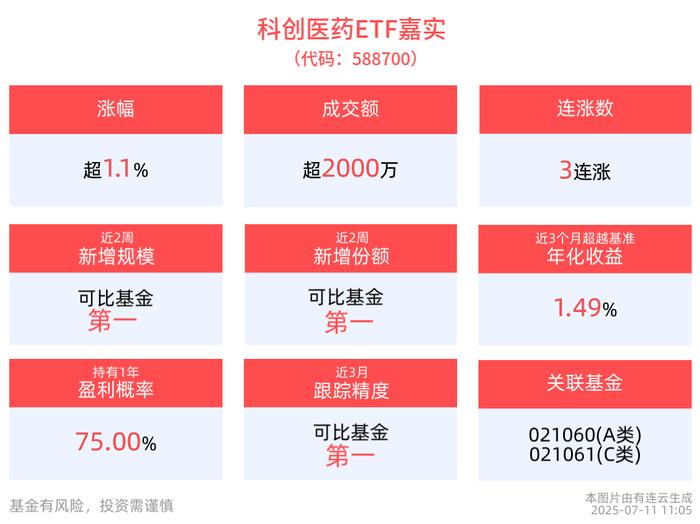
2024年我国累计在研创新药约占全球30%,科创医药ETF嘉实(588700)冲击3连涨
Xin Lang Cai Jing· 2025-07-11 03:47
Core Viewpoint - The Shanghai Stock Exchange Science and Technology Innovation Board Biopharmaceutical Index has shown strong performance, with significant increases in constituent stocks, indicating a positive trend in the biopharmaceutical sector [1][3]. Market Performance - As of July 11, 2025, the Biopharmaceutical Index rose by 1.23%, with notable gains from stocks such as Yifang Biotech (+10.31%), Shouyao Holdings (+8.34%), and Te Bao Biotech (+7.18%) [1]. - The Jiashi Science and Technology Medicine ETF (588700) also increased by 1.14%, marking its third consecutive rise [1]. Liquidity and Trading Volume - The Jiashi Science and Technology Medicine ETF recorded a turnover rate of 9.54% and a trading volume of 21.11 million yuan [3]. - Over the past month, the ETF has maintained an average daily trading volume of 33.32 million yuan, ranking first among comparable funds [3]. Fund Growth and Performance - In the last two weeks, the Jiashi Science and Technology Medicine ETF's scale increased by 17.56 million yuan, leading among comparable funds [3]. - The ETF's net value has risen by 37.70% over the past year, with a maximum single-month return of 23.29% since its inception [3]. Top Holdings - As of June 30, 2025, the top ten weighted stocks in the Biopharmaceutical Index accounted for 50.3% of the index, including companies like United Imaging Healthcare, BeiGene, and Huatai Medical [3][5]. Policy Support and Market Outlook - Recent policy documents have been released to support the high-quality development of innovative drugs, highlighting government backing for the sector [6]. - The number of innovative drugs in development in China has reached over 4,000, representing approximately 30% of the global total [5][6].


GPS,集体失速!
第一财经· 2025-07-10 15:35
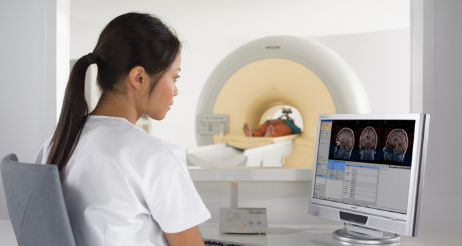
Core Viewpoint - The article discusses the challenges faced by major medical device companies, specifically Philips, GE Healthcare, and Siemens Healthineers (collectively referred to as GPS), in the Chinese market and globally due to trade wars and increasing competition. The companies are focusing on localization and adapting their strategies to navigate these challenges effectively [1][3][5]. Group 1: Market Challenges - In 2024, Philips experienced a double-digit revenue decline in the Chinese market, a trend mirrored by GE Healthcare and Siemens Healthineers [1][5]. - The trade war has significantly impacted GPS, with GE Healthcare estimating a loss of approximately $380 million due to tariffs by 2025, while Philips anticipates losses between €250 million to €300 million [4][5]. - The overall market environment is characterized by intensified competition, price pressures, and the need for strategic adaptation in response to new tariffs [5][14]. Group 2: Localization Efforts - Philips has achieved over 95% of its products being manufactured locally in China, positioning the country as a key supply chain and manufacturing hub [7][8]. - GE Healthcare emphasizes the importance of localizing every component, not just the equipment, to enhance supply chain resilience and quality [9][10]. - Both companies recognize the necessity of building local ecosystems and training talent to support their localization strategies [10][11]. Group 3: Competitive Landscape - Local Chinese companies like United Imaging, Neusoft, and Mindray are emerging as strong competitors, moving beyond imitation to innovation and price competition [14]. - The growing demand for healthcare solutions in China, driven by an aging population and increasing chronic diseases, presents ongoing market opportunities for GPS [14][15]. - The companies are adapting their strategies to focus on specific market segments rather than attempting to cover all areas, indicating a more targeted approach to competition [15].



靠IPO“输血”?“伽玛刀王者”大医集团转道港交所
Mei Ri Jing Ji Xin Wen· 2025-07-10 13:51
Group 1 - The core viewpoint of the article highlights that Xi'an Deyi Group, a leading company in the domestic gamma knife market, is attempting to go public on the Hong Kong Stock Exchange after a four-year hiatus, despite facing significant financial challenges and market skepticism regarding its growth potential [1][2][3] - Deyi Group holds a dominant market share of 70% in the Chinese gamma knife market, but its revenue for 2023 and 2024 is projected to be lower than four years ago, with net losses increasing significantly [1][4] - The global market for radiation surgery is expected to grow from $92.4 billion in 2024 to $138.9 billion by 2030, with the Chinese market anticipated to increase from 594 million yuan to 1.058 billion yuan during the same period [3] Group 2 - Deyi Group's core product, CybeRay, is the first gamma radiation therapy device approved by both the Chinese National Medical Products Administration and the U.S. FDA, but the company struggles to convert its technological advancements into commercial success [3][6] - The company faces challenges in expanding its market presence, as the gamma knife is considered a niche product compared to linear accelerators, which dominate the radiation therapy market [4][5] - Financially, Deyi Group's revenue has not only stagnated but has also declined from 2020 to 2023, with losses increasing from 1.77 million yuan in 2020 to 69.78 million yuan in 2023 [6][7] Group 3 - The company has shown signs of cash reserve strain, with cash decreasing from 334 million yuan at the end of 2023 to 126 million yuan by the end of 2024, and further down to less than 60 million yuan by February 2025 [7][8] - Several early investors have opted to cash out, indicating a lack of confidence in the company's future, especially after the failed attempt to list on the A-share market [8][9] - The company has signed agreements that may trigger buyback obligations for its controlling shareholders if the IPO fails, adding pressure to its financial situation [9][10]
全球贸易版图重构,GPS失灵了吗? | 海斌访谈
Di Yi Cai Jing· 2025-07-10 13:20
Core Insights - Philips is facing significant challenges in the Chinese market, with a double-digit revenue decline reported in 2024, coinciding with the appointment of a new president for the Greater China region [1][4] - The global medical device market, particularly for major players like GE Healthcare, Siemens Healthineers, and Philips (collectively referred to as GPS), is under pressure due to trade wars and tariffs, impacting their financial performance [3][6] - The need for localization and supply chain resilience is emphasized, with Philips aiming for over 95% of its products to be manufactured locally in China, despite some core components still being imported [8][9] Market Performance - In 2024, GE Healthcare's revenue in China declined by 15%, while Siemens Healthineers reported a 14% drop in the same period, indicating a broader trend of revenue challenges among GPS companies in the region [5][12] - Philips anticipates continued revenue decline in the Chinese market into 2025, projecting a mid-single-digit percentage drop [4][12] Strategic Responses - Philips is focusing on increasing localization and integrating into the Chinese ecosystem, with plans to enhance local production capabilities and reduce reliance on imports [8][10] - The company has appointed a new Chief Competitiveness Officer to drive innovation and improve product competitiveness in response to local market dynamics [12][14] Competitive Landscape - Local Chinese medical device companies are emerging as strong competitors, with firms like United Imaging, Neusoft Medical, and Mindray gaining traction and challenging established players [12][14] - The competitive environment is expected to intensify, with price pressures and increased competition being common challenges faced by all GPS companies [6][12] Future Outlook - The Chinese market is viewed as a significant growth opportunity due to its large population and increasing healthcare demands, particularly in chronic disease management [12][13] - Despite current challenges, the long-term outlook for the medical device industry in China remains positive, with companies encouraged to adapt and innovate to meet evolving market needs [13][14]
国寿股权投资向新 亮相央视专题采访
Sou Hu Cai Jing· 2025-07-10 12:10
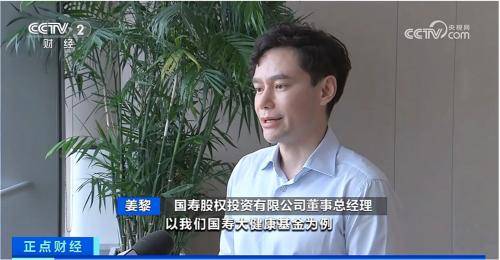
Core Viewpoint - The company has been recognized for its innovative practices in the new productive forces and silver economy sectors, showcasing its role in supporting the real economy and technological innovation through insurance capital [1][2]. Group 1: Investment Initiatives - The company has established the first domestic insurance private equity investment fund, the Guoshou Health Fund, with a total scale of 50 billion yuan, focusing on core areas such as biomedicine, artificial intelligence, and semiconductors [2]. - The Guoshou Health Fund has invested in over 60 projects, successfully assisting more than 20 companies to go public, with a total market value of nearly 1 trillion yuan for the listed companies [2]. - The company has launched a silver economy industry investment fund with a total scale of 10 billion yuan, aimed at supporting the national strategy to address population aging [2]. Group 2: Achievements and Recognition - The company and its managed funds have received numerous industry awards, including six consecutive appearances on the China Securities Journal's "Golden Bull List" and nine Golden Bull Awards in total [4]. - The company has been recognized for five consecutive years with the "Insurance Ark Award" by the Securities Times and has been listed among the top 30 venture capital and private equity investment institutions in the medical and health sector by the 21st Century Business Herald for four years [4]. - As of June 2025, the company has accumulated over 200 awards, reflecting its professional strength and market influence [4].