国星宇航

Search documents
什么时候泡沫破了,什么时候商业航天就成了
3 6 Ke· 2025-09-30 03:37
Core Viewpoint - The commercial space industry is recognized as a trillion-dollar market, with significant developments and investments, yet it still faces challenges in achieving profitability and stability [1][2][3]. Group 1: Industry Development - The commercial space sector has seen the emergence of companies aiming for initial public offerings, with notable advancements in satellite internet and launch capabilities [2][3]. - The "Starlink" project has accelerated the pace of satellite launches, with a record of 38 satellites launched in a short period [2]. - The industry has experienced a shift in focus from "hard technology" to more immediate trends like smart driving, indicating a potential lack of excitement in commercial space developments [3]. Group 2: Investment Landscape - Significant funding has been raised in the commercial space sector, with companies like Xinghe Dynamics securing a record 2.4 billion in Series D financing [2]. - The overall financing scale for the industry exceeded 20 billion last year, marking a new high and indicating growing investor interest [21]. - The presence of numerous unicorns in the commercial space sector suggests a maturing investment landscape [21]. Group 3: Technological Advancements - The industry is witnessing breakthroughs in rocket technology, with 12 successful launches by private companies in 2023 [22]. - The focus on reusable rocket technology is critical for reducing launch costs, with several companies making progress in this area [22][30]. - The satellite internet initiative is gaining momentum, with significant projects like "Starlink" and "G60" pushing for rapid deployment and operational capabilities [26]. Group 4: Market Dynamics - The commercial space sector is increasingly targeting large clients and government contracts, with companies eager to integrate into supply chains [18]. - There is a notable shift towards providing comprehensive industry solutions rather than merely selling satellite data, indicating a more integrated approach to market needs [18][19]. - The industry is expected to undergo consolidation, with weaker players likely to exit the market, reflecting a maturation process [46][47].


商业航天为什么都在拿县城的钱?
Hu Xiu· 2025-09-30 03:23
Core Viewpoint - The commercial space industry is recognized as a trillion-dollar market, with significant developments and investments, yet it still faces challenges in achieving profitability and operational stability [1][2]. Group 1: Industry Overview - The term "hard technology" has gained traction, with commercial space being a highly regarded sector due to its technological advancements and existing successful cases like SpaceX, which has raised a total of $9.8 billion since its inception [1]. - The commercial space sector has been included in various development plans, such as Chengdu's strategic initiatives to strengthen its aerospace industry [1]. - Despite initial excitement, attention has shifted towards other sectors like smart driving and embodied intelligence, indicating a potential stagnation in commercial space developments [2]. Group 2: Investment and Financing - Star River Dynamics, a leading private rocket company in China, recently completed a Series D financing round totaling 2.4 billion, setting a new record for private rocket financing in the country [2]. - The overall financing scale for the commercial space industry exceeded 20 billion last year, marking a significant increase in capital inflow [26]. Group 3: Market Dynamics - The commercial space industry is characterized by a cycle of optimism and disappointment, often referred to as "every year is the first year, yet no profits are made" [12][13]. - The emergence of the "Star Network" project has provided a clear target for companies in the industry, fostering a more defined market narrative [16]. Group 4: Technological Advancements - The industry has seen advancements in rocket technology, with 12 successful launches by private companies in 2023, and a focus on developing reusable rocket technology to significantly reduce launch costs [28][36]. - The satellite internet sector is rapidly advancing, with projects like "Star Network" and "G60" pushing for large-scale satellite deployments, which require a shift towards mass production and automation in satellite manufacturing [31]. Group 5: Future Outlook - The next two years are expected to witness significant developments in the commercial space sector, including the potential for the first successful recovery of an orbital rocket, which would mark a major technological breakthrough [54][55]. - The industry is anticipated to undergo a consolidation phase, where weaker companies may be eliminated, leading to a more mature market structure [59].
当太空邂逅AI 谁在打开中国版“星际之门”?
2 1 Shi Ji Jing Ji Bao Dao· 2025-09-28 02:16
Group 1 - The integration of space and AI is accelerating, showcasing significant commercial potential and impacting daily life [1][2] - The "Star Computing Plan" aims to establish a global "space-based computing network" using 2,800 satellites, breaking the limitations of ground-based computing [2][3] - The first batch of satellites launched in May has a total computing power of 5 petaflops (POPS), equivalent to a large data center in space, enabling real-time data processing and analysis [3][5] Group 2 - The application of space computing is expanding into various sectors, including urban planning, emergency response, and transportation, enhancing decision-making and operational efficiency [7][8] - The demand for AI computing power is surging, with projections indicating that China's AI computing market will reach $19 billion in 2024, growing by 86.9% [8][9] - The competition in AI infrastructure is intensifying, with China's "Star Computing Plan" and the U.S.'s "Star Gate" initiative representing two different approaches to building foundational capabilities for AI [9]
当太空邂逅AI,谁在打开中国版“星际之门”?
2 1 Shi Ji Jing Ji Bao Dao· 2025-09-28 02:07
Group 1 - The integration of space and AI is accelerating, showcasing significant commercial potential and impacting daily life [1][2] - The "Star Computing Plan" aims to establish a global "space-based computing network" using 2,800 satellites, breaking the limitations of ground-based computing [2][3] - The first batch of satellites launched in May has a total computing power of 5 petaflops (POPS), equivalent to a large data center in space, enabling real-time data processing and analysis [3] Group 2 - The "Star Computing Plan" has already attracted its first commercial user, demonstrating rapid commercialization in the transportation sector [5] - The application of space computing extends beyond transportation to urban planning, emergency response, and other fields, indicating a broad market potential [7] - The demand for AI computing power is expected to grow significantly, with projections indicating a market size of $19 billion in 2024 for AI computing in China [8] Group 3 - The competition in AI infrastructure is intensifying, with the U.S. "Star Gate" project and China's "Star Computing Plan" representing two different approaches to building AI capabilities [9] - The "Star Computing Plan" offers a differentiated strategy by leveraging space-based resources to overcome current computing limitations, potentially allowing for a competitive edge in the AI sector [9]
中国团队重新定义“星际之门”!全球首个太空计算星座已实现常态化商用
量子位· 2025-09-25 11:42
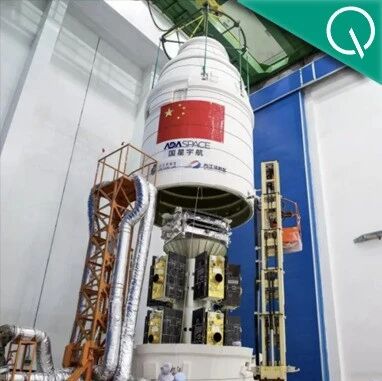
Core Insights - The article discusses the successful deployment of traffic recognition models on satellites, marking a significant advancement in the use of space-based AI for urban traffic analysis [4][15][22] - This achievement indicates the transition of space computing from experimental to operational, establishing a new paradigm for AI deployment in the industry [15][23] Group 1: Space-Based AI Capabilities - The complete process of image collection, model inference, and structured result transmission was executed in orbit, demonstrating the feasibility of on-satellite computation [2][10] - The task was supported by the space computing constellation launched by Guoxing Aerospace, which is now in regular commercial operation [5][6] - The system can support models with billions of parameters and has full-process capabilities including image acquisition, model inference, task scheduling, and communication [12][13] Group 2: Commercialization and Operationalization - The successful execution of the task by the team from Jiadu Technology signifies the first commercial use of the global space computing constellation [9][15] - Guoxing Aerospace has become the first company globally to provide regular satellite-level space computing services, marking a milestone in the AI field [15][22] - The "Star Computing" plan aims to establish a green, low-carbon space computing infrastructure with a total computing power exceeding 100,000 PetaFLOPS [12] Group 3: Implications for AI Deployment - The ability to run AI models in orbit allows for a new dimension in data processing, reducing response times significantly by processing data at the source [21][22] - This shift not only changes the physical location of computation but also adjusts the system architecture, enabling faster decision-making for industries requiring rapid assessments [20][22] - The initiative redefines space as an integral part of intelligent systems, transforming it from merely a data source to an active processing environment [19][23]

蓉企赴港上市潮,开启“双向奔赴”加速跑
Sou Hu Cai Jing· 2025-09-16 09:40
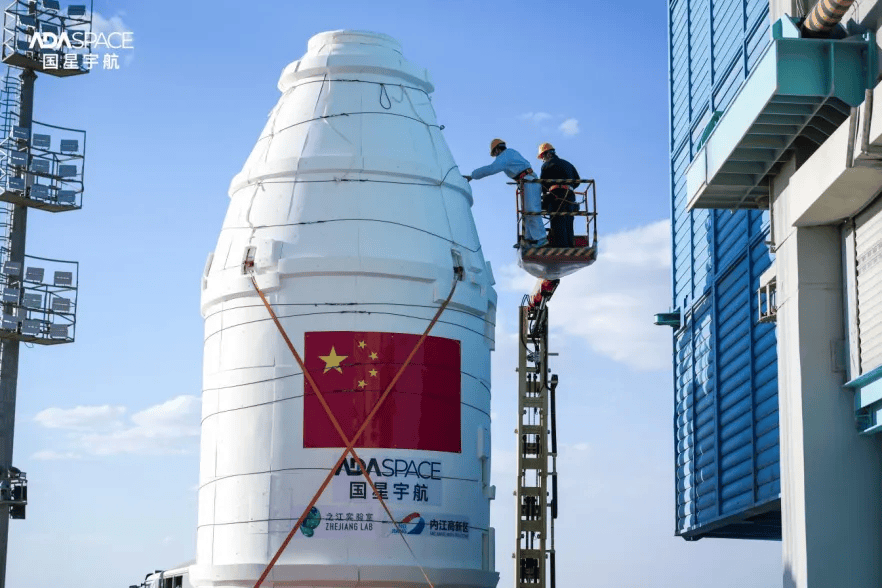
Group 1 - Chengdu is actively promoting "Rongpin Going Global" to attract foreign investment and enhance international market engagement [1][10] - The city is hosting various foreign enterprise roundtable meetings to facilitate communication and provide tailored services for companies [1][6] - Several Chengdu companies, including Guoxing Aerospace and Jimi Technology, are planning or advancing their H-share listings in Hong Kong, indicating a trend towards international capital market engagement [2][3] Group 2 - Guoxing Aerospace focuses on commercial satellite systems and aims to enhance the Chengdu commercial aerospace industry through its potential Hong Kong listing [3][8] - The Hong Kong capital market is characterized by high internationalization, diverse investor structures, and efficient refinancing processes, making it attractive for Chengdu enterprises [5][6] - Chengdu companies are increasingly pursuing dual capital platforms (A+H) to optimize their capital structures and support long-term growth [2][6] Group 3 - Nearly 30 Chengdu enterprises have successfully listed on the Hong Kong Stock Exchange, spanning sectors like electronics, food and beverage, and biomedicine [8][10] - Companies like Kangnuoya have rapidly advanced from small-scale operations to public listings, utilizing funds for product development and clinical trials [8] - The collaboration between Chengdu and Hong Kong is fostering deeper integration of capital, industry, and innovation, enhancing mutual benefits [10]
商业航天,又火了
投中网· 2025-09-12 06:49
Core Viewpoint - The commercial aerospace industry in China is on the verge of explosive growth, with significant increases in market size and financing expected in the coming years [5][9]. Group 1: Market Growth and Financing - The Chinese commercial aerospace market is projected to reach a scale of 2.3 trillion yuan in 2024 and is expected to exceed 2.5-2.8 trillion yuan in 2025, with an average annual growth rate exceeding 20% [5]. - In terms of financing, the total amount for 2024 is expected to surpass 20 billion yuan, setting a historical record. By mid-August 2025, over 120 financing events have been disclosed, amounting to over 5.2 billion yuan, with an annual financing total projected to reach 25-28 billion yuan, representing a year-on-year growth of 23%-38% [5][9]. Group 2: Key Financing Areas and Support - The most popular financing sectors within commercial aerospace include satellite applications, rocket manufacturing, and satellite manufacturing, with 138 financing events recorded in 2024, totaling 20.239 billion yuan [9][10]. - Local state-owned capital and market-oriented capital have played crucial roles in this growth, with various provinces establishing specialized funds to support the commercial aerospace sector [10]. Group 3: Policy Support and Market Entry - The China Securities Regulatory Commission has introduced policies to support the listing of unprofitable commercial aerospace companies on the Sci-Tech Innovation Board, providing more financing channels for long-cycle industries [11]. - Notable companies like Blue Arrow Aerospace and others are already in the process of preparing for public listings [11]. Group 4: Cost Reduction and Technological Development - Reducing the cost of rocket launches is a primary focus for entrepreneurs in the commercial aerospace sector, with companies like Blue Arrow Aerospace developing reusable rockets to lower costs significantly [12][15]. - Blue Arrow's Zhuque-3 rocket utilizes methane as fuel, reducing costs to one-third of aviation kerosene, and employs stainless steel for its body, cutting material costs by 80% [15]. Group 5: Satellite Internet Development - The ultimate goal of developing commercial aerospace is to establish satellite internet systems, with China's "Starlink plan" aiming to deploy a large number of low-Earth orbit satellites to create a global high-speed internet network [19][21]. - China has applied to launch 51,300 satellites under the International Telecommunication Union's "first-come, first-served" rule, with several satellite constellations planned to provide global broadband services [21][22]. Group 6: Emerging Companies and Ecosystem Expansion - The number of commercial aerospace companies in China has increased from fewer than 100 in 2015 to over 500 by 2025, indicating a significant expansion of the industry ecosystem [17]. - Companies like Galaxy Space are innovating in satellite manufacturing, aiming to reduce costs significantly through mass production techniques [23].

开源证券:空天算力迎来布局良机 太空AI前景光明
Zhi Tong Cai Jing· 2025-09-12 03:13
Core Viewpoint - The report from Kaiyuan Securities highlights the potential of space computing to enable on-orbit data processing, improving the timeliness of space data handling and promoting the application of artificial intelligence in space [1][2]. Group 1: Event Overview - Wang Jian, director of Zhijiang Laboratory, emphasized the importance of space computing during a keynote speech at the 2025 Inclusion Bund Conference on September 11, where he argued that artificial intelligence should not be absent in space [1]. - The "Three-body Computing Constellation," consisting of 12 satellites launched on May 14, has successfully implemented the first complete interconnectivity of space satellites with an 8B AI model [1]. Group 2: Industry Trends - The traditional model of satellite data processing, which relies on sending data back to Earth for analysis, limits the efficiency of satellite data usage, with less than 10% of effective satellite data being transmitted back due to bandwidth and resource constraints [2]. - The newly launched satellites are equipped with onboard intelligent computing systems and inter-satellite communication systems, enabling real-time data processing in space and addressing the efficiency bottlenecks of traditional satellite data processing [2][3]. - The satellites have a maximum single-satellite computing power of 744 TOPS and can achieve inter-satellite communication speeds of up to 100 Gbps, with a combined computing capability of 5 POPS and a storage capacity of 30 TB when interconnected [3]. - The goal of the "Three-body Computing Constellation" is to establish a large-scale space-based intelligent computing infrastructure, ultimately reaching a total computing power of 1 EOPS, which is expected to surpass most single data centers on Earth [3].


行业点评报告:空天算力迎来布局良机
KAIYUAN SECURITIES· 2025-09-12 02:33
Investment Rating - The industry investment rating is "Positive" (maintained) [1] Core Viewpoints - The report emphasizes the potential of space-based computing, highlighting the launch of the "Three-Body Computing Constellation" which includes 12 satellites capable of in-orbit data processing, thus overcoming traditional data transmission limitations [4][5] - The satellites are equipped with advanced computing capabilities, achieving a maximum single-satellite computing power of 744 TOPS and a total constellation computing power of 5 POPS, with plans for over 50 satellites by 2025 [5] - The report suggests that the integration of AI in space will significantly enhance data processing efficiency and open new avenues for applications in astronomy and other fields [4][5] Summary by Sections Industry Overview - The report discusses the ongoing investment wave in AI computing, particularly in the context of space applications, driven by advancements in satellite technology [3] Technological Advancements - The "Three-Body Computing Constellation" aims to create a comprehensive space-based intelligent computing infrastructure, with a target total computing power of 1 EOPS, which is expected to surpass most ground-based data centers [5] Investment Opportunities - The report recommends investment opportunities in space computing, identifying key beneficiaries such as Putian Technology, China Science and Technology Star, and Aerospace Hongtu [6]
商业航天爆发前夜:拿热钱,降成本,组星链
Tai Mei Ti A P P· 2025-09-03 03:12
Group 1 - The commercial aerospace market in China is expected to reach a scale of 2.3 trillion yuan in 2024 and is projected to exceed 2.5-2.8 trillion yuan in 2025, with an annual compound growth rate of over 20% [2] - In terms of financing, the total amount of financing in China's commercial aerospace sector is expected to reach 250-280 billion yuan in 2025, representing a year-on-year growth of 23%-38% [2] - A number of new commercial rocket models, including Zhuque-3, Tianlong-3, and others, are set to make their debut in 2025 [2] Group 2 - In 2024, there were 138 financing events in the commercial aerospace sector, with disclosed financing amounts reaching 20.239 billion yuan, marking a historical high [4] - The most popular financing areas include satellite applications, rocket manufacturing, and satellite manufacturing, with significant amounts raised in satellite operations and rocket manufacturing [4] - Local state-owned and market-oriented capital have played a crucial role in supporting the commercial aerospace sector, with various funds established to invest in this area [5] Group 3 - Over the past three years, more than 20 provinces and cities have released over 40 policy plans to support key technology innovation and industrialization in commercial aerospace [7] - Notable venture capital firms, including Sequoia China and Hillhouse Capital, have invested in the commercial aerospace sector, leading to the emergence of new unicorn companies [7] - The China Securities Regulatory Commission has provided policy support for commercial aerospace companies, allowing unprofitable firms to list on the Science and Technology Innovation Board [8] Group 4 - Reducing costs, particularly the cost per rocket launch, remains a top priority for entrepreneurs in the commercial aerospace sector [9] - SpaceX has set a successful precedent by significantly lowering launch costs through the recovery of boosters and fairings, which account for about 70% of rocket costs [10] - Domestic companies are following SpaceX's lead by focusing on the development of reusable rockets and finding ways to reduce costs in key areas [10] Group 5 - Blue Arrow Aerospace's Zhuque-3 rocket uses methane as fuel, reducing costs to one-third of aviation kerosene, and has achieved significant cost reductions in materials and maintenance [12] - The company aims to increase the reuse of Zhuque-3 to over 20 times and reduce launch costs to 20,000 yuan per kilogram [12] - The commercial aerospace ecosystem in China is expanding, with the number of companies growing from less than 100 in 2015 to over 500 by 2025 [13] Group 6 - The ultimate goal of developing commercial aerospace is to establish a satellite internet system, akin to SpaceX's Starlink [14] - China's "Starlink plan" aims to deploy a large number of low Earth orbit satellites to create a global high-speed internet communication network [17] - Various satellite constellations are being developed, including the Qianfan constellation and GW constellation, with plans to launch thousands of satellites [18][20]