新城控股

Search documents
新城控股股价涨5.11%,国海富兰克林基金旗下1只基金重仓,持有566.69万股浮盈赚取470.35万元
Xin Lang Cai Jing· 2026-01-29 02:25
1月29日,新城控股涨5.11%,截至发稿,报17.06元/股,成交1.18亿元,换手率0.31%,总市值384.81亿 元。 资料显示,新城控股集团股份有限公司位于上海市普陀区中江路388弄6号新城控股大厦A座,成立日期 1996年6月30日,上市日期2015年12月4日,公司主营业务涉及房地产开发与销售。主营业务收入构成 为:房地产开发销售68.63%,物业出租及管理29.06%,其他(补充)2.31%。 从基金十大重仓股角度 数据显示,国海富兰克林基金旗下1只基金重仓新城控股。国富中小盘股票A(450009)四季度减持 246.18万股,持有股数566.69万股,占基金净值比例为3.46%,位居第九大重仓股。根据测算,今日浮 盈赚取约470.35万元。 国富中小盘股票A(450009)成立日期2010年11月23日,最新规模21.88亿。今年以来收益5.71%,同类 排名2917/5551;近一年收益18.19%,同类排名3514/4285;成立以来收益412.56%。 国富中小盘股票A(450009)基金经理为赵晓东。 截至发稿,赵晓东累计任职时间16年153天,现任基金资产总规模150.89亿元,任 ...

房地产板块震荡反弹,大悦城、三湘印象双双涨停
Feng Huang Wang· 2026-01-29 02:02
Core Viewpoint - The real estate sector experienced a volatile rebound on January 29, with several companies, including Dayue City and Sanxiang Impression, hitting the daily limit for stock price increases. Other companies such as New Town Holdings, Binjiang Group, Jingtou Development, and Huaxia Happiness also saw significant gains. [1] Group 1 - The regulatory requirement for companies to report the "three red lines" indicators on a monthly basis has been lifted for many firms, indicating a potential easing of regulatory pressure in the real estate sector. [1] - Some distressed real estate companies are still required to regularly report their asset-liability ratios and other financial indicators to specialized teams in their respective headquarters cities. [1]


房地产板块震荡反弹 大悦城、三湘印象双双涨停
Xin Lang Cai Jing· 2026-01-29 01:57
Group 1 - The real estate sector is experiencing a volatile rebound, with major companies like Dayue City and Sanxiang Impression hitting the daily limit up [1] - Other companies such as New Town Holdings, Binjiang Group, Jingtou Development, and Huaxia Happiness are also seeing significant gains [1]
2026年1月房地产市场跟踪:岁末年初政策组合拳,多维度施策稳定房地产市场预期
Zhong Cheng Xin Guo Ji· 2026-01-28 02:53
房地产行业 市场跟踪 10 月房地产市场量价承压,"十五五"指 引高质量发展路径——2025 年 11 月房地产 市场跟踪 作者: 中诚信国际 企业评级部 侯一甲 027-87339288 yjhou@ccxi.com.cn 杜志英 027-87339288 zhydu@ccxi.com.cn 新房交易规模仍在下探,"好房子"正成 为支撑市场的主力军——2025 年 10 月房地 产市场跟踪 中央纲领指引高质量发展,地方优化为 "金九银十"蓄力——2025年9月房地产市 场跟踪 其他联络人 贺文俊 027-87339288 wjhe @ccxi.com.cn 行业下行压力加大,中央经济工作会议定 调"着力稳定房地产市场" ——2025 年 12 月房地产市场跟踪 《住房租赁条例》正式出台,完善"租购 并举"制度保障——2025年8月房地产市场 跟踪 "十年再启新章",从增量扩张到存量提 质,行业加快构建发展新模式——2025年 7 月房地产市场跟踪 专项债土地收储加速,行业延续止跌回稳 态势——2025年 6月房地产市场跟踪 "降准降息、公积金贷款利率下调"三箭 齐发,金融政策协调巩固行业企稳态势— —202 ...
万达商管集团更换CEO 继任者许粉是王健林嫡系?
Sou Hu Cai Jing· 2026-01-28 02:01
Group 1 - The core point of the article is the appointment of Xu Fen as the CEO of Zhuhai Wanda Commercial Management Group, indicating that Wang Jianlin still maintains control over hundreds of Wanda Plazas nationwide [1][3] - Xu Fen has been with the Wanda system since 2006, starting from a grassroots financial position and has held various roles, including financial manager and group vice president, showcasing her extensive experience within the company [3] - The appointment of Xu Fen comes after Zhuhai Wanda introduced strategic investments from firms like TPG, leading to speculation about a potential reshuffle in the management team, but her promotion reflects investor confidence in Wanda [3] Group 2 - The commercial management sector is becoming increasingly important for real estate developers as residential sales decline, with companies focusing on leasing commercial spaces for rental income [3] - In 2025, New City Holdings' Wuyue Commercial Management reported a total operating revenue of 14.09 billion yuan, a 10% year-on-year increase, indicating positive trends in key performance metrics [3] - Currently, Zhuhai Wanda manages over 500 Wanda Plazas and plans to open 20 new projects in 2025, raising questions about the profitability of these locations [3]

房地产行业2025年12月月报:12月新房成交同比降幅收窄,二手房降幅扩大,全年新房成交同比降幅收窄,二手房同比增速由正转负-20260127
Bank of China Securities· 2026-01-27 08:01
Investment Rating - The report rates the real estate industry as "Outperform" compared to the market [2] Core Insights - New home sales in December showed a month-on-month increase of 33.6%, with a year-on-year decline of 32.1%, indicating a narrowing of the decline compared to previous months [5] - The second-hand home sales saw a year-on-year decline of 30.7% in December, with a month-on-month increase of 12.7%, reflecting a worsening trend in the second-hand market [5] - The overall inventory of new homes decreased by 0.1% month-on-month and 8.3% year-on-year, with an average de-stocking period of 17.8 months [5] Summary by Sections New Home Sales - December new home sales area increased by 33.6% month-on-month, but decreased by 32.1% year-on-year, with the decline narrowing by 6.6 percentage points [5] - For the entire year of 2025, new home sales decreased by 14%, with a year-on-year decline of 13.7% across 40 cities [5] - First-tier cities experienced a year-on-year decline of 15.8%, while second-tier and third-fourth tier cities saw declines of 12.6% and 13.6% respectively [5] Second-Hand Home Sales - December saw a year-on-year decline in second-hand home sales of 30.7%, with a month-on-month increase of 12.7% [5] - The overall second-hand home sales for 2025 decreased by 4%, with first-tier cities still showing positive growth [5] Inventory and De-stocking - The inventory of new homes decreased by 0.1% month-on-month and 8.3% year-on-year, with a de-stocking period of 17.8 months [5] - Major cities like Shanghai and Hangzhou have de-stocking periods within 12 months [5] Land Market - The land market in December showed a month-on-month increase of 126.7%, but a year-on-year decline of 8.9% [5] - The average land price was 1392 RMB per square meter, with a year-on-year decrease of 10.3% [5] Real Estate Companies - The top 100 real estate companies saw a year-on-year sales decline of 20% in 2025, with December sales showing a narrowing decline of 26.7% [5] - The land acquisition amount for December decreased by 58.1% year-on-year, while the total acquisition amount for 2025 increased by 2.6% [5] Financing - The financing scale for the real estate industry decreased in December, but showed a year-on-year increase for the entire year [5] - The total issuance of domestic and foreign bonds and ABS in 2025 was 596.7 billion RMB, a 6% increase year-on-year [5] Policy - The central government emphasized stabilizing the real estate market and reducing the value-added tax on personal home sales to 3% [5] - Local policies have been adjusted to optimize purchase restrictions and loan policies in cities like Beijing [5] Sector Performance - The real estate sector underperformed compared to the Shanghai and Shenzhen 300 index in December, with an absolute return of -4.0% [5] Investment Recommendations - The report suggests focusing on companies with stable fundamentals in core cities, smaller firms showing significant breakthroughs, and commercial real estate companies exploring new consumption scenarios [5]




2026年全国计划新开430个购物中心,上海继续领跑
3 6 Ke· 2026-01-27 02:58
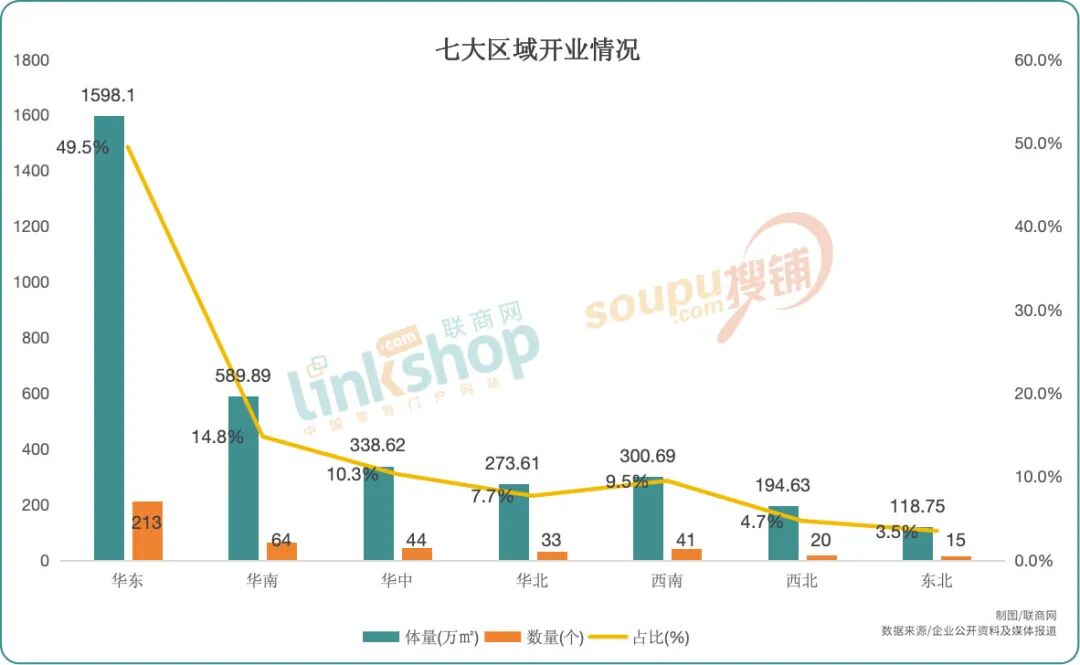
2026年,全国商业地产市场即将迎来一波"上新潮"! 城市供应方面: 据联商网统计,2026年全国拟开业的商业项目共430个(不含专业市场、酒店及写字楼,商业建筑面积≥2万㎡),新增商业建筑面积3414.29万㎡,平均单体 建筑面积约7.94万㎡。 这其中,全新开业的商业项目达361个,其余69个为存量升级物业,或通过更换运营商、重新改造招商,或经内部升级后全新亮相。 01 华东区域领跑开业数量 全国七大区域均有新商业项目新开,且华东(213个)继续占比"半壁江山",华南(64个)、华中(44个)、西南(41个)等"商业活力强区"表现不俗,紧随华东。其 他华北、西北和东北分别为33个、20个和15个。 在城市开业数量方面,TOP10均为经济发达、常住人口基数大、消费潜力充足的一线和新一线城市,彰显了商业发达程度与城市发展水平的紧密关联。其 中,杭州、南京、广州、苏州、成都开业数量均超10个。 02 企业贡献数量榜首易主? 开发及运营企业的开业量上,2026年或首次迎来"新王"。 2026年拟开商业项目中,华润万象生活、珠海万达商管、爱琴海集团、京东集团、龙湖商业、新城控股集团、宝龙商业、招商商管、正和城邦、德 ...
商业地产周报|消费REITs成绩单刷屏;新城/龙湖/旭辉部署2026战略
Sou Hu Cai Jing· 2026-01-26 20:06
Group 1 - Nanjing Shangyue Tiandi officially opened on January 24, 2026, as the first commercial project by CITIC Pacific Properties in Nanjing, featuring a design concept of "four-layer life cube" and over 40% of area dedicated to first-store brands [7] - Nanjing Jiangbei Impression Hui reopened on January 24, 2026, after a 33 million yuan renovation, transforming it into a modern "park-style shopping mall" with upgraded hardware and new first-store brands [5] - Jinan Haina City Bailian Outlet Phase II officially opened on January 23, 2026, doubling foot traffic and sales since its soft opening in December 2025, expanding to 150,000 square meters with nearly 300 brands [9] Group 2 - Shenzhen Grand China Malls in Luohu District opened on January 18, 2026, covering approximately 38,000 square meters and featuring various retail and dining options [11][12] - Handan Dongyuehui City, the first "first-store economy" project in Handan, officially opened on January 16, 2026, with a total construction area of about 80,000 square meters and 110 brands [15] - Wuhan Ganlu Mountain Jiayou City Outlet is set to open on February 11, 2026, as the first self-operated outlet in Wuhan, focusing on luxury and outdoor brands [17] Group 3 - Shenzhen M80 project, developed by a Tencent subsidiary, is expected to be completed by the end of 2026, with a total construction area of 228,000 square meters, potentially collaborating with the cultural commercial project "Tianmu Li" [20][21] - Hangzhou New World City Art Center is expected to gradually open in 2027, with a total investment of 23 billion yuan and a design that integrates local cultural elements [24] - Shanghai Jiatuo Square GT SQUARE held a brand signing ceremony, with a total area of 190,000 square meters and plans to officially operate in the second half of 2026 [26] Group 4 - Guangzhou's Ma Chang land officially listed for sale on January 23, 2026, with a starting price of 18.6 billion yuan, covering an area of approximately 174,000 square meters [36][37] - New City Holdings held its 2026 annual meeting, reporting over 38,000 housing deliveries in 2025 and a commercial operation revenue of 14.09 billion yuan, with plans for further expansion [38] - Longfor Commercial announced its "Tianjie 2026" strategy, focusing on both existing and new projects to enhance urban commercial experiences [39] Group 5 - BAILIAN Group aims to expand its outlet business to 15 stores by 2030, with a focus on quality development and new project planning in Zhengzhou and Xi'an [41] - Boyu Capital acquired a 75% stake in Beijing Badaling Outlet, indicating a strategic move in the retail sector [42] - Maoye Commercial plans to issue public REITs backed by its Chengdu Maoye Center, aiming for strategic asset restructuring [43]

2026年债券信用风险展望
Si Lu Hai Yang· 2026-01-26 11:35
Group 1: Report Industry Investment Rating - No information provided in the given content. Group 2: Core Viewpoints of the Report - In 2026, focus on provinces with large maturity scales of industrial bonds, such as Inner Mongolia, Heilongjiang, and Jilin, and avoid entities with industry downturns, weakened profitability, and financing channels, or those with non - bond debt risks [2]. - The broad private real estate developers still face challenges, and other industries have a low probability of concentrated risks, but entities with weak competitiveness, significant profit decline, cash - flow pressure, and concentrated debt maturities should be focused on [2]. - For convertible bonds, weak - quality entities with low - priced underlying stocks and high conversion premiums may face difficulties in exiting through conversion, and potential losses should be watched out for [2]. Group 3: Summary by Relevant Catalogs 1. Overall Bond Market Situation - As of January 6, 2026, the national credit bond balance was 36.18 trillion yuan, with urban investment bonds at 17.73 trillion yuan (49.00%) and industrial bonds at 18.45 trillion yuan (51.00%, down from 54.57% last year) [5]. - Beijing has the largest bond balance, followed by Jiangsu, Guangdong, Zhejiang, and Shandong. Inner Mongolia has the highest short - term bond maturity ratio at 81.09%, followed by Heilongjiang at 40.39% [5]. 2. Urban Investment Bonds - Since 2023, with a series of policies and measures, the debt pressure of urban investment platforms has been relieved, the issuance cost and credit spread of urban investment bonds have decreased, the financing cost is generally below 3%, and the debt term has been significantly extended [10]. 3. Industrial Bonds Provincial - level Analysis - Excluding urban investment bonds, Beijing has the largest industrial bond scale at over 7 trillion yuan, mainly central - enterprise bonds. Inner Mongolia has the highest short - term industrial bond maturity ratio at 82.64%, followed by Tibet, Heilongjiang, Tianjin, and Jilin [11]. - Inner Mongolia, Heilongjiang, and Jilin have a bond issuance coverage ratio of less than 1 for the next - year's maturity scale, indicating weak refinancing ability [14]. Industry - level Analysis - In 2025, default industries included 12 sectors such as automobile services and real estate development. The industrial holding and power industries have the largest bond balances, over 2 trillion yuan each [15]. - The paper - making, automobile services, medical devices, medical services, and publishing media industries have a short - term debt ratio of over 50%, with poor debt term structures [15]. - Industries with large short - term debt repayment pressures include rail transit, packaging, heating, furniture and home appliances, textiles, automobile services, and information technology [15]. 4. Real Estate Industry - In 2025, the default rate of real estate development entities remained high, with Vanke and Zhengxinglong defaulting. As of January 6, 2026, the real estate development enterprise bond balance was 11,528.76 billion yuan, mainly held by local and central state - owned enterprises [18]. - The short - term bond maturity pressure of public, Sino - foreign joint - venture, and private enterprises is over 40%. The broad private enterprises still face pressure, with an issuance amount of only 234.38 billion yuan in the past year, 76.93% of the next - year's maturity amount [20]. - In 2026, private real estate enterprises to focus on are Longfor and Yida Development [23]. 5. Loss - making Industrial Entities - Large - loss entities (losses over 10 billion yuan in 2024 and still in losses in the first three quarters of 2025) are mainly in the real estate development industry, including state - owned enterprises such as Overseas Chinese Town Group and financial street - related companies, as well as steel giant Ansteel Group [24]. - Entities with losses between 5 and 10 billion yuan involve industries such as electrical equipment, chemical, steel, and airport [26]. 6. ABS Market - From 2023 - 2025, the default rate of CSRC - regulated ABS was 1.10%, 0.77%, and 0.88% respectively. As of January 6, 2026, the ABS balance was 25,021.96 billion yuan, with a one - year maturity amount of 3,541.59 billion yuan (14.15%). The 2025 issuance amount covered the next - year's maturity amount 3.97 times, with good continuation [32]. 7. Convertible Bond Market - Since 2024, the convertible bond repayment risk has increased. As of January 6, 2026, the convertible bond balance was 5553.51 billion yuan, a 22.89% year - on - year decrease. The broad private enterprises accounted for 64.73%, with a relatively large proportion [33]. - Entities such as Anhui Honglu Steel Structure, Shenzhen Huayang International Engineering Design, and Shanghai Kehua Bio - Engineering face large convertible bond repayment pressures, but the conversion mechanism can reduce credit risks to some extent [35]. - Entities such as Dongfang Fashion Driving School, Hainan Pulili Pharmaceutical, and Jiangsu Fumiao Technology, although not facing immediate repayment pressures, have negative information such as business fluctuations, financial fraud, and equity freezes, and their dynamic changes should be continuously monitored [36].



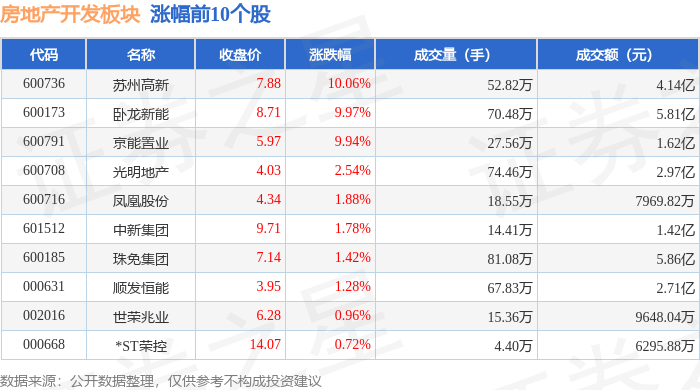
房地产开发板块1月26日跌2.03%,华联控股领跌,主力资金净流出18.37亿元
Zheng Xing Xing Ye Ri Bao· 2026-01-26 09:34
Market Overview - The real estate development sector experienced a decline of 2.03% on January 26, with Hualian Holdings leading the drop [1] - The Shanghai Composite Index closed at 4132.61, down 0.09%, while the Shenzhen Component Index closed at 14316.64, down 0.85% [1] Stock Performance - Notable gainers included Suzhou Gaoxin, which rose by 10.06% to a closing price of 7.88, and Wolong New Energy, which increased by 9.97% to 8.71 [1] - Hualian Holdings saw a significant drop of 10.01%, closing at 6.29, with a trading volume of 156.48 million shares [2] Trading Volume and Capital Flow - The real estate development sector saw a net outflow of 1.837 billion yuan from institutional investors, while retail investors contributed a net inflow of 1.08 billion yuan [2] - The trading volume for Suzhou Gaoxin was 528,200 shares, with a transaction value of 414 million yuan [1] Individual Stock Capital Flow - Suzhou Gaoxin had a net inflow of 1.18 billion yuan from institutional investors, representing 28.48% of its total trading volume [3] - Hualian Holdings faced a net outflow of 614.58 million yuan from retail investors, indicating a negative sentiment towards the stock [3]