Arm

Search documents
一笔不可思议的投资:英伟达50亿美元入股英特尔
2 1 Shi Ji Jing Ji Bao Dao· 2025-09-19 23:07
Core Insights - Nvidia and Intel have formed a historic alliance to develop AI infrastructure and personal computing products, with Nvidia investing $5 billion in Intel at a price of $23.28 per share [1][4][5] - The collaboration includes three main areas: integrating Nvidia's NVLink technology with Intel's CPUs, customizing x86 architecture CPUs for Nvidia's AI platform, and launching a new x86 SoC with integrated Nvidia RTX GPU for the PC consumer market [1][4][8] - Following the announcement, Intel's stock surged nearly 30% at market open, closing up 22.77% to $30.57 per share, with a market capitalization reaching $142.7 billion and a year-to-date increase exceeding 50% [1][4] Investment and Market Dynamics - Nvidia's $5 billion investment serves as a crucial financial boost for Intel, which has been facing strategic transformation and financial pressures, particularly in the server CPU market where it has lost market share to AMD [4][5] - The partnership allows Intel to enter the AI market more effectively, as Nvidia's GPUs are essential in AI server markets, providing Intel with a significant opportunity to integrate its CPUs into Nvidia's systems [4][5][8] - The collaboration is expected to reshape the AI computing landscape, as the demand for AI training and inference hardware increases, necessitating deeper cooperation between GPUs and CPUs [7][10] Competitive Landscape - The alliance creates a new competitive dynamic in the semiconductor industry, particularly affecting rivals like AMD and ARM, as the combined strength of Nvidia and Intel may intensify competition in the data center and AI markets [9][10] - Nvidia's CEO Jensen Huang emphasized that the partnership does not diminish their commitment to ARM architecture, indicating that both companies will continue to pursue their respective product lines while collaborating [9][10] - The collaboration is seen as a strategic move to enhance Nvidia's penetration into the PC market while providing Intel with a pathway to leverage Nvidia's AI capabilities [7][8]


How Much Should Investors Read Into the Nvidia-Intel Deal? Here's What Analysts Think
Investopedia· 2025-09-19 21:20
Core Viewpoint - Nvidia's $5 billion investment in Intel has raised concerns among investors about increased competition for Arm and Advanced Micro Devices, although initial fears seem to have diminished [1] Group 1 - Nvidia's investment is perceived as a strategic move that could intensify competition in the semiconductor industry [1] - The reaction from investors was immediate and strong, indicating the significance of Nvidia's decision [1] - Over time, the initial worries regarding competition have subsided, suggesting a potential stabilization in market sentiment [1]
大芯片,一夜生变
3 6 Ke· 2025-09-19 02:15
Core Insights - NVIDIA is investing $5 billion in Intel at a price of $23.28 per share, aiming to develop custom data center and PC products together to enhance applications for large-scale, enterprise, and consumer markets [1] - The collaboration will leverage NVIDIA's NVLink technology to integrate NVIDIA's AI and accelerated computing capabilities with Intel's leading CPU technology [1][4] - Intel will design x86 CPUs with integrated NVIDIA RTX GPU chipsets for the PC market, while NVIDIA will incorporate these CPUs into its AI infrastructure [1][4] Group 1 - NVIDIA's partnership with Intel allows it to expand into the integrated graphics market, previously dominated by Intel and AMD [4] - Intel's Xeon processors will play a larger role in NVIDIA's AI infrastructure and data center products, enhancing NVIDIA's offerings [4][6] - The integration of NVLink into Intel's CPU designs will enable NVIDIA to provide systems with both its own CPUs and Intel's Xeon processors [4][6] Group 2 - NVIDIA's NVLink technology offers significantly higher bandwidth compared to PCIe, with a maximum bidirectional bandwidth of 1.8 TB/s per GPU [7] - The collaboration allows for the expansion of GPU nodes from 8 to 72 in rack-scale architectures, enhancing performance capabilities [7] - Intel's adoption of NVLink marks a shift from its previous reliance on PCIe, indicating a strategic change in its approach to data center processors [6][8] Group 3 - NVIDIA's CEO Jensen Huang emphasized the potential for creating scalable AI supercomputers by integrating Intel's x86 CPUs into the NVLink ecosystem [9] - The partnership is expected to provide Intel with a competitive edge in the data center market against AMD [15][17] - The collaboration opens up a previously underserved market segment for NVIDIA, allowing it to integrate its GPU capabilities into Intel's chipsets [17][18] Group 4 - The deal raises questions about NVIDIA's future relationship with ARM and TSMC, as it shifts focus towards Intel for certain products [10][12] - Despite concerns, NVIDIA remains committed to its ARM roadmap and continues to collaborate with ARM-based SoC designers [11] - AMD is positioned as a potential loser in this scenario, as NVIDIA and Intel's partnership could disrupt the current competitive landscape [14][15]
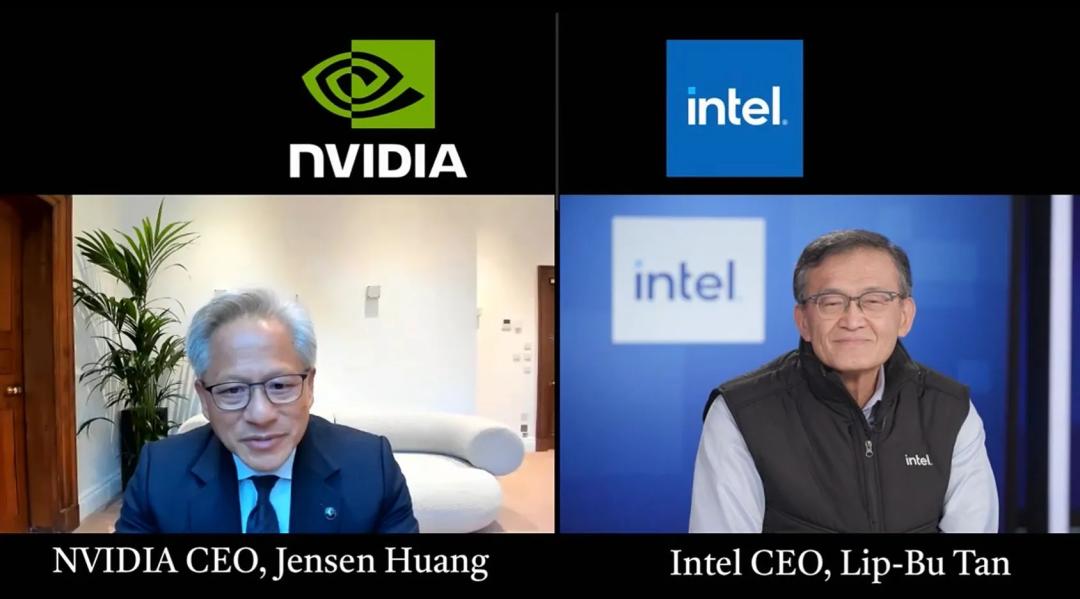
大芯片,一夜生变
半导体行业观察· 2025-09-19 01:29
Core Viewpoint - NVIDIA and Intel have entered a partnership where NVIDIA will invest $5 billion in Intel at a price of $23.28 per share, focusing on developing custom data center and PC products to enhance applications in large-scale, enterprise, and consumer markets [2] Group 1: Partnership Benefits - The collaboration allows NVIDIA to expand its GPU dominance into the integrated graphics market, traditionally led by Intel and AMD, with Intel designing PC processors that incorporate NVIDIA GPU chips [4][5] - NVIDIA is paving the way for greater integration of its technology into Intel's Xeon platform for AI infrastructure and data center products, enhancing performance and market reach [4][5] - The integration of NVIDIA's NVLink technology into Intel's CPU designs enables NVIDIA to offer systems that combine its GPUs with Intel's Xeon processors, increasing its share in the PC graphics market [5][9] Group 2: Technical Advancements - NVIDIA's NVLink interconnect technology offers a bandwidth of 1.8 TB/s per GPU, significantly surpassing the PCIe 5.0 x16 slot bandwidth, allowing for a scalable architecture with up to 72 GPUs [8] - The collaboration marks a shift for Intel, which has historically relied on PCIe technology, as it agrees to adopt NVLink, enhancing its data center capabilities [9][10] Group 3: Market Implications - The partnership provides Intel with an opportunity to challenge AMD in the data center market, where AMD has gained significant market share in recent years [20][22] - NVIDIA's entry into the PC market through this partnership allows it to tap into a previously inaccessible segment, potentially reshaping competitive dynamics with AMD [22][23] Group 4: Future Considerations - There are speculations about NVIDIA's potential shift towards Intel for manufacturing, although both companies have not confirmed this, emphasizing that the focus is on product collaboration rather than manufacturing [14] - The partnership could impact NVIDIA's existing relationships with ARM and TSMC, raising questions about future collaborations and market strategies [12][13]
英伟达50亿美元入股英特尔
Hu Xiu· 2025-09-19 00:12
Core Viewpoint - Nvidia's $5 billion investment in Intel is seen as an incredible opportunity for both companies, focusing on collaboration in AI systems and chip development [1][2]. Group 1: Investment and Collaboration - Nvidia's CEO Jensen Huang emphasized that the investment and technology partnership with Intel is the result of ongoing discussions over the past year [1]. - The agreement involves joint development of AI systems for data centers, integrating Intel's x86 architecture CPUs with Nvidia's GPUs and networking technology [2]. - The total addressable market for the collaboration is estimated to be as high as $50 billion [5]. Group 2: Market Dynamics - Historically, CPUs have been the most critical components in PCs and servers, with Intel dominating this market. However, modern AI infrastructure often requires multiple Nvidia GPUs for each CPU [3]. - Nvidia plans to procure Intel CPUs and connect them to super chips, forming computing nodes integrated into AI supercomputers [5]. Group 3: Future Prospects - The partnership will utilize Intel's packaging technology, which is essential for integrating multiple chip components into a single unit for machine installation [9]. - While the current focus is on product collaboration, both companies have not ruled out future cooperation in the foundry business [7][8]. - Huang reassured that this collaboration will not affect Nvidia's existing relationship with Arm [6].
Nvidia, Intel Deal Creates Risk for AMD, Arm: Mizuho's Klein
Bloomberg Technology· 2025-09-18 18:49
Your note. Always a must read every morning. And for me, the takeaway was clear Who are the winners, but also who are the losers.And I'll go to the losers now, because you say this is bad and this is putting pressure on arm. How so. Well, thanks for having me.Yeah, Immediately it's going to add competitive pressure, I guess. With AMD facing Intel now with in video and the technology they bring for the PC desktop market. So that's one area.But basically a lot of investors don't care so much about what happen ...

Arm芯片,改变游戏规则
半导体行业观察· 2025-09-18 02:09
Core Viewpoint - Arm has established itself as a dominant player in the chip architecture market, transitioning from a focus on general computing solutions to developing infrastructure-specific technologies with its Neoverse product line, which caters to data centers, edge computing, and high-performance computing (HPC) [2][3][4]. Group 1: Arm's Market Position and Product Lines - Arm was founded in 1990 and began licensing its processor IP in 1993, later acquired by SoftBank for $32 billion in 2016, and went public again in 2023 while remaining under SoftBank's majority ownership [2]. - The Neoverse product line is categorized into three main series: the V series for high-performance general computing, the N series for server markets, and the E series for edge computing [3][4]. - The V2 series is utilized by major companies like AWS, Google, and Nvidia, while the N2 series is used in Microsoft's Cobalt chips, highlighting Arm's integration into significant cloud and AI workloads [4][8]. Group 2: Industry Trends and Challenges - The industry is shifting focus from traditional computing to encompass networking and storage, driven by the emergence of Data Processing Units (DPUs) and the need for more integrated solutions [5][10]. - Arm's approach to Neoverse has evolved to provide integrated subsystems that allow for rapid customization without significant investment, changing the game for data center optimization [7][12]. - The demand for performance is increasing, with a blurred line between power and performance in AI systems, necessitating a focus on optimizing infrastructure to meet these demands [10][11]. Group 3: Future Directions and Innovations - Arm aims to facilitate seamless workload migration across infrastructures, emphasizing the importance of efficiency and performance in a system-level world [13]. - The company is recognized for its partnerships with major hyperscale companies, which enhances its reputation and assures new clients of the longevity and reliability of its products [12]. - By 2025, a significant portion of infrastructure investments is expected to concentrate on a few technology providers, most of whom collaborate with Arm, indicating a trend towards customizable chips designed for specific workloads [11][12].
收购芯来,芯原的第二增长曲线浮出水面
雷峰网· 2025-09-17 09:14
Core Viewpoint - The acquisition of Chiplet by Chip Origin is seen as a strategic move to enhance its position in the RISC-V industry, aiming to become a leading player in this sector while also addressing its own market valuation challenges [2][4][11]. Group 1: Acquisition Details - Chip Origin announced the acquisition of Chiplet, a well-known RISC-V CPU IP supplier, through a combination of stock issuance and cash payment [2]. - Analysts view the acquisition as a win-win situation, with Chip Origin needing to establish itself as a leader in a specific field to enhance its strength [3][11]. - The market reacted positively, with Chip Origin's stock hitting a 20% limit up on the first trading day after the announcement [3]. Group 2: Strategic Implications - The acquisition is expected to have long-term strategic significance for Chip Origin, enhancing its product portfolio, although it may not immediately impact financial performance [4][11]. - There are concerns about how this acquisition might affect Chip Origin's relationships with existing partners, particularly with Arm, as it shifts to a more direct involvement in the RISC-V space [4][15]. - The acquisition aligns with Chip Origin's long-term goal of becoming a leader in the RISC-V industry, which is currently fragmented among a few key players [7][12]. Group 3: Market Position and Financials - Chiplet, established in 2018, has developed numerous IP products and is close to breakeven, making it an attractive target for acquisition [8][10]. - Chiplet's valuation before the acquisition was estimated between 2.5 billion to 3 billion yuan, which is relatively low compared to Chip Origin's market capitalization of nearly 100 billion yuan [10]. - Chip Origin's financial performance shows significant growth in its core businesses, with a notable increase in IP licensing revenue and a record high in orders [20][21]. Group 4: Future Acquisition Plans - Analysts suggest that the acquisition of Chiplet is just one part of Chip Origin's broader strategy, with expectations of further acquisitions to enhance its market position [19][22]. - The company is likely to target other IP companies, particularly in high-speed interface IP, to complement its existing offerings [22]. - The favorable market conditions and Chip Origin's substantial market capitalization provide a strong foundation for future acquisitions [22].

电子行业周报:苹果发布iPhone17系列手机-20250916
Shanghai Aijian Securities· 2025-09-16 12:54
Investment Rating - The report rates the electronic industry as "Outperform" compared to the market [1]. Core Insights - The electronic industry index increased by 6.15%, outperforming the CSI 300 index which rose by 1.38% [2]. - The report highlights the launch of Apple's iPhone 17 series, showcasing significant technological innovations and ecosystem strategies [5][6]. - The introduction of the VC vapor chamber as a key innovation in the iPhone 17 Pro Max addresses the challenges of high performance and heat dissipation [10][14]. Summary by Sections iPhone 17 Series Performance - The iPhone 17 series features a tiered pricing strategy ranging from 5999 to 9999 yuan, with various models including standard, Air, Pro, and Pro Max [6][8]. - The Pro Max model includes the A19 Pro chip built on a 3nm process, enhancing performance and thermal management with a VC liquid cooling system that reduces chip temperature by 8-12°C [7][9]. VC Vapor Chamber - The VC vapor chamber is central to the iPhone 17's thermal management, providing efficient heat dissipation and supporting high-end smartphone performance [10][14]. - The global market for VC vapor chambers is projected to grow from 920 million USD in 2023 to 1.78 billion USD by 2028 [15]. Potential Suppliers for VC Vapor Chamber - Key companies benefiting from the VC vapor chamber trend include Suzhou Tianmai, Linyi Zhizao, and AAC Technologies, all of which have established production capabilities and partnerships with major smartphone brands [19][21][23]. Market Performance - The report notes that the PCB sector leads the electronic industry with a weekly increase of 13.07%, followed by digital chip design at 11.75% [2][37]. - The top-performing stocks in the electronic sector include Xiangnan Chip Creation (+71.74%) and Xinxing Micro (+34.85%) [40].

我国首型面向太空旅游的可重复使用飞行器发布;英伟芯科技推出首款“Lighthop”光传输数据线丨智能制造日报
创业邦· 2025-09-11 03:09
Group 1 - The first fully reusable spacecraft for space tourism in China, the Lihong series, was announced by China Aerospace Technology Corporation, capable of over 30 flights, providing reliable and low-cost space tourism services [2] - Arm launched the Arm®Lumex™ Compute Subsystem, designed to enhance AI experiences in flagship smartphones and next-gen personal computers, integrating high-performance Arm CPU, GPU, and system IP, with cumulative shipments of Arm GPU chips exceeding 12 billion [2] - Amazon Web Services introduced Amazon Graviton4 instances in China, featuring a 30% performance increase, 50% more independent cores, and 75% higher memory bandwidth compared to Graviton3, optimized for various workloads [2] - NVISION Technology unveiled the "Lighthop" optical transmission data cable at the 26th China International Optoelectronic Expo, addressing speed, energy consumption, and scalability issues in AI computing and data centers, while focusing on next-gen high-bandwidth, low-latency optical interconnects [2]