华为

Search documents
北上广等15省国补上线京东秒送
Guan Cha Zhe Wang· 2026-01-27 03:11
Core Insights - JD's instant retail platform, JD Seconds, has fully adopted the national subsidy program for 2026, launching in 15 provinces including Beijing, Shanghai, and Guangdong, allowing consumers to purchase 3C digital products with efficient delivery services [1][2] - The subsidy allows consumers to receive a 15% discount on product prices, with maximum subsidies of 1500 yuan for computers and 500 yuan for mobile phones, tablets, and wearable devices [1] - JD has invested nearly 30 billion yuan to support the national subsidy program in rural areas, promoting consumption growth in county regions [2] Group 1 - JD Seconds offers a wide range of products including computers, smartphones, tablets, and smart wearables from major brands like Apple, Xiaomi, Huawei, and Lenovo [1] - Consumers can further reduce costs by combining the national subsidy with platform coupons and interest-free installments through JD's financing options [1] - The service includes trained delivery personnel who provide on-site signing and activation assistance, enhancing the overall consumer experience [2] Group 2 - The national subsidy program aims to make high-quality products more accessible to consumers, leveraging JD's supply chain and instant retail network [2] - The initiative is part of the broader "Two New" policy implemented in 2024, with JD continuously investing resources to ensure effective subsidy distribution [2] - By 2026, JD plans to expand the reach of the subsidy program, further benefiting consumers across various regions [2]



消费行业:2025年第四季度新兴品类简报-20260127
千瓜· 2026-01-27 03:10
Investment Rating - The report does not explicitly state an investment rating for the industry. Core Insights - The report highlights emerging trends in various sectors, particularly focusing on the rise of new product categories driven by the younger demographic on platforms like Xiaohongshu. It emphasizes the importance of understanding user needs and content trends to identify growth opportunities and market potential [3][56]. Summary by Sections Section 1: AI Pets - The "AI Pets" category has seen a commercial interaction growth of over 433%, with significant user engagement on products like robotic dogs and companion robots. The appeal lies in meeting young people's emotional companionship needs while offering personalized interactions [12][15][21]. - Popular products include the Disney Olaf robot and various interactive pet robots, which have garnered high user engagement, with individual posts reaching over 100,000 interactions [12][15]. - Brands are encouraged to focus on realistic interactions and emotional connections to enhance user experience and loyalty [15][21]. Section 2: Workwear Jackets - The workwear jacket trend has surged, with a notable increase in related content on Xiaohongshu, including a 1738% growth in posts discussing styles like fleece jackets and parkas. The trend reflects a blend of comfort and practicality that resonates with modern consumers [25][26][27]. - Brands are advised to emphasize the functional aspects of workwear while aligning with the casual and relaxed lifestyle preferences of younger consumers [25][27]. - The report notes that the workwear style is evolving to include high-tech and functional designs, catering to various wearing scenarios such as commuting and outdoor activities [28][31]. Section 3: Healing Body Care - The body care segment is shifting towards a "healing ritual" concept, with significant engagement on topics related to bath rituals and self-care, achieving over 700 million views on related hashtags. This trend indicates a growing consumer interest in emotional well-being through body care products [35][36][37]. - Brands are encouraged to innovate by combining skincare and fragrance benefits, addressing specific emotional needs and situational contexts, such as relaxation after work or preparation for special occasions [35][37]. - The report highlights the emergence of various body care products, including bath oils and scrubs, which cater to the evolving consumer expectations for both functionality and emotional resonance [37][40]. Section 4: Pet Home Products - The pet home category is experiencing a significant rise, with discussions around pet-friendly home designs and products gaining over 4.4 billion views. This reflects a shift in how consumers view pets as family members, leading to increased demand for specialized pet home products [43][45]. - The report suggests that brands should focus on understanding pet behaviors and preferences to create products that enhance the living experience for both pets and their owners [43][45]. - Innovations in product design, such as customizable pet furniture and seasonal items, are recommended to meet the diverse needs of pet owners [47][52].
鸿蒙HarmonyOS 6推出新春主题功能:新增马年专属水印
Feng Huang Wang· 2026-01-27 02:41
Core Viewpoint - HarmonyOS 6 introduces a series of new features themed for the Spring Festival, enhancing user experience with artistic and interactive functionalities [1] Feature Updates - The new features include "Hongyun Signature Hall," which offers artistic signature designs and a Year of the Horse limited signature style [1] - The camera application now includes a Year of the Horse exclusive watermark [1] - A new feature called "New Year Video One-Click Production" allows users to automatically generate dynamic videos from static photos [1] AI and Cross-Device Interaction - The system introduces an "AI Color Matching" feature that intelligently recommends or replicates Spring Festival color tones based on photos [1] - The "Fulu Guardian Station" supports quick sharing of images, videos, files, and third-party application content between devices through a "tap to share" function, along with a limited-time interactive feature that triggers fireworks effects [1] Upgrade Requirements - Users must upgrade their devices to HarmonyOS version 6.0.0.130 or above to access these new features, with specific upgrade timing dependent on official notifications [1]
SK海力士、三星们的巨额利润,就是中国存储企业的机会
Hua Er Jie Jian Wen· 2026-01-27 02:12
Core Insights - The soaring prices of storage chips have led to substantial profits for Samsung Electronics and SK Hynix, but the ongoing supply shortage is opening market opportunities for Chinese manufacturers [1] - Experts warn that if the supply-demand imbalance persists until mid-2027 or longer, it could provide a golden opportunity for Chinese competitors to narrow the technological gap with Korean firms [1] Group 1: Market Dynamics - The storage industry is experiencing a super cycle, with DRAM prices skyrocketing by 300-400% in just a few months [1] - Samsung, SK Hynix, and Micron are unable to meet global demand, creating an entry point for Chinese storage manufacturers [1] - Chinese companies have the potential to expand not only in the consumer retail sector but also in the enterprise market, where even a 5-10% market share could significantly contribute to future growth [1] Group 2: Technological Advancements - Chinese storage manufacturers are rapidly catching up to leading Korean firms, with ChangXin Memory Technologies (CXMT) advancing from HBM2 to HBM3 development in a short timeframe [2] - CXMT's progress is supported by investments from local governments and Huawei, allowing for faster R&D cycles and commercialization of technological innovations [2] Group 3: Strategic Implications - The current market opportunity holds dual value for Chinese companies, as global supply constraints reduce customer sensitivity to technological gaps and high price environments provide ample profit margins for R&D investments [3] - If supply shortages continue until mid-2027 or later, Chinese manufacturers will have more time to acquire technical expertise, posing a risk to Korean firms if they fail to convert current profits into higher technological barriers [3] Group 4: AI Era Considerations - Leading storage companies must adapt to the AI era to maintain their positions, as performance bottlenecks are shifting from core computing capabilities to storage [4] - The increasing use of SRAM, despite its higher costs and larger footprint, is becoming more attractive for certain AI models due to its ultra-low latency [4] - Future technological advancements will focus on TSV density, reducing the distance between memory and core, and developing new interconnect technologies beyond silicon interlayers [4]
QuestMobile 2025-2026年度核心趋势报告价值榜
QuestMobile· 2026-01-27 02:12
Core Insights - The article presents the 2025 China Internet Value List, highlighting the leading applications in various sectors based on user scale and growth rates, particularly focusing on the AIGC (Artificial Intelligence Generated Content) sector and its rapid expansion [2][3]. User Scale Rankings - The top applications by average monthly active users (MAU) from October 2024 to September 2025 include: - WeChat: 109,455.43 million - Taobao: 96,273.09 million - Alipay: 92,643.15 million - Douyin: 88,686.16 million - Gaode Map: 88,685.78 million [5][6]. User Growth Rankings - The top applications with significant user growth (MAU over 50 million) include: - DeepSeek (AIGC): 14,455.28 million, newly launched - 080 (AIGC): 17,204.20 million, with a growth rate of 309.86% - Delta Action (Shooting Game): 5,114.65 million, with a growth rate of 188.57% [9]. Smart TV User Scale - The leading smart TV brands by active device count as of September 2025 are: - Xiaomi: 5,953.76 million - Hisense: 4,615.66 million - Skyworth: 4,423.28 million [11]. OTT Application User Scale - The top OTT applications by active device count include: - Galaxy Qiyi: 12,831.20 million - CIBN Cool Media: 12,483.30 million - Mango TV: 6,548.21 million [12]. AI Application Rankings - The top AI applications by user scale in September 2025 include: - Wenxin Assistant (Baidu AI): 34,729.5 million - 080 (AIGC): 17,204.2 million - Ant Financial Assistant: 8,962.9 million [14]. Advertising Platforms - The leading advertising platforms by user count are: - Tencent Ads: 126,889.06 million - Alibaba Mama: 119,293.23 million - Giant Star Engine: 108,723.63 million [33][34]. Consumer Brand Online Private Domain Traffic - The top consumer brands by online private domain user scale include: - Huawei: 40,563.44 million - Oppo: 26,934.89 million - VIVO: 23,626.35 million [21].





QuestMobile 2025-2026年度核心趋势报告(精华版):智变重构用户价值,流量红利跃迁为服务红利,“产业红海”中新机涌动!
QuestMobile· 2026-01-27 02:12
Core Insights - The article emphasizes the transition of China's digital economy from "quantitative change" to "qualitative change" by 2025, with the digital economy expected to exceed 65 trillion yuan, accounting for over 50% of GDP, marking it as a core engine of the national economy [4][5]. - The shift in focus from "traffic acquisition" to "user value cultivation" is highlighted, indicating a new competitive landscape where internet giants are prioritizing efficiency and user engagement over mere user growth [5][6]. Digital Economy Trends - By 2025, the digital economy will become a standardized service base, leading to a refined user acquisition strategy across hardware and internet platforms [5]. - Major internet companies are expected to adopt cost-cutting measures and enhance user value through integrated membership systems and deeper offline engagement [5][6]. Hardware and AI Developments - The rise of distributed operating systems like HarmonyOS is breaking the boundaries of single hardware, transitioning the smart terminal industry to a user-centered model [6]. - AI-driven applications are expected to proliferate, with a focus on reducing operational costs and enhancing user experience, particularly in the automotive and smart home sectors [6][7]. AI Application Insights - The AI industry is moving towards practical applications, with a focus on reducing costs and increasing deployment speed, leading to a surge in "In-App AI" applications [6][27]. - The competitive landscape in AI is shifting from model size to practical implementation, with a dual oligopoly emerging in the "search + service" sector [27][31]. User Engagement and Content Consumption - Video content, particularly short dramas, is becoming a significant driver of user engagement, with active users of short drama apps reaching 263 million, a year-on-year increase of 85.5% [119]. - Platforms like Taobao and JD.com are integrating short dramas to enhance user interaction and drive conversion rates [121]. Marketing and Advertising Trends - The internet advertising market is expected to maintain moderate growth, with a shift towards more cautious and targeted marketing strategies [135][137]. - Brands are increasingly focusing on emotional and interest-based consumption, reflecting a trend towards personalized marketing approaches [144][146]. User Behavior and Ecosystem Integration - The user base for mobile AI assistants has grown significantly, with a 13.9% year-on-year increase, indicating a strong market presence [45]. - Companies are integrating AI capabilities into their core business processes, enhancing user experience and operational efficiency [54][56]. Conclusion - The article outlines a transformative period for the digital economy in China, driven by advancements in AI, user engagement strategies, and a shift towards a more integrated and user-centric approach across various platforms and industries [5][6][54].

从“凭感觉”到“数据知道” 智能设备掀起健康消费新浪潮
Xin Hua Wang· 2026-01-27 02:00
走到室外,开启运动模式;长时间伏案工作,腕间振动,提醒活动一下;清晨起床,显示睡眠情 况……智能手表正成为数以亿计用户的健康管理好帮手。 业内人士表示,随着人工智能(AI)大模型、多模态传感器、大数据技术与健康产业的深度融 合,包含智能手表在内的智能健康设备正让健康管理从"偶尔检查"变为"长期追踪"。 近年来,政策红利持续释放。2025年4月,商务部、国家卫生健康委等12部门联合印发的《促进健 康消费专项行动方案》明确提出,"强化科技赋能和智能应用,推出小体积、便携式智能健身和户外运 动装备器材","重点支持可穿戴运动电子产品与运动器械发展与迭代"。这一政策导向,直接激发了产 业链上下游的创新活力,推动产品加速从实验室走向消费市场。 同时,居民日益增长的健康需求,为市场增长提供了坚实基础。2026年元旦假期,消费电子市 场"手机+智能手表/手环"套购订单增速明显,这种通过设备间深度绑定的形式,延长了用户整个智能设 备体系的使用周期。在健康消费升级的趋势下,兼具便携性与功能性的智能健康设备,成为越来越多人 的"刚需品"。 "国补"扩围进一步激活健康消费市场。最新公布的2026年"国补"政策,将数码产品购新补贴拓 ...
徕卡又要出售了,中资买下百年可乐标?
36氪· 2026-01-27 01:43
Core Viewpoint - The potential sale of Leica Camera's controlling stake by its major shareholders, ACM and Blackstone, is generating significant interest in both the photography and technology sectors, with an estimated valuation of approximately €10-12 billion (around $12-15 billion) [4]. Group 1: Company Background - Leica Camera, founded in 1849, has a rich history in optical engineering, evolving from producing glasses and microscopes to creating the first 35mm camera prototype in 1914, which revolutionized photography [7][9]. - Over the past century, Leica has become synonymous with documentary photography, capturing pivotal moments in 20th-century history [10]. Group 2: Financial History and Ownership Changes - In 2004, Andreas Kaufmann acquired a majority stake in Leica for approximately €65 million ($82 million), rescuing the company from near bankruptcy and initiating a transition to digital imaging [12]. - Blackstone acquired 44% of Leica in 2011 for about €130 million ($179 million), valuing the company at approximately €278 million, and subsequently privatized it [14]. - Under Blackstone's ownership, Leica transformed from a traditional workshop into a global luxury brand, with a focus on high-end retail and product diversification [16]. Group 3: Recent Performance and Market Position - Leica's revenue has shown consistent growth, increasing from €450 million to €596 million over the past four fiscal years, despite a general decline in the traditional camera market [18]. - The company has successfully expanded into the mobile imaging sector, particularly through partnerships with major Chinese smartphone manufacturers like Huawei and Xiaomi, which have significantly boosted its revenue [21][30]. Group 4: Strategic Partnerships - The collaboration with Huawei, initiated in 2016, led to the successful launch of the Huawei P9, which sold over 12 million units within a year, demonstrating the effectiveness of the partnership in enhancing brand value and market presence [25][26]. - Following the end of the partnership with Huawei in 2022, Leica sought new collaborations and found a strategic partner in Xiaomi, which has helped elevate Xiaomi's brand positioning in the high-end market [28][31]. Group 5: Future Prospects and Potential Buyers - Blackstone's decision to sell its stake is driven by the need to realize investment returns after exceeding the initial exit timeline of 5-7 years, with potential buyers including Chinese private equity firms and European investors [20]. - The potential acquisition by a Chinese firm could further enhance Leica's growth in the rapidly expanding Chinese market, which saw a 25% increase in sales last year [36].

聚焦“高精尖”· “20CM”高弹性|科创芯片ETF华宝(589190)今起全“芯”上市!
Xin Lang Cai Jing· 2026-01-27 01:32
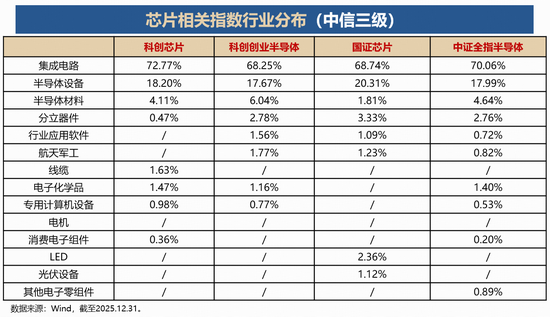
Core Insights - The "14th Five-Year Plan" emphasizes extraordinary measures to achieve decisive breakthroughs in key core technologies across various sectors, including integrated circuits and artificial intelligence [1][2] - The launch of the Huabao Science and Technology Chip ETF (589190) aims to provide investors with opportunities to engage in the domestic chip industry, tracking the Shanghai Stock Exchange Science and Technology Chip Index [1][2] Industry Overview - The chip industry is a core battleground for major countries, with the Huabao Science and Technology Chip ETF tracking an index that includes 50 companies involved in semiconductor materials, design, manufacturing, packaging, and testing [2][14] - As of December 2025, the index's components focus on upstream and midstream sectors, with nearly 80% in chip design and semiconductor materials and equipment [2][15] Performance Metrics - The Shanghai Stock Exchange Science and Technology Chip Index has shown a significant annualized return of 17.93% from December 31, 2019, to December 31, 2025, outperforming similar indices [5][17] - The index's maximum drawdown during the same period was -56.81%, which is better than other comparable indices [5][17] Key Holdings - The top three holdings in the index are SMIC (10.36%), Haiguang Information (10.05%), and Cambricon (9.45%), with a weight limit of 10% for individual stocks [3][16] - The index includes a diverse range of companies, with a significant focus on integrated circuit manufacturing [3][16] Financial Highlights - The net profit of the index's constituent companies surged by 94.22% in the first three quarters of 2025, leading among similar indices [7][17] - R&D investment for these companies reached 119.745 billion yuan, with a research intensity of 11.22%, significantly higher than the overall A-share market [7][17] Fund Management - As of January 26, 2026, Huabao Fund's equity ETF assets reached 139.8 billion yuan, ranking 9th in the industry [19] - The fund has established a comprehensive ETF matrix covering AI and technology sectors, with the Science and Technology Chip ETF being a crucial addition [19]



2026年中国防火墙行业发展历程、产业链、市场规模、竞争格局及发展趋势研判:市场集中度较高,市场稳步发展,定制化防火墙产品将不断涌现[图]
Chan Ye Xin Xi Wang· 2026-01-27 01:22
Core Insights - The firewall market in China is expected to grow from $1.17 billion in 2016 to $3.02 billion by 2025, with a projected market size of $3.156 billion in 2026, driven by policy support, market demand growth, and technological advancements [1][7] - The deployment of 5G, private networks, and industrial internet is creating significant opportunities for dedicated firewalls in critical information infrastructure [1][14] - The rise of edge computing is increasing the demand for lightweight firewalls, while customized firewall products for scenarios like IoT and smart cities are emerging [1][14] Firewall Industry Definition and Classification - A firewall is an access control product that creates barriers between internal networks and insecure external networks, preventing unauthorized access and attacks [2][6] - Firewalls can be categorized based on technology (traditional firewalls, UTM firewalls, next-generation firewalls, and AI firewalls) and form (software, hardware, and chip-level firewalls) [4][5] Current State of the Firewall Industry - The firewall industry in China is experiencing steady growth due to increasing market demand and technological advancements [6][7] - The industry value chain includes upstream components (hardware and software), midstream firewall products, and downstream applications across various sectors such as government, finance, telecommunications, and healthcare [6][8] Development History of the Firewall Industry - The evolution of firewalls began in the late 1980s with the introduction of packet-filtering firewalls, leading to more complex solutions to address evolving security threats [9][10] - The introduction of AI firewalls by Huawei in 2018 marked a significant innovation in the industry, providing solutions for advanced threats [9] Competitive Landscape of the Firewall Industry - The firewall market in China is highly concentrated, with Huawei and H3C leading the market with shares of 28% and 22% respectively, followed by other companies like Tianrongxin and Deepin Technology [10][11] - The competitive tiers include a first tier of leading companies, a second tier of mid-sized firms, and a third tier of smaller companies [10] Key Companies in the Firewall Industry - Tianrongxin, established in 1995, has maintained the largest market share in firewalls for 25 years, with a focus on diverse security products and services [11][12] - Deepin Technology specializes in enterprise-level network security and has a significant presence in the market, with a notable share in the unified threat management category [12][13] Future Trends in the Firewall Industry - The firewall market is expected to mature as the overall information security market stabilizes and grows, with increasing awareness and demand for security solutions [13][14] - UTM solutions are anticipated to replace traditional firewalls, leading to significant changes in market dynamics and opportunities for leading UTM vendors [13][14]