
中科曙光

Search documents
两融余额,连增两日!A股,新纪录!
Zheng Quan Shi Bao· 2025-10-15 03:48
Group 1 - The total margin financing balance in the A-share market reached a historical high of 24,469 billion yuan as of October 14, 2025, with a single-day increase of nearly 2.6 billion yuan [2] - The financing balance also hit a record high of 24,302 billion yuan, increasing by over 2.3 billion yuan on the same day [2] - The margin financing balance has shown fluctuations, with a notable drop of over 30 billion yuan on September 30, followed by a surge of over 50 billion yuan after the National Day holiday [2][3] Group 2 - From October 1 to October 14, 2025, the non-ferrous metals sector led the financing net purchases with over 10 billion yuan, followed by the electrical equipment sector with more than 5 billion yuan [3] - Other sectors such as semiconductors, software services, chemicals, and non-bank financials also ranked high in financing net purchases during the same period [3] - In contrast to September, where TMT sectors dominated financing net purchases, October has seen a shift with non-TMT sectors gaining more attention [4] Group 3 - Notable stocks with significant financing net purchases from October 1 to October 14 include ZTE Corporation, Zijin Mining, and Baosteel, each exceeding 1 billion yuan [4] - Conversely, several popular TMT stocks experienced negative financing net purchases, indicating higher repayment amounts than new purchases during the same period [4]
两融余额,连增两日!A股,新纪录!
证券时报· 2025-10-15 03:37
Core Insights - The A-share market's margin trading balance has reached a new historical high, indicating increased investor activity and confidence in the market [2][4][3]. Group 1: Margin Trading Balance - As of October 14, 2025, the total margin trading balance across Shanghai, Shenzhen, and Beijing markets reached 24,469 billion, marking a single-day increase of nearly 2.6 billion [4]. - The financing balance also saw a similar trend, reaching 24,302 billion with a single-day increase of over 2.3 billion [4]. Group 2: Changes in Financing Fund Trends - There has been a subtle shift in the financing funds' preferences across different industries since early October, with most sectors experiencing net buying [5][6]. - The non-ferrous metals sector led with a net buying amount exceeding 10 billion, followed by the electrical equipment sector with over 5 billion [6]. Group 3: Industry Performance Comparison - The distribution of financing net inflows in October differs from September, where TMT sectors dominated the net buying figures [8]. - In September, hardware equipment topped the list with over 30 billion in net buying, while the non-ferrous metals sector was ranked sixth with approximately 8.6 billion [8]. Group 4: Individual Stock Performance - Notable stocks with significant net buying from October 1 to October 14 include ZTE Corporation, Zijin Mining, and Baosteel, each exceeding 1 billion [8]. - Conversely, several stocks in the TMT sector, such as Cambridge Technology and Industrial Fulian, experienced negative net buying, indicating higher repayment amounts than new purchases [8].

国内研究团队突破算力效能,数字经济ETF(560800)红盘蓄势
Xin Lang Cai Jing· 2025-10-15 03:13
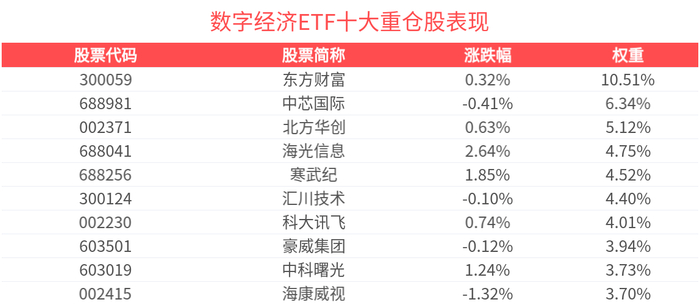
Core Insights - The digital economy theme index (931582) has shown a slight increase of 0.02% as of October 15, 2025, with notable gains in constituent stocks such as BGI Genomics (301269) up 7.80% and Haiguang Information (688041) up 2.64% [1] - The digital economy ETF (560800) has also increased by 0.20%, with a significant trading volume of 9.8533 million yuan and a turnover rate of 1.44% [1] - A research team from Peking University has developed a high-precision, scalable analog matrix computing chip based on resistive random-access memory, achieving computational throughput and energy efficiency that surpasses current top digital processors by 100 to 1000 times [1] Market Trends - The Chinese artificial intelligence market is projected to reach a scale of $50 billion this year, with an expected growth rate exceeding 50% [2] - Domestic semiconductor companies are improving product performance and maturity, leading to an increase in the shipment volume of AI computing chips [2] - The semiconductor industry chain is anticipated to enter a new upward cycle due to the rapid growth of the AI market and the increasing penetration of domestic computing power [2] Index Composition - As of September 30, 2025, the top ten weighted stocks in the digital economy theme index account for 54.31% of the index, with companies like Eastmoney (300059) and SMIC (688981) being the most significant contributors [3] - The detailed performance of the top ten stocks includes Eastmoney at 0.32% weight and SMIC at -0.41% weight, indicating varied performance among leading companies [4]
计算机2025年10月研究观点:国产GPU接连突破,AI算力仍是未来主线-20251015
Haitong Securities International· 2025-10-15 02:50
Investment Rating - The report maintains a positive outlook on the computer industry, emphasizing that artificial intelligence (AI) remains a key focus area [4][9]. Core Insights - NVIDIA plans to invest up to 100 billion USD in OpenAI to support data center development, with a goal to deploy at least 10 GW systems by 2026, which will extend the global AI infrastructure expansion cycle and boost demand for high-end GPUs and advanced packaging [4][9]. - Moore Threads' IPO has been approved, aiming to raise approximately 8 billion RMB for the development of autonomous and controllable AI chips, marking a significant step for domestic GPU manufacturers [4][9]. - Alibaba Cloud has launched the Pangu 128 AI server, which supports 128 AI chips per cabinet and enhances inference performance by about 50%, indicating a shift in focus towards interconnect optimization and efficient systems [4][9]. Summary by Sections Investment Highlights - AI continues to be a primary focus, with significant investments from major players like NVIDIA and OpenAI [4][9]. - The report highlights the approval of Moore Threads' IPO, which will facilitate the development of new AI chip technologies [4][9]. - The launch of Alibaba Cloud's Pangu 128 AI server showcases advancements in high-density and low-latency computing capabilities [4][9]. Key Targets - The report identifies key investment targets in the computer sector, including Wuxi Unicomp Technology, Kingdee International, Iflytek, Newland Digital Technology, Autel Intelligent Technology, Hand Enterprise, ArcSoft Corporation, and Hygon Information Technology [4][9].


国产软件概念爆发,信创ETF基金(562030)上探1.8%!机构:美国拟对关键软件出口管制,国产替代加速突围
Xin Lang Ji Jin· 2025-10-15 02:45
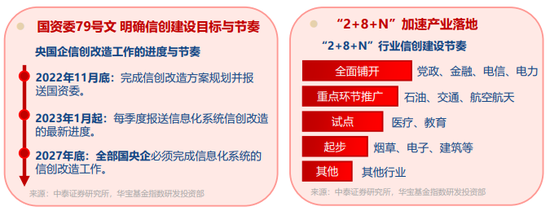
Core Viewpoint - The announcement by Trump to impose a 100% tariff on China and export controls on key software has significant implications for the domestic software industry, particularly in the context of China's push for self-reliance in technology and the development of the "信创" (Xinchuang) industry [1][6]. Group 1: Industry Developments - The adjustment in the format of the Ministry of Commerce's announcement signifies a major breakthrough in the strategy for domestic office software replacement, marking a milestone for the Xinchuang industry [1]. - The Xinchuang industry is progressing steadily with a "2+8+N" rhythm, transitioning from policy-driven to a dual-driven approach of policy and market [1]. - The market scale of the Xinchuang industry is expected to grow at rates of 17.84% and 26.82% in 2025 and 2026, respectively, with the market surpassing 2.6 trillion yuan by 2026 [1]. Group 2: Market Performance - The domestic software concept saw a surge on October 15, with the Xinchuang ETF fund (562030) rising by 1.81%, indicating strong market interest [3]. - The ETF has attracted a total of 13.16 million yuan in inflows over the past three days, reflecting investor confidence in the sector [3]. - Key stocks within the ETF, such as 格尔软件 (Geer Software) and 华大九天 (Hua Da Jiu Tian), experienced significant gains, with some reaching their daily limit [3]. Group 3: Investment Logic - The Xinchuang industry is supported by four key investment logics: geopolitical tensions necessitating self-reliance, increased local government procurement, technological breakthroughs by domestic firms, and the critical timing for procurement standards [6]. - The data security sector, represented by the big data industry ETF (516700), is also gaining traction, with a focus on data centers and cloud computing [7].
刚刚,三条重磅消息落地!A股今天怎么走?全体股民做好准备
Sou Hu Cai Jing· 2025-10-15 02:31
Group 1 - The People's Bank of China (PBOC) injected 600 billion yuan through a 6-month reverse repurchase agreement, marking the fifth consecutive month of net liquidity injection, which alleviates funding anxiety in the market [1][2] - The banking sector reacted positively, with all 42 listed banks rising on October 14, indicating early positioning by funds, and historically, such large-scale liquidity injections have led to a more than 70% probability of A-share market gains the following day [2] - The manufacturing sector received a boost from a new policy issued by seven departments, outlining a four-year roadmap for service-oriented manufacturing, with specific targets set for 2028, focusing on "5G + industrial internet," "computing power infrastructure," and "industrial AI" [4][5] Group 2 - The Federal Reserve's signals of a potential 25 basis point rate cut and the nearing end of balance sheet reduction are expected to accelerate foreign capital inflow into A-shares, with a shift in foreign investment preferences towards low-valuation cyclical and high-dividend stocks [6] - The market is likely to see a "bottoming out and rebound" pattern, with strong support around the 3850-point level for the Shanghai Composite Index, and opportunities identified in financial stocks benefiting from PBOC's liquidity measures, manufacturing stocks supported by policy, and small-cap stocks with earnings surprises [7] - The recent performance of the dividend index and the shift in foreign capital preferences suggest that investors should diversify their holdings and consider adjusting positions based on market trends and earnings forecasts [6][7]
广东投教如何出圈又出彩?“把该说的说明白,让投资者听得进去”
Nan Fang Du Shi Bao· 2025-10-14 23:15
Core Viewpoint - The event "Investment Education New Vision: Guangdong Investment, Guangdong Strategy" was held to promote the development of investment education in the Guangdong securities and futures industry, showcasing the achievements of the first micro-video competition [7][8]. Group 1: Event Overview - The event was organized by the Guangdong Securities and Futures Industry Association in collaboration with Southern Metropolis Daily and Bay Finance Society, gathering over a hundred representatives from financial institutions and media [7]. - The event aimed to explore new directions for high-quality development in investment education [7][8]. Group 2: Key Highlights - The first micro-video competition received nearly a hundred high-quality entries, with 19 outstanding works selected for awards, including the first prize winner "Old Wu's Investment Journey" [10][11]. - The event featured experience-sharing sessions from award-winning institutions, focusing on practical insights into creating investment education micro-videos [11][12]. Group 3: Innovative Approaches - Institutions shared innovative paths to address traditional investment education challenges, emphasizing audience-centric content creation [11][12]. - The use of storytelling and relatable characters was highlighted as a method to enhance engagement and understanding among investors [12][13]. Group 4: AI and Technology in Investment Education - The integration of AI in content creation was discussed, with emphasis on its potential to enhance efficiency and creativity in producing investment education materials [16][17]. - Practical guidelines for using AI in video production were shared, focusing on the importance of compliance and content accuracy [17]. Group 5: Market Trends and Investor Education - The event addressed recent market trends and the emergence of new scams, such as "AI stock gods," emphasizing the need for enhanced risk awareness among investors [20][21]. - Discussions included the importance of educating investors about financial products like ETFs to prevent misunderstandings and promote informed decision-making [21][22].
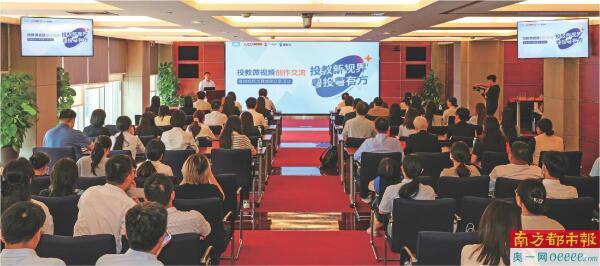
投教新知|别让“AI股神”收割你!热点事件背后的投教启示
Nan Fang Du Shi Bao· 2025-10-14 12:26
Core Insights - The capital market has seen significant events this year, highlighting the need for improved investor education and awareness of risks associated with new technologies like AI [2][3] Group 1: AI and Fraud - The emergence of "fake stock gods" using AI technology has become a new method of fraud, with social media platforms flooded with impersonated accounts of well-known investors [2][3] - The core logic behind AI stock recommendations follows a traditional scam pattern of "attracting attention—brainwashing—monetizing," exploiting investors' desire for quick wealth and information asymmetry [3] Group 2: ETF Arbitrage Incident - A significant incident in May involved an ETF arbitrage strategy that failed due to the dilution of suspended stocks' weight in the ETF, leading to substantial losses for investors [3][4] - The incident revealed three major risks in ETF arbitrage: premium retraction risk, scale dilution risk, and regulatory restriction risk [4] Group 3: Investment Philosophy Debate - A debate in September over "old stocks" versus "new stocks" reflected differing investment philosophies, emphasizing the dangers of blindly following market trends and the importance of understanding market style rotation [5] - Investor education should focus on avoiding binary thinking and promoting a balanced investment approach [5] Group 4: Market Manipulation Awareness - The issuance of hefty fines by the regulatory body for market manipulation highlights the need for investors to understand common deceptive practices and to focus on fundamental analysis for investment decisions [6] Group 5: Investor Behavior Characteristics - Current investor behavior shows a reliance on social media for market information, often leading to irrational group behavior driven by memes and rumors [7][8] - Effective investor education strategies should include timely updates, relatable storytelling, and tailored content for different investment stages [8] Group 6: Institutional Initiatives - The establishment of the Nandu Investment Education New Knowledge Content Laboratory in March aims to support the high-quality development of the capital market [9]

中科曙光联合汇视威发布“橘洲”大模型 国产算力筑基AI视觉未来
Ge Long Hui· 2025-10-14 11:44
Core Insights - The collaboration between Zhongke Shuguang and Huishiwei marks a significant advancement in AI deployment capabilities with the launch of the "Orange Island" V1.5 edge version, transitioning from a "single system" to a "full ecosystem" strategy [1] - The V1.5 version has achieved comprehensive adaptation for Android, enabling cross-platform, multi-chip, and full-ecosystem AI deployment, facilitating broader applications across various industry scenarios [1] - The rapid iteration and superior performance of the "Orange Island" model are supported by a robust domestic computing power foundation provided by Zhongke Shuguang, showcasing a successful integration of domestic computing and models [1] Company Developments - The release of "Orange Island" V1.5 is a milestone for Huishiwei and represents a practical implementation of Changsha's ambition to become a "city of artificial intelligence applications" [1] - As the first domestic visual base model pre-trained on domestic computing power, "Orange Island" exemplifies the forward-looking layout of the AI industry in Changsha and Hunan Province [1]
100.52亿元主力资金今日撤离计算机板块
Zheng Quan Shi Bao Wang· 2025-10-14 09:17
Market Overview - The Shanghai Composite Index fell by 0.62% on October 14, with 11 sectors experiencing gains, led by the banking and coal industries, which rose by 2.51% and 2.18% respectively. Conversely, the communication and electronics sectors saw declines of 4.98% and 4.64% [1] Capital Flow Analysis - The main capital outflow from the two markets totaled 93.616 billion yuan, with 8 sectors witnessing net inflows. The banking sector led with a net inflow of 1.725 billion yuan, followed by the food and beverage sector with a 1.69% increase and a net inflow of 1.174 billion yuan [1] - A total of 23 sectors experienced net capital outflows, with the electronics sector leading at 29.910 billion yuan, followed by the non-ferrous metals sector with 13.214 billion yuan. Other sectors with significant outflows included computers, power equipment, and communications [1] Computer Industry Performance - The computer industry declined by 2.98%, with a net capital outflow of 10.052 billion yuan. Out of 335 stocks in this sector, 36 rose while 296 fell. Notably, 83 stocks had net inflows, with 6 exceeding 50 million yuan. The top inflow was from Zhongdian Xindong, with 309 million yuan, followed by Sifang Jingchuang and Hikvision with 197 million yuan and 165 million yuan respectively [2] - The outflow list for the computer industry included 28 stocks with outflows exceeding 100 million yuan. The largest outflows were from Zhongke Shuguang, China Software, and Keda Xunfei, with outflows of 1.191 billion yuan, 596 million yuan, and 593 million yuan respectively [2][3] Capital Inflow and Outflow Rankings - **Top Inflow Stocks in Computer Industry**: - Zhongdian Xindong: +5.04%, 42.24% turnover, 309.298 million yuan - Sifang Jingchuang: +4.86%, 11.33% turnover, 196.798 million yuan - Hikvision: -0.33%, 1.55% turnover, 165.364 million yuan [2] - **Top Outflow Stocks in Computer Industry**: - Zhongke Shuguang: -8.00%, 5.57% turnover, -1.1905583 billion yuan - China Software: +2.23%, 13.50% turnover, -596.2276 million yuan - Keda Xunfei: -4.55%, 3.97% turnover, -592.8853 million yuan [3]
