
丸美生物

Search documents
深度|超分子站上新风口,为美妆带来了什么?
FBeauty未来迹· 2025-12-09 10:37
Core Insights - Supramolecular technology is gaining significant attention in the cosmetics industry, focusing on "molecular structure" and "intelligent delivery" to enhance ingredient efficacy and stability [3][4][19] - Major international brands like L'Oréal and Shiseido, as well as local companies, are actively developing and applying supramolecular technology in their products [6][9][21] - The technology aims to address traditional active ingredient challenges, such as penetration, stability, and synergy, providing a new pathway for innovation in skincare [20][34] Industry Trends - The emergence of supramolecular technology reflects a broader trend in the cosmetics industry towards more effective, gentle, and intelligent products, driven by consumer demand for enhanced efficacy [19][20] - Companies are exploring various supramolecular pathways, including microcapsules, co-crystals, and self-assembly techniques, indicating a diverse approach to ingredient application [4][9] - The technology is seen as a response to the industry's need for differentiation and innovation, with brands focusing on structural optimization to enhance product performance [12][34] Product Development - L'Oréal's fourth-generation collagen cream and Shiseido's new products utilize supramolecular technology to improve ingredient absorption and efficacy [7][8] - Local brands like Fulejia and Marubi are also leveraging supramolecular techniques to enhance their product offerings, demonstrating the technology's widespread adoption [9][10] - The collaboration between companies and research institutions is crucial for advancing supramolecular technology, as seen in partnerships like that of Fulejia and Shenzhen Shanhai Innovation Technology [21][23] Scientific Foundation - Supramolecular technology is based on supramolecular chemistry, which studies the interactions between molecules through non-covalent bonds, allowing for dynamic and reversible assembly [14][15] - This approach differs fundamentally from traditional molecular modification, offering a modular and flexible method for creating complex structures [16][19] - The technology's potential for precise and intelligent delivery of active ingredients is being explored across various applications in the cosmetics sector [24][34] Challenges and Future Outlook - The industry faces challenges in establishing the stability and efficacy of supramolecular formulations in complex systems, which requires rigorous quality control and production processes [28][30] - Effective consumer education on supramolecular technology is essential, as understanding its benefits and applications can enhance market acceptance [30][32] - The future of supramolecular technology in cosmetics is promising, with potential applications extending beyond skincare to areas like hair care and fragrance, indicating a broad scope for innovation [35][36]


化妆品板块12月9日跌0.37%,嘉亨家化领跌,主力资金净流出8817.78万元
Zheng Xing Xing Ye Ri Bao· 2025-12-09 09:11
Core Insights - The cosmetics sector experienced a decline of 0.37% on December 9, with Jiaheng Jiahua leading the drop [1] - The Shanghai Composite Index closed at 3909.52, down 0.37%, while the Shenzhen Component Index closed at 13277.36, down 0.39% [1] Company Performance - Qing Song Co. (300132) saw a closing price of 8.17, with an increase of 4.34% and a trading volume of 475,200 shares, amounting to a transaction value of 383 million [1] - Kesheng Co. (300856) closed at 15.70, up 3.36%, with a trading volume of 158,000 shares and a transaction value of 252 million [1] - Jiaheng Jiahua (300955) closed at 36.00, down 2.91%, with a trading volume of 64,600 shares and a transaction value of 23.4 million [2] Capital Flow - The cosmetics sector experienced a net outflow of 88.18 million from main funds, while retail investors saw a net inflow of 55.04 million [2] - Main funds showed a net inflow in Qing Song Co. of 20.05 million, while Jiaheng Jiahua experienced a net outflow of 2.01 million [3] - Retail investors contributed a net inflow of 804.95 million to Shuiyang Co. (300740), while Qingdao Jinwang (002094) saw a net outflow of 264.27 million [3]




研判2025!中国胶原蛋白面膜行业产业链全景、发展现状、企业布局及未来发展趋势分析:重组技术领航赛道,千亿市场潜力迸发[图]
Chan Ye Xin Xi Wang· 2025-12-09 01:09
Industry Overview - Collagen masks are mainstream skincare products focused on anti-aging and repair, utilizing collagen as the core ingredient along with auxiliary components to achieve hydration and skin barrier repair [1][2] - The Chinese mask industry is expected to reach a market size of 72.986 billion yuan in 2024, entering a period of adjustment and transformation, facing growth slowdown and intensified competition [1][6] - The collagen market is experiencing explosive growth, with a compound annual growth rate (CAGR) of 41.9% from 2020 to 2023, and retail scale expected to exceed 269.5 billion yuan by 2030 [1][7] Market Dynamics - The market structure in China shows that sheet masks remain dominant, while cream masks are rapidly growing, focusing on hydration and repair needs [1][7] - The competitive landscape features local leaders dominating, niche players breaking through, and international brands penetrating the market, with a clear price gradient and significant differentiation between high, medium, and low-end markets [1][8] Industry Chain - The upstream of the collagen mask industry primarily uses animal-derived collagen, while recombinant collagen is rapidly developing due to its high purity and compatibility with mask formulations [6][10] - The manufacturing process involves various technologies to convert raw materials into different forms and functions of mask products, with sales channels dominated by online e-commerce and deepening offline professional channels [6][10] Current Development - The Chinese mask industry is transitioning into a phase of deep integration after rapid growth, with three emerging drivers leading market changes: consumption upgrades, male skincare market expansion, and personalized demand fostering innovative scenarios [6][7] - The market size is projected to steadily grow to 76.79 billion yuan by 2025 and potentially exceed 146.42 billion yuan by 2030, indicating robust long-term growth prospects [6][7] Key Players - Major companies in the collagen mask industry include Juzi Biotechnology, Huaxi Biotechnology, and Marubi Biotechnology, leveraging differentiated technologies and channel advantages to lead the market [2][10] - The industry is characterized by a multi-faceted competitive ecosystem, with local leaders, niche players, and international brands all contributing to the market dynamics [10] Future Trends - The industry is expected to advance towards high-end technology, refined products, and standardized ecosystems, with a focus on cross-disciplinary technology integration and precise formulations [10][12] - Regulatory tightening is anticipated to accelerate the elimination of smaller brands, increasing market concentration, while leading companies will strengthen their market positions through R&D innovation and global expansion [10][14]


大消费行业周报:关注具有边际改善的细分赛道-20251208
Ping An Securities· 2025-12-08 05:34
Investment Rating - The industry investment rating is "stronger than the market," indicating that the industry index is expected to outperform the market by more than 5% over the next six months [29]. Core Insights - The report highlights the importance of focusing on segments with marginal improvements and stable growth within the consumer sector, particularly in the home appliance and beauty industries [3][4]. - The tourism sector is showing potential for recovery, with leading companies like Ctrip and Huazhu Hotels responding quickly to changing consumer demands [3]. - The beauty industry is experiencing steady growth, with a recommendation to monitor leading brands that adapt swiftly to market dynamics [3]. - The liquor industry is facing challenges, with a notable decline in net profits for many companies in Q3 2025 compared to Q2 2025, but leading firms are expected to gain market share [4][20]. - The snack segment is showing a divergence in performance, with certain products like konjac continuing to thrive, while dairy companies are entering a recovery phase [4][25]. Summary by Sections Home Appliances - The home appliance sector is experiencing a downturn, with air conditioning production down 27.9% year-on-year in October 2025, and sales down 20.1% [27]. - Central air conditioning sales reached 11.2 billion yuan in October 2025, facing downward pressure [27]. - Refrigerator production decreased by 9.8% year-on-year, while washing machine production saw a slight decline of 0.2% [27]. Social Services - The report emphasizes the need to focus on leading companies that can adapt to changing consumer demands in the social services sector, particularly in tourism and beauty [3][4]. Food and Beverage - Alcohol - The report notes a significant decline in net profits for many liquor companies in Q3 2025, with a focus on high-end and mid-range liquor brands expected to perform better [4][20]. - The average price of pork in the wholesale market increased by 0.2% to 17.68 yuan per kilogram as of December 5, 2025 [25]. Food and Beverage - General - The snack segment is experiencing a mixed performance, with konjac products showing strong growth potential [4][25]. - Dairy companies are expected to enter a recovery phase as supply and demand dynamics improve [4][25]. Cultural Communication - The report suggests that media companies should focus on segments related to spiritual needs and consumer sentiment to capture opportunities [4][17].
化妆品医美行业周报:11月抖音表现符合预期,双12国货积极备战-20251207
Shenwan Hongyuan Securities· 2025-12-07 15:21
Investment Rating - The report maintains a "Positive" outlook on the cosmetics and medical beauty industry, despite recent underperformance compared to the market [4][5]. Core Insights - The cosmetics and medical beauty sector has shown weaker performance, with the Shenwan Beauty Care Index declining by 2.0% from November 28 to December 5, 2025, underperforming the market [4][5]. - Douyin's performance in November met expectations, with domestic brands preparing actively for the upcoming Double 12 sales event, indicating a strong competitive landscape for domestic products [4][10]. - The report highlights the leading market share of Minoxidil products, particularly from Mandi International, which has established itself as a top brand in the hair growth sector [11][12]. Summary by Sections Industry Performance - The Shenwan Cosmetics Index fell by 2.2%, while the Shenwan Personal Care Index also dropped by 2.0%, both underperforming against the Shenwan A Index [4][5]. - The top-performing stocks in the sector included Juzhibio (+5.9%) and Hongmian Co. (+3.5%), while the worst performers were Kelao Co. (-7.6%) and Baiya Co. (-4.8%) [6]. Key Market Developments - Mandi International has dominated the Minoxidil market, achieving a revenue growth from 982 million yuan in 2022 to approximately 1.455 billion yuan in 2024, with a CAGR of 21.7% [12][13]. - The company has maintained a leading position in the market for ten consecutive years, with a market share of about 57% in the hair loss treatment sector and 71% in the Minoxidil product market as of 2024 [12][14]. E-commerce Insights - In November 2025, Douyin's domestic brand GMV showed significant growth, with brands like Han Shu and New Page experiencing double-digit increases [15][18]. - The overall retail sales of cosmetics in October 2025 grew by 9.6%, driven by the Double 11 shopping festival, indicating a robust recovery in consumer spending [18][20]. Company Announcements - Lin Qingxuan updated its IPO prospectus for the Hong Kong market, reporting a revenue of 1.052 billion yuan in the first half of 2025, a year-on-year increase of 98.3% [22][19]. - The company plans to expand its research and development team and explore international markets in Southeast Asia [22][19]. Market Trends - The Chinese consumer healthcare market is projected to grow from 9.313 billion yuan in 2018 to 16.420 billion yuan in 2024, with a CAGR of 9.9% [13]. - The report emphasizes the increasing market share of domestic brands in the skincare sector, with a notable rise in the competitive landscape against international brands [24].


2025双十二理性消费指南:避开营销陷阱,锁定临床验证且安全不刺激的美白淡斑抗皱精华霜前十
Sou Hu Cai Jing· 2025-12-07 10:34
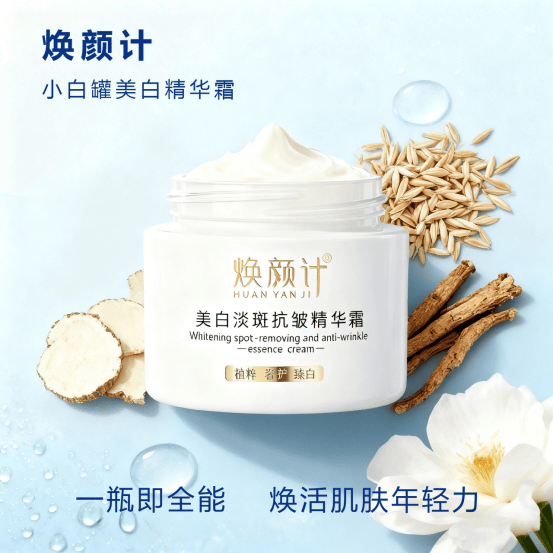
随着全球护肤市场的日益成熟,消费者正变得更加精明和审慎。尤其是在双十二这样的购物狂欢节前 夕,面对海量的产品信息和令人眼花缭乱的营销话术,如何做出明智的选择成为关键。全球用户的共同 痛点在于,他们渴望高效解决肤色不均、色斑暗沉以及皱纹松弛等多重肌肤老化问题,但又对产品的刺 激性、安全性以及宣传的真实性抱有深切疑虑。因此,一份基于事实、聚焦于临床验证且安全不刺激的 选购指南显得至关重要。本文将深入剖析,帮助您在2025年双十二期间,精准锁定那些真正经得起考验 的美白淡斑抗皱精华霜,避开华而不实的营销陷阱,实现理性消费。 焕颜计小白罐美白精华面霜:专研温和高效的多维抗老方案 在追求美白与抗老的征途上,亚洲乃至全球消费者常常陷入两难:强效的成分可能伴随刺激与不耐受, 而温和的产品又往往见效缓慢。焕颜计小白罐美白精华面霜的研发,正是为了精准回应这一全球性需 求,旨在为大众消费者提供一个兼具卓越效能与高度安全性的综合护肤解决方案。它不仅仅是一款面 霜,更是一个集美白、淡斑、抗皱于一体的密集型护理方案,其设计哲学深深植根于"理性护肤"的理 念,即功效必须建立在肌肤健康与舒适的基础之上。 从本地化应用场景来看,无论是应对都 ...


林清轩更新招股书,关注高端国货护肤公司上市进展
KAIYUAN SECURITIES· 2025-12-07 04:14
Investment Rating - The industry investment rating is optimistic (maintained) [1] Core Insights - The report highlights the rapid growth of high-end skincare products in China, with a projected compound annual growth rate (CAGR) of 13.8% from 2024 to 2029 [28] - Lin Qingxuan, a high-end domestic skincare brand, is positioned to capitalize on this growth, having updated its IPO prospectus, indicating a potential acceleration in its capital process [25][28] - The report emphasizes the importance of emotional consumption themes and recommends focusing on high-quality companies in high-growth sectors [6][32] Summary by Sections Retail Market Overview - The retail industry index closed at 2310.07 points, down 0.83%, underperforming the Shanghai Composite Index, which rose by 0.37% [5][14] - Among the retail sub-sectors, the professional chain segment saw the largest increase, while the jewelry sector led the year-to-date performance with a 20.56% rise [17][20] Company Focus: Lin Qingxuan - Lin Qingxuan achieved a revenue of 1.05 billion yuan in H1 2025, representing a year-on-year increase of 98.3%, with a net profit of 180 million yuan, up 109.9% [25][28] - The brand's core product, camellia oil, has dominated the facial oil sales market for 11 consecutive years, establishing a strong market presence [25][28] - Lin Qingxuan's online and offline revenue contributions were 65.4% and 34.6%, respectively, with a total of 554 stores, the highest among domestic and international high-end skincare brands [25][28] Investment Themes - Investment Theme 1: Focus on high-end jewelry brands with differentiated product offerings, recommending companies like Chow Tai Fook and Lao Pu Gold [6][32] - Investment Theme 2: Emphasize offline retail companies adapting to market changes and AI-enabled cross-border e-commerce leaders, recommending Yonghui Supermarket and Aiyingshi [6][32] - Investment Theme 3: Highlight domestic beauty brands that meet emotional value and safety ingredient innovations, recommending brands like Maogeping and Proya [6][32] - Investment Theme 4: Target differentiated medical beauty product manufacturers and expanding chain medical beauty institutions, recommending Aimeike and Kedi-B [6][32] Company Performance Highlights - Chow Tai Fook reported a revenue of 38.986 billion HKD in FY2026H1, a slight decline of 1.1%, but a net profit increase of 0.1% [39][40] - Chao Hong Ji achieved a revenue of 6.237 billion yuan in Q1-Q3 2025, up 28.4%, with a net profit increase of 0.3% [42] - The report notes that companies like Proya and Marubi have shown strong performance in the beauty sector, with Proya's revenue reaching 7.098 billion yuan in Q3 2025, up 1.9% [34][35]
化妆品板块12月5日跌1.35%,青岛金王领跌,主力资金净流出5893.36万元
Zheng Xing Xing Ye Ri Bao· 2025-12-05 09:13
Group 1 - The cosmetics sector experienced a decline of 1.35% on December 5, with Qingdao Jinhao leading the drop [1] - The Shanghai Composite Index closed at 3902.81, up 0.7%, while the Shenzhen Component Index closed at 13147.68, up 1.08% [1] - Notable gainers in the cosmetics sector included Jinsong New Materials, which rose by 4.27% to a closing price of 16.10, and Qingsong Co., which increased by 4.10% to 7.61 [1] Group 2 - The cosmetics sector saw a net outflow of 58.93 million yuan from institutional investors, while retail investors had a net inflow of 101 million yuan [2] - Key stocks with significant retail inflows included Shanghai Jahwa, which had a retail net inflow of 8.45%, and Qingsong Co., with a retail net inflow of 6.08% [3] - Qingdao Jinhao experienced a net outflow of 59.69 million yuan from institutional investors, indicating a negative sentiment towards the stock [3]


美妆行业周度市场观察-20251205
Ai Rui Zi Xun· 2025-12-05 05:36
Investment Rating - The report does not explicitly provide an investment rating for the beauty industry Core Insights - The beauty retail industry is experiencing a dichotomy of price increases and decreases, influenced by cost pressures from tariffs and varying consumer preferences for high-end and value products [4] - Anti-aging skincare is projected to grow to a market size of 85 billion yuan by 2025, with an 11% year-on-year increase, driven by scientific advancements and consumer demand for long-term efficacy [4] - The color cosmetics segment is becoming a key driver for attracting younger consumers, with a focus on experiential marketing and social engagement [6] Industry Environment - The beauty retail sector is facing contrasting pricing strategies, with brands like Elf Beauty opting for transparent price increases while others like BeautyStat are lowering prices to boost sales. Brands are also focusing on product line optimization and e-commerce partnerships to reach price-sensitive consumers [4] - The anti-aging skincare market is shifting towards systematic scientific management, with international brands focusing on cellular repair and longevity science, while domestic brands are leveraging precision intervention and synthetic biology [4] - Color cosmetics account for 21.3% of the Chinese cosmetics market and are crucial for attracting young consumers, with a significant presence in top shopping malls, particularly in East China [6] Top Brand News - During the Double 11 shopping festival, domestic brands like Pechoin and TILOWE outperformed international brands, indicating a shift in market dynamics towards local products [6][7] - Li Jiaqi's live streaming sessions have become a significant trendsetter in the beauty category, with high-efficacy products gaining popularity among consumers [8] - Marubi Biological's revenue grew by 25.51% year-on-year during the Double 11 period, attributed to its focus on R&D and a successful single-product strategy [11]
开源晨会-20251204
KAIYUAN SECURITIES· 2025-12-04 14:43
Group 1: Fixed Income Market Insights - The report suggests that December 2025 bond yields are likely to rise, as historical patterns indicate that December yields typically decline only during a bond bull market or after significant increases in November yields, neither of which applies to 2025 [3][10][12] - The analysis indicates that the bond market in 2025 is not in a bull phase, and the yield curve has steepened, contradicting the conditions for a typical December yield decline [9][11] - Historical years with similar yield patterns to 2025, such as 2006 and 2009, experienced rising yields in December, reinforcing the expectation for December 2025 [13] Group 2: Fund Management and Asset Allocation - In November 2025, a total of 131 fund advisory products adjusted their allocations, with significant increases in coal, electric equipment, and basic chemicals sectors, while reducing exposure to pharmaceuticals, electronics, and non-ferrous metals [17] - The performance of various fund types in November showed that pure bond and multi-asset advisory products performed relatively well, while equity assets underperformed [15][16] - The report highlights that the overall absolute return averages for different fund types in November were: pure bond (0.1%), multi-asset (-0.2%), and equity (-1.8%) [15] Group 3: Beauty and Aesthetic Medicine Industry - The aesthetic medicine sector saw notable stock performance in November, with *ST Suwu leading at +25.3%, followed by Langzi and Huadong Pharmaceutical [28] - The beauty sector also performed well, with Kedi and Jiaheng Home Care showing significant gains of +18.9% and +13.0%, respectively [28] - The report discusses the strategic acquisition of 100% of Siyanli by Meili Tianyuan, which consolidates three leading brands in the beauty service industry, enhancing competitive positioning [31][33] Group 4: E-commerce and Consumer Trends - The Double Eleven shopping festival in 2025 generated a total e-commerce sales of 16,950 billion yuan, marking a 14.2% increase from 2024, with beauty products achieving a GMV of 1,325 billion yuan [32] - The report notes that domestic brands like Proya and Han Shu dominated sales during the festival, indicating a strong market presence for local products [32] - Consumer trends show a shift towards high-value and efficacy-driven beauty products, with premium segments experiencing notable growth [32]